
Guides · Plant problems · Published November 1, 2026
Blossom End Rot on Tomatoes: Causes and the Real Fix
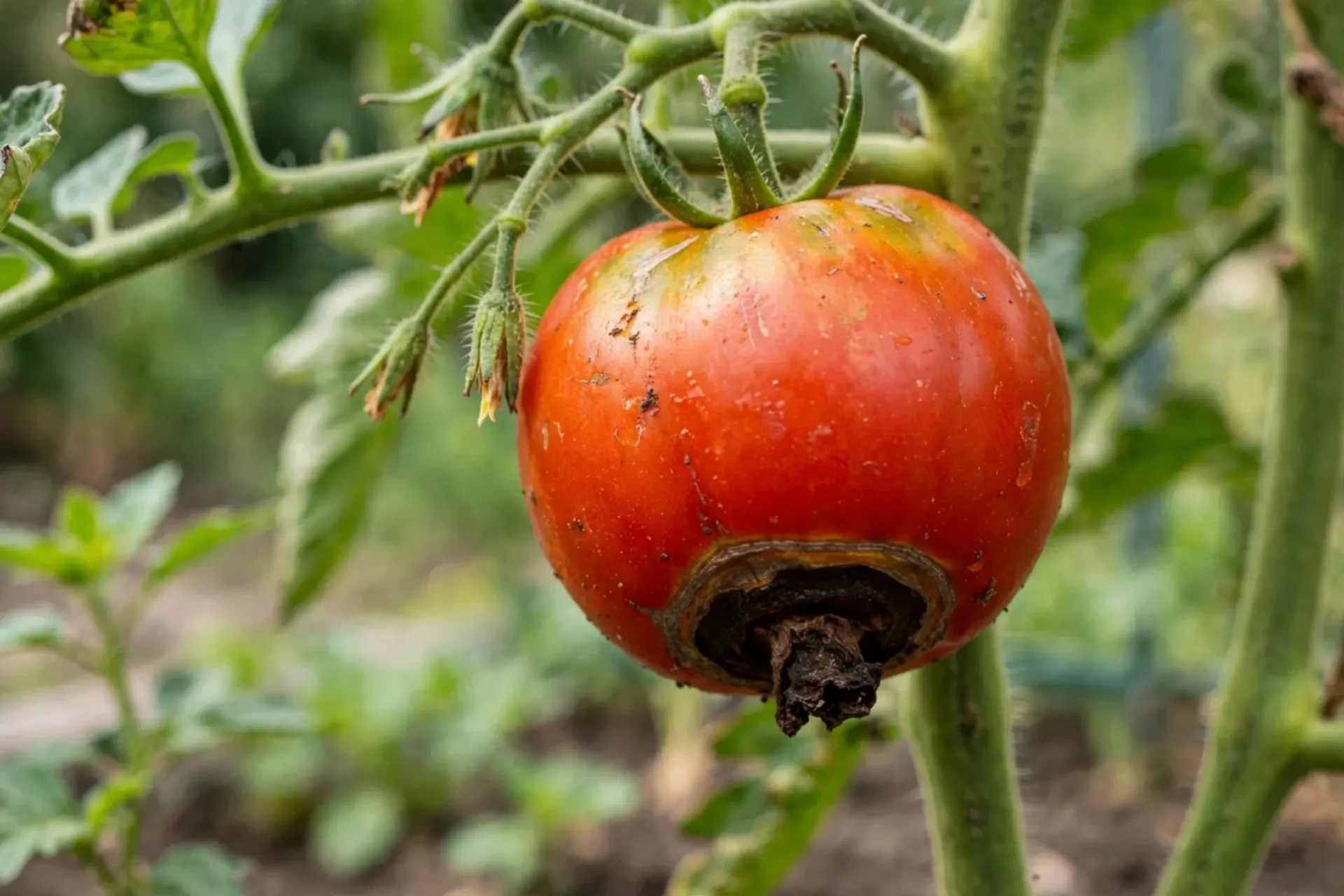
You waited weeks for the first tomatoes — and the bottom of each one is a black, leathery, sunken patch. That is blossom end rot, and here is the part most advice gets wrong: it is not a disease, and it is usually not a lack of calcium in your soil. It is a calcium delivery failure inside the fruit — and delivery runs on water. This guide gives you the real fix, and names the popular remedies that waste your money.
What you are looking at
- Starts as a water-soaked-looking spot at the blossom end (the end opposite the stem) of a green or ripening fruit
- Becomes a sunken, brown-to-black, leathery patch that can cover half the fruit
- Worst on the first fruit of the season, long paste-type tomatoes, and anything growing in pots or grow bags
- Never spreads plant to plant — each fruit is affected by its own supply problem, not by contagion
Step 1 — Understand the delivery chain
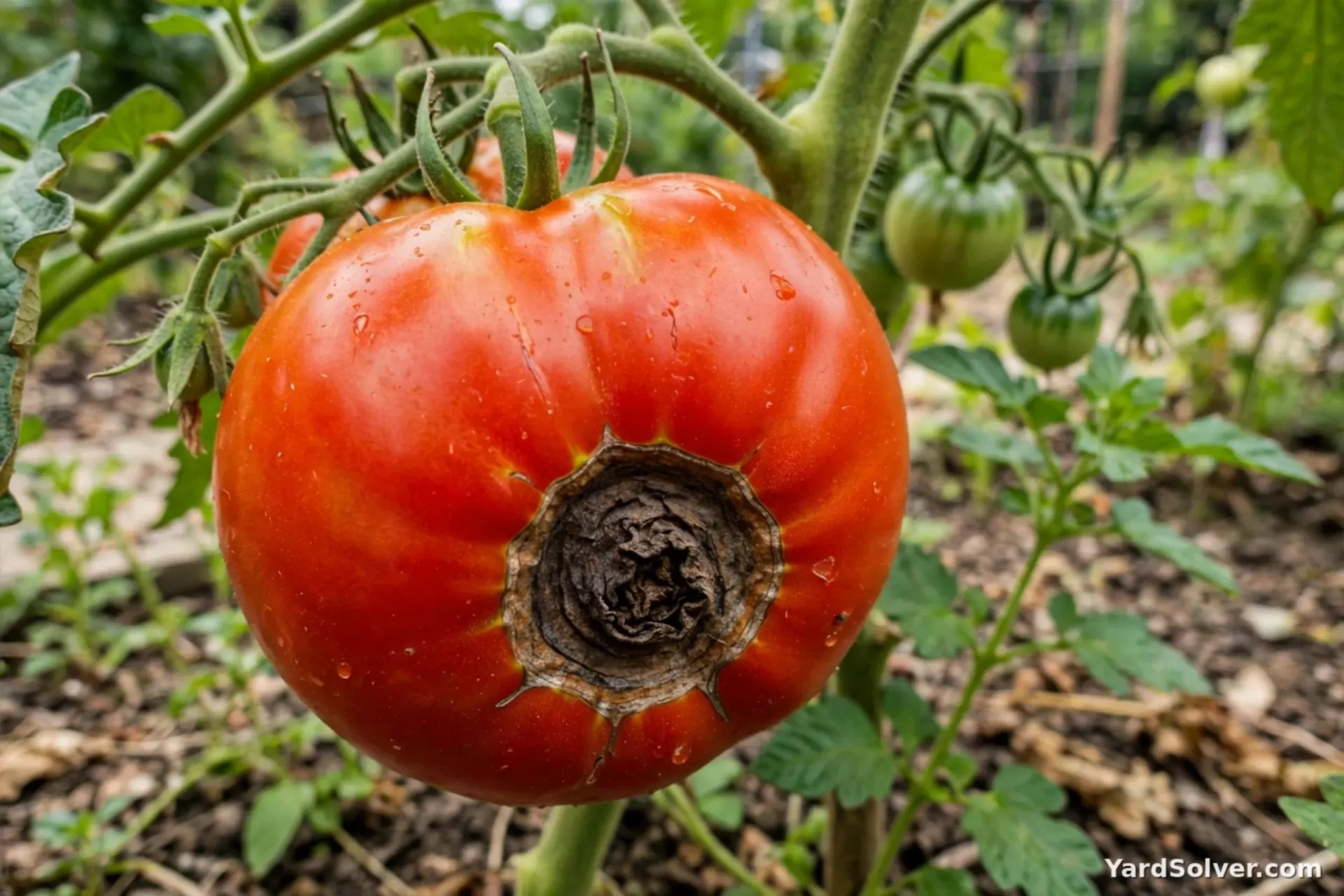
Calcium moves through a tomato plant in the water stream, and it moves slowly — the far end of a fast-growing fruit is the last place it reaches. Any break in steady water supply — a dry spell followed by a soaking, roots damaged by deep hoeing, a small pot drying out daily — starves the fruit's far end of calcium at the exact moment its cells are being built. Those cells collapse, and the patch appears. That is why the fix is about steadiness, not about adding more calcium.
Step 2 — Take off the damaged fruit
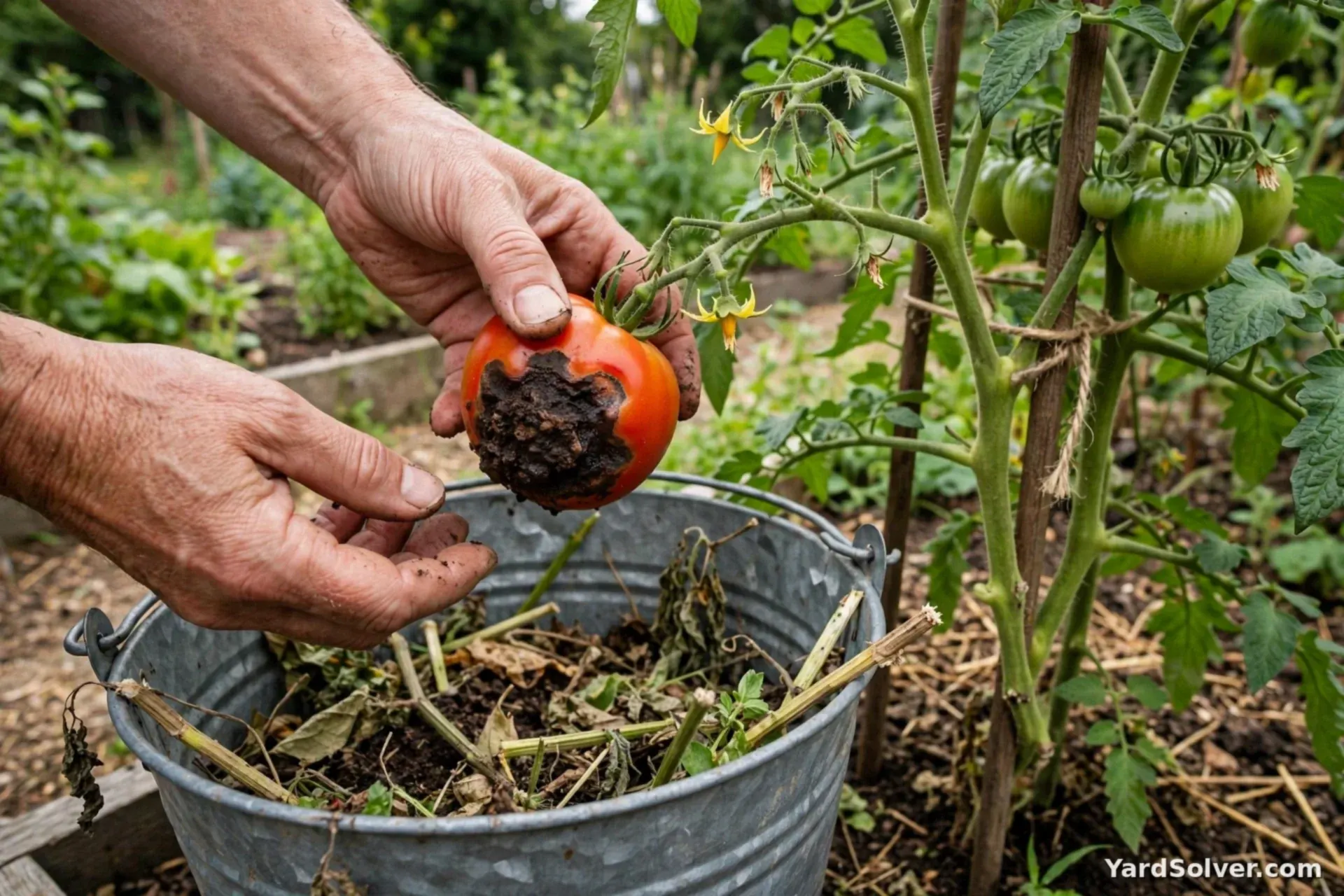
Pick fruit that is badly affected and compost it. The plant cannot repair the patch, and leaving ruined fruit on the vine wastes the plant's energy that could go to healthy trusses. Small patches on nearly ripe fruit can be cut away generously at harvest and the rest eaten the same day.
Step 3 — Water for steadiness, not volume
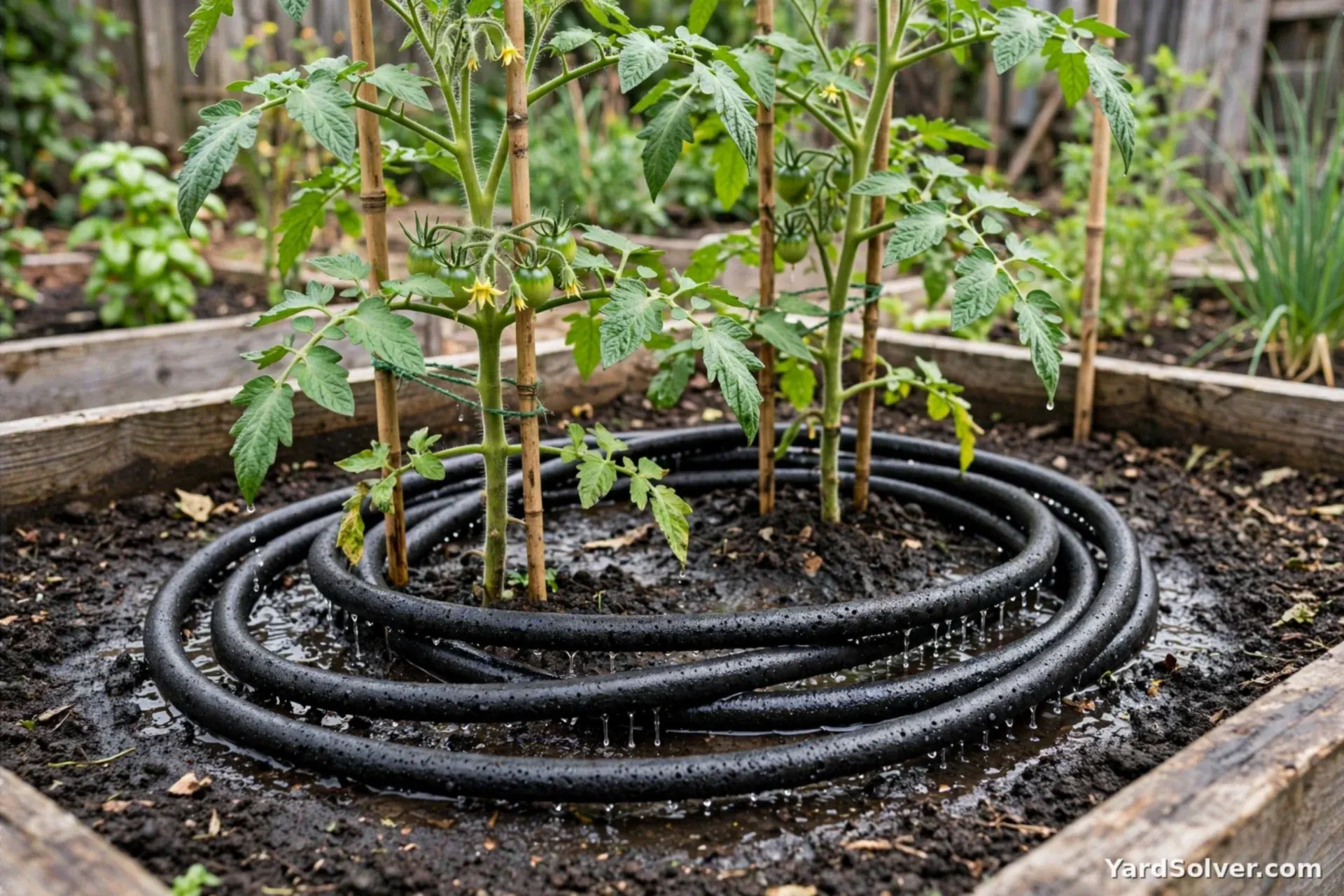
Deep watering on a regular rhythm beats flood-and-drought. Aim to keep the root zone evenly moist: water thoroughly at the base, then again when the top couple of inches have dried — in hot weather, potted plants may need it daily. If you garden in beds, a soaker hose or drip line on a timer is the single most reliable blossom-end-rot prevention there is.
Step 4 — Mulch the root zone (the highest-value step)
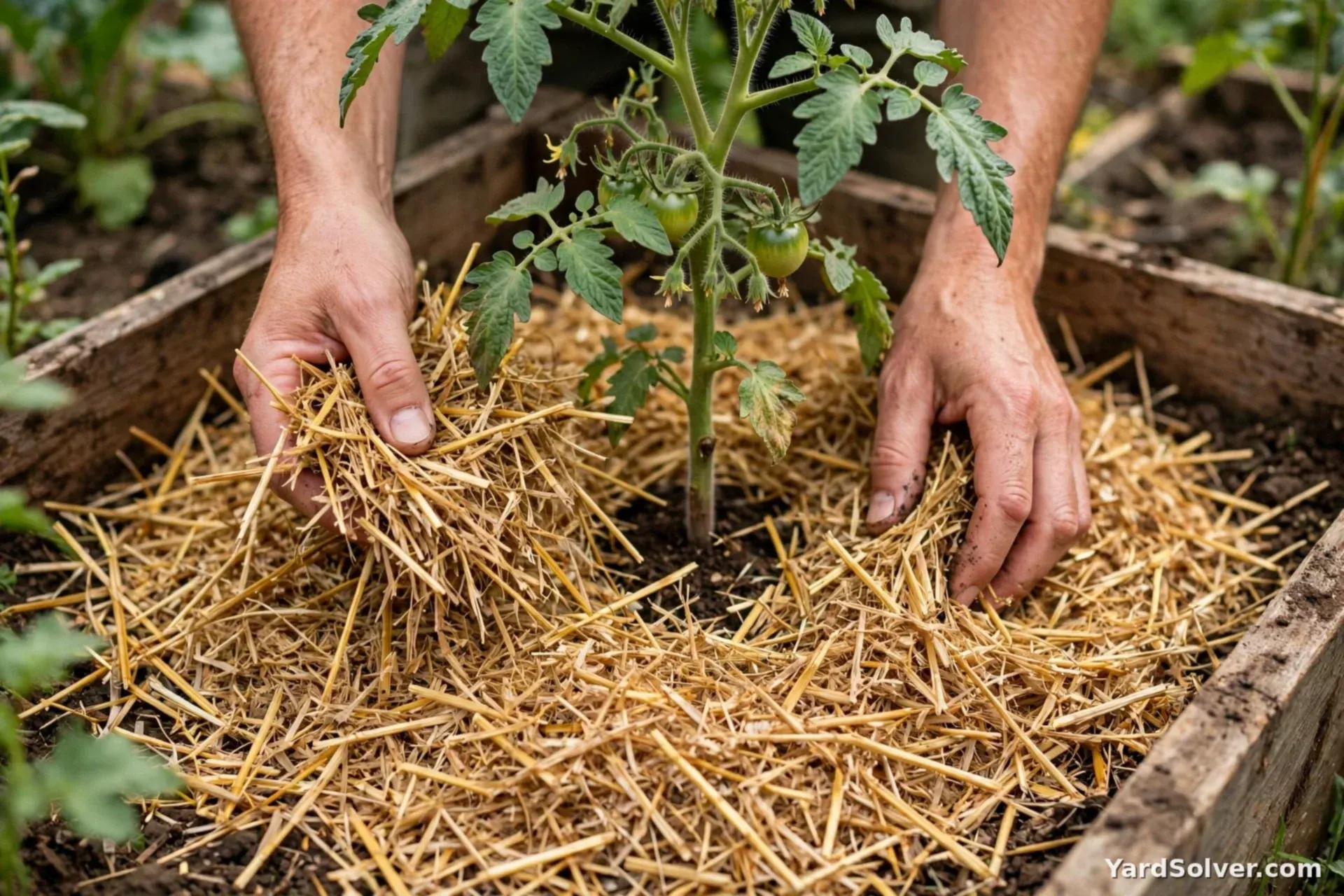
A 2–3 inch layer of straw or shredded bark over the root zone slows evaporation and flattens the wet-dry swings that cause this disorder — it is the closest thing to a one-step fix. Work out how many bags your beds need with the Mulch Calculator, and top beds up with compost first if levels have dropped: the Compost Calculator gives the amount.
Step 5 — Skip the miracle cures, test before treating
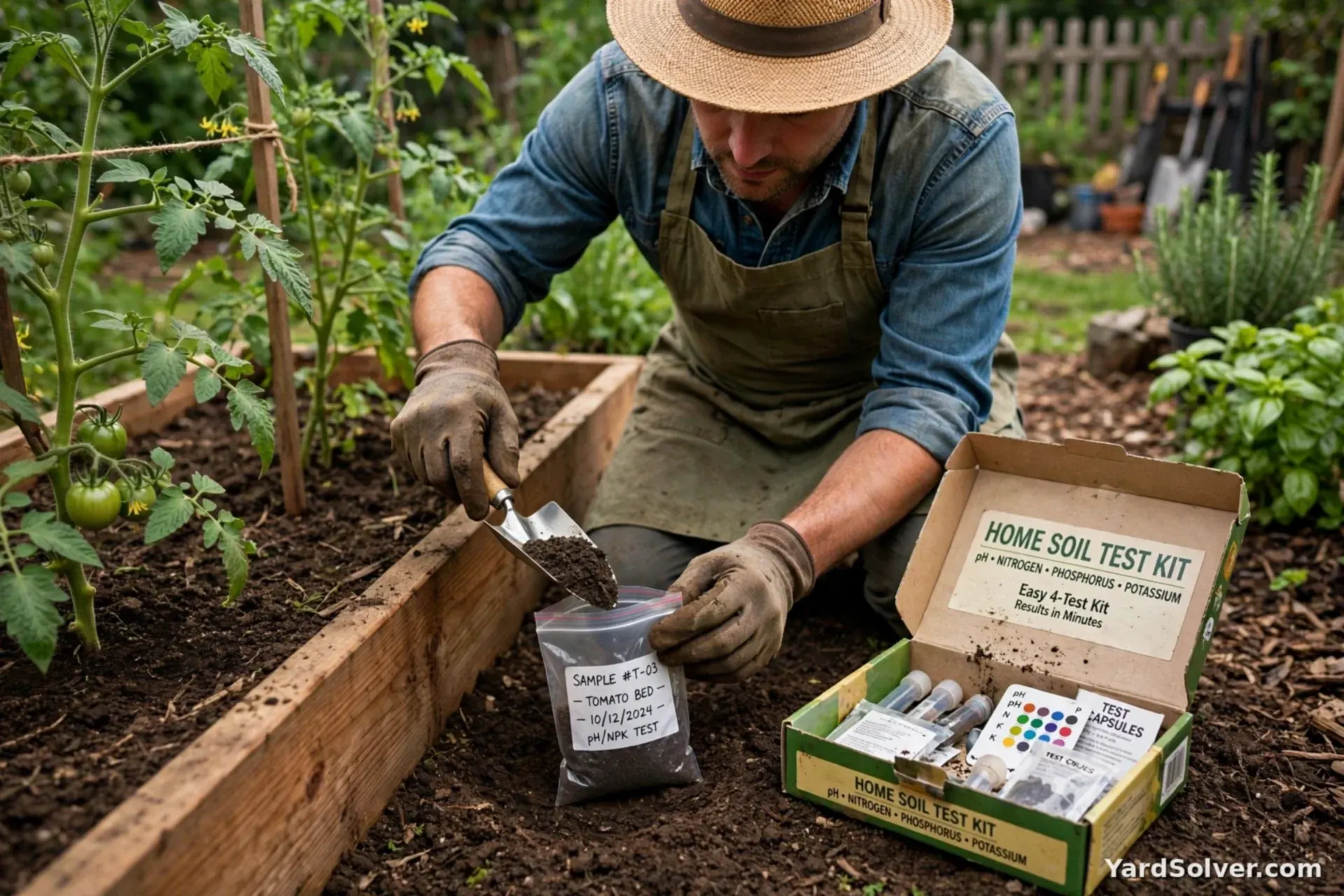
Calcium foliar sprays, crushed eggshells and antacid tablets all fail the same way: the calcium either cannot reach the fruit or cannot break down in time. The genuine exception: if your soil is acidic and truly low in calcium, lime worked in before planting (at the rate a soil test recommends) is the right correction — for next season, not as a mid-season rescue. If blossom end rot hits every plant every year despite steady watering, that is the signal to send a soil sample to your local extension office and stop guessing. More yellowing-type troubles are sorted in Why Are My Tomato Leaves Turning Yellow?
Keep going
More tomato trouble, sorted: Why Are My Tomato Leaves Turning Yellow? · Why Are My Tomato Leaves Curling? The full tomato profile is in the Plant Library.
Questions people ask
Can you eat a tomato with blossom end rot?
Yes — it is not a disease and the fruit is not poisonous. Cut away the rotted end well above the damage and eat the rest promptly. Fruit with mould growing in the patch is best composted.
Do calcium sprays or eggshells fix it?
Rarely. Most soils hold enough calcium; the failure is water delivery to the fruit. Sprays barely reach fruit and eggshells break down too slowly. Steady watering plus mulch fixes most cases.
Will all my tomatoes get it?
Usually not. It typically hits the first fruit while roots are still small and routines unsettled, then fades as the plant matures. Paste types and container plants are the most prone.
Comments & ratings
No comments yet.
Be the first to share your experience.