
Guides · Lawn care · Published November 15, 2026
Crabgrass: How to Identify It, Kill What's Up, and Stop It Coming Back
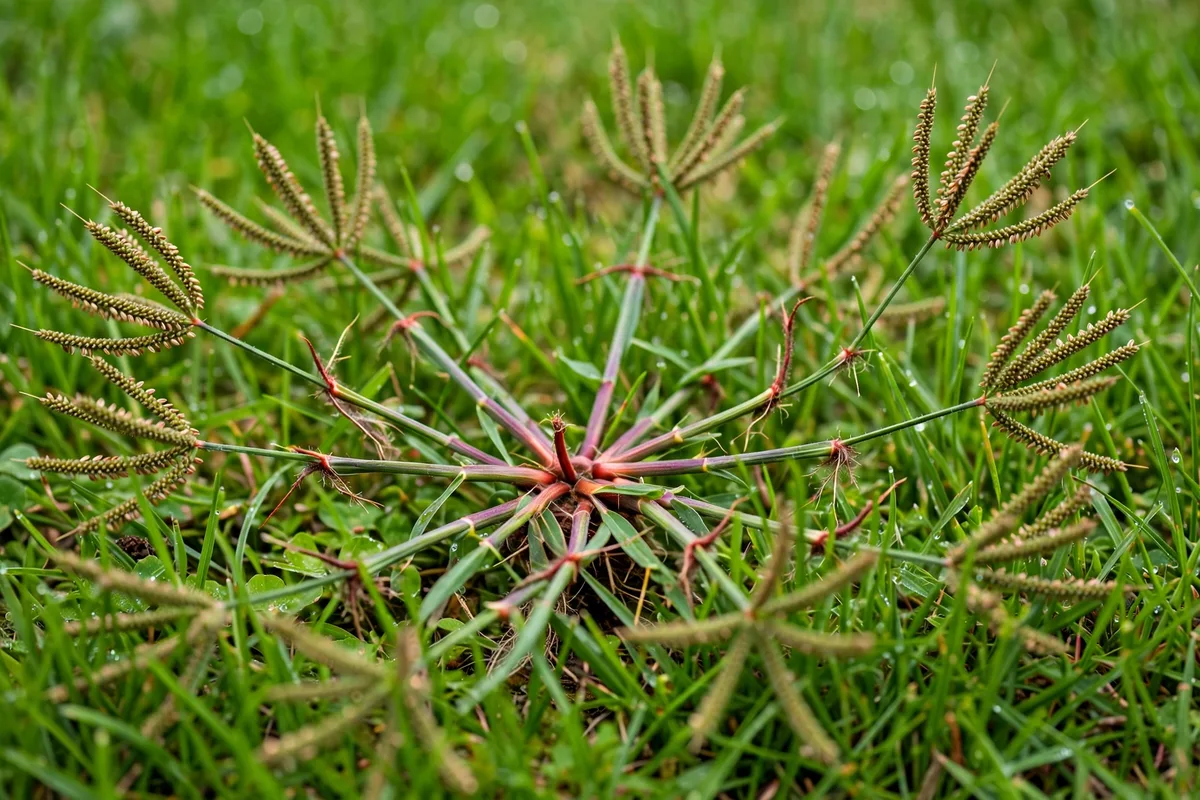
Crabgrass is the most hated lawn weed in North America for one simple reason: it is playing a longer game than you are. It germinates in spring, sprawls flat under the mower all summer, shrugs off drought that thins your real grass, and then — the actual point of the exercise — drops up to 150,000 seeds per plant before the first frost kills it. Those seeds wait in your soil for years. So the honest answer to how to get rid of crabgrass has three parts, and skipping the third is why it comes back: identify it correctly, kill or remove what is up now, and then block next year's germination at the one moment it is vulnerable.
Step 1 — Identify it: crabgrass vs quackgrass and the other lookalikes
Crabgrass grows flat and outward, like a crab: pale green stems radiate from a central point, hug the ground, and root again wherever a stem node touches soil. The seed heads give it away from midsummer — thin, finger-like spikes, three to seven of them fanning from the top of each stem. The leaves are wider and lighter green than lawn grass, and the whole plant turns a tell-tale purple-brown with the first cold nights before dying completely at frost. It is an annual: every plant you see this year grew from seed this spring.
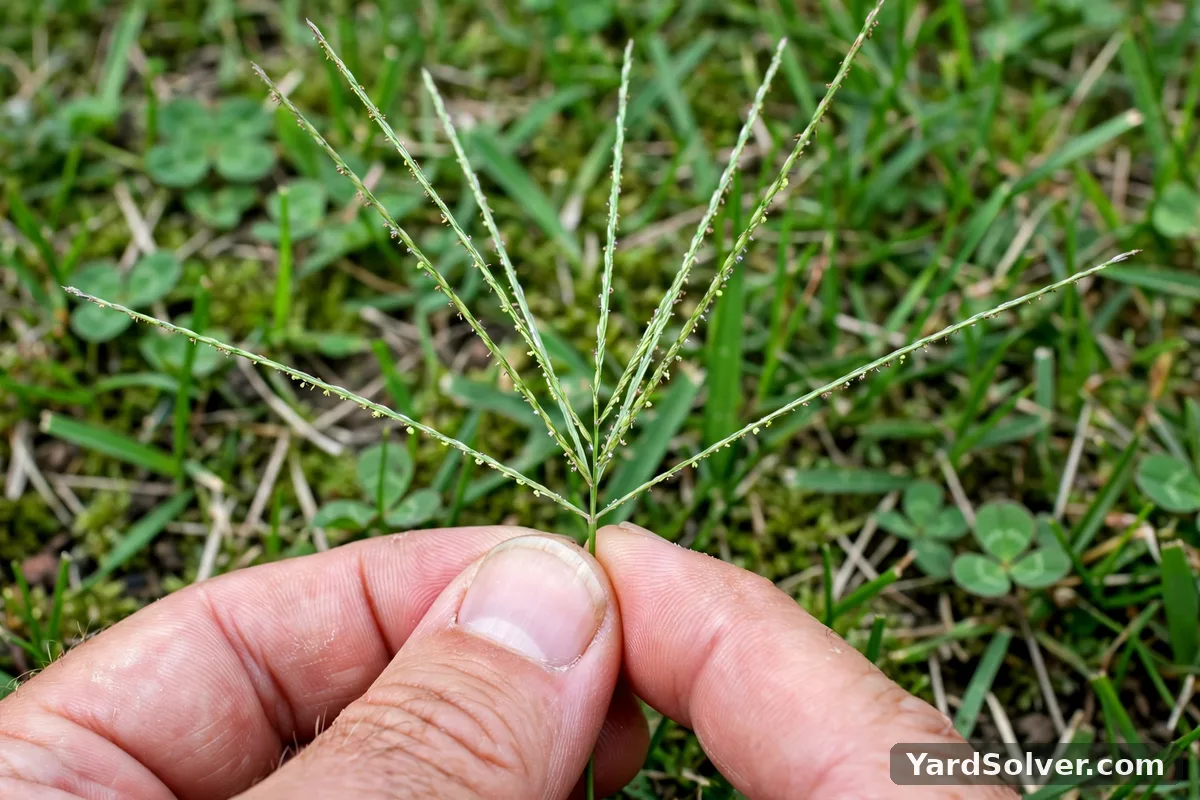
The lookalike that matters is quackgrass, because the treatment is opposite. Quackgrass stands upright, grows from creeping underground rhizomes, and is a perennial — it survives winter and laughs at pre-emergent, because it never needs to germinate. Check the base: crabgrass roots at surface nodes and pulls up in one radiating mat; quackgrass snaps off and leaves white, sharp-pointed rhizomes in the soil. Tall fescue clumps are the third impostor — coarse, dark and upright, but a desirable grass growing where you did not plant it, not a weed to poison. Identify before you treat: the wrong diagnosis wastes a season.
Step 2 — Kill what's up: pull it, or spot-treat it honestly
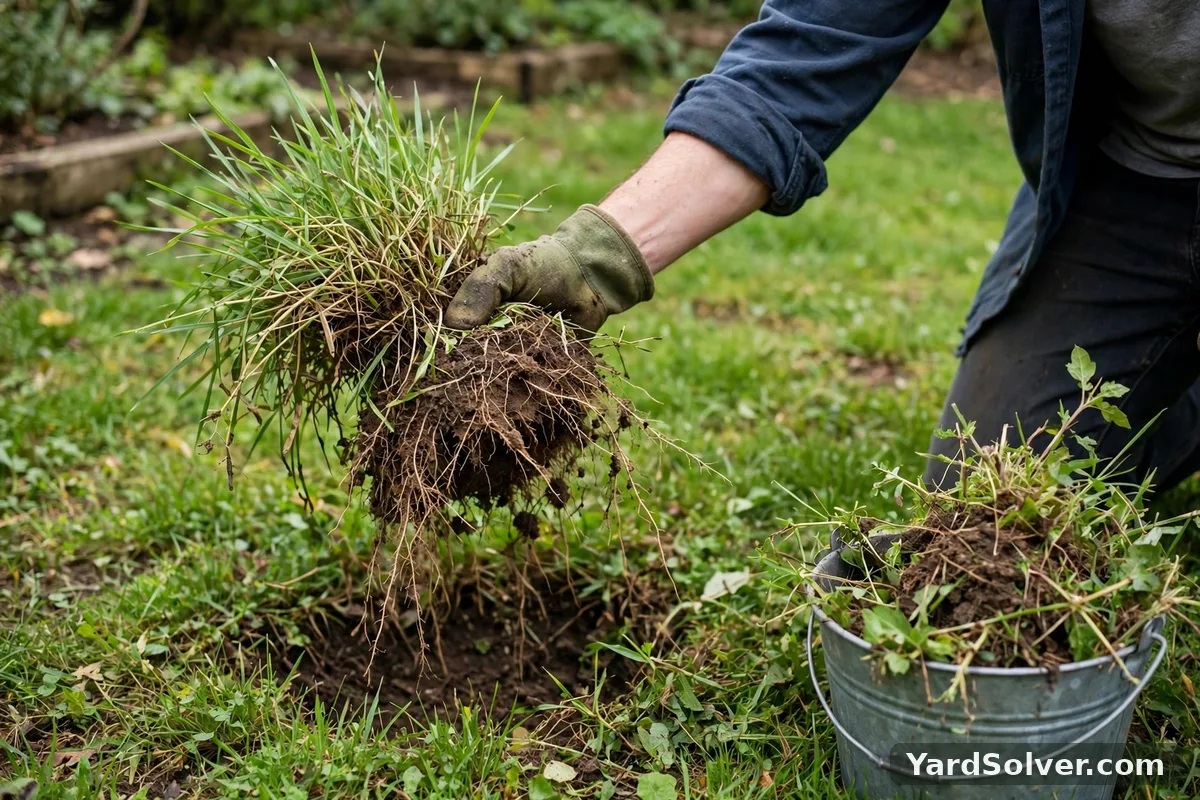
For scattered plants, pulling works and works permanently — that plant, at least, will never seed. Water the area first, grip the plant at its central crown, and lift the whole radiating mat with its node-roots; a flat weeding tool under the crown helps. Bag what you pull once seed heads have formed, because those fingers are exactly the problem. For lawns where crabgrass is the dominant species by August, a post-emergent herbicide containing quinclorac (often with other actives) is the standard US answer, applied while plants are young — mature, tillered crabgrass in late summer is far harder to kill, and two applications are commonly needed. Read the label for your grass type: several crabgrass killers injure fine fescues and St. Augustine.
Canada, honestly: several of the synthetic actives used in the US are restricted for cosmetic lawn use in much of Canada. The Canadian playbook leans on the cultural controls in Step 3 — thick, fed, high-mown turf — plus iron-based (FeHEDTA) spot treatments and corn-gluten products sold for suppression. That is not a consolation prize: on lawns where crabgrass is thin, the cultural route alone usually wins within two seasons.
Step 3 — Prevent it: the 55-degree window that decides next year
Crabgrass seed germinates when soil at 2 inches deep holds around 55 °F (13 °C) for several days — typically as forsythia blooms and lilac starts. A pre-emergent herbicide (prodiamine or dithiopyr are the common US actives) laid down just before that window forms a barrier that kills seedlings as they sprout. Timing is everything: too early and it thins before the last seeds wake; too late and the first flush is already through. Our dedicated guide, When to Apply Pre-Emergent, works through the soil-temperature rule, the forsythia signal and split applications in full — treat it as the deep-dive companion to this page.
Then starve the weed of its two favourite conditions: light at soil level and bare ground. Crabgrass seed needs light to germinate, so a lawn mown at 3 inches or higher shades the soil and quietly blocks most of it. Feed measured, not heavy: the Fertilizer Calculator works out the rate for your lawn's size so the grass — not the weed — gets the advantage. And every autumn, overseed the thin patches crabgrass died out of; those October gaps are next June's crabgrass colonies unless grass gets there first. The Seed Calculator gives the overseeding rate for your area so the repair is thick enough to matter.
In the UK, Europe and Australia — the honest regional note
In the UK and most of Europe, crabgrass is a minor pavement-and-wasteland weed rather than a lawn plague; if your lawn problem arrived as yellow patches in autumn, you are more likely looking at leatherjackets or chafer grubs than crabgrass. In Australia the same plant is a genuine summer lawn weed, usually called summer grass (Digitaria species): it germinates as soils warm in late spring, and the same three-part plan applies with the seasons flipped — pre-emergent in early spring, thick buffalo or couch turf as the long-term defence.
Keep going
The prevention half of this guide lives in full in When to Apply Pre-Emergent — soil temperatures, split applications and the seeding conflict, all worked through.
Weed pressure is one line in a whole lawn season. The Garden Planner turns your frost dates into a dated plan with quantities, so pre-emergent, feeding and overseeding each land in their proper week.
Questions people ask
When does crabgrass germinate?
When soil at about 2 inches deep holds near 55 °F (13 °C) for several consecutive days — in most northern lawns that is mid-spring, around forsythia bloom. Germination continues in flushes into early summer, which is why split pre-emergent applications exist.
Will crabgrass die in winter?
Yes — the plants are annuals and the first hard frost kills them, often after a purple-brown colour change. The seeds they dropped do not die; they are next year's infestation, which is why autumn cleanup and spring prevention matter more than summer spraying.
Does mowing high really stop crabgrass?
It is one of the strongest cultural controls there is. Crabgrass seed needs light at the soil surface to germinate; a lawn kept at 3 inches or taller shades the soil and blocks a large share of germination before any product is involved.
Comments & ratings
No comments yet.
Be the first to share your experience.