
Guides · Lawn care · Published November 15, 2026
Grass Seed for Shade: What Actually Grows Under Trees (and When to Stop Trying)
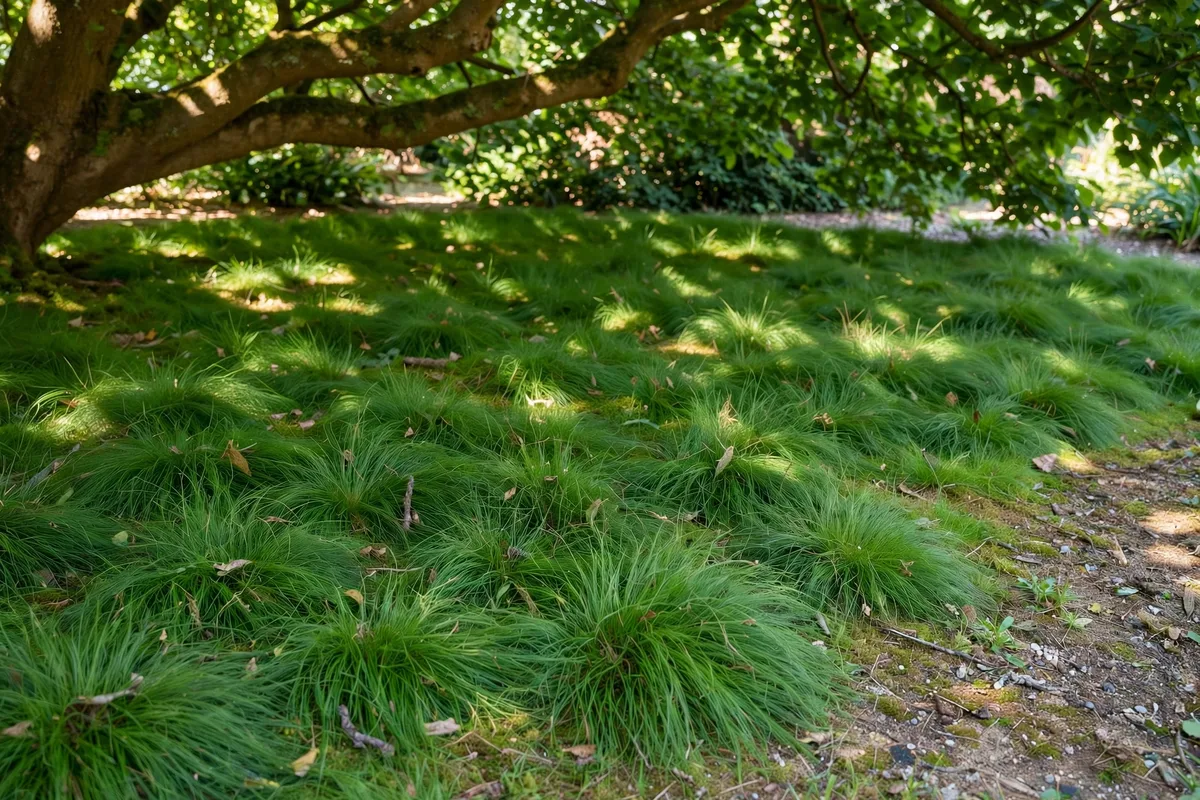
Every garden centre sells a bag labelled for shade, and every spring somebody sows it under a maple, watches it germinate beautifully, and buries it by July. The seed was usually fine. The light was not. Grass is a sun crop with a minimum wage: below a certain number of direct-sun hours, no variety on earth can photosynthesise enough to hold a lawn together, and the honest product is not better seed but a different groundcover. So the search for the best grass seed for shade starts with a measurement, continues with the two or three species that genuinely earn the label, and ends with a clear-eyed line below which you should stop buying seed altogether.
Step 1 — Count your sun hours before you spend anything
Stand in the problem area at three points in a day — mid-morning, midday, mid-afternoon — and note whether direct sun is reaching the ground at each. Better still, run the spot through the Sun & Shadow Calculator: it models the shadows your trees, fences and house actually cast across the season, which is the number that decides this purchase. Then read your result against the honest scale. Five or more hours of direct sun: most lawn grasses cope, and shade is a minor handicap. Three to five hours: the shade specialists' territory — fine fescues and shade-bred tall fescue. Two to three hours: grass will thin every summer no matter what you sow; plan on annual autumn overseeding as maintenance, or change the plan. Under two hours: stop trying — see Step 4.
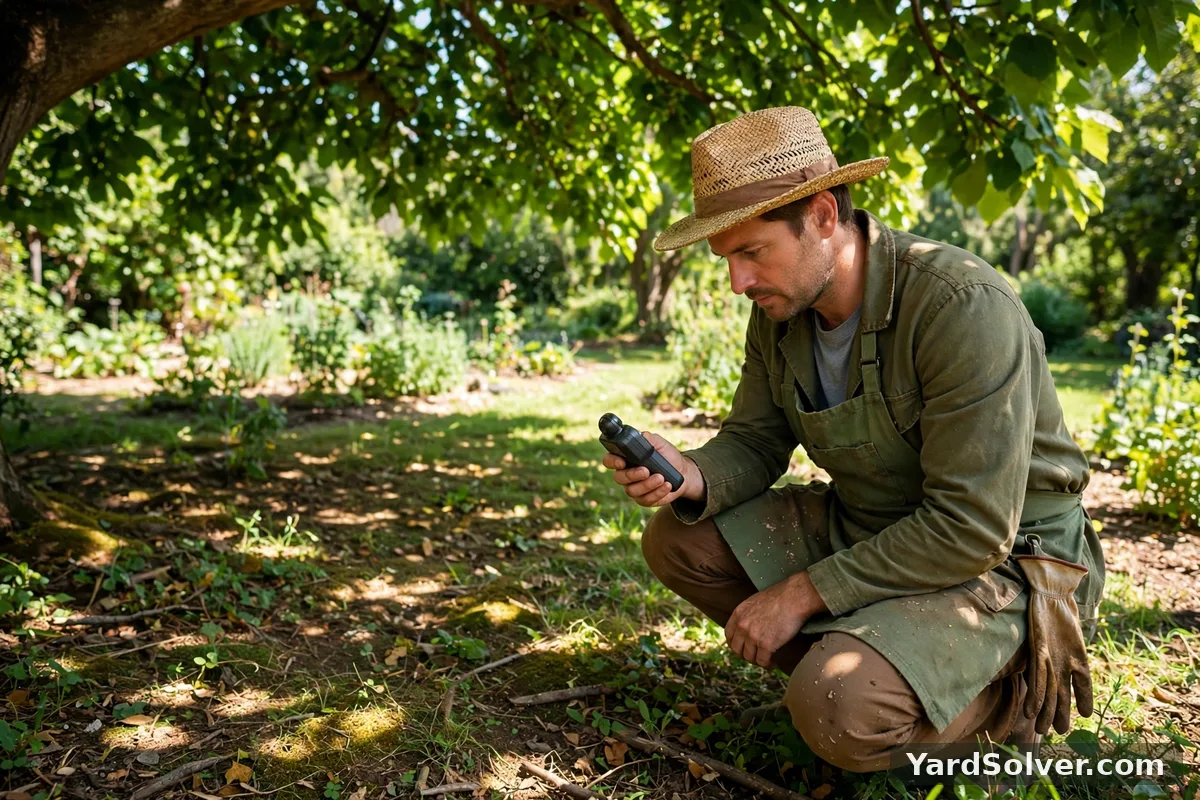
Remember that a tree is a competitor as well as an umbrella: its roots drink the same water and eat the same fertilizer as your grass, across the whole drip line. Shade grass under trees needs more water and more feeding than the same grass in the open, not less.
Step 2 — The species that actually earn the word 'shade'
Fine fescues — creeping red, chewings, hard and sheep fescue — are the genuine article: they hold a respectable lawn at three to five hours of sun, need little fertilizer, and are the backbone of every honest shade mix (the well-known dense-shade blends from breeders like Jonathan Green and Pennington are built on them). Their weakness is wear: fine fescue under a children's football game wears to soil. Tall fescue is the compromise for shade with traffic: modern shade-selected cultivars tolerate four-ish hours and take foot traffic far better, with a coarser blade as the trade. Kentucky bluegrass is the impostor in many 'sun and shade' mixes — it needs four to six-plus hours and quietly dies out of real shade within two seasons, leaving the fescues it was blended with to carry the bag's promise. In the UK and Europe, shade mixes add woodland species and sometimes Poa supina, the one grass that genuinely tolerates deep, damp shade. In warm Australian shade, the answer is not fescue at all: shade-bred buffalo varieties handle warm shade best, with dichondra as the no-mow alternative under trees.
Step 3 — Sow it like you mean it: autumn, thin soil contact, steady water
Shade seed succeeds or fails in the sowing. Autumn is the prime northern window — soil is warm, tree canopies are thinning, weed pressure is low — with early spring second. Rake the area to bare, loosened soil (seed sitting on thatch under a tree is bird food), sow at the overseeding rate for thin areas or the full new-lawn rate for bare ones, and run your area through the Seed Calculator so you buy enough for the rate on the bag rather than a hopeful scatter. Roll or tread the seed into contact, then keep it evenly moist: under trees that means watering more often than the open lawn, because the canopy intercepts rain you assume reached the ground.
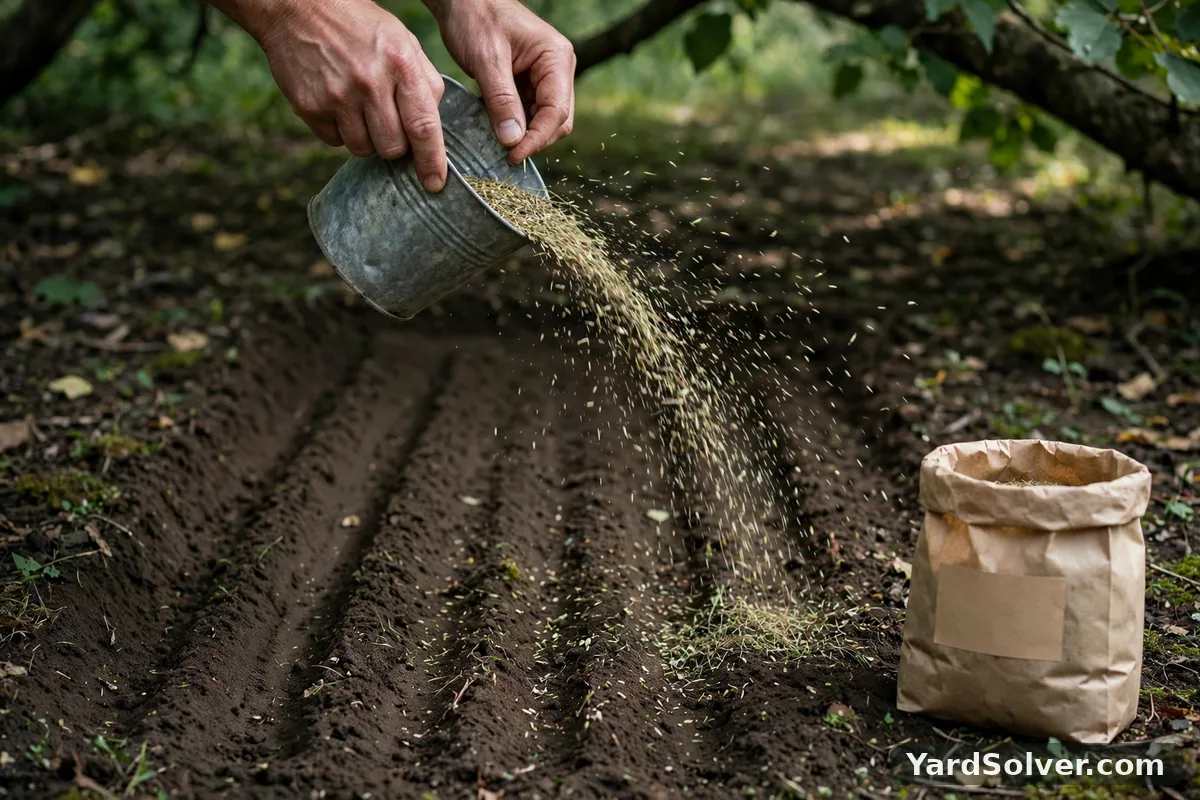
Prune for light where you can: raising a tree's canopy (removing the lowest limbs, done properly or by an arborist) can add an hour or two of moving sun, which is often the whole difference between the three-hour and five-hour bands. The full sowing method — rates, timing, watering curve — is in How to Overseed Your Lawn; shade areas follow it exactly, with the extra watering note above.
Step 4 — When to stop trying: the under-two-hours answer
Below roughly two hours of direct sun, every bag of shade seed is a subscription to disappointment. The mature move is to change the surface: a 2–3 inch mulch ring under the tree (better for the tree than grass ever was), or a shade groundcover — creeping thyme in the sunnier edges, dichondra in warm climates, hostas and ferns in temperate shade beds. This is not surrender; it is why the best-looking gardens have lawns that end where the light ends. Spend the seed money once on plants that want the conditions you actually have, and the under-tree problem is solved permanently instead of annually.
Keep going
Shade is rarely the only thin spot. The full repair method — preparation, rates and the watering curve — is in How to Overseed Your Lawn, and the shade areas of your lawn follow it with extra water.
Planning beds and lawn together? The Garden Planner turns your space and frost dates into a dated plan with quantities, so seed, mulch and groundcovers are ordered once, correctly.
Questions people ask
How many hours of sun does grass need, minimum?
Most lawn grasses need at least 4–6 hours of direct sun. Fine fescues, the true shade specialists, can hold a lawn at 3–5 hours. Below about 2–3 hours no grass stays thick — that is groundcover territory, and recognising it saves years of reseeding.
Why does my shade seed germinate then die by July?
Seedlings live off the seed's stored energy first, which is why shade sowings always look promising in week three. They fail when the reserves run out and the light income cannot cover the plant's costs — compounded by tree roots out-competing them for water. It is a light budget problem, not a seed quality problem.
Is there a grass for deep shade under trees in Australia?
In warm Australian climates the shade answer is buffalo: shade-bred buffalo varieties tolerate warm, dappled shade better than any cool-season fescue, which will struggle in the heat regardless of light. For deep dry shade under trees, dichondra is the traditional no-mow alternative.
Comments & ratings
No comments yet.
Be the first to share your experience.