
Guides · Fall harvest · Published November 10, 2026
Brussels Sprouts After Frost Taste Sweeter — Here Is Why
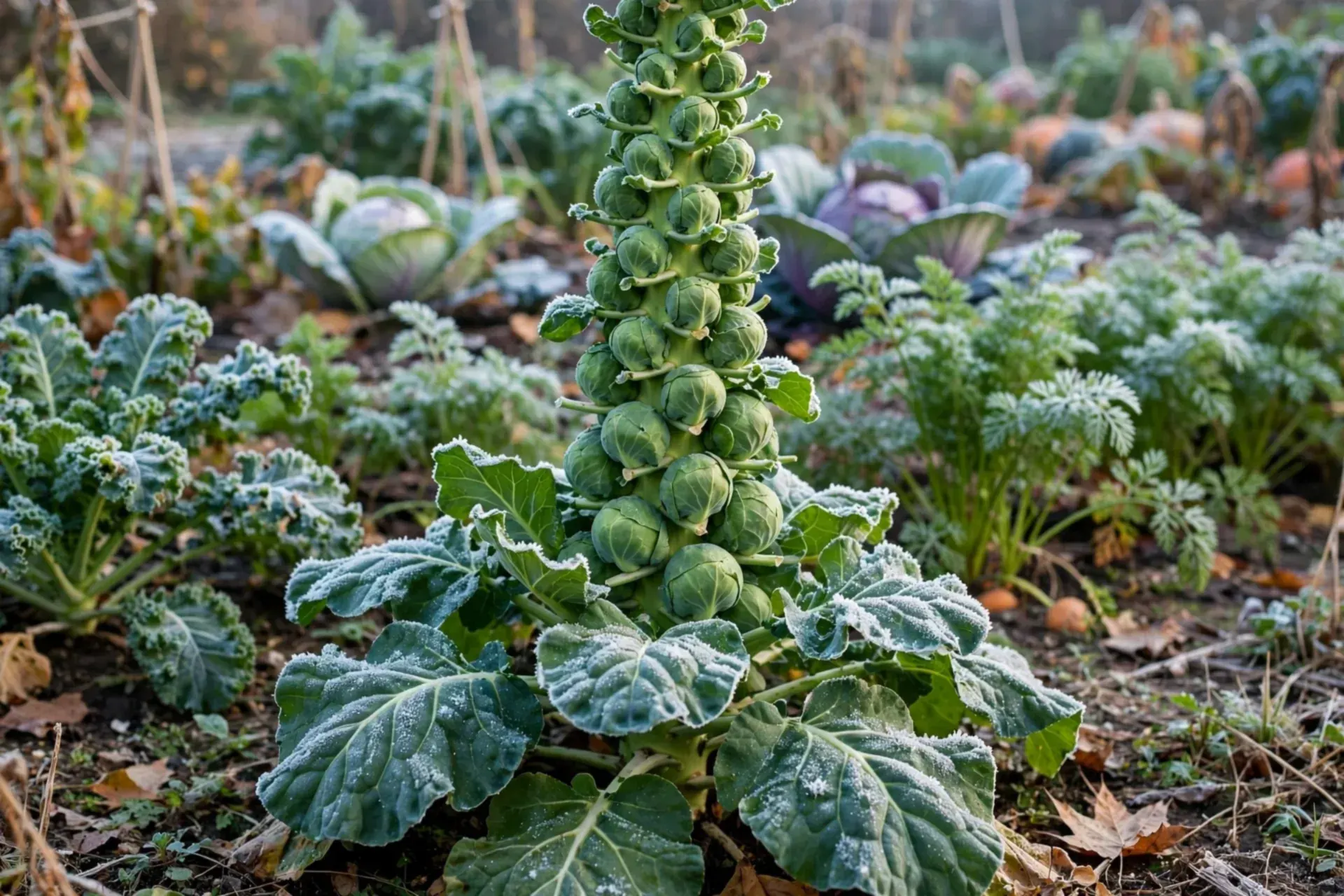
Ask anyone who grows Brussels sprouts in a cold climate and you will hear the same advice: do not pick them until the frost has been. It sounds like a folk tale. It is not. A Brussels sprout that has been through a light frost is a genuinely different vegetable from one picked in September — sweeter, milder, and none of the harsh bite that gives the crop its bad name. The change is real chemistry, the plant does it on purpose, and once you know the trick you can use it on purpose too: wait for the frost, pick from the bottom up, and let the stalk stand in the garden as your outdoor fridge. The full growing basics live on the Brussels Sprouts plant page; this guide is about the cold, and what it does.
The plant makes its own antifreeze — and the antifreeze is sugar
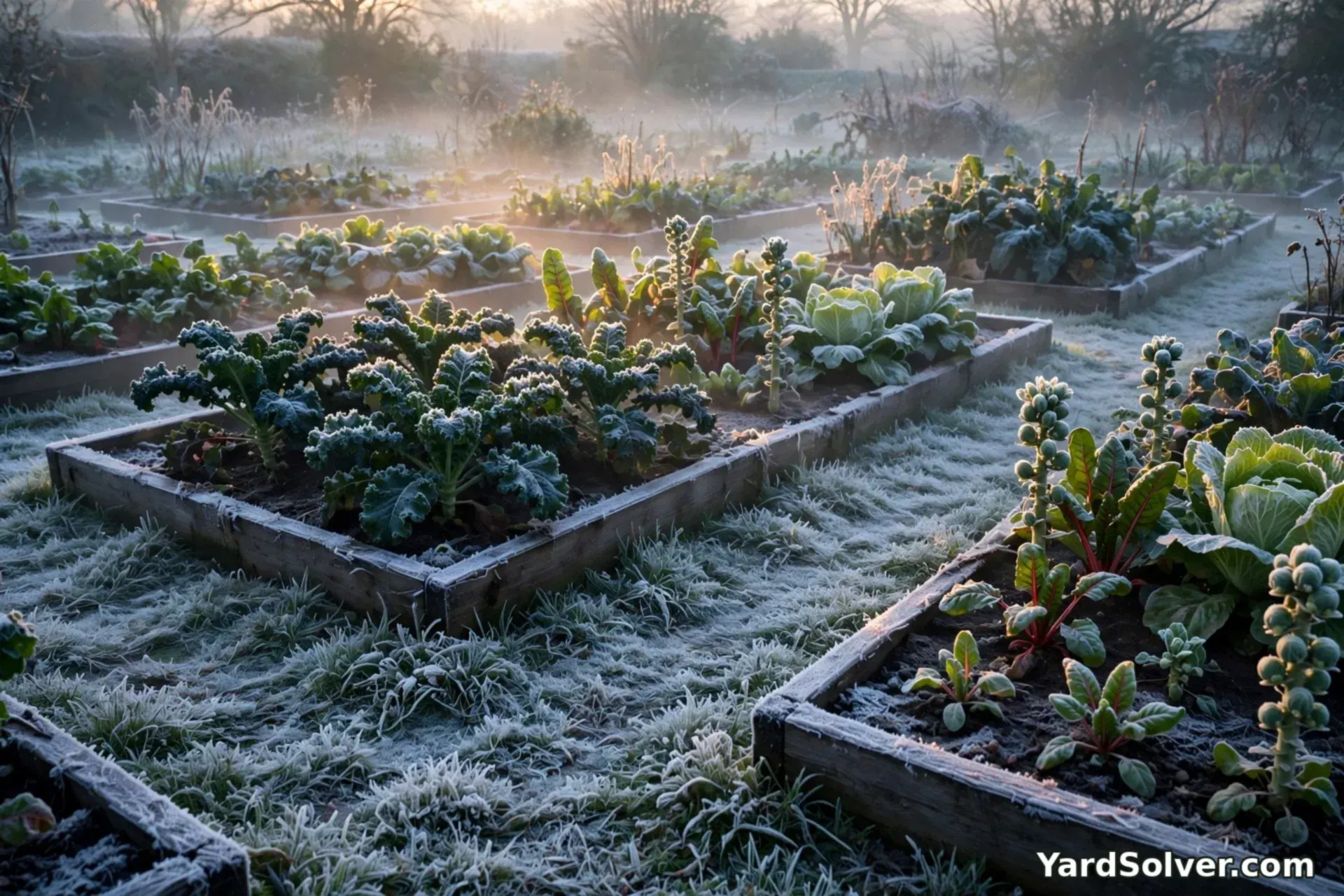
Here is what happens inside the plant when the nights turn cold. Water inside plant cells can freeze, and frozen cells die — so as temperatures drop toward freezing, the sprout defends itself by turning stored starch into sugar. Sugar dissolved in the cell sap lowers the freezing point of that sap, the same way salt lowers the freezing point of a road. It is antifreeze, brewed by the plant. And dissolved sugar is something your tongue can taste, which is why a frosted sprout eats sweeter and milder than a warm-weather one: the bitter edge steps back and the sugar steps forward. The change starts with cool fall weather and completes after a light frost or two — nights in the 28 to 32°F range. Gardeners are not imagining the difference, and neither was your grandmother.
Step 1 — Let the frosts find them
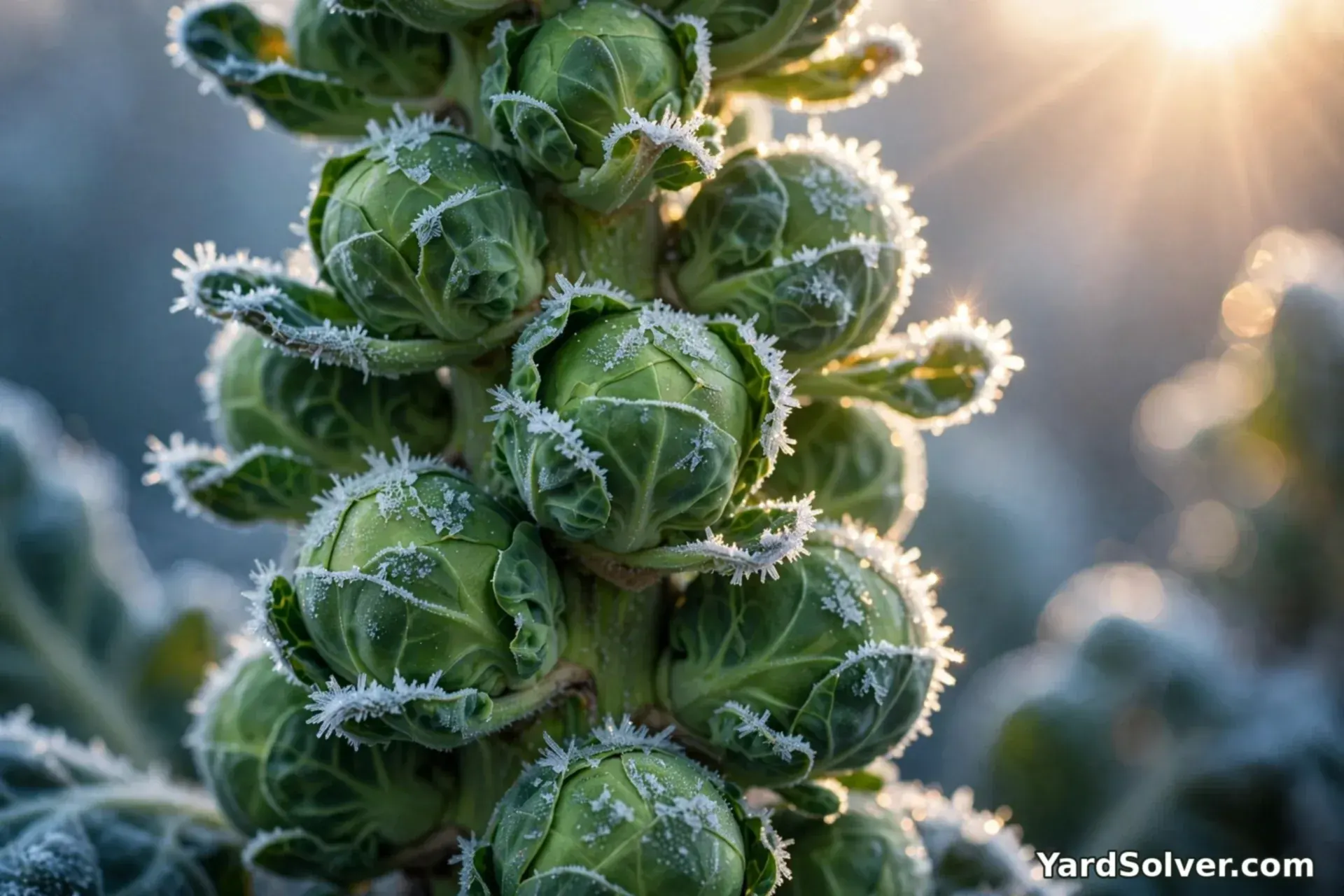
This is the hard step, because it asks you to do nothing while the sprouts look ready. Resist the September harvest. Brussels sprouts are a slow crop — around three months from transplant to first pick for most varieties — and they are bred to finish in the cold. Watch the forecast instead of the calendar: when the first light frosts are called for, let them come and go. One or two nights at 28–32°F is the sweet spot, and there is no rush after them either. Unlike tender crops, sprouts do not spoil standing in cold weather — they improve. Plan the timing backward with the Planting Calendar next year so the crop sizes up just as your frosts arrive, which is how the best sprouts you will ever eat happen on purpose instead of by luck.
Leave the stalks standing — the garden is the fridge
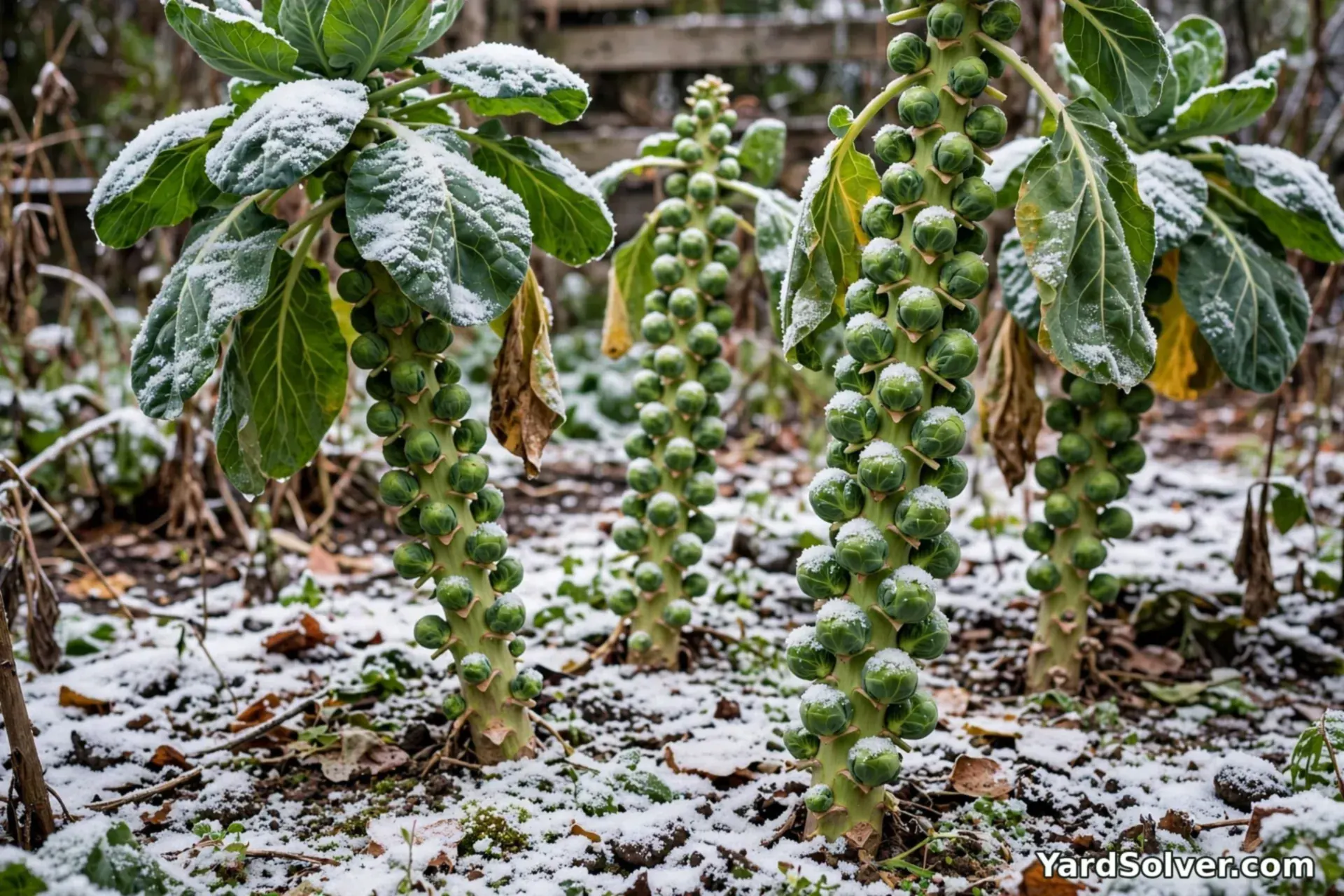
Brussels sprouts are one of the hardiest vegetables in the garden. Extension guidance puts established plants standing through temperatures down to about 20°F, and gardeners in cold zones routinely pick fresh sprouts with snow on the ground. So there is no stripping the plant bare in a panic before a cold night. The stalk is the best storage the crop has: sprouts left on it stay firm and keep sweetening gently, while sprouts picked and bagged slowly dry and toughen. Pick what the kitchen needs, when it needs it, and let the plant hold the rest. Only when a serious deep freeze settles in — repeated nights well below 20°F — is it time to cut whole stalks and bring them in.
Step 2 — Pick from the bottom up
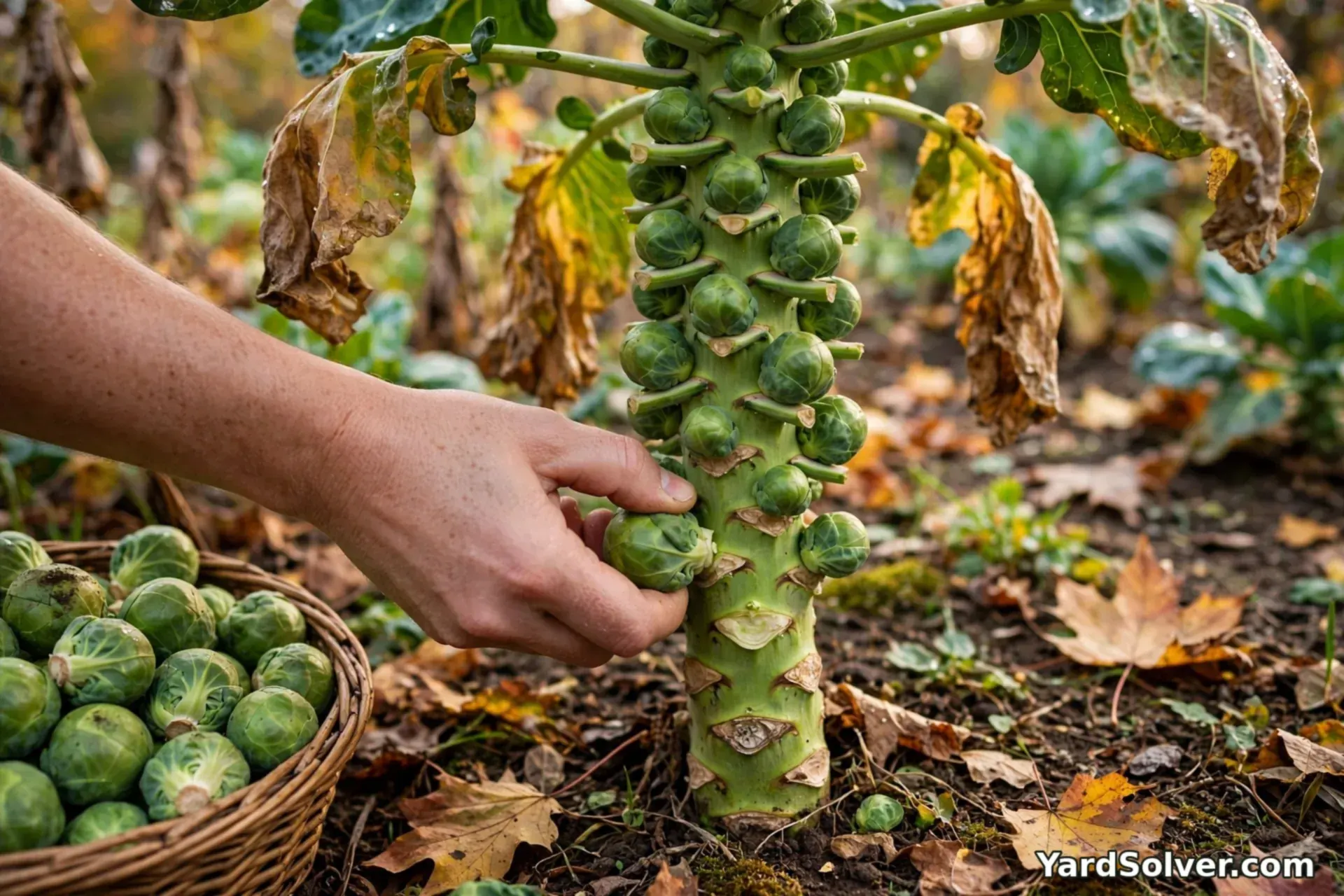
A stalk ripens like a ladder, bottom rung first. Sprouts are ready when they are firm, tight and 1 to 2 inches across — squeeze one: it should feel hard, with its leaves wrapped close. To pick, push the sprout down with a twist, or cut it clean with a knife. Work up the stalk over the following weeks, taking each sprout as it reaches size, and strip the big leaves off below your picking line as you go so the plant puts its energy into the sprouts still sizing up. Two things spoil the flavour, and both are picking errors: taking them too early in warm weather (bitter), and leaving them until they loosen and balloon (strong and cabbagey). Firm and frosted is the whole recipe.
While you wait for the frost, one small job pays off: top the plant. Once the lower sprouts have started to form — roughly a month before your first frost — cut or pinch out the growing tip at the very top of the stalk. The plant stops spending energy on height and pours it into the sprouts instead, so they size up faster and more evenly. It feels drastic the first time you do it. Do it anyway: a topped stalk in October is a fuller, sweeter stalk in November.
The whole family does it
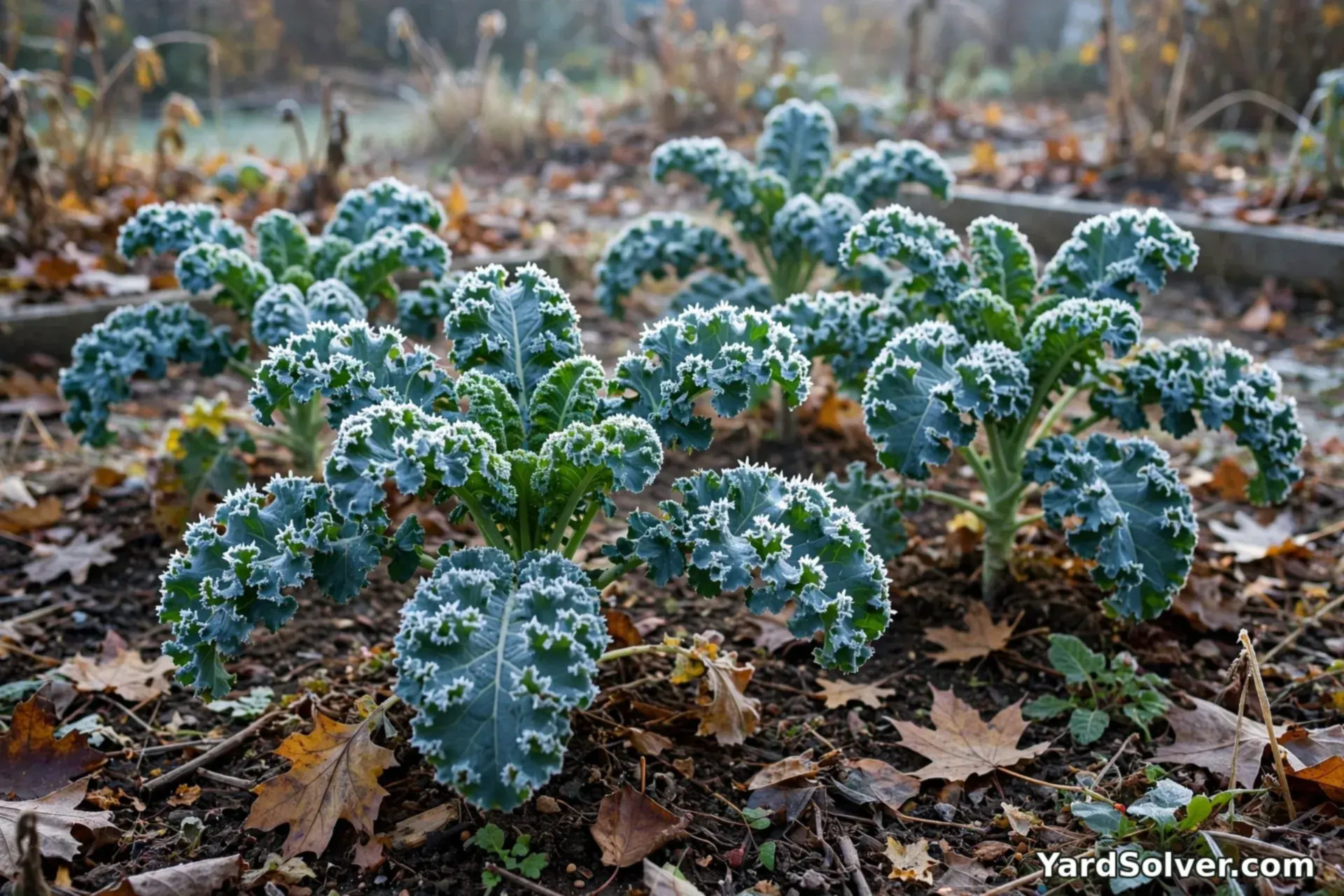
Once you know the trick, you will see it across the whole fall garden, because the sprouts are not the only plant brewing sugar against the cold. Kale does it so well that fall kale is a different, gentler green than summer kale. Parsnips left in cold ground turn noticeably sweet — some gardeners refuse to dig them before frost on principle. Carrots, collards, leeks and cabbage all lean the same way. The practical lesson is to stop treating the first frost as the end of the garden. For the hardy half of the vegetable patch, frost is not the finish line. It is the seasoning.
Keep them, cook them
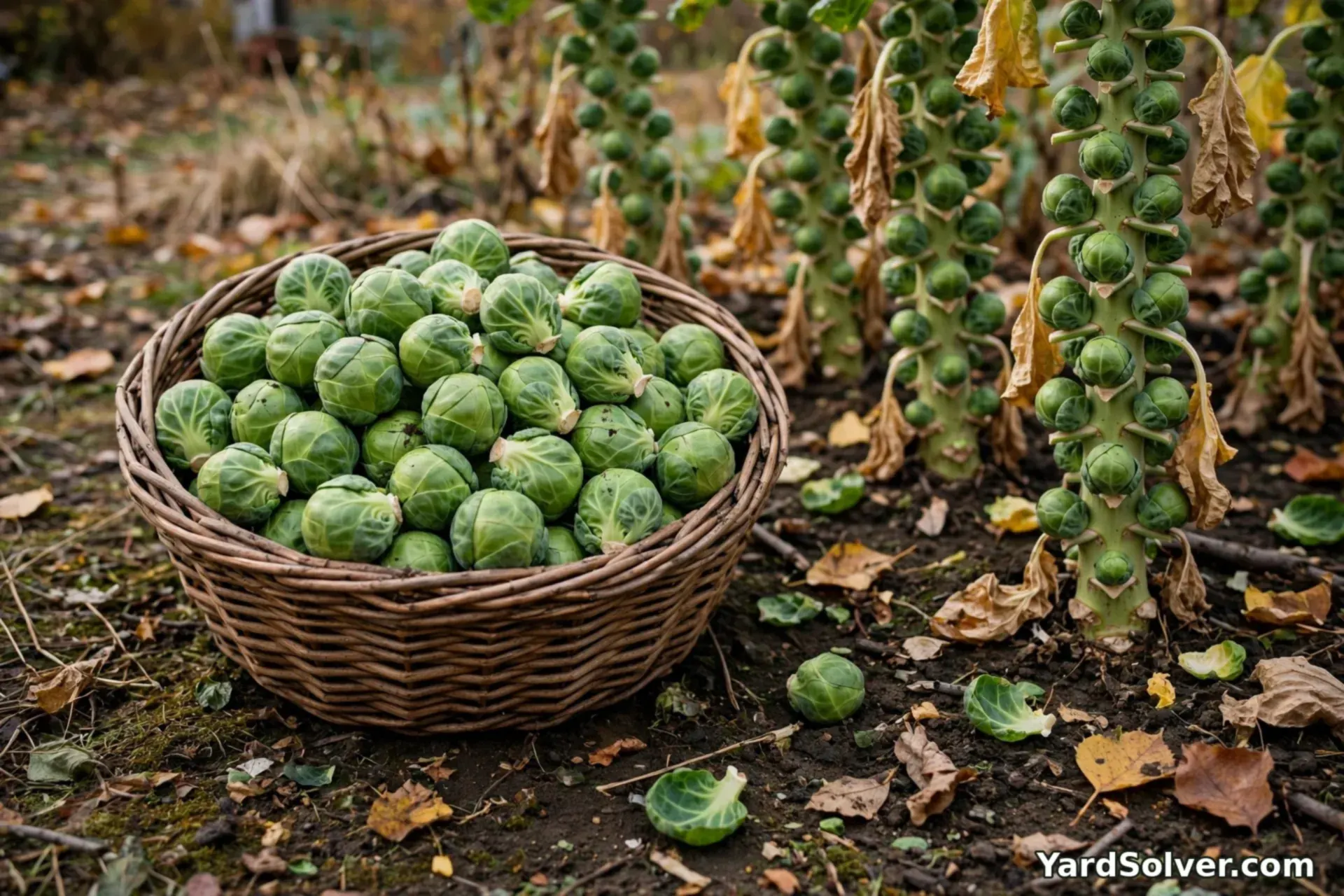
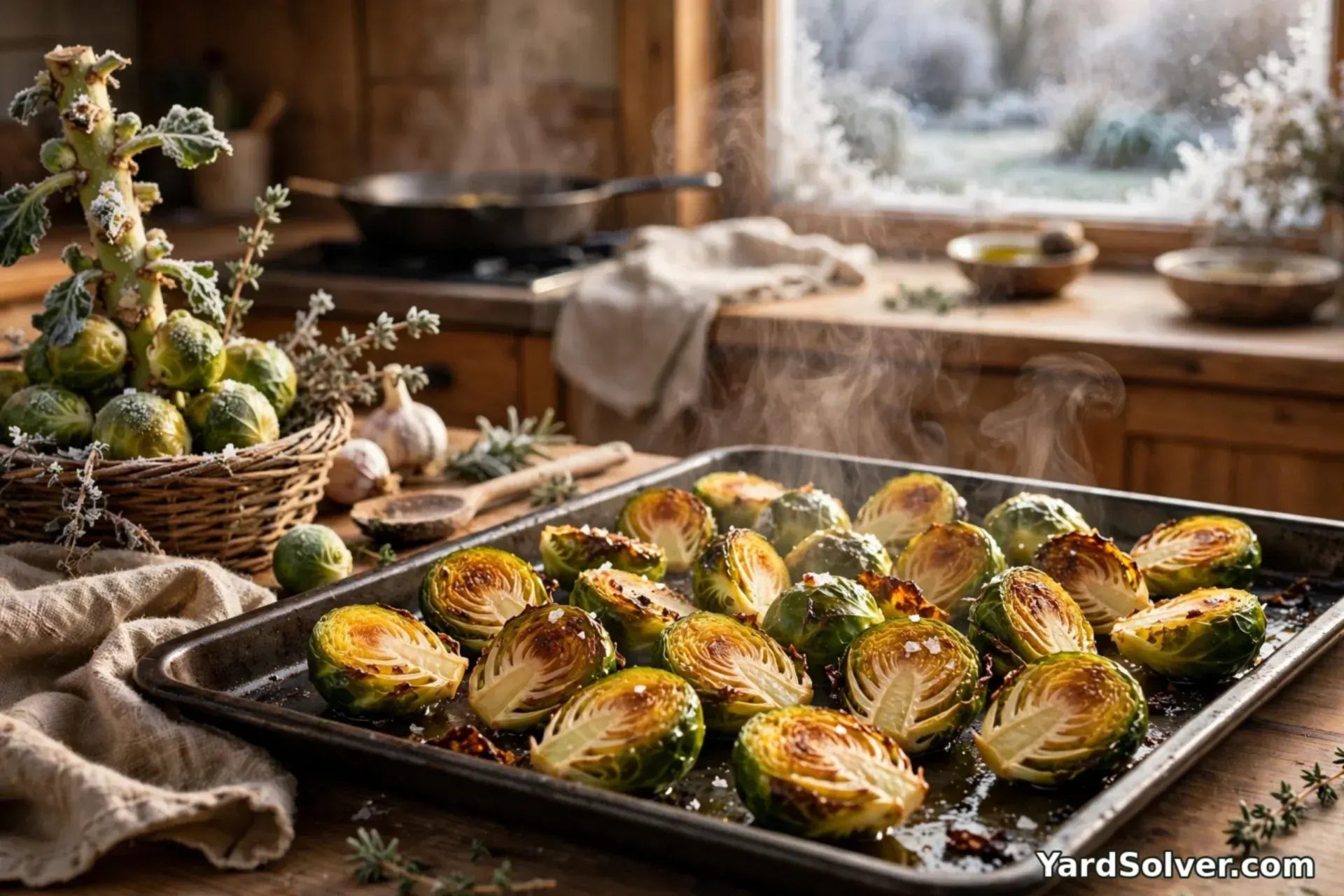
Stripped sprouts keep roughly a week in a bag in the fridge. Sprouts left on a cut stalk, stood upright somewhere cold, keep for weeks — the stalk keeps feeding them. Either way, do not wash them until cooking day, and peel off any tired outer leaves at the pan, not before. Then give the sweetness room: halve them, toss in oil and salt, and roast in a hot oven until the cut faces caramelise and the edges crisp. Frost sweetened them; the oven finishes the job. Boiling is the one method to leave behind — it is responsible for more sprout-haters than the vegetable itself ever was.
Keep going
The crop from the start: Brussels Sprouts in the Plant Library — varieties, spacing, and the long road from transplant to stalk.
Its hardy cousin: Kale — the other green that frost turns sweet.
Time next year's crop to finish as the frosts arrive: the Planting Calendar works back from your first fall frost.
Questions people ask
How cold can Brussels sprouts plants handle?
Surprisingly cold. The plants shrug off light frosts in the 28–32°F range — those are the ones that sweeten them — and established stalks can keep standing through cold down to about 20°F, according to university extension guidance. Repeated deep freezes below that will eventually damage the sprouts, but in most northern gardens the harvest runs well into late fall and often to the first lasting snow.
Do Brussels sprouts have to freeze to taste good?
No — they need cold, not a hard freeze. Cool fall weather starts the change, and a light frost or two in the 28–32°F range completes it. Picking firm sprouts after that first frosty week gives the sweet, mild flavour; picking them in warm September weather gives the sharper, more bitter taste that puts people off the vegetable.
When are Brussels sprouts ready to pick?
When they are firm, tight and about 1 to 2 inches across — roughly marble to golf-ball size. They ripen from the bottom of the stalk upward, so harvest the lowest sprouts first and keep coming back for the ones above as they size up. A sprout that has gone loose, yellow or oversized will taste strong no matter what the weather did.
Can I store Brussels sprouts on the stalk?
Yes, and it is the best storage there is. A cut stalk stood in the fridge or a cold garage keeps its sprouts fresh for weeks, because the stalk keeps feeding them. Stripped sprouts keep about a week in a bag in the fridge. In the garden, the standing plant is itself the store cupboard — many northern gardeners pick straight off the stalk until deep winter.
Comments & ratings
No comments yet.
Be the first to share your experience.