
Plant Library · Vegetables
🥬 How to Grow Brussels Sprouts
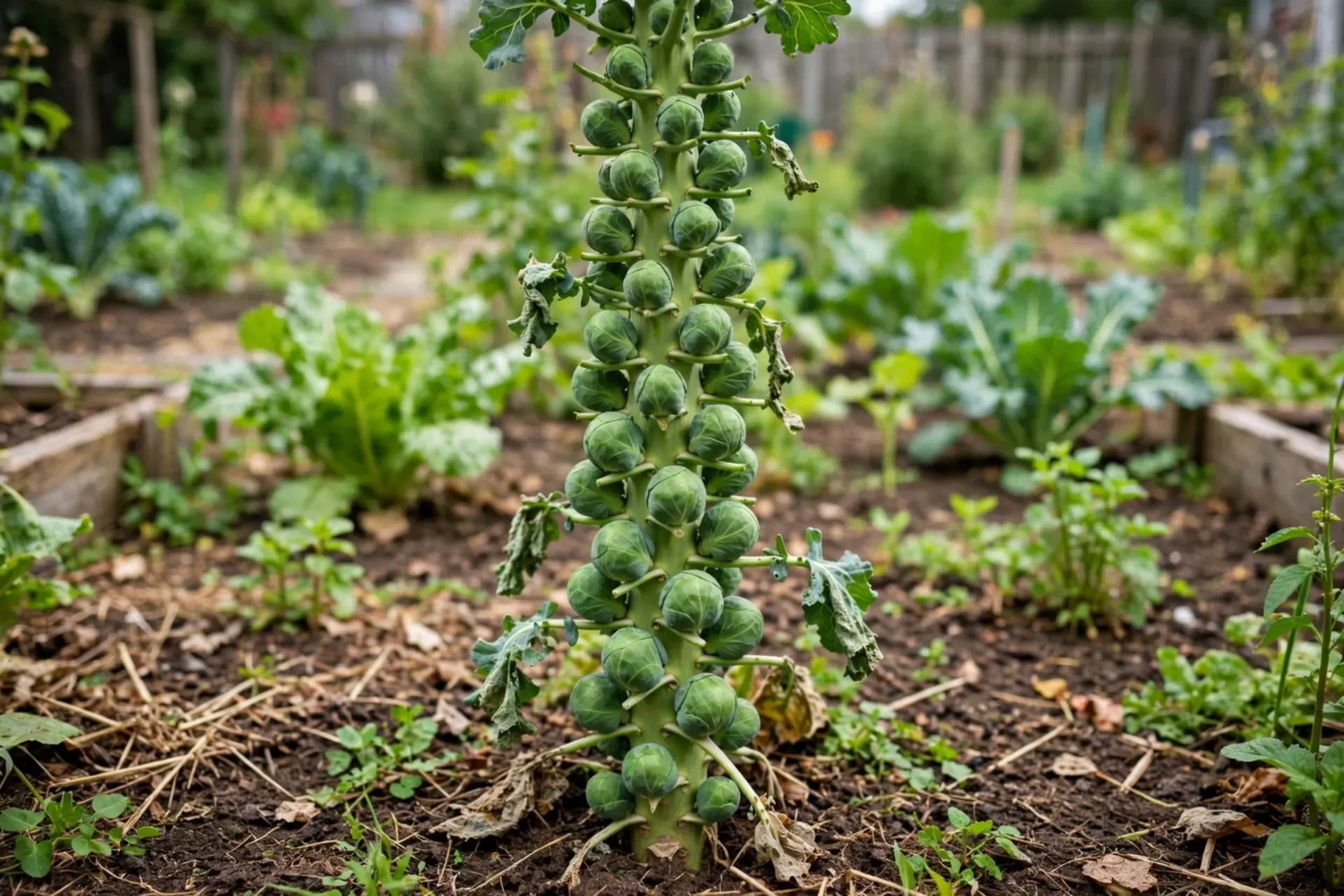
The slowest brassica, and the sweetest after frost — sprouts form up the stalk and ripen from the bottom first. Brussels sprouts are a cool-season, long-season crop: start indoors about 7 weeks before your last frost and transplant about 2 weeks before it — the plants need the whole season in the ground, and the sprouts taste best after they have been touched by fall frost.
Grow Brussels Sprouts with us — step by step
Everything for this plant is written step by step below — what to do, and exactly when. Read it through first if you like: you can grow it entirely on your own with that guide. Or start with us here — tell us your planting day and we lay out your personal schedule on this page, every next step on its own day, counted from your planting date. No guessing, no forgetting.
Step 1 — today: Plant out your young Brussels Sprouts plants today (hardened off first), spaced 18–24 in apart in firm soil, and water them in well. Starting from seed instead? Sow indoors now, 1/4 in deep, and this same schedule counts from transplant day.
Brussels Sprouts at a glance
Sow indoors: 7 weeks before last frost
Move outside: 2 weeks before last frost
Spacing: 18–24 in · Seed depth: 1/4 in
Sun: Full sun
Water: Regular and even
Harvest: 90–110 days after transplant
Timing counts from your average last spring frost — get your own dates in the Planting Calendar. Guidance follows standard extension-service practice for Canada and the US.
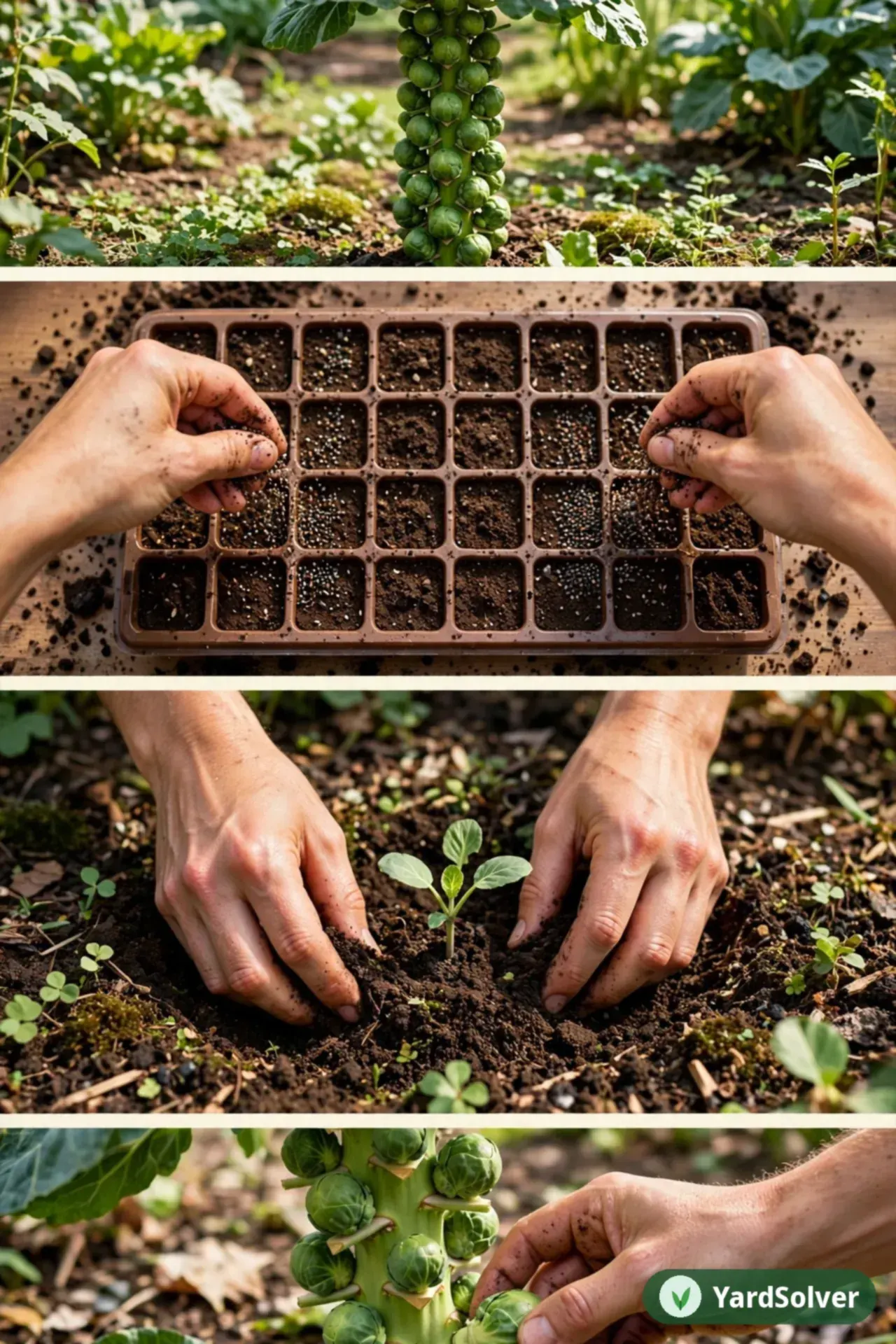
How to plant and grow brussels sprouts, step by step
Step 1 — Time it right
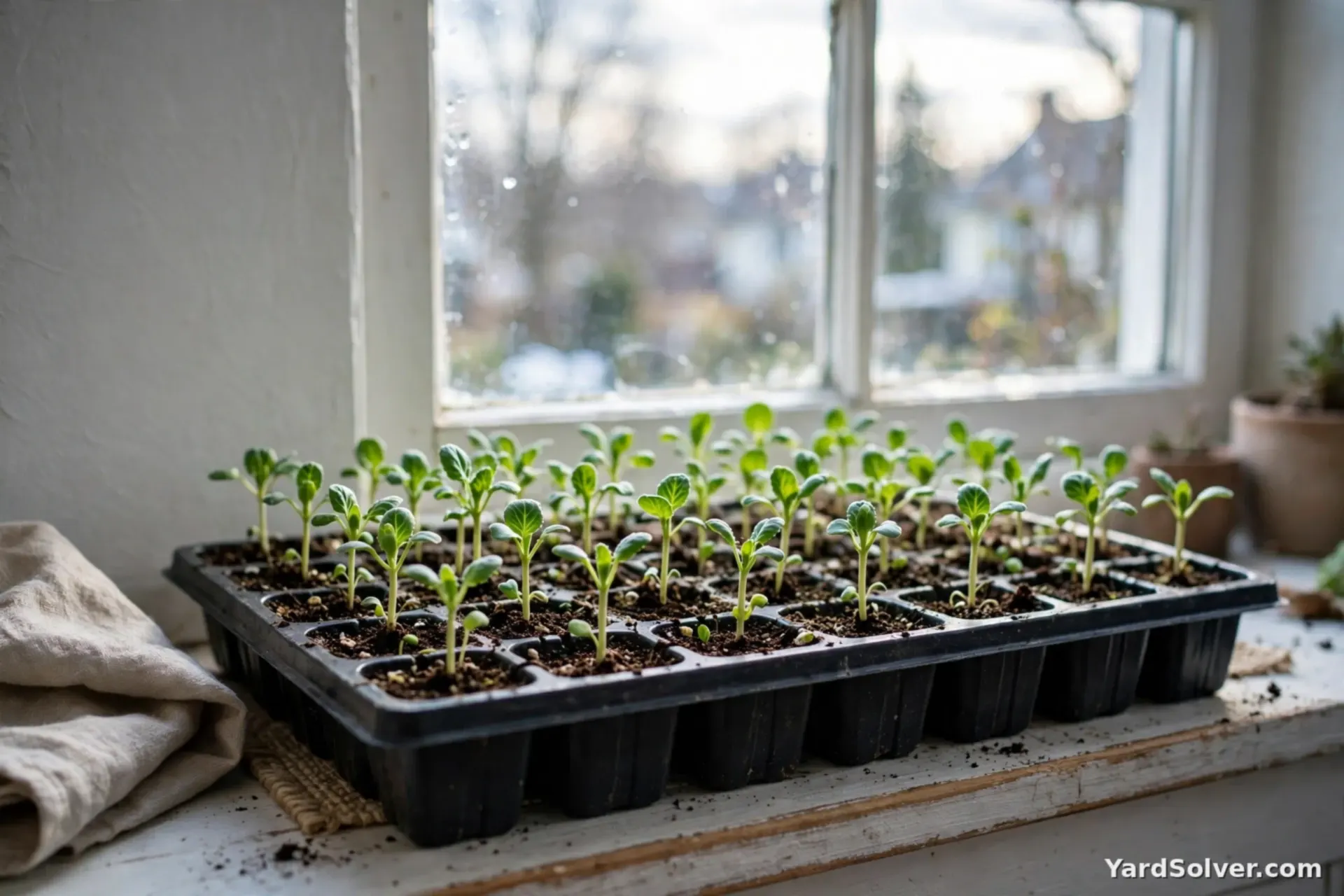
Sow indoors: 7 weeks before last frost; Move outside: 2 weeks before last frost. All dates count from your average last spring frost — the Planting Calendar turns them into real dates for your garden. Brussels sprouts are a cool-season, long-season crop: start indoors about 7 weeks before your last frost and transplant about 2 weeks before it — the plants need the whole season in the ground, and the sprouts taste best after they have been touched by fall frost.
Step 2 — Prepare the spot
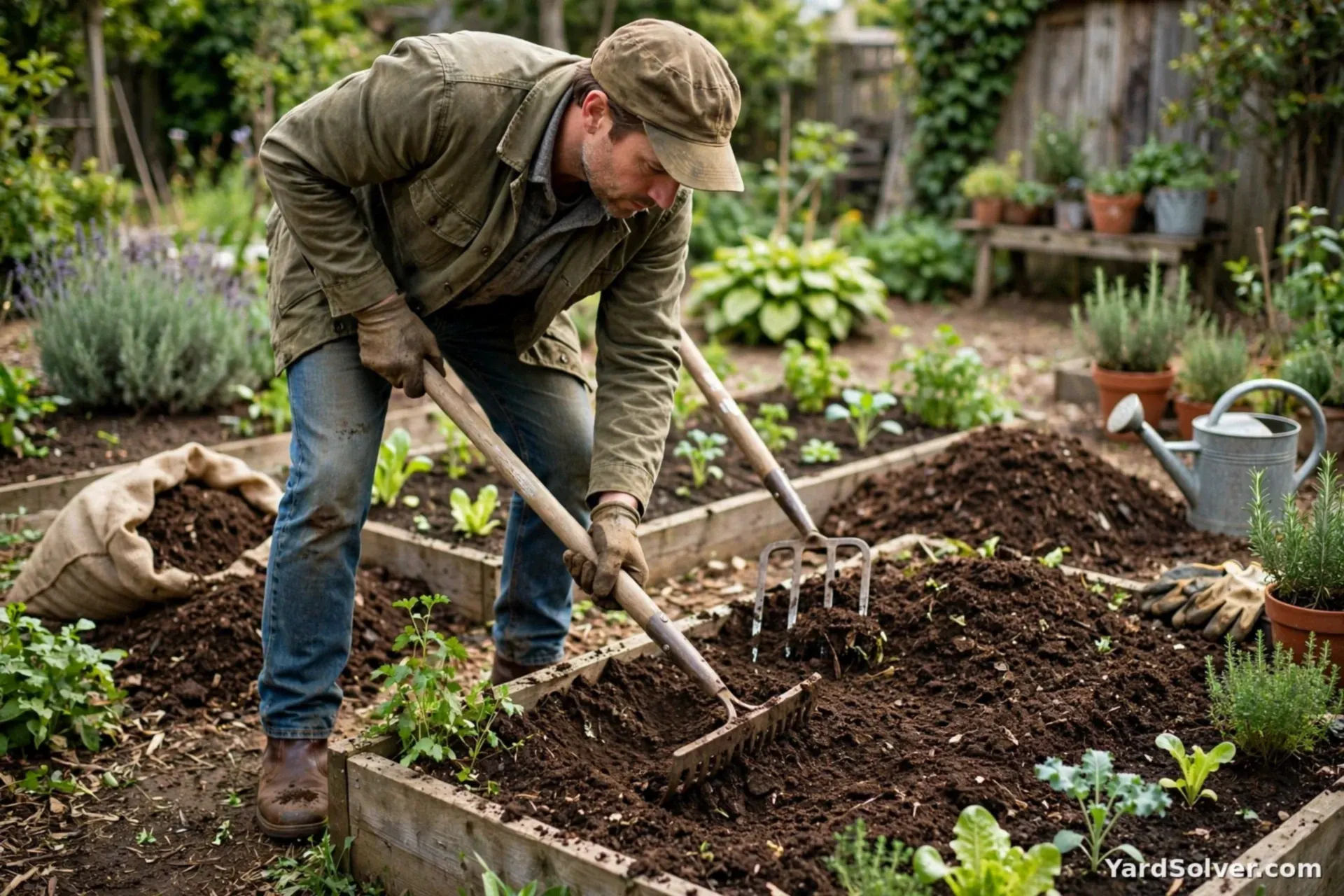
Sun: Full sun. Rich, firm soil with plenty of compost worked in before planting — firm the ground well, because a tall sprout stalk rocks loose in soft soil and then the sprouts open up. Mulch once the plants are growing. Work out how much you need with the Garden Mix Calculator or the Raised Bed Soil Calculator.
Step 3 — Sow and plant out
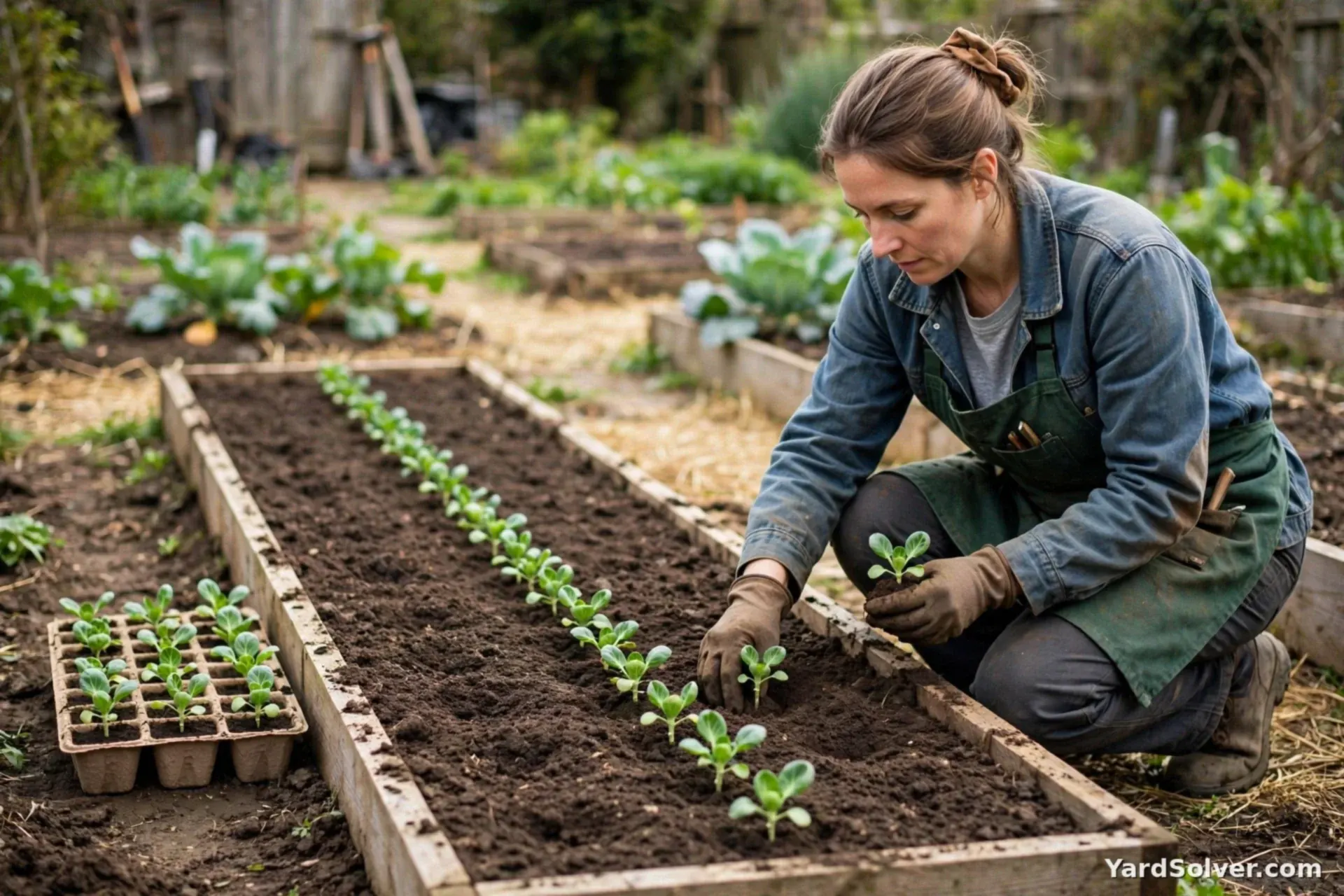
Start seed indoors 7 weeks before last frost, sowing 1/4 in deep. Grow seedlings on in strong light, then harden them off over 7–10 days (see How to Harden Off Seedlings) and move them outside 2 weeks before last frost, spaced 18–24 in apart. The Plant Spacing Calculator turns that spacing into plants-per-bed.
Step 4 — Water and feed
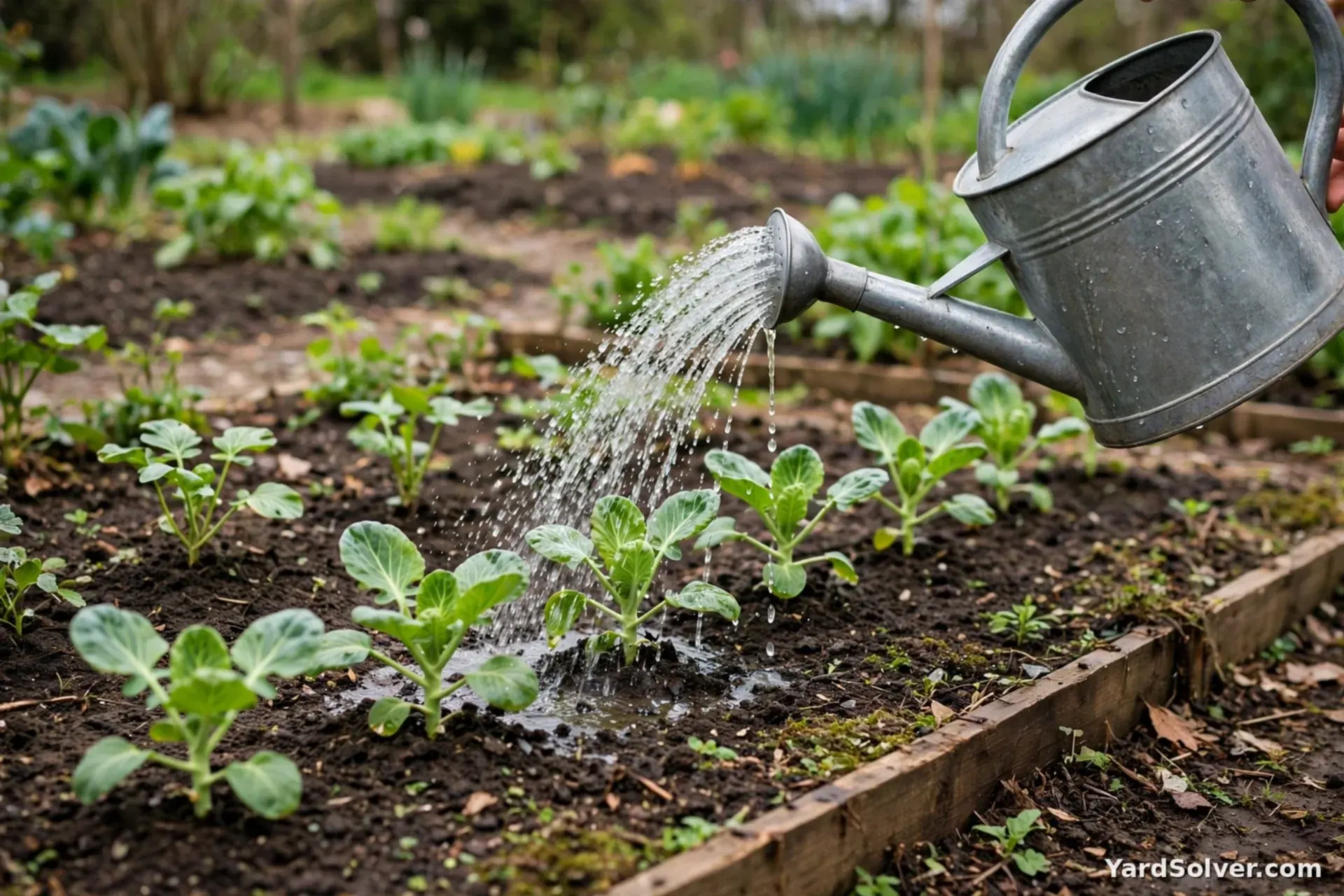
Water: Regular and even. First feed: around day 45 — Feed about six weeks after transplanting, and push a stake in beside tall plants in windy gardens — a leaning stalk makes lopsided sprouts. The Fertilizer Calculator turns a bed size into the right amount.
Step 5 — Care and the problems to watch for
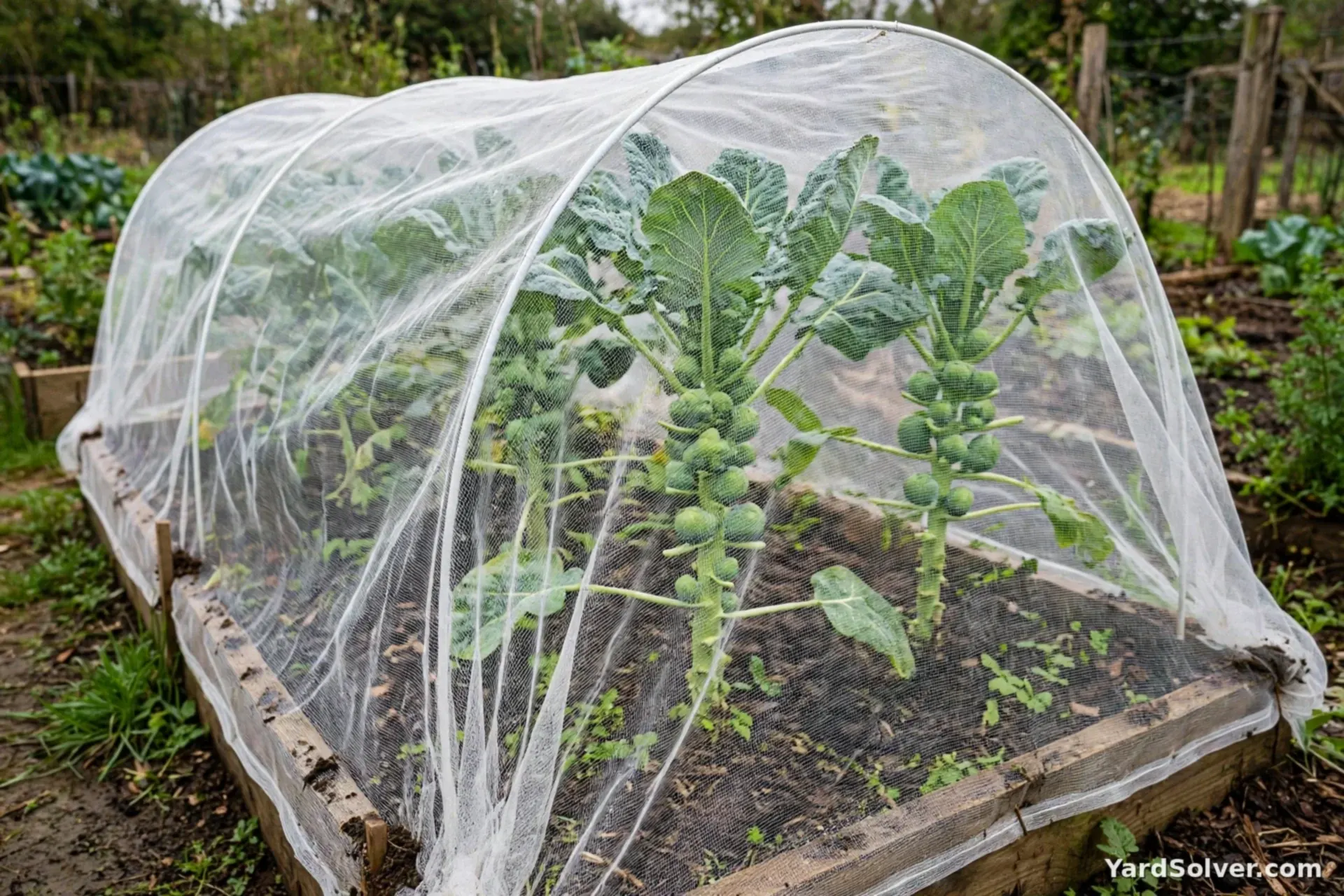
- Aphids in the sprouts — grey-green aphids hide inside the buttons; blast them off with water and encourage ladybirds.
- Loose, open sprouts — from soft soil, too much nitrogen late, or a leaning stalk; firm the ground and stake.
- Cabbage white caterpillars — check leaf undersides and cover plants with insect mesh.
Take care: Sprouts are a brassica — generous servings can cause gas until your stomach is used to them.
Step 6 — Harvest
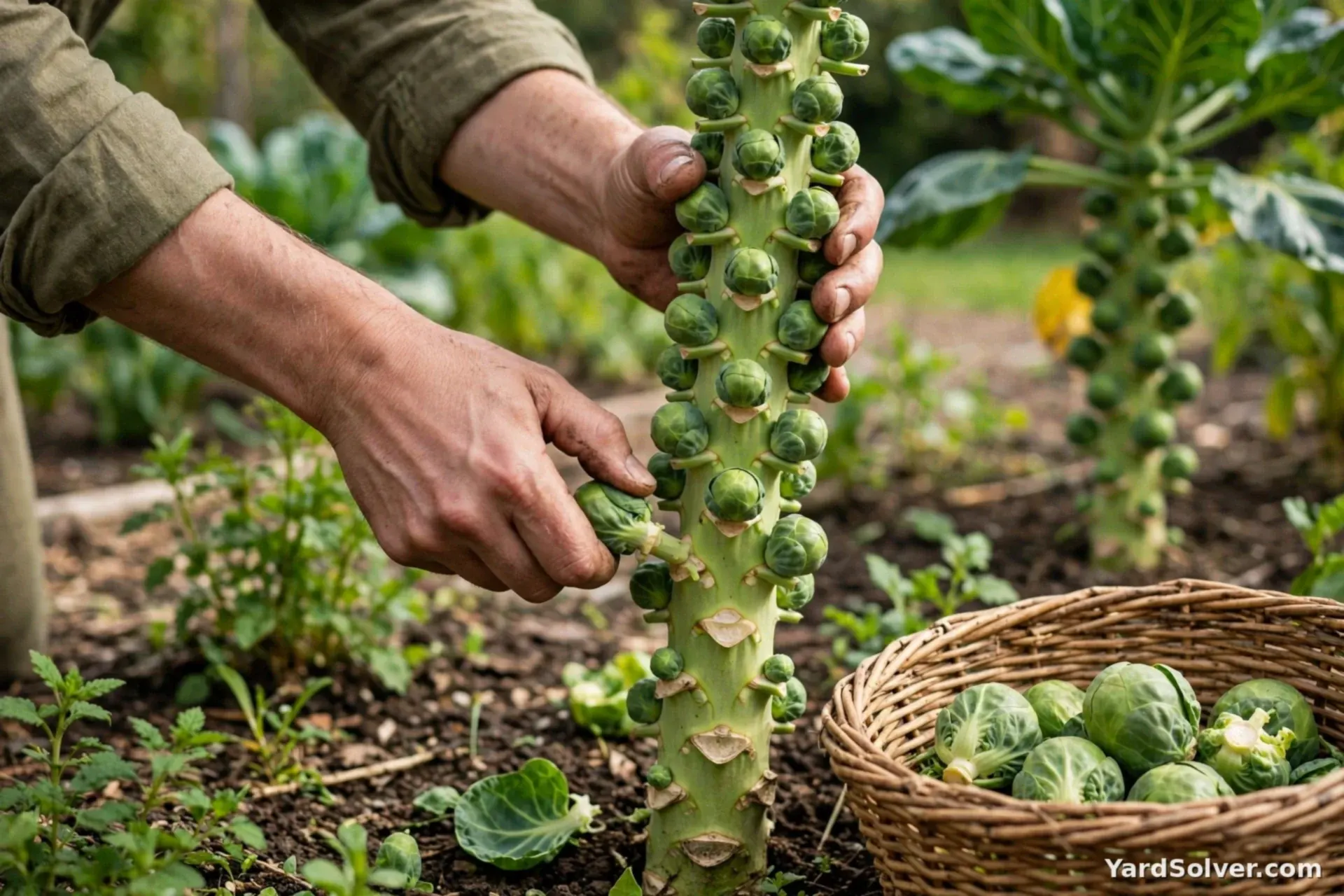
Ready in: 90–110 days after transplant. Harvest runs from about day 90 to 110 after transplant — twist off the lowest sprouts first, once they are about an inch wide and tight.
📅 Your personal Brussels Sprouts schedule
Counted from your planting day — not a generic calendar. Day 0 is the day the seed went in the ground or the young plant went out.
Varieties worth growing
| Variety | Colour | Why gardeners like it |
|---|---|---|
| Long Island Improved | Green | The old heirloom standard — reliable sprouts on sturdy, medium-height stalks |
| Jade Cross | Green | An early hybrid that suits shorter seasons |
| Diablo | Green | Tall and hardy, bred for fall and winter picking |
| Rubine | Red-purple | Red sprouts that look striking on the plant — cook them lightly to keep the colour |
| Hestia | Green | Handles warmer early weather better than most, for an earlier start |
Good for you — and take care
Benefits
- Provides vitamin C and a lot of vitamin K
- Provides folate and fibre
- One of the cruciferous vegetables, a family linked with many health studies
- Low in calories
- Provides small amounts of iron and potassium
Take care
- Generous servings can cause gas and bloating
- People who take blood thinners: Brussels sprouts are rich in vitamin K, so keep portions steady and mention big changes to your doctor
A little history — and one good fact
Brussels sprouts were bred near Brussels in Belgium, where growers selected a cabbage that made dozens of little buds along one tall stalk — they were being grown there by the 1200s and were famous across Europe by the 1700s.
Fun fact: A single sprout stalk can carry 50 or more sprouts — and they ripen from the bottom up, so one plant gives pickings for weeks.
Keep going
Guides: When to Start Seeds Indoors · How to Protect Plants from Frost · How to Get Rid of Aphids · Brussels Sprouts After Frost
Calculators: Plant Spacing Calculator · Seed Calculator · Fertilizer Calculator · Garden Mix Calculator
More vegetables: Cabbage · Mustard Greens · Kale
← Back to the Plant Library · Get your personal planting dates
Questions people ask
When do I plant brussels sprouts?
Count from your average last spring frost: sow indoors 7 weeks before last frost; move outside 2 weeks before last frost. Brussels sprouts are a cool-season, long-season crop: start indoors about 7 weeks before your last frost and transplant about 2 weeks before it — the plants need the whole season in the ground, and the sprouts taste best after they have been touched by fall frost.
How far apart do I space brussels sprouts?
Space plants 18–24 in apart, with seed sown 1/4 in deep. Sun: full sun.
When is brussels sprouts ready to harvest?
90–110 days after transplant. The slowest brassica, and the sweetest after frost — sprouts form up the stalk and ripen from the bottom first.