
Guides · Lawn care · Published November 10, 2026
Dormant Seeding: Plant Grass Seed in Winter for Spring
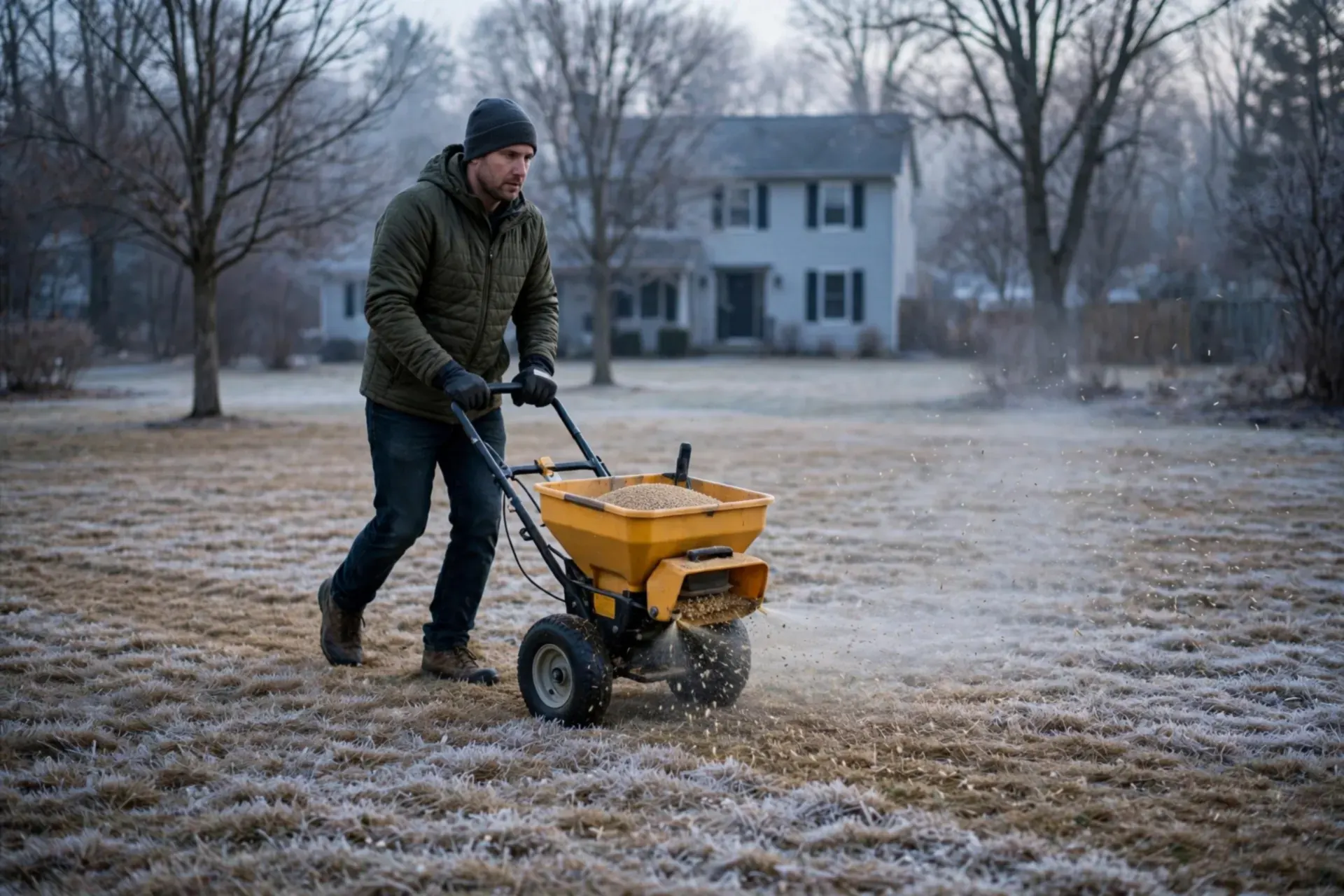
It sounds like a mistake: grass seed spread on cold ground in the middle of winter. It is actually an old extension-service method with a name — dormant seeding. The seed goes down after the soil is too cold for it to sprout, sits there through the freeze and thaw, and germinates the moment spring warms the soil — weeks before you could work the ground for a normal spring seeding. It suits bare patches and thin lawns in cold-winter country, it takes twenty minutes, and winter does the hardest part of the job for you. Here is how it works, and the rules that decide whether it works.
Step 1 — Check the soil, not the calendar
The one number that matters: soil temperature below 40°F (about 4°C), measured a couple of inches down. Below that, cool-season seed cannot germinate, so it cannot be tricked into sprouting by one warm afternoon and then killed by the returning cold. Push a soil thermometer or a kitchen probe in on a few mornings running; when it reads under 40 every time, you are in the window. In most northern states that window runs from about November to mid-March, with mid-December to mid-February the safest stretch. University extension programs are blunt about the other end too: sow too early, on soil still warm enough to sprout, and the young seedlings die over winter — that failed version is how the method gets a bad name.
Step 2 — Do the prep in fall, before the ground freezes
Seed-to-soil contact is the whole ballgame, and in mid-winter the ground is too hard to fix a bad seedbed. So the prep happens on a workable late-fall day, before the freeze locks in: mow the patch short, rake bare spots hard enough to scratch the soil surface, and pull up thatch where it mats. On a whole thin lawn, core aerating first gives the seed thousands of little pockets to fall into — the same prep as How to Overseed Your Lawn, just done a season earlier in the story. Then wait for your Step 1 soil readings before any seed comes out of the bag.
Step 3 — Sow at the dormant rate
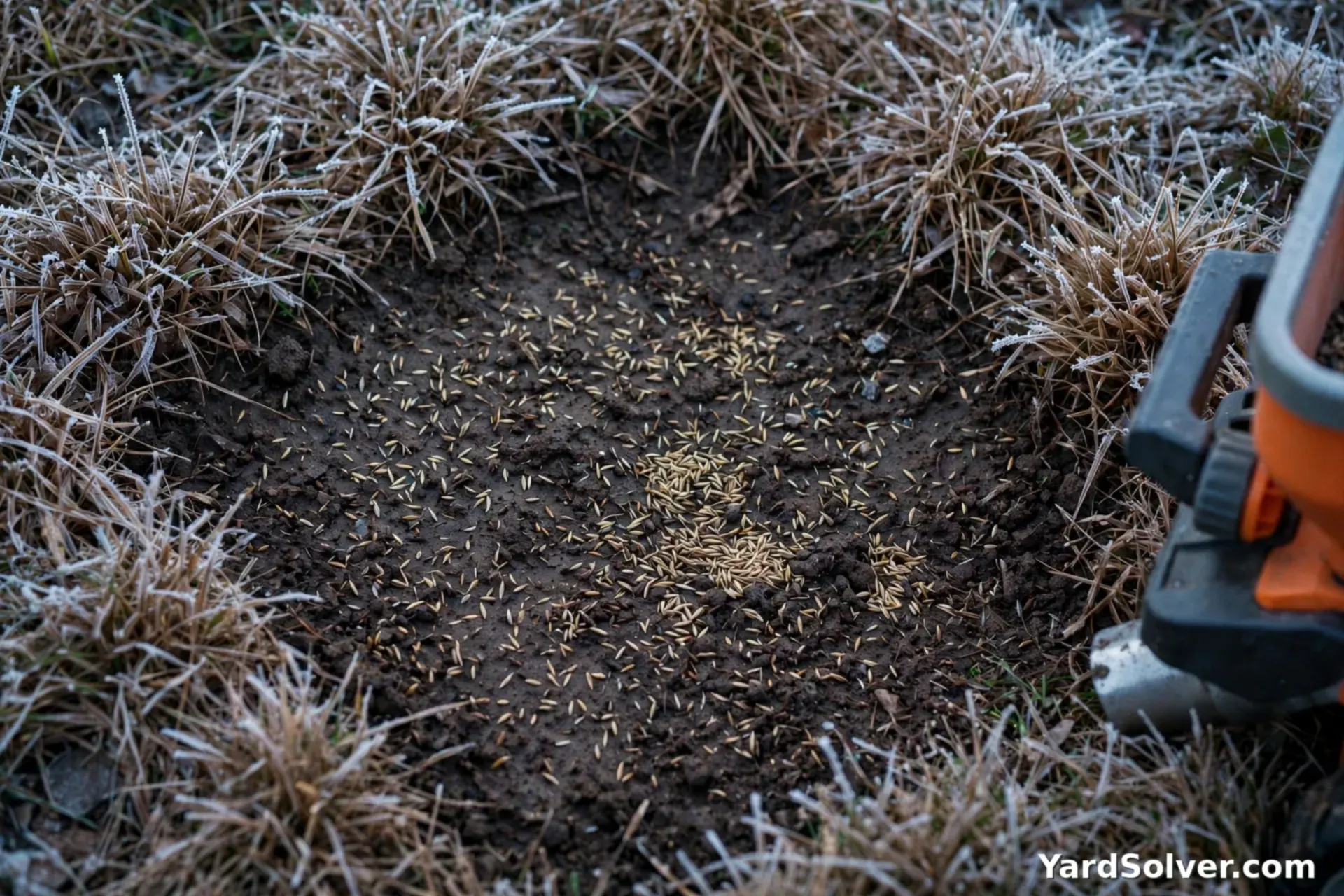
Use the standard rate for your grass — dormant seeding does not call for a heavier hand, just a small reserve in the bag. Extension rates per 1,000 square feet:
| Grass | Bare ground | Into a thin lawn |
|---|---|---|
| Kentucky bluegrass | 2–3 lb | 1–2 lb |
| Tall fescue | 6–8 lb | 3–4 lb |
| Blends and mixes | Use the rate printed on the bag — it is set for the mix | |
Run your lawn's size through the Seed Calculator to turn those rates into the pounds you actually need to buy. Then buy 10–20 percent extra, as the University of Minnesota advises — but keep that extra in the bag, dry, for spring patching. It is your repair kit, not part of the spreading.
Step 4 — Let winter press the seed in for you
Now the part that feels wrong and works anyway: you do nothing. Winter's freeze and thaw cycles swell and settle the soil surface over and over, and the seed gets worked into exactly the shallow contact with the soil it needs — the same job a slit-seeder or a spring raking would do, done by the weather for free. Two limits. Do not sow onto snow cover: melting snow carries seed downhill and pools it in the low spots, and seed sitting on snow has no soil contact at all. And avoid steep slopes for the same reason — a hard rain on frozen ground moves seed before the thaw can tuck it in. Flat or gentle ground, bare and cold, is the whole requirement.
Step 5 — Follow the spring rules
When the soil warms in spring, the seed wakes on its own — often weeks ahead of any lawn seeded the normal spring way, and ahead of most weed seed too. Three rules protect the head start. First, skip the crabgrass pre-emergent on dormant-seeded ground: those products stop grass seed from sprouting just as happily as crabgrass, unless the label specifically says it is safe at seeding. Second, if spring turns dry just as the sprouts appear, water lightly — the seedlings have almost no roots yet. Third, patch honestly: walk the lawn when the new grass is up, spread your reserved seed on the spots that missed, and give thin areas a light starter feed using the Fertilizer Calculator for the dose. Mow new growth once it reaches about 3½ inches, cutting it back to 3.
Keep going
Missed the cold window? The normal-season version is How to Overseed Your Lawn — same prep, warm soil, a moisture rule instead of a frost rule.
Planning the whole lawn year? The Planting Calendar puts dormant seeding and every other dated job in one place.
Questions people ask
Will grass seed rot or get eaten over winter?
Some seed is always lost — to birds, to washing, to a patch that stays too wet. Extension services treat that as part of the method, not a failure of it: buy 10–20 percent more seed than the rate calls for, but hold that extra back in the bag and use it for spring patching rather than spreading it all in winter.
Can I dormant seed in the South?
No. Dormant seeding is a cool-season grass method — Kentucky bluegrass, tall fescue, fine fescue, perennial ryegrass — for lawns that get a real cold winter. Warm-season grasses like bermuda and zoysia need warm soil and a long growing season; seed them in spring and summer instead.
What if a warm week shows up in January?
Usually nothing — a few warm afternoons barely move soil temperature at seed depth, and the seed reads the soil, not the air. A long warm spell that pushes soil past about 50°F can start germination, and seedlings caught by the returning freeze may die. That is the known risk of the method, and slow-sprouting Kentucky bluegrass is the safer choice where winters yo-yo.
Comments & ratings
No comments yet.
Be the first to share your experience.