
Guides · Fall planting · Published November 10, 2026
Hardneck vs Softneck Garlic: Which Should You Grow?
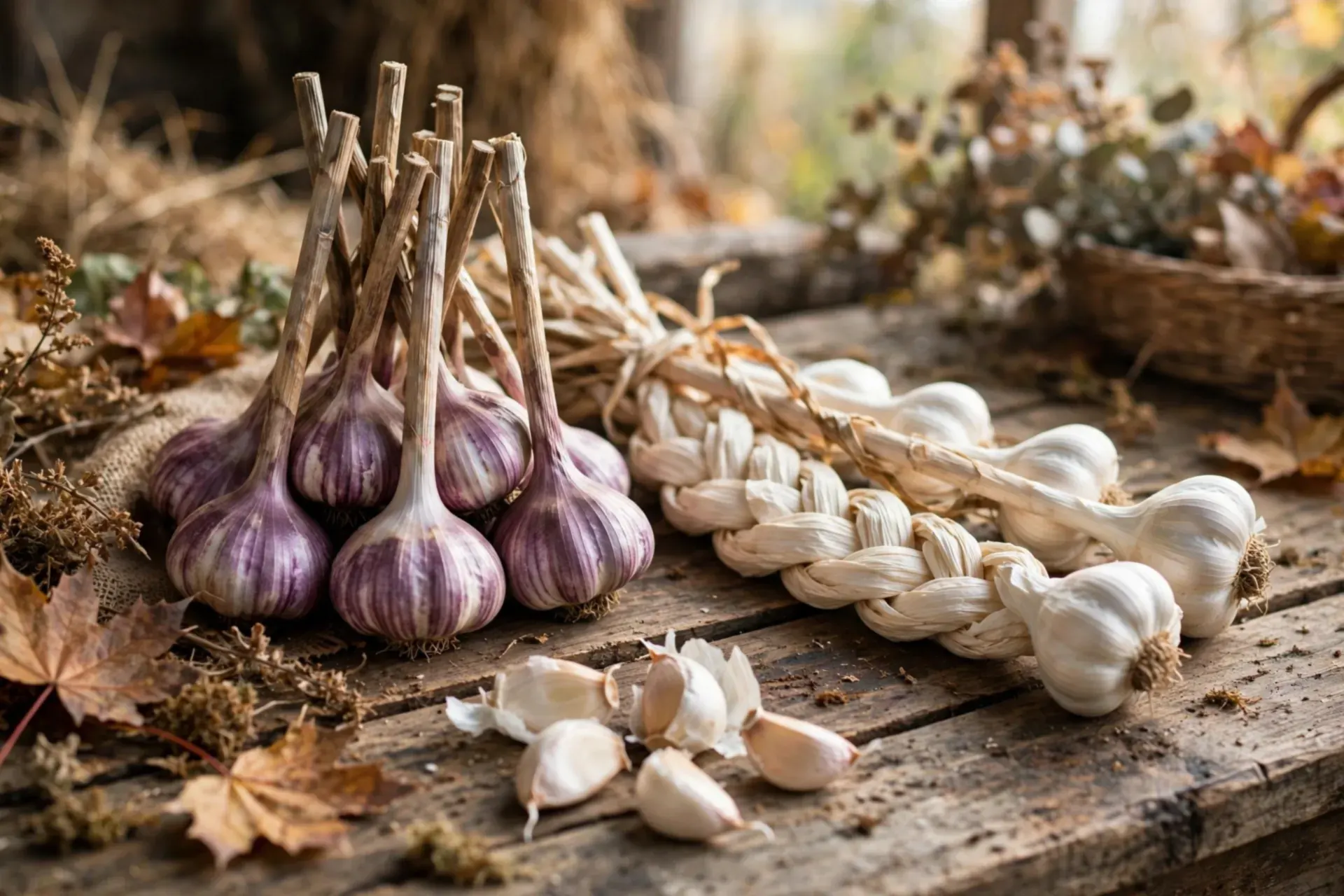
Every bag of seed garlic in the fall catalogue is one of two kinds, and the choice is not really about taste or fashion. It is about your winter. Hardneck garlic is built for real cold and sulks without it; softneck is built for mild winters and long storage, and it is the garlic in every grocery store braid you have ever seen. Pick the kind your winters favour and garlic is one of the easiest crops in the garden. Pick against your climate and you get small, sulky bulbs. Here is the side-by-side, then the short decision.
The two kinds, side by side
| Hardneck | Softneck | |
|---|---|---|
| Best in | Zones 3–7 — winters with real cold | Zones 8–10 — mild winters (zone 7 grows both) |
| Cloves | 4–12 large cloves in one ring | 10–20+ smaller cloves in layers |
| Stalk | Stiff stalk up the middle of the bulb | Soft stem — the kind that braids |
| Scapes | Yes — a curly flower stalk in late spring | None |
| Cold it needs | 6–8 weeks below about 40–45°F to split into cloves | Little to none |
| Storage | About 4–6 months | About 9–12 months |
| Flavour | Richer, often hotter raw; peels easily | Milder; the store-bought standard |
The single most useful line is the cold one. Hardneck that never gets its weeks of cold often grows one round, undivided bulb instead of proper cloves — the plant is not sick, it is just waiting for a winter that never came.
Step 1 — Read the bulb before you plant it
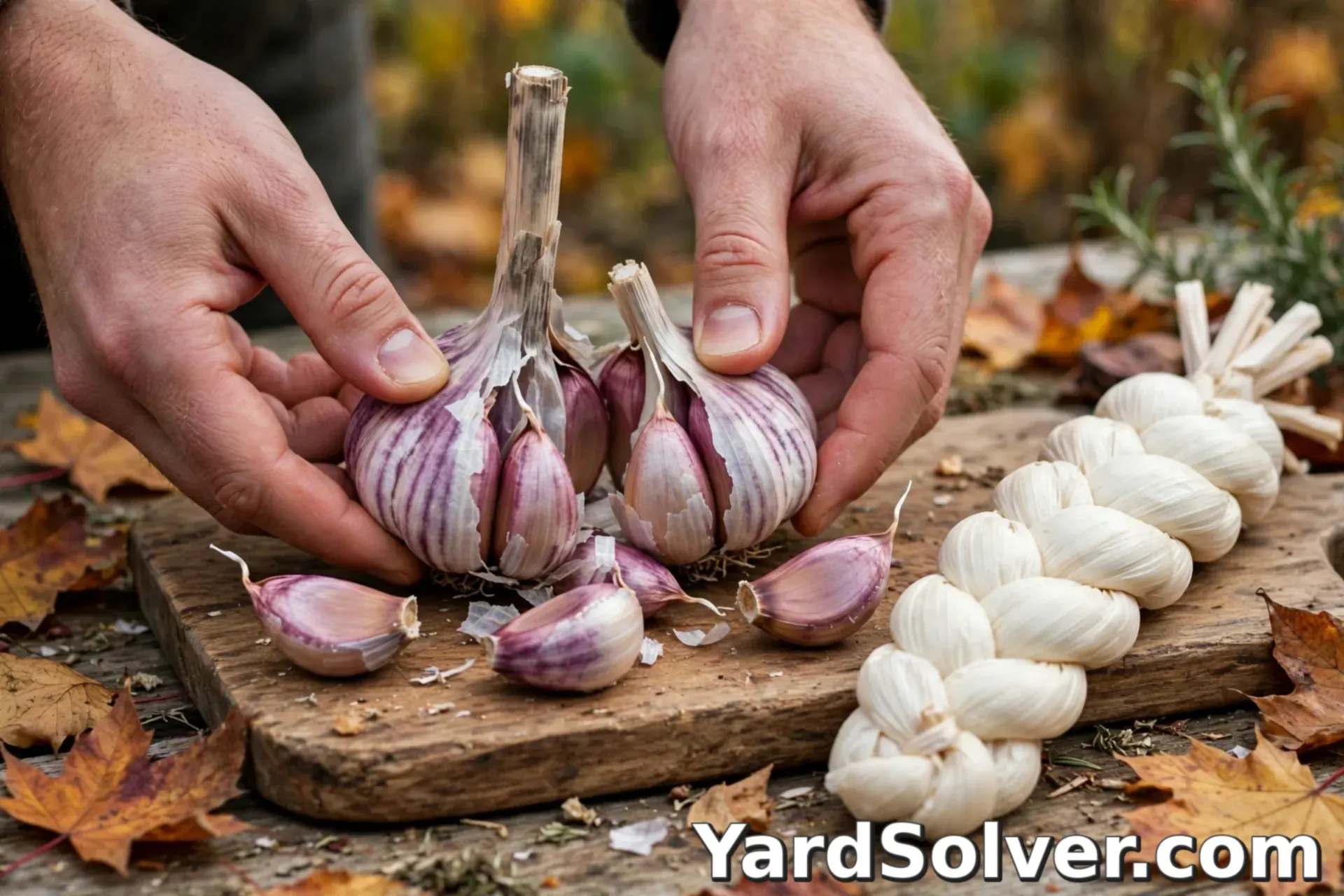
You can tell the kinds apart in your hand. A hardneck bulb opens into a single ring of big, even cloves around a hard central stalk — snap one open and the structure is obvious. A softneck has no stalk to speak of, and its cloves come in layers: a ring of larger outer cloves with smaller ones packed in the middle. Knowing which you are holding matters at planting time too, because the outer, fattest cloves grow the biggest bulbs — with softneck, save the tiny centre cloves for the kitchen and plant the outer ring.
Step 2 — Match the kind to your winter
The rule is short. If your winters bring weeks of proper cold — zones 3 to 7 — grow hardneck: it is the more cold-hardy kind, it expects the freeze, and it rewards you with scapes in June and cloves worth peeling. If your winters are mild — zones 8 to 10 — grow softneck: hardneck down there often refuses to divide without its cold weeks, while softneck asks for almost none. Zone 7 is the overlap, where both do well. One trick crosses the line a little: in a mild winter you can chill hardneck bulbs in the fridge at about 40°F for 6 to 8 weeks before planting, faking the cold it needs. It works often enough to be worth an experiment, not often enough to bet the whole bed on.
Step 3 — Weigh scapes and storage before you order
Two honest trade-offs sit on top of the climate rule. Scapes: only hardneck gives you the June bonus crop — the curly stalks, cut at one full curl, that send the plant's energy back into the bulb and make a fine pesto. Gardeners who love scapes plant hardneck even at the mild edge of its range. Storage: softneck wins by months. A hardneck bulb keeps about 4 to 6 months before it sprouts or softens, so plan to eat it by mid-winter; a softneck keeps 9 to 12 months and can carry you right through to the next harvest. If you grow one big crop to eat all year, that storage line may matter more than flavour. Many northern gardeners split the difference: hardneck to eat first, softneck as the keeper.
Step 4 — Plant your pick the fall way
Both kinds plant the same way, and the timing is the fall way: 4 to 6 weeks before the ground freezes hard, pointy end up, about 2 inches deep. The Garlic plant page carries the full growing notes, How to Plant Garlic in Fall walks the planting day itself, and the Plant Spacing Calculator works out how many cloves your bed length needs at the usual 6-inch spacing — handy, because “one pound of seed garlic” means very different plant counts for the two kinds.
Keep going
The planting itself: How to Plant Garlic in Fall — depth, spacing and the mulch question.
Full growing notes for the crop live on the Garlic plant page.
Questions people ask
Which garlic tastes better?
Most cooks give the flavour edge to hardneck — richer and often hotter raw, with big cloves that are quick to peel for cooking. Softneck is the garlic of most grocery stores: milder, and bred for shipping and shelf life rather than depth of flavour. If you roast whole heads or eat it raw, hardneck is the usual favourite.
Can I grow hardneck garlic in a warm climate?
You can try, with the fridge trick: chill the bulbs at about 40°F for 6 to 8 weeks before planting, to stand in for the winter cold it is missing. Results are still less reliable than softneck in warm zones — expect some small or undivided bulbs — so most warm-climate gardeners grow softneck as the main crop and treat hardneck as an experiment.
What are garlic scapes, and do I cut them?
Scapes are the curly flower stalks hardneck garlic sends up in late spring. Snap or cut each one when it has made about one full curl: the plant then puts its energy back into the bulb, and the scapes themselves are good eating — mild, green and made for pesto. Softneck garlic makes no scapes at all.
Comments & ratings
No comments yet.
Be the first to share your experience.