
Guides · Fences and projects · Published November 10, 2026
How Deep Should Fence Posts Be? Depth by Frost Line
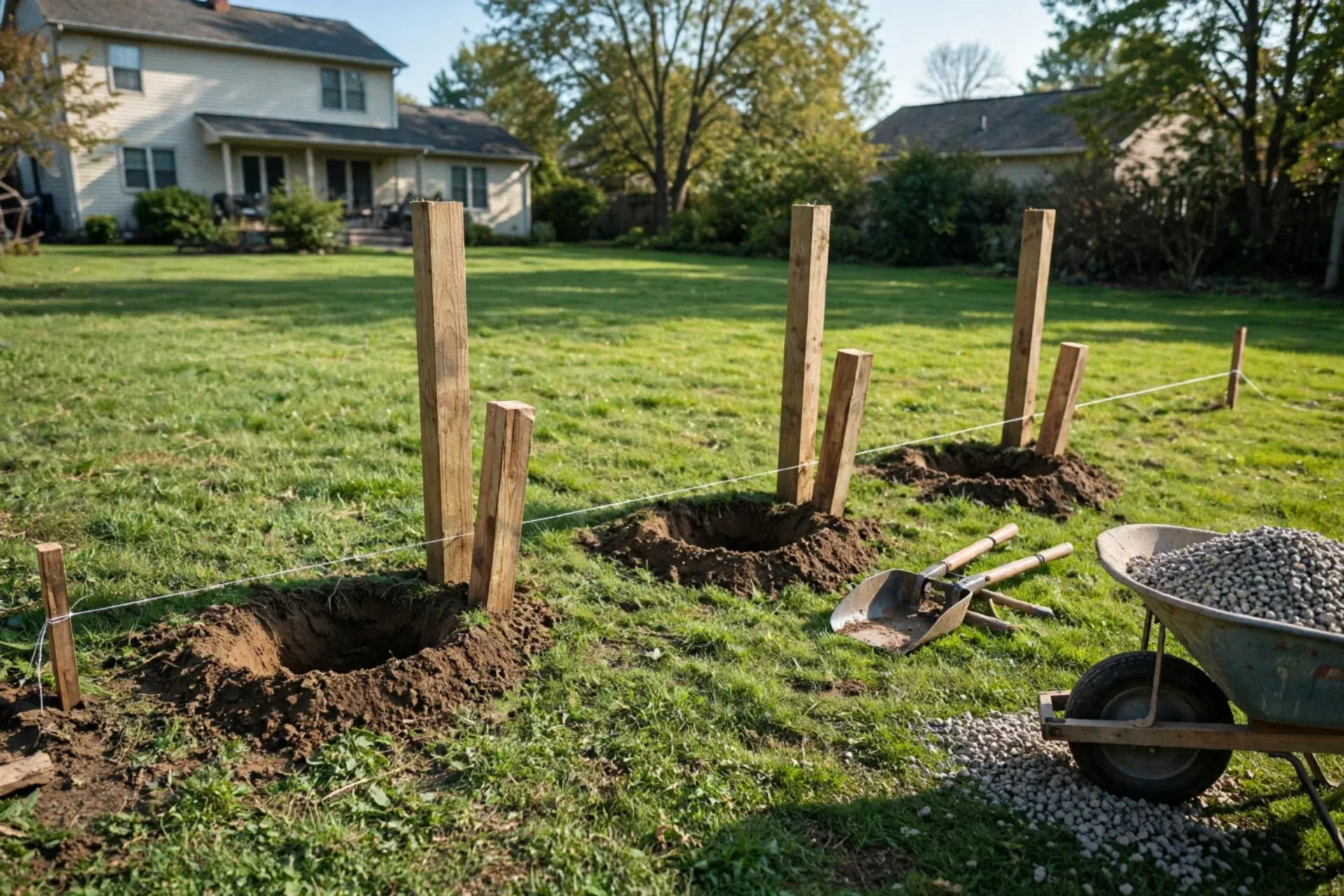
Ask ten people how deep a fence post should go and you will hear ten numbers. The truth is simpler than the argument: two rules decide it, and you take the deeper of the two. The first rule comes from the post itself — bury about a third of its length. The second comes from your climate — the bottom of the post has to sit below the frost line, the depth your ground freezes to in winter. Add 6 inches of gravel under the post for drainage, and that is the whole subject. Everything below is working those rules out for your fence, your soil and your winters.
Depth at a glance
| Fence height | Post to buy | Buried depth | Hole depth (with gravel) |
|---|---|---|---|
| 4 ft | 6 ft | 24 in | 30 in |
| 6 ft | 8 ft | 32 in | 38 in |
| 6 ft, deep-frost country | 10 ft | 42–48 in | 48–54 in |
| 8 ft | 12 ft | 48 in | 54 in |
Buried depth is a third of the post, or below your frost line — whichever is deeper. Gate, corner and end posts go about 6 inches deeper than the posts between them.
Rule one: a third of the post underground
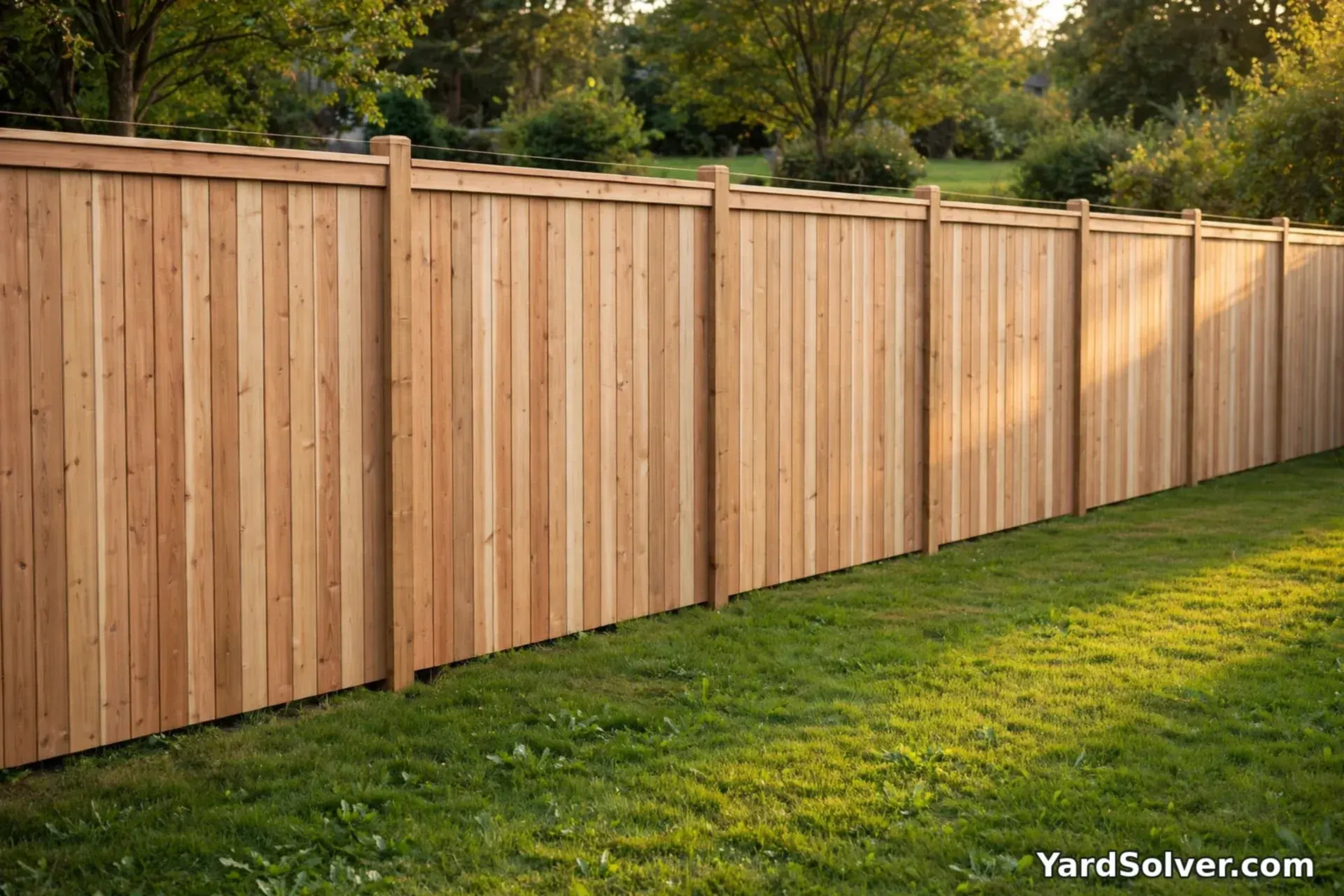
A fence is a sail on sticks. Wind pushes the whole panel, and all that push lands on the buried part of the post, levering against the soil. The longer the buried part, the more soil it has to lever against, and the steadier the fence. The old builder's rule — bury a third of the post's total length — balances that lever well for ordinary fences. For the common pairing of an 8-foot post and a 6-foot fence, it puts about 32 inches in the ground and 64 inches above it. Shorter fences still deserve a floor of about 24 inches buried: a 4-foot garden fence on a 6-foot post gets its full third, and nothing worth building should sit shallower than that. Tall, solid privacy fences catch the most wind and sit at the demanding end of the rule; open styles like split rail or chain link catch less and can live at the easy end. When in doubt, the error to make is deeper.
Rule two: beat your frost line
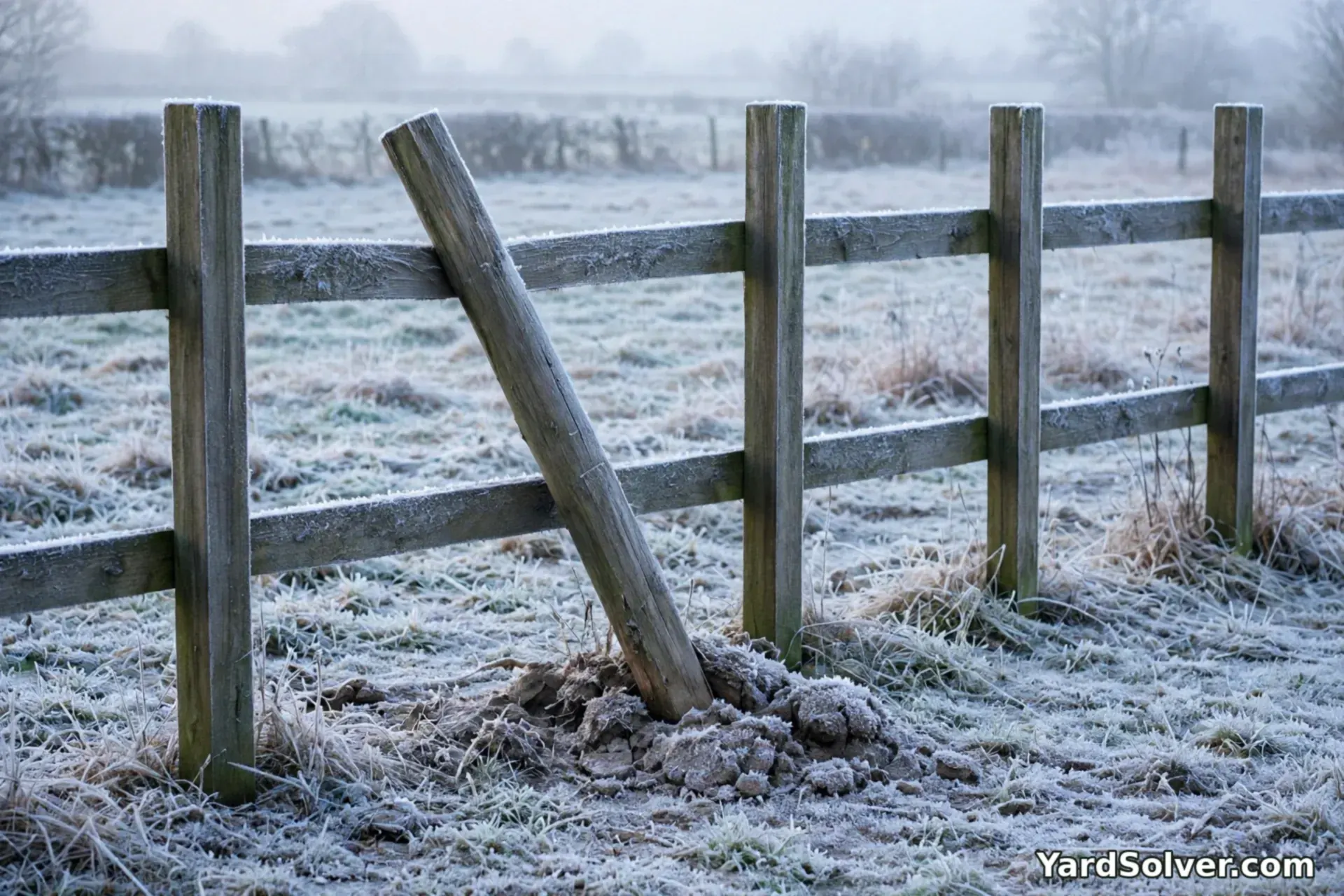
In cold country, the second rule takes over. Soil freezes from the top down to a depth called the frost line. If a post ends above that line, the freezing soil under and around it expands and grips the post, lifting it a fraction of an inch — frost heave. It rarely settles back level. A few winters of small lifts and the line is wavy and the posts lean. The fix is simply to end the post below the frost line, in soil that never freezes, so there is nothing under it left to push. Frost depth varies enormously: a few inches or nothing in the deep South, roughly 24–36 inches across much of the middle of the country, and 42–60 inches in the northern plains, New England and much of Canada. There is no honest national number — your city or county building office, or your local extension service, publishes the figure for your address, and it is worth the two minutes to look it up before you dig, not after.
Step 1 — Work out your depth before you dig

Take the bigger of your two numbers. Fence height gives you the post and its third; your frost line gives you the floor. If the frost line is deeper, buy longer posts rather than burying a short post shallow — a 6-foot fence on a 42-inch frost line wants 10-foot posts. Then add the specials: gate posts, corner posts and end posts carry the pull of the whole run and the weight of a swinging gate, so give them about 6 extra inches and consider the next post size up. Mark each post with tape at the ground line before you start, so a glance tells you when a hole is deep enough. Counting posts, rails and concrete for the whole run is exactly what the Fence Calculator does — run your fence length through it before you order, not after the third trip to the store.
Step 2 — Dig the hole, and gravel the bottom
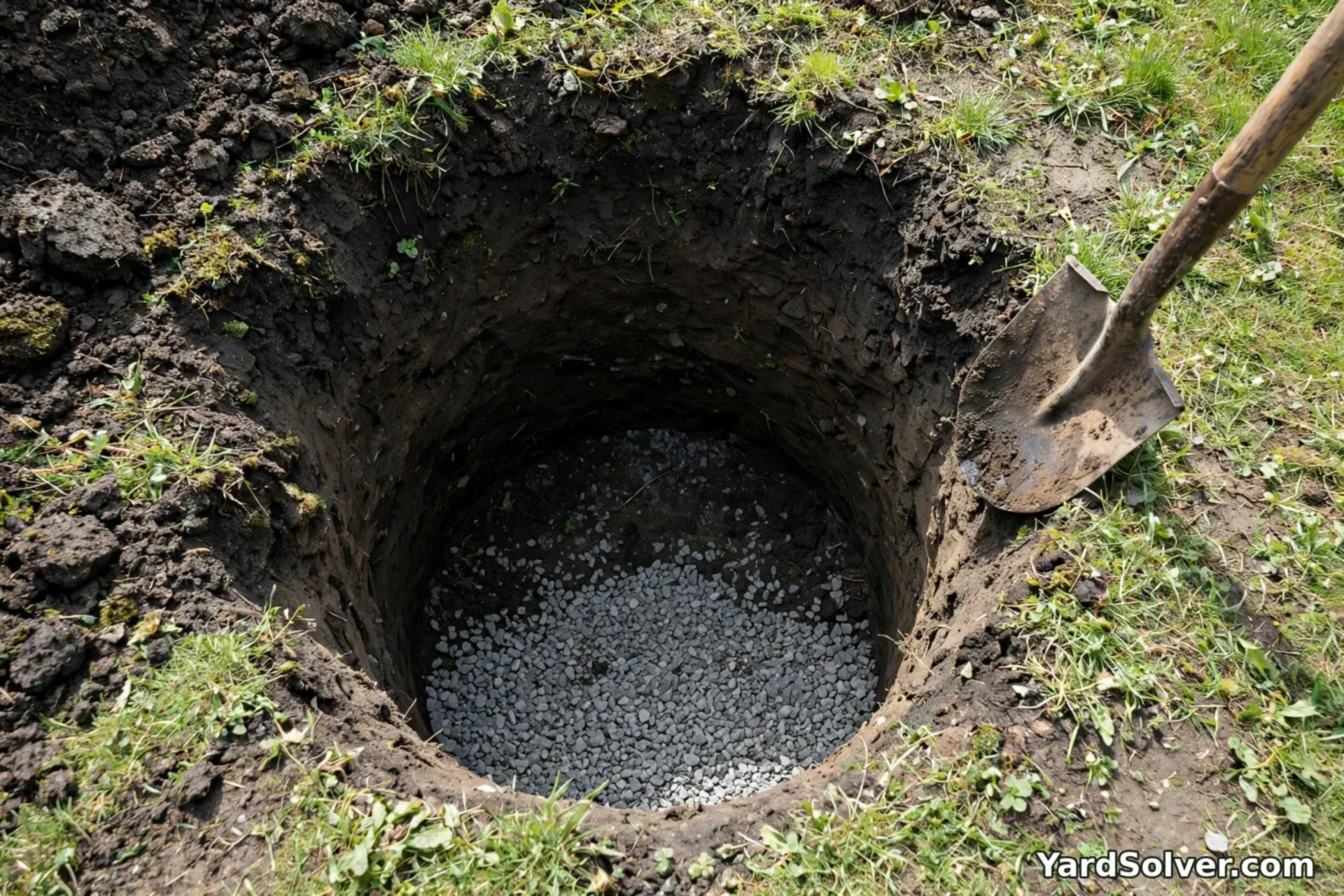
Dig the hole about three times as wide as the post — 10 to 12 inches across for a standard 4×4. That width is not wasted: it leaves room to tamp the fill hard in layers all around the post, and the tamping is where most of the hold comes from. A hole barely wider than the post cannot be tamped and holds like it. Then drop in 6 inches of gravel and tamp it flat. The post stands on that pad, not in the mud at the bottom of the hole. Rain that runs down the post drains away through the gravel instead of sitting against the end grain, which is where posts rot first. In very wet or clay ground this small step is worth more than concrete.
Step 3 — Set it plumb, brace it, then fill
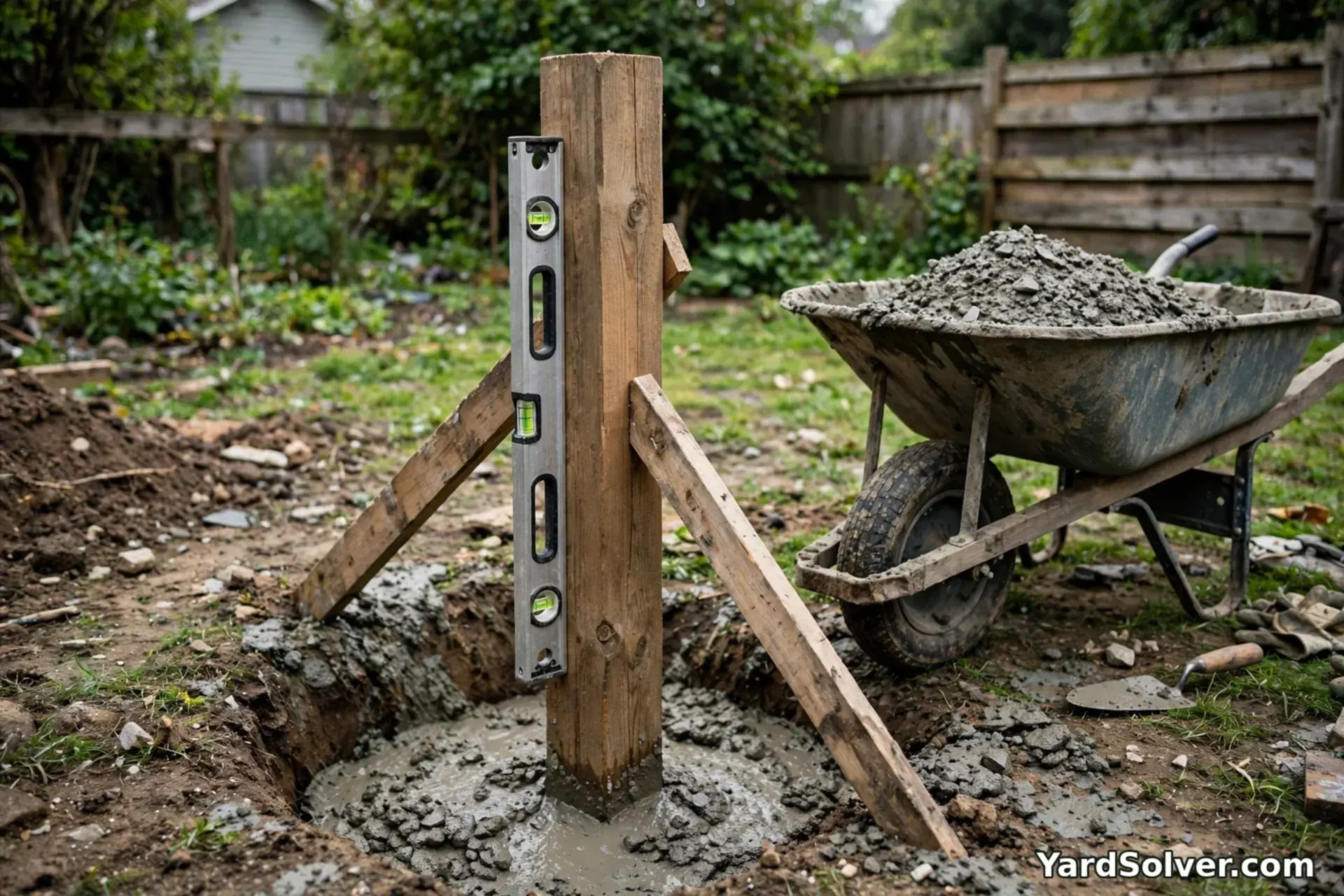
Stand the post on its gravel pad and check it with a level on two faces — a post can lean in two directions at once, and one check only catches one. Screw or clamp two diagonal braces to stakes so it cannot drift while you fill. Fill choice is honest ground for argument, so here is the plain version. Concrete gives the firmest set and suits gate and corner posts, tall solid fences and loose soil — figure the bags per hole with the Concrete Calculator, and mound the top of the pour slightly above ground so water sheds off instead of pooling around the wood. Gravel tamped in layers drains best and is kindest to the post in wet soil; many long-lived fences stand in gravel alone. Packed soil is fine for short, light fences in firm ground. Whichever you choose, fill and tamp in layers of a few inches, and check the level again before the last layer — posts drift while you work.
Gates and corners earn their extra depth
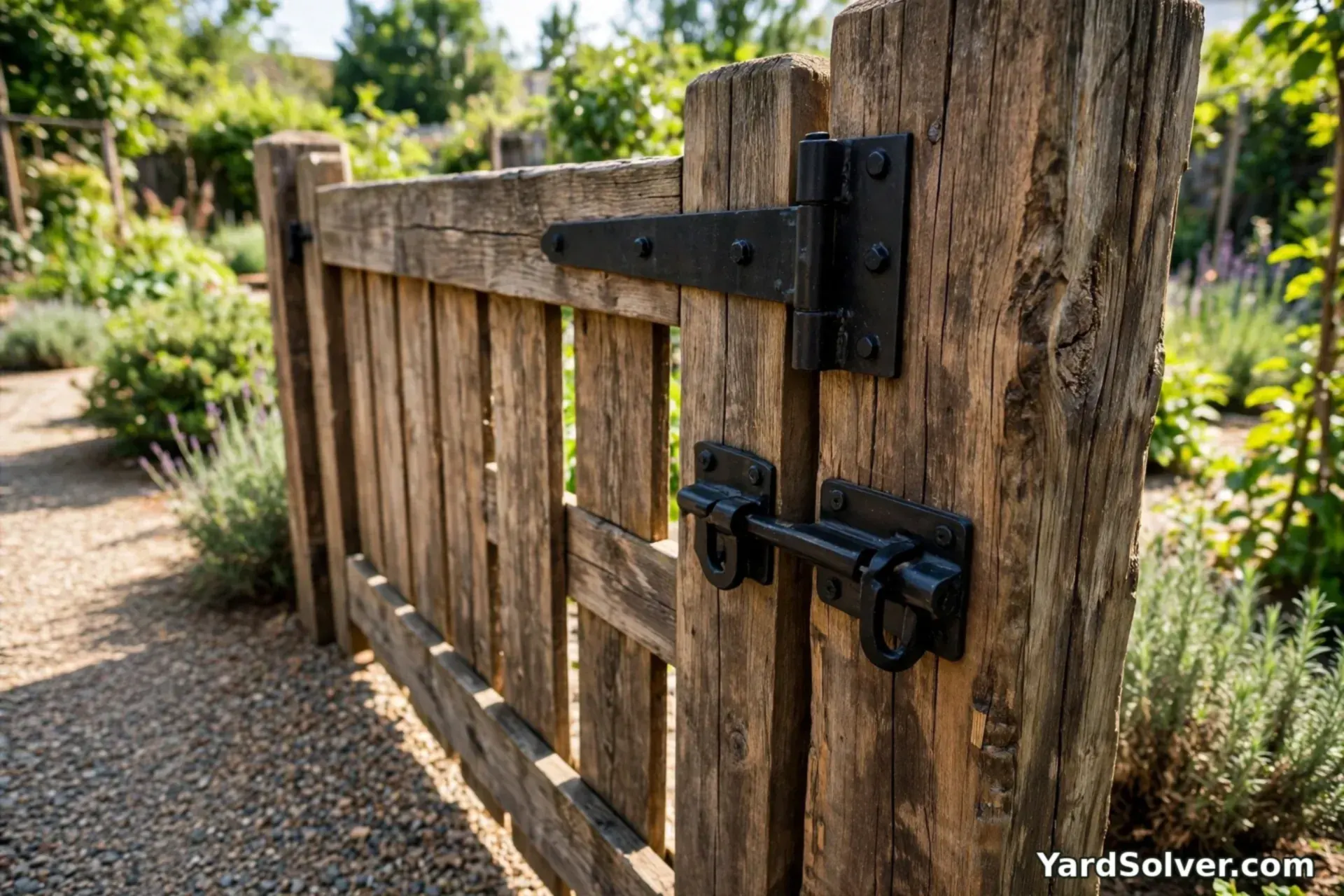
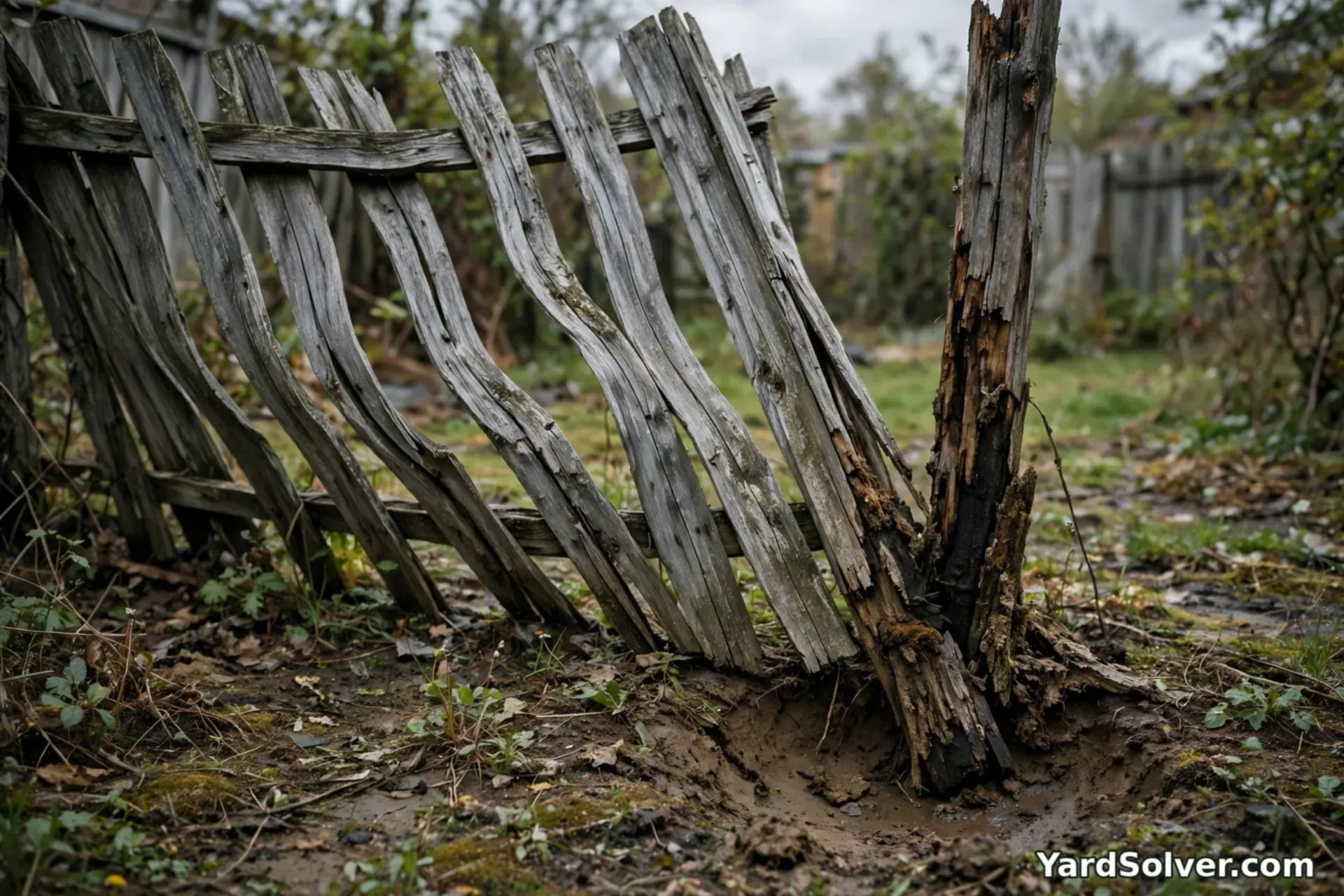
Most fence failures start at the gate. A gate hangs off one post, swings, slams, and gets climbed on by children — its post takes more force than any three line posts. Set gate posts deepest of all, in the biggest hole, and let a concrete fill cure fully before the gate goes on. Corner and end posts anchor the pull of the whole run, so they get the same treatment. And a word from the leaning fences of the world: the usual cause is not bad luck or bad wood. It is a shallow hole, dug in a hurry, in ground that freezes. Depth is the cheapest part of a fence. It is just digging.
Keep going
Every number for the whole fence: Fence Calculator — posts, rails or pickets, and the concrete to set them, from your fence length and post spacing.
Setting posts in concrete? Concrete Calculator works out the bags for your holes before you buy.
Questions people ask
How deep should fence posts be for a 6-foot fence?
Use an 8-foot post and bury about 32 inches of it — a third of its length — so the hole is about 38 inches deep once you add 6 inches of gravel at the bottom. In cold country the frost line can overrule that: if your frost line is 42 inches or deeper, the bottom of the hole has to go below it.
Do fence posts need concrete?
No. Concrete is one good fill, not the only one. Posts set in gravel tamped down in layers drain better and rot slower in wet soil, and packed soil suits short, light fences in firm ground. Concrete earns its keep on gate, corner and end posts, tall solid fences and loose or sandy soil.
How wide should a fence post hole be?
About three times the width of the post — roughly 10 to 12 inches across for a standard 4x4 post. That leaves room to tamp the fill in layers all around the post, which is where most of the hold comes from. Narrower holes cannot be tamped properly; much wider holes just cost extra concrete.
What happens if fence posts are too shallow?
The fence starts to lean within a few winters. Wind works a shallow post back and forth like a loose tooth, and in cold ground frost heave lifts it a fraction each year, never settling back straight. Resetting a leaning line of posts costs far more digging than doing the depth once, properly, at the start.
Comments & ratings
No comments yet.
Be the first to share your experience.