
Guides · Lawn & wildlife · Published November 15, 2026
How to Get Rid of Moles in Your Yard (Without Poison)
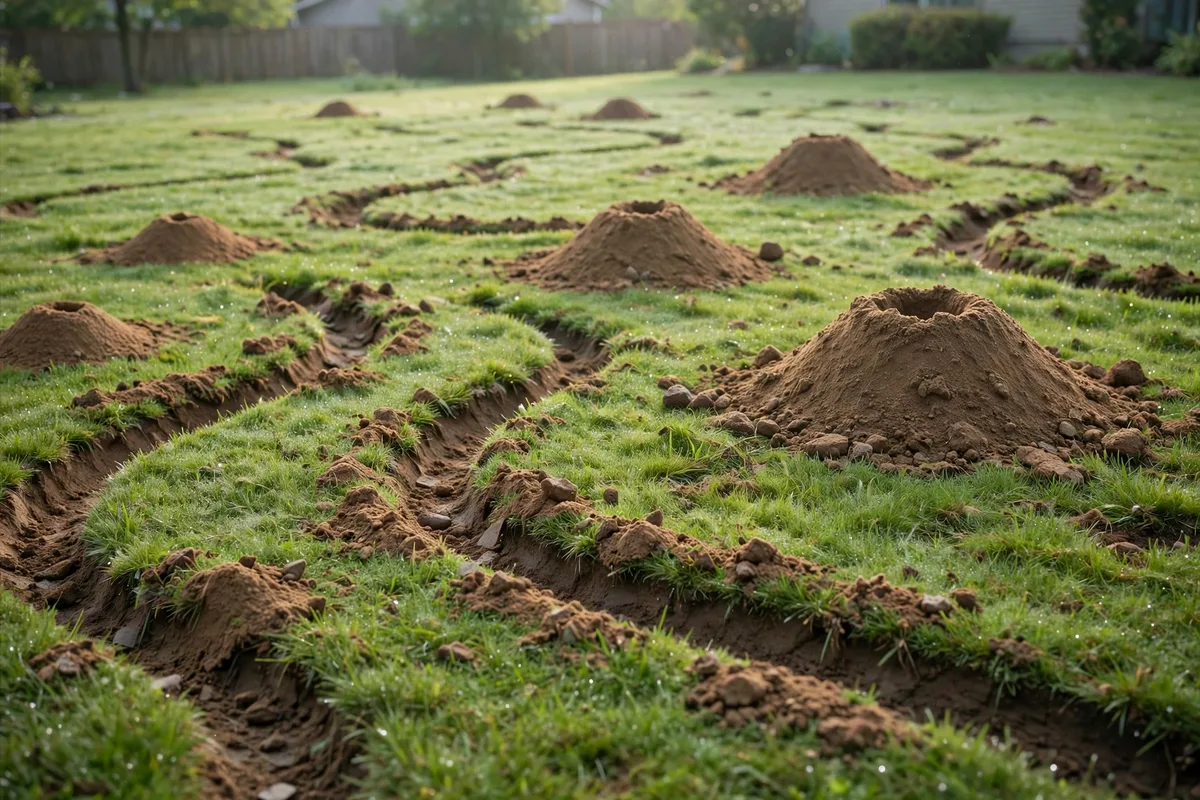
The morning after a mole moves in, a lawn can look like a tiny earthquake zone: raised ridges snaking across the grass, volcano-shaped mounds of soil, turf that feels like a waterbed. The instinct is to reach for poison or a gadget from the hardware shelf. Resist it — and not only for humane reasons. Moles eat earthworms and grubs, not grain or bait, so poison baits mostly fail while risking the pets and wildlife that eat what the poison kills. The method that actually works is older and more mechanical: confirm the animal, find its main travel tunnels, and trap on those runs. This page walks through how to get rid of moles in your yard without poison, and how to repair the damage behind them.
Step 1 — Confirm it is a mole (and not a vole)
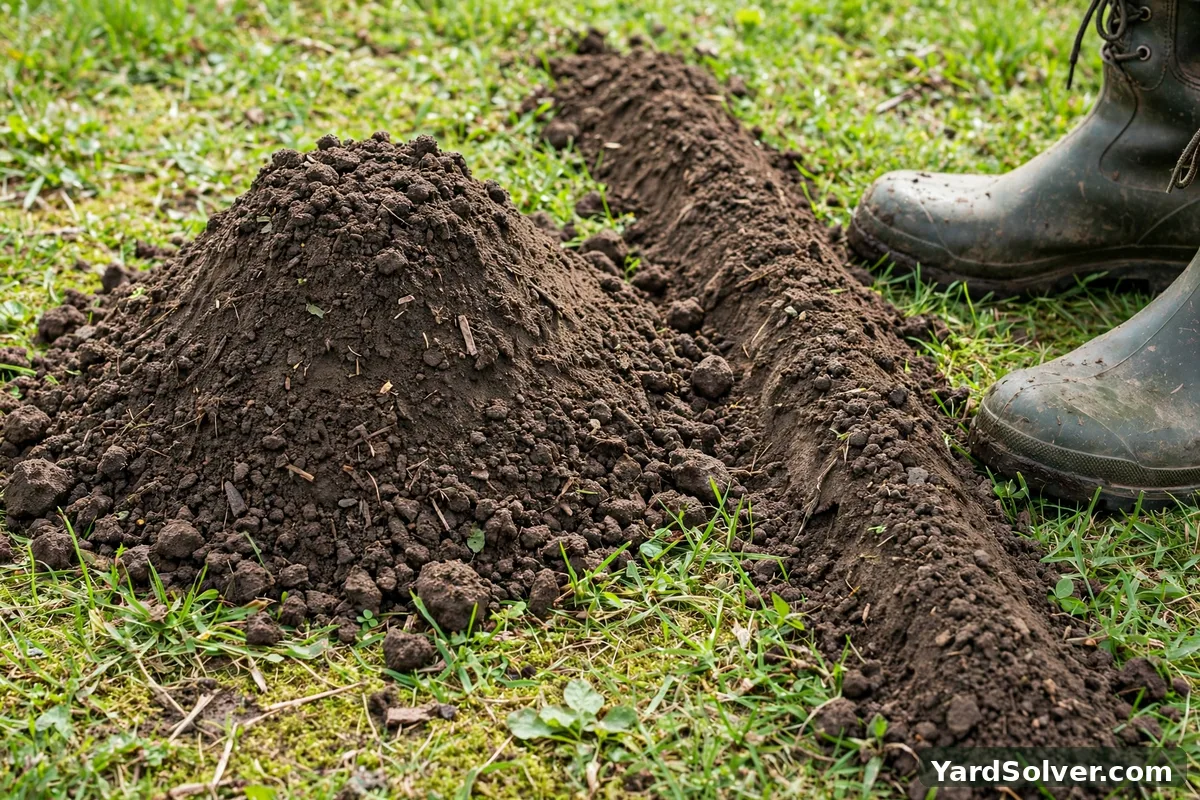
The two animals are confused constantly, and the fixes differ. Moles are insect-eaters working underground: they leave raised surface tunnels — ridges you can feel underfoot — and conical molehills of loose soil pushed up from deep runs. You will almost never see one; they are solitary, territorial, and a single mole can work a whole yard, which is why the damage looks like an army and is usually one animal. Voles are plant-eating rodents that run on the surface: they leave open, worn runways in the grass, small burrow holes with no mound, and they gnaw roots, bulbs and bark. If your damage is chewed plants and surface paths with no ridges or hills, you have voles, and mole traps will not help — snap traps baited at runway edges and habitat cleanup are the vole tools. Everything below is for the ridge-and-mound signature of the mole.
Step 2 — Find the main runs: probe, and use the step test
Trapping fails when traps sit in the wrong tunnels. A mole’s system has two kinds: winding feeding tunnels just under the surface, used once or twice and abandoned, and straight main runs — deeper, permanent travel routes along edges: fence lines, paths, bed borders, the line where lawn meets a driveway. Main runs are used daily and are where a trap belongs. Find them by following a straight ridge along an edge, and confirm activity with the step test: press a short section of ridge flat with your foot, mark it, and check in 12–24 hours. If the mole pushes it back up, that run is active and travelled. A run still flat after a day is abandoned — move on. Two or three evenings of this detective work is what separates a caught mole from a month of frustration.
Before you dig anything, measure the damaged area: repairs at the end go faster with a number, and the Square-Footage Calculator turns a paced-off length and width into the area for seed and soil. It also tells you honestly how big the problem is — mole damage photographs worse than it measures.
Step 3 — Trap the main run (the method that works)
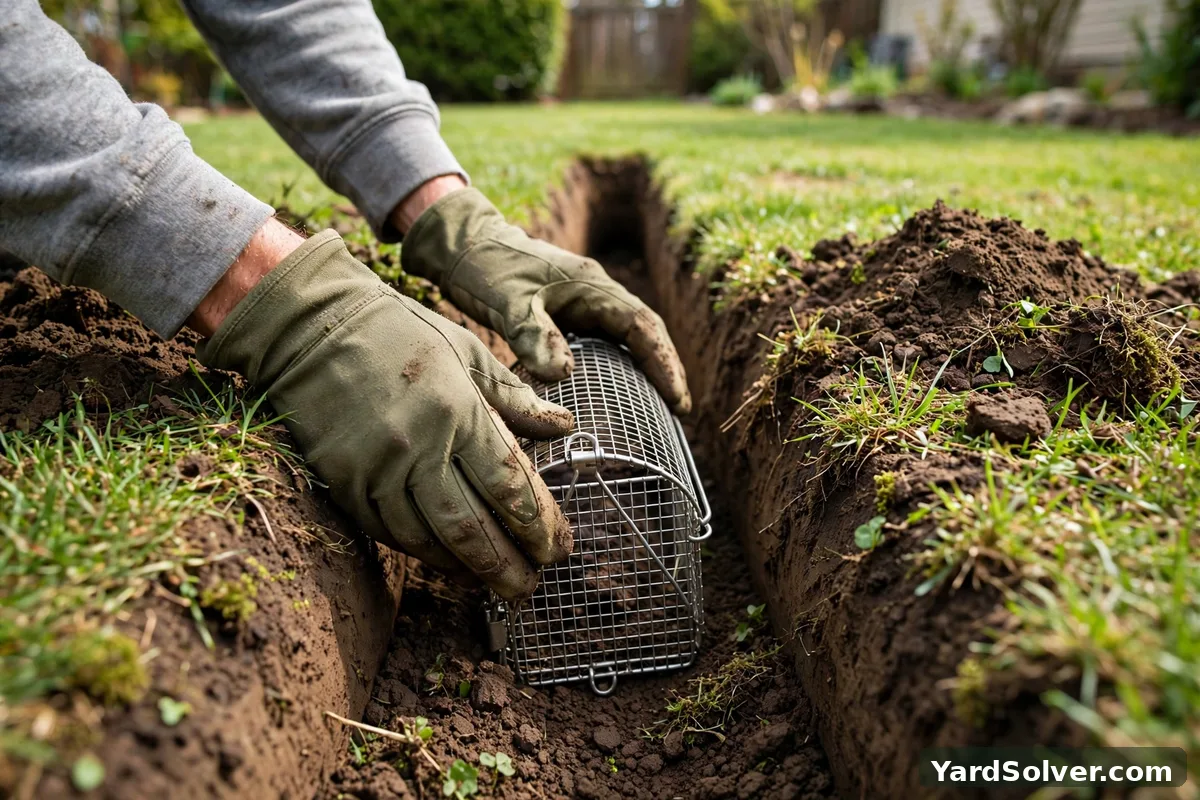
Use a proper mole trap — scissor-jaw or harpoon style — set exactly as its maker directs, in the middle of a confirmed active main run. The standard setting: excavate a small section of the tunnel, rebuild the tunnel shape firmly with soil (moles push through loose soil and set the trap off — or are caught travelling, depending on the design), set the trap over or in the run, and cover the spot with an upturned bucket or board. Covering matters: light leaking into the tunnel makes moles suspicious, and the cover also keeps pets and children away from the set trap. Check daily. A caught mole usually ends the problem, because the animal was almost certainly working alone; if fresh ridges appear a week later, a new mole has claimed the empty tunnel system — reset on the same runs, which are now proven routes.
What about the gentler shelf of options? Castor-oil granules have some evidence as a repellent — they upset moles’ digestion and can push an animal to relocate, which may be enough for a small garden — but results are inconsistent and rain-dependent. Vibrating stakes, ultrasonic spikes, and flooding with a hose have no reliable evidence behind them; a mole’s tunnel system drains better than a garden hose can fill. And one honest note in the mole’s favour: it aerates soil and eats grubs, including the ones in our lawn grubs guide. If the damage is in a rough area you can tolerate, leaving the mole alone is a legitimate choice — trapping is for lawns and beds where the damage is real.
Step 4 — Repair the ridges and re-level the lawn
Once activity stops, walk every ridge and press it back down with your foot or a lawn roller — surface tunnels collapse easily, and grass roots re-contact the soil. Fill molehills’ craters and any settled spots with a little topsoil, level, and reseed bare patches: the Seed Calculator sizes the seed to the repaired area so a yard of scattered patches does not eat a whole bag. Water repairs like any new seeding.
Beds deserve a check too: a mole tunnelling under a vegetable bed heaves soil and can leave roots hanging in air pockets — firm the soil back around plants and water it in. Deep-rooted perennials shrug this off, and a bed of garlic planted in fall usually winters undisturbed, since moles neither eat bulbs nor hunt in frozen ground. What moles do eat — worms and grubs — tells you the lasting prevention: a lawn with a managed grub population and no over-watering (wet soil draws worms, and worms draw moles) is a less attractive territory. You will never make a yard mole-proof, but you can make it unremarkable.
Keep going
Moles often arrive because dinner did: a heavy grub population draws them in. If your peel-back test finds the lawn full of larvae, Lawn Grubs covers the count and the treatment windows.
Repairs and reseeding slot into the season’s plan — the Garden Planner builds yours from your frost dates, quantities and shopping list included.
Questions people ask
What is the fastest way to get rid of moles in a yard?
Trapping a confirmed active main run. It is the only method with consistent results, because it targets the animal itself — usually a single, solitary mole — on the travel tunnel it uses every day. Most failures are placement failures: traps set in winding surface feeding tunnels the mole may never visit again. Do the step test first, set on the straight run along an edge, cover the set, and check daily.
Do mole repellents and vibrating stakes work?
Mostly, the evidence says no. Vibrating and ultrasonic stakes have repeatedly failed in extension-service trials, and flooding a tunnel system accomplishes little — the tunnels drain, and the mole waits it out. Castor-oil-based repellents are the partial exception: there is some evidence they make a yard unpleasant enough that a mole relocates, but results vary and rain washes the effect away. If you need the mole gone rather than discouraged, a trap on the main run is the reliable answer.
Are moles bad for the garden?
Less than their reputation. Moles eat earthworms and grubs — including lawn grubs that damage turf — and their tunnelling aerates soil. The real damage is cosmetic and mechanical: ridges and mounds in lawns, heaved soil and exposed roots in beds. They do not eat plants, bulbs or roots; that damage, when it happens alongside tunnels, is usually voles using the mole’s runs. Many gardeners tolerate a mole in rough areas and trap only when it works the good lawn.
Comments & ratings
No comments yet.
Be the first to share your experience.