
Guides · Garden planning · Published November 3, 2026
How to Plan a Vegetable Garden
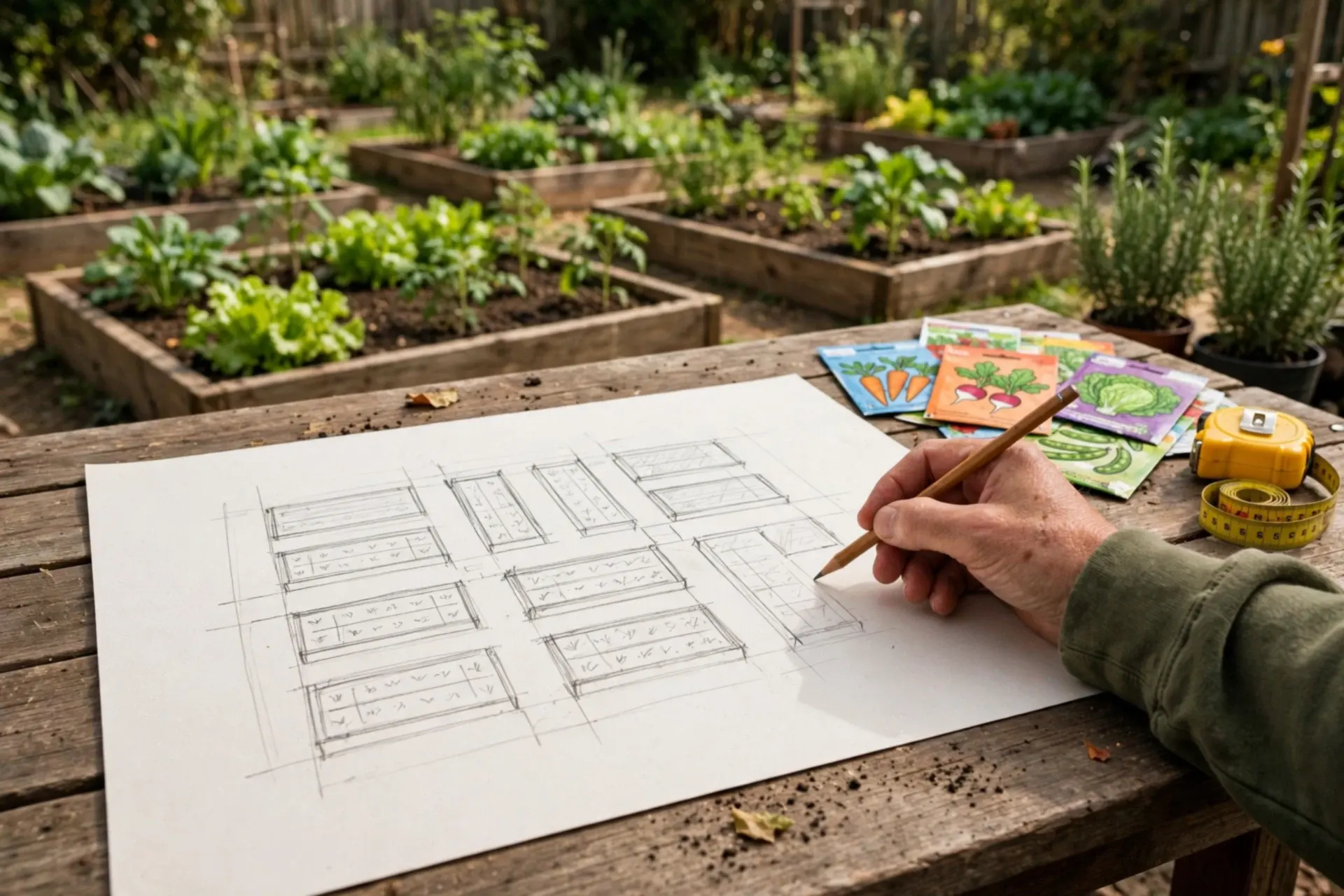
Every good garden exists twice: once on paper, once in soil. The paper version is where the season is actually decided — because the five planning choices below (size, sun, water, families, reach) cannot be fixed in July at any price. This guide makes those choices in order, works a complete first garden as an example, and finishes by handing you to the tool that turns the plan into bed-by-bed layouts and dates: our Garden Planner, which is free and needs no account. An hour with a tape measure now saves a season of apologies later.
The five decisions, in the order to make them
- Size: start smaller than your ambition — one bed done well beats four done badly
- Sun: 6+ hours for fruiting crops. Measure it; do not guess it
- Water: a beautiful plan far from a tap fails in the first dry week
- Families together: next year's rotation is only possible if this year's bedmates are grouped
- Reach: no bed wider than you can reach into — 4 feet from one side, or the middle gets stepped on
Step 1 — Measure your space honestly
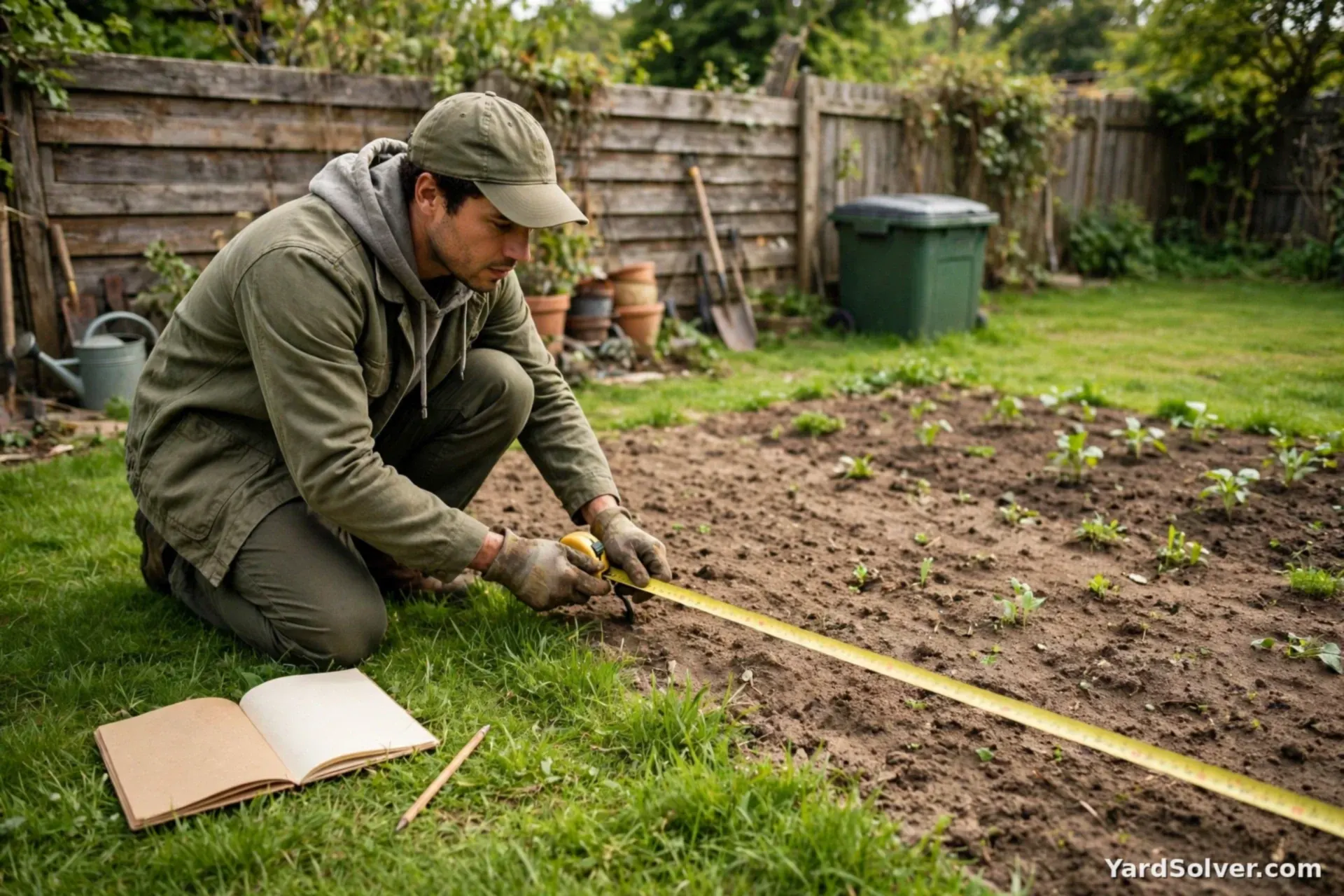
Walk the space with a tape measure and write down real numbers — length, width, and the parts that are not negotiable: paths, the compost bin, bins and play space, the tap, the tree whose shade is a fact of life. Sketch the rectangle and mark north; you will need it in Step 2. Note the slope, too: beds run best across a gentle slope, and the lowest corner of any yard is where water (and frost) collects — a poor address for tender crops. This ten-minute survey is the difference between a plan and a wish: every later tool, including the Planner, works from these dimensions.
Step 2 — Sun first: map the light before the layout
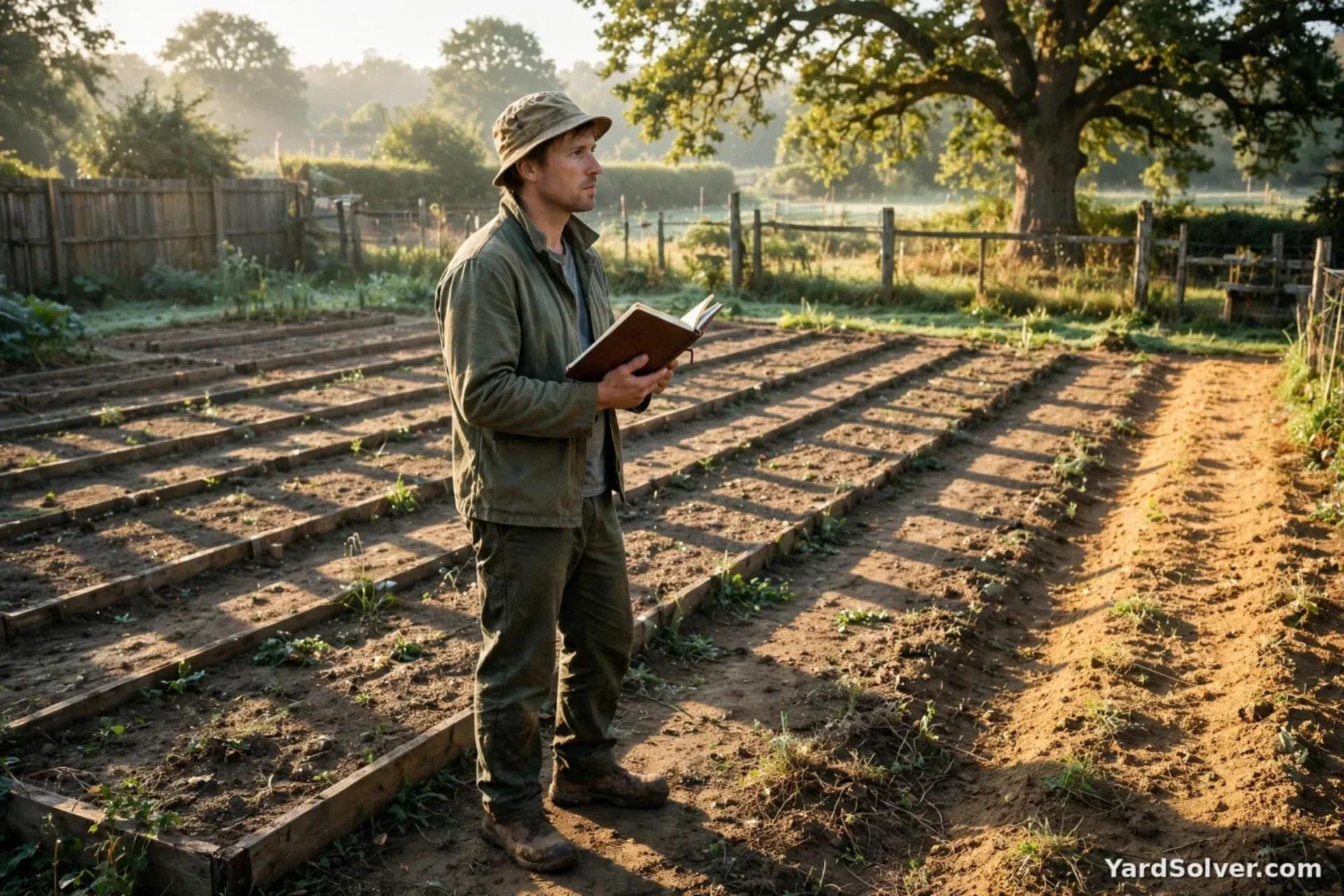
Sun is the one input you cannot buy later. Fruiting crops — tomatoes, peppers, cucumbers, beans — want at least 6 hours of direct sun, and give back more for every hour beyond it. Leaf crops (lettuce, spinach, kale) and most herbs manage on 3–4 hours and even appreciate afternoon shade in summer. Watch your plot across one day, or run the obstacles through the Sun & Shadow Calculator, which estimates the hours any spot actually receives once fences, trees and buildings cast their shadows. Then allocate: the sunniest strip goes to the fruiting crops, tall crops (trellised cucumbers, sweet corn) go on the north edge where their own shade falls out of the garden — the method is in How to Grow Cucumbers Vertically — and the part-shade corner becomes the greens' home rather than the garden's disappointment.
Step 3 — Start small, grow what you actually eat
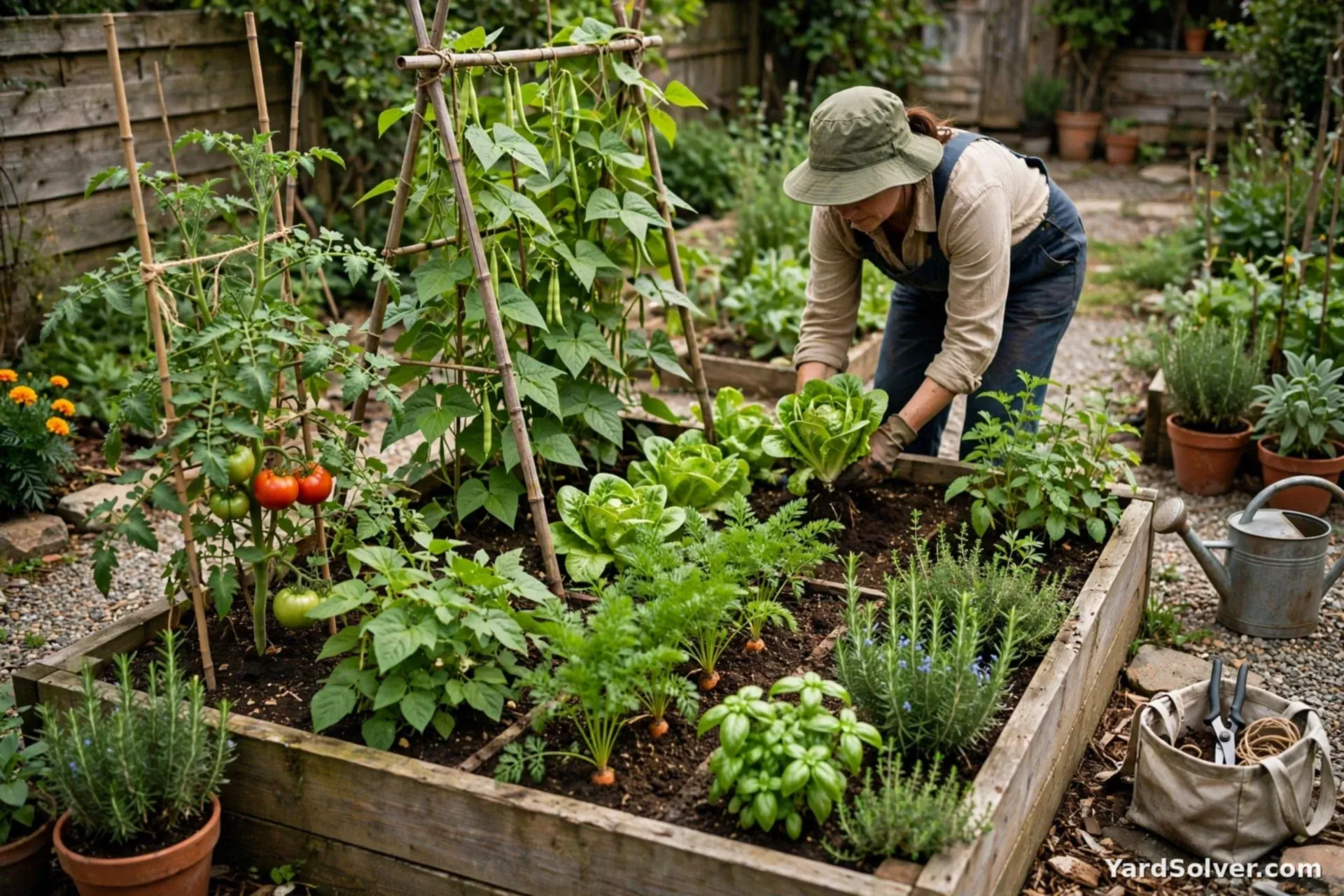
The classic beginner error is a plot sized for a farm shop. Start with one 4 × 8 foot bed (or two 4 × 4s): it takes minutes a day, and a small bed kept well out-produces a big one abandoned in July — while teaching you your soil, your light and your appetite in one season. Choose crops from your actual shopping list, and prefer things that taste different home-grown (tomatoes, beans, salad) over things that are cheap and identical in stores (onions, maincrop potatoes). Plan for flow, not a single glut: a short row of lettuce re-sown every couple of weeks beats a full row bolting at once — the Succession Sowing Calculator turns that idea into dates. The small-garden picks are a sound first list, and the raised-bed guide covers building the bed itself.
Step 4 — Group by family, and leave paths you can work
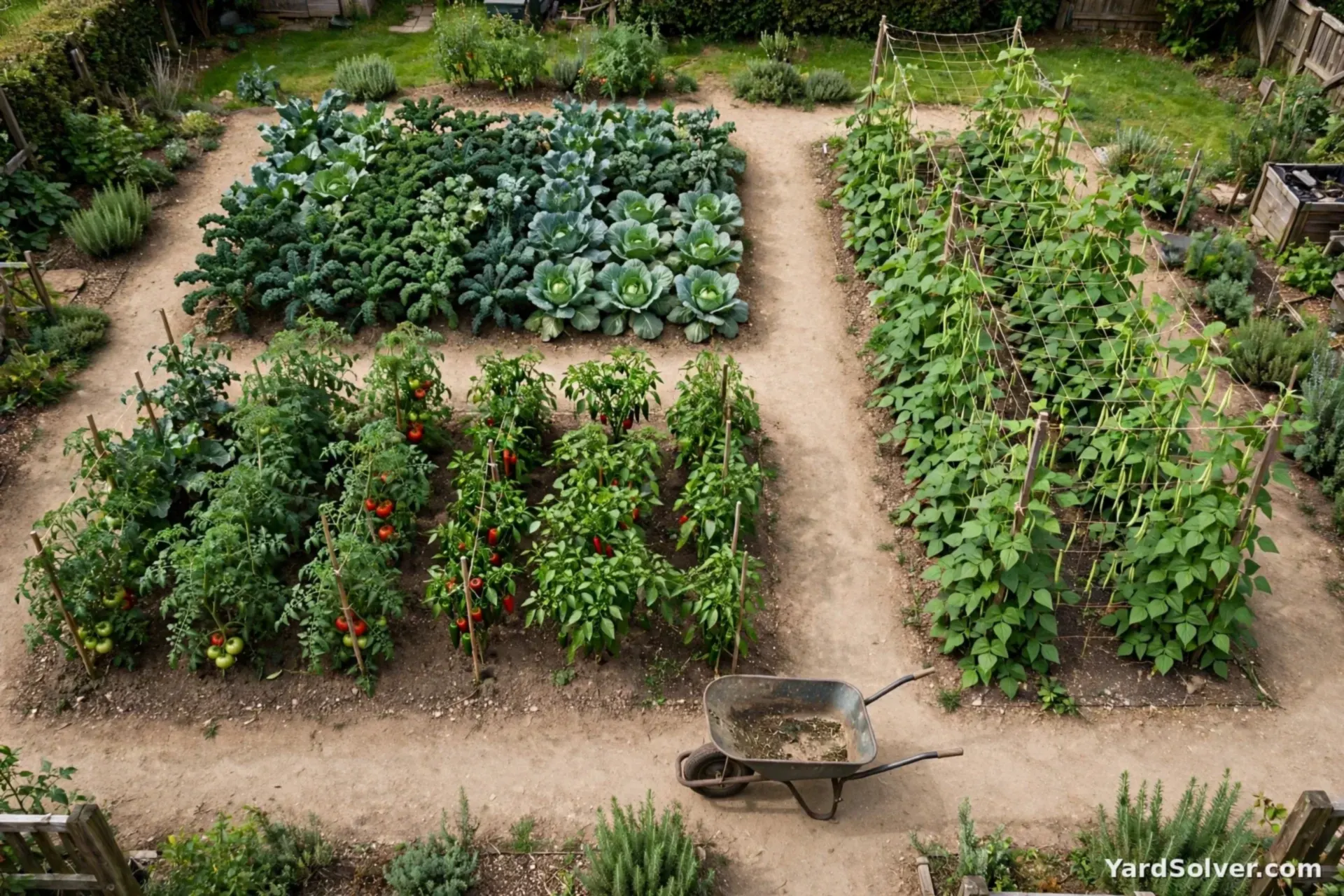
Draw each crop's home by family: nightshades (tomato, pepper, potato), brassicas (cabbage, kale, broccoli), legumes (peas, beans), roots and alliums (carrot, onion, beet), cucurbits (cucumber, squash, zucchini) and the leafy greens. Families share feeding appetites, covers and covers-worthiness — and the same soil diseases, which is exactly why grouping matters: next year you move each family to a bed that held a different one, and the Crop Rotation Helper tells you which moves are good. Within the layout, respect your arms: beds no wider than 4 feet so the middle is reachable from a side, paths of 18–24 inches (45–60 cm) — wider where a wheelbarrow must pass. Space each crop with the Plant Spacing Calculator; seed packets are optimistic, and the overcrowded bed is the most common yield-killer nobody blames on the plan.
Step 5 — A worked first garden, then build it in the Planner
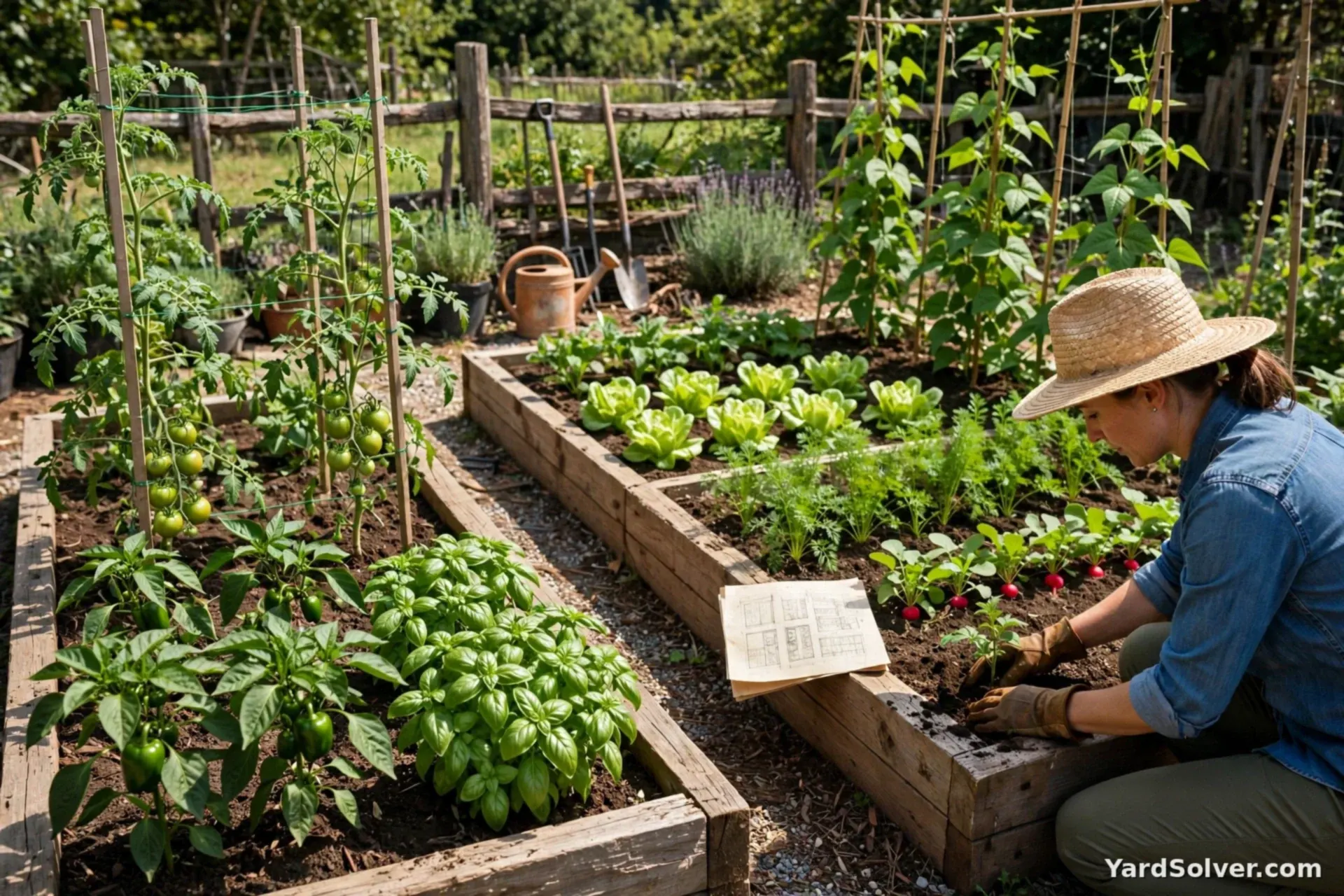
Here is the example whole. Bed A (4 × 8, sunniest): two tomatoes staked at the north end, two peppers in front of them, basil tucked at their feet, and a spring row of radishes in the gap that is eaten before the tomatoes need the room. Bed B (4 × 8): a trellis of climbing beans at the north edge, two short rows of carrots, and lettuce re-sown in a fresh short row every two weeks down the sunny side. Eight crops, every family grouped, nothing wider than a reach, and a season of salads plus summer's tomatoes and beans from 64 square feet of beds. Your version will differ — that is the point of planning it rather than copying it. Now build it properly: the Garden Planner takes your space and city, lays out beds plant by plant with quantities, and produces the planting calendar counted from your own frost dates — free, and with no account to create. Pair it with the Planting Calendar for sowing dates, and your paper plan becomes a season that runs itself.
Keep going
Build the plan for real: The Garden Planner — bed-by-bed layout, quantities and your calendar, free with no account.
Then: Planting Calendar · Raised Bed Gardening for Beginners · Crop Rotation Helper.
Questions people ask
How big should my first vegetable garden be?
One 4 x 8 foot bed — or two 4 x 4 beds — is the honest starter size: about 32 square feet grows a genuinely useful amount of food and takes minutes a day to tend. A small garden kept well out-produces a big one abandoned in July, and you can always add a bed next year.
How much sun does a vegetable garden need?
Fruiting crops like tomatoes, peppers and cucumbers need at least 6 hours of direct sun, and more is better. Leafy greens, lettuce and herbs manage well on 3-4 hours. Check your spot before you dig — shade is the one problem no fertiliser can fix.
What should I plant together in one bed?
Group crops by plant family — tomatoes with peppers, cabbage with kale, beans with peas. Families share feeding needs and the same pests and diseases, so grouping makes watering, covering and next year's rotation simple. The Crop Rotation Helper shows which family should follow which.
Comments & ratings
No comments yet.
Be the first to share your experience.