
Guides · Pruning · Published November 10, 2026
When to Prune Hydrangeas: Old Wood vs New Wood Guide
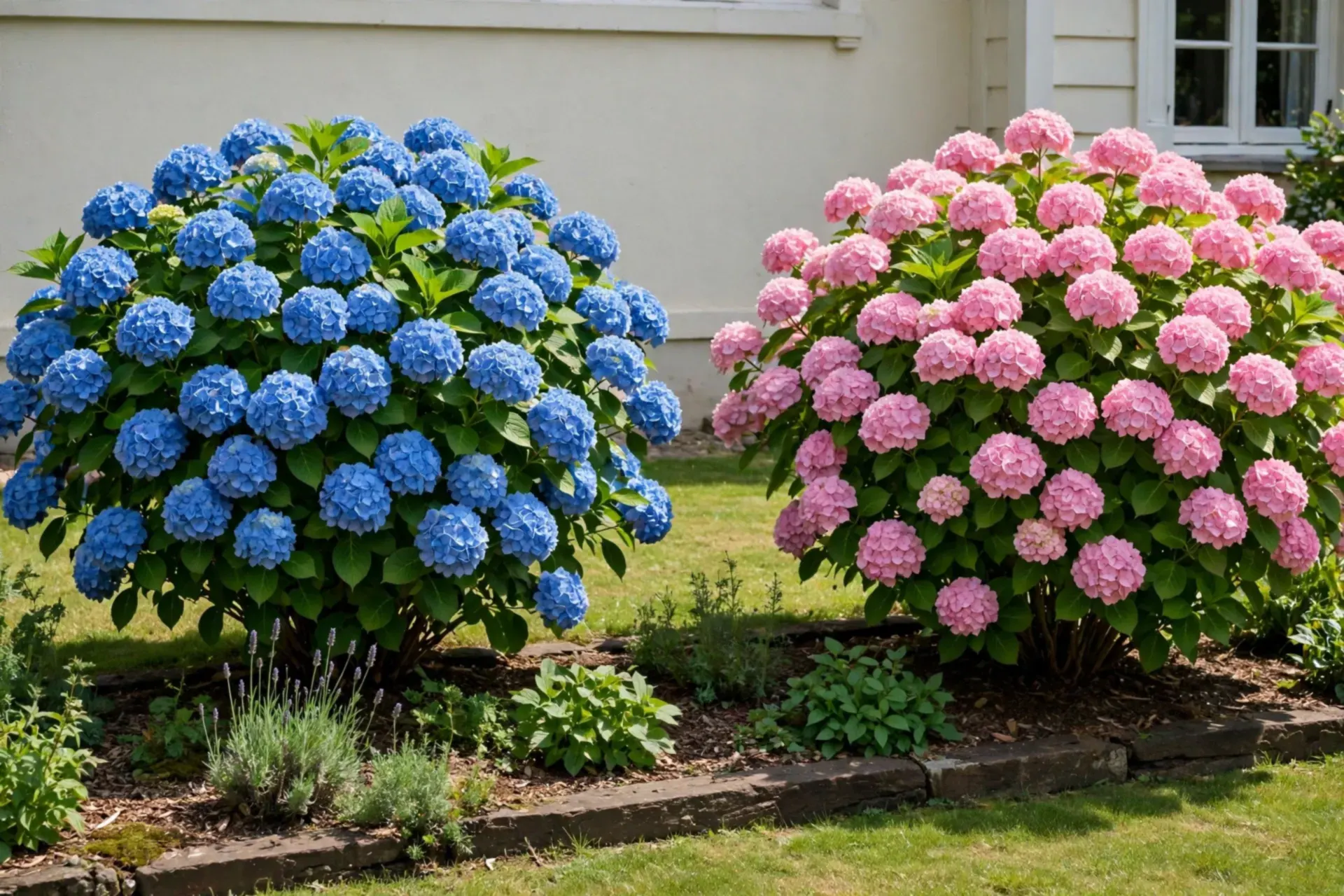
More hydrangeas lose their flowers to the pruning shears than to any pest or disease. The reason is simple: some types make their flower buds a whole year ahead, on last year's stems — "old wood" — and some make them fresh each spring on new growth. Prune an old-wood plant at the tidy-up moment in fall or spring and you have cut off every flower it was going to give you. Prune a new-wood plant late and nothing bad happens at all. So the whole skill is one question: which wood does yours bloom on?
The chart — find your type
| Type | Blooms on | When to prune | How to spot it |
|---|---|---|---|
| Bigleaf (macrophylla) | Old wood | Right after flowers fade — done by early August | Big round or flat flower heads, glossy rounded leaves; the classic blue/pink one |
| Oakleaf | Old wood | Right after flowering | Lobed leaves like an oak, cone-shaped white flowers, peeling bark |
| Mountain (serrata) | Old wood | Right after flowering | Like a smaller, hardier bigleaf with lacecap flowers |
| Climbing | Old wood | After flowering, tidy only | A vine climbing a wall or trunk; slow to get going |
| Panicle (paniculata) | New wood | Late winter to early spring | Big cone-shaped flowers, white turning pink; 'Limelight' is one |
| Smooth (arborescens) | New wood | Late winter | Huge round white balls; 'Annabelle' is one |
| Reblooming (Endless Summer types) | Both | Light tidy after the first flush | Sold as repeat bloomers; deadhead, do not hard-prune |
Do not know your type? Watch for one season. If the flowers opened on stems that were already there, bare, in early spring, it is old wood. If the plant was cut or grew fresh green stems and bloomed on those, it is new wood.
Step 1 — Check the buds before you touch anything
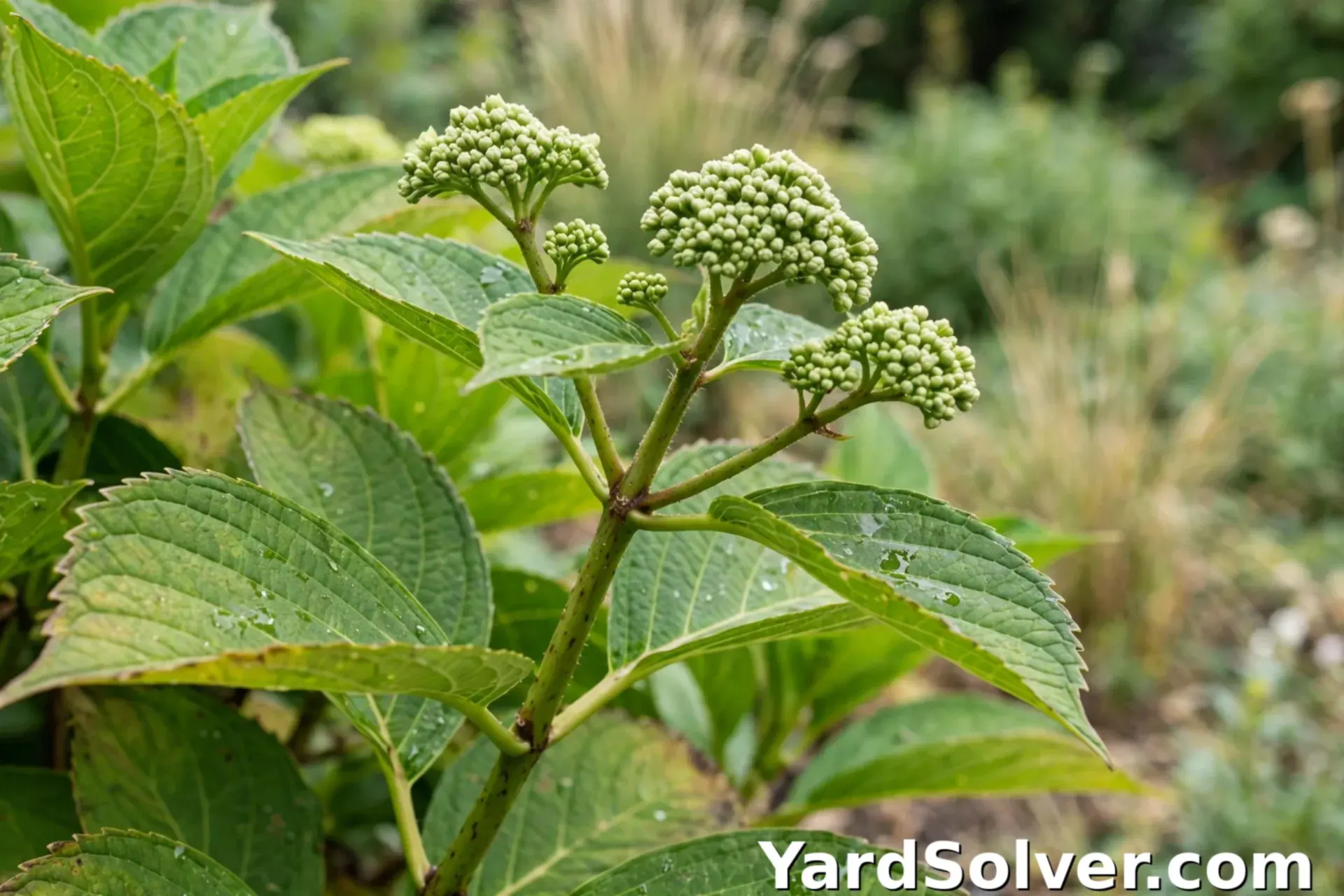
From late summer onward, an old-wood hydrangea carries fat buds at the tips of its stems. Those buds are next year's flowers, already made. They have to survive winter to bloom — which is why cold winters, not pruning, are sometimes the culprit (more on that in Step 4). Get in the habit of looking before cutting: if a stem ends in a plump bud, that stem is a flower waiting. Removing dead wood is the one job that is safe at any time of year, on any type — once you are sure the stem is truly dead.
Step 2 — Old wood: prune right after the flowers
For bigleaf, oakleaf, mountain and climbing types, the safe window opens the day the flowers fade and closes by about early August. Cut the flowered stems back to a strong pair of buds, and take out the oldest, weakest stems at the base to keep the plant young. After that window closes, hands off — the plant is busy making next year's buds, and any stem you remove takes its flowers with it. In cold areas, leave the old flower heads on over winter; they look untidy and they shelter the buds below them from the worst frosts.
Step 3 — New wood: prune in late winter
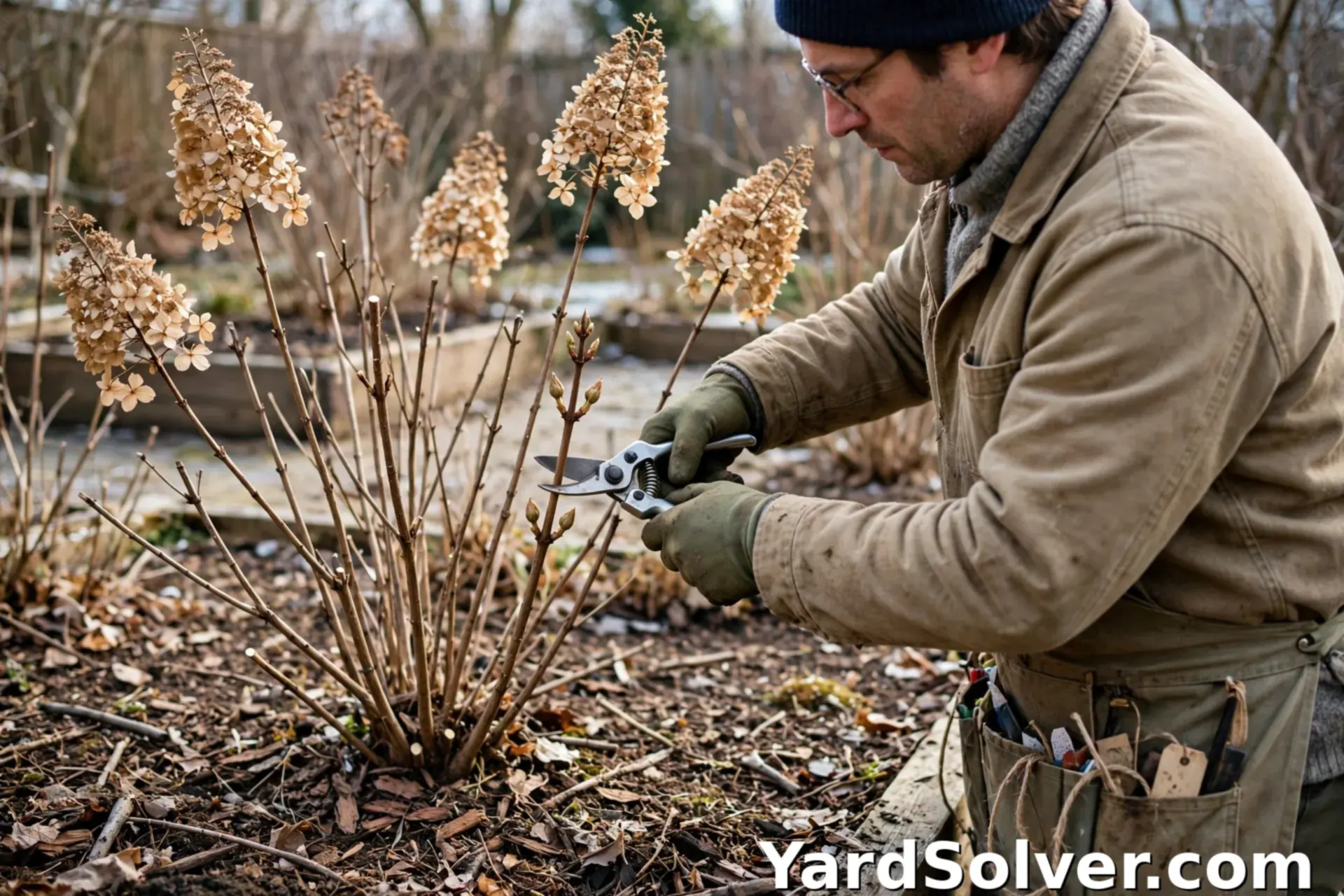
Panicle and smooth hydrangeas are the forgiving ones. In late winter, before the leaves open, cut panicle types back by about a third to a half, always to just above a pair of strong buds — this gives fewer, bigger flower cones. Smooth types like 'Annabelle' can be cut harder, down to about a foot tall, or even to the ground in cold areas; they grow back and bloom the same summer. The same late-winter slot is when the woody shrubs get their turn — the pattern matches How to Prune Roses, and the dormant-season tree work is in How to Prune Fruit Trees in Winter.
Step 4 — Still no flowers? Run the other checks
If you have not pruned at the wrong time and the plant still sulks, work through the usual suspects. Winter bud kill: in zone 5 and colder, bigleaf buds often die in a hard winter even when the stems live — a plant that leafs out from the base but never blooms is telling you this. Wrap it or pick a reblooming type. A late spring freeze after buds swell does the same damage in one night. Too much shade gives leaves, not flowers. Too much nitrogen — a hydrangea beside a fed lawn gets pushed into leaf growth. And deer bite the buds off neatly, which looks a lot like pruning. Sort the cause, note the pruning date for your type in the Garden Planner, and next year's flowers are mostly a matter of leaving the right stems alone.
Keep going
The same old-wood rule, on a smaller shrub: How to Prune Roses covers timing by rose type.
Doing all the dormant-season cutting in one weekend? How to Prune Fruit Trees in Winter has the tree half of the job.
Questions people ask
I pruned my hydrangea in spring and got no flowers. What happened?
Almost certainly an old-wood type — bigleaf, oakleaf or mountain. It had made its flower buds the summer before, along the stems you cut off. The plant itself is fine. Leave it alone this year, let it bloom, and prune straight after the flowers fade. You have lost one season of flowers, not the shrub.
When can I cut off the dead-looking stems?
In spring, once the buds start to swell and you can see which stems are alive. Scratch a stem with a thumbnail: green under the bark means alive, brown and dry means dead. Cut dead stems right out at the base. Cutting in fall or early winter is a guess — and on old-wood types a wrong guess costs blooms.
Can I prune a hydrangea in fall?
Best not to. On old-wood types, fall pruning removes the buds that are already formed for next year. On new-wood types there is no need — late winter does the same job better, and the old stems give the crown a little winter protection in the meantime. Snipping off spent flower heads for tidiness is always fine.
Comments & ratings
No comments yet.
Be the first to share your experience.