
Guides · Roses · Published November 1, 2026
How to Prune Roses, Step by Step
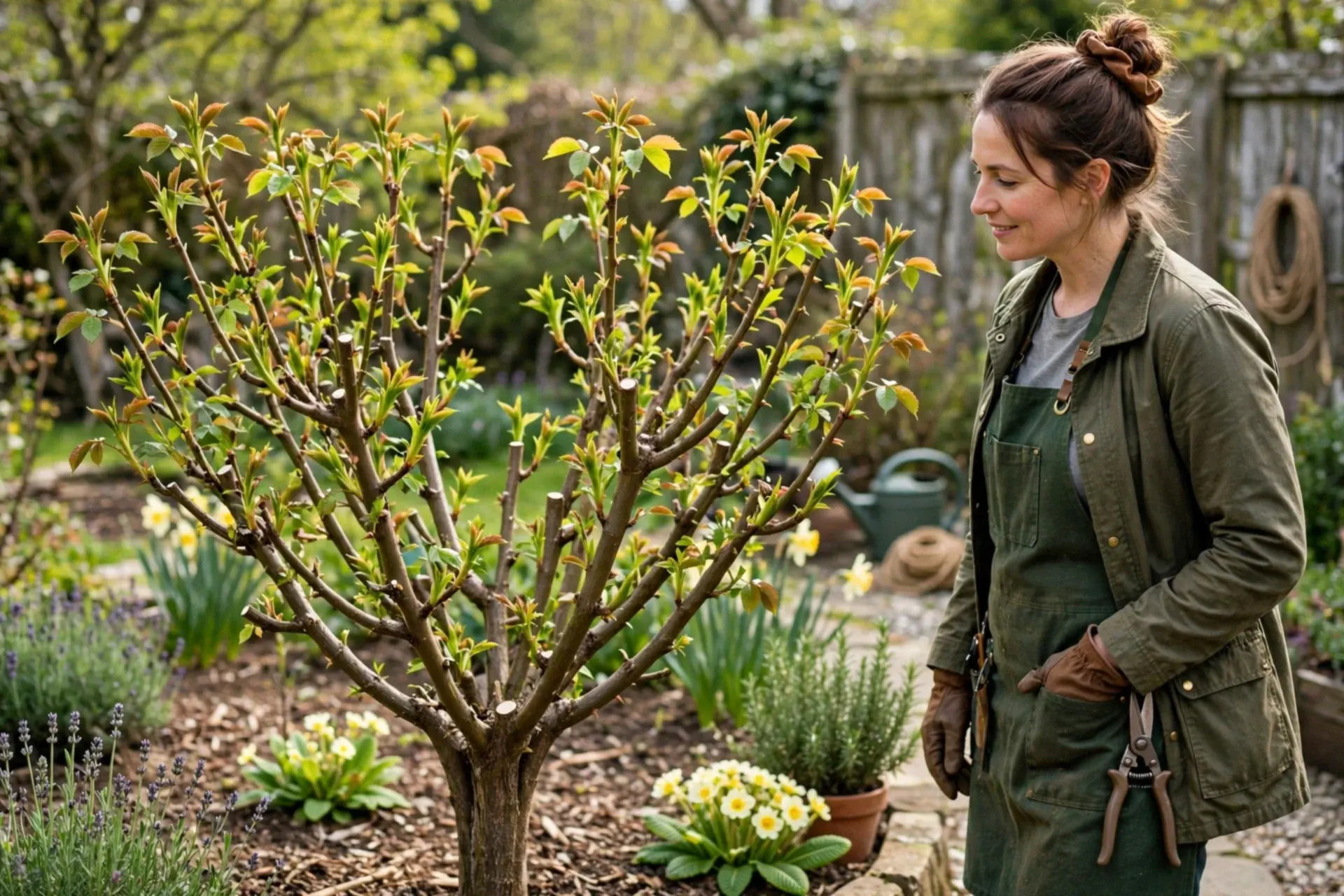
Pruning roses scares new gardeners more than any other job, but roses are hard to kill with secateurs and easy to ruin without them. An unpruned rose becomes a tangle of dead wood, crossing canes and disease, flowering worse every year. The method below works for nearly every rose in a home garden: know your type, take out the three Ds first, open the centre, and make each cut in the one place that heals fast.
Before you cut: the timing rule
- Repeat-blooming roses (hybrid teas, floribundas, most modern shrubs): prune in late winter to early spring, just as the buds swell — the old cue is “when the forsythia blooms.” See your season dates on the Planting Calendar
- Once-blooming roses (many old ramblers and climbers): prune right after flowering — prune them in spring and you cut off this year's flowers
- Any time of year: dead, damaged and diseased wood comes off the day you see it
- What you need: sharp bypass secateurs (not anvil), loppers for thick canes, gloves, and a bucket for clippings
Step 1 — Time it for your rose type
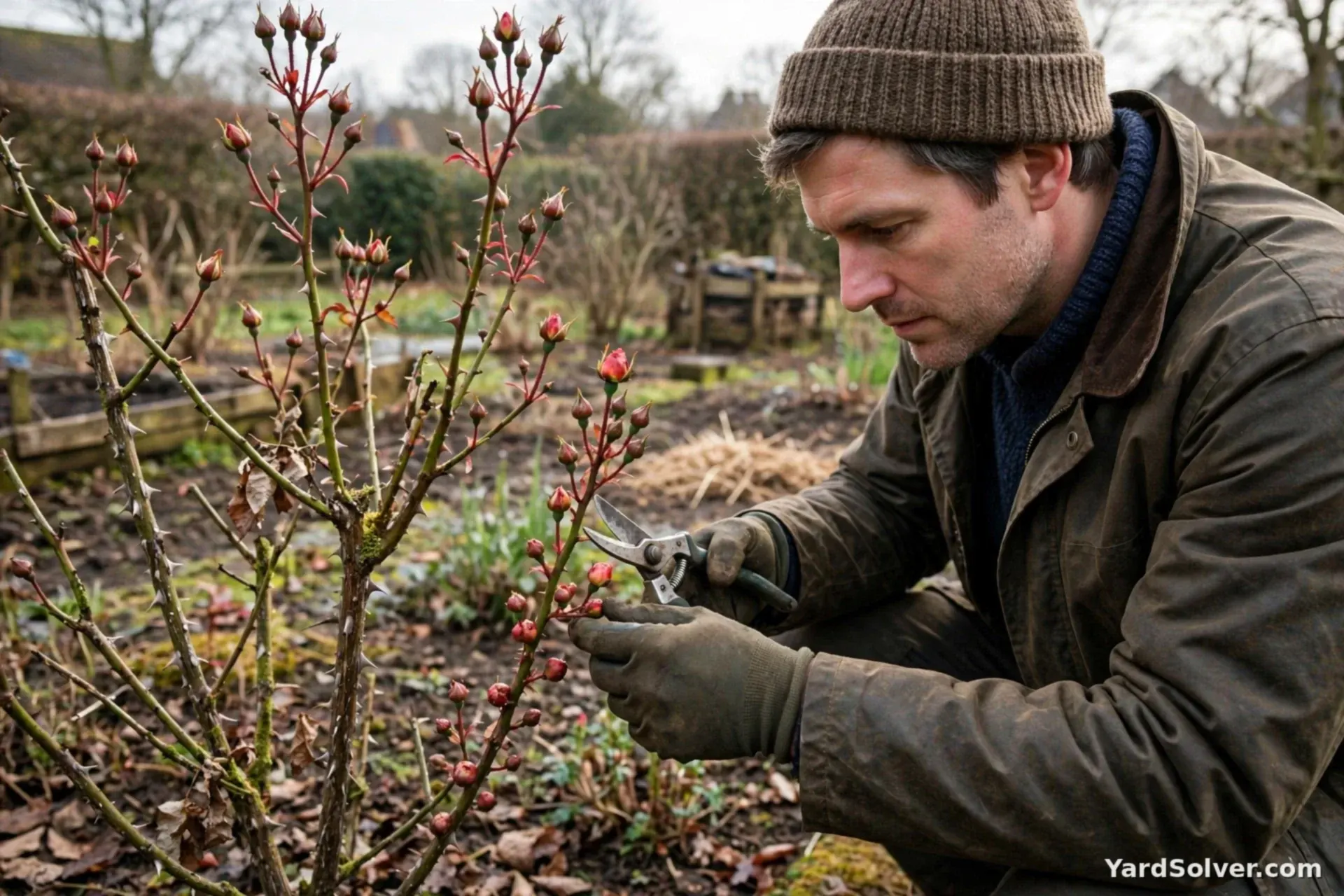
For repeat-blooming roses, the window is late winter into early spring, when the leaf buds have swollen but not yet opened into leaves. Prune too early and a hard frost can kill back the fresh cuts; prune too late and you waste the plant's first flush of energy on growth you then remove. In cold Canadian and northern US gardens that usually means March to April; in mild UK and coastal gardens, February to March. Climbers get shaped after their main bloom, and every rose gets dead wood removed whenever it appears.
Step 2 — Start with the three Ds
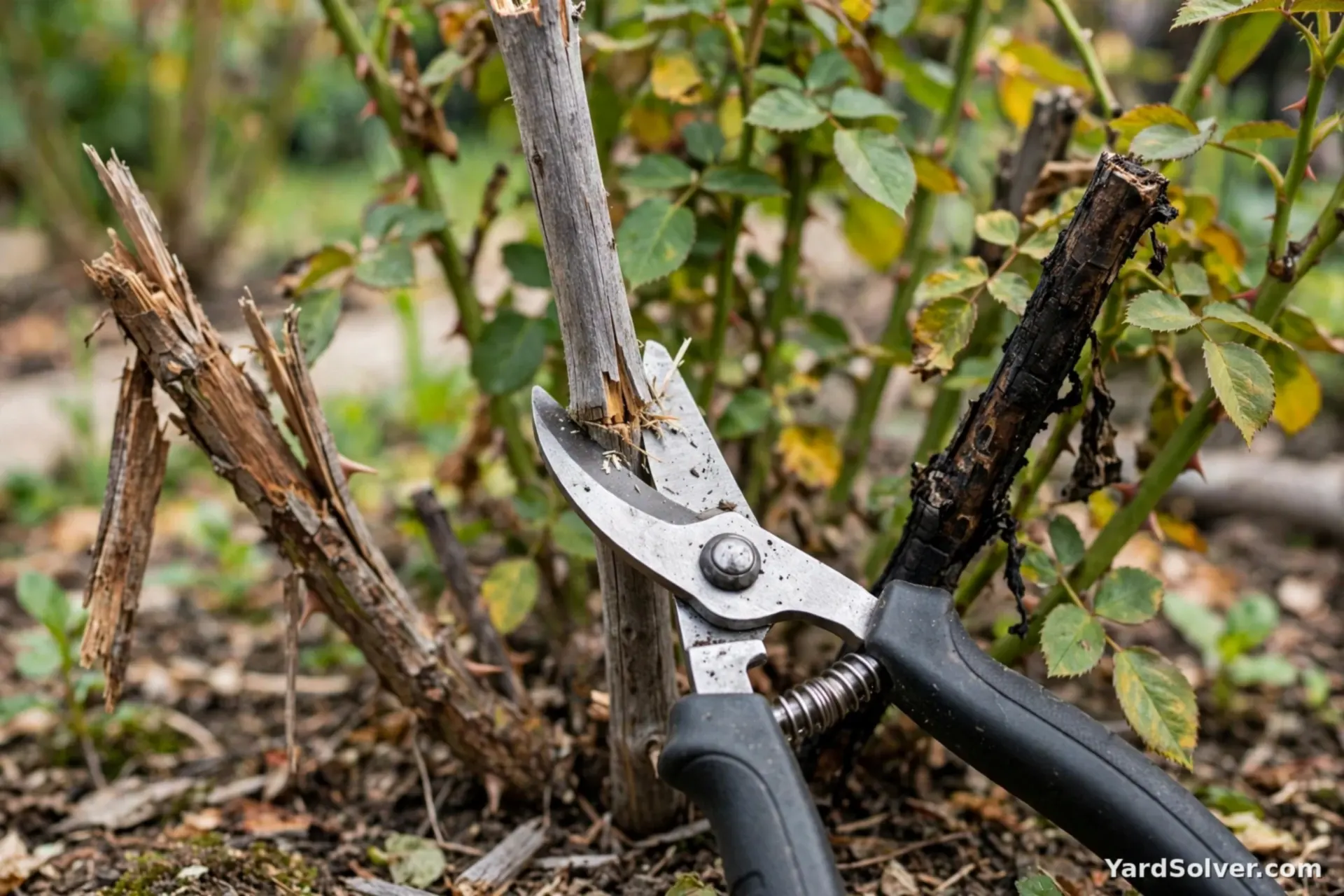
Before any shaping, remove the three Ds. Dead wood is brown or grey and brittle, with no green under the bark when you scratch it. Damaged canes are broken, split or rubbing wounds into a neighbour. Diseased canes carry black spots, cankers or dieback creeping down from a tip. Cut each one out at its base or back to clean, healthy wood — healthy pith inside the cut is white or pale green, not brown. This pass alone opens most overgrown bushes up, and it is the pass that prevents the fungal problems sorted in How to Get Rid of Powdery Mildew.
Step 3 — Open the centre for air and light
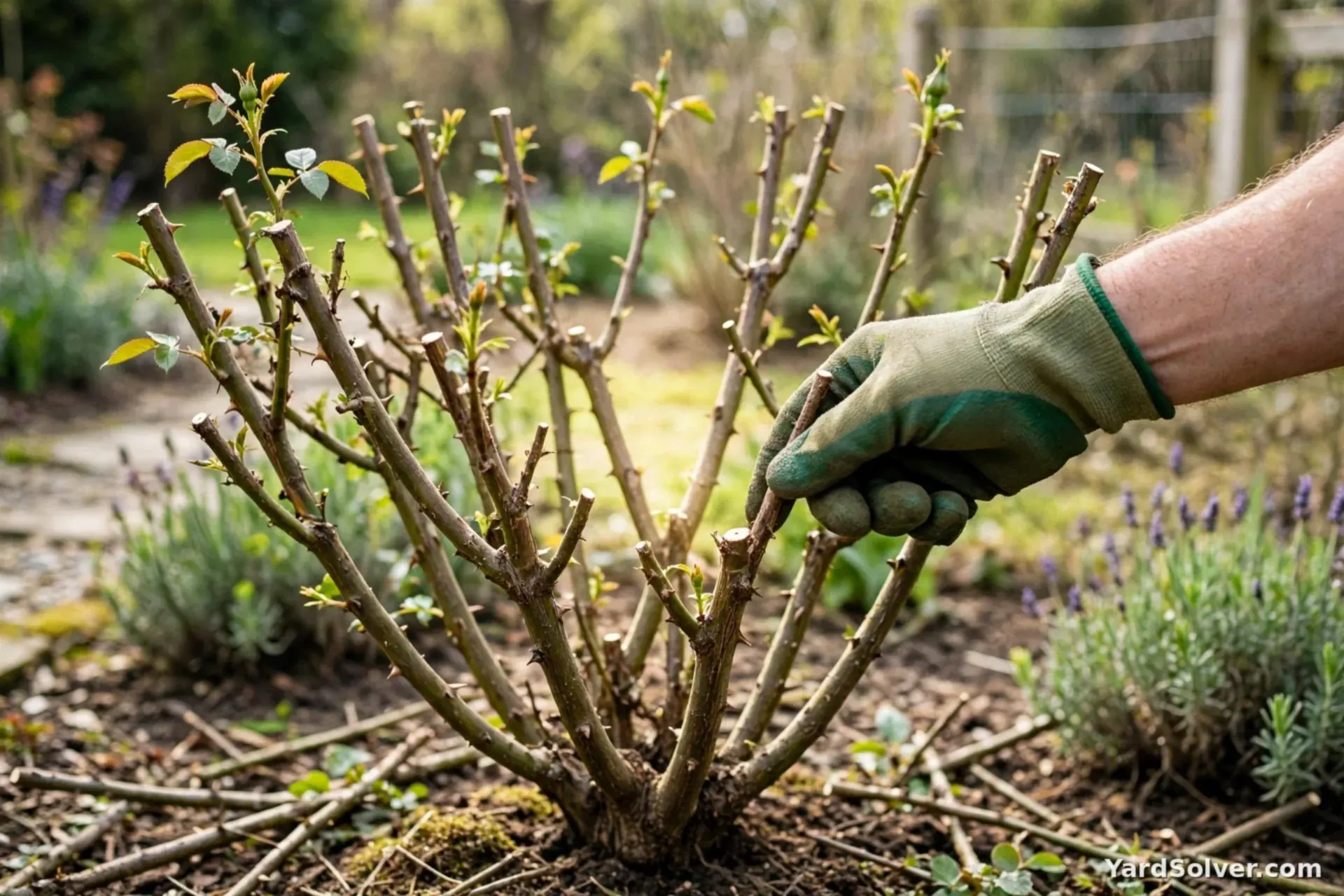
Now shape the bush into an open vase. Remove canes that cross through the centre or rub against another cane, and take out thin, weak, twiggy growth — as a rule, anything thinner than a pencil on a hybrid tea. Keep the strongest 3–5 young canes on hybrid teas and floribundas, more on big shrub roses. An open centre is not about looks: air moving through the bush dries leaves quickly after rain, which starves the mildew and black spot fungi that thrive in a still, damp thicket.
Step 4 — Make the cut in the right place
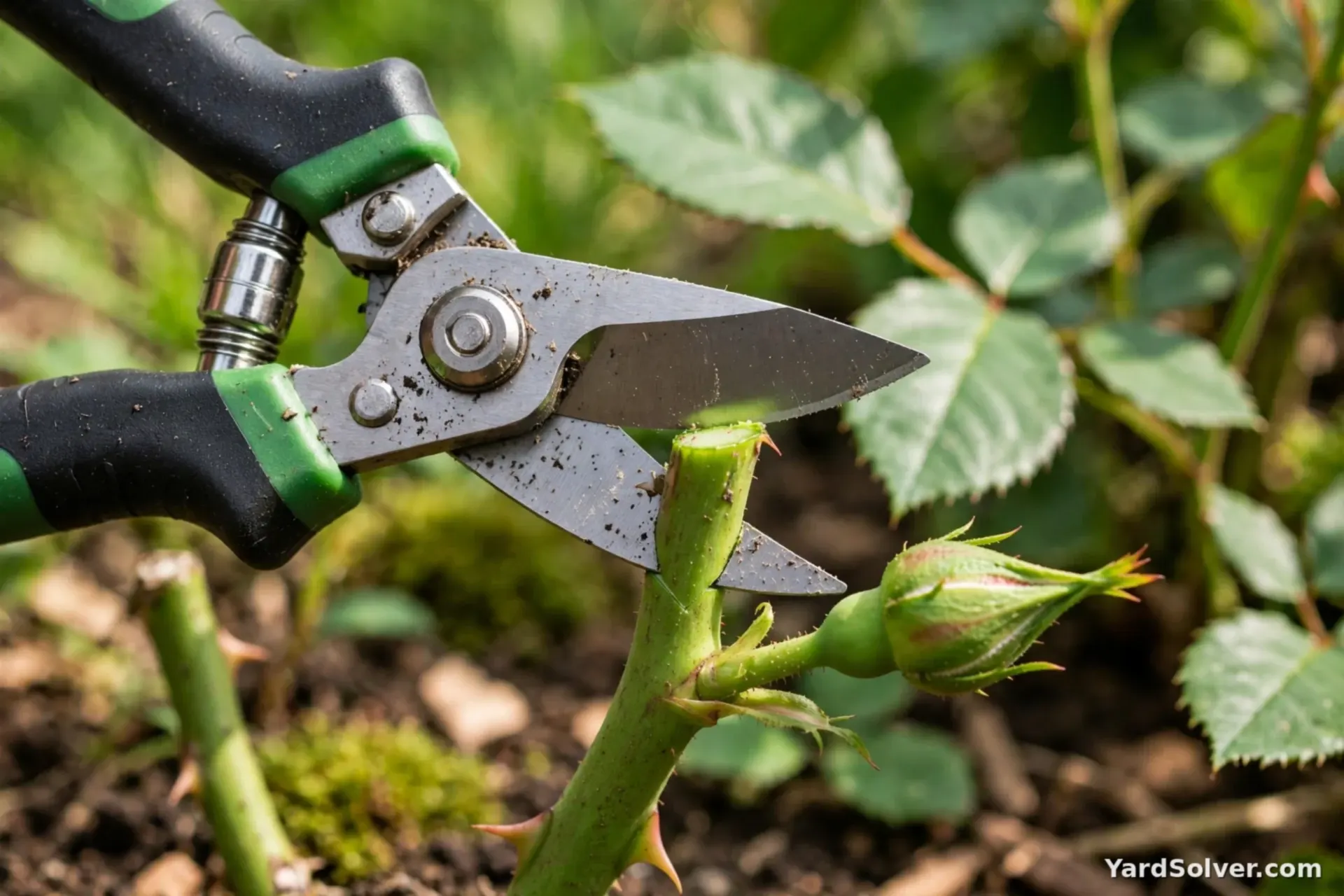
Every shortening cut follows the same geometry: cut about 1/4 inch (5–6 mm) above a healthy leaf bud, angled at roughly 45° so the slope runs away from the bud and rain sheds off instead of pooling on it. Choose a bud that faces outward, away from the centre of the bush — the new shoot grows in the direction the bud points, so outward buds build the open vase and inward buds rebuild the thicket. Cut too far above the bud and the stub dies back; cut too close and you damage the bud itself. How hard to shorten is your choice: cutting canes back by about half is the standard for hybrid teas, a third for vigorous shrubs — hard pruning gives fewer, bigger blooms; light pruning gives more, smaller ones.
Step 5 — Clean up, feed, and mulch
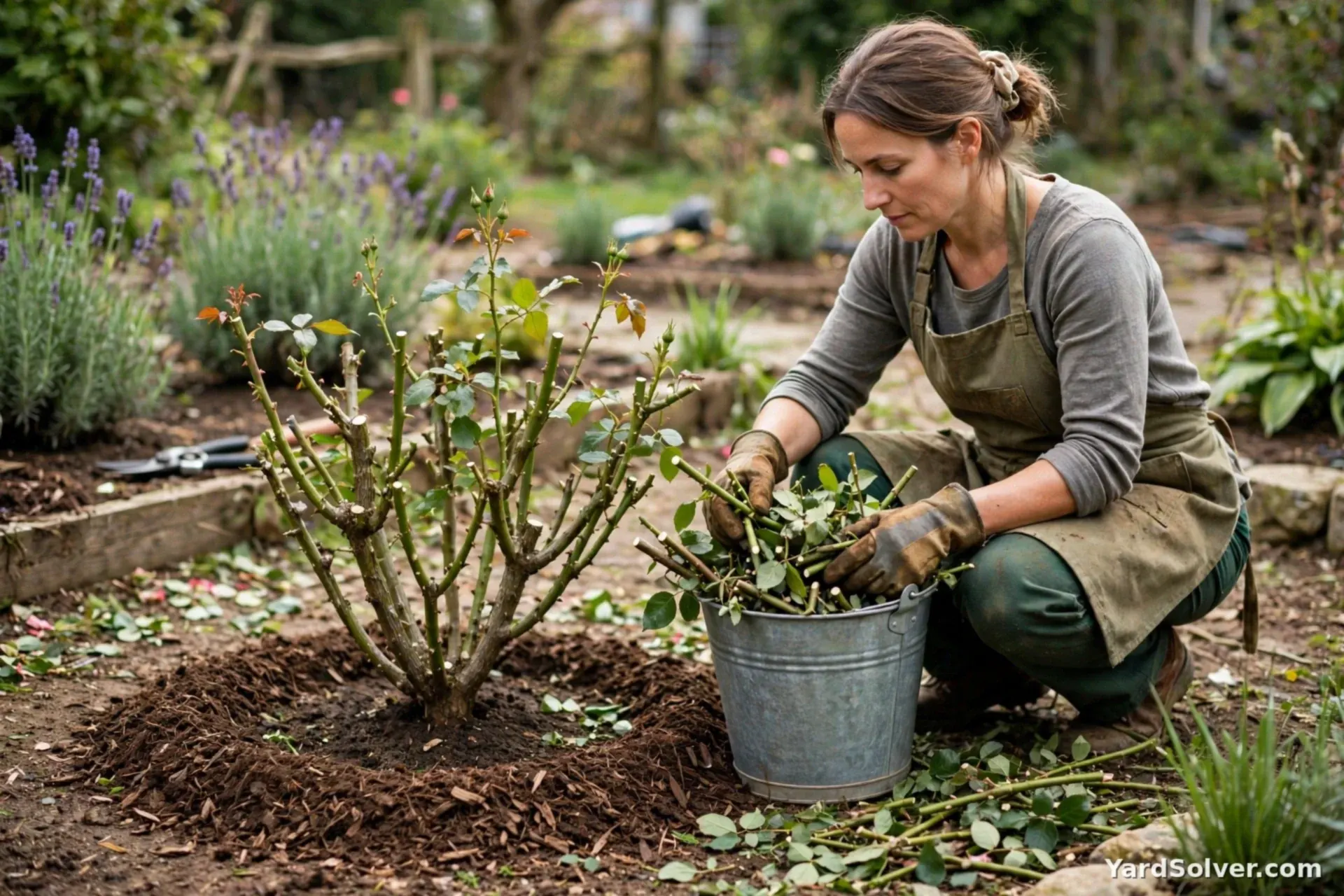
Gather every clipping and fallen leaf from under the bush and bin them — do not compost them; fungal spores overwinter in that debris and re-infect the new growth. Then feed and mulch: a balanced rose or garden feed at the label rate for the bush's size (the Fertilizer Calculator keeps the dose honest), and a 2–3 inch (5–8 cm) ring of compost or bark mulch, kept off the stems themselves — the Mulch Calculator works out how much you need. Water it all in if the spring is dry. The winter side of rose and woody-plant care — what to cut and what to leave standing in the cold months — is covered for trees in How to Prune Fruit Trees in Winter.
Keep going
Pruning other things? The woody-plant winter routine is in How to Prune Fruit Trees in Winter, and the vegetable garden's equivalent tidy-up is How to Prune Tomato Plants.
Roses live or die by their soil and spacing — find their profile in the Plant Library before you plant the next one.
Questions people ask
Can I prune roses in the fall?
Only lightly. Tidying the tallest canes down by a third so winter wind does not rock the plant loose is fine, but the main prune belongs to late winter and early spring. Hard fall pruning stimulates tender new growth that frost then kills, and fresh cuts heal slowly in cold, wet weather.
How hard can I cut back a neglected, overgrown rose?
Harder than you think. Most modern roses survive being cut to 12–18 inches (30–45 cm) of strong young canes and regrow vigorously — this renovation prune is standard practice. Do it in the normal late-winter window, keep the three strongest young canes you can find, and feed and mulch afterwards.
Why did my rose produce long blind shoots with no flowers?
Blind shoots — growth that ends in leaves instead of a bud — usually follow a hard late frost, deep shade, or pruning that removed the flowering wood of a once-blooming type. Cut the blind shoot back to a strong outward bud and the replacement growth usually flowers.
Comments & ratings
No comments yet.
Be the first to share your experience.