
Guides · Seed starting · Published November 10, 2026
Are Old Seeds Still Good? The Paper Towel Test

Every January the same question lands on the kitchen table: are last year's seed packets still worth sowing? The packet date will not tell you — seed does not expire on a schedule, it fades, and how fast depends on the crop and on where the packet spent the year. The paper towel test settles it for the price of one towel. Ten seeds, a few days of waiting, and you get a real germination percentage — a number you can act on, instead of a bed of bare soil and a guess that failed. Here is the test, and exactly what to do with the answer.
How long seed keeps, roughly
| Crop | Keeps about | Crop | Keeps about |
|---|---|---|---|
| Onion | 1 year | Beans and peas | 3 years |
| Parsnip | 1 year | Carrot and spinach | 3 years |
| Leek and sweet corn | 2 years | Tomato | 4–5 years |
| Pepper | 2–3 years | Cabbage family | 4 years |
| Parsley | 1–2 years | Cucumber and lettuce | About 5 years |
These are the classic extension figures for seed stored cool and dry. A packet older than its row here is not automatically dead — it is automatically worth testing. A packet stored in a hot shed may fail years early.
Step 1 — Gather the doubtful packets
Work through your seed box — if you keep the My Seed Box inventory, sort it by year and pull every packet past the age in the table above, plus anything that lived somewhere warm or damp whatever its date. Testing costs ten seeds a packet, so be generous with suspects: the test is cheap, and a failed row in May is not. Write each crop and its packet year on your list as you go.
Step 2 — Lay out ten seeds
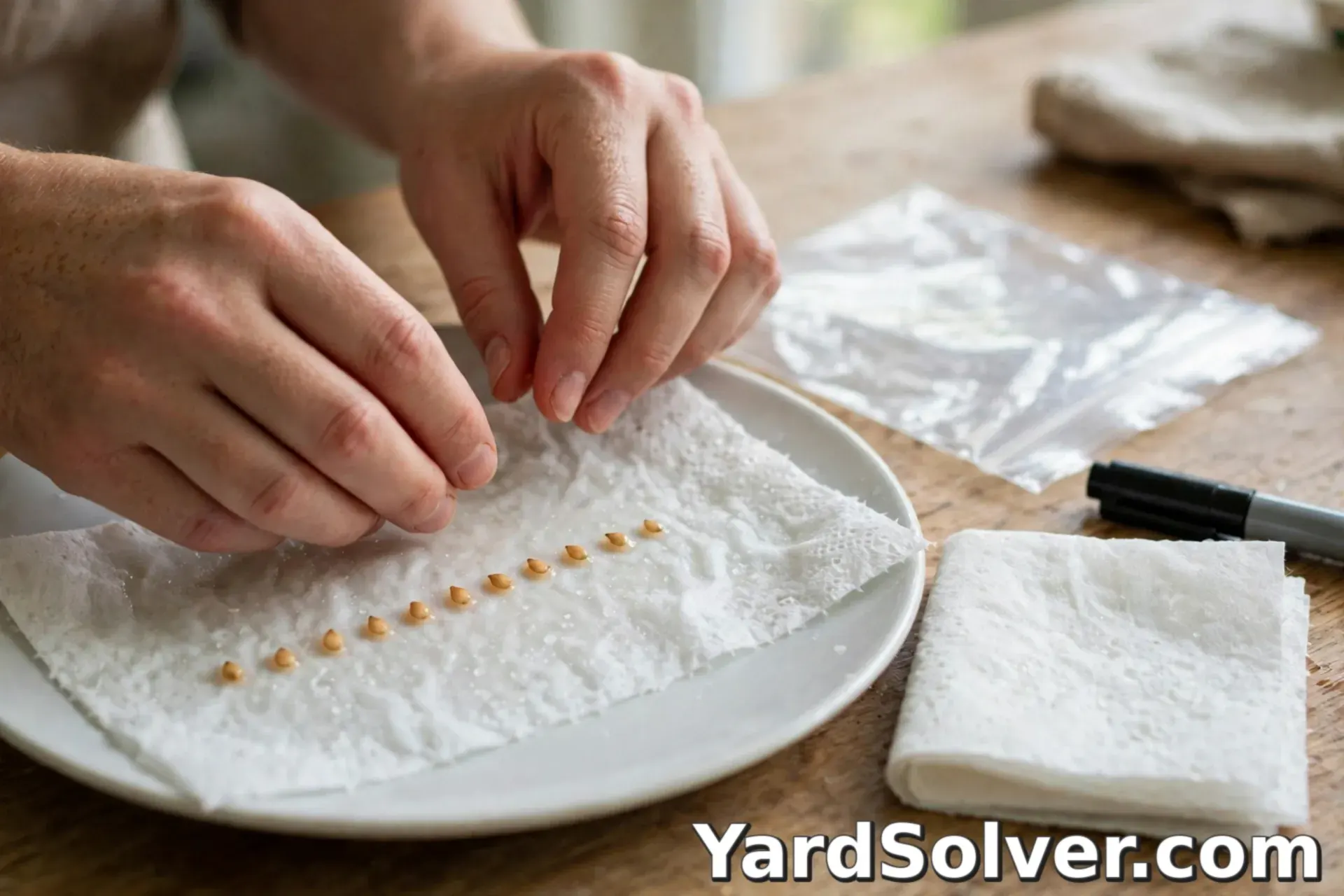
Wet a paper towel and wring it out so it is damp like a wrung sponge, not dripping. Lay ten seeds in a row on one half, fold the other half over them, and slide the towel into a clear zip bag or a lidded tub. Write the crop, the packet year and today's date on the bag. Ten seeds is the whole trick: whatever sprouts, you read the count straight off as a percentage — seven sprouted is 70 percent, no sums needed.
Step 3 — Keep it warm and wait the crop's own time
Put the bag somewhere steadily warm — the top of the fridge, an airing cupboard, a heat mat if you run one — around 70°F suits most seed. Then wait as long as that crop normally takes to sprout: radish a few days, tomato about a week, pepper up to two, parsley and parsnip up to three. The Seed Germination Temperature Chart lists the days for 30 vegetables if you need the figure for yours. Check every couple of days and re-dampen the towel if it dries; do not judge early, because old seed is often slow seed, not dead seed.
Step 4 — Count the sprouts and make the call
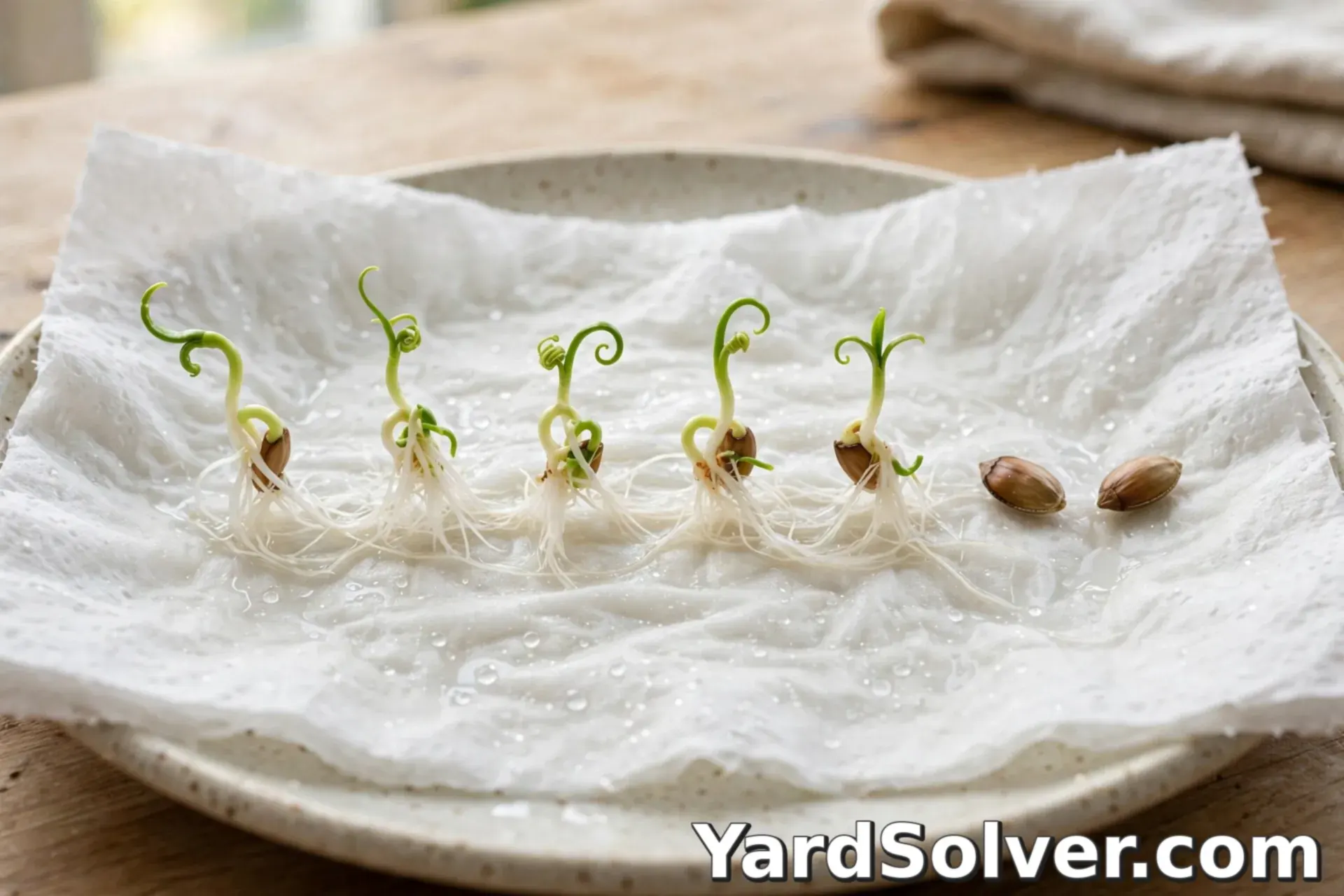
Unfold the towel and count a seed as alive only if a white root has come out. Then the rules are simple. 8 to 10 sprouted (80–100 percent): sow as normal, the packet is fine. 5 to 7 sprouted (50–70 percent): the seed is usable but thin — sow thicker to make up for it, roughly half as much seed again at 70 percent and double at 50. The Seed Calculator works out the adjusted amount for your bed size. 4 or fewer (under 50 percent): buy fresh. A variety you cannot replace — a saved heirloom, a gift — is the one exception: sow the whole packet thickly and take what comes.
Step 5 — Store the survivors so next year is easier
Write the test result and the date on each packet that passed — “85%, Jan 2026” is next year's decision already made. Then store the packets the way seed likes it: cool, dry, dark and sealed, in a jar or tub with a silica packet if you have one. Cool and dry beats a fancy container in a warm room every time; the classic rule is that seed life roughly halves for every step warmer and damper it is stored. Log the keepers in your My Seed Box, and note the test dates in the Garden Planner so the January audit becomes a habit rather than a rescue.
Keep going
Seed passed? When to Start Seeds Indoors counts back from your last frost and gives the start dates.
Warmth is half the battle: the Seed Germination Temperature Chart shows the soil temperature each crop is waiting for.
Questions people ask
How long does the paper towel test take?
As long as the crop itself takes to sprout. Radish answers in 3 to 5 days, tomatoes in about a week, peppers in one to two weeks, and slow parsley or parsnip can need three weeks. Judge the test only after the crop's full normal sprouting time, or you will fail good seed for being slow.
Can I plant the seeds that sprouted in the towel?
Yes — lift each sprout gently with tweezers and set it root-down into a pot of mix, holding it by the seed coat, never by the root. Tomatoes and peppers from the test towel pot up happily. It feels like a bonus row of free seedlings, because it is.
The packet says packed for last year — is the seed dead?
No. That date is the packing season, not an expiry date. Seed does not switch off on a birthday; its germination fades a little each year, faster in a warm or damp drawer and slower in a cool, dry jar. That fading is exactly why a ten-seed test beats guessing from the date.
Comments & ratings
No comments yet.
Be the first to share your experience.