
Guides · Seed starting · Published October 31, 2026
When to Start Seeds Indoors: The Chart by Plant
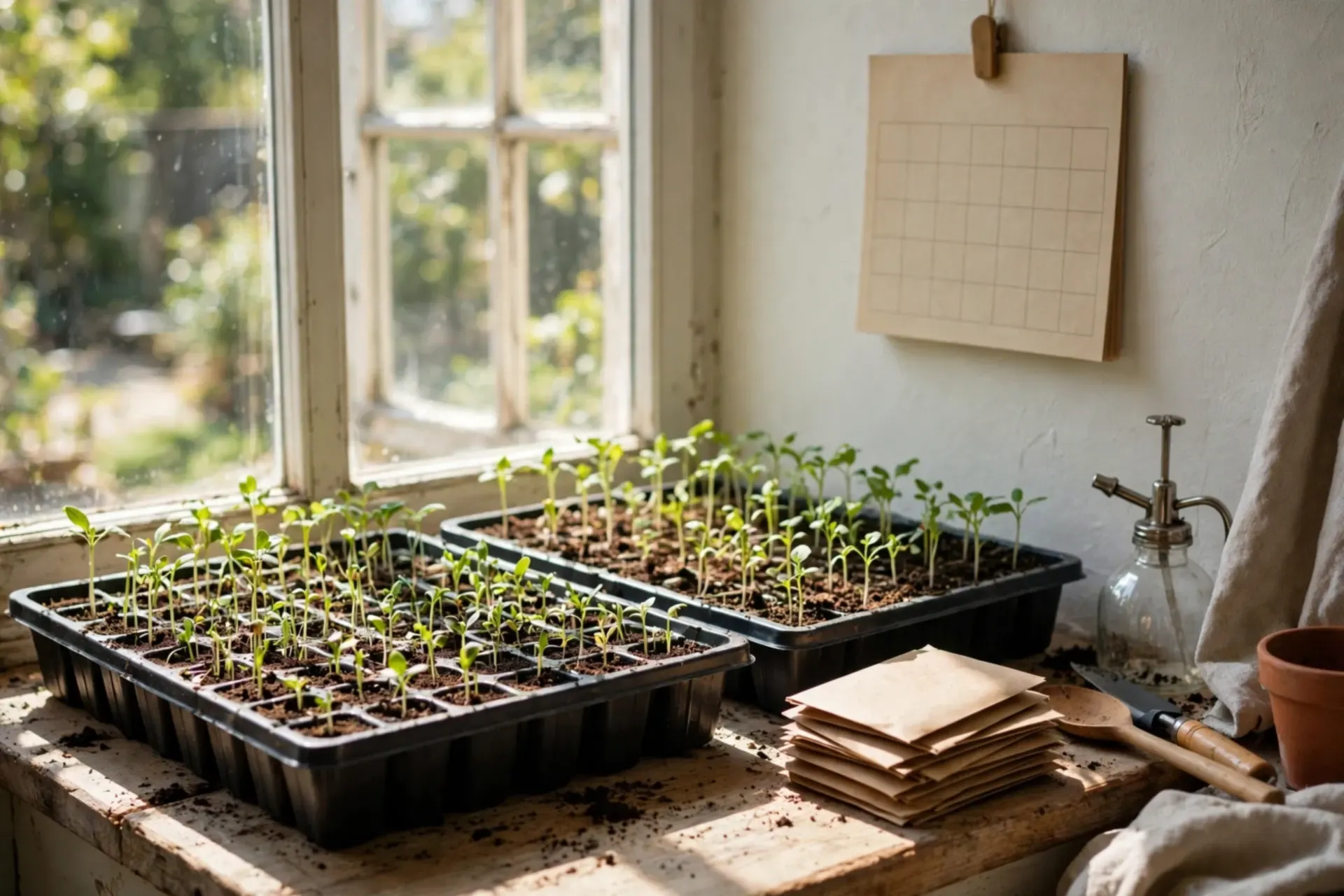
Every seed-starting date in your season comes from one number: your average last spring frost date. Find it, then count backwards by the weeks in the chart below. That is the whole method — no zone charts, no guessing. Our Planting Calendar does the counting for you once you enter your frost date.
The chart: weeks before your last frost date
- 10–12 weeks before: onions, leeks, celery — the slow starters, always first
- 8–10 weeks before: peppers (they are genuinely slow), eggplant
- 6–8 weeks before: tomatoes, broccoli, cabbage, cauliflower, kale
- 6 weeks before: basil and most herbs
- 4–6 weeks before: lettuce and leafy greens (or sow them outside early — they tolerate cold)
- 3–4 weeks before: cucumbers, squash, melons — no earlier; they grow fast and hate waiting in pots
- Sow directly outside instead: beans, peas, corn, carrots, beets, radishes
Worked example: if your last frost is around May 15, peppers start indoors about March 6–20, tomatoes about March 20 – April 3, and cucumbers about April 17 – May 1.
When to start seeds indoors by zone
The chart above counts back from your own last frost date, which is the accurate method. If you think in zones instead, this table does the conversion: it uses the typical last-frost window for each zone and shows when the earliest crops — the 10–12 week group — go in, and when the main 6–8 week group follows. Zones are broad bands and your town's actual frost date is the one to trust; the Planting Calendar gives you that date directly.
| Zone | Typical last frost | Start onions, leeks & celery indoors (10–12 wks before) | Start tomatoes & brassicas indoors (6–8 wks before) |
|---|---|---|---|
| Zone 3 | Early to mid-May | Mid-February to early March | Mid to late March |
| Zone 4 | Late April to mid-May | Early to mid-February | Mid-March to early April |
| Zone 5 | Mid-April to mid-May | Late January to late February | Early to late March |
| Zone 5b | Mid to late May | Mid to late February | Late March to early April |
| Zone 6 | Early to late April | Mid-January to mid-February | Late February to mid-March |
| Zone 7 | Late March to early April | Early to mid-January | Mid to late February |
| Zone 8 | Mid to late March | Late December to mid-January | Late January to mid-February |
| Zone 9 | Mid-February to late February | Early to mid-December | Late December to mid-January |
| Zone 10 | Little or no frost | November to December (for spring crops) | December to January |
Zone 5b worked example: if your average last frost is around May 20, count back 10–12 weeks and onions, leeks and celery are sown in mid to late February; peppers and eggplant (8–10 weeks) follow in mid to late March, and tomatoes (6–8 weeks) in late March to early April. If you only grow the very earliest crops, our companion guide What Are the Earliest Seeds to Start Indoors? works through just those first sowings, in order.
Step 1 — Get your last frost date
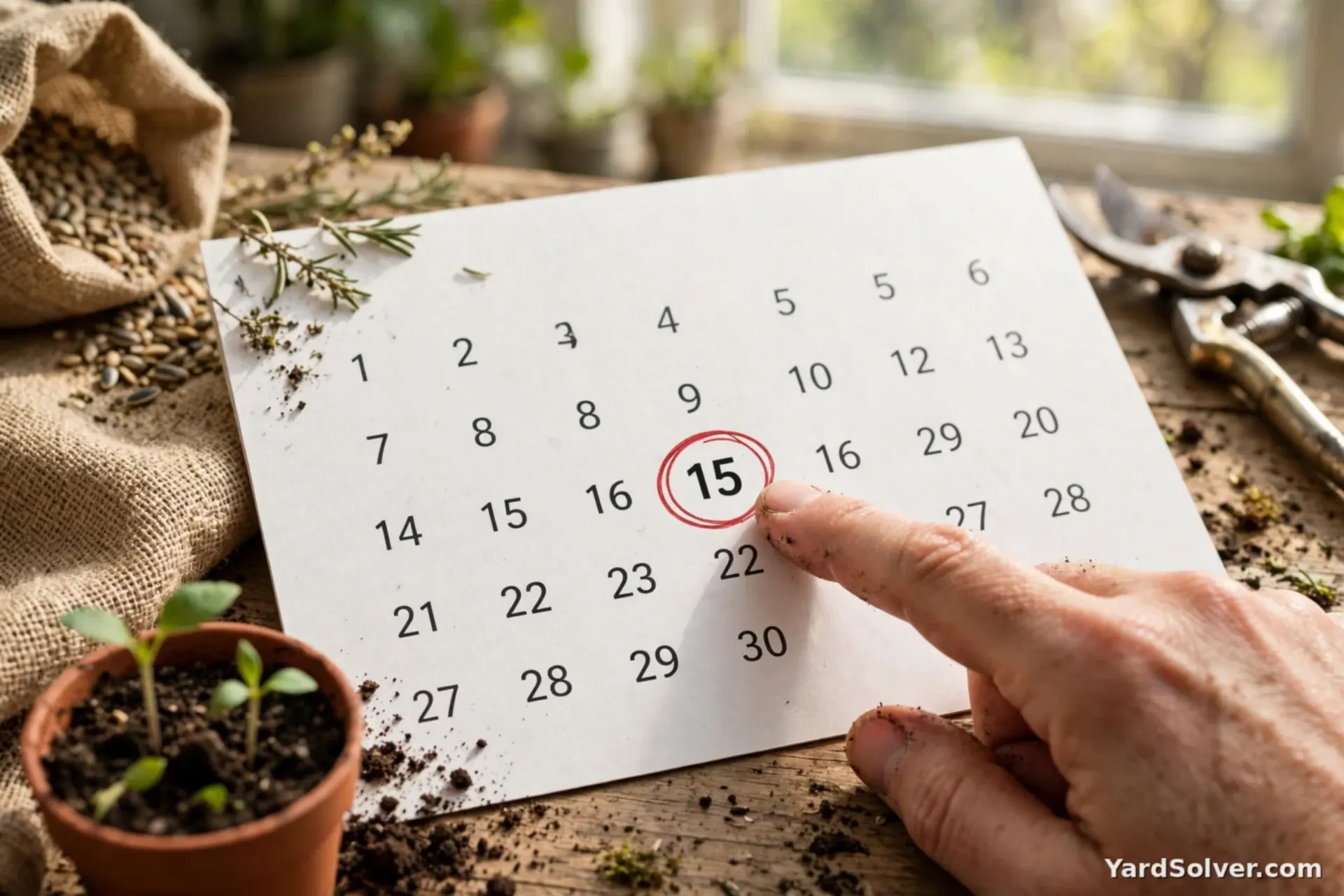
Use the average last frost date for your town (the Planting Calendar explains typical vs safer dates — the safer date is the wise one for tender plants like tomatoes and peppers). Write it on the calendar in big letters; everything counts back from it.
Step 2 — Count back and write real dates on the packets
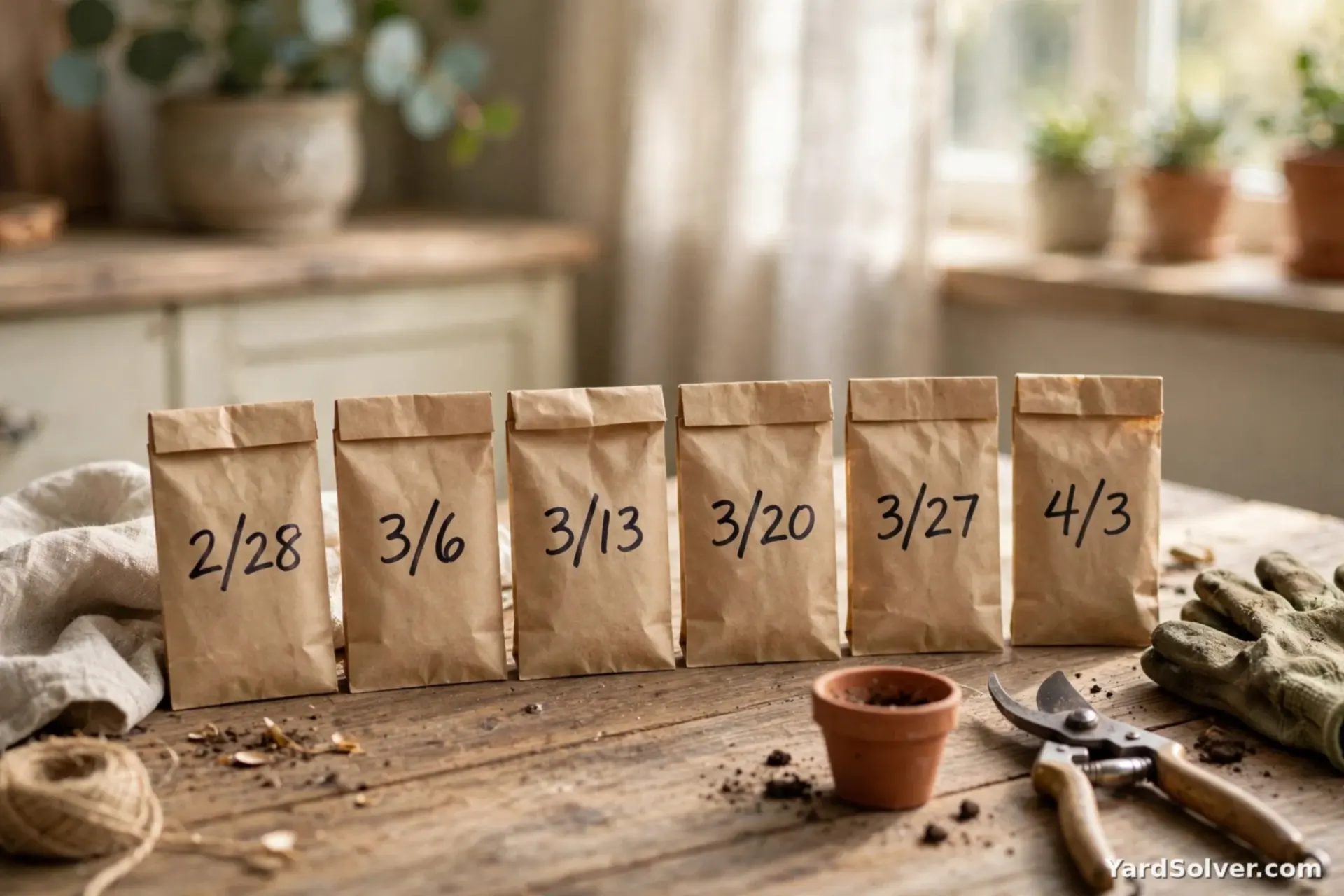
For each packet, count back its weeks and write the actual sowing date on the packet in marker. A packet that says "start March 27" gets sown; a packet that says "6–8 weeks before last frost" gets forgotten in a drawer.
Step 3 — Resist starting early (the most common mistake)
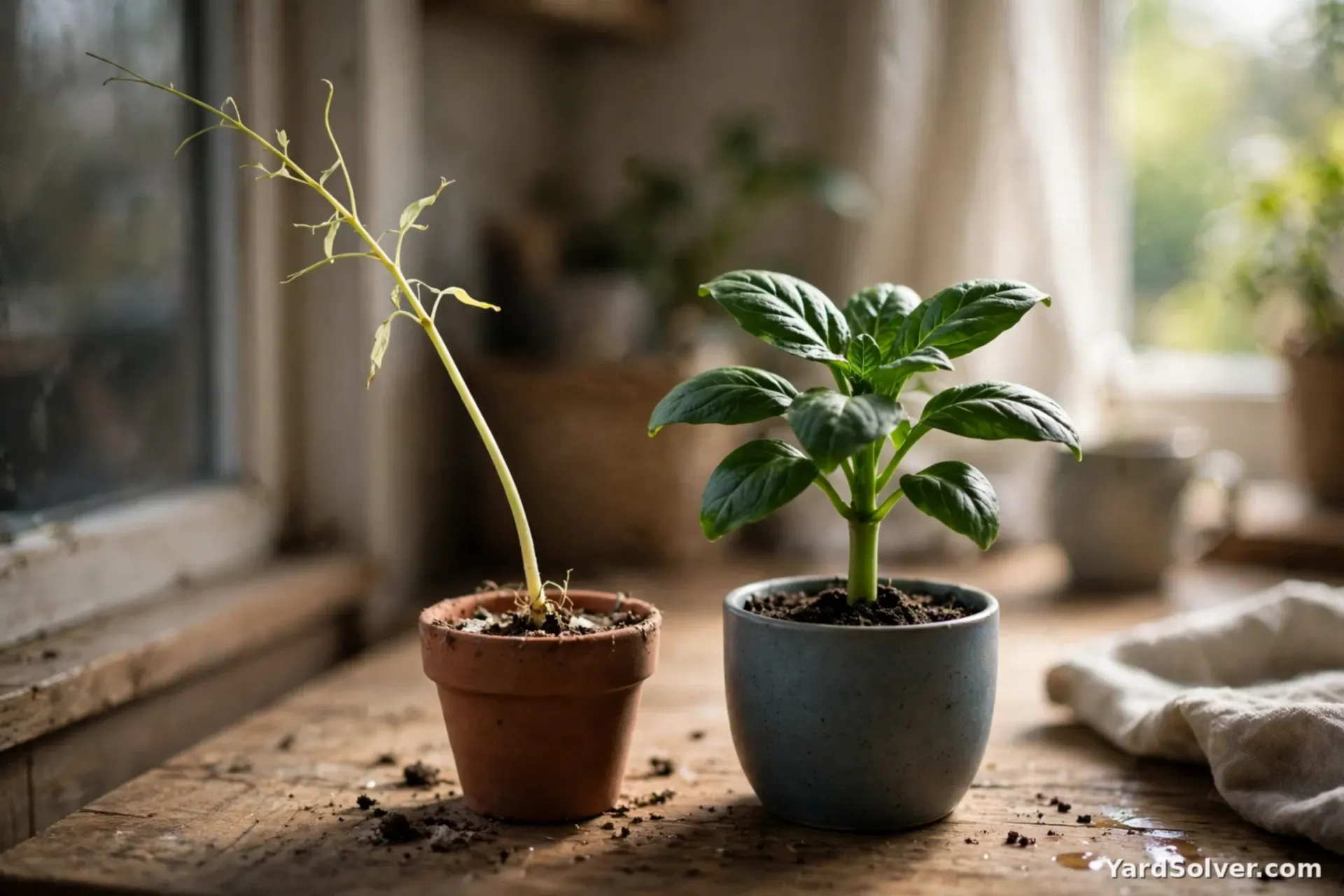
February enthusiasm produces March problems: seedlings that outgrow their pots and stretch thin toward weak light — see Why Are My Seedlings Leggy? A tomato started on time in good light passes an early, leggy one within weeks of transplanting. If you are itching to sow in deep winter, winter sowing in milk jugs is the method built for exactly that itch.
Step 4 — Give seedlings light the day they sprout
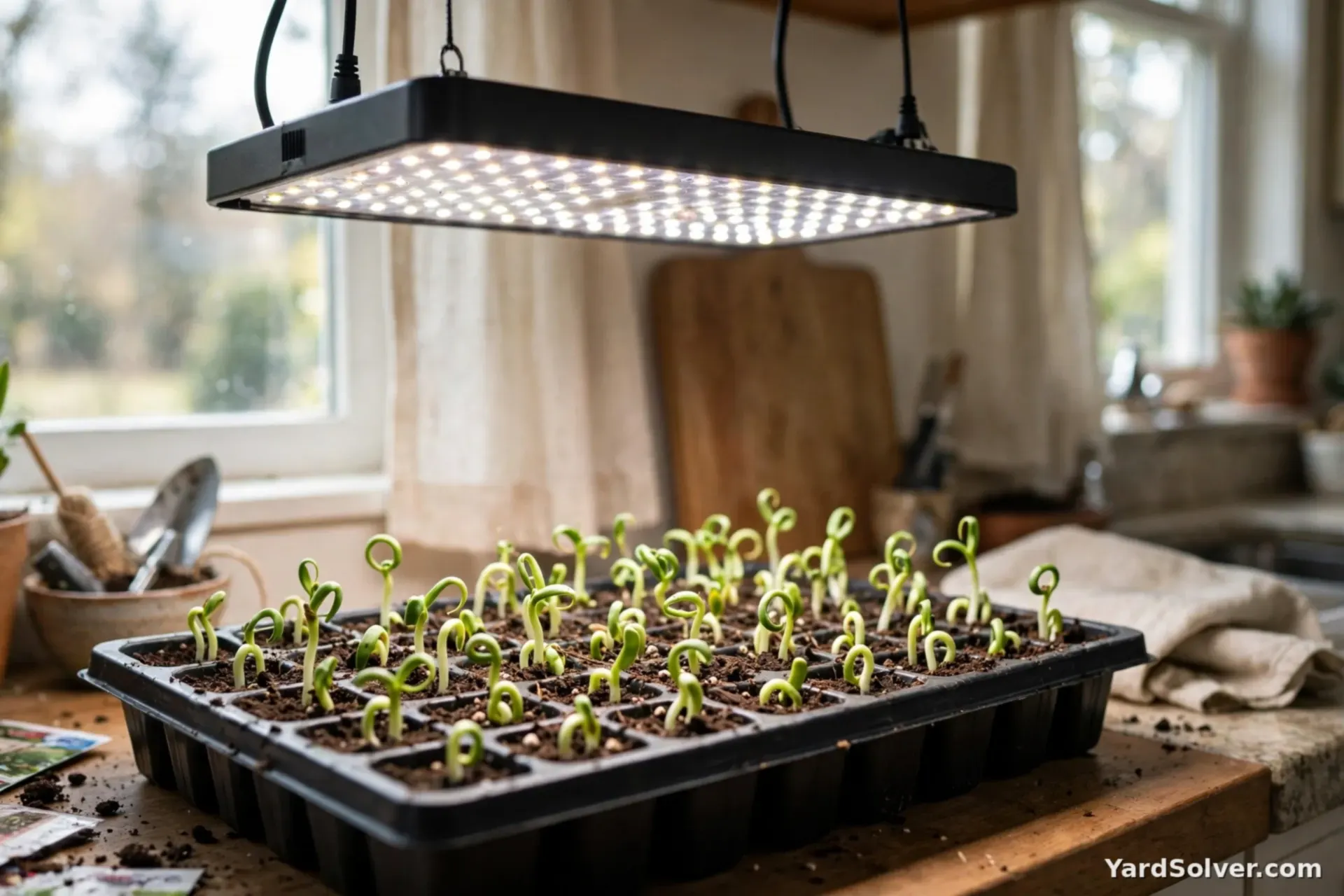
Most seeds germinate in the dark or in ordinary room light, but the day the first loop of green appears, the tray needs strong light — a bright south window at minimum, ideally an LED or fluorescent light 2–4 inches above the leaves for 14–16 hours a day. Light, more than any other factor, decides whether seedlings grow stocky or stretch.
Step 5 — Sow in small batches, not all at once
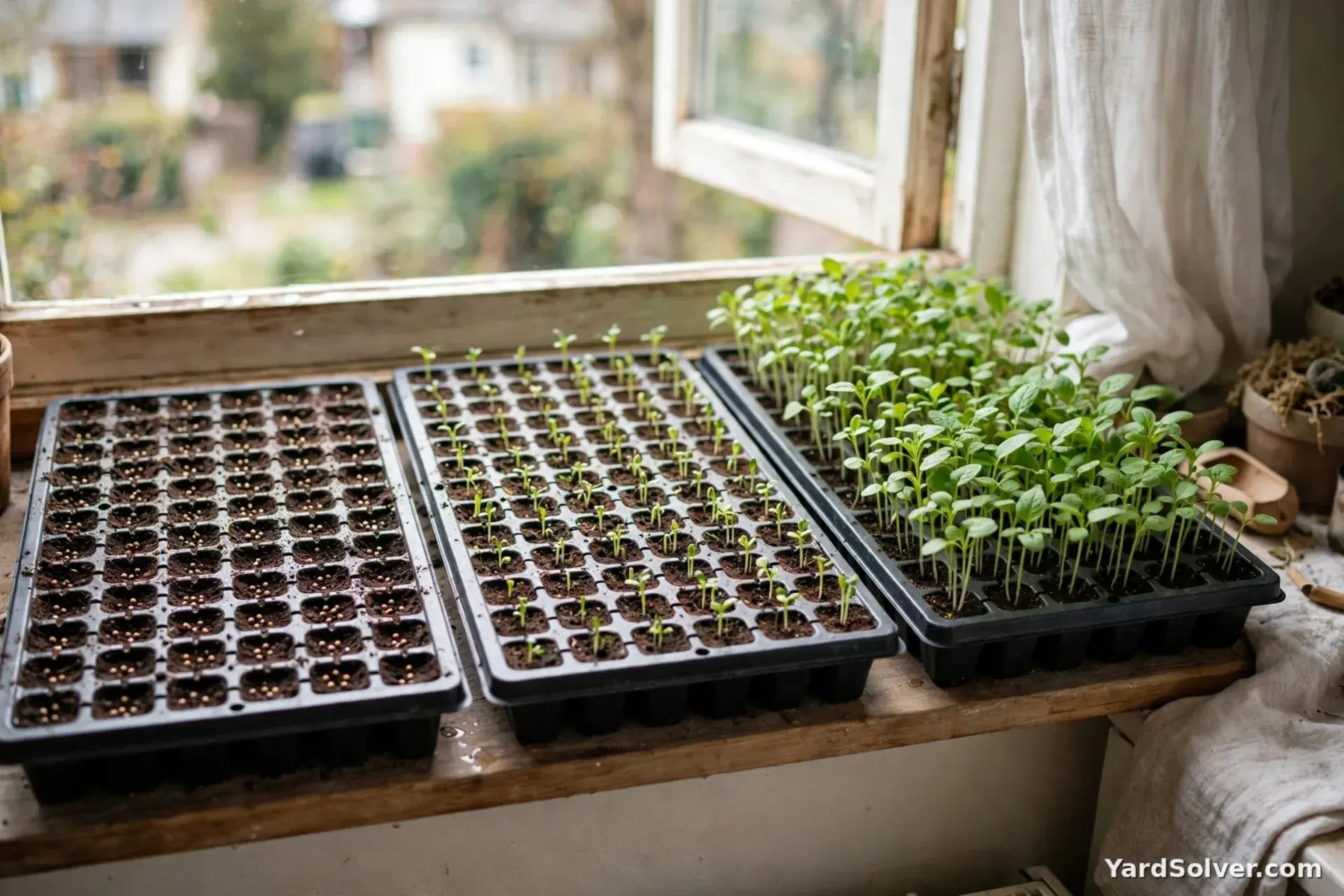
For lettuce, beans (outside) and herbs, a small sowing every 2 weeks beats one big sowing — you harvest over months instead of drowning in lettuce for one week. Note each sowing date on the packet; your future self, staring at identical green trays, will be grateful.
Keep going
Next in the season: How to Start Tomato Seeds Indoors · How to Grow Herbs Indoors in Winter · Seed Germination Temperature Chart.
Questions people ask
What happens if I start seeds too early?
Seedlings outgrow their pots and stretch thin toward weak light. They transplant poorly and often produce less than seedlings started on time. Starting late is recoverable; starting a month early usually is not.
Can I just follow the seed packet?
Yes — the packet uses this same method, written for your exact variety. Where the packet and a general chart differ, follow the packet.
Which vegetables should NOT be started indoors?
Beans, peas, corn, carrots and other roots — sow them directly where they will grow. Cucumbers, squash and melons can start indoors only 3–4 weeks ahead, in individual pots.
When should I start seeds indoors in Zone 5b?
In Zone 5b the average last frost falls in mid to late May, so count back from it: onions, leeks and celery 10–12 weeks before (mid to late February), peppers and eggplant 8–10 weeks before (mid to late March), and tomatoes 6–8 weeks before (late March to early April). The by-zone table on this page converts the same count for zones 3–10.
Comments & ratings
No comments yet.
Be the first to share your experience.