
Guides · Seed starting · Published November 10, 2026
Seed Germination Temperature Chart: 30 Vegetables
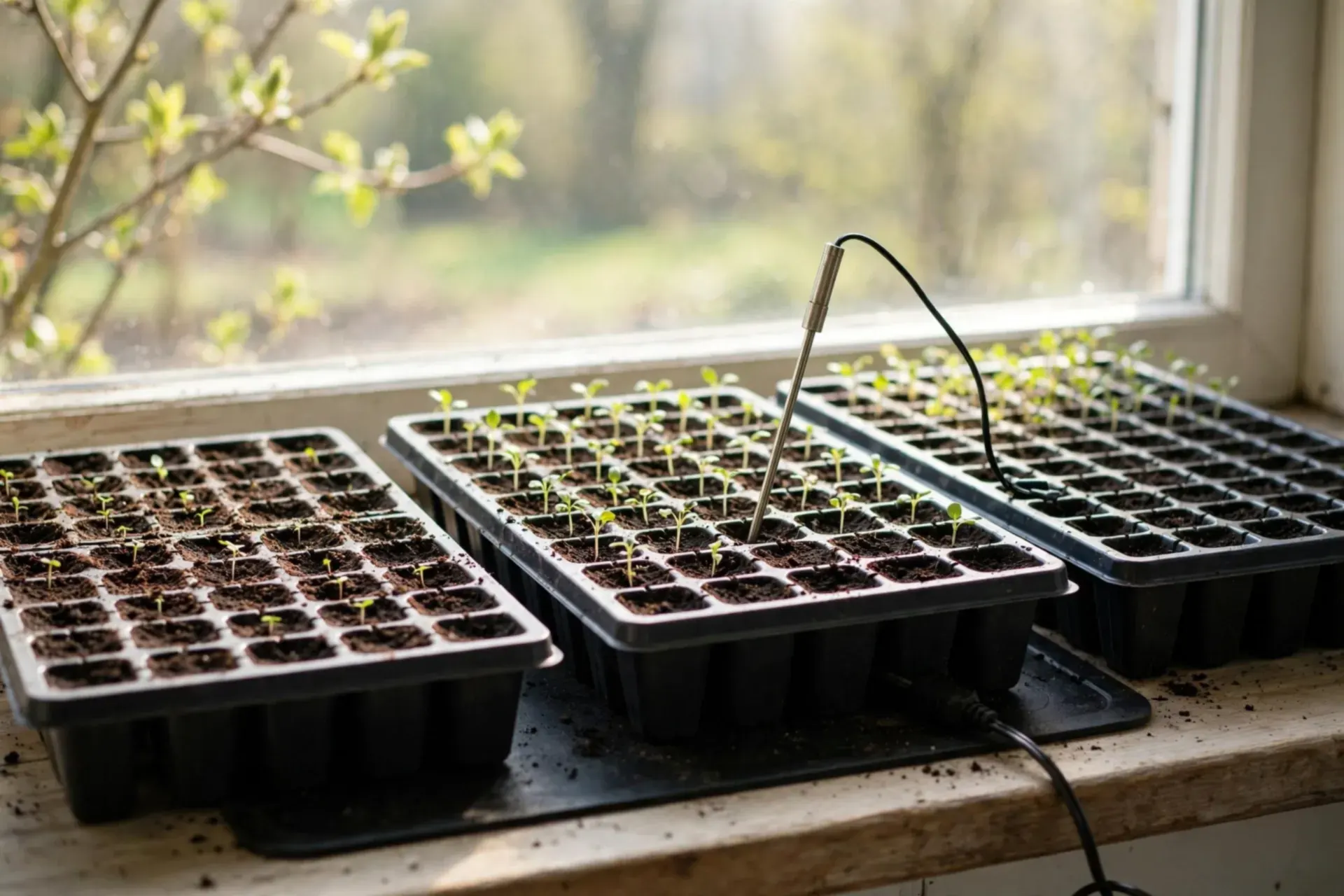
More seed fails from soil temperature than from any other cause. Sow tomato seed into 50°F soil and it can sit there for six weeks, rotting a little more each day; sow it at 80°F and it is up inside a week. Every crop has its own numbers — the coldest soil that will sprout it, the range where it sprouts fast and strong, and the heat where it gives up. This chart puts all three on one page for 30 vegetables, plus the days to expect at the best temperature. Print it, pin it in the shed, and sow by the soil, not by the calendar or the sunshine.
The chart — 30 vegetables
| Crop | Coldest soil °F | Best soil °F | Too hot °F | Days to sprout at best temp |
|---|---|---|---|---|
| Asparagus | 50 | 60–85 | 95 | 14–21 |
| Beans, snap | 60 | 60–85 | 95 | 6–10 |
| Beets | 40 | 50–85 | 95 | 7–14 |
| Broccoli | 40 | 45–85 | 95 | 4–7 |
| Brussels Sprouts | 40 | 45–85 | 95 | 4–7 |
| Cabbage | 40 | 45–85 | 95 | 4–7 |
| Carrots | 40 | 45–85 | 95 | 14–21 |
| Cauliflower | 40 | 45–80 | 95 | 4–7 |
| Celery | 40 | 60–70 | 85 | 14–21 |
| Corn, sweet | 50 | 60–95 | 105 | 4–7 |
| Cucumber | 60 | 65–95 | 105 | 3–6 |
| Eggplant | 60 | 75–90 | 95 | 7–14 |
| Kale | 40 | 45–85 | 95 | 4–7 |
| Leeks | 35 | 60–85 | 95 | 7–14 |
| Lettuce | 35 | 60–75 | 85 | 2–8 |
| Muskmelon | 60 | 75–95 | 105 | 3–5 |
| Okra | 60 | 70–95 | 105 | 7–14 |
| Onion | 35 | 50–95 | 95 | 7–14 |
| Parsley | 40 | 50–85 | 90 | 14–28 |
| Parsnip | 35 | 50–70 | 85 | 14–21 |
| Peas | 40 | 40–75 | 85 | 6–10 |
| Pepper | 60 | 65–95 | 95 | 7–14 |
| Pumpkin | 60 | 70–90 | 100 | 4–7 |
| Radish | 40 | 45–90 | 95 | 3–5 |
| Spinach | 35 | 45–75 | 85 | 7–14 |
| Squash, summer | 60 | 70–95 | 100 | 3–6 |
| Swiss Chard | 40 | 50–85 | 95 | 7–14 |
| Tomato | 50 | 65–85 | 95 | 6–14 |
| Turnip | 40 | 60–95 | 105 | 2–5 |
| Watermelon | 60 | 70–95 | 105 | 3–8 |
Figures follow the standard university germination tables (Oregon State, Purdue and UC Sacramento). Treat every number as a band, not a line — sources differ by a few degrees, seed lots vary, and “best” means the fastest, strongest sprouting, not the only temperature that works.
Step 1 — Measure the soil, not the air
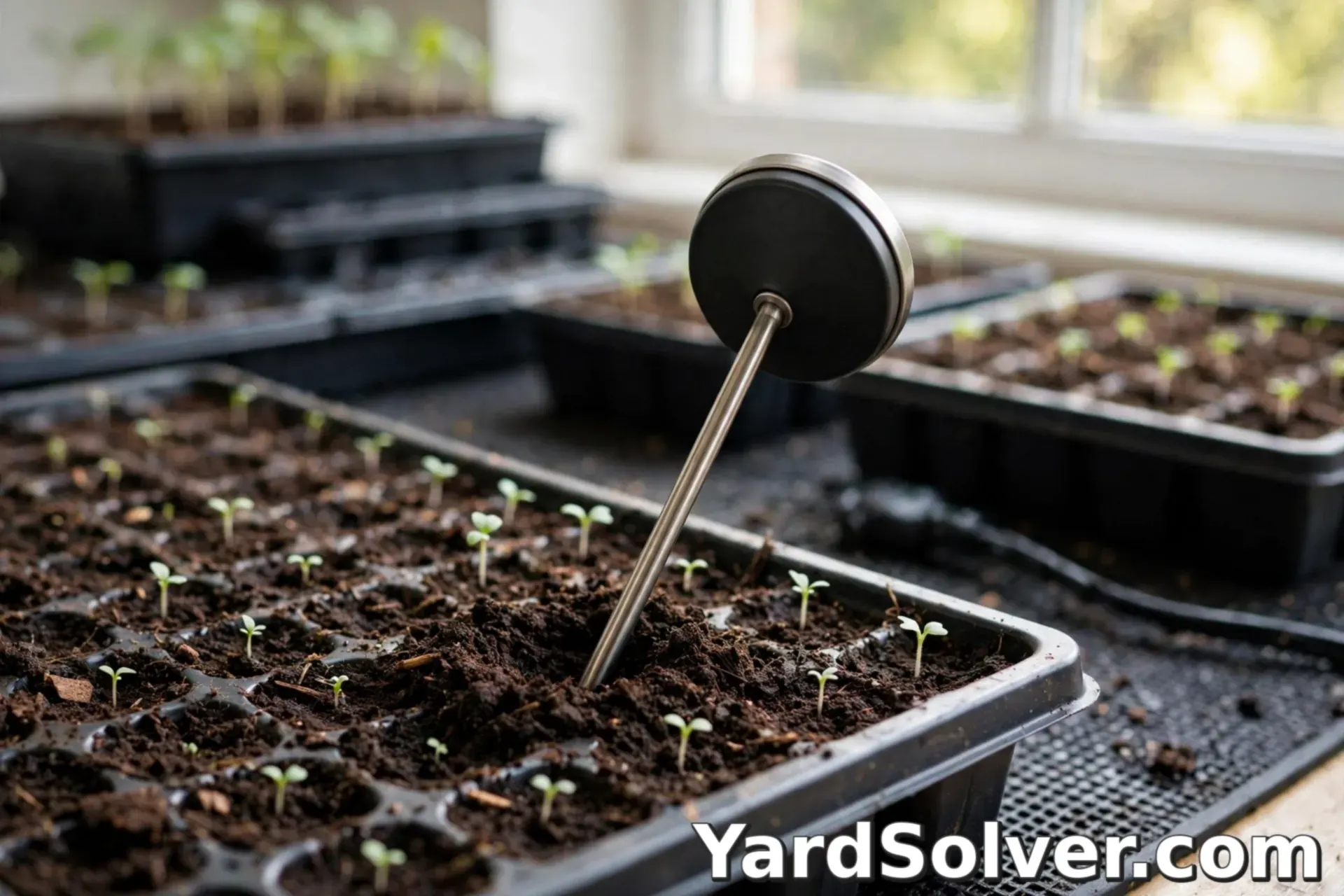
A soil thermometer costs a few dollars; a kitchen probe does the same job. Push it down to the depth the seed will sit — an inch or two for most crops — and read it in the morning, when the soil is at its coolest. One warm afternoon reading lies; the average of two or three mornings is the number the seed will actually live in. Indoors, the same rule applies to the tray: the soil in the pot is what counts, not the room. A tray on a sunny sill can swing 20 degrees in a day, and a cold basement shelf can hold tomato seed under 60°F for weeks.
Step 2 — Read the three numbers the right way
Coldest is survival, not a promise: seed can sprout there, slowly, and some of it will rot or give up on the way — peas and lettuce shrug at 40°F soil, beans sulk and rot below 60°F. Best is where sprouting is fast and nearly complete, and it is the column worth aiming at. Too hot is a real shut-off, not a slowdown: lettuce above about 85°F mostly refuses to sprout at all, and spinach and celery do the same. Between coldest and best, everything is a trade of days — tomato at 50°F takes roughly 43 days to come up; at 85°F, about 6. Slow seed outdoors is seed exposed to cold soil, pests and drying for weeks longer, which is why the waiting game costs stands.
Step 3 — Warm the slow ones, cool the fussy ones
For the warm-lovers indoors — pepper, eggplant, tomato — a heat mat under the tray, or a spot on top of the fridge, lifts the mix into the best range and can cut the wait in half. Outdoors, black plastic laid on the bed for a week before sowing, or a cloche over the row, buys a few degrees when you are impatient in spring. For the cool-lovers in summer, work the other way: sow lettuce and spinach in the evening, water the row in, and shade it with a board or a strip of fabric for the first days. And when the dates matter as much as the temperature, pair this chart with the Planting Calendar for your frost dates and the Seed Calculator for how much seed the bed needs.
Keep going
Old seed in the drawer? Are Old Seeds Still Good? — the paper towel test tells you the percentage before you sow.
Dates as well as degrees: When to Start Seeds Indoors counts back from your last frost.
Questions people ask
Is this air temperature or soil temperature?
Soil, every time. Seed lives in the soil, and soil lags the air by days in spring — a warm afternoon means nothing to a seed two inches down. Measure the soil at seed depth in the morning, and average two or three mornings before you decide.
My tomatoes indoors took three weeks to sprout. Why?
Almost always a cold tray. At 50°F tomato seed needs about 43 days; at 85°F the same seed is up in about 6 days. A tray on a cool windowsill sits far below the best range even in a warm house — move it somewhere steadily warm, or onto a heat mat, before you blame the seed.
Can soil be too warm for seed?
Yes — the cool-season crops shut down in hot soil. Lettuce is the famous one: above about 85°F most varieties refuse to sprout at all, which is why late-summer lettuce fails in a heatwave. Spinach, peas and cilantro sulk the same way. Wait for a cooler spell, or sow in the evening and keep the row shaded and watered.
Comments & ratings
No comments yet.
Be the first to share your experience.