
Guides · Soil and beds · Published November 10, 2026
Fertilizer Numbers Explained: What NPK Really Means
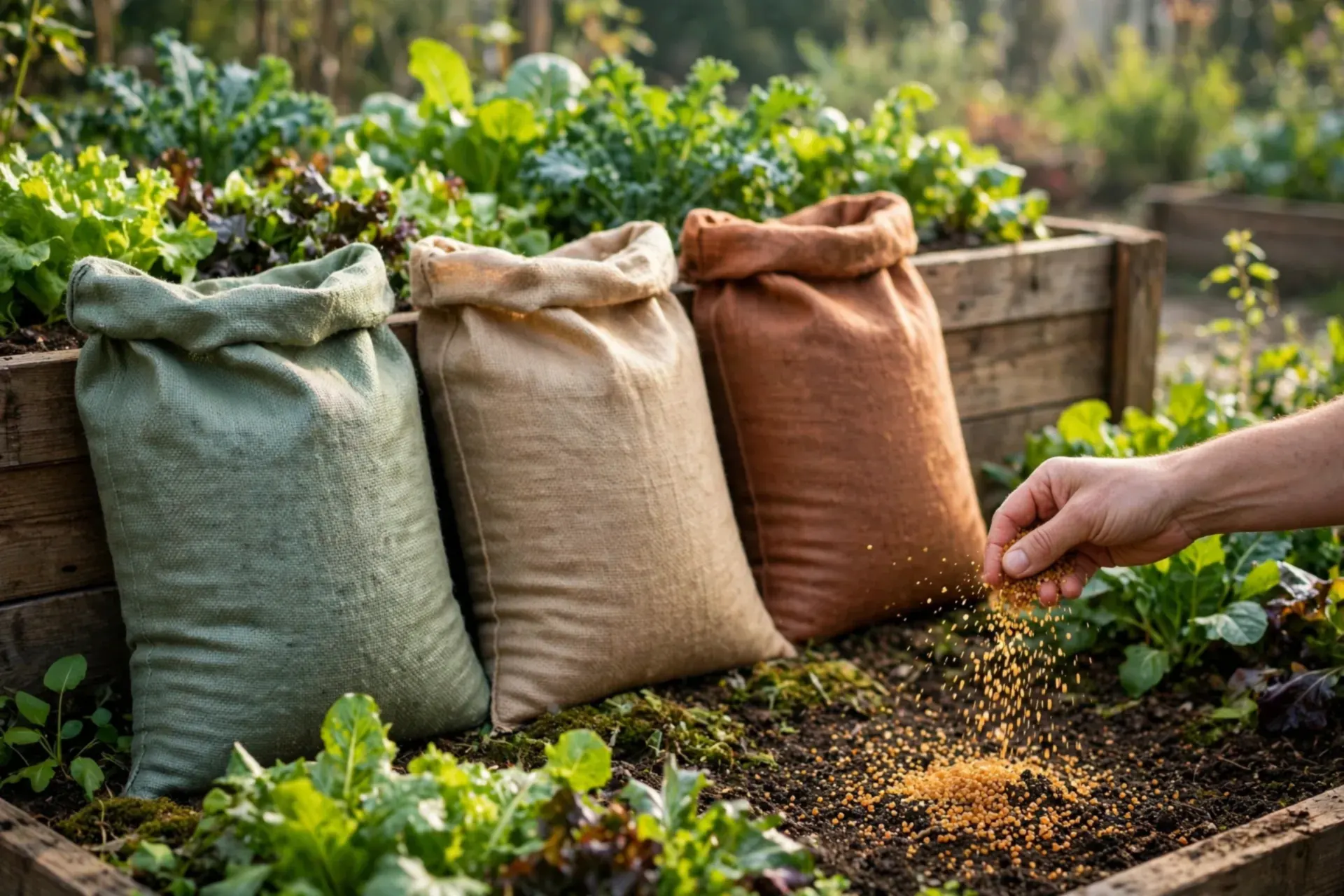
Every bag of fertilizer in the shop carries the same three numbers — 10-10-10, 5-10-5, 24-0-10 — and almost nobody explains them at the shelf. They are not a code and they are not a brand thing. They are simply the recipe of what is inside the bag, written as percentages. Once you can read them, you can walk past the marketing, compare any two bags in seconds, and work out the dose your beds actually need instead of the dose the bag suggests. Here is the whole system, in plain words.
One bag, read in ten seconds
| Number | What it is | What it feeds |
|---|---|---|
| First — N | Nitrogen | Leaves and green growth. The one plants run out of fastest |
| Second — P | Phosphate (counted as P₂O₅) | Roots, flowers and fruit set |
| Third — K | Potash (counted as K₂O) | Toughness: stems, water control, disease resistance |
Each number is a percentage by weight. A bag of 10-10-10 is 10 percent nitrogen, 10 percent phosphate and 10 percent potash. The rest of the bag is filler and the other ingredients the nutrients are carried in.
Step 1 — Read the three numbers like a recipe
The order never changes: nitrogen, phosphate, potash — N, P, K. A bag that reads 24-0-10 is strong in nitrogen, brings no phosphate at all, and has a middling amount of potash. A bag that reads 5-10-10 leans toward roots and fruit. Gardeners call the pattern the ratio: 10-10-10 is a 1-1-1 ratio, 5-10-5 is 1-2-1. The ratio tells you what the feed is shaped for; the size of the numbers tells you how strong it is. Two fine-print points worth knowing: the phosphorus number is counted as phosphate (P₂O₅), so the actual phosphorus in the bag is about 44 percent of that figure, and the potassium is counted as potash (K₂O), about 83 percent actual potassium. You never need those conversions for garden maths — everyone works in the label numbers — but they explain why the numbers look oddly round.
Step 2 — Turn percentages into real food
Here is the only maths in this guide, and it is simple. A 40 lb bag of 10-10-10 holds 10 percent nitrogen: 4 lb of actual nitrogen in the whole bag. The same size bag of 24-0-10 holds nearly 10 lb. That is why strong fertilizers are spread thin and weak ones are spread thick — the plant only cares about the pounds of nitrogen that land, not the brand on the sack. Plants are fed to a target, and the common one for vegetable beds is roughly 1 lb of actual nitrogen per 1,000 sq ft per feed, usually split into two feeds across the season for hungry crops. To hit 1 lb of nitrogen: 10 lb of 10-10-10, about 4 lb of 24-0-10, or 25 lb of a gentle 4-4-4 organic. Same dinner, three different plate sizes. The Fertilizer Calculator does this division for your exact bed size and any bag you bring home — but now you know what it is doing, and you can sanity-check it at the shelf.
Step 3 — Weigh the dose, do not guess it
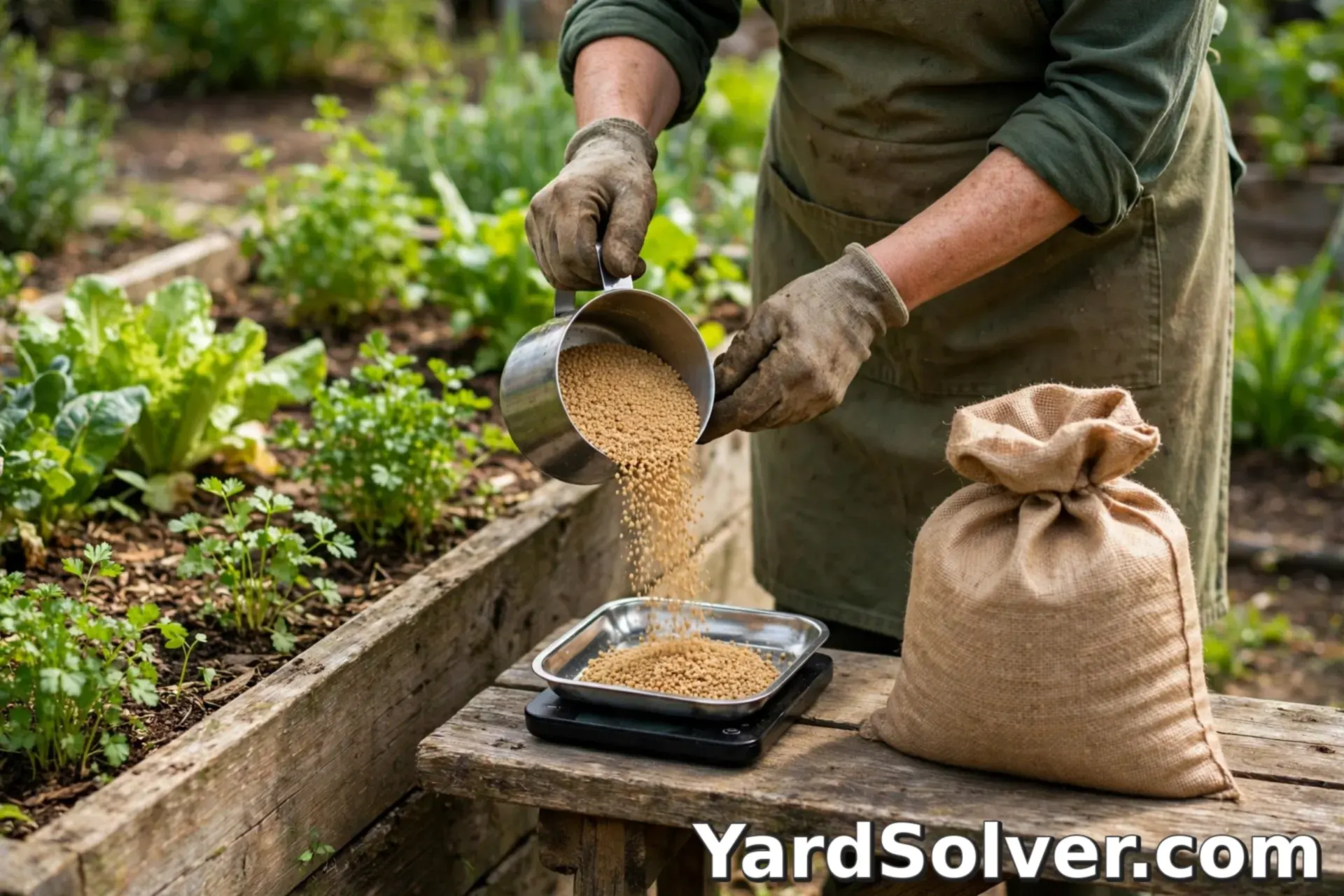
Most feeding mistakes are measuring mistakes. “A handful” varies by hand, by glove and by day, and granular fertilizer is easy to double without noticing — which is how plants get fertilizer burn, the scorched leaf edges that show up a week after a heavy-handed feed. Weigh your dose once on a kitchen scale, note how it looks in your usual scoop or cup, and use that scoop from then on. Thirty seconds of weighing buys you the same dose every time, all season.
Step 4 — Match the ratio to the job
Leafy crops — lettuce, spinach, sweet corn, lawns — are nitrogen eaters, so a first number that leads the pack suits them. Fruiting crops — tomatoes, peppers, squash — want a balanced start, then relatively more potash as flowers come; a tomato feed often reads something like 4-6-8 or 5-10-10 for that reason. The lawn bags at 24-0-10 and higher are built for grass and for soil that already holds plenty of phosphorus, which is why the middle number is zero. And sometimes zero is the right answer in the garden too: if a soil test shows high phosphorus, every bag of balanced fertilizer adds more of what you already have too much of. Not sure where your soil stands? How to Test Your Garden Soil walks through the cheap home kits and the lab tests, and the result tells you which of the three numbers your beds are actually short of.
Keep going
Ready to work out a real dose? The Fertilizer Calculator turns any bag and any bed size into pounds, bags and cost.
Overdone it once already? Fertilizer Burn shows the signs and the rescue routine.
Questions people ask
Is 10-10-10 good for everything?
It is a fair general feed for mixed beds, and plenty of gardens run on it. Two cautions: fruiting crops often do better with more potash than nitrogen once they flower, and if a soil test shows your phosphorus is already high, a balanced fertilizer keeps adding phosphorus you do not need. That is the case for a low-phosphorus blend instead.
What is the difference between 10-10-10 and 24-0-10?
Strength and one missing number. The 24-0-10 is 24 percent nitrogen, so about 4 lb of it carries the same nitrogen as 10 lb of 10-10-10. The zero in the middle means it brings no phosphate at all — lawn blends are made that way because most lawn soils already hold plenty of phosphorus.
Do organic fertilizers follow the same numbers?
Yes — same system, smaller numbers. Organic feeds like 3-4-4 or 4-4-4 release their nutrients slowly as soil life breaks them down, so you spread more product to hit the same nitrogen target. The maths in this guide works exactly the same way for them.
Comments & ratings
No comments yet.
Be the first to share your experience.