
Guides · Plant problems · Published November 3, 2026
Fertilizer Burn: Spot It, Flush It, Save the Plant
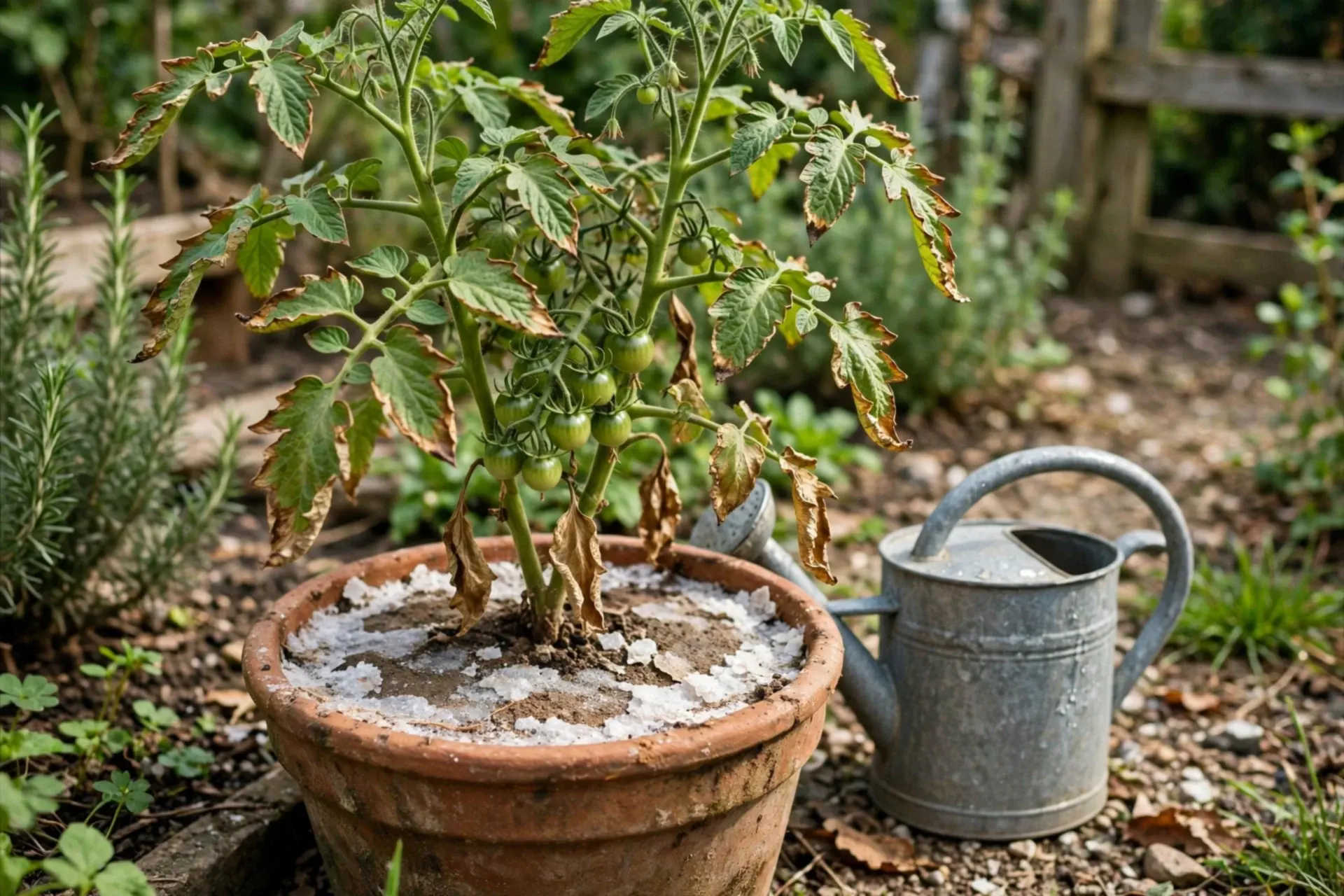
It usually happens with the best intentions: you feed a plant generously, and within days the leaf edges turn crisp and brown, as if scorched, even though the soil is damp. That is fertilizer burn — the plant is not hungry, it is salted. Concentrated fertilizer pulls water out of roots instead of feeding them, and the damage shows at the leaf margins first. The good news is that a fast, correct response saves most plants. This guide gives you the symptom checklist, the look-alikes to rule out, the flush that does the rescuing, and honest timelines — ending with the measuring habit, powered by our Fertilizer Calculator, that stops it ever happening again.
Fertilizer burn at a glance
- The signature: brown, crispy leaf edges and tips appearing within days of feeding, worst on older leaves first
- The paradox clue: the plant wilts even though the soil is wet — roots cannot drink salty water
- The crust: a white or pale salt crust on the soil surface or pot rim confirms excess salts
- The rescue: stop all feeding and flush — long, slow water to carry salts below the roots
- The honesty: burned leaf edges never heal; recovery means new growth, over weeks
- The prevention: measure the dose for the bed or pot in front of you — and yes, organic feeds burn too
Step 1 — Read the symptoms
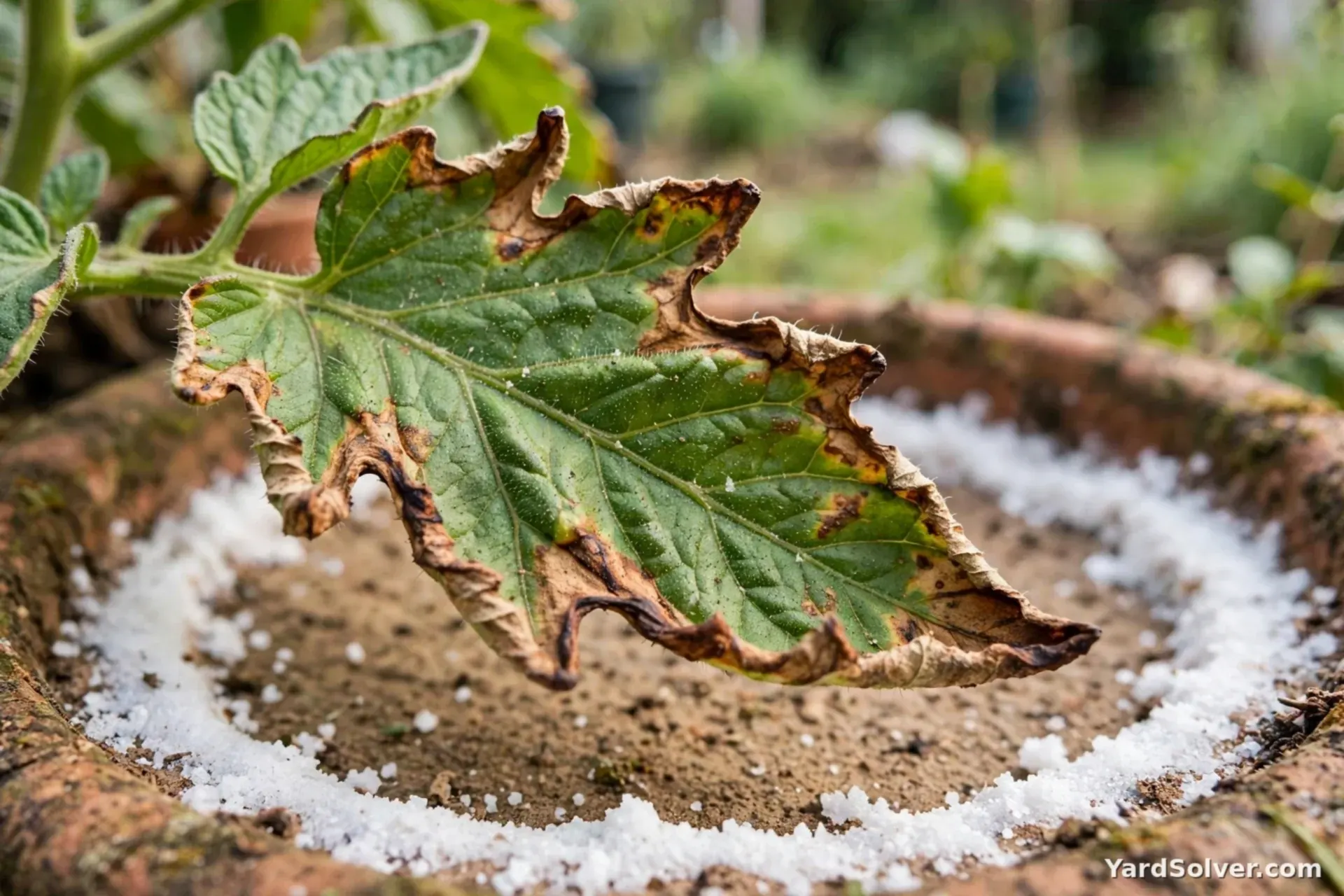
Fertilizer burn has a recognisable pattern. The leaf edges and tips go brown and papery, starting with the oldest leaves and the margins furthest from the veins, because that is where the leaf's water supply runs out first. It appears within days of a feed — that timing is the strongest single clue. The plant may wilt while the soil is still moist, which confuses people into watering less, when in fact the roots are surrounded by water too salty to absorb: concentrated salts reverse the normal flow and pull moisture out of root tissue. In pots and containers you may also see a white or yellowish crust on the soil surface or around drainage holes — dried fertilizer salts, direct evidence. Below ground, fine roots look brown and wiry instead of white and branching. Heavy feeders like tomatoes and peppers are the usual victims for a simple reason: they are the plants gardeners feed hardest, often with a little extra "to help them along". Seedlings and young transplants burn fastest of all — their roots are small, and a dose sized for a mature plant is an overdose for them.
Step 2 — Rule out the look-alikes
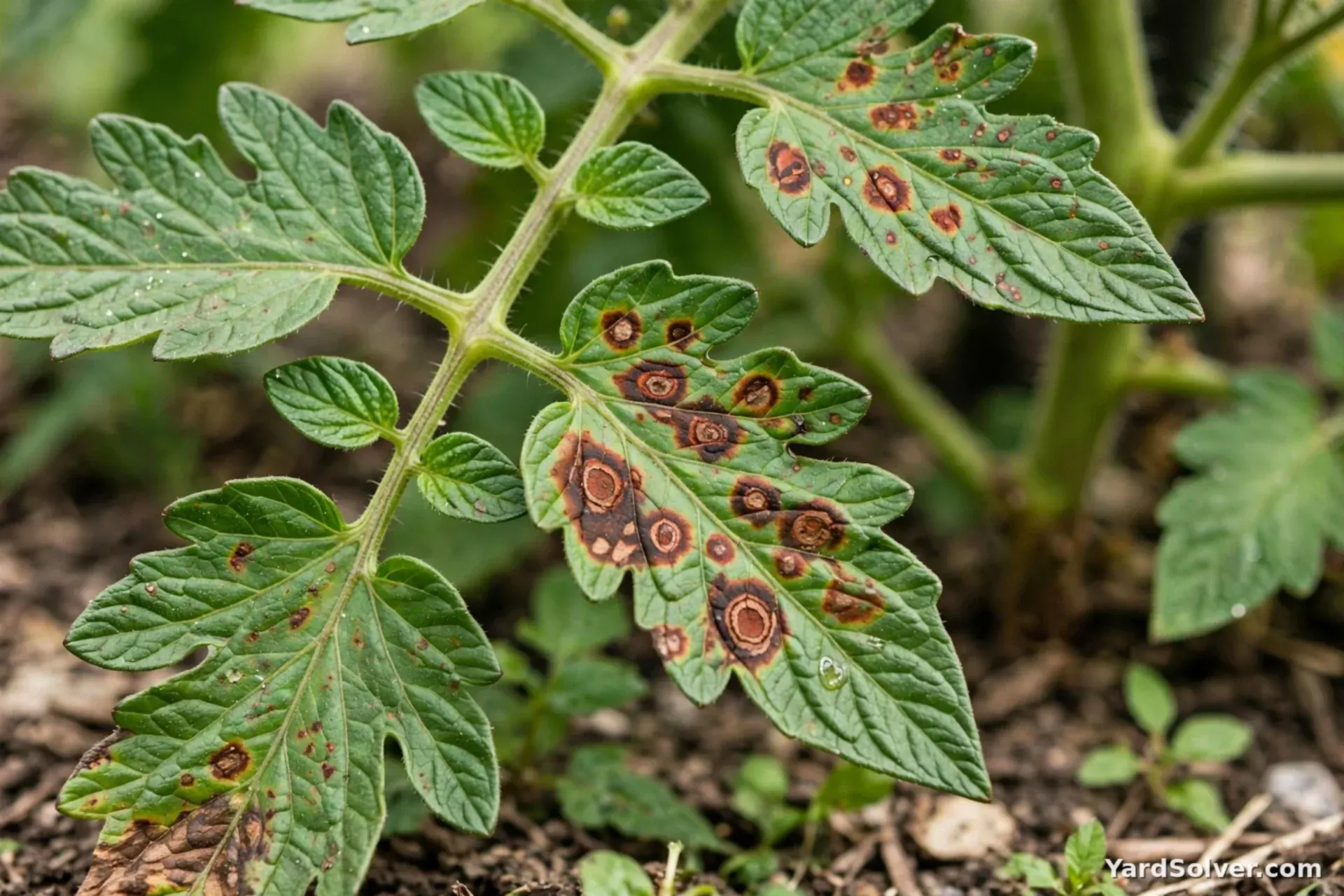
Three other problems borrow fertilizer burn's clothes. Drought also crisps leaf edges — but the soil is dry, the whole plant droops evenly, and a thorough watering perks it up within hours; burned plants sit in wet soil and do not recover with a drink. Sun scorch bleaches or browns only the exposed side of the plant, often after a sudden move into full sun or a heat spike, and it does not care when you last fed. Disease and leaf spot diseases make discrete round or angular spots, often with yellow halos or dark borders, scattered rather than marching in from every margin at once. The deciding questions are simple: Did I feed this plant in the last week? Is the soil moist while the plant wilts? Is there a pale crust on the surface? Two or three yeses mean burn, and the treatment is the opposite of what a thirsty plant wants done cautiously — a deliberate, generous flush. If you are unsure what a plant actually needs, that is exactly what a soil test answers before the next feed: How to Test Your Garden Soil walks through it.
Step 3 — The rescue: flush the salts out
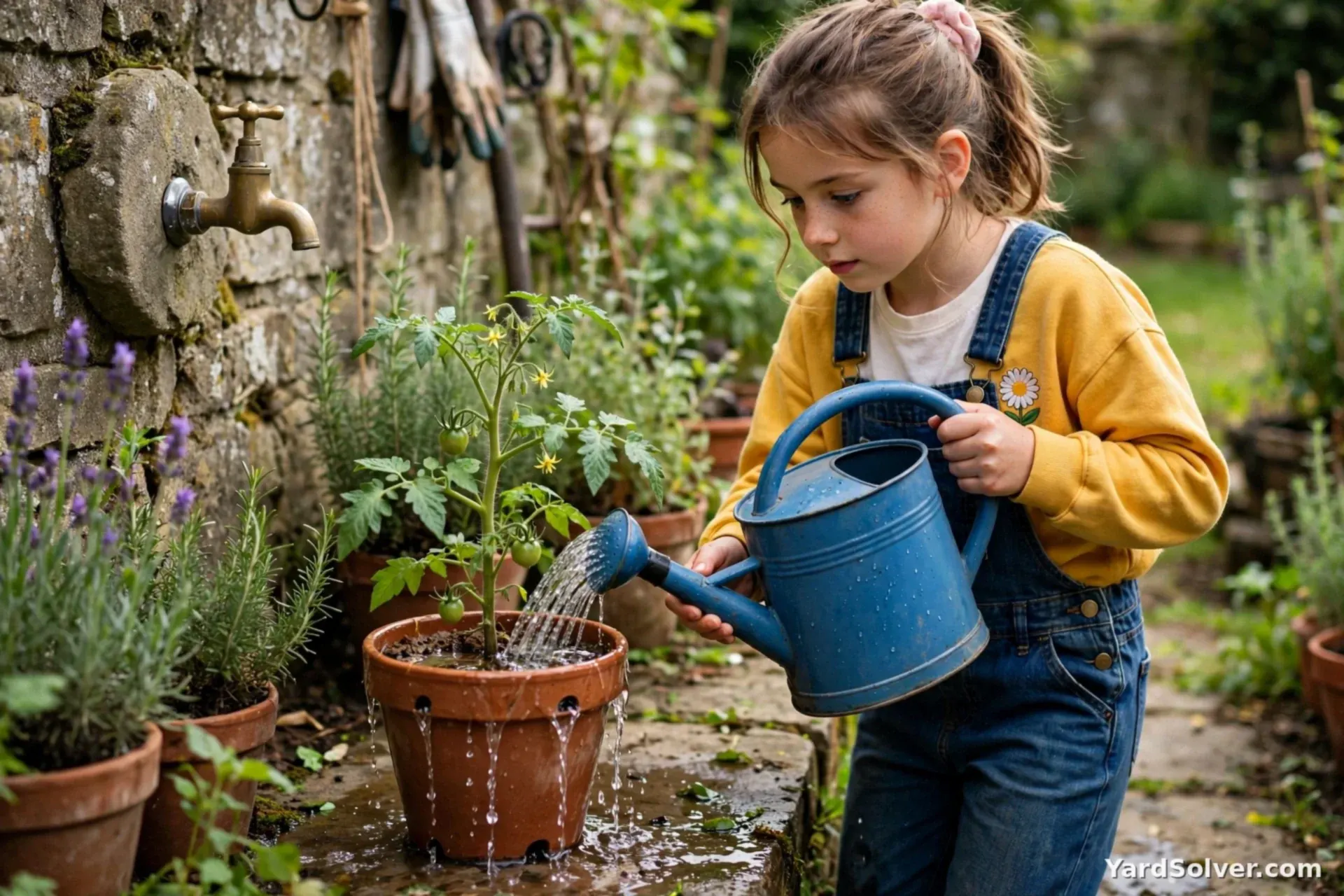
Act the day you spot it; salts keep damaging roots while they sit there. First, stop all feeding and scrape off any visible fertilizer granules still on the surface, plus the salt crust itself. For pots and containers — the commonest burn patients, as our container guide warns — take the pot to a sink or outdoors, pour water slowly over the surface until it runs freely from the drainage holes, let it drain completely, and repeat two or three times in the same session. You are running several pot-volumes of water through, dissolving the salts and carrying them out the bottom; discard the runoff rather than letting the pot stand in it. For beds, give one long, slow, deep watering that soaks well beyond the root zone, then repeat a day or two later — two thorough leachings beat daily sprinkles, which can push salts sideways into neighbouring roots. Do not add anything else: no tonic, no transplant solution, no "a little feed to help it recover". A burned plant needs plain water, shade from the harshest afternoon sun for a few days if it is badly wilted, and time.
Step 4 — Aftercare, and honest timelines
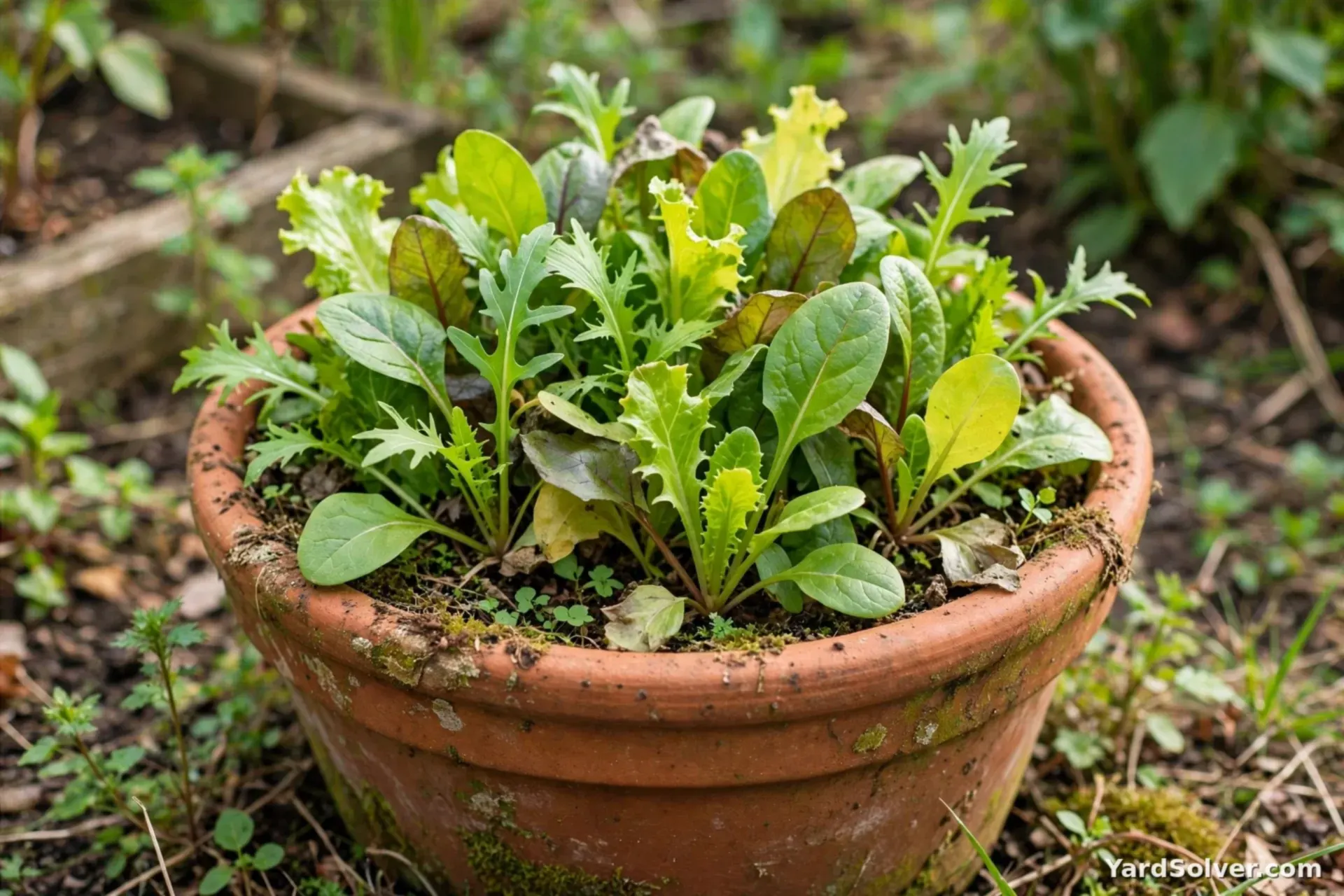
Here is the part rescue articles often fudge: burned tissue does not heal. A brown leaf margin will be brown forever; the plant recovers by growing new leaves, not by repairing old ones. So judge progress at the growing points — fresh green growth within one to three weeks means the roots survived and the plant is coming back. Snip off fully dead leaves once you can tell them apart; leave partially damaged ones that still photosynthesise. Keep watering normally (not constantly), and do not feed again until the plant has put on clear new growth — then restart at half the label rate. The honest exceptions: tiny seedlings with browned stems, and plants where every leaf has crisped and the stem is soft or blackened at the base, rarely recover whatever you do, and it is kinder to replant at once than to spend the season hoping. As budget gardening teaches in reverse, a fast replant of a lost crop is cheaper — in money and morale — than a month of nursing a corpse. Most established plants, though, flushed early, pull through with nothing worse than a lost fortnight.
Step 5 — Measure it next time
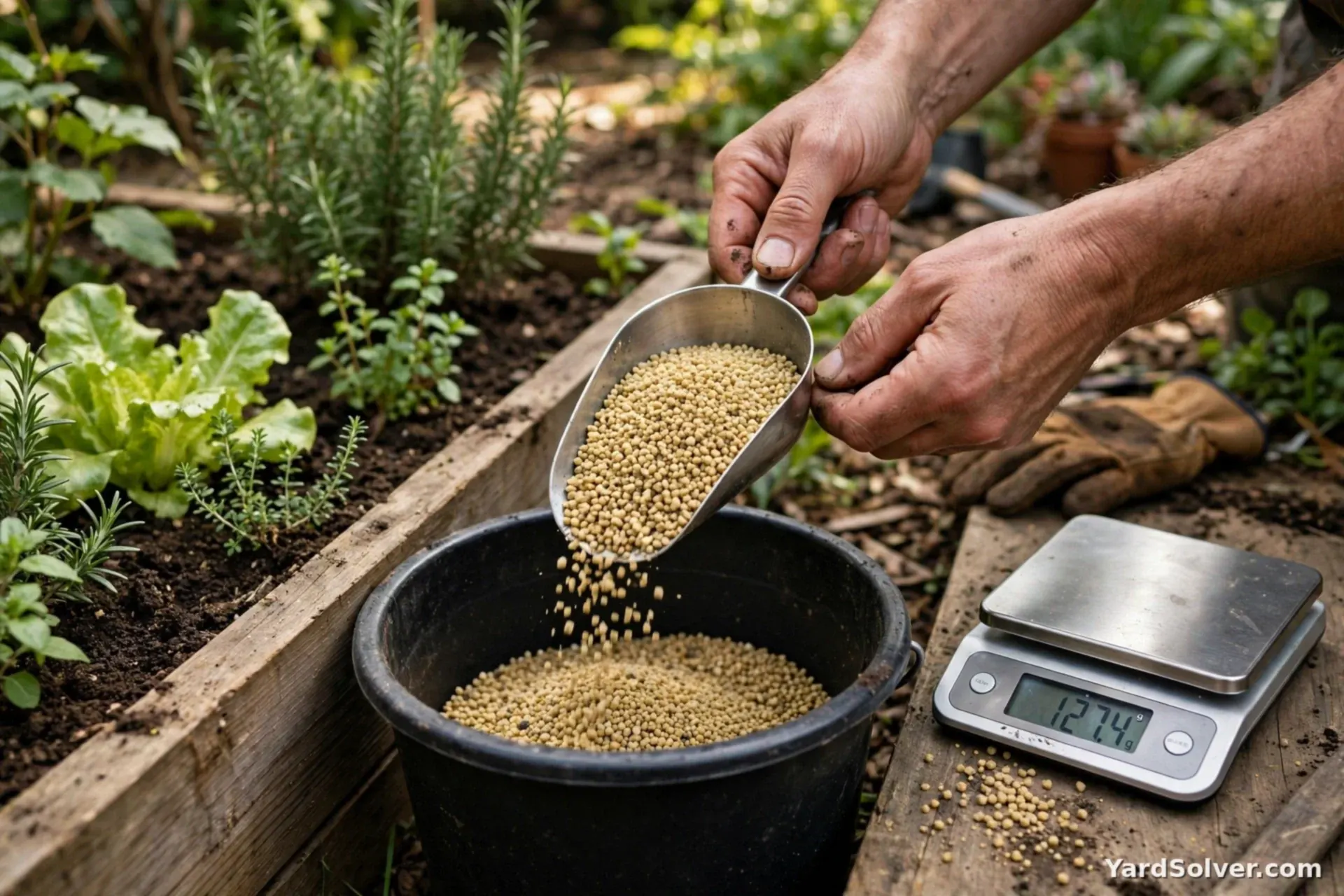
Nearly every case of burn is a measuring error, not a product error. The fix is to stop feeding by feel. Run your bed or border through the Fertilizer Calculator before you open the bag: it turns the product's analysis and your area into an actual weighed amount, which is the single habit that separates feeding from gambling. Then follow the supporting rules: feed into moist soil, never onto dry roots; little and often beats one heroic dose; weaker for containers and seedlings, half strength is a feature, not a failure; and keep granules off stems and leaves. Two myths deserve burying while we are here. First, "organic can't burn": it can — the salts in strong manure tea, fish emulsion or fresh manure burn exactly the way synthetic salts do; gentleness lives in the dose, not the label. Second, pH problems masquerade as feeding problems — a plant yellow in soil that is far too acid or alkaline may need its pH corrected with the Lime Calculator rather than more fertilizer poured onto a locked pantry. Measure, feed the soil test's answer, and burn becomes a story you tell beginners.
Keep going
The funnel every burned plant points to: Fertilizer Calculator · Test before you treat: How to Test Your Garden Soil.
Containers burn fastest: Container Gardening for Beginners · Spend less, burn less: Budget Gardening Tips.
Questions people ask
Can a fertilizer-burned plant recover?
Usually, if the roots are flushed promptly and some healthy stem and leaf remain. The burned leaf edges themselves never heal — recovery shows as fresh green growth over the following weeks while the damaged leaves are gradually shed. Small seedlings and plants browned to the stem often do not come back, and it is kinder to replant quickly than to wait on them.
How much water does it take to flush fertilizer salts?
For a pot, pour water slowly through until it runs freely from the drainage holes, let it drain fully, and repeat two or three times in the same session. For a bed, one long, slow, deep watering that soaks well past the root zone — then the same again a day or two later. The goal is to carry dissolved salts down and away from the roots, not to keep the plant permanently wet.
Can organic fertilizer burn plants too?
Yes. Burn is caused by salts, and concentrated organic feeds — strong manure tea, fish emulsion, fresh manure, heavy blood meal — carry salts just as synthetic feeds do. Gentle, dilute and well-composted organic matter rarely burns, but 'organic' on the bag is not a guarantee against overdoing it.
Comments & ratings
No comments yet.
Be the first to share your experience.