
Guides · Winter growing · Published October 31, 2026
How to Grow Herbs Indoors in Winter
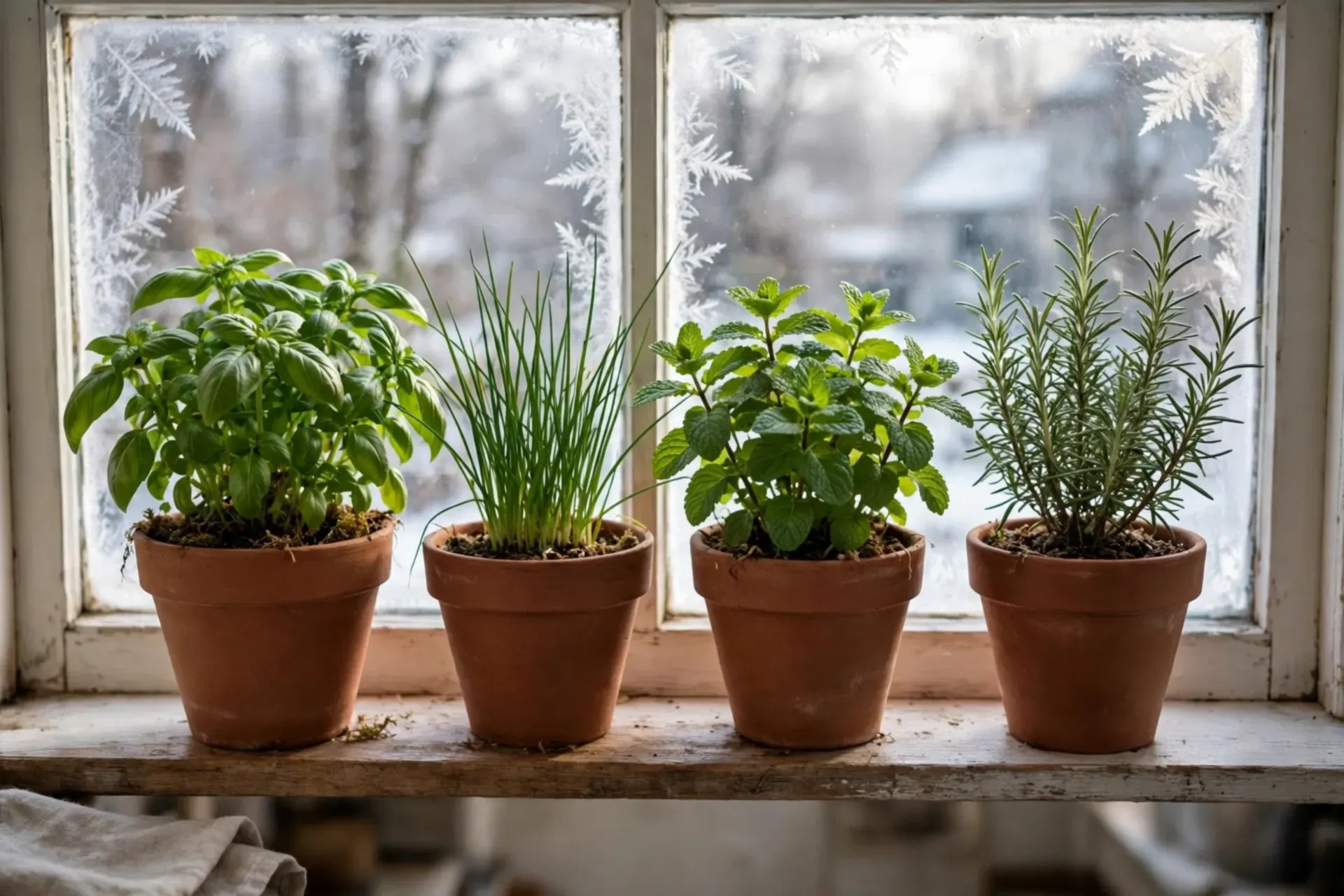
Fresh herbs in January are completely possible — if you respect the one rule that decides everything indoors: light. Winter daylight through a window is a quarter of what summer gives, and most indoor herb failures are just quiet light starvation. Solve light, and the rest is easy.
Start with the herbs that actually thrive indoors
- Easiest: chives, mint (its own pot — it takes over), parsley, thyme, oregano
- Worth it with good light: basil (warmth-loving; keep it off cold glass), cilantro (cool and fast; sow a pinch every 3 weeks)
- Slow but steady: rosemary — sparing water, brightest spot you have
Buy small plants or sow seed; parsley is slow to sprout (2–3 weeks), so start it first. Profiles for each herb are in the Plant Library.
Step 1 — Give them real light
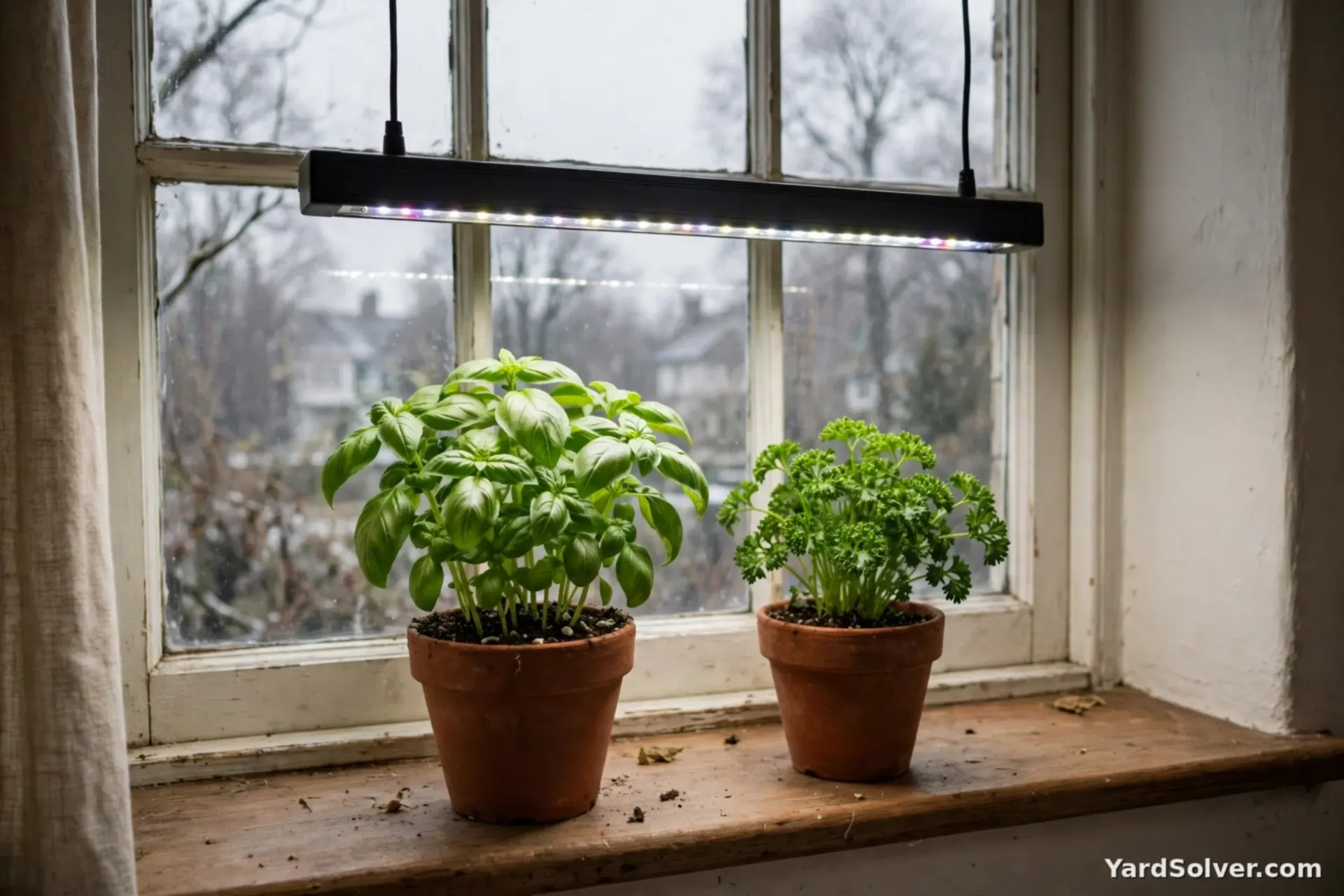
Best: an unobstructed south-facing window. Better and reliable anywhere: a simple LED grow light or shop light hung 2–4 inches above the plants, on a timer for 12–16 hours a day. Raise the light as the plants grow. Leggy, pale, stretching stems are the plant asking for exactly this.
Step 2 — Pots with drainage, ordinary potting mix
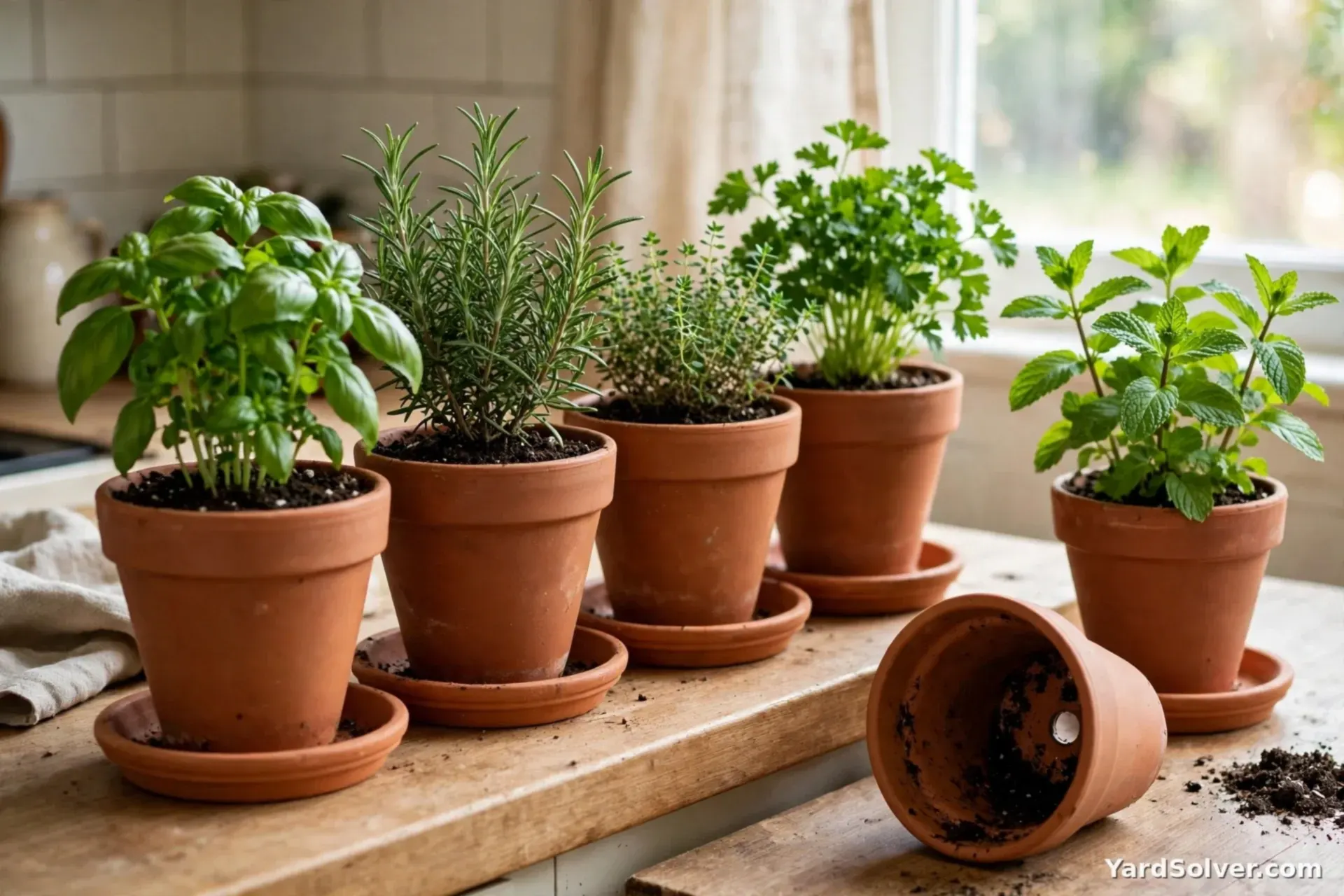
Every pot needs a drainage hole — herbs in a sealed decorative pot drown slowly. One herb per 6–8 inch pot (mint always alone). Standard indoor potting mix is right; garden soil is too dense and brings pests indoors.
Step 3 — Water the indoor way
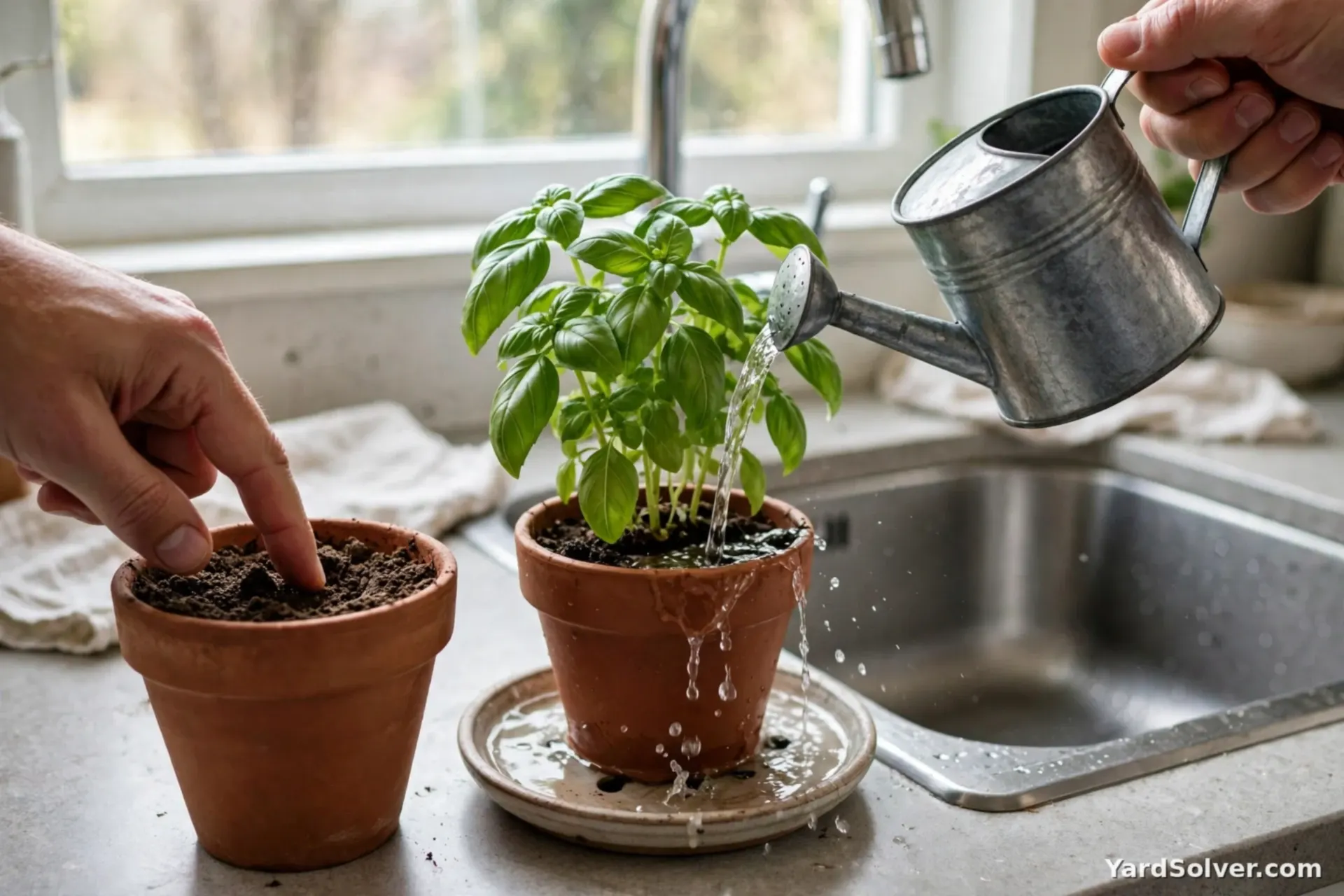
Water when the top inch feels dry, then soak until it drains and empty the saucer. Heating vents dry pots fast — check twice a week in deep winter. Constantly soggy soil (root rot) kills more indoor herbs than drought ever will.
Step 4 — Keep them off cold glass and away from heat blasts
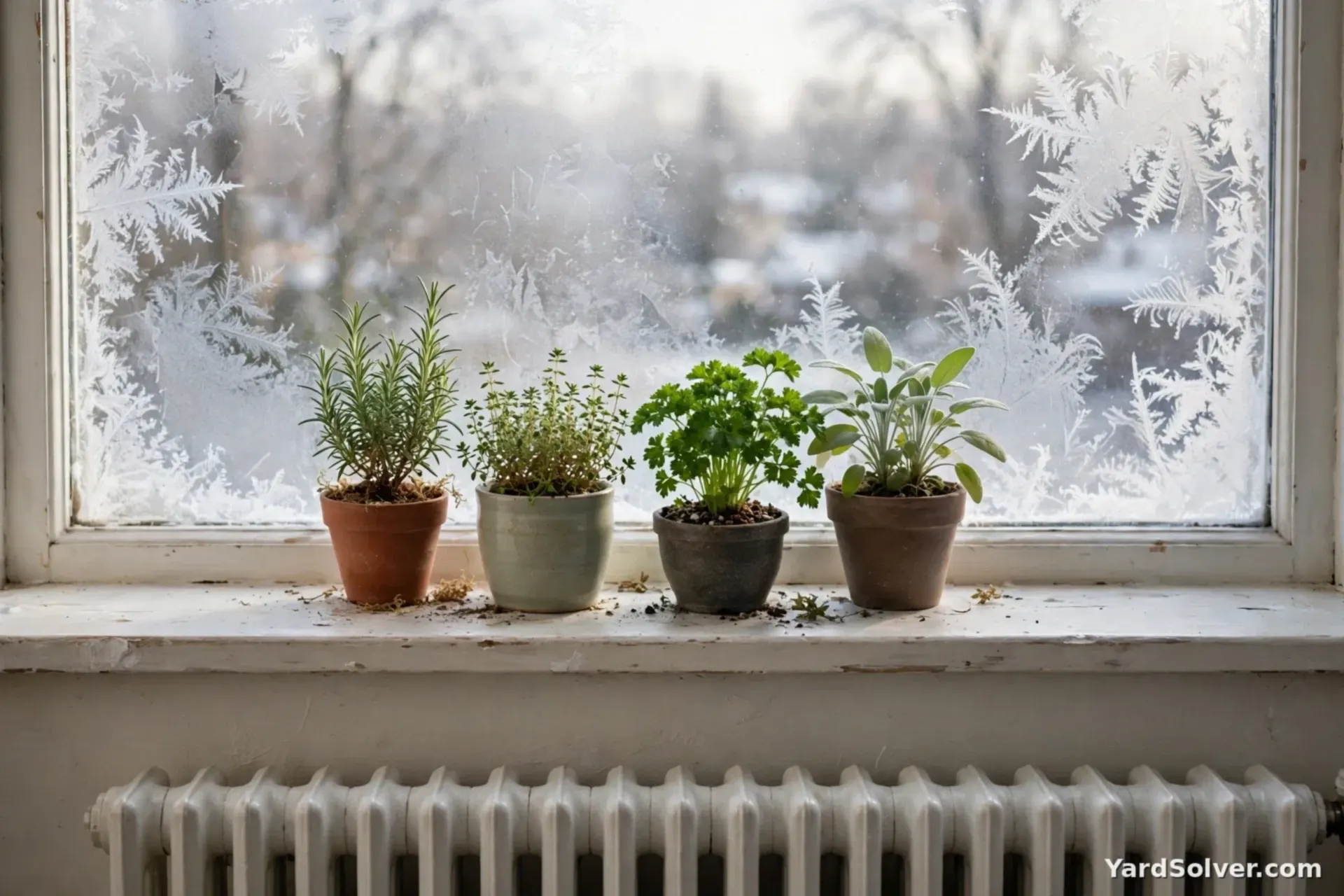
Leaves touching a freezing window get damaged on the coldest nights; an inch of clearance fixes it. Directly above a radiator is the opposite problem — hot dry air and aphid parties. A small gap and decent air movement keep both troubles away.
Step 5 — Harvest so they grow more
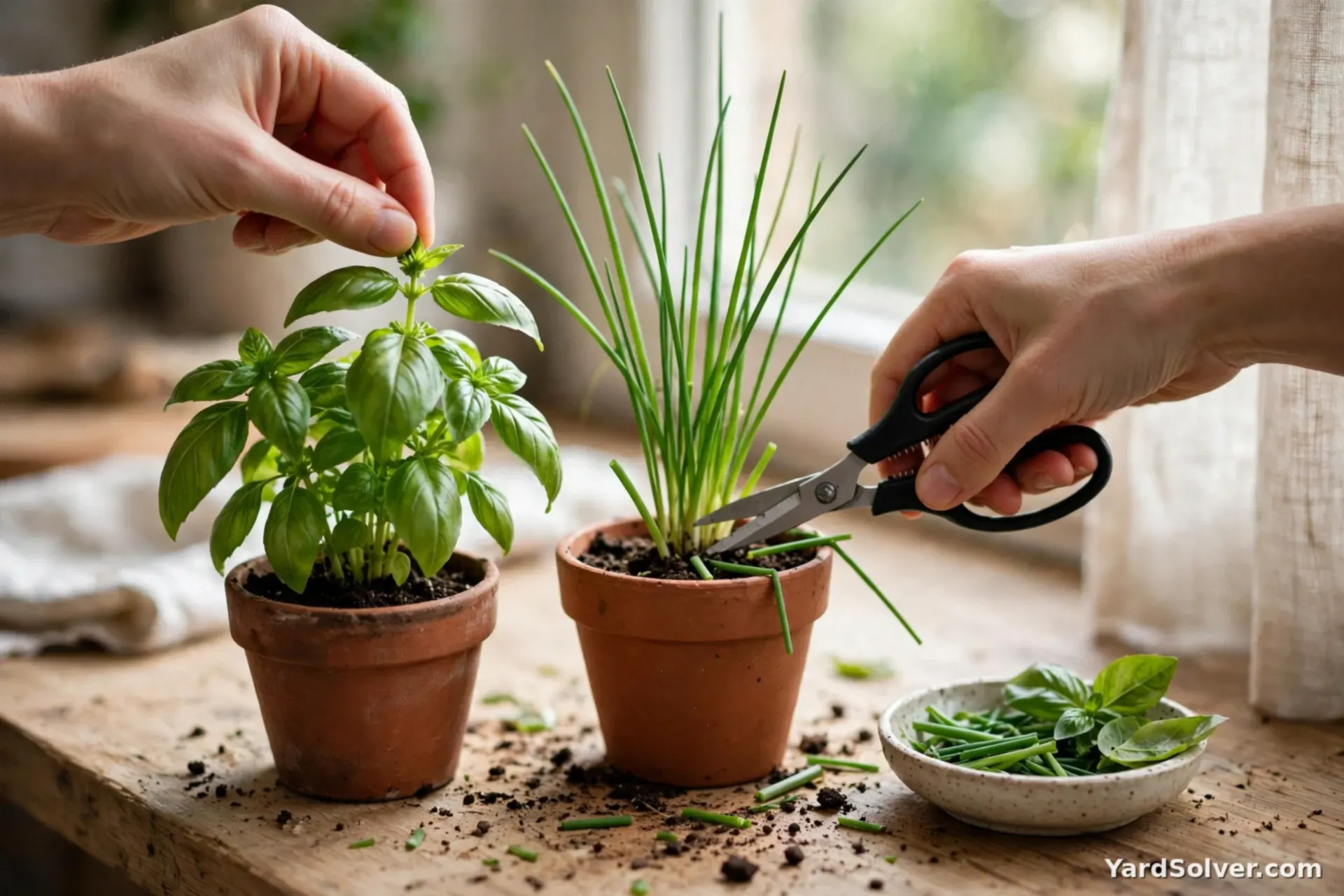
Little and often beats one big strip: never take more than a third of the plant at once. Pinch basil just above a pair of leaves and it branches double. Snip chives at the base of a few blades. Regular pinching is what keeps the windowsill bushy instead of bald.
Keep going
Winter projects that pair well: Winter Sowing in Milk Jugs and Composting in Winter.
Questions people ask
Why do my indoor herbs get leggy and die?
Almost always light. Winter window light is a fraction of summer sun, so herbs stretch and weaken. An LED light 2–4 inches above the plants, 12–16 hours a day, fixes most failures outright.
Can I dig up outdoor herbs and bring them in?
Yes for chives, mint, parsley and oregano — pot a division, cut it back by half, expect a sulky week. Basil usually refuses the move; start fresh basil seed indoors instead.
How often should they be watered?
When the top inch of soil feels dry — then deeply, until it drains, and empty the saucer. Soggy soil kills more indoor herbs than thirst.
Comments & ratings
No comments yet.
Be the first to share your experience.