
Guides · Winter sowing · Published October 31, 2026
Winter Sowing in Milk Jugs, Step by Step
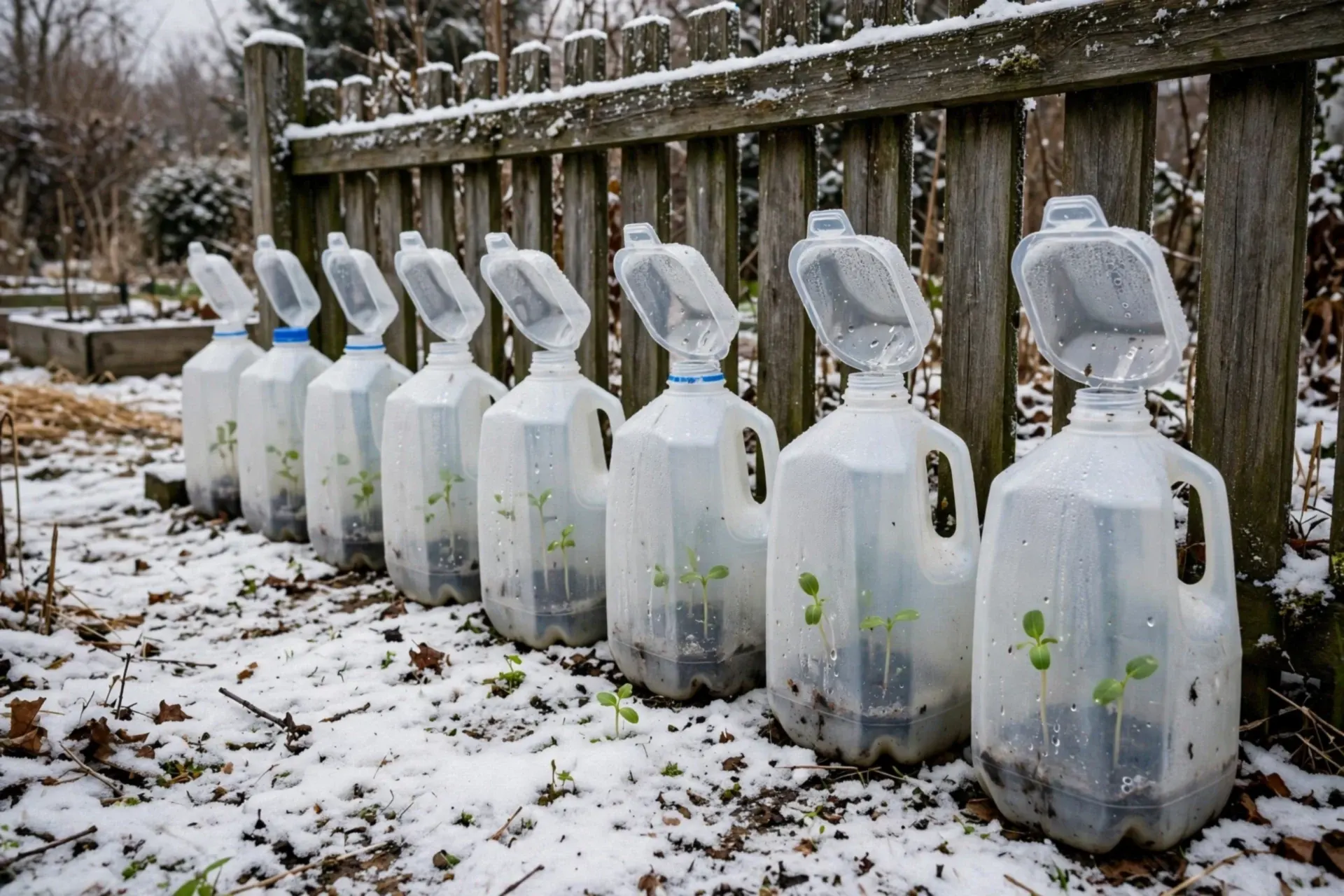
Winter sowing is the seed-starting method for people with no windowsill and no grow lights: you sow seeds in translucent milk jugs, set them outside in the snow, and let winter do the schedule. The freeze-thaw cycle wakes seeds exactly when nature intends — and the seedlings that emerge are already hardened to real weather.
What winter sowing is for (and what it is not)
- Perfect for: hardy perennials and wildflowers (many need cold to germinate), plus cold-tolerant vegetables — kale, broccoli, cabbage, onions, leeks, spinach, hardy herbs
- Not for deep winter: tomatoes, peppers, basil and other warmth-lovers — use the same jugs in spring for them, or start them by the Planting Calendar indoors
Step 1 — Build the jug
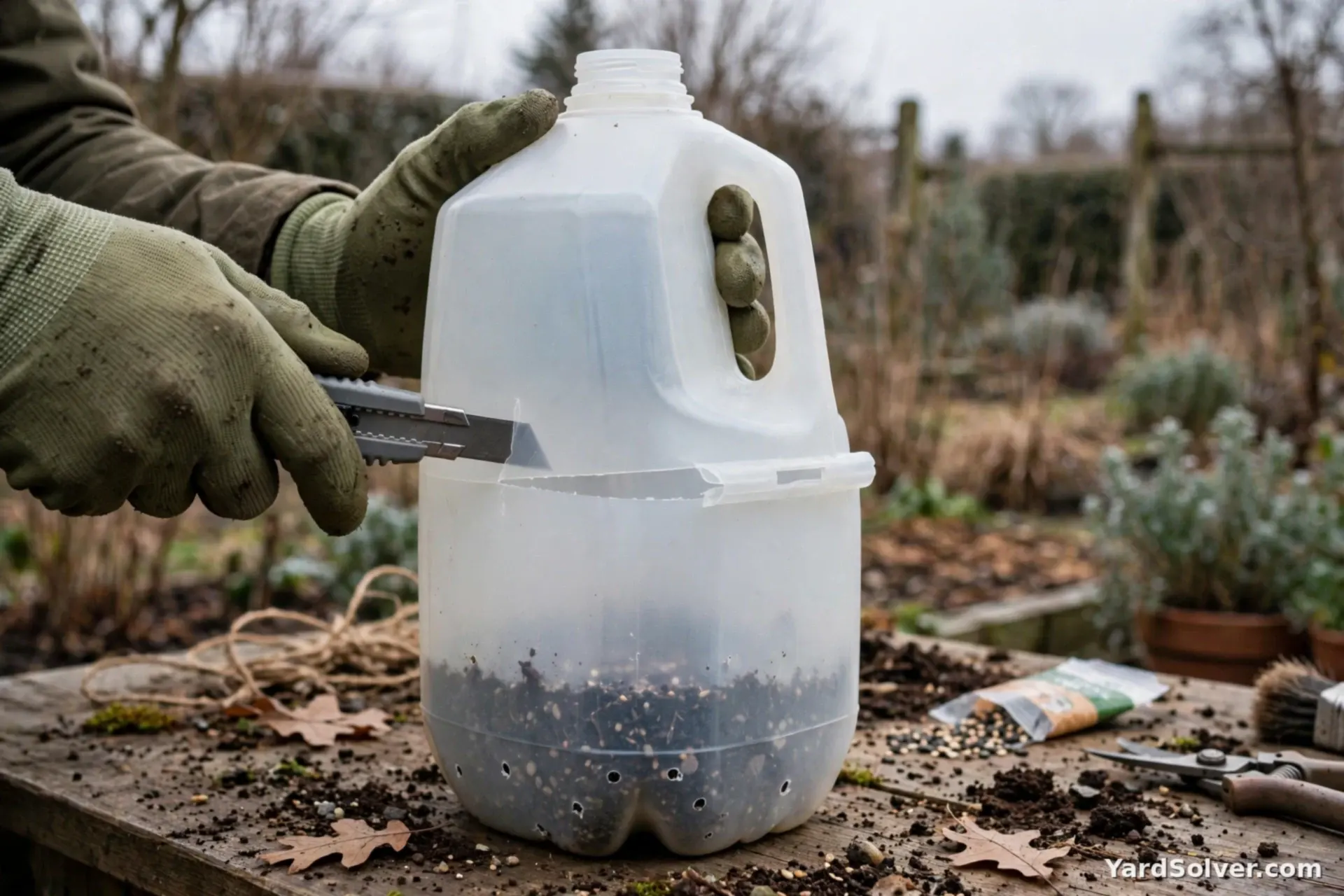
Use a translucent 4 L / 1 gallon milk or water jug. Cut around the middle, leaving a hinge under the handle. Poke or melt several drainage holes in the bottom. Throw the cap away — the open neck is the rain door and vent.
Step 2 — Fill and sow
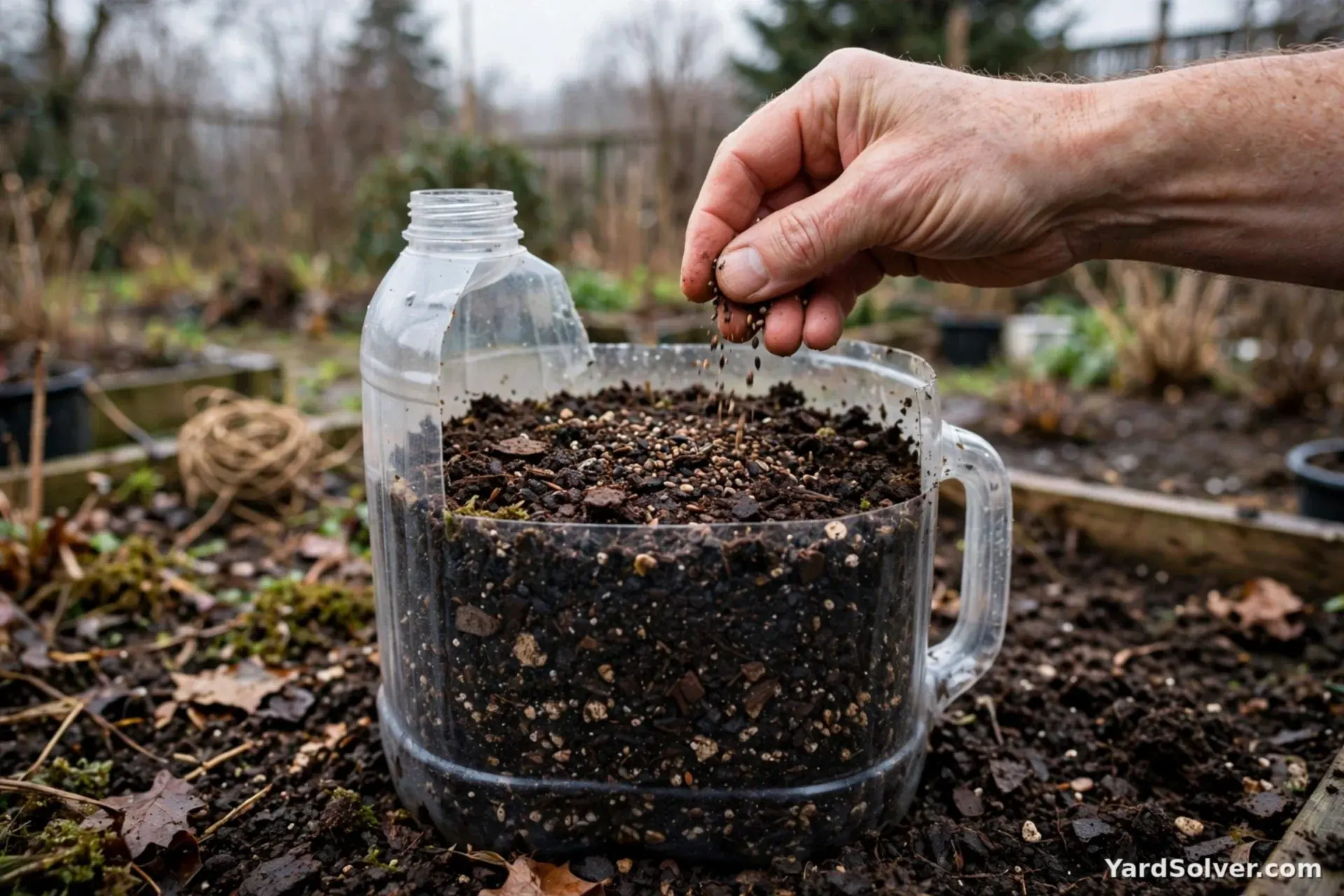
Add 3–4 inches of moist potting mix. Sow at the depth on the packet (when in doubt, about twice the seed's width), a little generously — winter takes a share. Water it in well.
Step 3 — Tape it shut and label twice
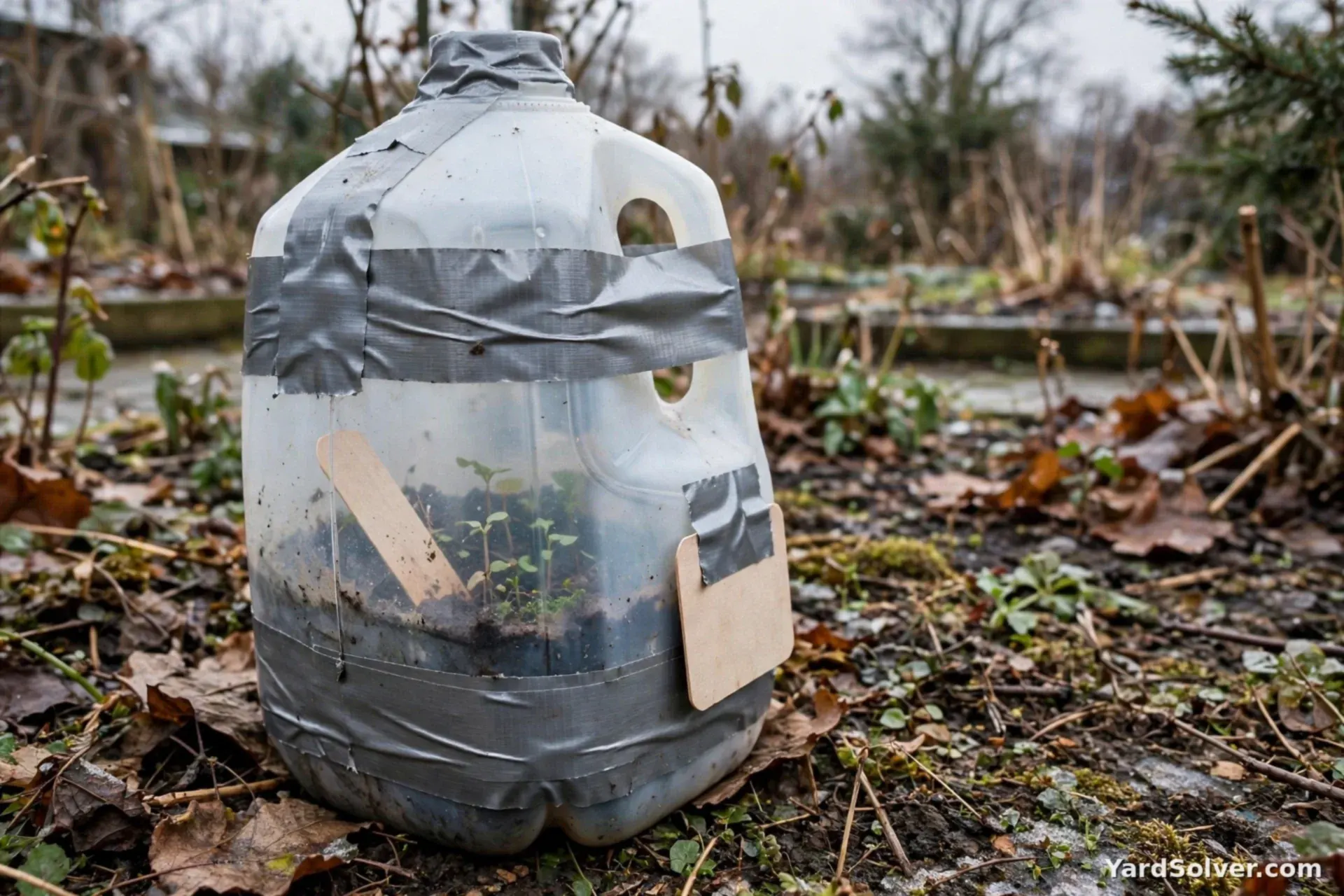
Tape the cut seam all the way around. Label with a paint pen on the outside and a second label buried inside — sun fades outside ink by spring, and a jug of mystery seedlings is a classic.
Step 4 — Set them outside and walk away
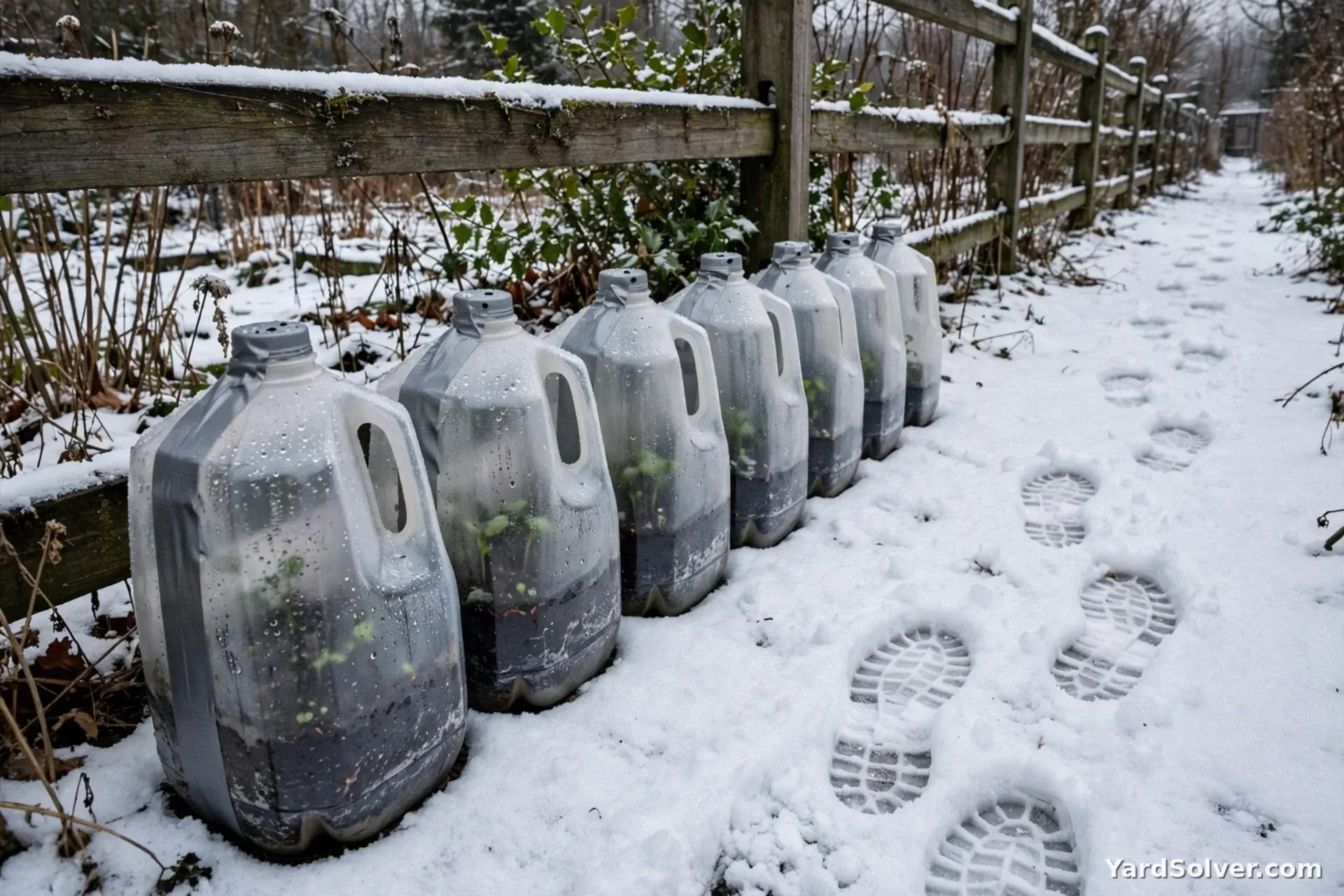
Put the jugs outdoors where rain and snow reach them, out of the way of shovels and snowplows. Any time from the winter solstice onward works. Then do nothing — winter waters, chills and stratifies for you.
Step 5 — Spring: watch, vent, water if dry
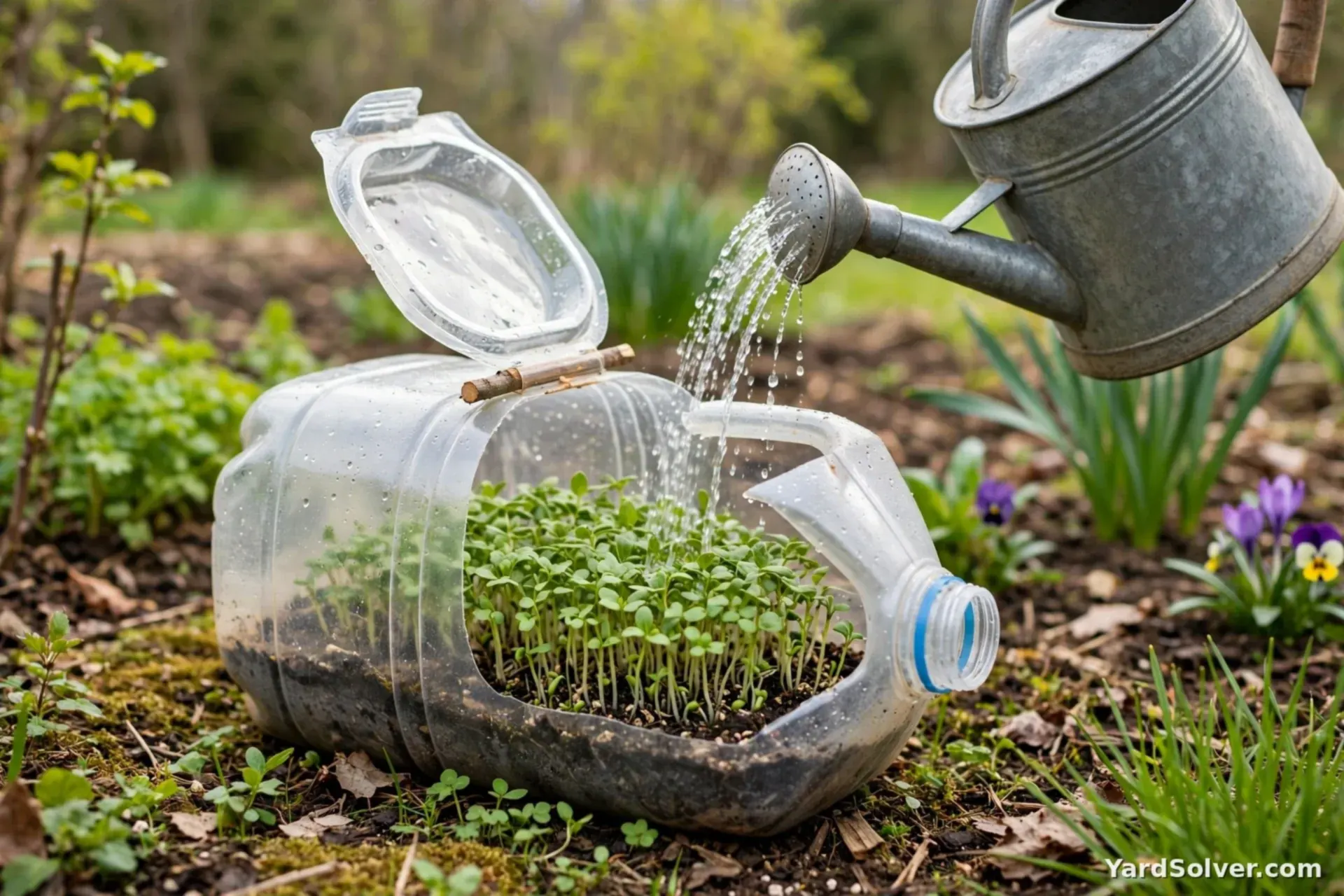
Seeds sprout when their moment comes — early ones on the first warm spell, perennials sometimes weeks later. On warm days as seedlings grow, open the tops; close them again on cold nights. If a dry spring spell leaves the soil dusty and the jug light, water gently through the neck.
Step 6 — Transplant the whole clump or divide
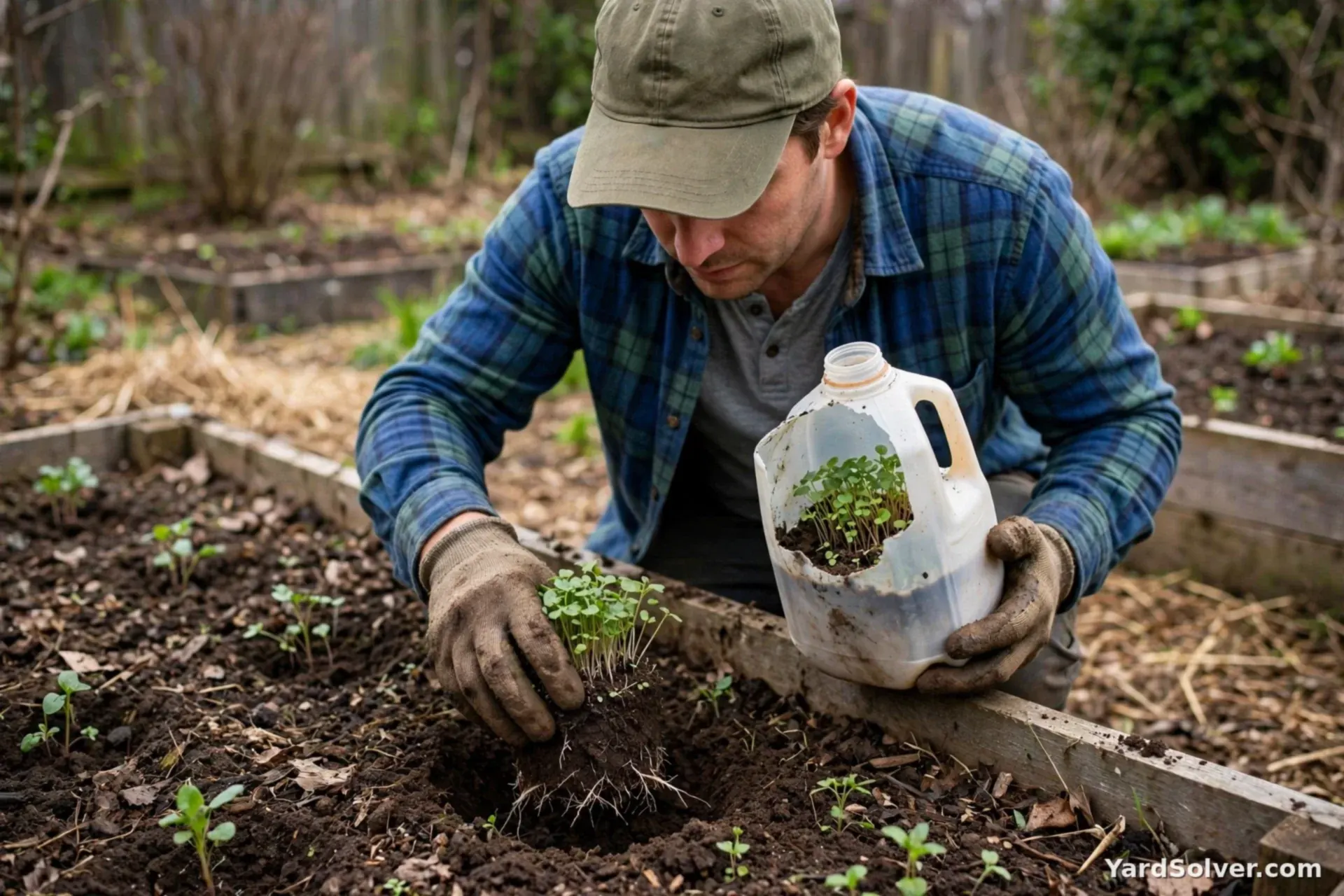
When seedlings show true leaves and the weather suits the plant, plant them out — either teased apart or as small clumps ("hunk-o-seedling" planting works well for flowers). They need no hardening off: they were born outside. Check spacing with the Plant Spacing Calculator.
Keep going
More winter projects: How to Grow Herbs Indoors in Winter · Composting in Winter.
Questions people ask
Can I winter sow tomatoes and peppers?
Not in deep winter — a hard freeze kills the seedlings. Sow tender plants in spring using the same jugs, or start them indoors. Winter sowing shines with hardy perennials, wildflowers and cold-tolerant vegetables.
Do the jugs need watering?
Mostly no — rain and melting snow enter through the open neck. In a dry spring spell, water gently through the opening; a light jug with dry-looking soil is the signal.
Why did none of my seeds sprout?
Usually: sown too deep, dried out in spring, or given up on too early. Many perennials sprout weeks after the first ones — keep jugs moist and wait before calling one failed.
The complete method
This page is the jug technique. The full method — which seeds suit winter sowing, any container that works, timing by climate, and spring care through transplanting: Winter Sowing: The Complete Guide.
Comments & ratings
No comments yet.
Be the first to share your experience.