
Guides · Seed starting · Published November 10, 2026
Grow Lights for Seedlings: LED vs Fluorescent Guide
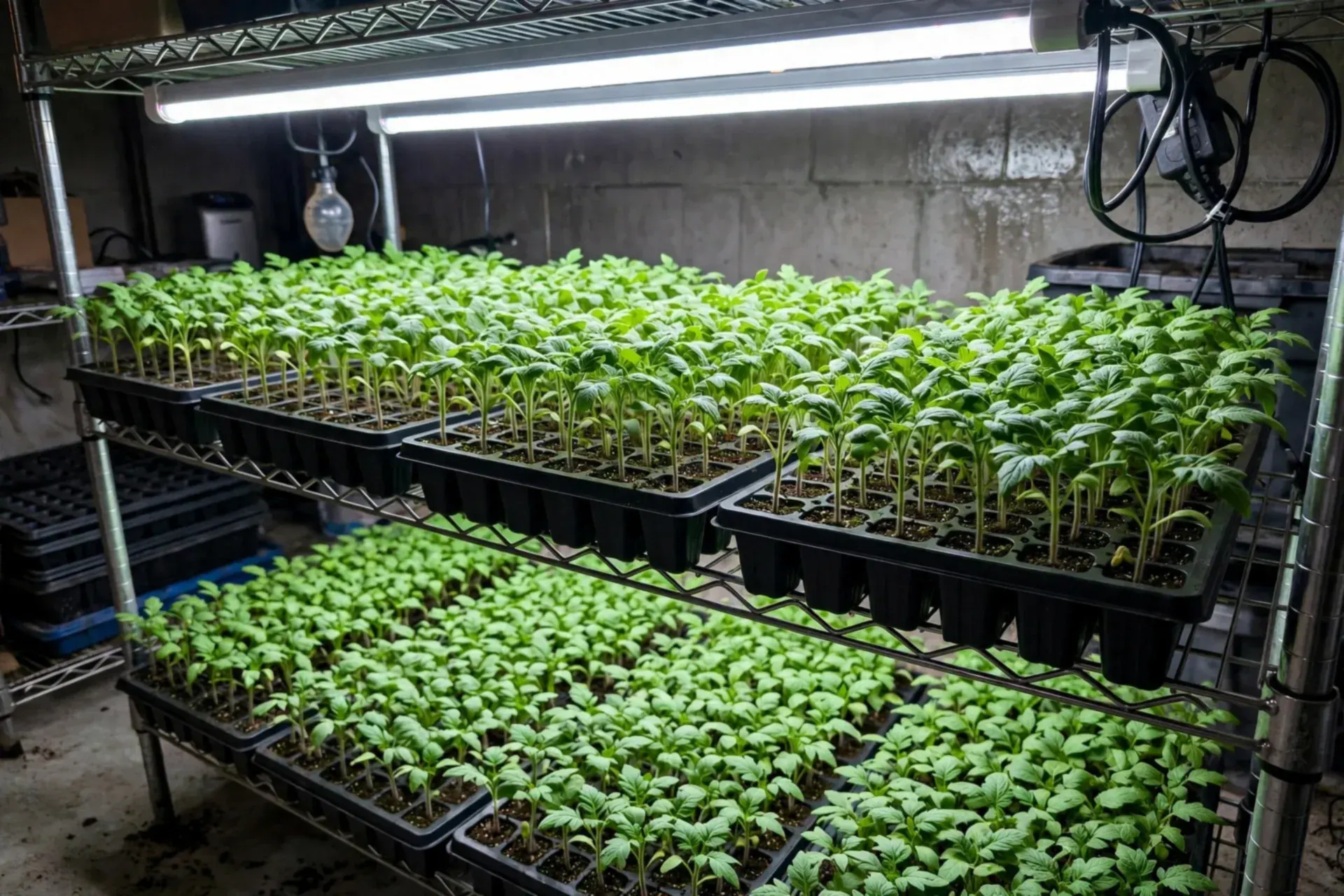
Every January the same question lands in garden centres and forums: which light should I buy for starting seeds? The honest answer is that seedlings are not fussy about brands — they are fussy about three numbers. How close the light hangs, how many hours it runs, and whether it is bright and white enough. Get those right and a cheap shop light beats an expensive panel hung too high. This guide compares the real choices — LED panels, LED shop lights and fluorescent tubes — and then walks the setup in four steps, so the seedlings that come up are the short, thick kind instead of the pale, floppy kind.
The choices at a glance
| Fixture | Hang above the tops | Strengths | Watch out for |
|---|---|---|---|
| LED panel or bar (full spectrum) | Per the maker's chart — often 12–24 in | Most light per watt, runs for years, little heat at the leaf | Costs most; quality varies a lot between brands |
| LED shop light (5000K+) | 2–6 in | Cheap, bright, easy to hang on a shelf | Light thins toward the tray edges |
| T5 fluorescent tubes | 2–4 in | Even, gentle light; seedlings love it | Tubes fade — replace about yearly; must hang very close |
| Old T8 / T12 fluorescent | 2–3 in | Often already in the garage | Weakest of the four; seedlings stretch if it sits any higher |
All four run on the same schedule: 14–16 hours a day, on a timer, with a real dark night.
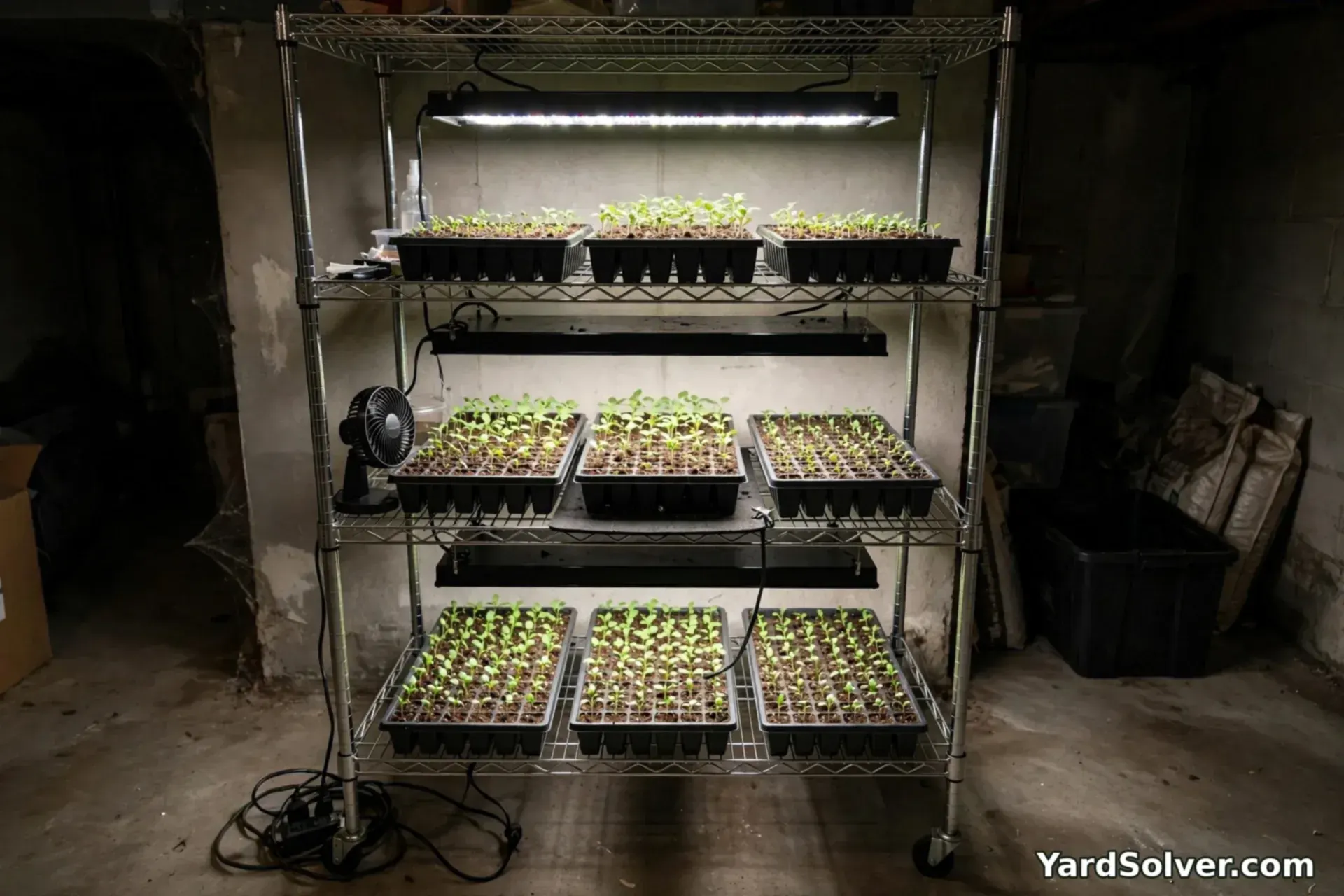
First, why the sunny window fails
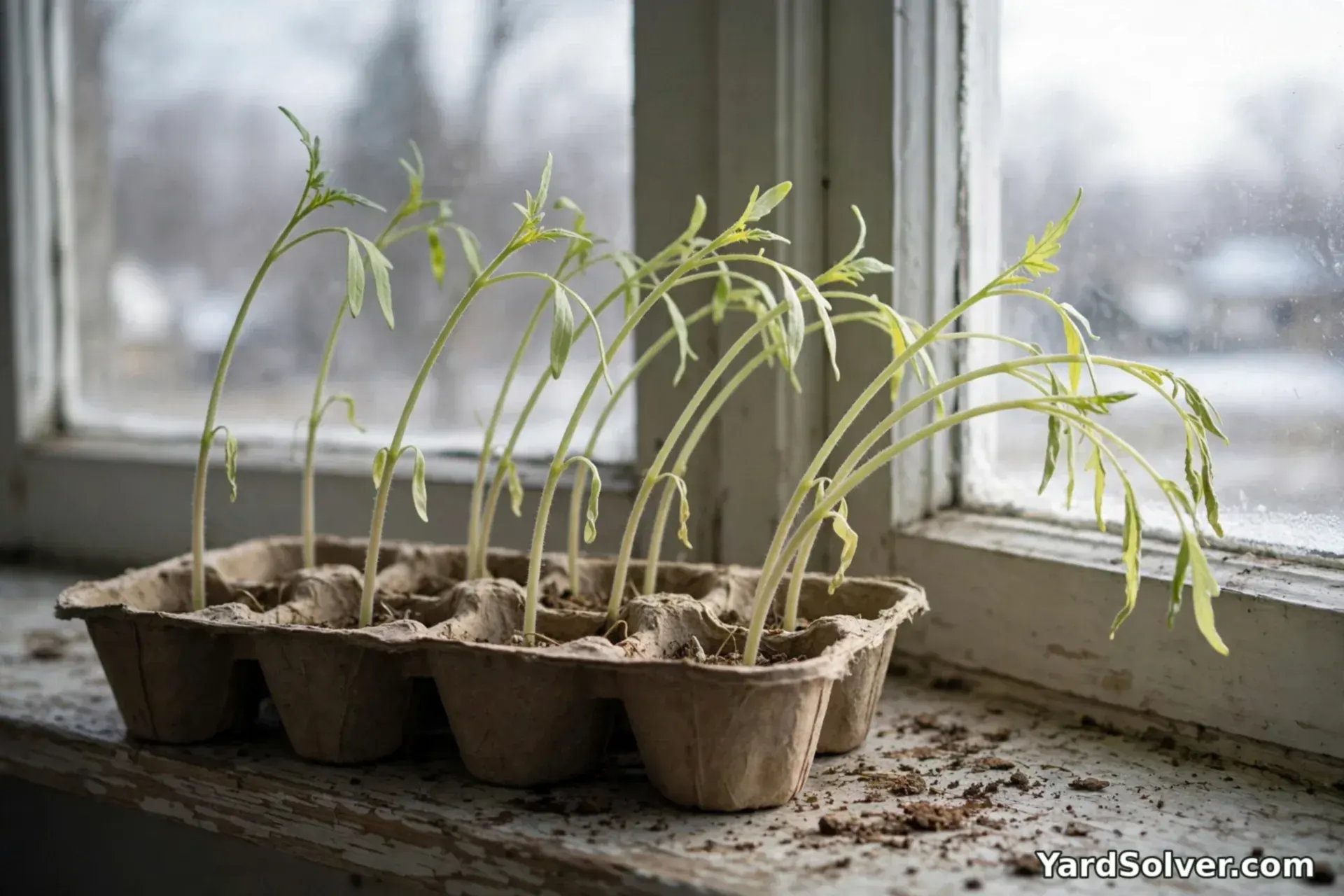
It feels wrong, because the windowsill looks bright to us. But our eyes adjust; a seedling cannot. Winter sun is low and short, glass cuts the light further, and the light that does arrive comes from one side, so stems bend and stretch toward it. The result is the classic leggy seedling: a long pale stem that cannot hold its own leaves up. If that is what you are looking at now, Why Are My Seedlings Leggy covers what can be saved and what is better re-sown. The fix going forward is a light directly overhead — close, bright and on a schedule. Seedlings do not need a greenhouse. They need about two months of honest light, and a fixture gives it in any basement, spare room or garage corner.
Step 1 — Pick the fixture for your shelf
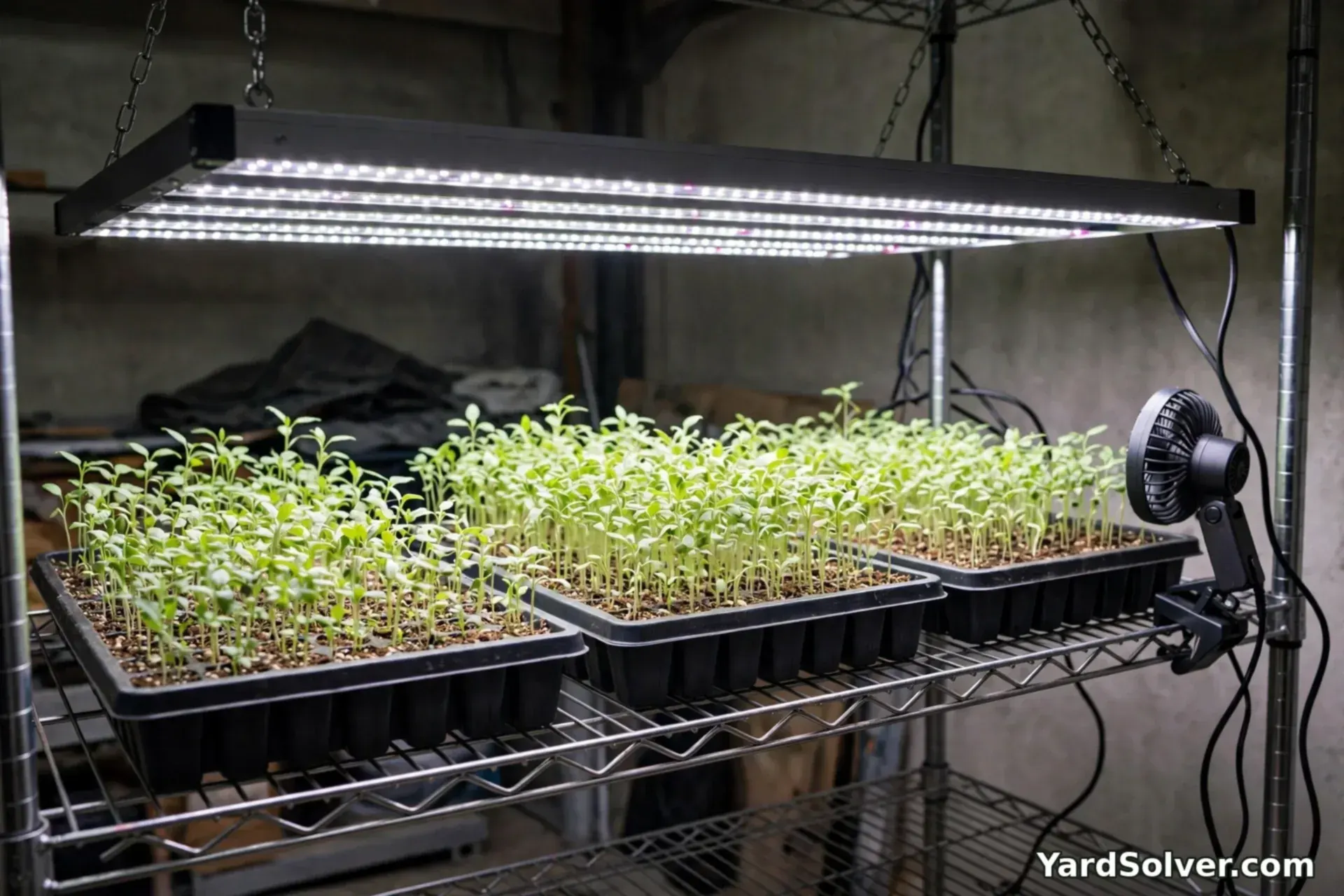
Buy for coverage, not for a impressive watt number. The light should cover the whole tray evenly — a 2-foot fixture over a standard tray, a 4-foot fixture over two. LED panels and bars are the buy-once choice: the most light for the electricity, no tubes to replace, and dimmable models forgive hanging mistakes. LED shop lights are the budget sweet spot — choose daylight white, 5000K or higher on the box, and hang them low. Fluorescent T5 tubes still grow beautiful seedlings and give the softest, most even light, but their output fades with age, so plan on fresh tubes each season or two. Whatever you pick, plain white light is what seedlings want — the purple-pink "blurple" look is for other stages of growing, and for seed starting a daylight-white fixture at the right distance beats it.
Step 2 — Hang it close, closer than feels right
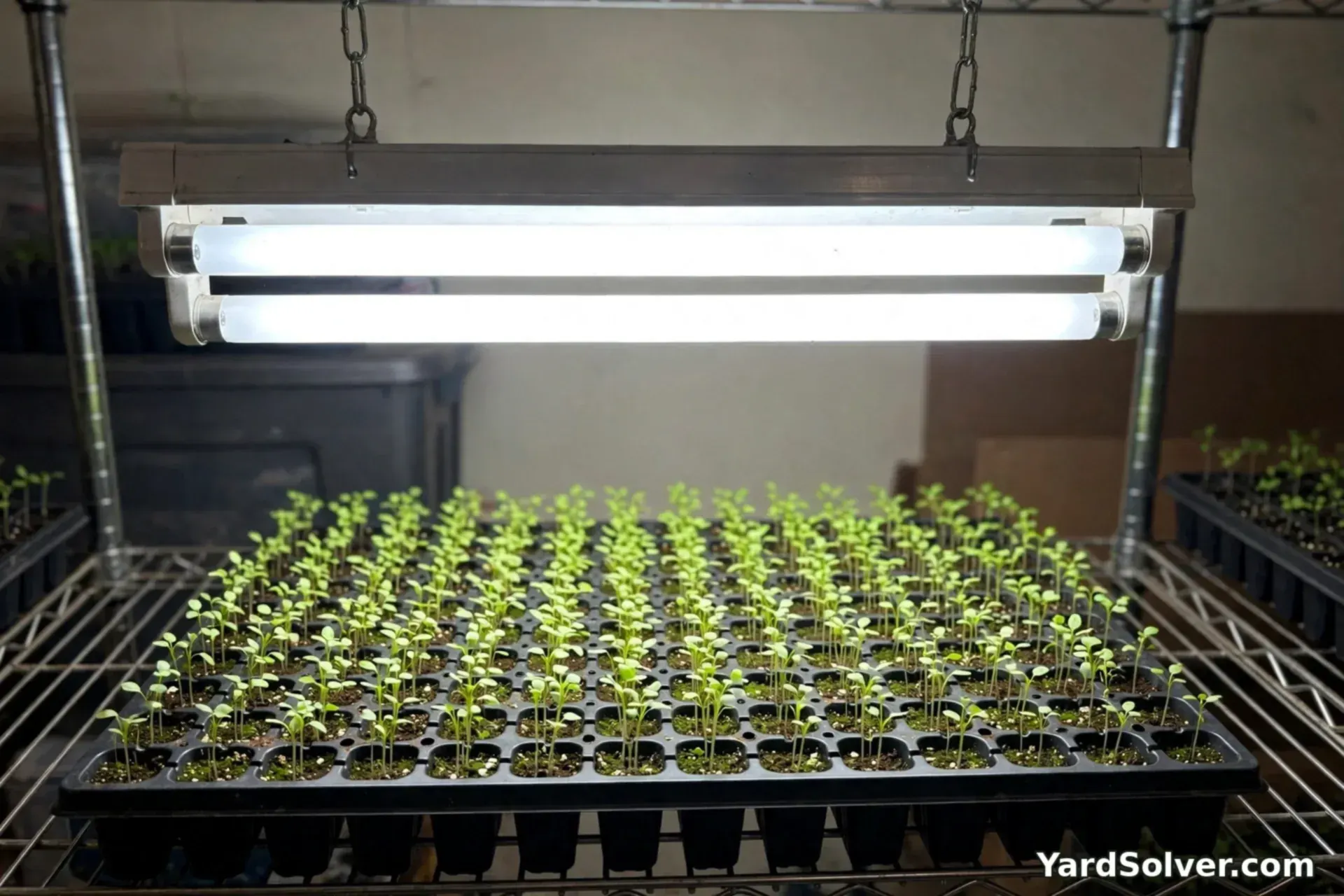
Light fades fast with distance — double the gap and the plants get a fraction of the light, not half of it in any way that matters to a stem. So the rule for tubes and shop lights is simple and startling the first time: 2 to 4 inches above the tops of the plants, close enough that raising it becomes a weekly job. Fluorescent tubes run cool, so this is safe; LED shop lights are nearly as cool at the face. Strong LED panels are the exception — they are bright enough to need air, and their makers publish a hanging distance, commonly 12 to 24 inches for seedlings. Follow the chart that came with a strong panel, and follow the 2–4 inch rule for everything gentler. Chains, S-hooks or rope ratchets all work as hangers; what matters is that the height adjusts in small steps.
Step 3 — Put it on a timer for 14–16 hours
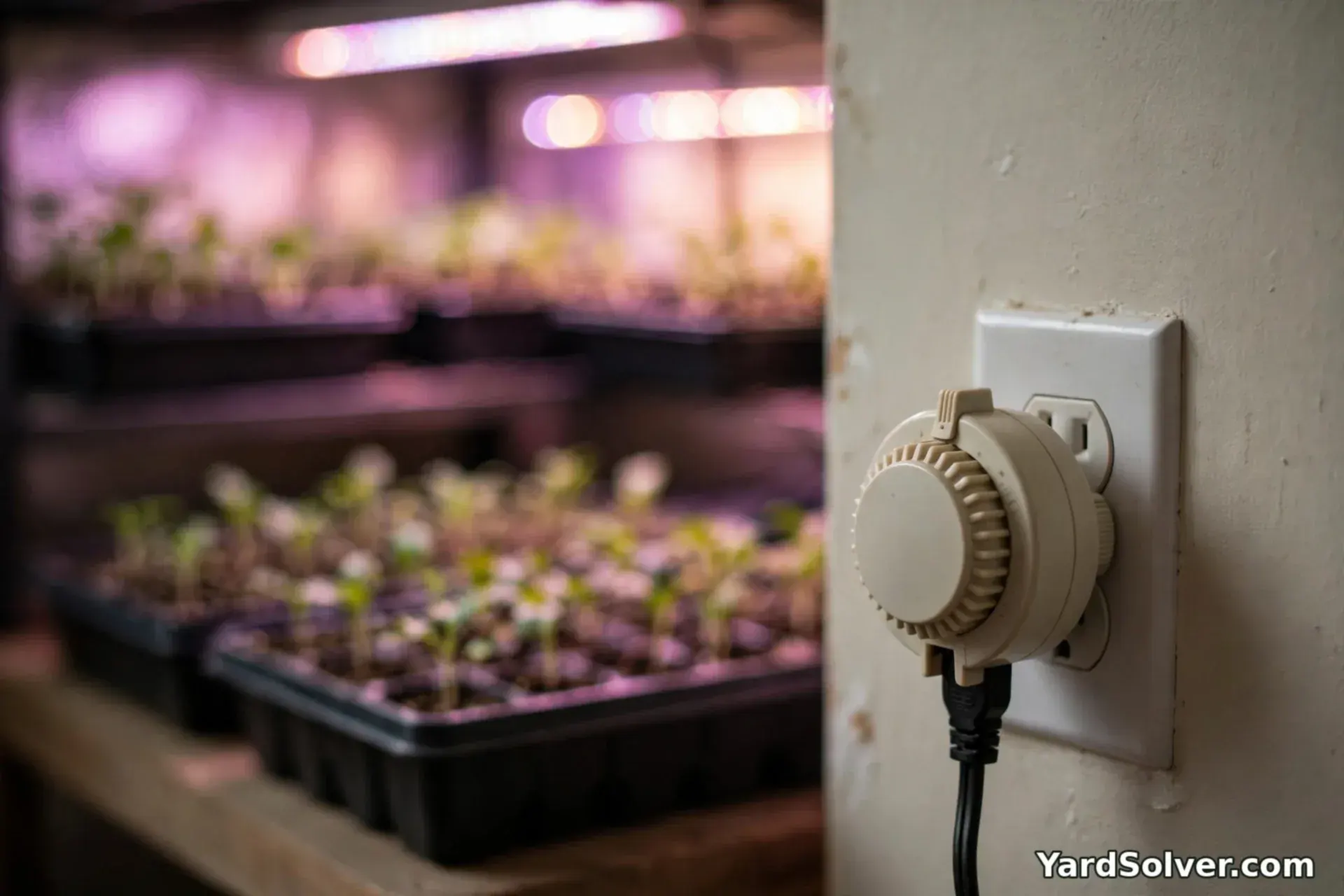
Seedlings grow best on 14 to 16 hours of light a day — sixteen is the setting most growers settle on. Resist the urge to run the lights around the clock: plants use the dark hours too, and 24-hour light gives pale, tired seedlings, not faster ones. A simple plug-in timer costs little and turns a daily chore into a set-and-forget system, which matters over the six to ten weeks a tray spends under lights. Pair the light with a small fan on low in the same room if you can. Moving air wiggles the stems, and stems that get wiggled grow thicker — it is the closest thing to a free upgrade in the whole setup. Timing the sowing itself still matters as much as the light: count back from your last frost with When to Start Seeds Indoors, and the Seed Calculator will work out how much seed the plan actually needs.
Step 4 — Raise the light as they grow
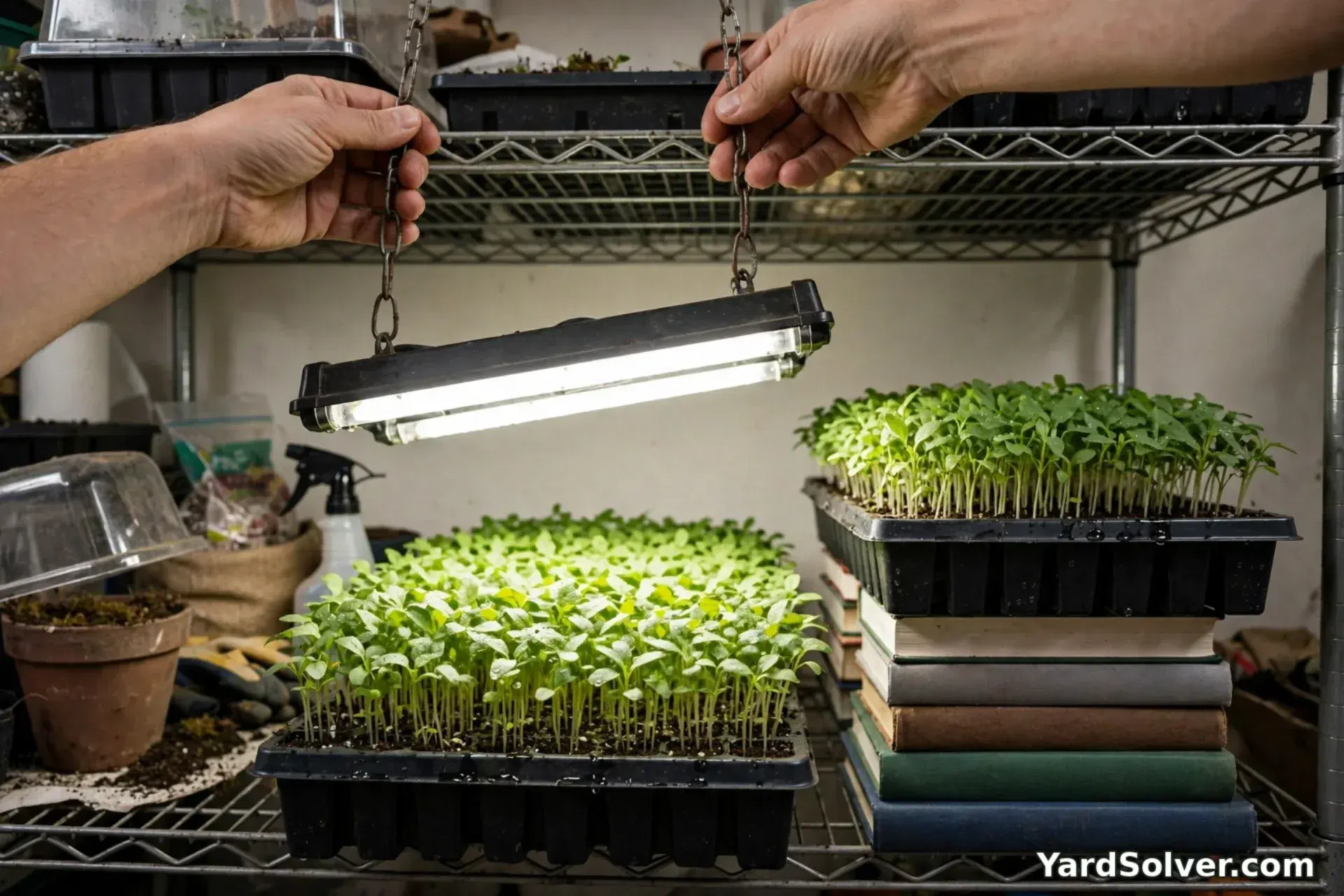
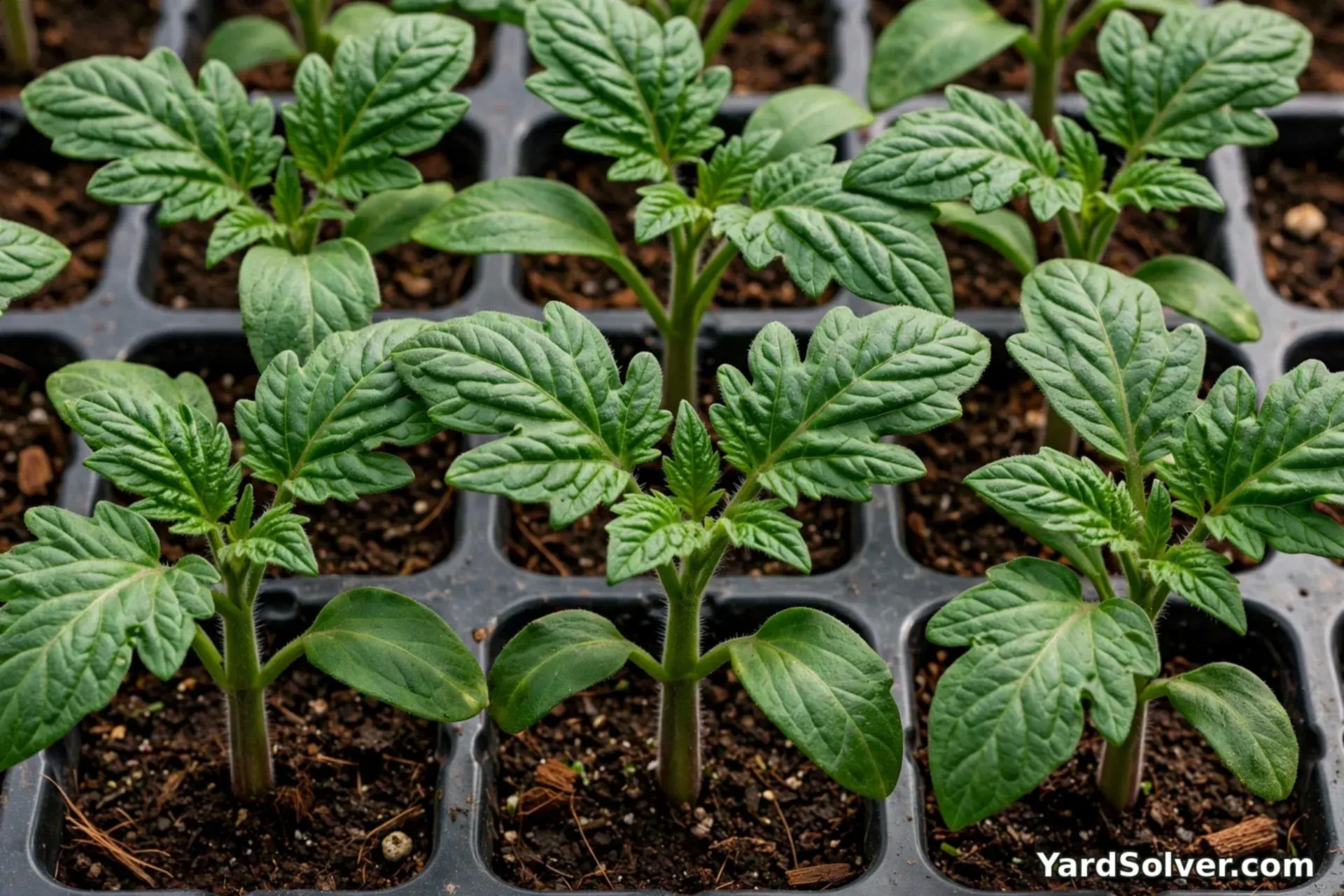
The distance is measured from the tops of the plants, and the plants keep moving. Check every few days: when the leaves close in on the fixture, raise it an inch or two — or lower the tray, which is easier when the light is fixed. Some growers set trays on upturned pots or books and remove a layer at a time. Keep the light level, so one end of the tray is not working harder than the other, and turn trays a quarter turn every couple of days if one side leans. Do this for the whole indoor stretch and the payoff looks like this:
Keep going
Already looking at pale, stretched plants? Why Are My Seedlings Leggy — what caused it, what can be saved, and the tomato trick that rescues the worst of them.
Light sorted, timing next: When to Start Seeds Indoors counts the weeks back from your last frost, crop by crop.
And the seed itself: Seed Calculator turns bed size and spacing into the amount of seed to sow and buy.
Questions people ask
Can I start seeds under a regular LED shop light?
Yes — it is the budget setup that quietly works for most home growers. Pick a daylight-white shop light rated 5000K or higher, hang it 2 to 4 inches above the tops of the seedlings, and run it 14 to 16 hours a day on a timer. It will not match a good horticultural panel watt for watt, but seedlings only need a few weeks of strong light, and a shop light gives it.
How many hours of light do seedlings need?
Fourteen to sixteen hours a day is the working range for vegetable and flower seedlings, with sixteen the common default. More is not better: seedlings need a real dark period every night, so 24-hour light is a mistake. A cheap plug-in timer keeps the schedule exact and frees you from remembering.
How close should an LED grow light be to seedlings?
It depends on the fixture's strength, which is why LED panels come with a hanging chart. Strong panels usually sit 12 to 24 inches above the tops; low-wattage LED bars and shop lights sit much closer, 2 to 6 inches. Fluorescent tubes are the closest of all at 2 to 4 inches, because their light fades fast with distance. When seedlings stretch, the light is too far or too weak — closeness is the first fix.
Why are my seedlings still leggy under a light?
Almost always one of three things: the light is too far away (light strength drops fast with every inch), the hours are too short, or the room is warm while the light is weak, so the plants grow fast toward too little light. Lower the fixture to a few inches above the tops, run 14 to 16 hours, and add a small fan on low — moving air makes stems grow thicker.
Comments & ratings
No comments yet.
Be the first to share your experience.