
Guides · Seedling problems · Published October 31, 2026
Why Are My Seedlings Leggy?
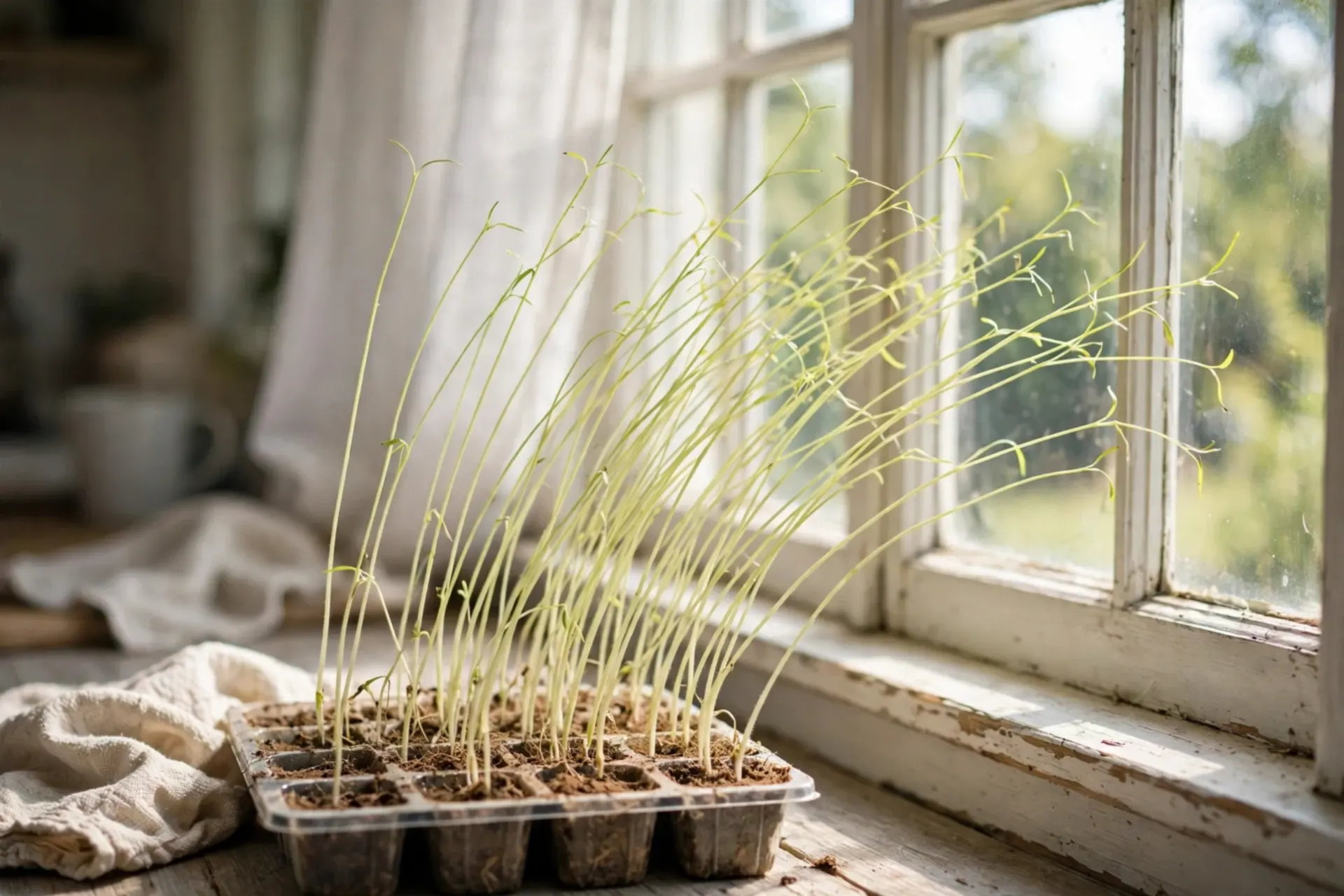
Leggy seedlings — tall, pale, thin-stemmed, flopping toward the window — are the most common indoor-gardening problem there is. The good news: the cause is almost always one thing, the fix takes ten minutes, and you can apply it today. This guide diagnoses first, then fixes, then tells you honestly which plants can be saved.
The diagnosis: seedlings stretch toward light they cannot get enough of
- Main cause — not enough light: a seedling in dim light grows its stem longer searching for brightness, spending its small seed reserves on stem instead of leaves and roots
- Making it worse — too much warmth: a hot room speeds stem growth while light stays weak; the combination stretches plants fastest
- Also common — sown too early: big seedlings waiting weeks for transplant day outgrow their light and pots (see When to Start Seeds Indoors)
- And crowding: seedlings shading each other in an over-sown tray all stretch together
Step 1 — Fix the light today (distance matters more than the lamp)
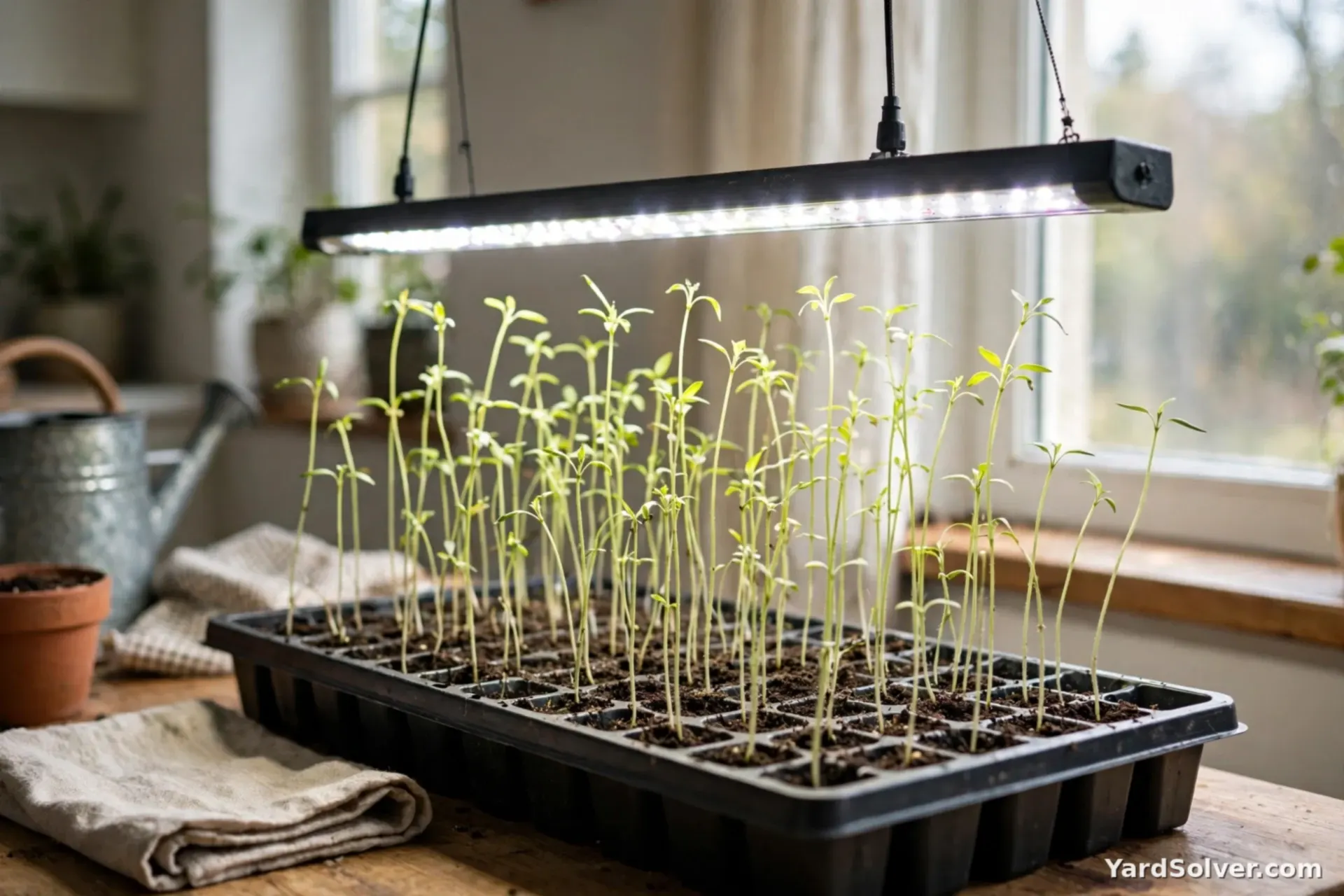
Hang a light 2–4 inches above the tops of the plants — not on a shelf a foot away, not across the room. Light intensity falls off fast with distance; a lamp 2 inches away delivers many times the light of the same lamp at 12 inches. Run it 14–16 hours a day (a cheap timer helps). Raise the lamp — or lower the tray — as plants grow, keeping that small gap.
Step 2 — Cool the room a little and add moving air
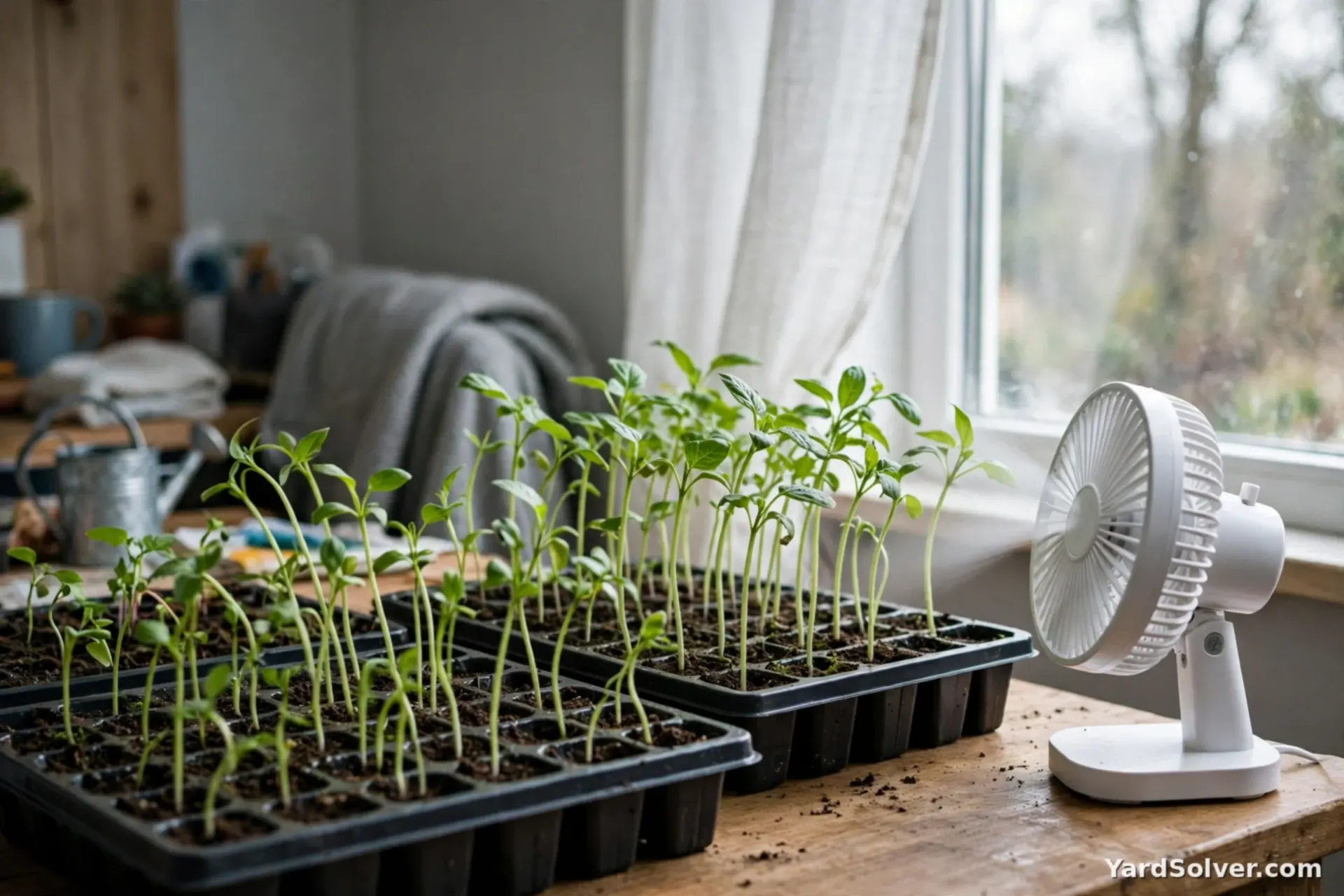
Once seedlings are up, most grow best in ordinary-to-cool room temperatures rather than on heat mats — warmth is for germination, not for growing on. Add a small fan on low nearby so stems sway gently; the movement itself triggers thicker, sturdier growth. Brushing your palm lightly over the tops daily works too.
Step 3 — Rotate and thin
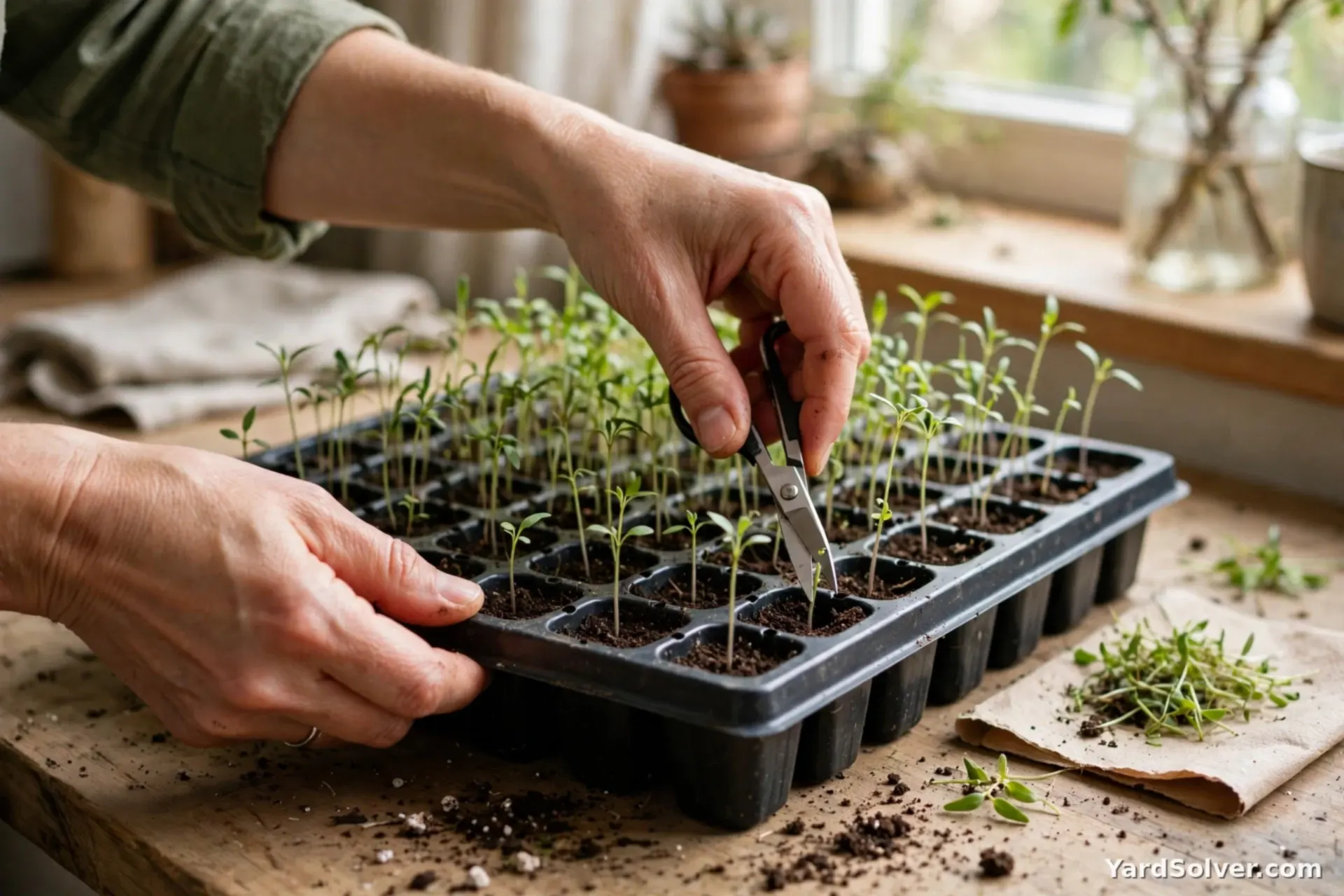
Turn trays a quarter-turn daily so stems grow straight instead of leaning. Thin crowded cells to the single strongest seedling — snip the extras at soil level rather than pulling them, so you do not tear the keeper's roots.
Step 4 — Decide what can be saved (the honest part)
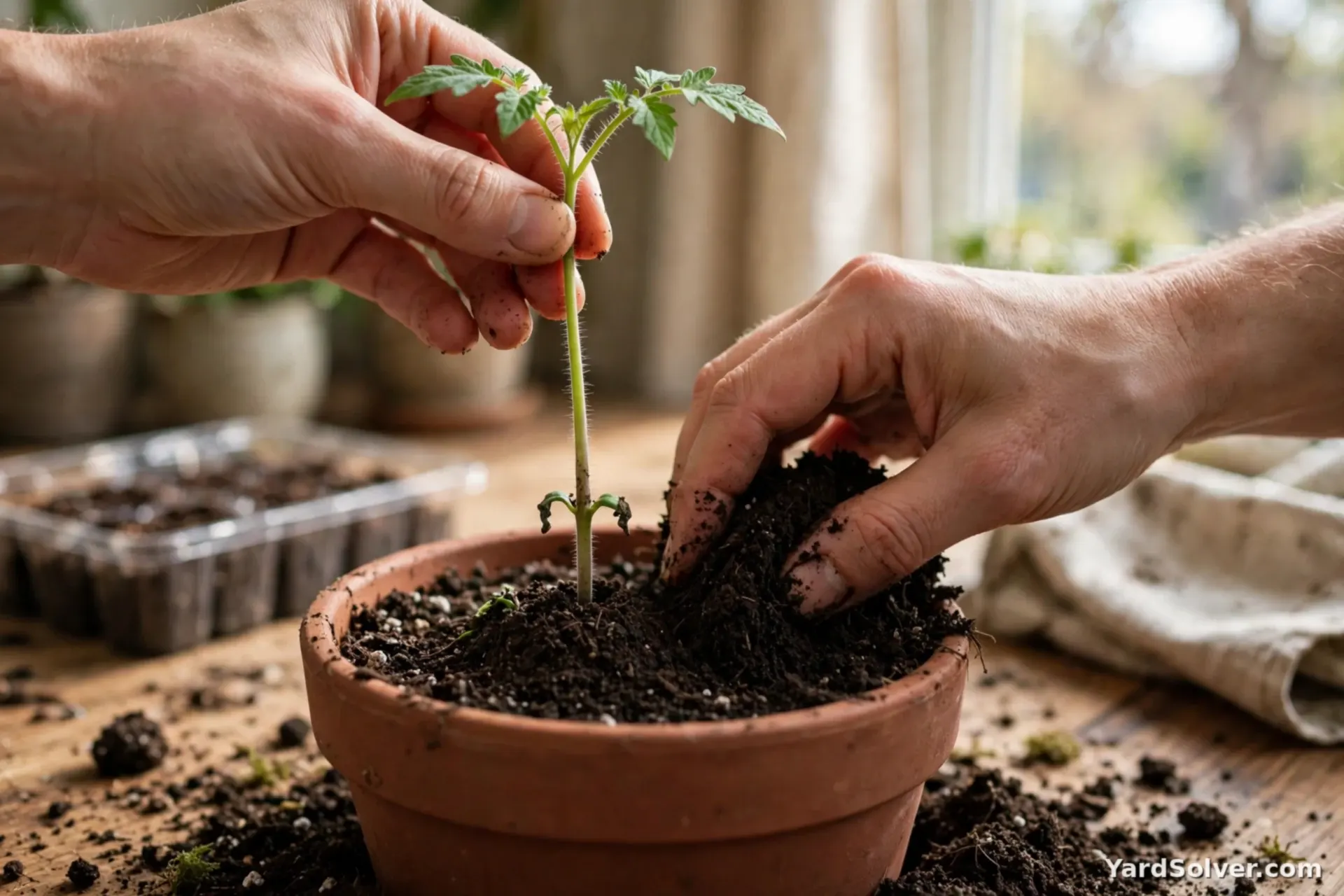
Mildly stretched: pale and a bit tall but standing — fix the light and they normally thicken within a week or two. Severely stretched: very long white stems folded over — for most crops, a fresh sowing under proper light overtakes them; do not sink the season into rescues. The exception — tomatoes: they root along buried stems, so pot a leggy tomato deeply, stem buried up to the first true leaves, as shown in How to Start Tomato Seeds Indoors, and it grows away as a strong plant. Lettuce and many flowers can also be transplanted slightly deeper than usual at planting-out time.
Step 5 — Prevent it next time: the checklist
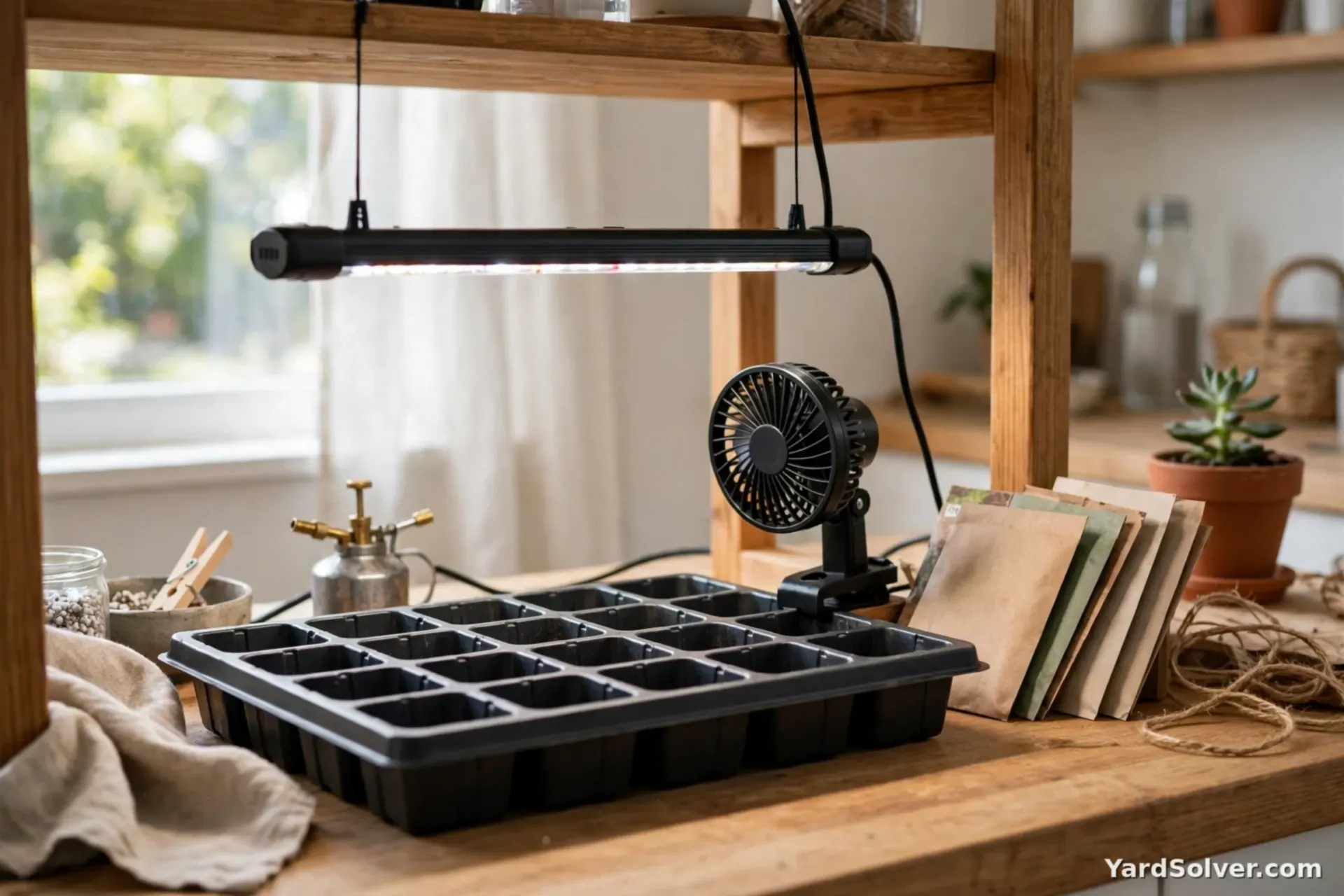
Light ready and hung before sowing; seeds started in their proper week, not in February enthusiasm; heat mat off (or tray moved to a cooler spot) once sprouts appear; fan running; trays turned daily. Five small habits, and legginess simply stops happening. Then finish the season properly with How to Harden Off Seedlings before anything moves outside.
Keep going
Seed starting, in order: When to Start Seeds Indoors · How to Harden Off Seedlings · Grow Lights for Seedlings.
Questions people ask
Can leggy seedlings recover?
Mildly stretched ones, yes — fix the light and they thicken in a week or two. Severely stretched ones rarely catch a fresh sowing. Tomatoes are the exception: transplant them deeply and they root along the stem.
Is a sunny windowsill enough?
Honestly, for most vegetables, no — especially in late winter. Herbs and slow greens manage; tomatoes and peppers stretch. A close-hung LED or fluorescent light is the reliable fix.
Does a fan really help?
Yes — gentle moving air makes stems flex and thicken. A light daily brush of your hand over the tops does the same on a small scale.
Comments & ratings
No comments yet.
Be the first to share your experience.