
Guides · Lawn care · Published November 15, 2026
How Often to Mow (and How High): Mowing Heights by Grass Type + the One-Third Rule
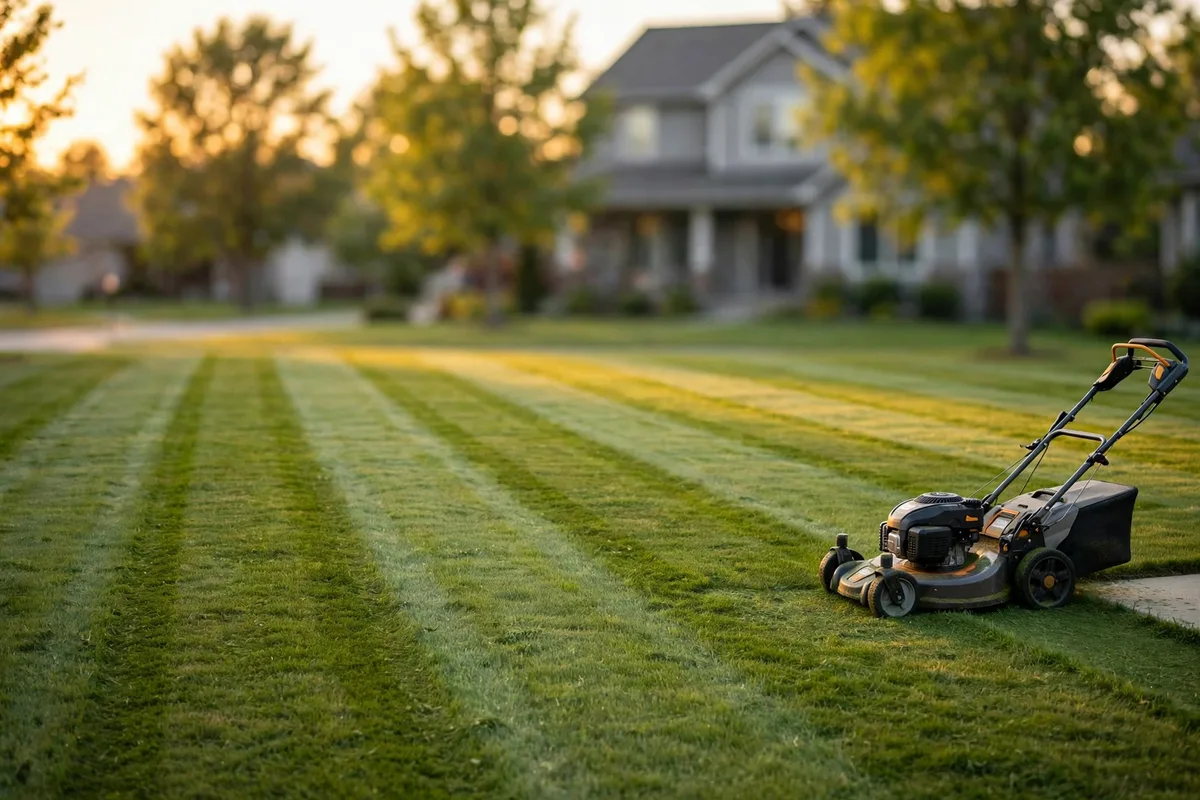
Of everything you do to a lawn, mowing is the most frequent and the most quietly destructive when it is wrong. Cut too short and the grass starves its own roots, thins out, and hands the bare soil to weeds; cut on a rigid calendar and you either scalp in the spring flush or hack back a hayfield in June. The good news is that the whole subject reduces to one rule and one chart. The rule decides how often to mow; the chart decides how high. Everything below is those two tools, in both inches and millimetres, because a buffalo lawn in Brisbane and a bluegrass lawn in Boston follow the same biology at different numbers.
Step 1 — The one-third rule: the only schedule you need
Never remove more than one third of the grass blade's height in a single mow. Grass grows from the crown at its base, and the blade is the root system's solar panel: take half of it away and the roots stop growing and start shrinking until the blade recovers. So the schedule writes itself — you mow when the lawn reaches roughly one and a half times your target height. Keeping bluegrass at 3 inches? Mow when it hits about 4.5 inches. In the spring flush that can mean every four or five days; in a dry July it might mean not mowing for two weeks, and that is correct, not lazy.
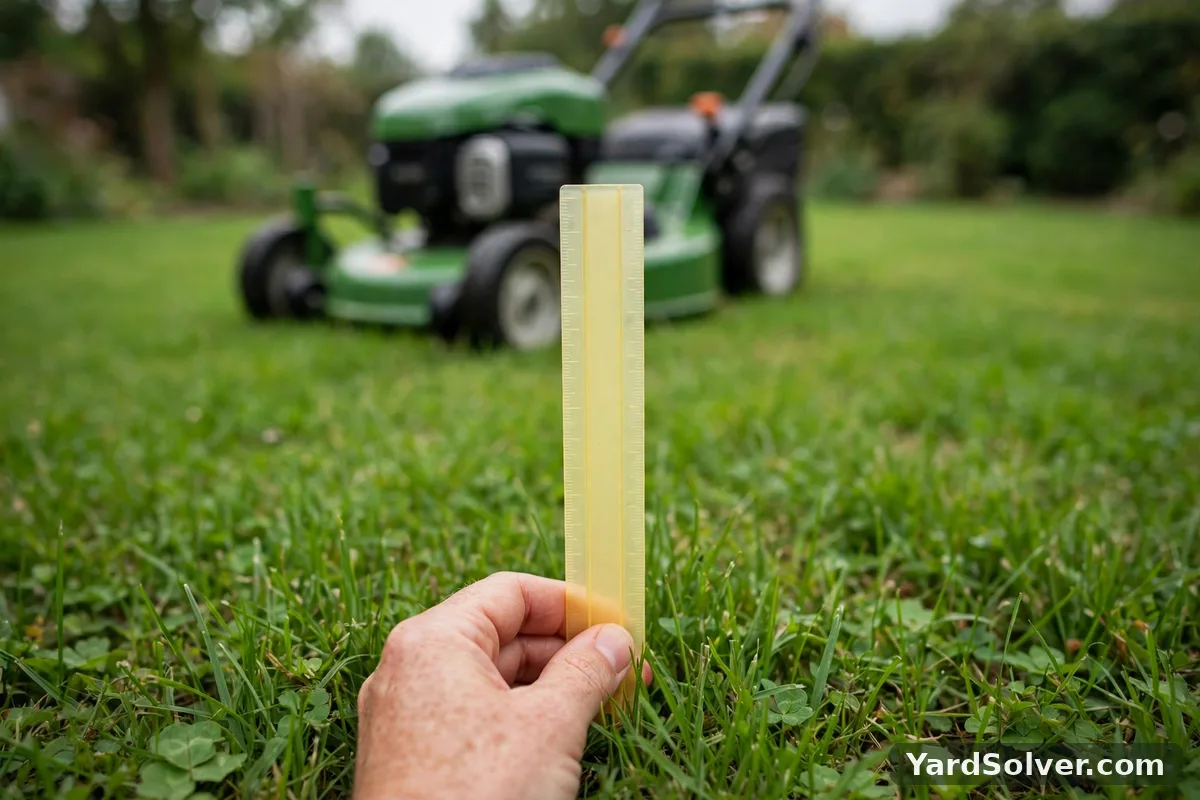
Coming home to a lawn that has grown far past the rule — the classic holiday problem — do not scalp it back in one pass. Take it down in two cuts a few days apart, a third at a time, and let it recover between them. One scalping in hot weather can set a lawn back a full season.
Step 2 — The height chart: by grass type, in inches and millimetres
Each grass has a height band where it is densest, deepest-rooted and most weed-resistant. Inside the band, err toward the taller end in summer heat and drought — taller grass shades its own soil, keeps roots cooler and measurably reduces watering need and crabgrass germination.
| Grass | Mowing height (US/CA) | Mowing height (metric) | Notes |
|---|---|---|---|
| Kentucky bluegrass | 2.5–3.5 in | 65–90 mm | Raise to the top of the band in summer |
| Tall fescue | 3–4 in | 75–100 mm | The most forgiving cool-season lawn grass |
| Perennial ryegrass | 2–3 in | 50–75 mm | Common in UK/EU lawns; keep at 40–60 mm in a typical UK mix |
| Fine fescues | 2.5–3.5 in | 65–90 mm | The shade specialists; dislike scalping most of all |
| Bermuda / couch | 1–2 in | 25–50 mm | AU couch is happiest at 15–25 mm with a cylinder mower |
| Buffalo (AU) / St. Augustine (US) | 2–3 in | 50–75 mm | AU buffalo: 40–50 mm in sun, up to 60 mm in shade |
| Zoysia | 1.5–2.5 in | 40–65 mm | Slow-growing: the longest intervals between cuts |
| Kikuyu (AU) | 1–1.5 in | 25–40 mm | Vigorous: in summer it may need cutting twice a week |
UK and European readers: a typical ryegrass-fescue family lawn sits happily at 40–60 mm (roughly 1.5–2.5 in), raised in dry spells. The region switch at the top of this site serves the units and seasonal notes for your region first — the biology underneath is the same.
Step 3 — Frequency by season, honestly stated
In active spring growth, most lawns want cutting every 4–7 days. Summer splits the world: irrigated lawns keep growing and keep the weekly rhythm, while dry lawns slow down — follow the growth, not the calendar, and raise the deck a notch in heat. Autumn growth surges again with cool nights and rain; keep mowing until growth truly stops, and go into winter at the middle of your grass's band — not scalped (which invites winter weeds and disease) and not shaggy (which mats under snow into snow mold). Warm-season lawns simply stop for winter dormancy; the last cut happens as growth ceases, not on a date.
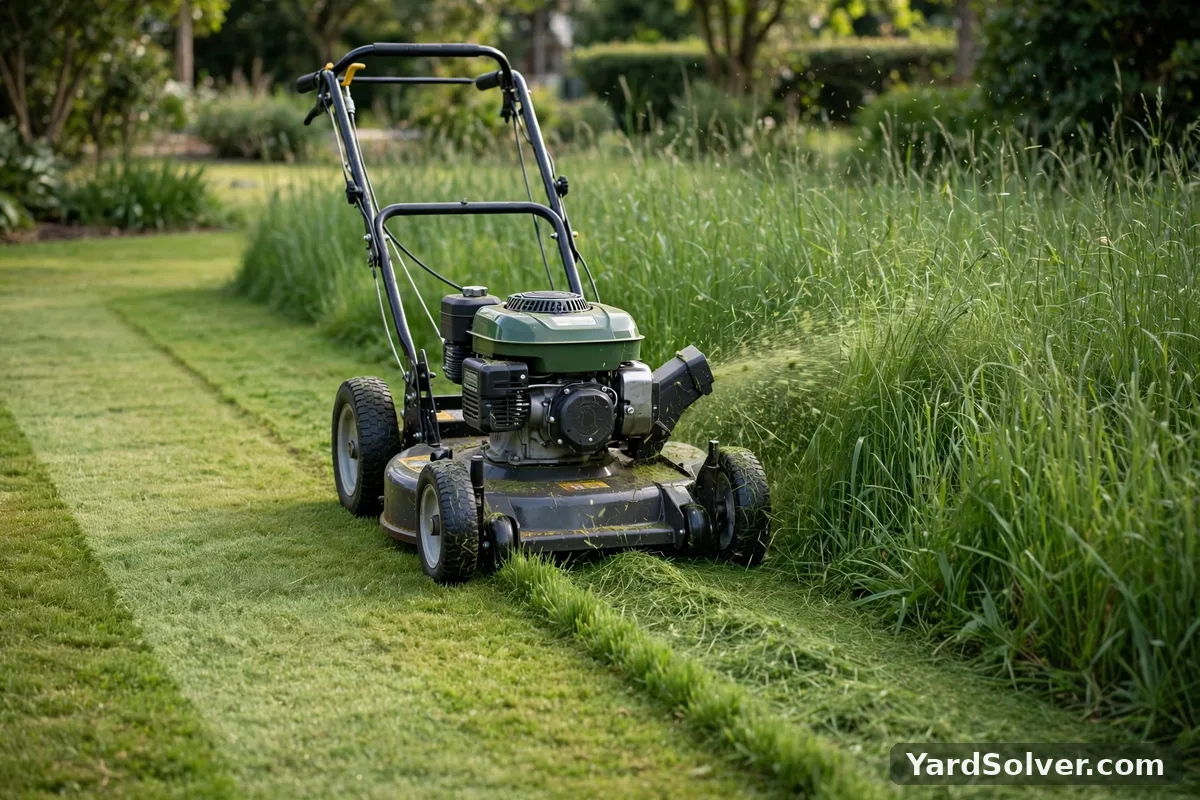
Two habits multiply everything above. Sharp blades: a dull blade tears grass into frayed white tips that lose water and invite disease — sharpen or swap blades at least once a season, twice for large lawns. Leave the clippings: at one-third-rule frequency the clippings are short, fall into the turf, and return roughly a quarter of the lawn's nitrogen needs. They do not cause thatch. Bag only when you have broken the rule and the clippings lie in windrows.
Step 4 — Mowing is half the lawn-care system
Height and feeding are the two halves of the same system: a lawn kept at the top of its band needs less water, shades out weed seed, and uses fertilizer more efficiently than a scalped one. Pair the chart above with a measured feed — the Fertilizer Calculator works out the amount for your lawn's size — and you have covered most of what a lawn service actually does. If the mowing itself is the burden, that is the exact job our Robot Lawn Mower guide examines: a robot's whole advantage is that it cuts a little, very often, which is the one-third rule automated. And a tall, dense lawn is the cheapest crabgrass control there is — the full story is in Crabgrass: Identify It, Kill It, Stop It.
Keep going
Trimming the edges is the other half of the mowing hour. Our tool comparison, Best Cordless String Trimmers, matches battery platforms to yard sizes so the finish work stops being the slow part.
Building the whole lawn season — mowing, feeding, seeding, weed windows? The Garden Planner turns your frost dates into a dated plan with quantities and a shopping list.
Questions people ask
How often should you mow in summer?
As often as the one-third rule demands, which for an irrigated lawn is about weekly and for a dry, dormant-leaning lawn may be every two weeks or less. Raise the cutting height a notch in heat — taller grass protects its own roots and soil moisture.
Is it better to mow in the morning or evening?
Late afternoon into early evening is the sweet spot: the grass has dried from morning dew (wet clippings clump and spread disease), and it gets the cool night to recover before the next day's sun. Midday mowing in a heat wave stresses both lawn and operator.
Should I bag clippings or leave them?
Leave them, provided you are following the one-third rule so they are short enough to fall into the turf. They return roughly a quarter of the lawn's nitrogen and do not cause thatch. Bag only long, windrowed clippings or when collecting seed heads of weeds.
Comments & ratings
No comments yet.
Be the first to share your experience.