
Guides · Lawn care · Published November 10, 2026
How to Aerate Your Lawn: Core vs Spike, Timing by Grass
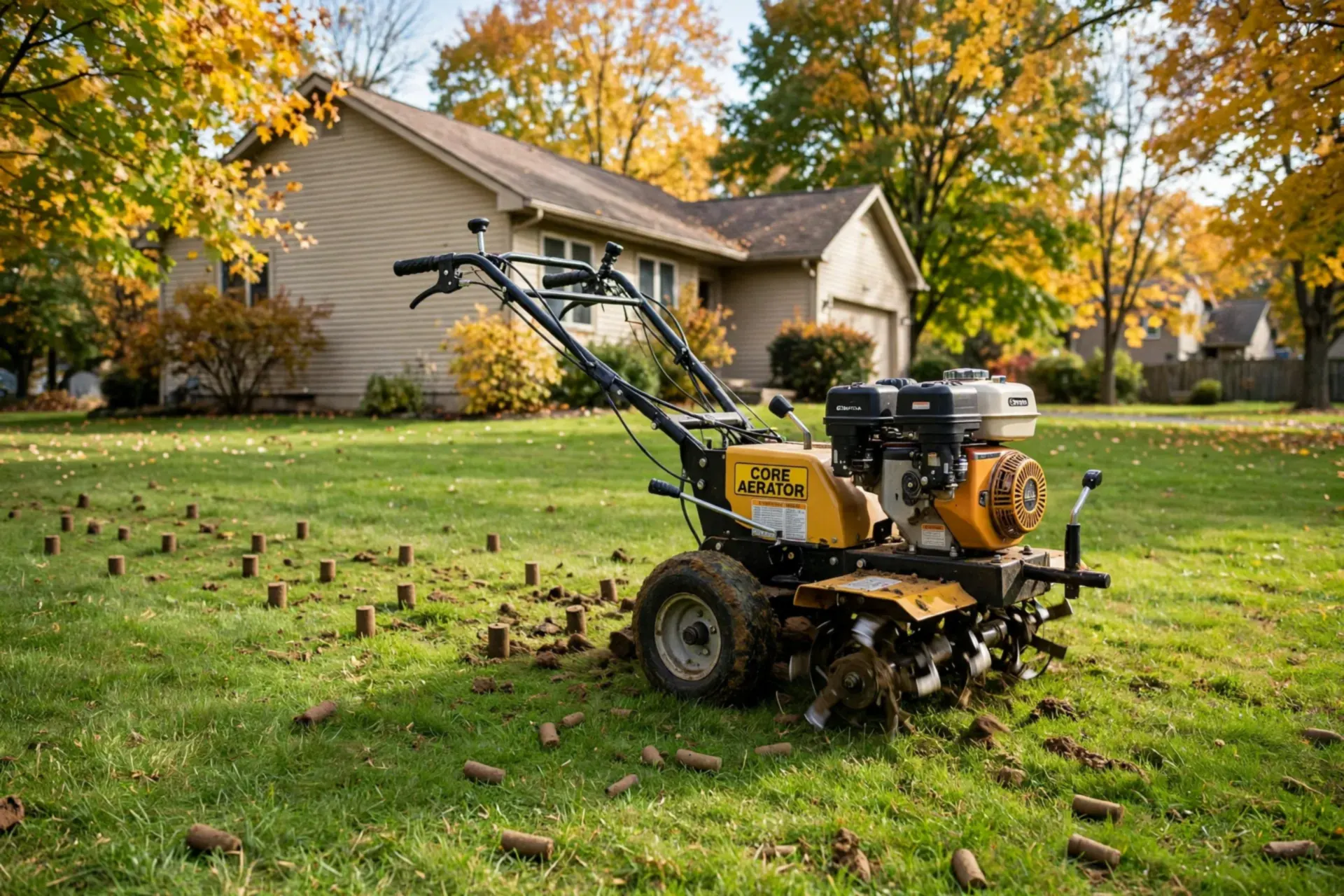
Soil under a lawn slowly gets trodden hard — feet, mowers, kids, dogs, all pressing the air out of it year after year. Roots cannot grow through concrete, and water starts running off instead of soaking in. Aerating fixes that by opening the ground back up. It is also the job that comes right before overseeding: seed dropped onto an aerated lawn falls into the holes and actually grows. Here is how to do it properly, and how to pick the right machine.
Core vs spike — the honest difference
| Core (plug) aerator | Spike aerator | |
|---|---|---|
| What it does | Pulls out finger-sized plugs of soil and leaves them on the lawn | Pushes solid spikes in and pulls them out — no soil removed |
| Effect on compaction | Really loosens the soil; the holes stay open | Presses soil sideways to make the hole, which can pack the walls tighter |
| Best for | Compacted lawns, clay soil, overseeding day | A quick pass over a small worn patch, or sandy soil that barely compacts |
| Verdict | The one to rent | Fine as a garden fork job on a tiny area; not a fix for a hard lawn |
If a rental shop offers both, take the core machine. The plugs look messy for a week and do more good than any lawn tonic in a bottle.
Timing by grass type
| Grass | Type | Best time | Also fine |
|---|---|---|---|
| Kentucky bluegrass, perennial ryegrass | Cool-season | Early fall | Spring |
| Tall fescue | Cool-season | Early fall | Early spring |
| Bermuda | Warm-season | Late spring to early summer | Mid-summer, while it is growing hard |
| Zoysia | Warm-season | Late spring to early summer | Early summer |
| St. Augustine | Warm-season | Late spring | Early summer |
The rule under the chart: aerate when the grass is growing strongly, so it heals fast — never when it is dormant or struggling in heat or drought.
Step 1 — Check the lawn actually needs it
Push a screwdriver into moist soil. It should slide in easily to 3–4 inches. If you have to lean on it, the ground is compacted. Other signs: water puddles or runs off instead of soaking in, the grass thins in the walked-on places first, and thatch — the brown spongy layer at the base of the grass — is thicker than about half an inch. One or two of those means aerating will pay. A soft, springy lawn that drains well can wait another year.
Step 2 — Prep the day before
Mow a little shorter than usual and rake up the clippings. Then water the lawn deeply the day before you aerate — the soil should be moist, not muddy. Dry hard ground defeats even a heavy machine (the tines bounce off), and mud clogs it. While the water soaks in, mark anything the machine must not hit: sprinkler heads, shallow cable or irrigation lines, and the wire of an invisible fence. Little flags or flour markers both work.
Step 3 — Pull real cores
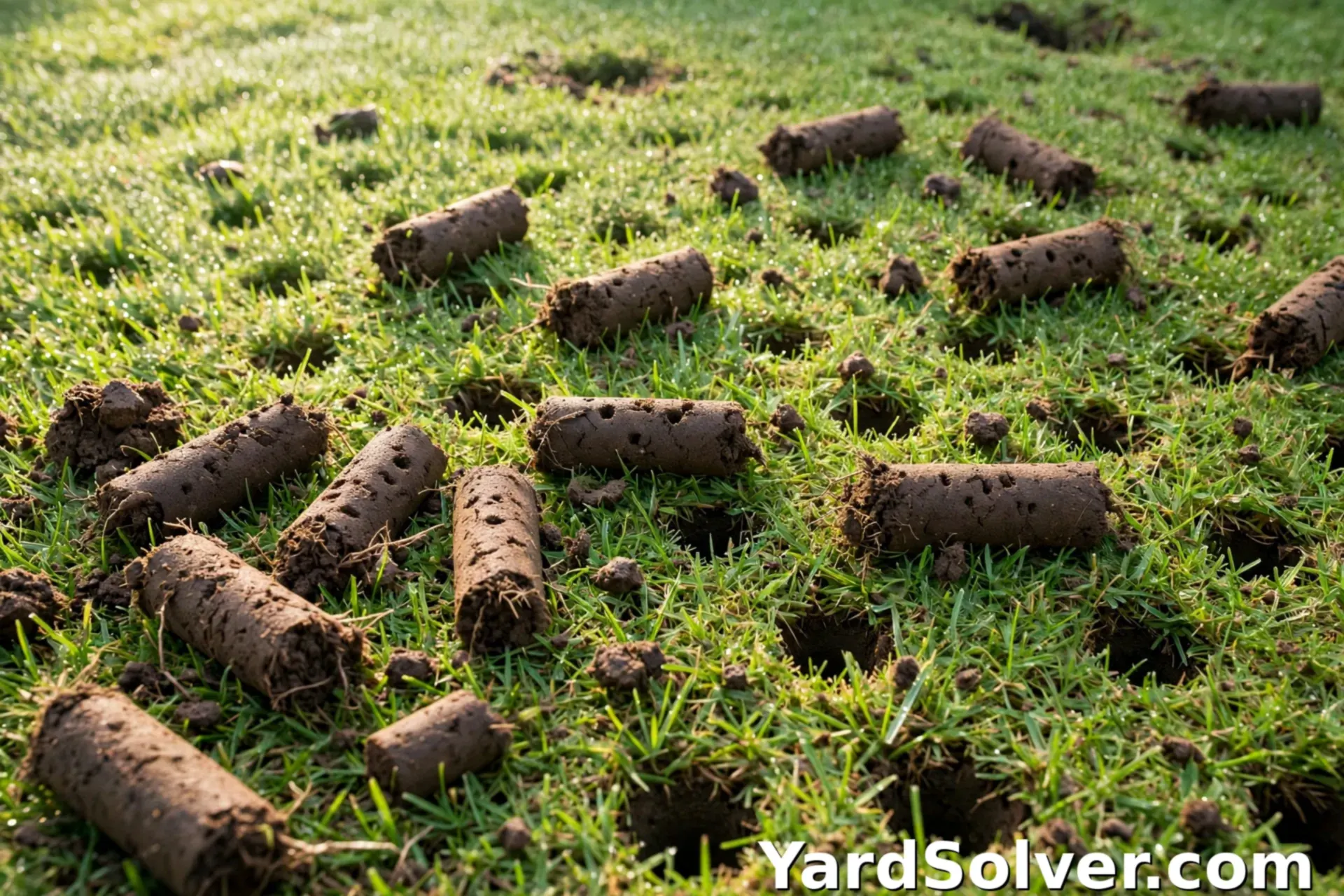
Set the machine to pull cores 2–3 inches deep. Walk it like you mow: steady pace, straight lines. On the worst areas — paths, gateways, play spots — go twice, the second pass at right angles to the first. Extension guidance aims for holes about 2–3 inches apart in the worn areas, roughly 20–40 holes per square foot once the passes are done; a single pass of most rental machines does not get there, which is why the second pass matters. Check the plugs as you go: long, moist cores mean it is working. Leave every plug where it lands.
Step 4 — Seed and feed straight after
This is the moment the whole job points at. Overseed the same day, while the holes are open — the method and the moisture rule are in How to Overseed Your Lawn, and the Seed Calculator works out how much seed your lawn's size actually needs. Bare patches too far gone for seed are a small sod job instead, priced out by the Sod Calculator. Water lightly and often until the seed is up. The plugs will crumble back into the lawn within a couple of weeks, the new grass roots dive down the core holes, and by next season the screwdriver test tells the story.
Keep going
Next in the lawn renovation order: How to Overseed Your Lawn — timing, rates and the moisture rule.
Renovating late in the year? Dormant Seeding covers the winter version: seed down now, grass in spring.
Questions people ask
Should I pick up the plugs after aerating?
No — leave them where they fall. In a week or two they dry out, crumble, and melt back into the lawn, returning soil and the microbes in it to the surface. A pass with the mower speeds up the breaking down. Picking plugs up throws away the best topdressing your lawn gets all year.
Do I aerate before or after fertilizing and seeding?
Aerate first, always. The holes are exactly where you want the seed and feed to land — seed that drops into a core hole has soil contact on all sides and stays moist, which is most of what germination needs. The usual order on the day is: mow, aerate, seed, then feed and water.
How often does a lawn need aerating?
A heavy clay lawn or one with hard foot traffic — paths, play areas, dog runs — benefits every year. An average lawn on decent soil is fine every two to three years. A light, sandy lawn that drains well may never need it. The screwdriver test tells you: if you cannot push one in easily when the soil is moist, the lawn is due.
Comments & ratings
No comments yet.
Be the first to share your experience.