
Guides · Sunflowers · Published November 8, 2026
How to Grow Sunflowers: The Complete Beginner's Guide
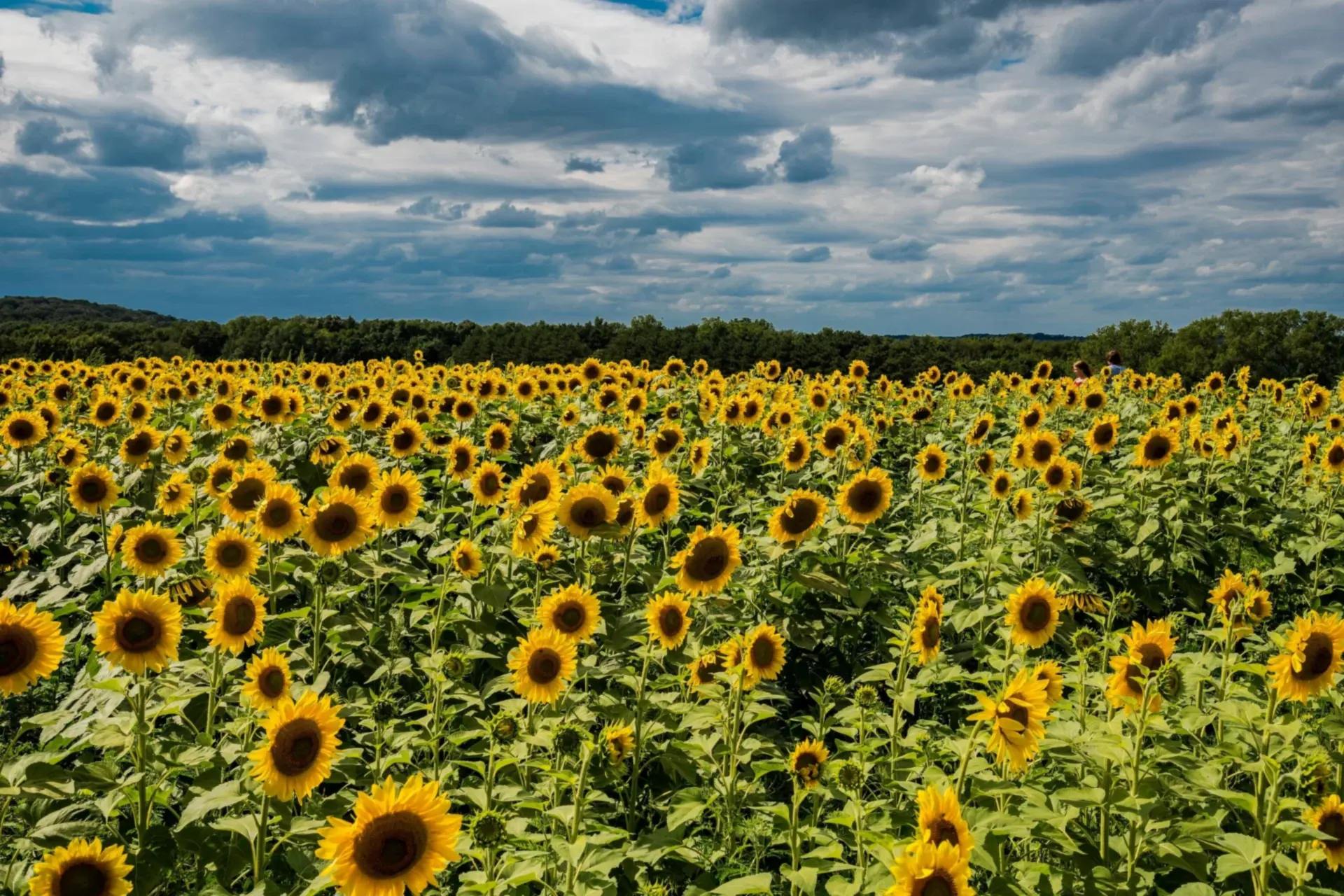
No flower gives a beginner more back for less work. One seed, pushed an inch into warm soil, becomes a plant taller than the gardener in a single season — and then hands back a head full of seeds. Sunflowers forgive almost everything except two things: being moved, and being crowded. This guide is the whole routine on one page, in order: the variety decision, the direct sowing, and the honest spacing that turns skinny weeds into giants. For the one-screen version — sun, water and care at a glance — see the Sunflower plant page; this is the deep guide it points to.
The sunflower season at a glance
- Choose by height: giants for seed and drama, mid-size for borders and cutting, dwarfs for pots
- Sow where they will grow: direct after the last frost, about 1 inch deep — the taproot hates transplanting
- Thin without mercy: giants need 2–3 feet each; crowded sunflowers stay small sunflowers
- Stake early, net late: tall stems get support before the wind, ripe heads get netting before the birds
- Harvest the droop: when the back of the head yellows and browns and the seeds loosen, the crop is ready
Step 1 — Choose your variety by height and purpose
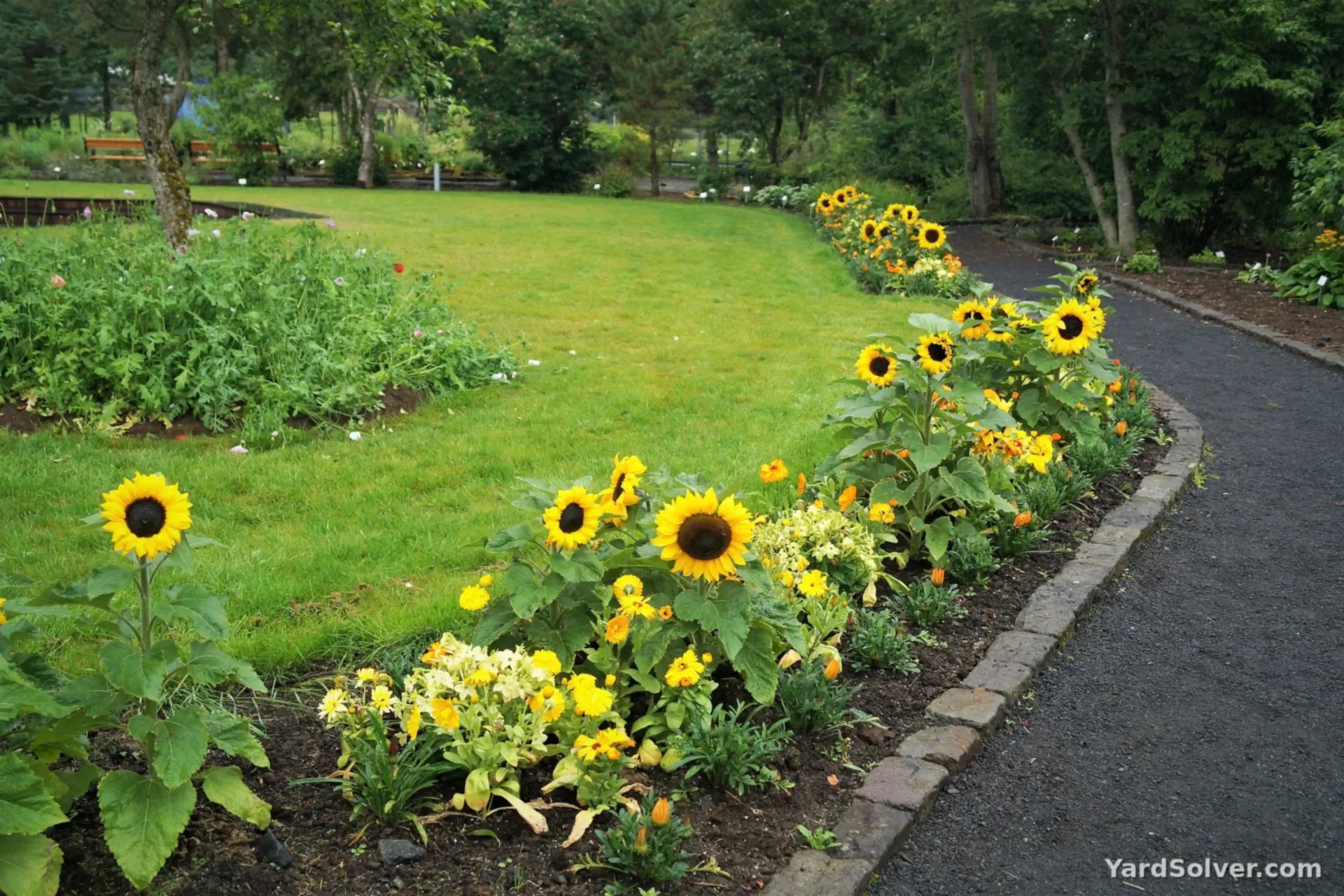
"Sunflower" covers plants from knee-high to taller than a house's eaves, so the first decision is size. Giants (10–12 feet and more) are grown for the spectacle and for seed — they need the back of a border, a fence line, and room to be huge. Mid-size types (4–6 feet) are the border and cutting flowers, often branching with several smaller heads instead of one big one. Dwarfs (1–2 feet) are bred for pots and the front of beds, and flower quickest of all. Purpose matters as much as height: for eating and for bird seed, choose a seed variety with large striped seeds; for vases, choose a pollenless type — they drop no pollen dust on the table and last longer cut, but their small seeds are no prize. Read the packet's height and days-to-bloom figures before you buy, and sketch where the row will stand in the Garden Planner — a wall of giants on the south side will shade everything behind it, so tall types belong on the north edge of the plot.
Step 2 — Sow direct, after frost, about an inch deep
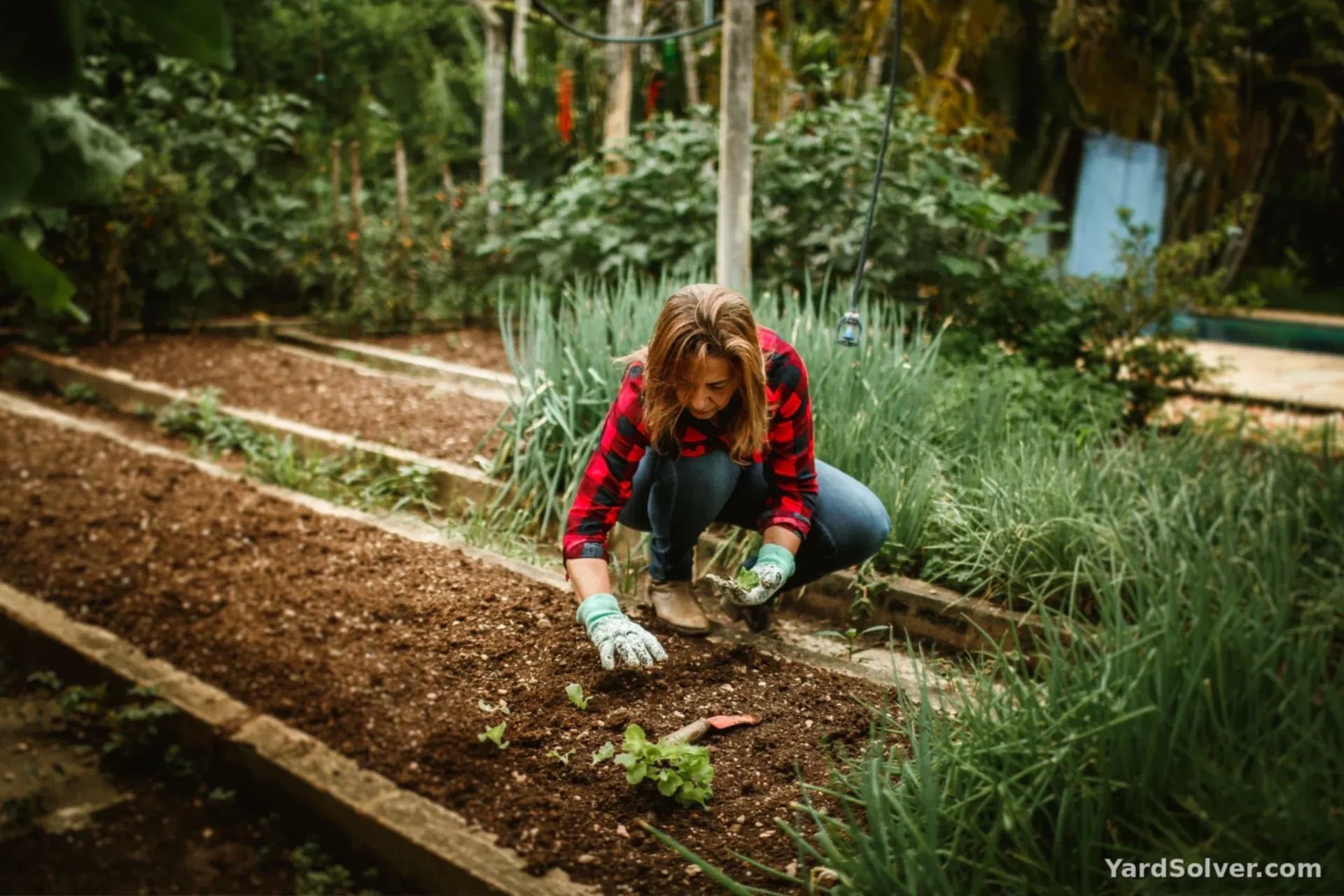
Sunflowers grow a long taproot that drives straight down to anchor those tall stems — and it bitterly resents being disturbed. Seedlings raised in pots and transplanted are set back, stunted, or snap at the root; the reliable rule is to sow direct, where the plant will flower. Wait until after your last frost, when the soil has warmed — check your dates on the Planting Calendar — then push two seeds per spot about 1 inch deep, at the final spacing for your type (Step 3 gives the numbers), and water the row in. In warm soil they germinate in roughly 7–14 days. Sow in the sunniest place you have: sunflowers in shade grow leggy, lean, and flop. Succession-sow a short row every couple of weeks into early summer and the flowers keep coming instead of finishing in one week. Sunflowers share this warm-soil sowing window with the other heat-lovers — the same frost-free week is when sweet potato slips go in, if you want both crops in one pass.
Step 3 — Thin to honest spacing, water deep, feed lightly
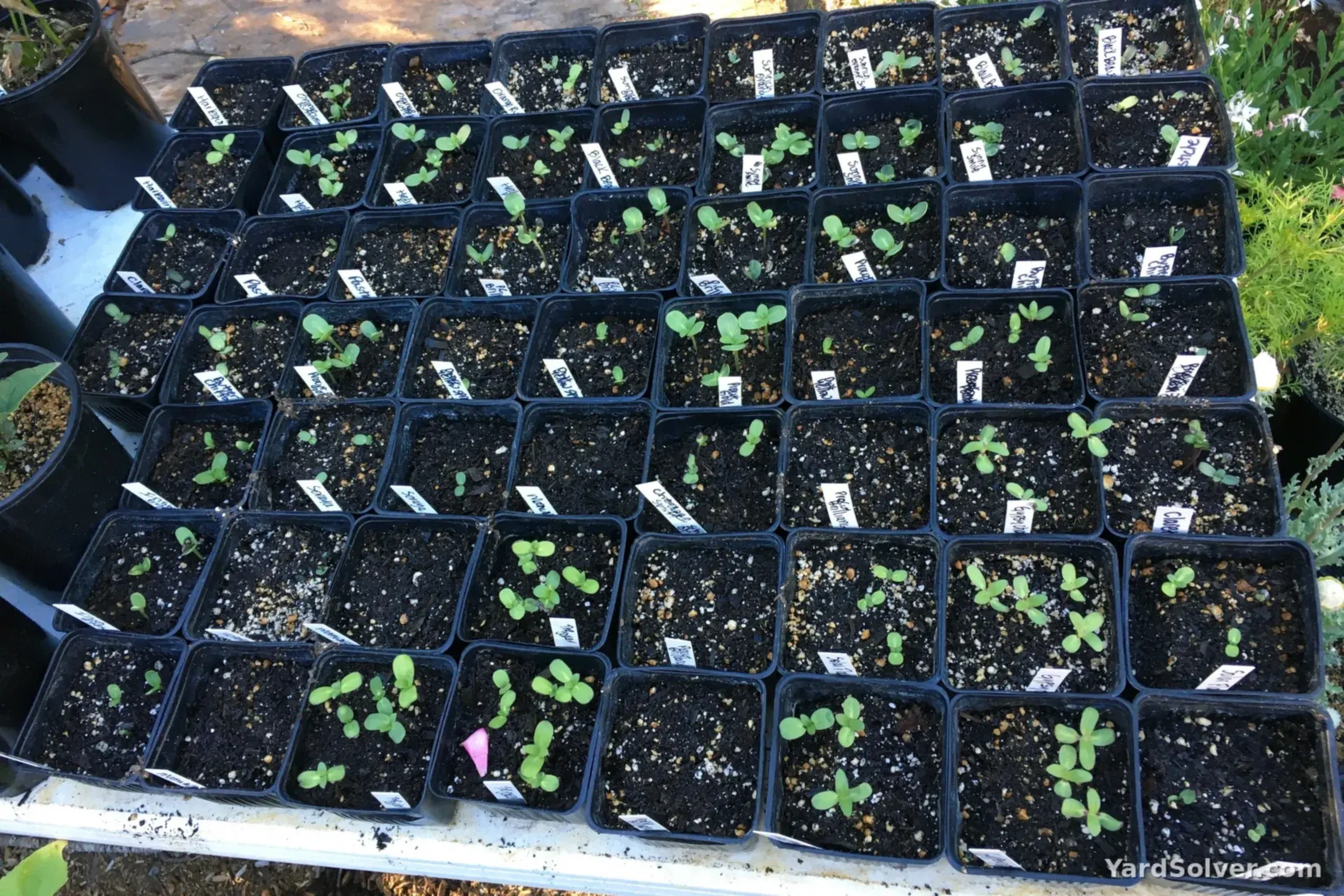
This is the step that decides everything, and the one beginners skip because pulling up healthy seedlings feels wrong. When the seedlings are about 6 inches tall, keep the strongest at each spot and snip the spares off at soil level with scissors — pulling them tears the roots of the keeper. Final spacing: dwarfs 6–12 inches apart, mid-size types about 18 inches, and giants a full 24–36 inches each. Laying out a long row or a mixed bed? Run the numbers through the Plant Spacing Calculator first. Then water deeply but not often — a thorough soak at the base once or twice a week in dry weather, so roots chase the water downward; a mulch of straw or compost holds that moisture in. Feeding is a light touch: rich soil needs nothing, and too much nitrogen makes soft, leafy plants that flower late and small. If growth is pale and slow, one balanced feed is plenty, with a second optional feed just as the flower buds form.
Step 4 — Stake tall types early, and net the ripening heads
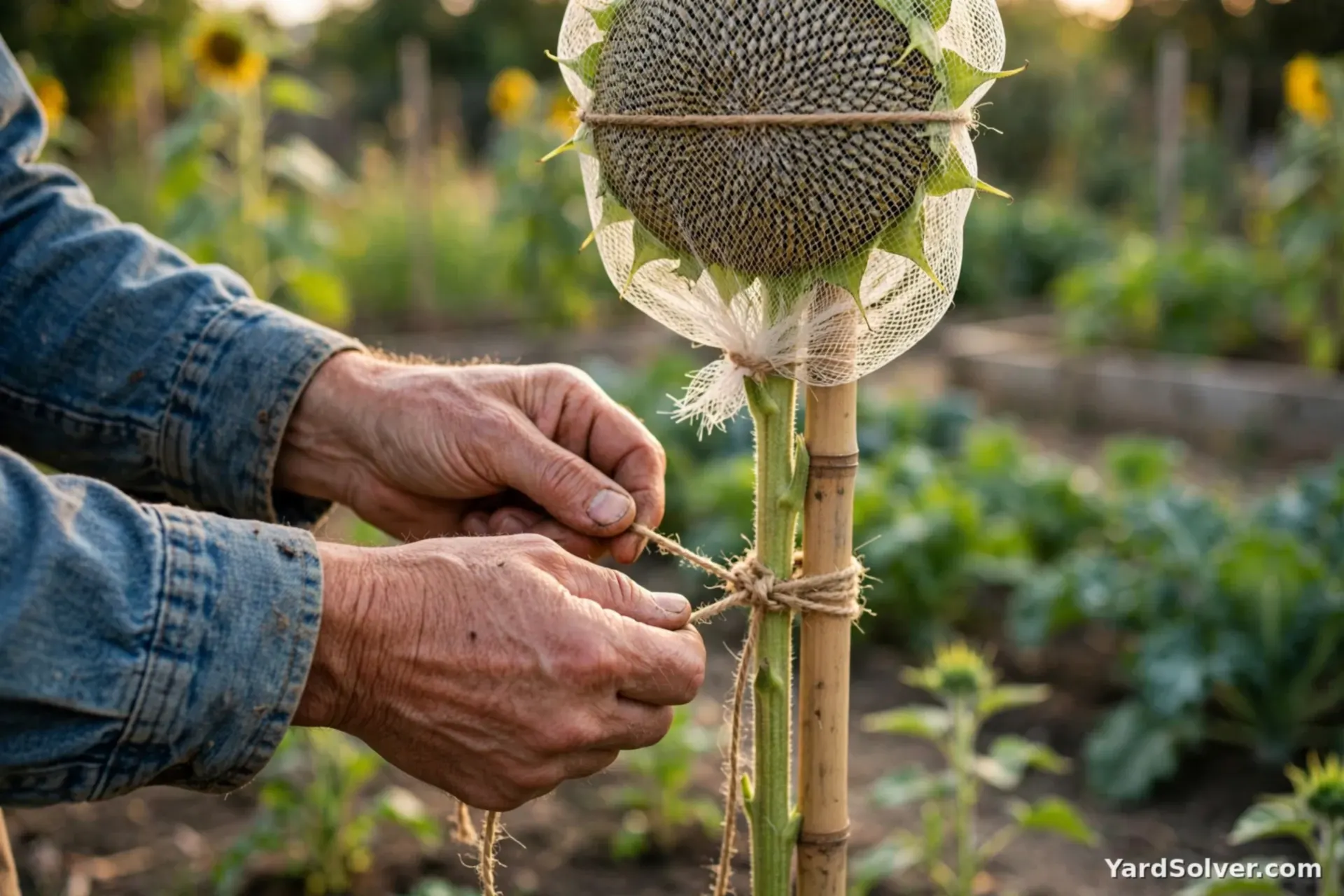
A 10-foot sunflower in full leaf is a sail, and summer storms collect them. Stake tall types early, while it is still easy: drive a sturdy cane or stake into the ground beside the young plant — before the roots spread, not through them — and tie the stem to it loosely with soft twine in a figure-eight as it grows, adding ties up the stem. Plants against a fence can simply be tied back to the fence. The second enemy arrives at the end of the season: birds find ripening heads days before you do. As soon as a head you want for seed starts to fill out and its petals fall, slip a mesh bag or a loose wrap of garden netting over it, tied under the head — air still flows, beaks don't reach. Leave at least a head or two un-netted if you can: feeding goldfinches in late summer is half the pleasure of growing them, and the standing heads feed birds well into autumn.
Step 5 — Harvest the seeds when the head says so
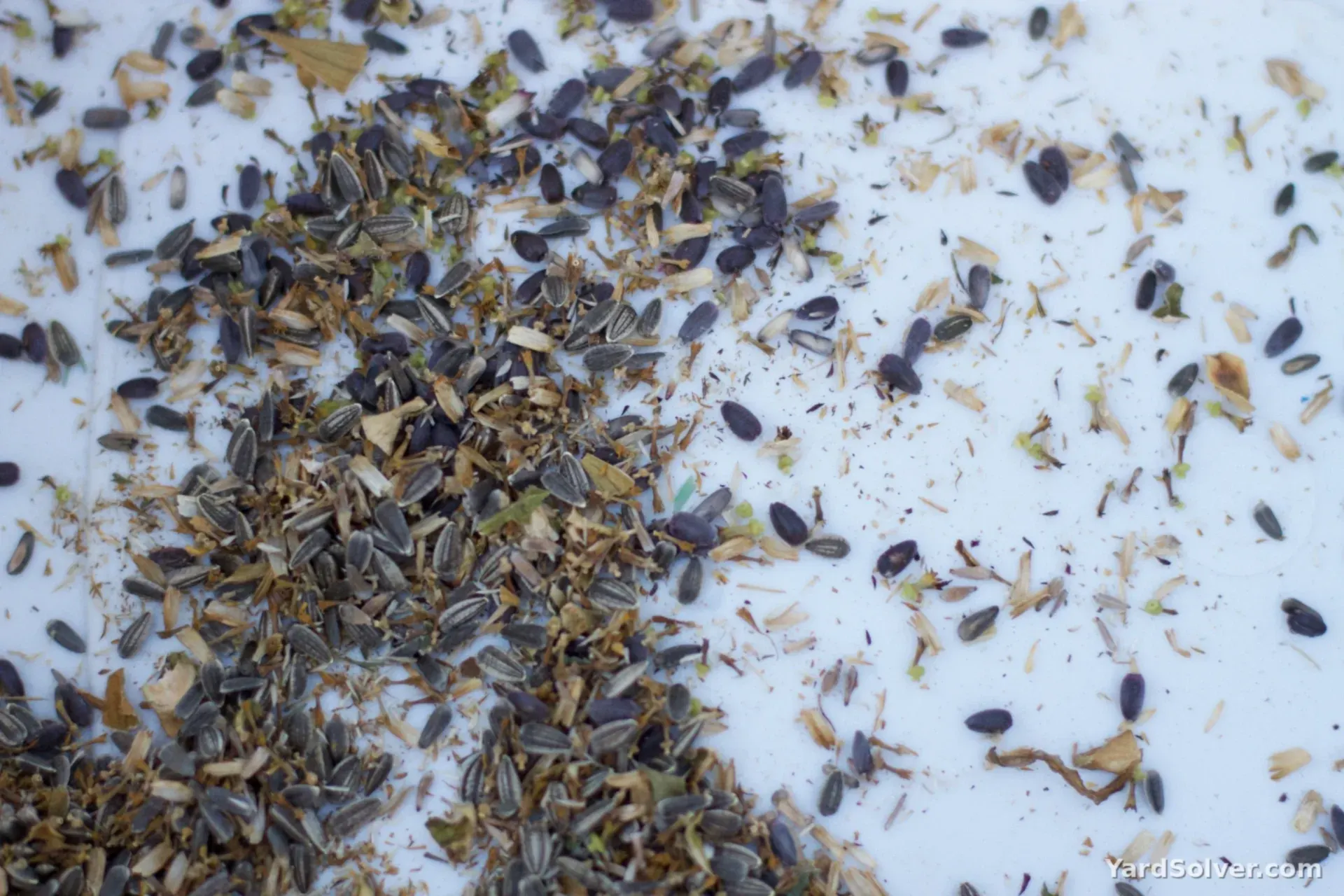
The plant announces its own harvest. The head grows heavy and droops face-down, the petals fall, and the flat back of the head turns from green to yellow, then brown. Rub a few seeds: ripe ones are plump, striped, and loosen easily from the face. Cut the head off with a foot of stem attached, and if the seeds are not fully dry, hang the head somewhere airy and bird-proof for another week or two. Then rub the seeds out over a bowl with your thumbs — a big head can hold a thousand or more. Dry the seeds thoroughly before storing: spread them in a single layer until they rattle and snap rather than bend, or they will mold in the jar. Store in a cool, dry place in a labeled jar or paper envelope — eating seeds for the kitchen (roast them in a dry pan or a low oven), and a handful of the best for next year's sowing. The empty heads and stalks can stand a while longer for the birds before they go to the compost.
Keep going
The at-a-glance version, with sun and water needs: Sunflower — Plant Library.
More summer-garden guides: Grow Sweet Potatoes · Grow Tomatoes · Grow Cucumbers Vertically.
Questions people ask
How long do sunflowers take to bloom?
About 70–90 days from sowing, depending on the variety. Dwarf types are at the quick end of the range and the true giants the slow end, which is why the packet's days-to-bloom figure is worth reading before you choose. Sown after the last frost, most sunflowers flower from mid-summer onward.
Do sunflowers need full sun?
Yes — give them the sunniest spot you have, at least 6 hours of direct sun a day and ideally 8 or more. In shade they grow leggy and weak, lean hard toward the light, and produce smaller flowers on stems that flop. Young plants track the sun across the sky; mature heads settle facing roughly east.
Can you eat the seeds from any sunflower?
The best eating seeds come from varieties grown for seed — the large, striped-seed types — where the seeds are big, plump and easy to shell. Let the head ripen fully on the plant, dry the seeds until they rattle, then eat them raw or roast them. Small ornamental and pollenless varieties make small, thin seeds that are hardly worth shelling; leave those heads standing for the birds instead.
Comments & ratings
No comments yet.
Be the first to share your experience.