
Guides · Tomatoes · Published November 3, 2026
How to Grow Tomatoes: The Complete Beginner's Guide
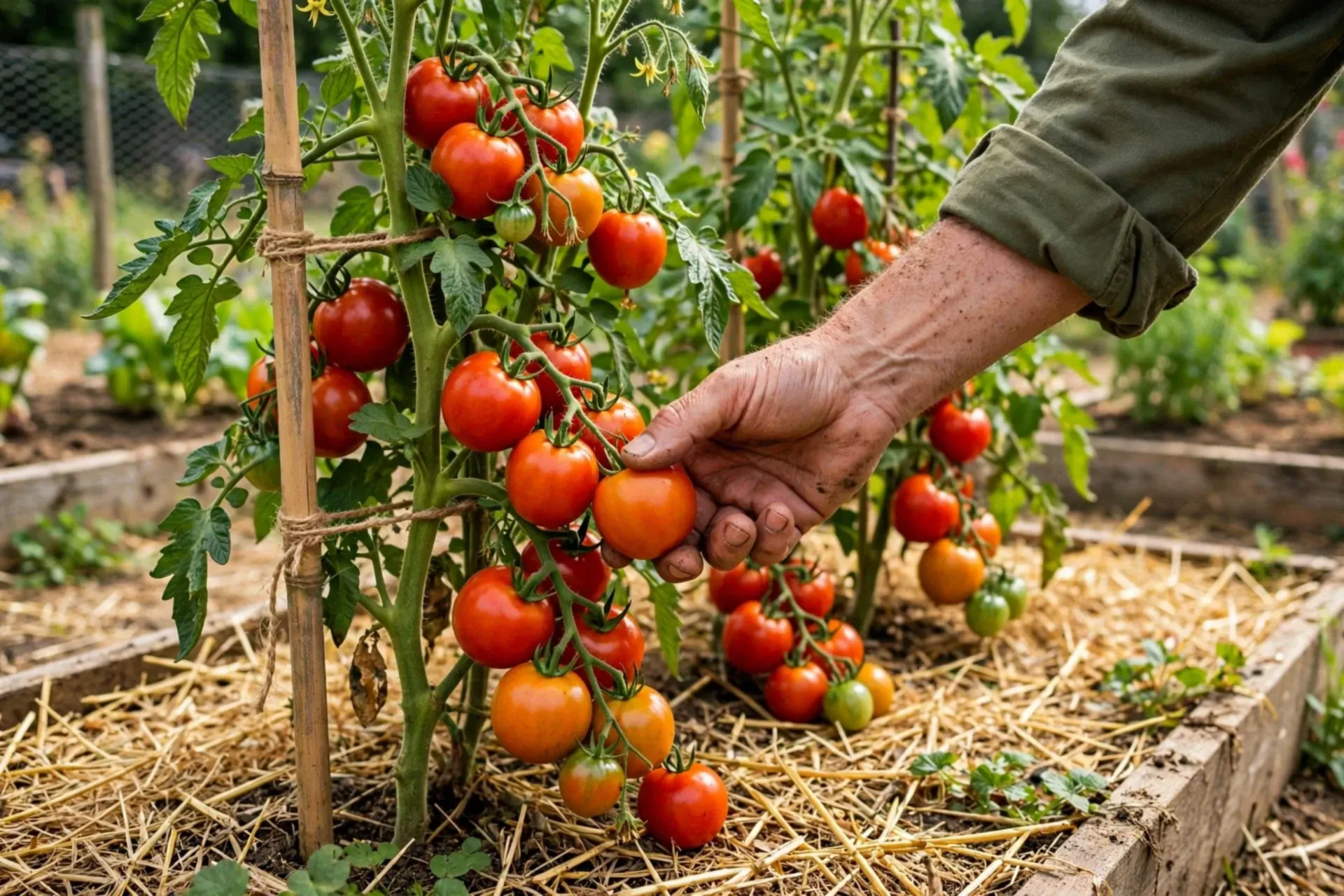
Tomatoes are the crop gardeners most want and most often lose to a handful of fixable mistakes: the wrong type for the space, shallow planting, no support until the plant flops, and watering that swings between drought and flood. This guide is the whole season on one page, in order. For the one-screen version — dates, spacing and a personal schedule counted from your planting day — see the Tomato plant page; this is the deep guide it points to.
The tomato season at a glance
- Type first: determinate means bush — compact, one big harvest. Indeterminate means vine — tall, picks all season. Everything else follows from this choice
- Start early, indoors: sow 6–8 weeks before your last frost, or buy sturdy transplants
- Plant deep: tomatoes root all along a buried stem — the strongest start in the vegetable garden
- Support on day one: stakes, cages or string go in at planting, not after the flop
- Water steady: even moisture at the base prevents most splitting and blossom end rot
Step 1 — Choose your type, then start seeds right
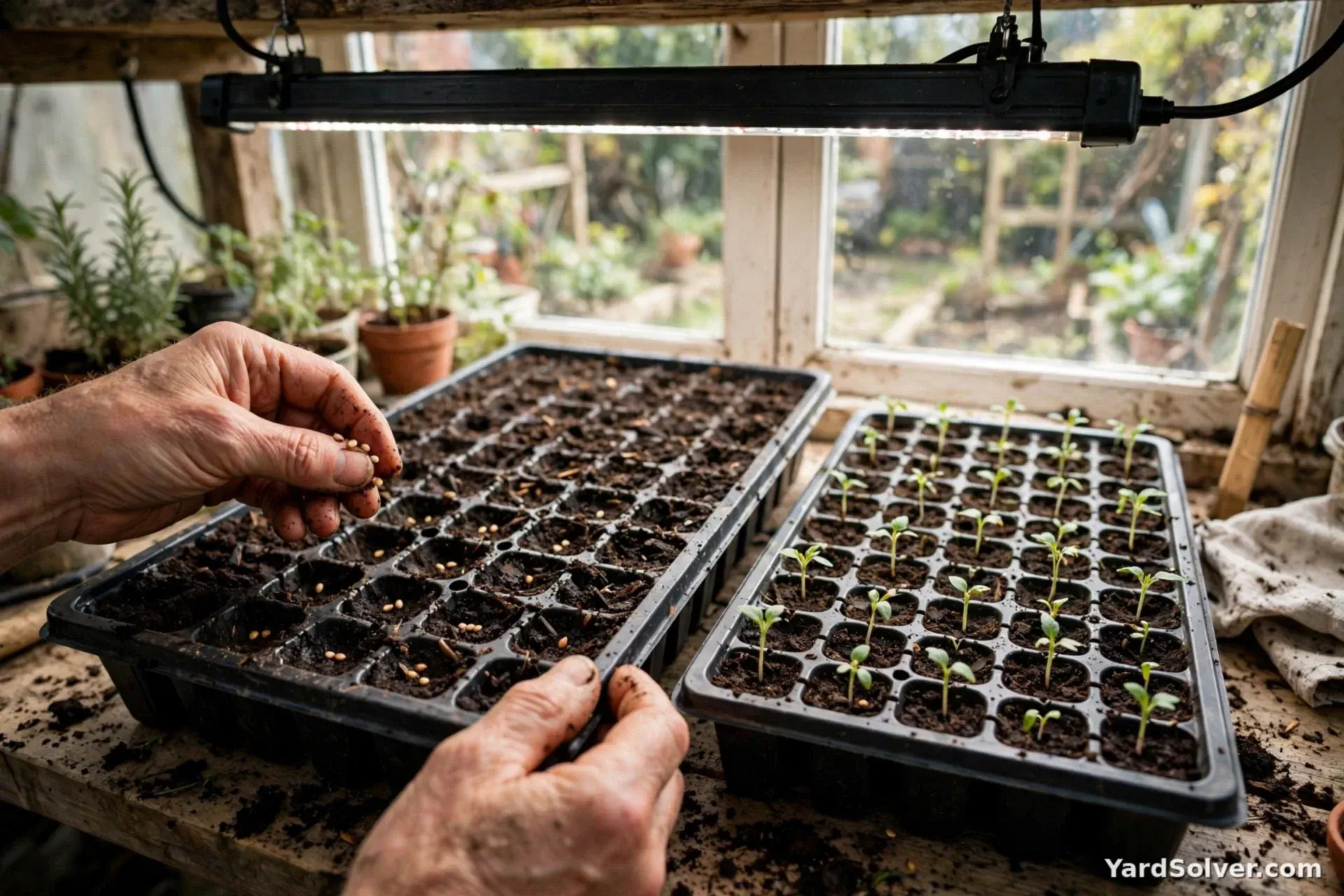
Determinate tomatoes grow into a bush about 3–4 feet tall, flower over a short window, and ripen most of their fruit within a few weeks — the sauce-maker's type, and the only type that behaves in a pot. Indeterminate tomatoes are vines: they grow until frost kills them, commonly 6 feet or more, and ripen a steady trickle of fruit all season — the salad gardener's type. Within either, cherry types are the most forgiving for beginners (fast, heavy cropping, crack-resistant kinds exist), beefsteaks are the slowest and fussiest, and mid-size salad tomatoes sit between. Starting from seed? Sow indoors 6–8 weeks before your last frost using the full routine in How to Start Tomato Seeds Indoors, and check your dates on the Planting Calendar. Buying transplants instead is no shortcut-shame: choose short, dark-green plants with thick stems — never the tall, pale, already-flowering ones.
Step 2 — Transplant deep, and space honestly
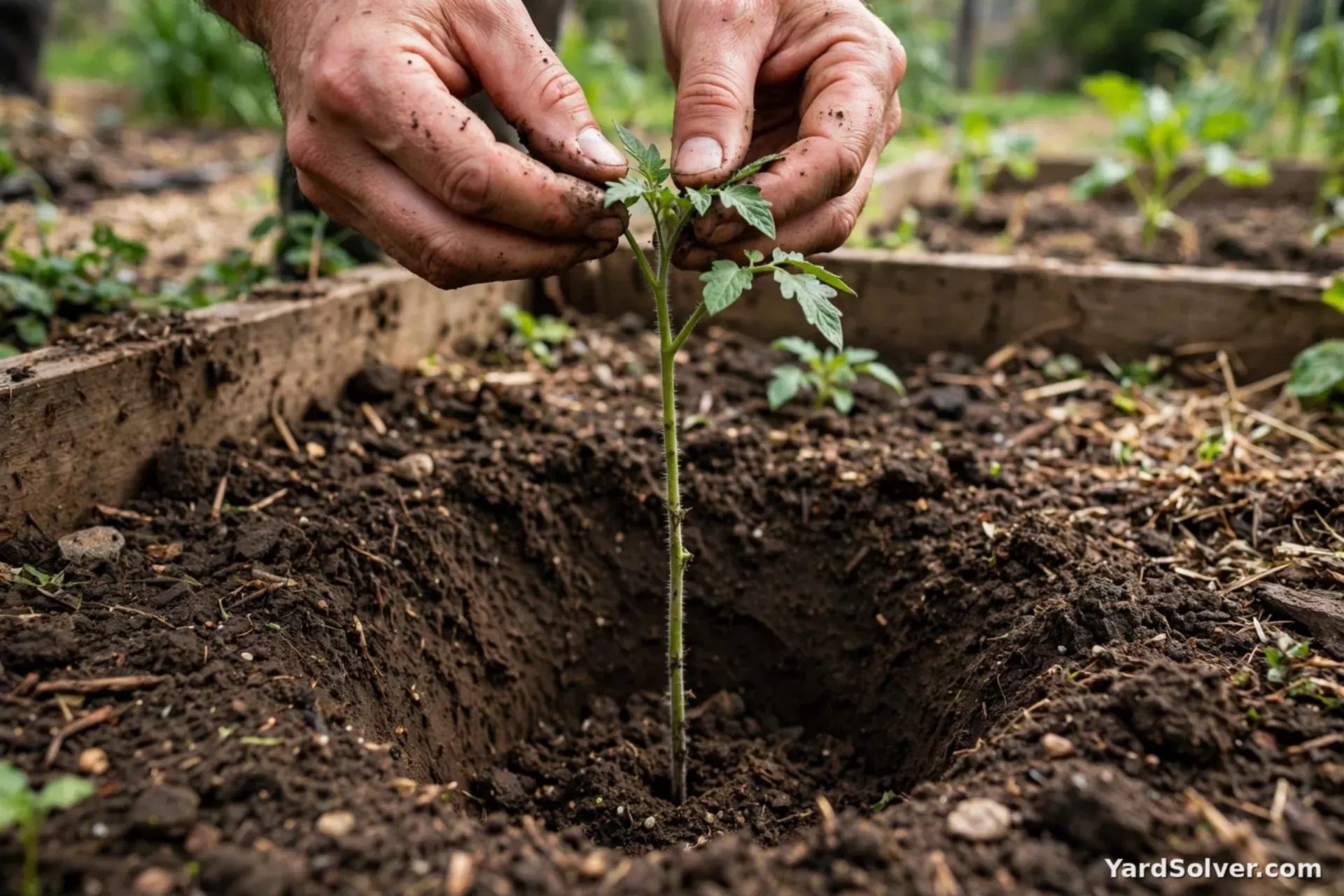
Tomatoes go outside only after frost is truly past and nights are warming — a cold-checked plant sulks for weeks. Harden plants off first (the hardening-off routine), then plant deeper than the pot: strip the lowest leaves and bury the stem up to the first true leaves. It feels wrong and works beautifully, because a buried tomato stem roots along its whole length. Space plants honestly — 18–24 inches (45–60 cm) apart for staked vines, 24–36 inches for caged or bush types — and run your bed's exact numbers through the Plant Spacing Calculator. Crowded tomatoes share stale, damp air, and damp air is where the blights and leaf spots live. Water the hole before you plant, firm gently, and water in.
Step 3 — Support early, prune with a light hand
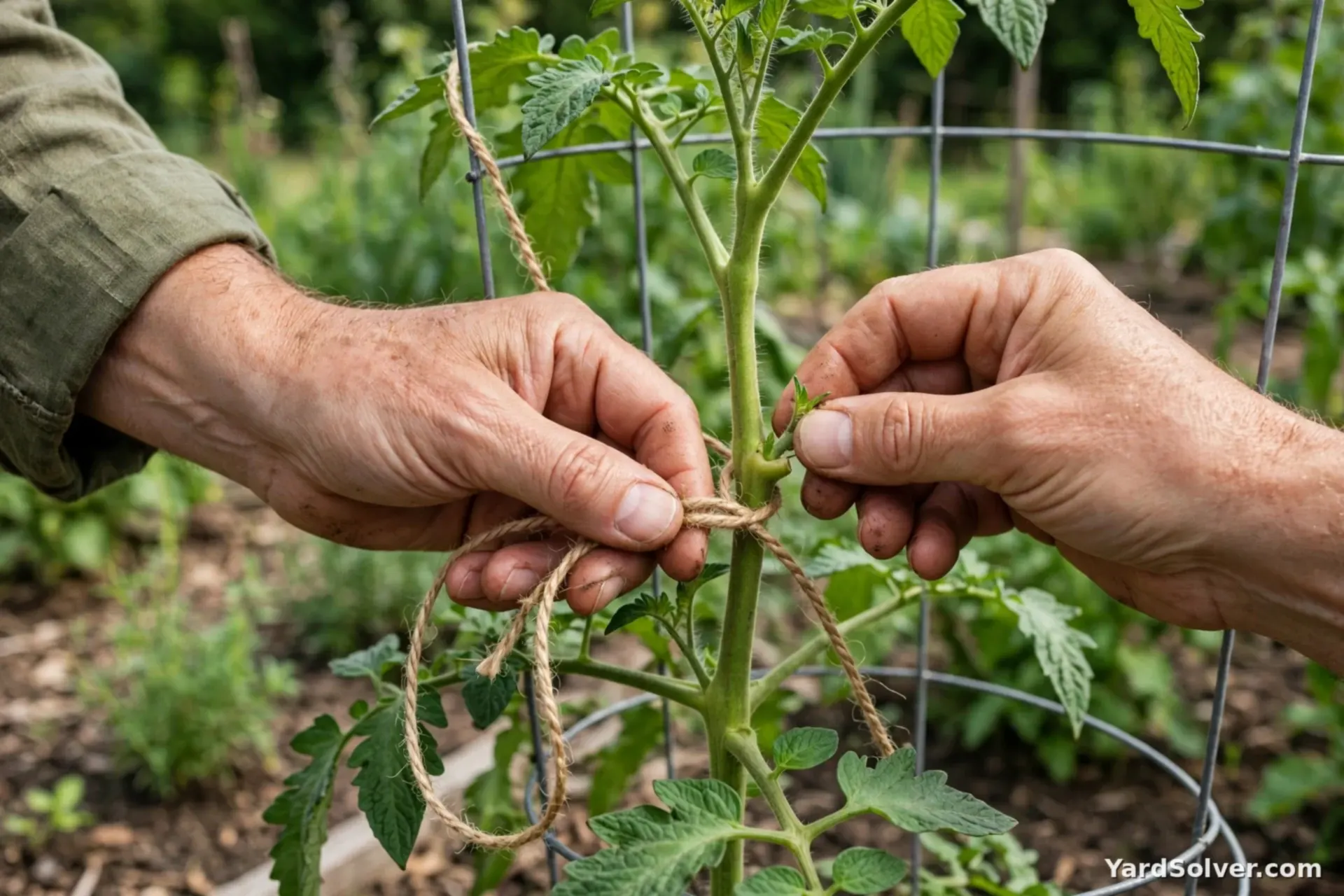
Push the stake or cage in at planting time — driving it in later spears roots. Tie the main stem loosely in a figure-eight with soft material as it climbs, or thread a cage plant through as it grows. Suckers are the shoots that sprout where a leaf meets the stem. On indeterminate plants, pinching out some of them channels energy into fewer, bigger trusses and opens the plant to air and sun; the full method is in How to Prune Tomato Plants. But pruning is a trade-off, not a law: unpruned vines give more, smaller fruit, and in hot climates the leaf cover protects fruit from sunscald. Determinate bushes need almost none — remove only growth touching the soil. Whatever you choose, keep leaves off the ground and wash or wipe tools between sick and healthy plants.
Step 4 — Water steady, feed gently (this prevents blossom end rot)
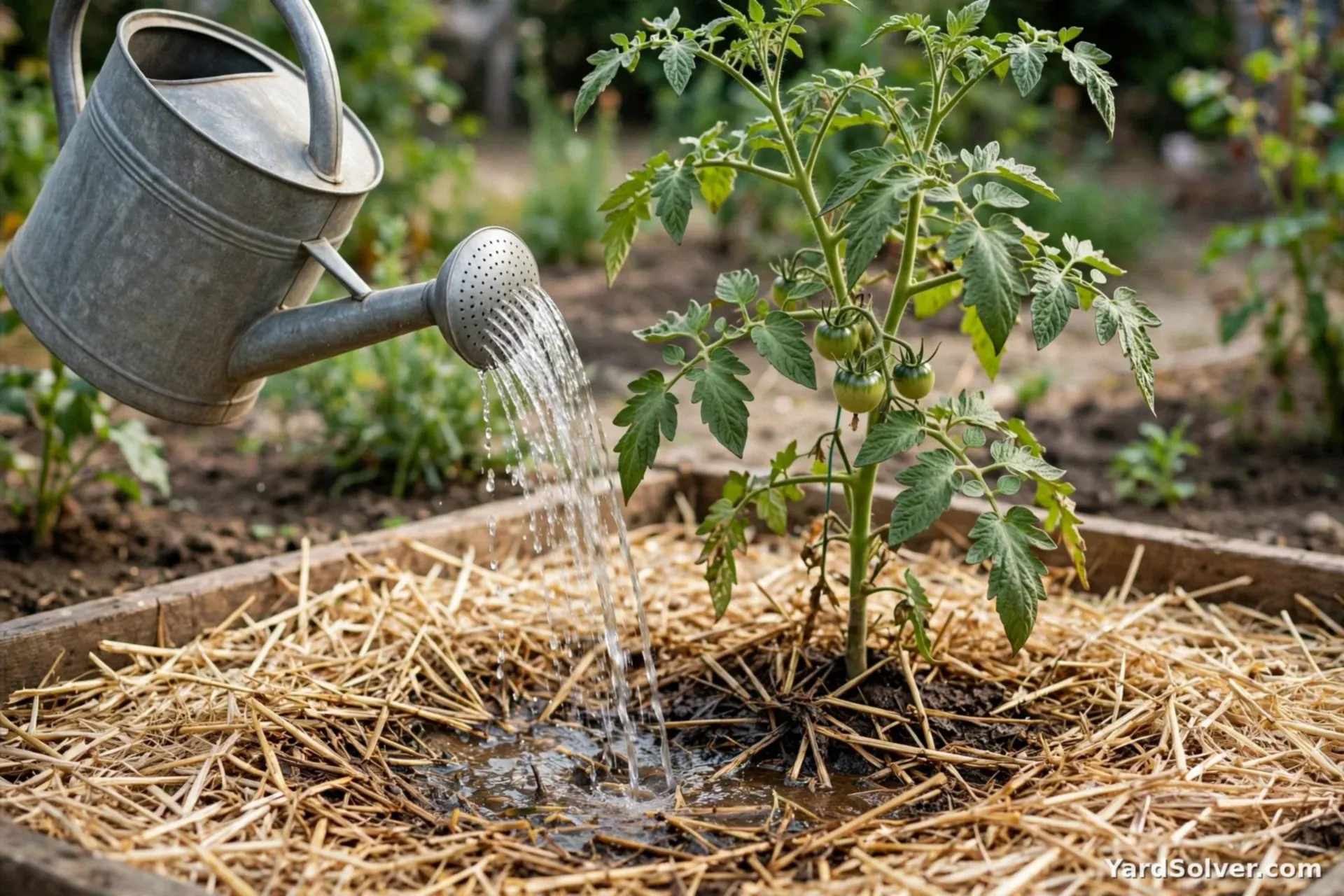
More tomato trouble traces to watering than to any pest. Water deeply at the base — a thorough soak every few days beats a daily sprinkle — and keep wet leaves to a minimum. Mulch with 2–3 inches of straw or shredded leaves once the soil has warmed; the Mulch Calculator gives amounts. Mulch is also the main defence against blossom end rot, the black sunken patch on the fruit's bottom: it is rarely a soil shortage — it is calcium delivery interrupted by swings between dry and wet. Steady moisture prevents most of it; the full diagnosis is in Blossom End Rot on Tomatoes. Feeding follows the same gentle logic: work compost into the bed at planting, then a balanced feed every couple of weeks once the first flowers set. Heavy nitrogen early gives you a magnificent green bush and very few tomatoes. If leaves yellow or curl mid-season, work through Why Are My Tomato Leaves Turning Yellow? and Why Are My Tomato Leaves Curling? before reaching for any bottle.
Step 5 — Ripen, pick, and close the season
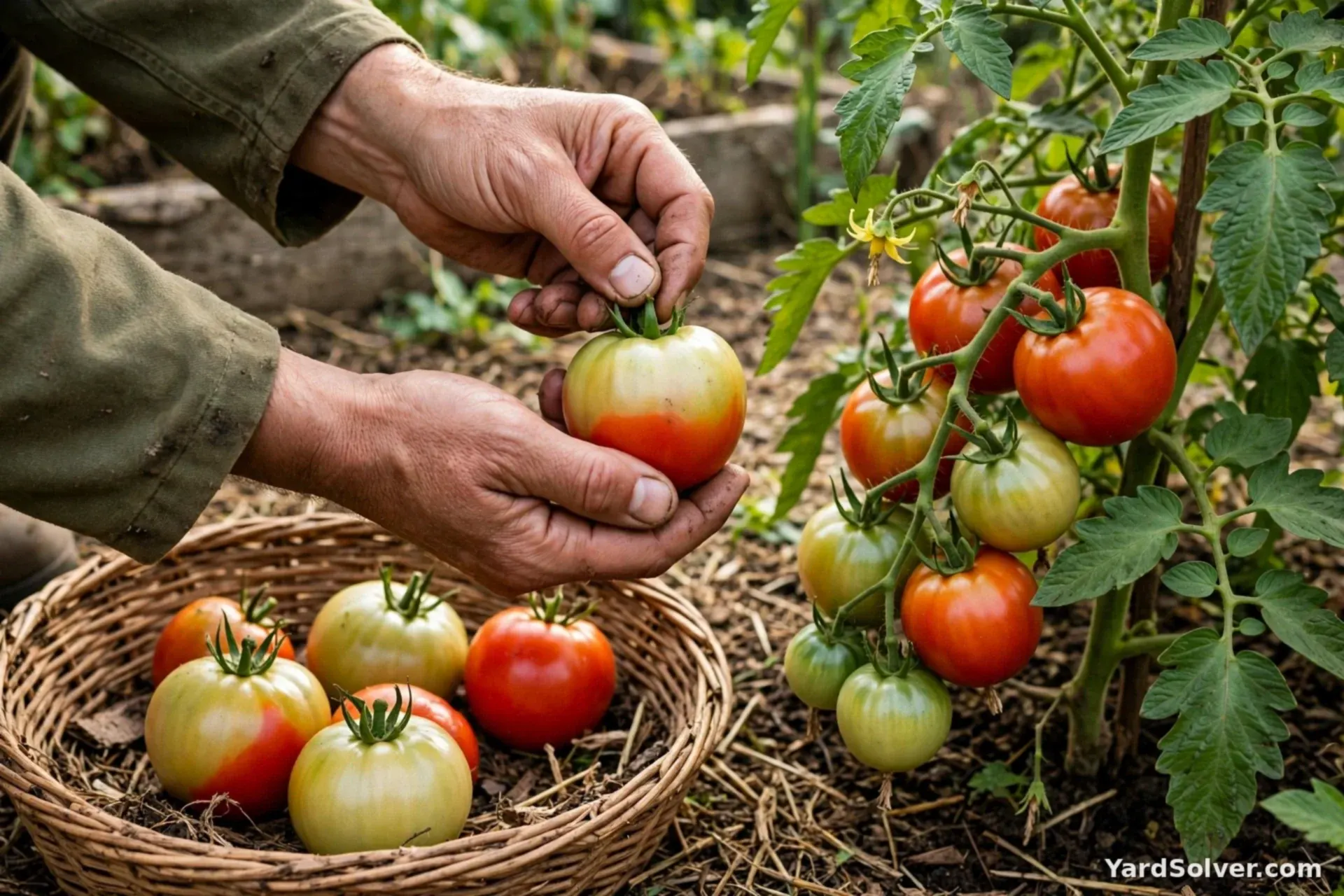
Pick tomatoes when the colour breaks — the first blush of red, orange or gold across the shoulders. From that point the fruit has everything it needs and finishes ripening indoors in a few days, with flavour gardeners generally judge equal to vine-ripened — and it beats the birds, the slugs and the rain-split to the harvest. Picking regularly also keeps the plant setting new fruit. As nights cool, cover plants on frost warnings (frost protection), and when a hard frost finally ends the season, bring in every mature-green tomato: unblemished ones ripen slowly in a box or paper bag at room temperature over the following weeks. Grew a variety you loved? Tomatoes pollinate themselves, so saved seed grows true — the fermenting method is in How to Save Tomato Seeds. Pull spent plants out whole rather than composting any that were diseased.
Keep going
The at-a-glance version, with your personal dates: Tomato — Plant Library.
The season, in order: Start Tomato Seeds Indoors · Prune Tomato Plants · Blossom End Rot · Save Tomato Seeds.
Questions people ask
Should I choose determinate or indeterminate tomatoes?
Choose indeterminate (vining) types if you want tomatoes ripening a few at a time all season and have room to stake a tall plant. Choose determinate (bush) types for containers, small beds, or one big harvest for sauce — they stay compact and ripen most of their fruit within a few weeks.
Why do my tomatoes split or get black bottoms?
Both are watering problems more than disease. Splitting follows a dry spell broken by heavy watering. Blossom end rot — the black, sunken bottom — follows uneven watering that interrupts calcium reaching the fruit. Deep, steady watering and a mulch layer prevent most of both.
Do I have to prune tomato suckers?
No — pruning is optional and mostly a trade-off. Removing some suckers on indeterminate plants gives bigger fruit and better airflow; leaving them gives more, smaller fruit. Never strip a plant bare, and determinate bush types need almost no pruning at all.
Comments & ratings
No comments yet.
Be the first to share your experience.