
Guides · Lawn care · Published November 15, 2026
How to Lay Sod: The Complete Step-by-Step (Prep, Laying Pattern, Watering Schedule)
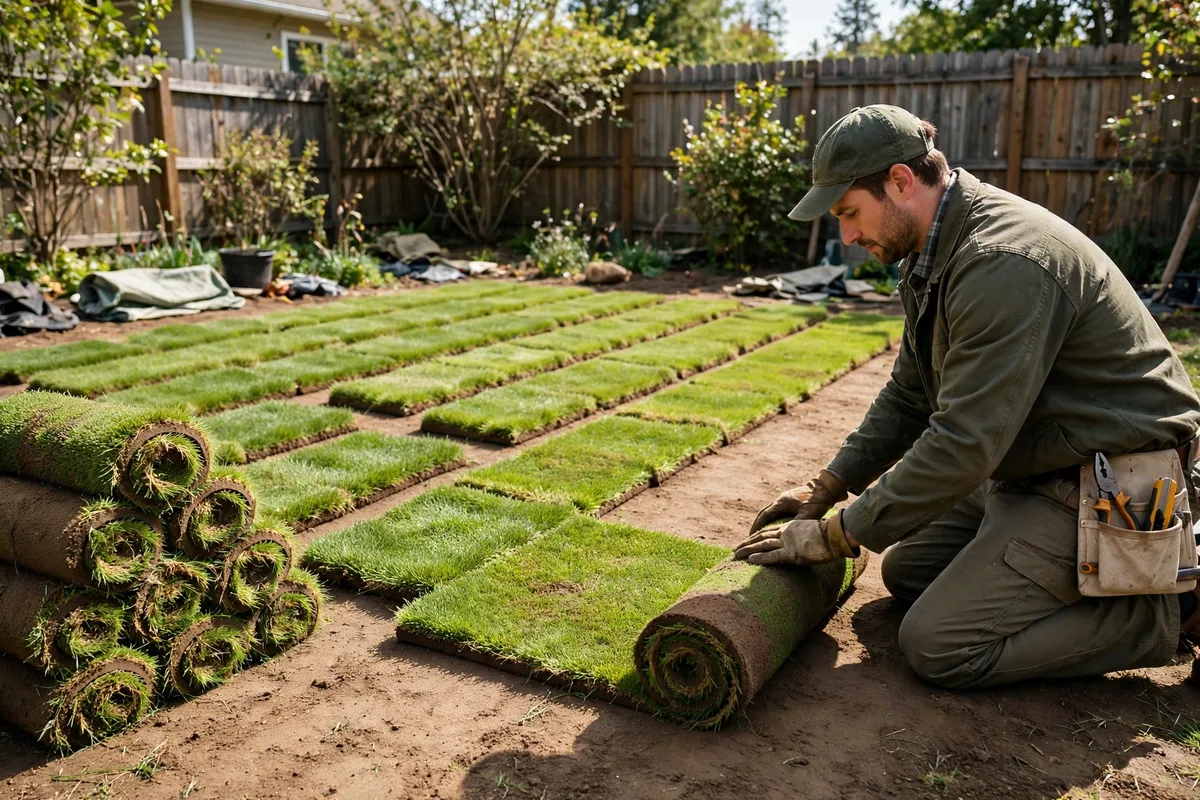
Sod is the fastest honest lawn there is — a month of patience compressed into a weekend — but it is unforgiving about two things: the soil underneath it and the clock. Rolls are cut living grass with almost no root reserve; left stacked on a pallet they heat up and die from the inside within a day or two. Nearly every failed sod lawn traces back to rushed prep or late watering, not bad turf. This guide shows you how to lay sod in the order the pros do it: measure and order, prepare and grade the soil, lay in a tight staggered pattern the day it arrives, then water to a schedule until the roots take over.
Step 1 — Measure, then order 5–10% more than the maths says
Measure the area in sections — rectangles and triangles are easier than one heroic guess — and total the square footage. If the shape is awkward, the Square Footage Calculator handles the section maths for you. Then run the total through the Sod Calculator: it converts your area into rolls or pallets for the sizes your supplier sells and adds the cutting allowance. Order 5–10% extra — edges, curves and one damaged roll will eat the surplus, and running short on laying day, with a half-finished lawn drying in the sun, is the most expensive mistake in the whole job. Schedule delivery for the morning of laying day, after the soil prep below is already finished. In the UK and Australia the same product is sold as turf, by the square metre — the method is identical.
Step 2 — Prepare the soil like the lawn depends on it (it does)
Strip the old surface first. Sod laid over living grass or weeds fails: the old layer rots unevenly, blocks root contact and leaves a spongy, lumpy lawn. Rent a sod cutter for large areas or skim with a flat spade for small ones, then rake out roots and debris. Loosen the top 4–6 inches (10–15 cm) of soil with a rototiller or fork — roots need to grow down into it, not skate across a hard pan. This is also your one cheap chance to fix the level: rake the soil smooth, fill hollows, and grade a gentle slope away from the house. If the area is uneven, fix it now with the method in How to Level a Bumpy Lawn — you cannot topdress your way out of a bad grade once the sod is down.
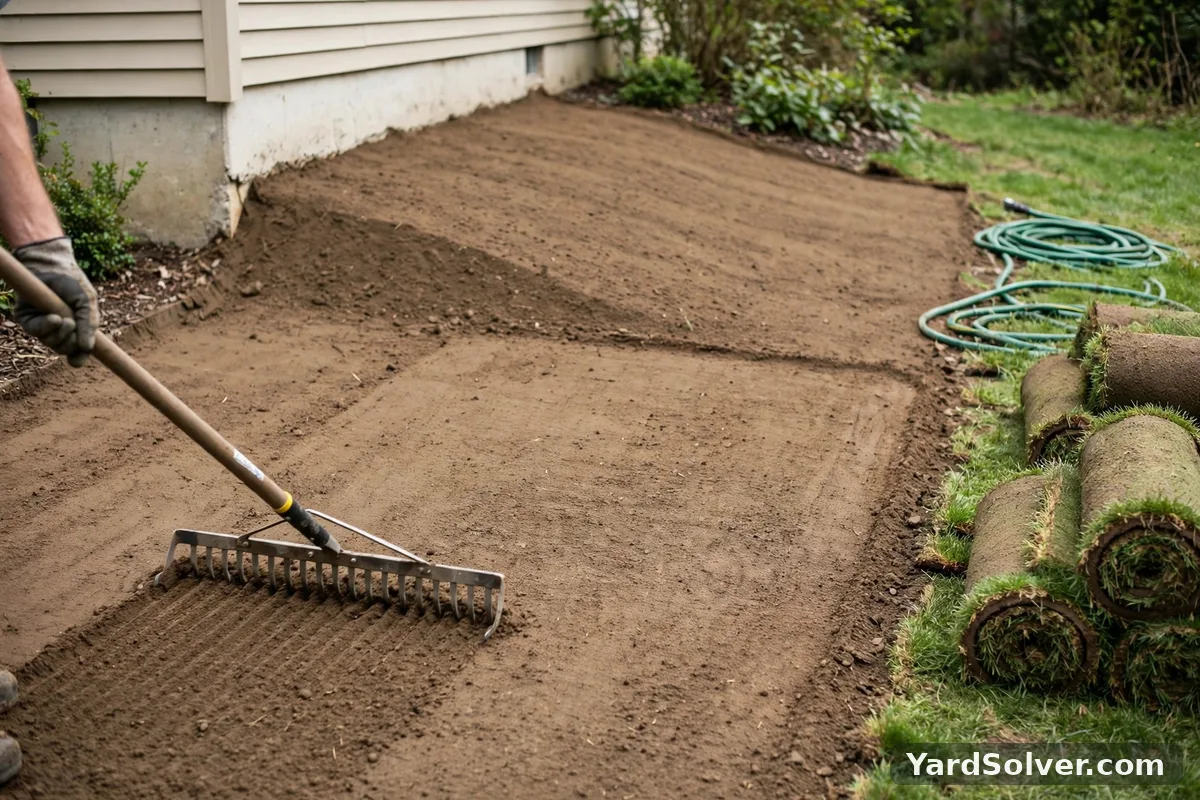
Finish with the finished-grade rule: the prepared soil should sit about 1 inch (2.5 cm) below paths, patios and driveways, because the sod itself adds roughly that much height. Rake it smooth, roll or tread it lightly so it is firm but not compacted, and water it the day before laying so the rolls land on moist soil, never on dust.
Step 3 — Lay it the day it arrives, in a brickwork pattern
Start along the longest straight edge — a fence, path or driveway — and unroll the first row tight against it. Lay subsequent rows in a staggered, brickwork pattern so the short ends never line up; aligned joints dry out and show as seams for a year. Butt every edge tightly against its neighbour with no overlaps and no gaps: overlaps become humps, gaps become dried-out cracks that weeds colonise. Work from boards or kneel on the laid sod rather than the bare soil so you do not dent your grade, cut curves and edges with a sharp spade or serrated knife, and use the offcuts for fiddly corners rather than forcing a full roll. Fill any hairline gaps with a handful of topsoil pressed in by hand.
Work fast and keep the unlaid rolls in shade. On a hot day, lightly mist the soil ahead of you and the laid sod behind you as you go. If delivery splits across two days, lay and water everything that arrived on day one rather than waiting — half a lawn rooted beats a whole lawn cooked on pallets.
Step 4 — Roll it, then water to a schedule, not a feeling
As soon as a section is down, roll the whole area with a water-filled lawn roller at about a third full. Rolling is not about flattening for looks; it presses the root mat into full contact with the soil and squeezes out the air pockets that dry roots out. Then water immediately — deeply enough that the sod and the top inch of soil beneath are thoroughly wet.
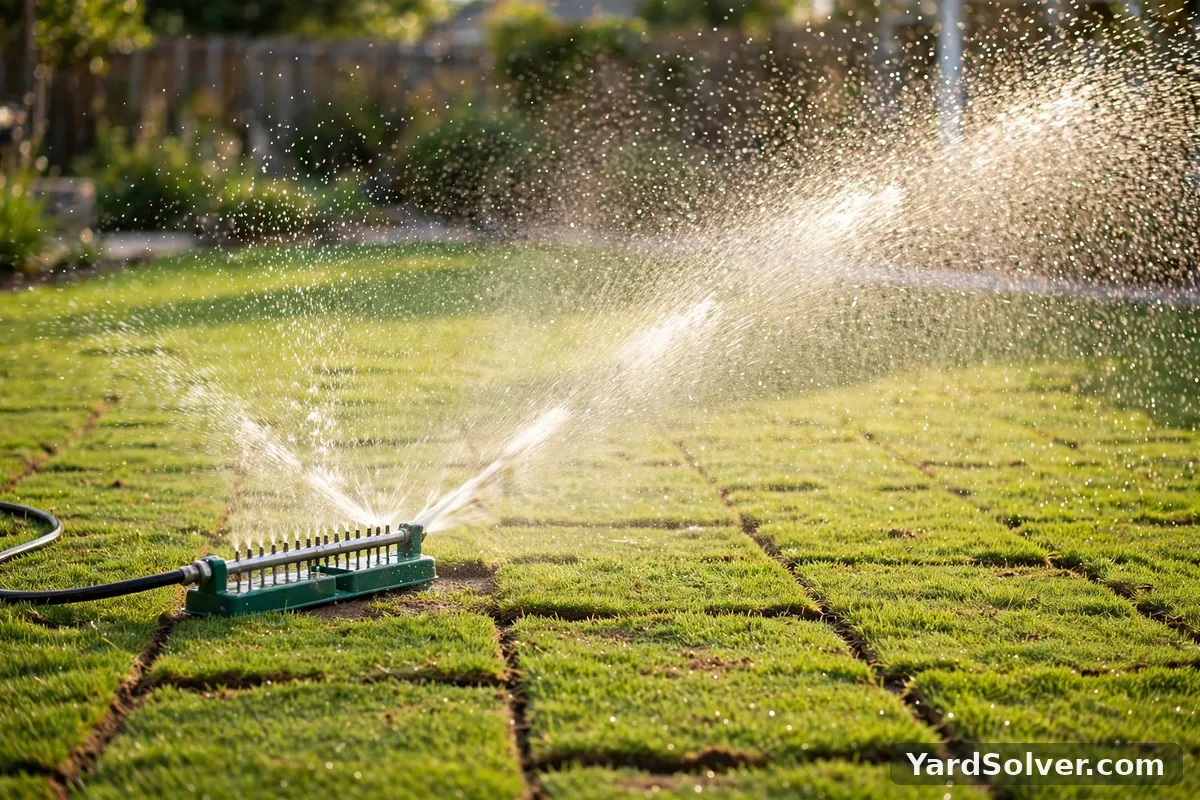
For the first two weeks the schedule, not the weather forecast, is in charge: water two to three times a day in warm weather, keeping the sod and the soil beneath it consistently moist — never soggy, never dry. Peel back a corner every couple of days; when you feel resistance and see white root hairs reaching into the soil (usually 10–14 days), the sod has rooted. Then taper: deeper watering every second day in week three, and by week four the lawn joins a normal deep-and-infrequent routine. Hold off mowing until the sod resists a gentle tug, then mow high, taking off no more than a third of the blade.
Step 5 — Feed and protect the new lawn through its first season
If you did not apply a starter fertilizer at prep, feed once the sod has rooted — a starter formula at the label rate encourages the root growth that is the whole game in season one. Work out the amount for your exact area with the Fertilizer Calculator rather than guessing by the handful. Keep foot traffic light for the first three weeks, keep dogs off if you possibly can, and do not apply weedkillers until the sod has been mowed at least three or four times — young roots are easily set back by chemistry meant for established lawns. Timing the whole job: spring and early autumn are the forgiving windows in the north; in Australia, spring into early summer is prime turf season, but midsummer laying means committing to the watering schedule without a single missed day.
Keep going
New sod and seeded lawns share the same first-season enemies — drying out and being fed by guesswork. If parts of your project are seeded rather than sodded, the rates and watering in How to Overseed Your Lawn pair with this guide's schedule.
Laying a lawn as part of a bigger garden build? The Garden Planner turns your space and frost dates into a dated plan with quantities and a shopping list, so turf, seed and feed arrive in the right order.
Questions people ask
How long does sod take to root?
In active growing weather, roots knit into the soil in about 10–14 days — test by tugging a corner gently. Full establishment, where you can treat it as a normal lawn, takes a full growing season.
Can you lay sod over existing grass?
You can, and it usually fails: the old grass rots unevenly underneath, blocks root contact and leaves a spongy, lumpy surface. Strip the old surface first — it is an hour of work that saves the whole job.
What time of year is best to lay sod?
Spring and early autumn in cool climates, when roots grow fast and watering is manageable. In Australia, spring to early summer is the prime window. Avoid laying into a heat wave unless you can guarantee the watering schedule.
Comments & ratings
No comments yet.
Be the first to share your experience.