
Guides · Tomatoes · Published November 1, 2026
How to Prune Tomato Plants
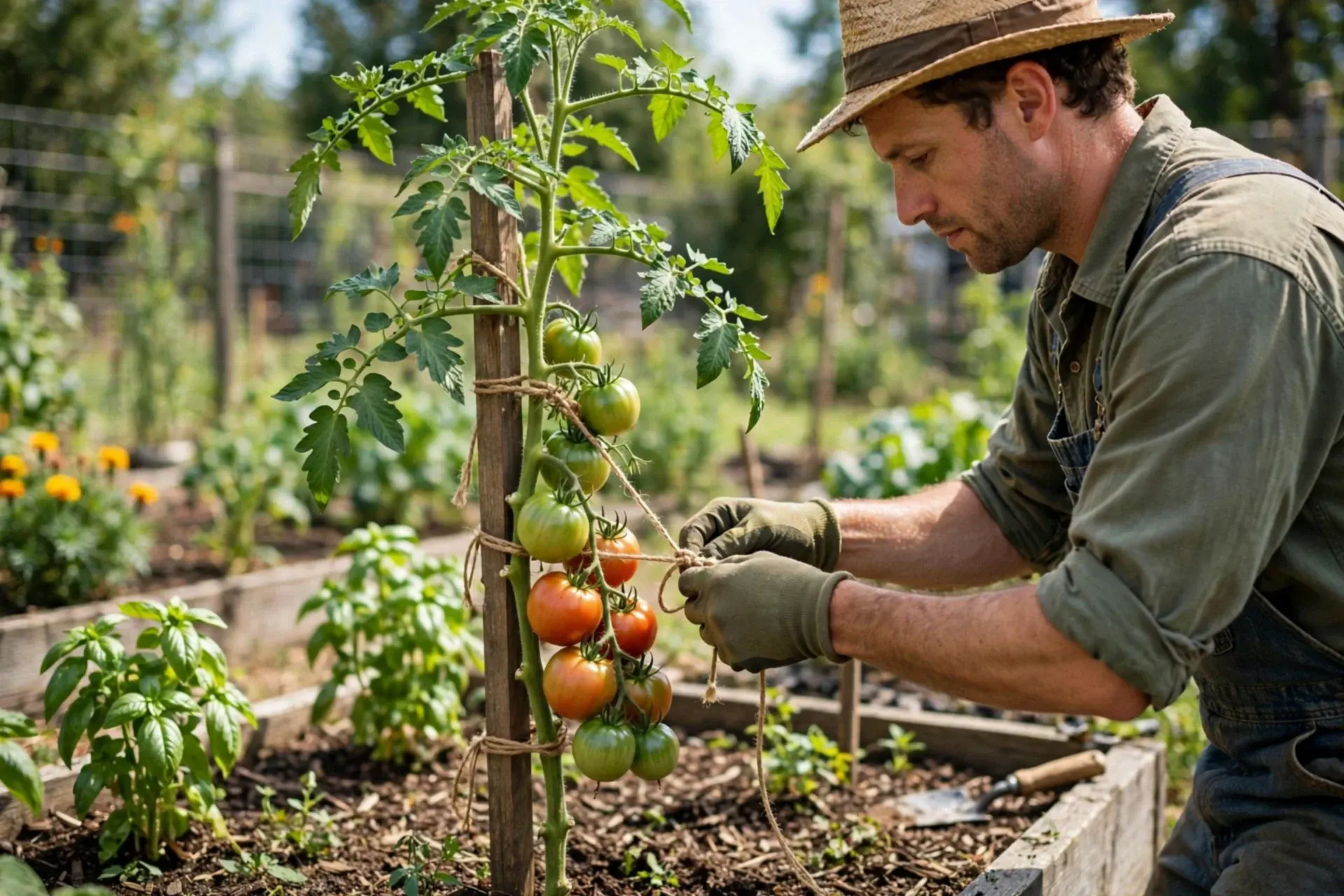
Tomato pruning is really one skill — removing suckers — wrapped in one decision: how many stems to let the plant run. Done weekly and gently, it buys you airflow, earlier and bigger fruit, and far less of the foliage disease that ends tomato seasons early. Done on the wrong type of tomato, it cuts your harvest in half. The steps below start with the type check — is yours indeterminate (a vining type that grows and fruits all season, and needs this pruning) or determinate (a bush type that stops at a fixed size, and should barely be pruned at all)? — because everything else depends on it.
Before you prune: the type rule
- Indeterminate (vining) tomatoes: grow all season and need regular pruning — this guide is mainly for them
- Determinate (bush) tomatoes: grow to a fixed size and set fruit in one flush — prune them barely (step 1 explains); heavy pruning removes their harvest
- What you need: clean hands or snips, a stake, cage or trellis already in place, and 5 dry minutes a week
Step 1 — Know your type before you touch it

Check the seed packet or variety name: it will say indeterminate or determinate. Indeterminate plants keep growing until frost and throw suckers constantly — they are the ones this routine serves. Determinate plants stop at a set height and ripen most of their fruit within a few weeks; nearly every shoot on them ends in flowers, so removing suckers removes tomatoes. For determinates, skip to step 5 only: clear the lowest leaves and nothing more. If you are starting from seed, the growing routine from day one is in How to Start Tomato Seeds Indoors.
Step 2 — Find the sucker — it grows in the armpit
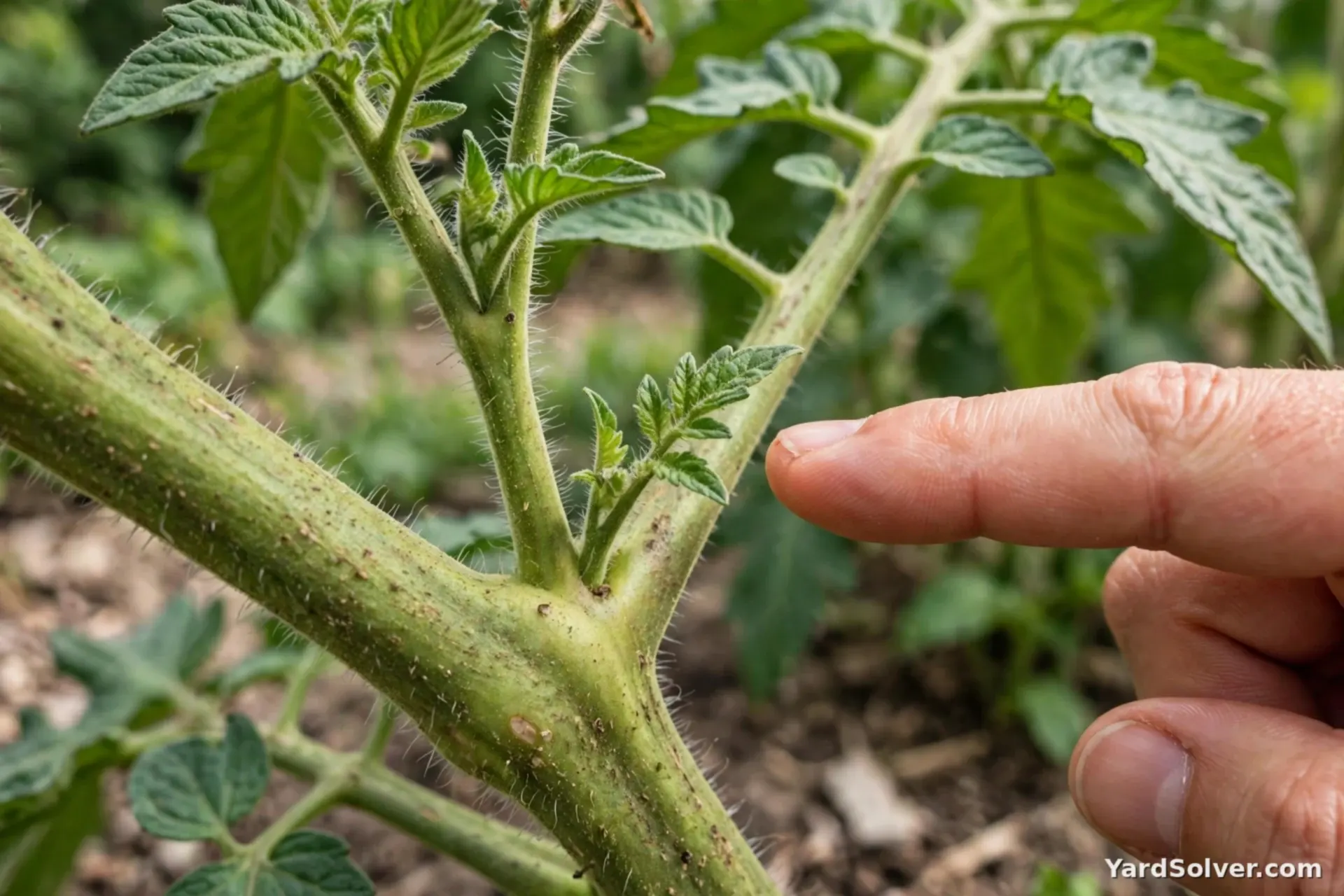
A sucker is the shoot that sprouts in the joint — the “armpit” — between a leaf branch and the main stem, at about 45°. Left alone it becomes a whole second stem, then a third and fourth, until the plant is a shaded jungle where fruit ripens slowly and fungal disease moves in. Do not confuse the sucker with the flower truss, which grows directly out of the main stem, not from a leaf joint. When in doubt, give a shoot a week: suckers grow leaves fast and show their position clearly.
Step 3 — Pinch small, on a dry morning
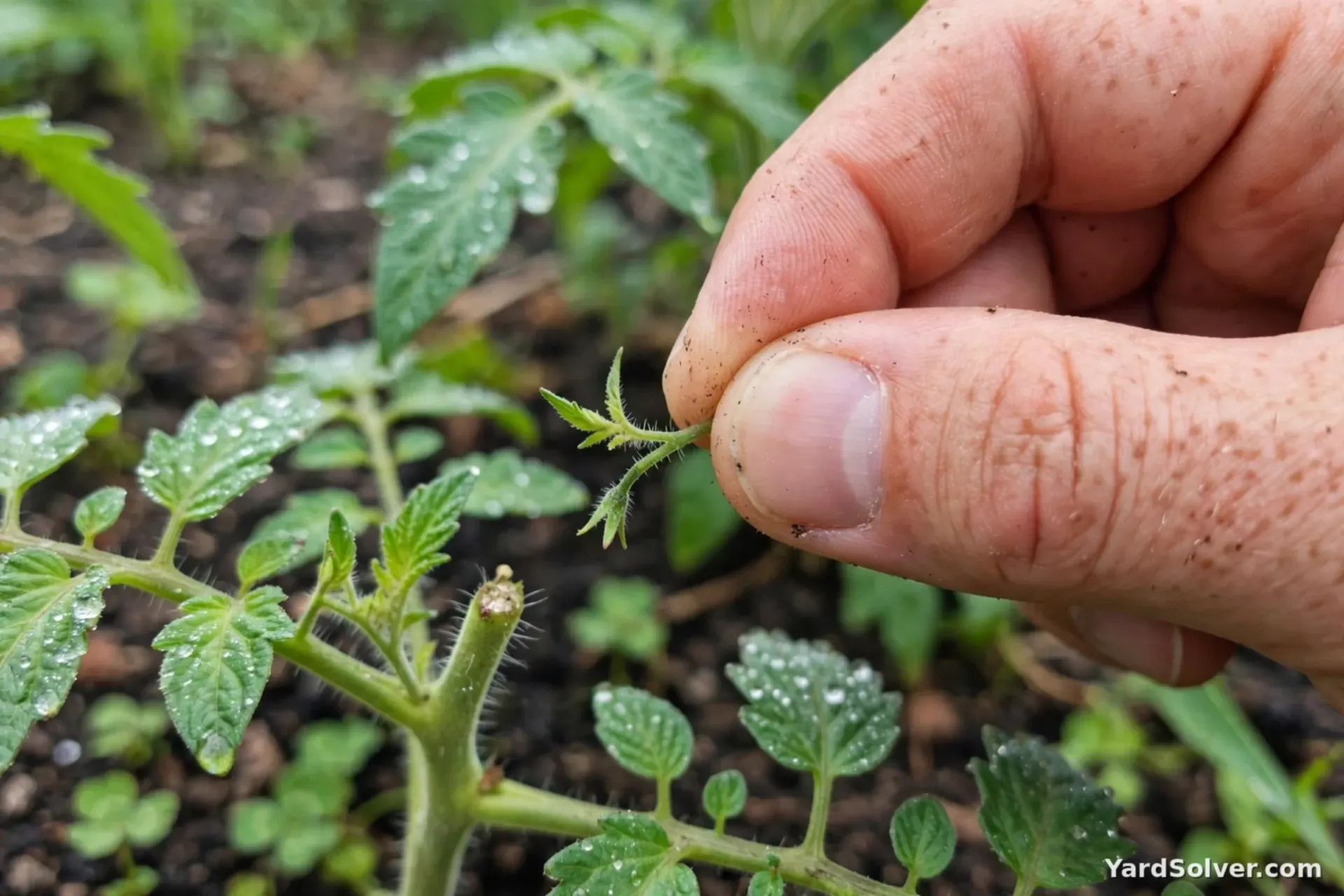
The weekly habit that makes pruning painless: walk the row once a week and remove suckers while they are small — under about 2 inches (5 cm). At that size they snap or pinch out cleanly between thumb and forefinger, leaving almost no wound. Bigger suckers need snips; cut close to the stem without nicking it, and clean the blades between plants if any plant looks diseased — pruning in wet weather or with dirty tools is how the leaf diseases in Why Are My Tomato Leaves Turning Yellow? travel plant to plant. Work on a dry morning so any small wounds dry and seal the same day.
Step 4 — Keep the right number of stems
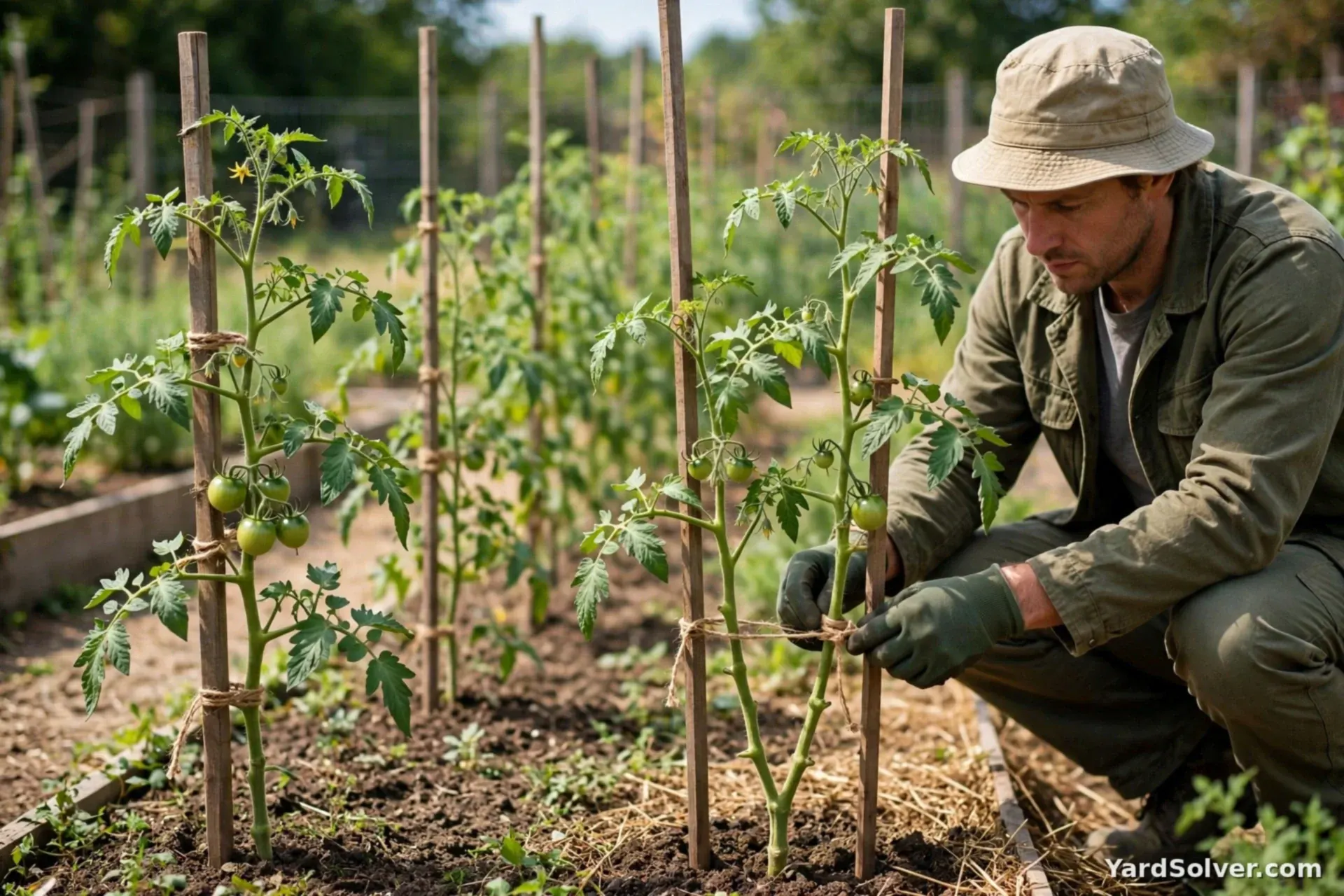
Pruning is really rationing. For plants on a single stake or string, keep one main stem and remove every sucker — you get the earliest, largest fruit and plants you can space tightly. For cages and wider spacing, let one strong sucker below the first flower truss grow into a second stem, and remove the rest. Two stems is the sweet spot for most home gardens: nearly the yield of an unpruned plant, far better airflow. Shade is the hidden cost of too many stems — fruit in deep shade ripens late and the sunscald-versus-shade trade-off flips; if your plants regularly suffer the leaf curl sorted in Why Are My Tomato Leaves Curling?, crowded foliage is often part of the story.
Step 5 — Clear the bottom leaves, top the plant late
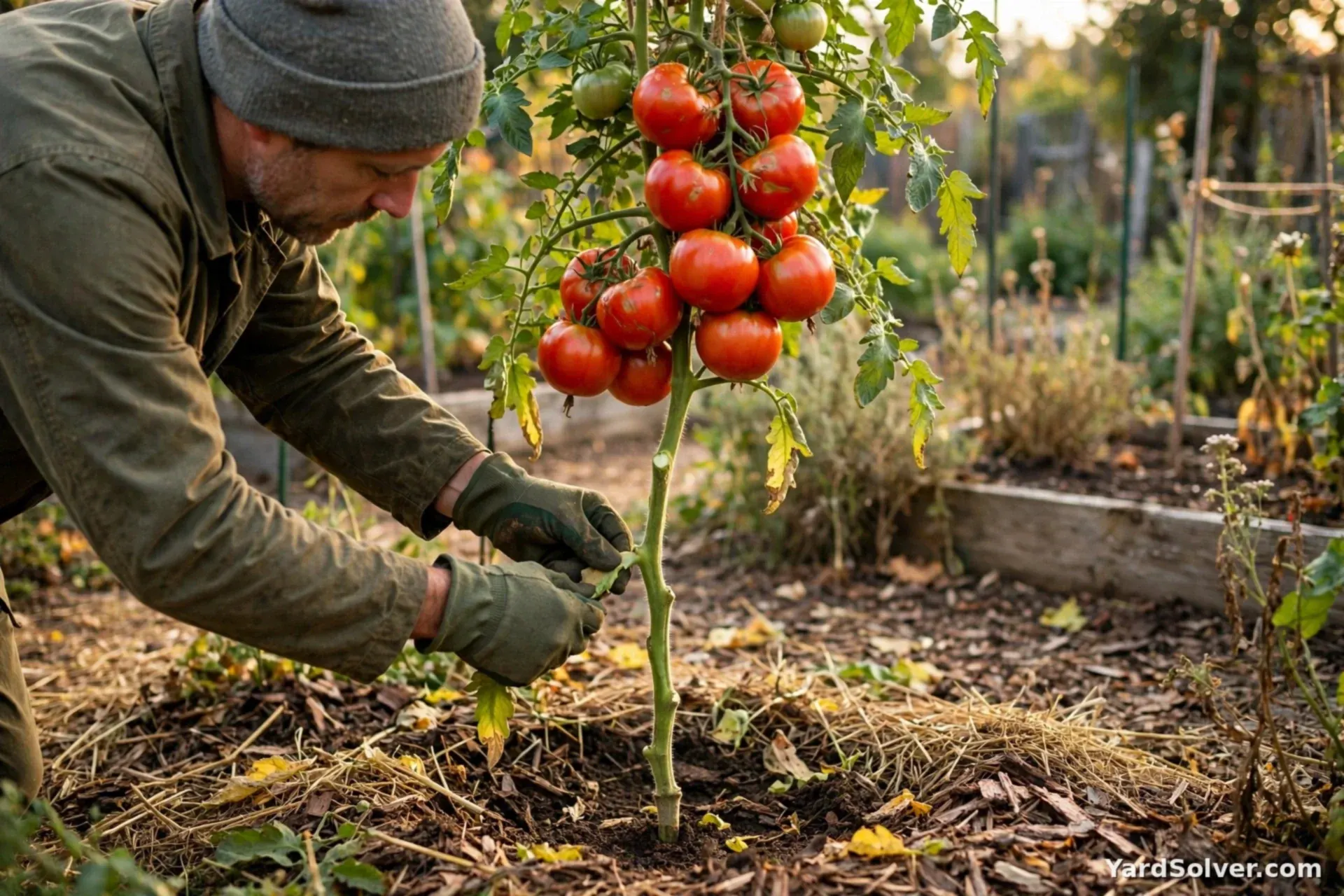
Two finishing jobs apply to both types. First, all season: remove leaves that touch the soil and, as the lowest fruit truss starts to colour, the leaves below it — soil splash is how early blight reaches the plant, and bare ankles break the ladder. Second, for indeterminates only, about 4 weeks before your expected first frost (check the Planting Calendar), pinch out the growing tip — “topping.” The plant stops making new flowers it cannot ripen and pushes its energy into the fruit already set, which is the difference between red tomatoes and a box of green ones in October.
Keep going
Growing the plants themselves? Start with How to Start Tomato Seeds Indoors and keep this year's best variety going with How to Save Tomato Seeds.
Fruit setting badly instead? That is a different diagnosis — see Why Are My Peppers Not Producing? for the shared tomato-and-pepper causes.
Questions people ask
Can I root the suckers I prune off?
Yes — a healthy sucker 4–6 inches (10–15 cm) long roots readily. Strip its lower leaves, set it in water or moist mix out of direct sun, and it roots in about a week. Potted up, it becomes a free, true-to-type tomato plant that fruits a few weeks behind its parent — a favourite trick for a late succession crop.
How often should I prune tomato plants?
Little and often wins: a quick pass once a week through the main growing season keeps every sucker in the easy pinch-out size range. Plants pruned monthly need cutting tools, suffer bigger wounds, and have already spent weeks feeding the growth you remove.
My determinate tomato is a huge tangle. Should I thin it?
Only for hygiene: remove yellowing or diseased leaves and any growth touching the soil, and improve airflow around — never through — the plant. Every leafy shoot you remove from a determinate carries flowers or fruit with it, so thinning for shape directly thins the harvest.
Comments & ratings
No comments yet.
Be the first to share your experience.