
Guides · Plant problems · Published November 1, 2026
How to Get Rid of Powdery Mildew (and Stop It Coming Back)
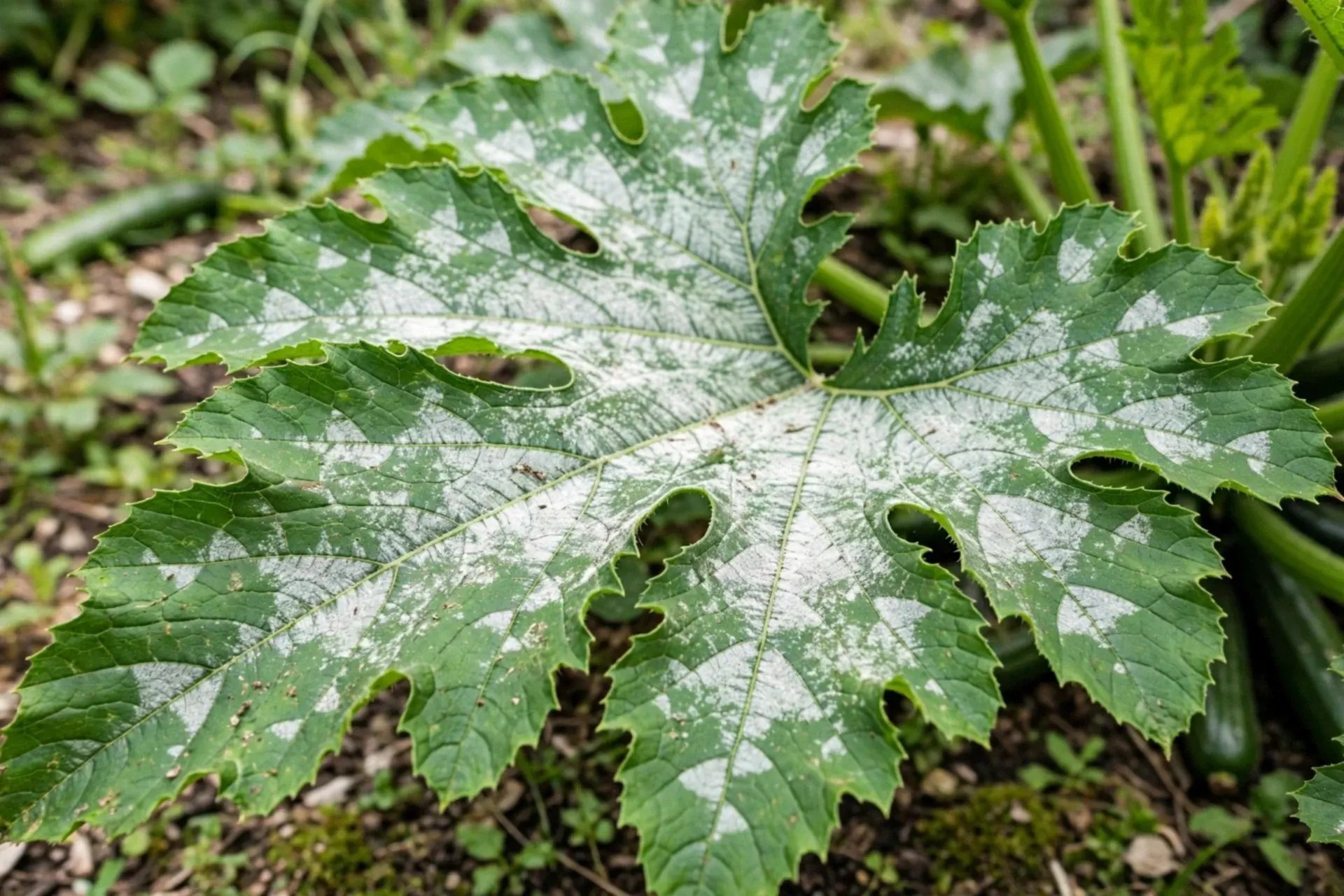
It looks as if someone dusted your plants with flour: white, powdery patches on leaves and stems, worst on zucchini, cucumbers, peas and roses. That is powdery mildew — actually a family of related fungi, each favouring certain plants. It rarely kills a plant outright, but it steadily steals its strength. Here is how to treat what you have, and — more valuable — how to stop inviting it back.
Know your mildew
- Looks like: white-to-grey powdery spots on leaf tops first, then undersides and stems; badly hit leaves yellow and dry up
- Arrives in: warm days with humid nights — and unusually for a fungus, it does not need wet leaves to start; still, damp, crowded air is its favourite
- Spreads by: wind-blown spores from leaf to leaf and garden to garden
- Not the same as downy mildew (pale patches on top, grey fuzz underneath, loves wet weather) — treatments overlap less than the names suggest; if your plant crashes fast in wet weather, an extension clinic can tell them apart from a sample
Step 1 — Prune the worst leaves today
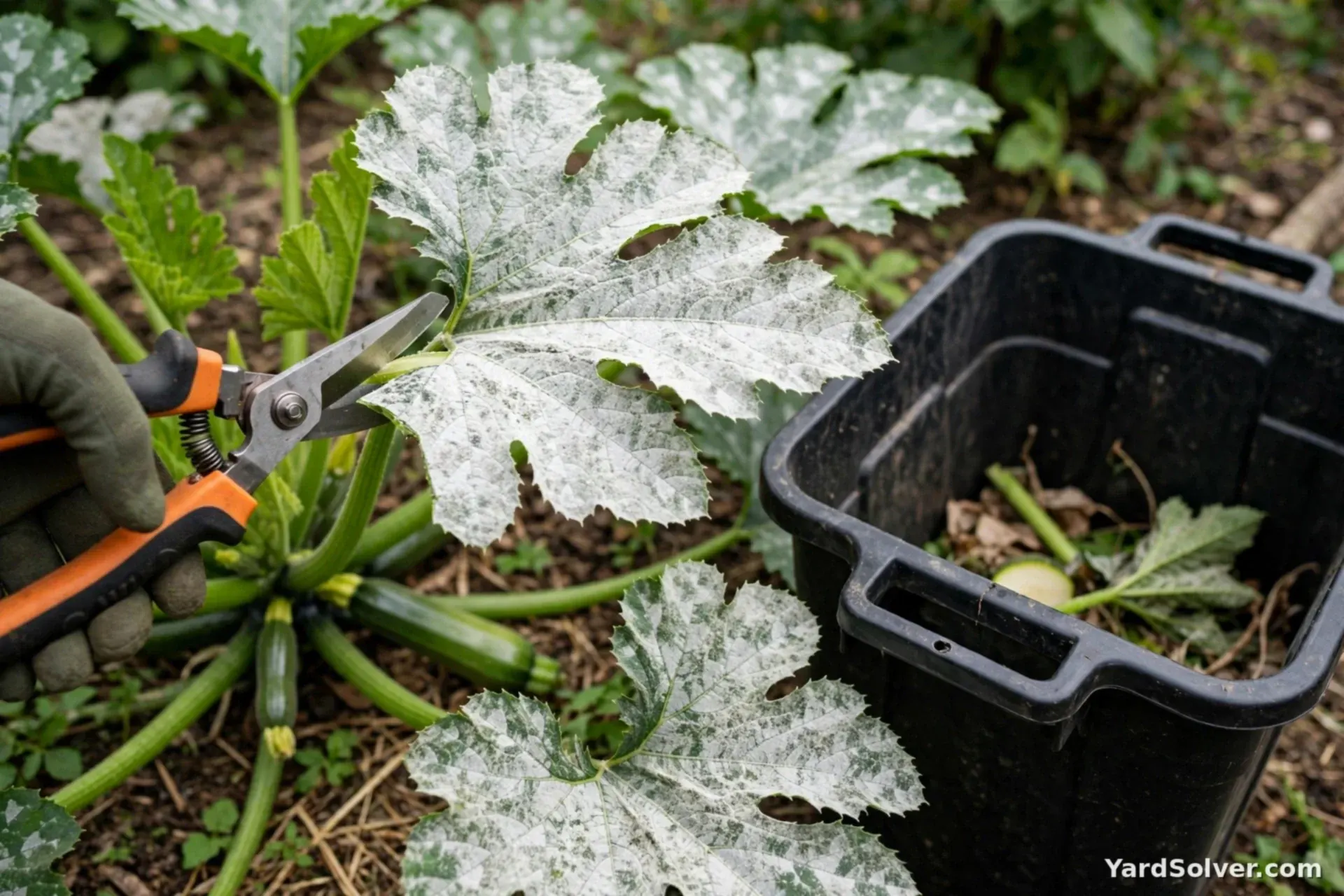
Cut off leaves that are more white than green and bin them — never compost them, since home compost rarely gets hot enough to kill the spores. This removes the biggest spore factories and opens the plant up to moving air. Disinfect pruners between plants if you are working through several infected ones.
Step 2 — Spray what remains (options that work)
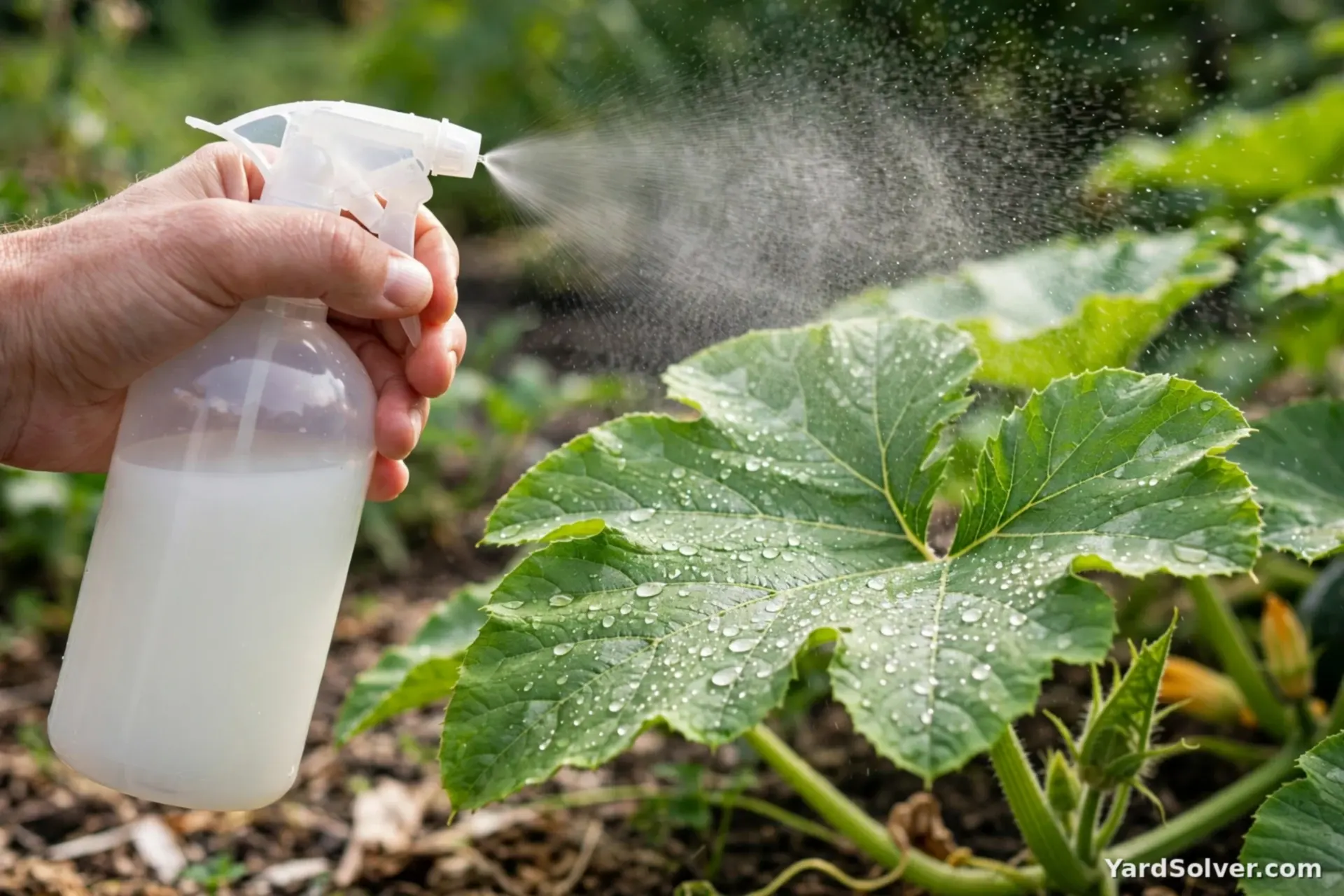
Sprays protect healthy tissue; they do not cure leaf area already colonised. Effective options, mildest first: a horticultural oil or potassium bicarbonate spray, which disrupts the fungus on contact; a diluted milk spray (roughly 1 part milk to 2–3 parts water) applied weekly in dry weather as a suppressant; or a sulfur-based fungicide for ornamentals and listed edibles, used exactly as its label directs. Whichever you choose: cover leaf tops and undersides, reapply after rain, and never spray oils or sulfur in hot midday sun or on water-stressed plants — leaf scorch is a real risk.
Step 3 — Change the air and water habits

Mildew thrives where air stands still. Thin crowded growth, and at planting time give mildew-prone crops their full recommended spacing — the Plant Spacing Calculator shows what zucchini and cucumbers genuinely need (it is more than most of us give them). Water at the base of plants, in the morning, so foliage stays as dry as your climate allows.
Step 4 — Grow it out of trouble: trellising and varieties
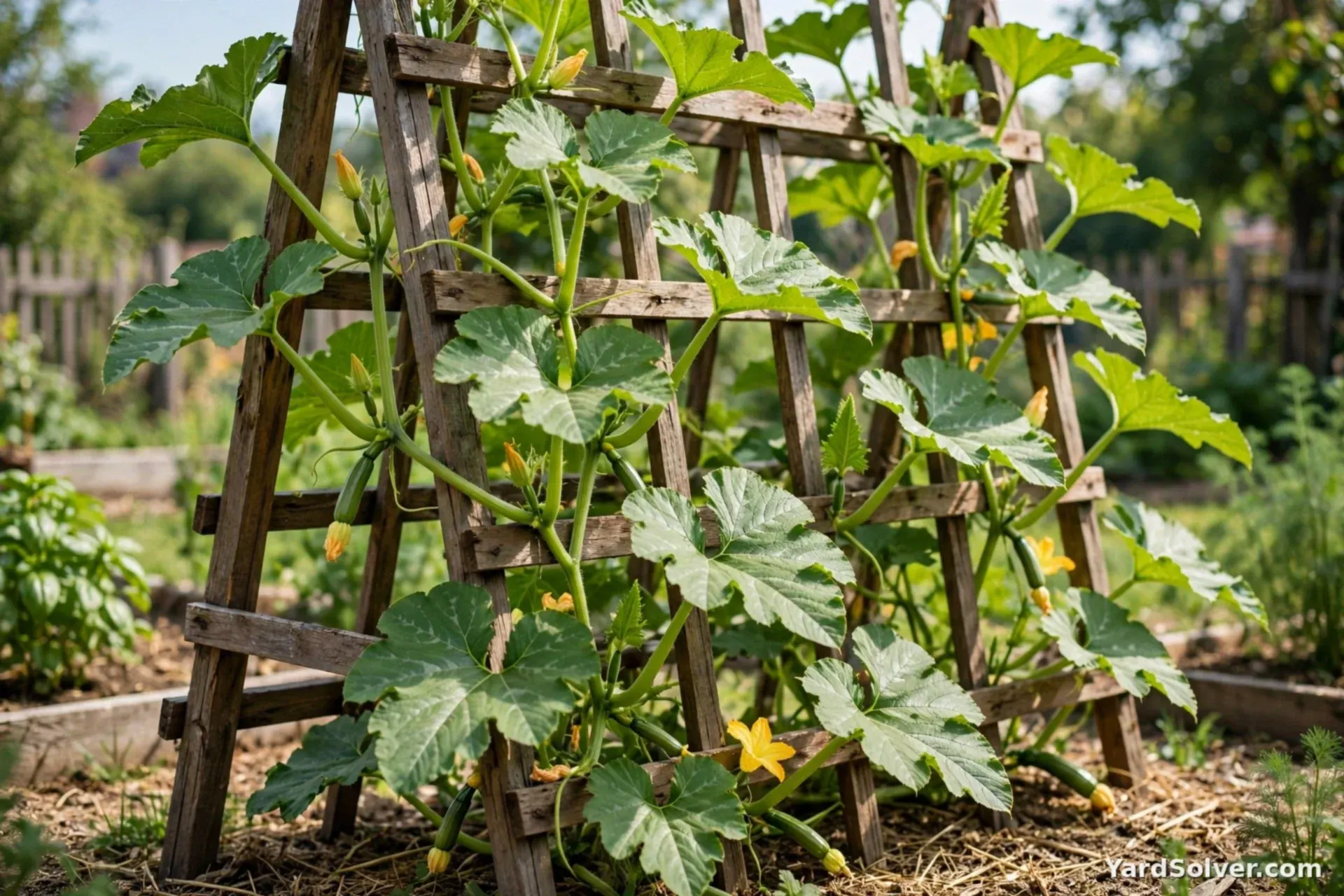
Lifting vining crops off the ground transforms their air flow: How to Grow Cucumbers Vertically covers the simple supports. Then, next season, read seed catalogues for the words "powdery mildew resistant" — for zucchini, cucumbers and peas, resistant varieties are widely available and are the single most reliable long-term answer.
Step 5 — Break the cycle in fall
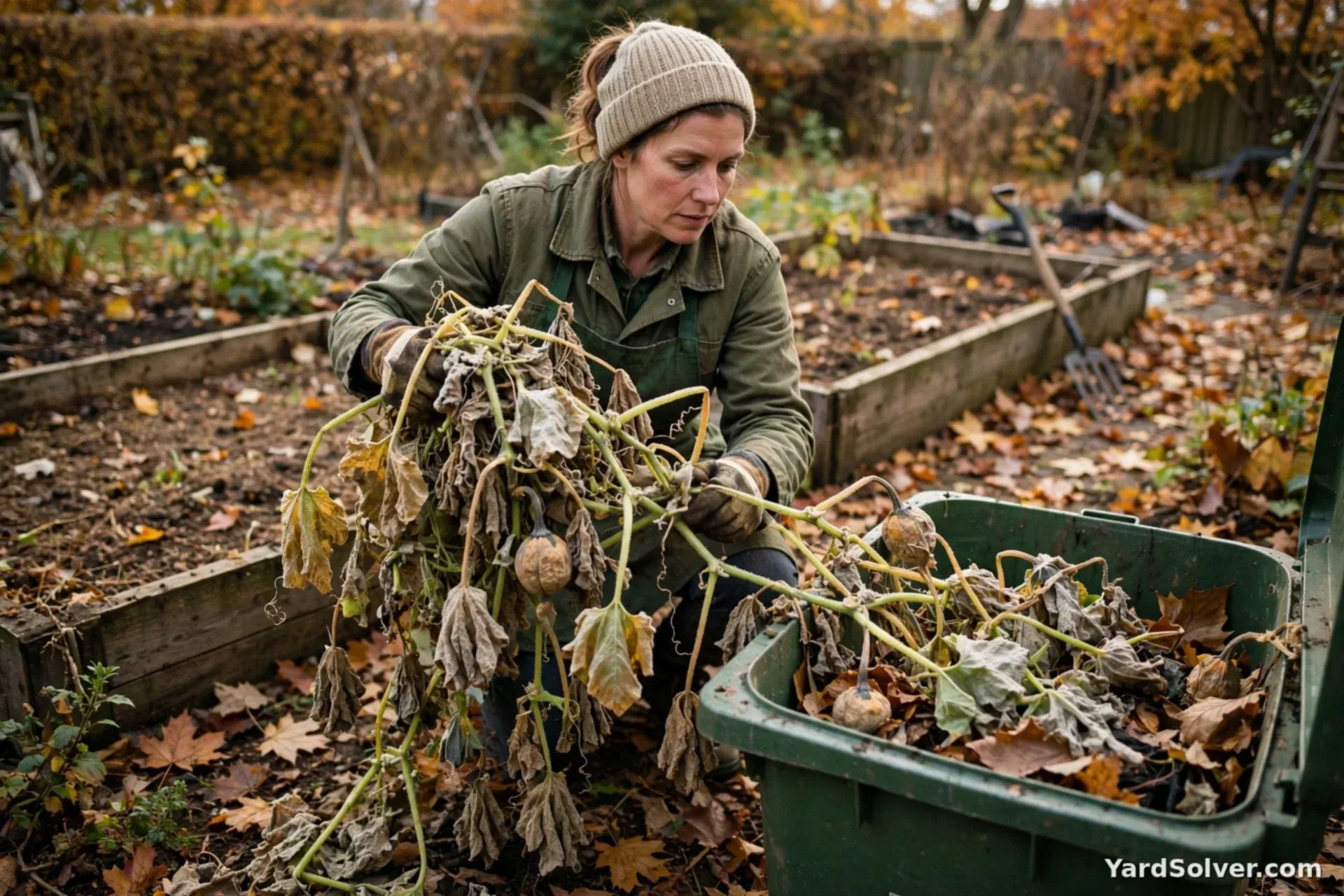
Clear infected plants completely at season's end rather than leaving them standing, and do not save seed from heavily infected plants. The Plant Library profiles for zucchini and cucumber note their mildew patterns so you can plan spacing and varieties before the season starts, not after the white dust appears.
Keep going
Not sure what you are looking at? The Plant Doctor matches the signs on your plant to the likely problem in two taps. Related help: Why Is My Zucchini Plant Dying? · Growing Cucumbers Vertically · Companion Planting Basics.
Mixing a spray for it? Work out the exact amount for your sprayer in the Garden Mix Calculator.
Questions people ask
Can I still harvest from mildewed plants?
Yes — the fungus lives on leaf surfaces and does not make fruit poisonous. Wash produce as usual. Treat the plant anyway: sick leaves stop feeding it, and yields fall.
Does milk spray really work?
It is one of the better-supported home remedies and works as a suppressant, best used weekly from the first spots. It will not rescue a leaf that is already white all over.
Why does it come back every year?
The fungi survive on debris and ride the wind, and the warm-day/humid-night pattern returns each season. Resistant varieties, wide spacing, base watering and fall cleanup are what break the cycle.
Comments & ratings
No comments yet.
Be the first to share your experience.