
Guides · Seed saving · Published November 1, 2026
How to Save Tomato Seeds
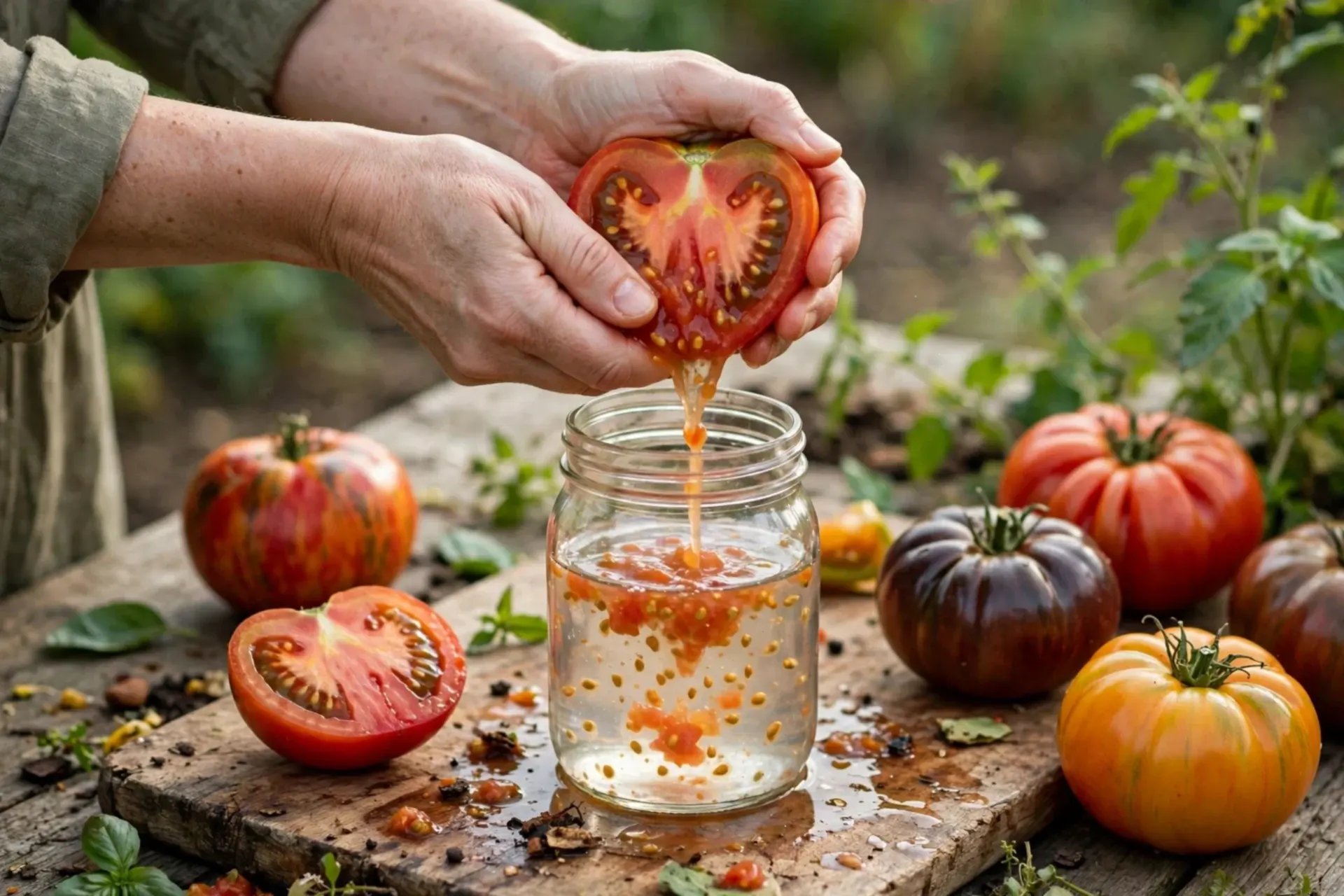
A tomato seed is wrapped in a gel sac that stops it germinating inside the fruit — and that same gel can carry disease into next year's seedlings. Saving tomato seed is mostly about removing the sac the way nature does, by a brief ferment, then drying the clean seed properly. Do it once with a variety you loved and you own that tomato for life: the seed in one fruit plants a whole row, and properly stored seed stays good for four to six years.
Before you save: what comes true and what does not
- Save from open-pollinated and heirloom varieties: their seedlings grow up true to the parent — these are the tomatoes worth saving
- Hybrids (F1) will not come true: their seedlings are a genetic shuffle — fine for fun, wrong for keeping a variety
- Pick the plant first, then the fruit: healthiest, most productive plant; its best-formed, fully ripe fruit — you are selecting next year's genetics
- What you need: a jar, water, a fine sieve, a plate or coffee filter, labels and a pen that will still be readable in spring
Step 1 — Choose the fruit and squeeze out the seeds
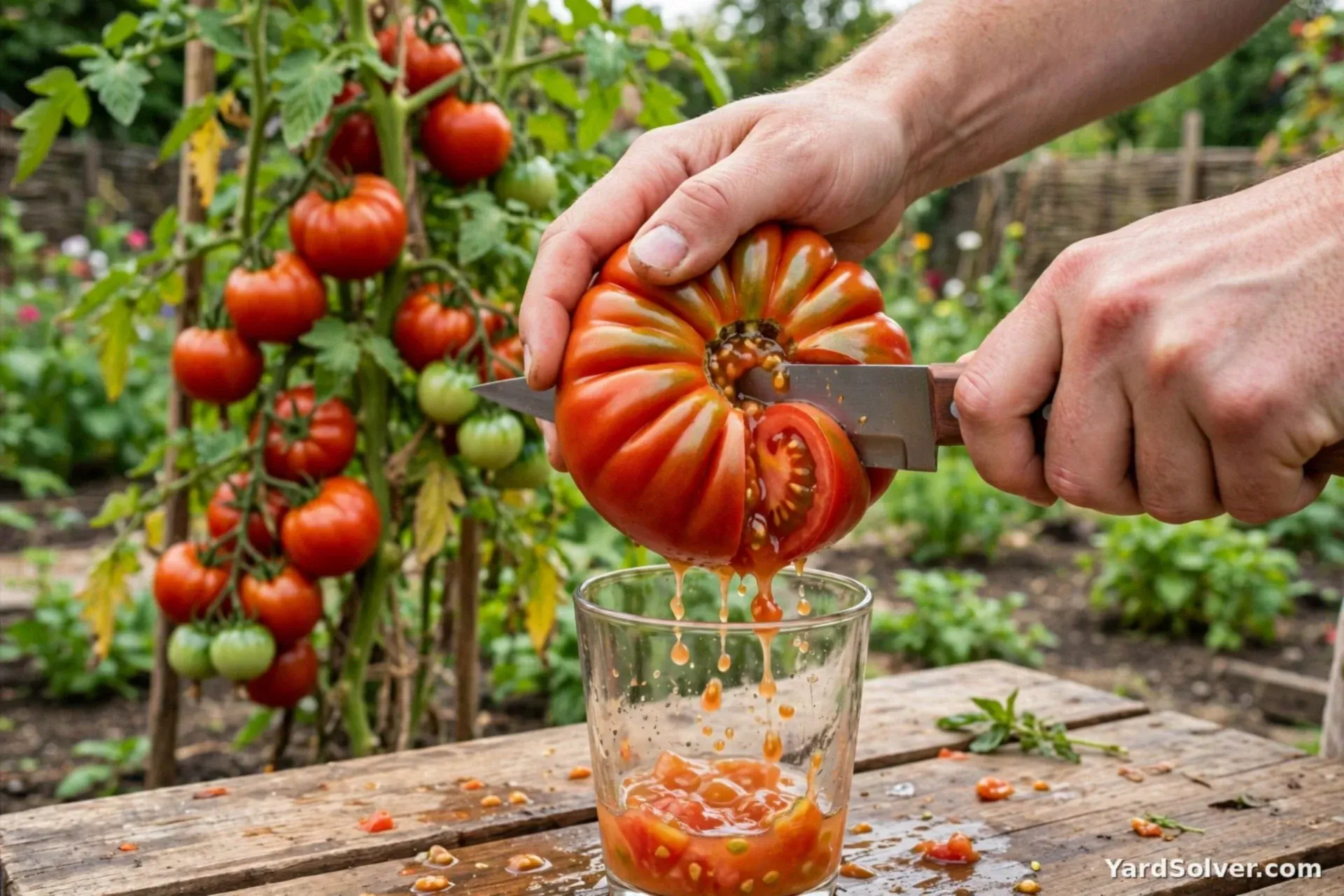
Walk the row and choose like a breeder: the plant that stayed healthiest and produced best gets to be the parent. On it, pick a fully ripe (even slightly over-ripe), well-formed fruit of true variety type. Cut it across the equator and squeeze or spoon the seed-and-gel into a small clean jar, adding a splash of water — about half the volume of the pulp. Label the jar with the variety name immediately; every seed saver has a drawer of anonymous jars that taught them this sentence. If you save several varieties, keep juices and tools rinsed between them.
Step 2 — Ferment briefly — 2 to 3 days, no longer
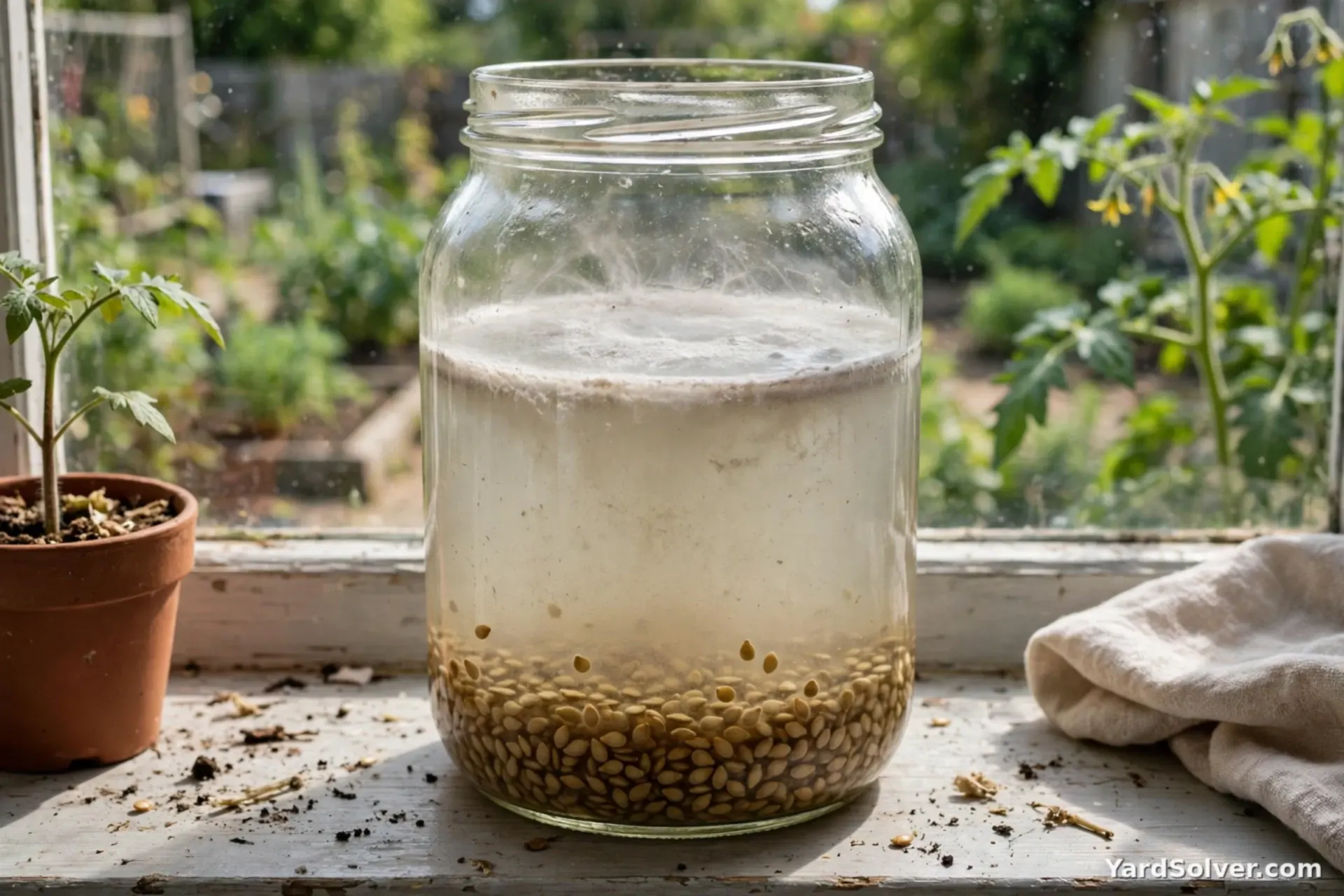
Cover the jar loosely and leave it somewhere warm and out of the way for two to three days. A pale mould film forms on top — that is the process working: fermentation dissolves the gel sac around each seed and destroys several seed-borne diseases in it. Old advice left the jar a week; more recent seed research found germination is best with a short soak and drops when fermentation runs past about three days, because the seeds begin to sprout or suffocate in their own soup. Stir or swirl daily, and move to the sink as soon as the good seeds visibly sink when the jar is swirled.
Step 3 — Rinse until only clean, sinking seed remains
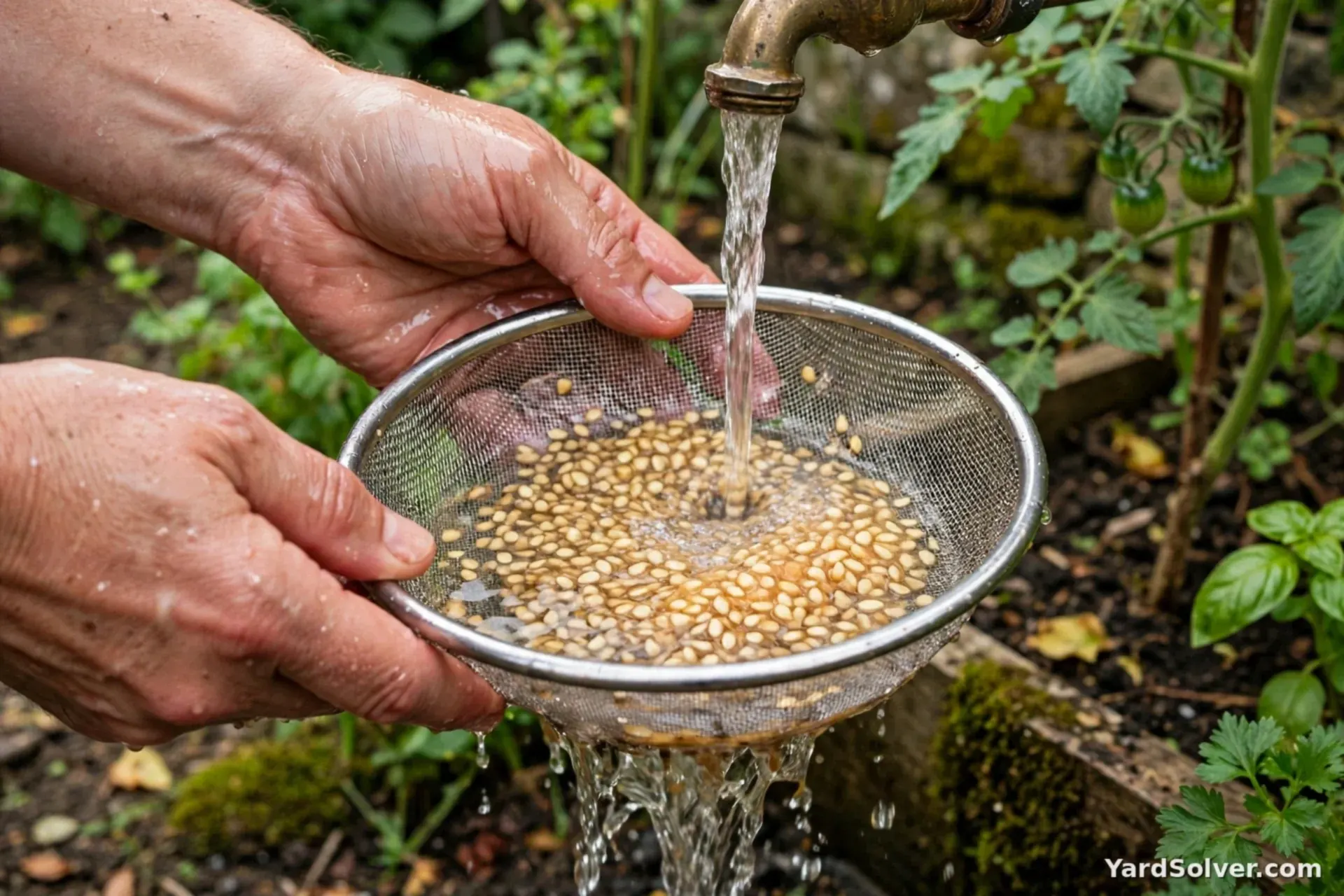
Top the jar up with water, stir, and let it settle a minute: viable seeds sink, while pulp, gel, mould and hollow dud seeds float. Pour off the floaters, refill, and repeat three or four times until the water runs clear and only plump clean seed remains at the bottom. Tip it into a fine sieve and rinse once more under the tap. This density sort is doing quiet quality control — the seeds in your sieve are statistically the strongest you grew this year, which is part of why saved seed lines improve in a garden over the seasons.
Step 4 — Dry them properly — a week, spread thin
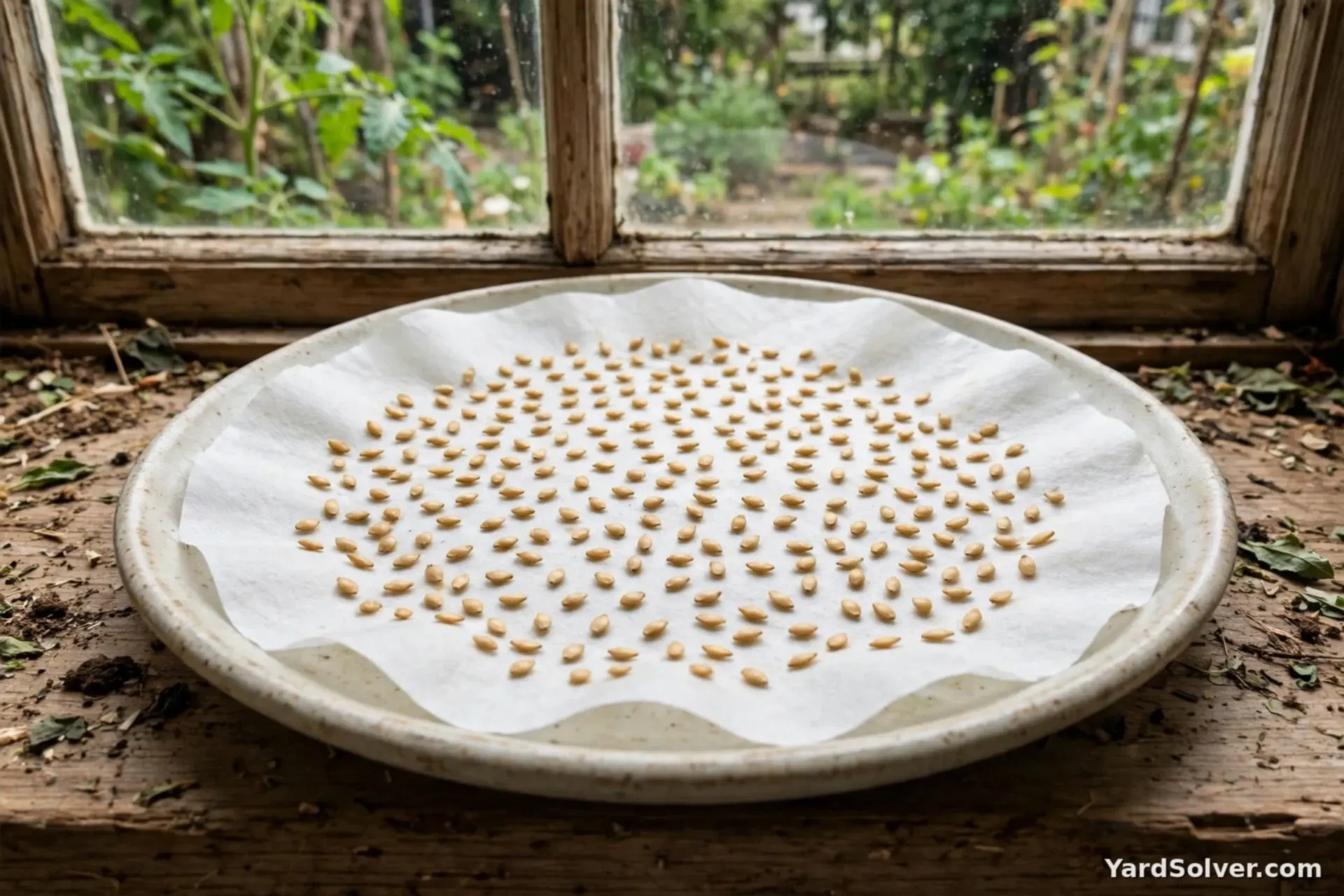
Spread the seeds in a single layer on a ceramic or glass plate, or a coffee filter — paper towel works but the seeds glue themselves to it (you can plant the towel and all, which some gardeners do on purpose). Put them somewhere airy, out of direct sun, and stir them daily so none dry in a clump. They are done after about a week, when they feel papery-dry and separate freely instead of sticking. Seeds stored even slightly damp mould in the packet — when a batch's dryness is in doubt, give it two more days; there is no prize for sealing early.
Step 5 — Label, store cool and dry, sow for years
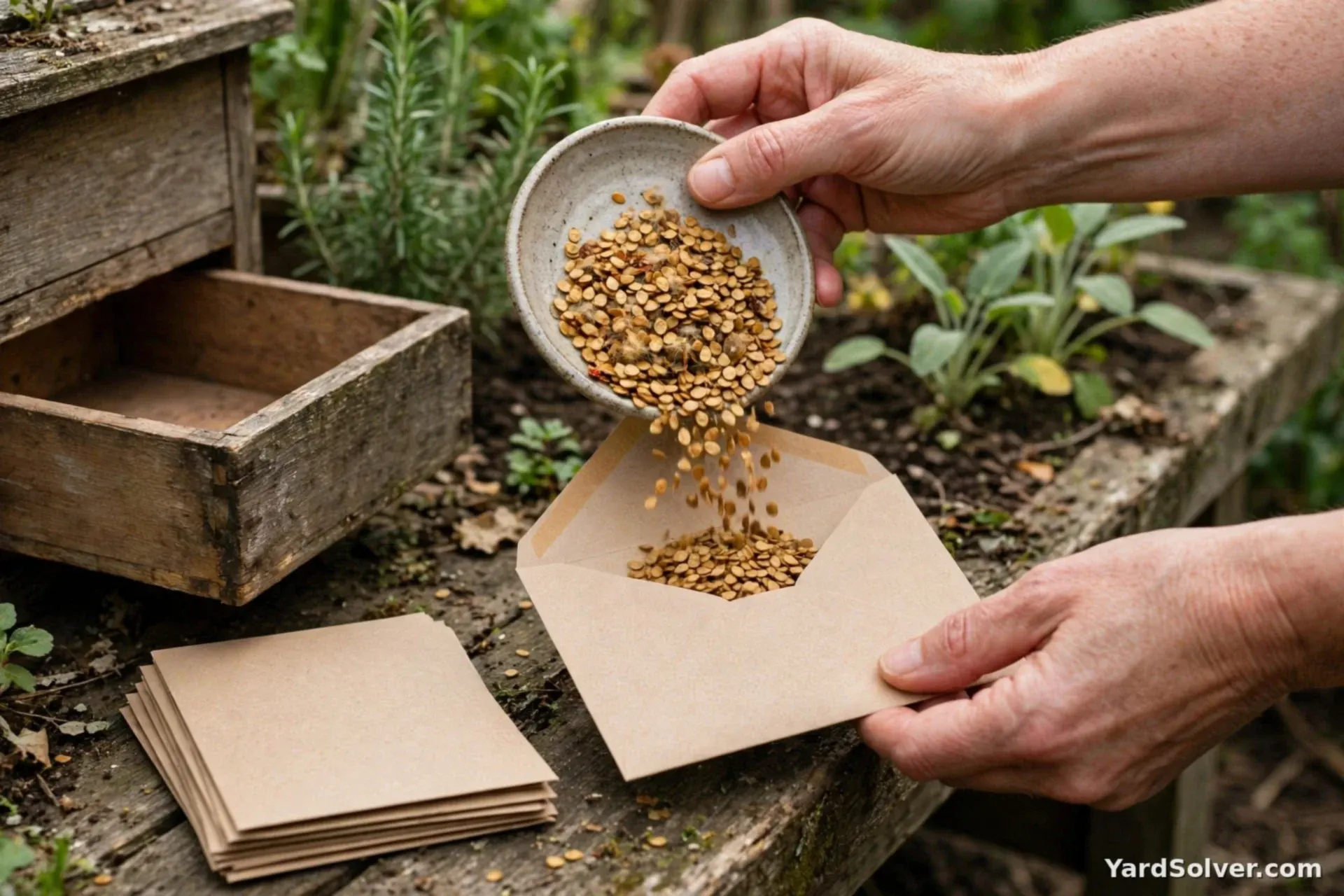
Into a paper envelope (paper breathes; sealed plastic traps any last moisture), labelled with variety, year saved, and one honest line — “first to ripen,” “cracked in wet weather” — that your January self will plan by. Store envelopes in a sealed jar somewhere cool, dark and dry; a cupboard beats a damp shed and a freezer is unnecessary. Saved this way, tomato seed typically germinates well for 4–6 years, often longer. When spring comes, the sowing routine is the one in How to Start Tomato Seeds Indoors, your start dates come off the Planting Calendar, and the Seed Calculator turns “a row of twenty” into exactly the plants to raise.
Keep going
Ready to sow what you saved? How to Start Tomato Seeds Indoors and When to Start Seeds Indoors cover the spring end of the loop.
Keep the parent plants worth saving with How to Prune Tomato Plants — healthy plants make healthy seed.
Questions people ask
Will seeds from a supermarket tomato grow?
Usually yes — they germinate readily. But supermarket tomatoes are nearly always hybrids grown for shipping, so the plants and fruit will differ from what you bought, often for the worse in flavour. It is a fun experiment and a poor seed-saving strategy; save from garden heirlooms instead.
Do I really have to ferment tomato seeds?
Strictly, no — seeds picked out and dried will grow. Fermentation earns its place by removing the germination-inhibiting gel and reducing seed-borne disease, and fermented seed stores cleaner and longer. Given that it costs one jar and two days, it is the recommended default; skipping it is a shortcut with a price, not a disaster.
How can I tell if old saved seed is still good?
The ragdoll test: put 10 seeds on a damp paper towel inside a bag somewhere warm for a week. Count what sprouts — 8 of 10 means sow as normal, 5 of 10 means sow half again as thick, and under 3 means start a fresh line from new seed this year.
Comments & ratings
No comments yet.
Be the first to share your experience.