
Guides · Plant problems · Published November 1, 2026
Why Are My Peppers Not Producing Fruit?
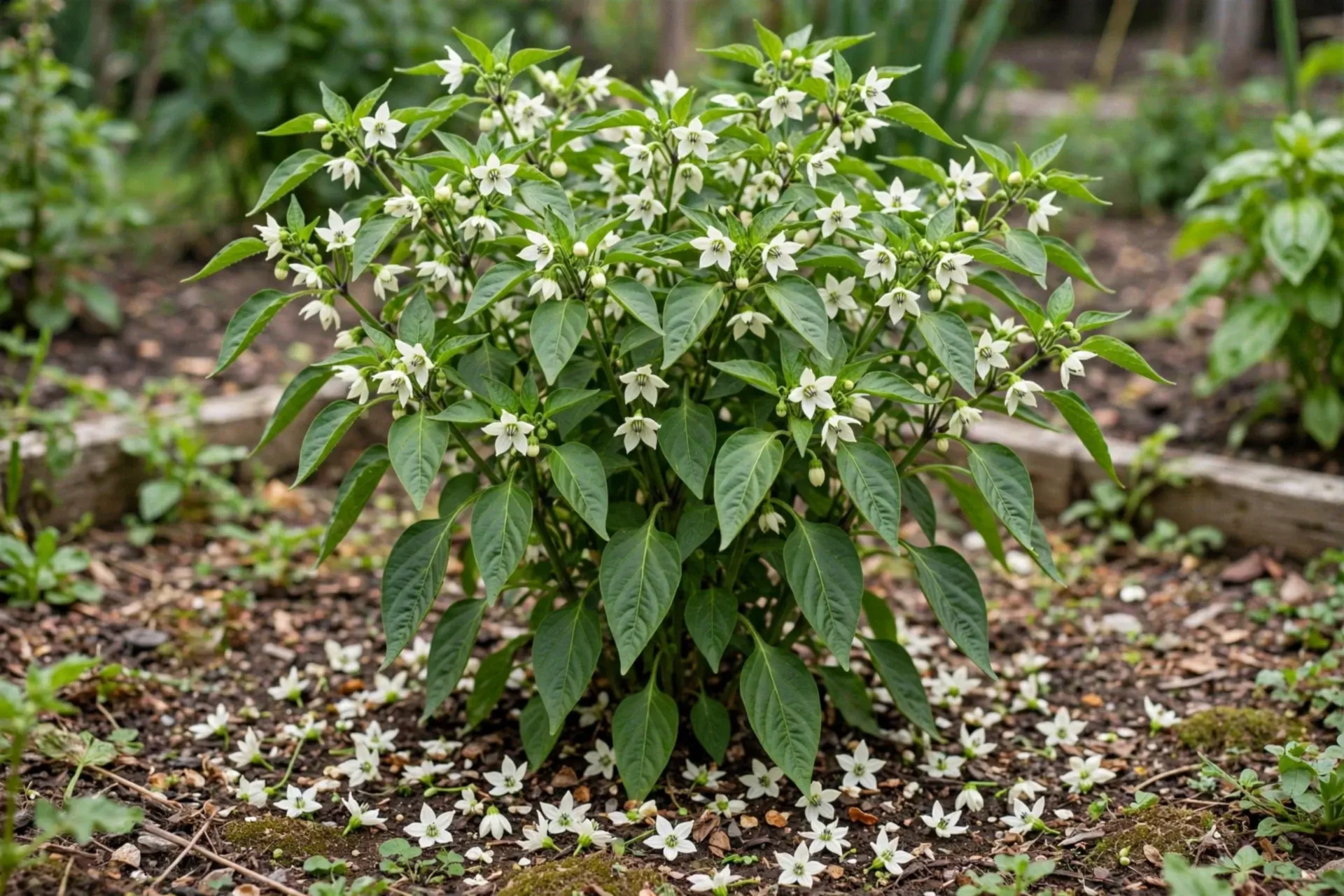
The plant looks wonderful — deep green, covered in flowers — and every flower drops off without a single pepper. This is one of the most frustrating summer searches, and the reassuring truth is that peppers are famously moody fruit-setters whose blossoms fall for environmental reasons far more often than for disease. Work through the causes in order; most gardens fix this without buying anything.
Sort the cause by the whole picture
- Flowers drop whole during a hot spell (days above ~32 °C / 90 °F, or nights staying very warm) → temperature blossom drop, the classic cause
- Flowers drop during cold nights in spring (below ~13 °C / 55 °F) → same response at the cold end
- Plant is huge, dark green and leafy with few flowers at all → too much nitrogen pushing leaves instead of fruit
- Flowers open indoors or in a still greenhouse and drop untouched → no vibration, no pollination
- Small pot, wilting between waterings → stress drop; the plant rations what it cannot support
Step 1 — Check the calendar of the weather, not the plant
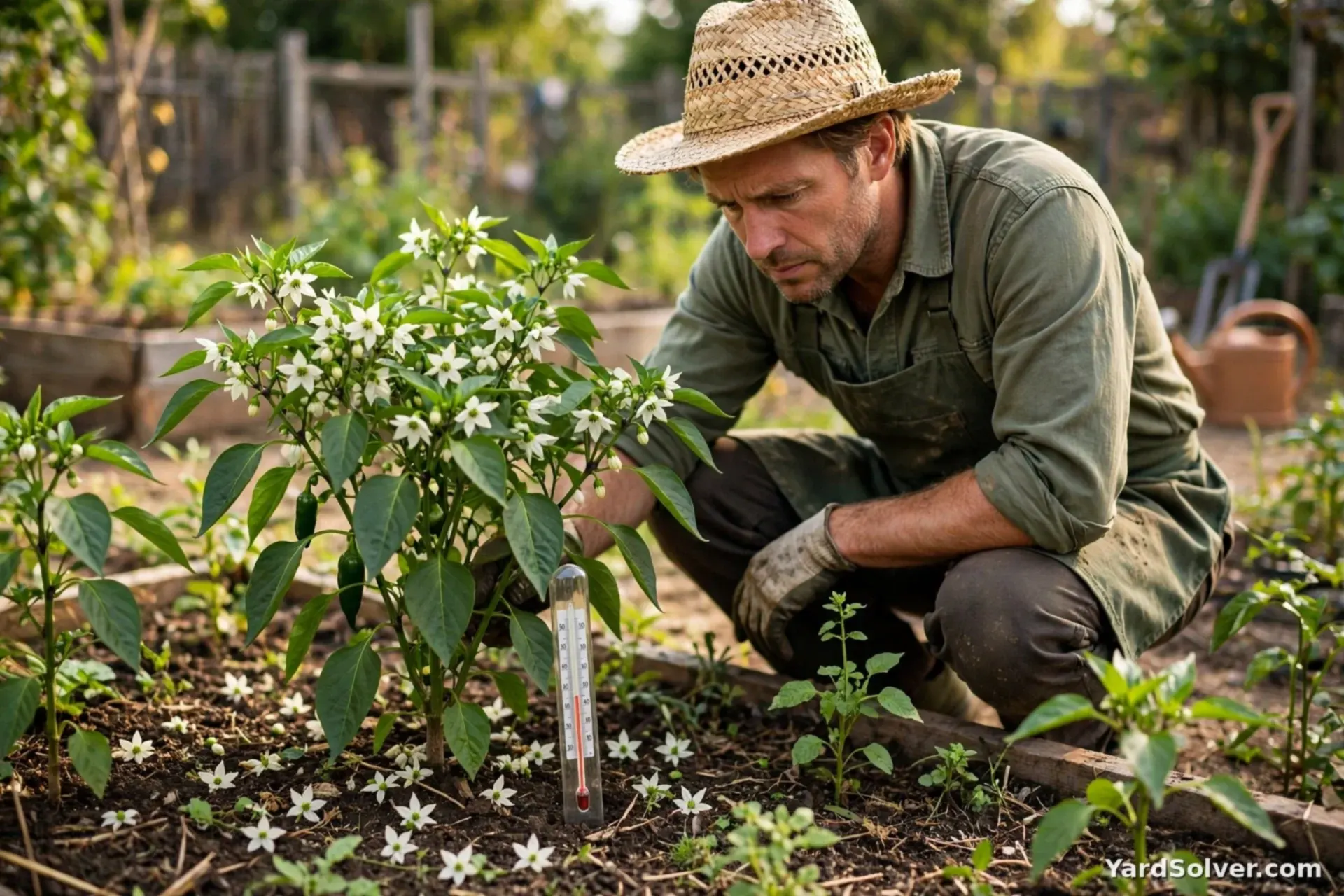
Pepper pollen goes sterile at temperature extremes, and the plant sheds flowers it cannot set. If a heat wave or a cold snap matches the dropping, the correct treatment is patience plus shade cloth during brutal afternoons: fruit set usually resumes by itself when nights moderate. Peppers planted out too early in a cold spring do exactly this and recover as nights warm — no feed fixes weather.
Step 2 — Back off the nitrogen
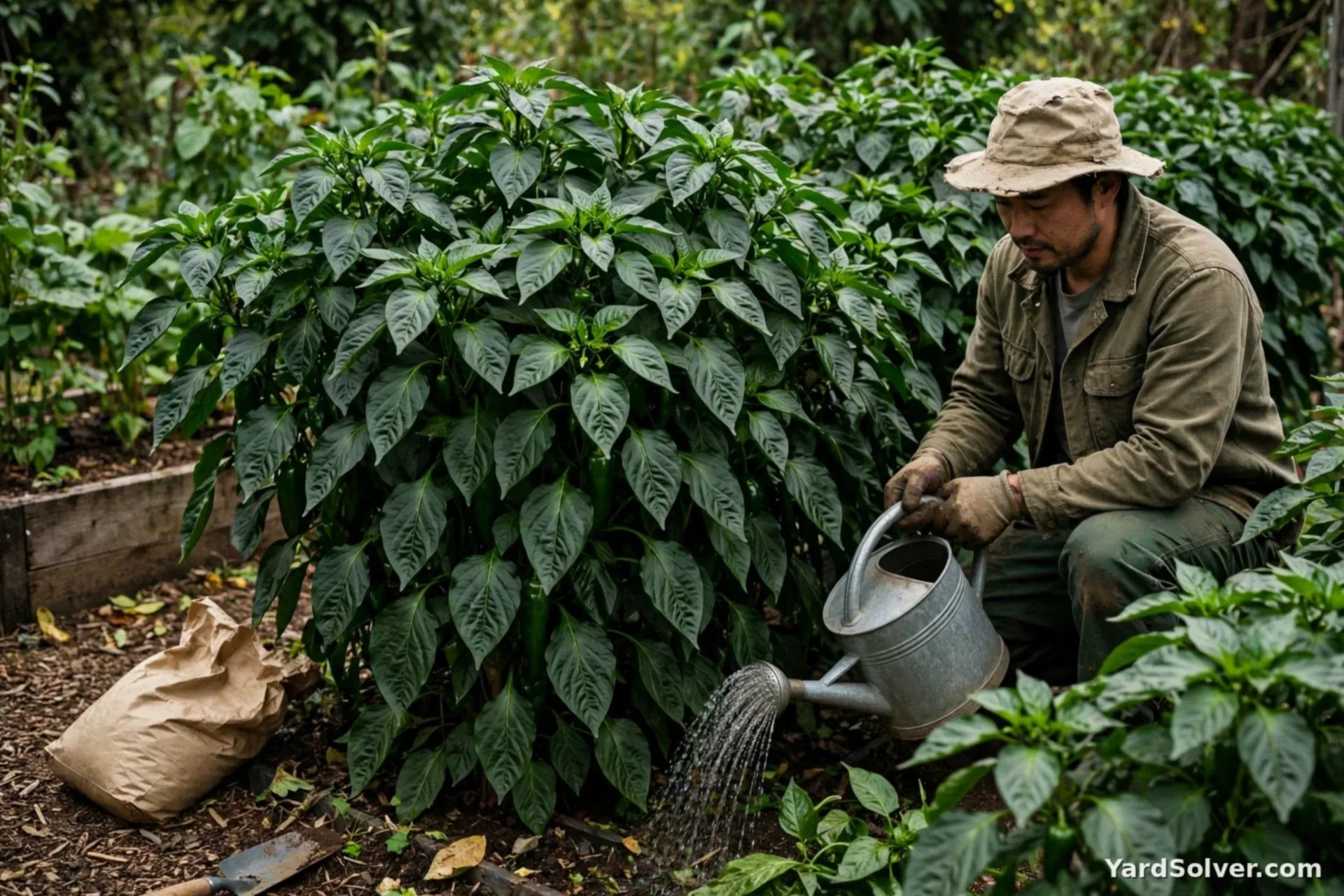
If the plant is a lush dark-green jungle, it is over-fed on nitrogen, which tells a pepper to make leaves. Stop high-nitrogen feeding; when you do feed, use a balanced or tomato-type feed at label rate — the Fertilizer Calculator doses it by your actual area. If you suspect a genuine nutrient imbalance rather than simple overfeeding, a soil test settles it instead of another season of guessing.
Step 3 — Keep water boringly even
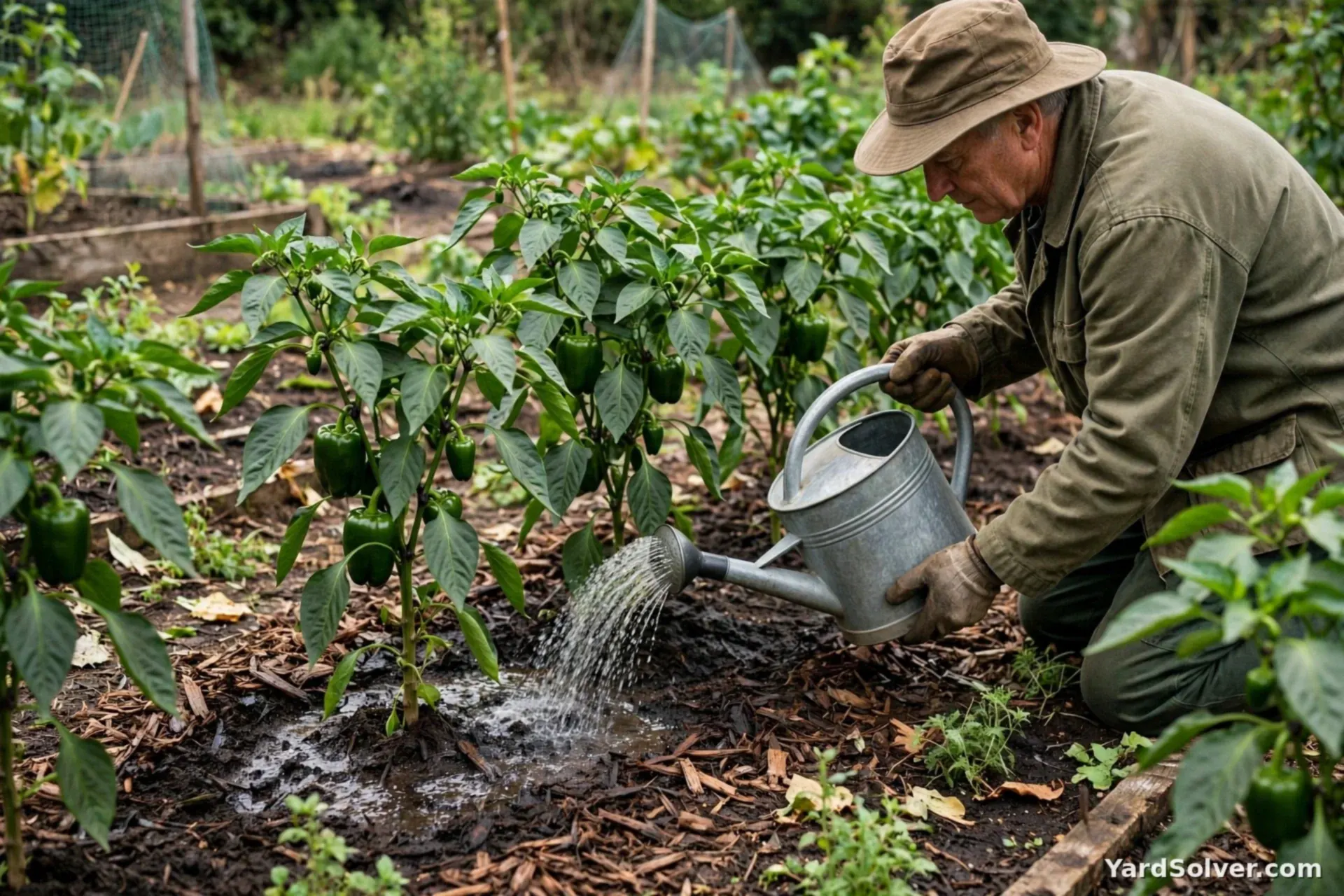
Swinging between drought and flood tells the plant times are hard, and flowers are the first budget cut. Water deeply and regularly, and mulch the soil surface to smooth the moisture curve. Peppers in pots — the most common stress-drop victims — may need daily watering in heat, and a bigger pot is a legitimate cure all by itself.
Step 4 — Do the bees' job where bees cannot
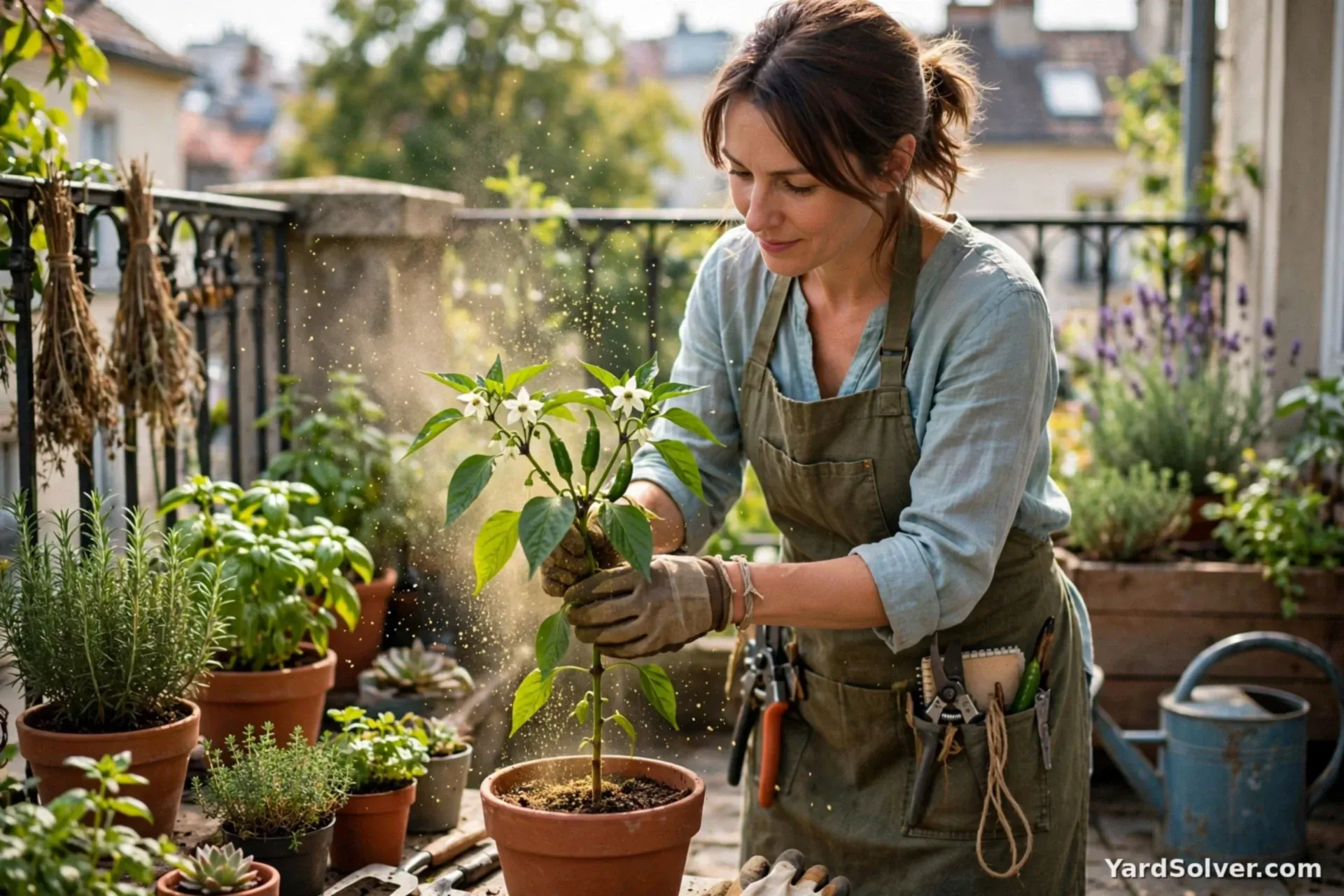
Peppers are self-fertile but the pollen must physically move within the flower. Outdoors, wind and bees handle it; indoors, on balconies and in greenhouses, give flowering plants a gentle shake each day, or tap the flower clusters — a fingertip or an electric toothbrush held to the stem for a second mimics a bee's buzz. Within a week of regular shaking, set fruit usually appears.
Step 5 — Finish the season like a pepper grower
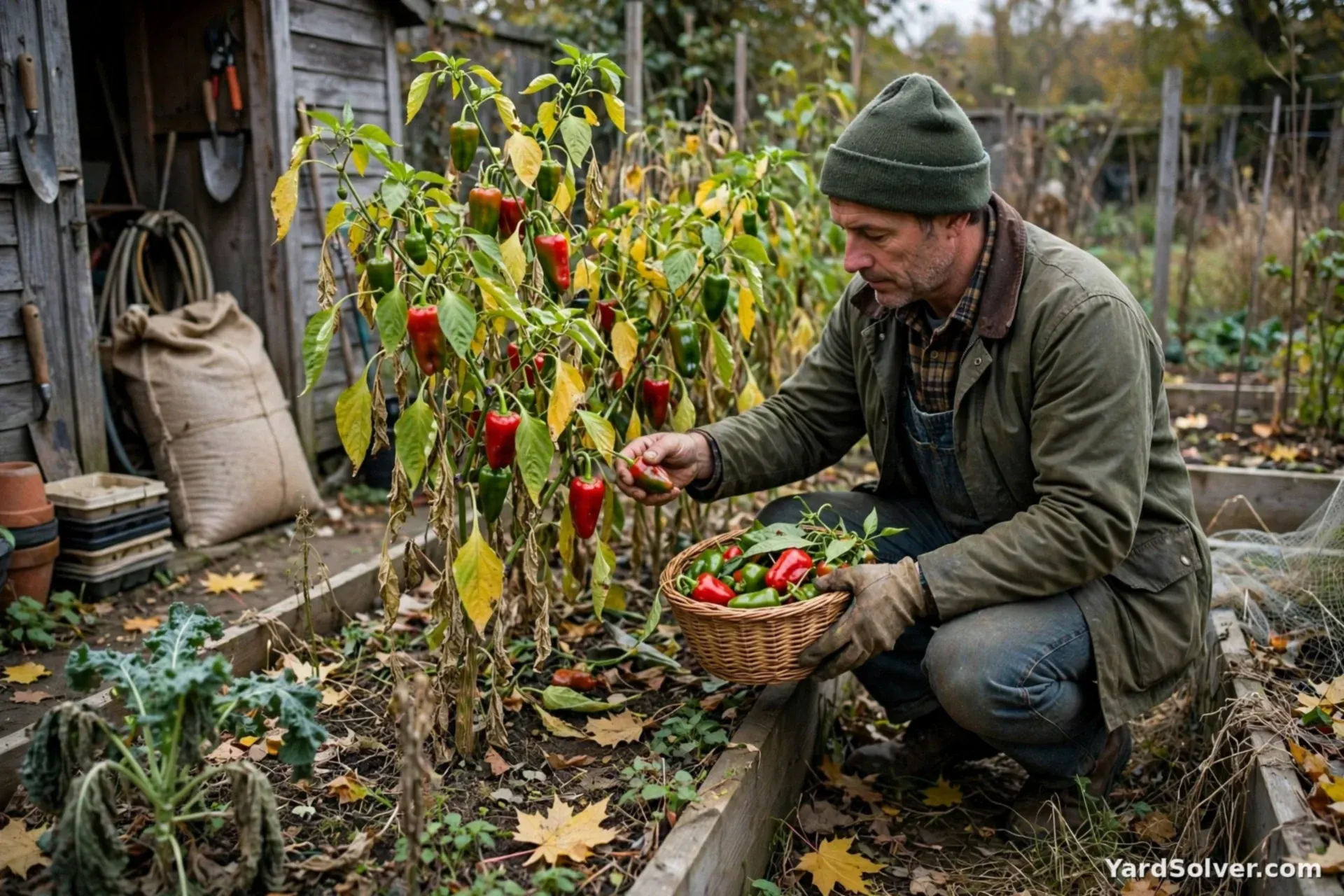
Pick peppers as they reach usable size rather than leaving every fruit to ripen on the plant — harvesting encourages the plant to set more. As nights cool in autumn the game reverses: stop feeding, and before the first frost either bring the best plant indoors following How to Overwinter Pepper Plants, or accept the season's end with a mature plant ready to start next spring months ahead of seedlings.
Keep going
Plan the pepper year properly: How to Overwinter Pepper Plants · How to Test Your Garden Soil. The pepper's light, warmth and feeding profile is in the Plant Library.
Questions people ask
Why do the flowers fall off without making peppers?
Usually temperature: pepper pollen fails in hot days above roughly 32 °C (90 °F) and on cold nights below about 13 °C (55 °F), and the plant drops flowers it cannot fertilize. Overfeeding with nitrogen, erratic watering and, under cover, lack of vibration for pollination are the other common causes.
Should I hand-pollinate my peppers?
Peppers do not need pollen carried flower to flower like squash — each flower can set alone if it is vibrated. A daily gentle shake of the plant, or tapping the flower clusters, does the whole job. Outdoors, wind and visiting bees normally provide it for free.
Does Epsom salt make peppers fruit?
Only in the narrow case of a real magnesium deficiency, which shows first as yellowing between the veins of older leaves — and a soil test is the way to confirm that, not a guess. In the common blossom-drop situation (temperature or nitrogen), Epsom salt changes nothing. It is a supplement with a specific job, not a fruiting tonic.
Comments & ratings
No comments yet.
Be the first to share your experience.