
Guides · Soil · Published November 10, 2026
How to Raise Soil pH: Lime Rates for Lawns and Beds
Soil that has drifted too acidic does something sneaky: the food is in the ground, but the plants cannot reach it. Fertilizer goes on, growth stays pale and thin, and the gardener adds more food to a pantry that is locked. The key to the lock is lime. Ground limestone, spread at the right rate, nudges pH back up over a few months and the pantry opens. The catch is that "right rate" changes a lot with your soil type — and guessing is how people overshoot. So this page runs in the only safe order: test, read the table, spread, wait.
Step 1 — Test before you spread a single pellet
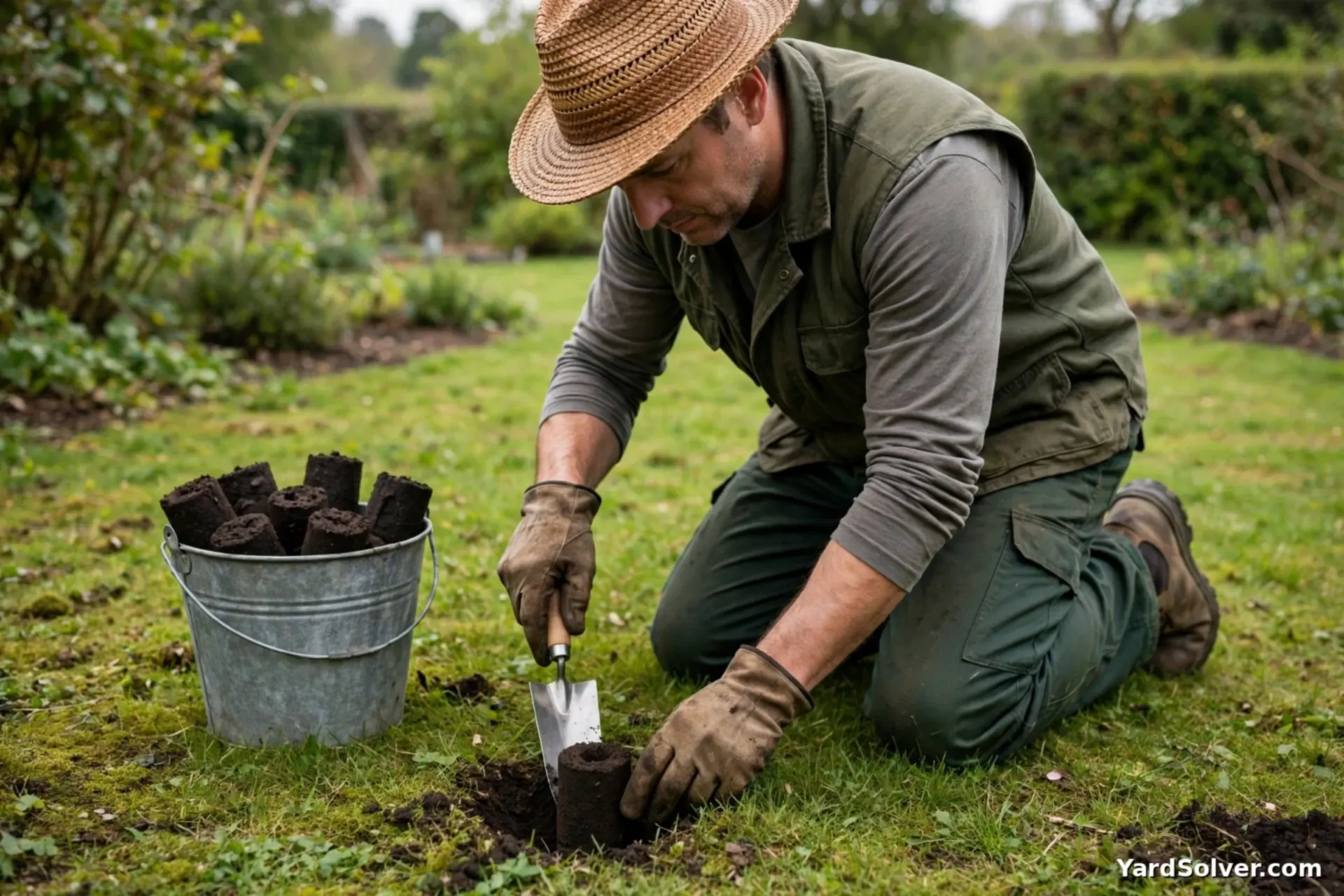
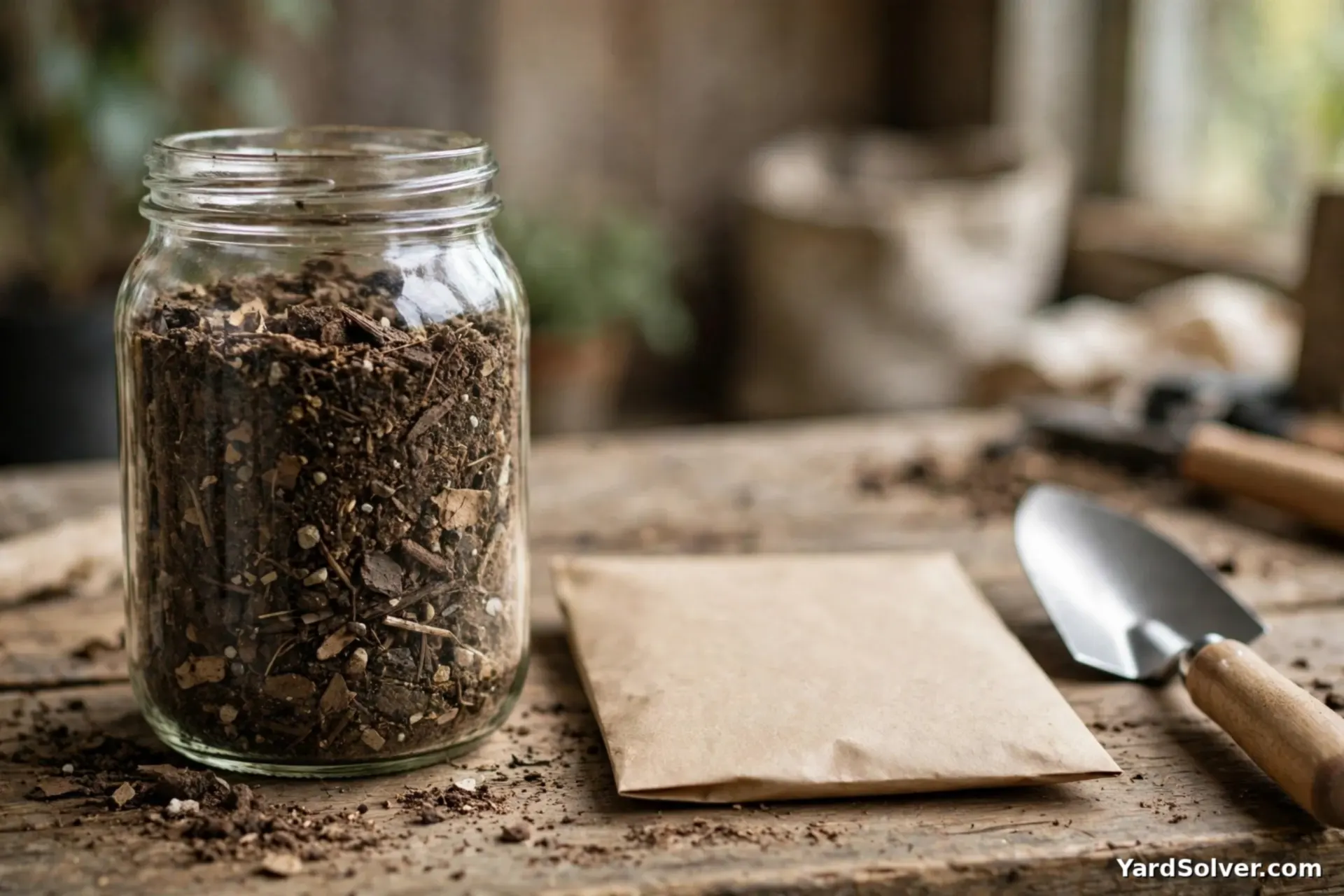
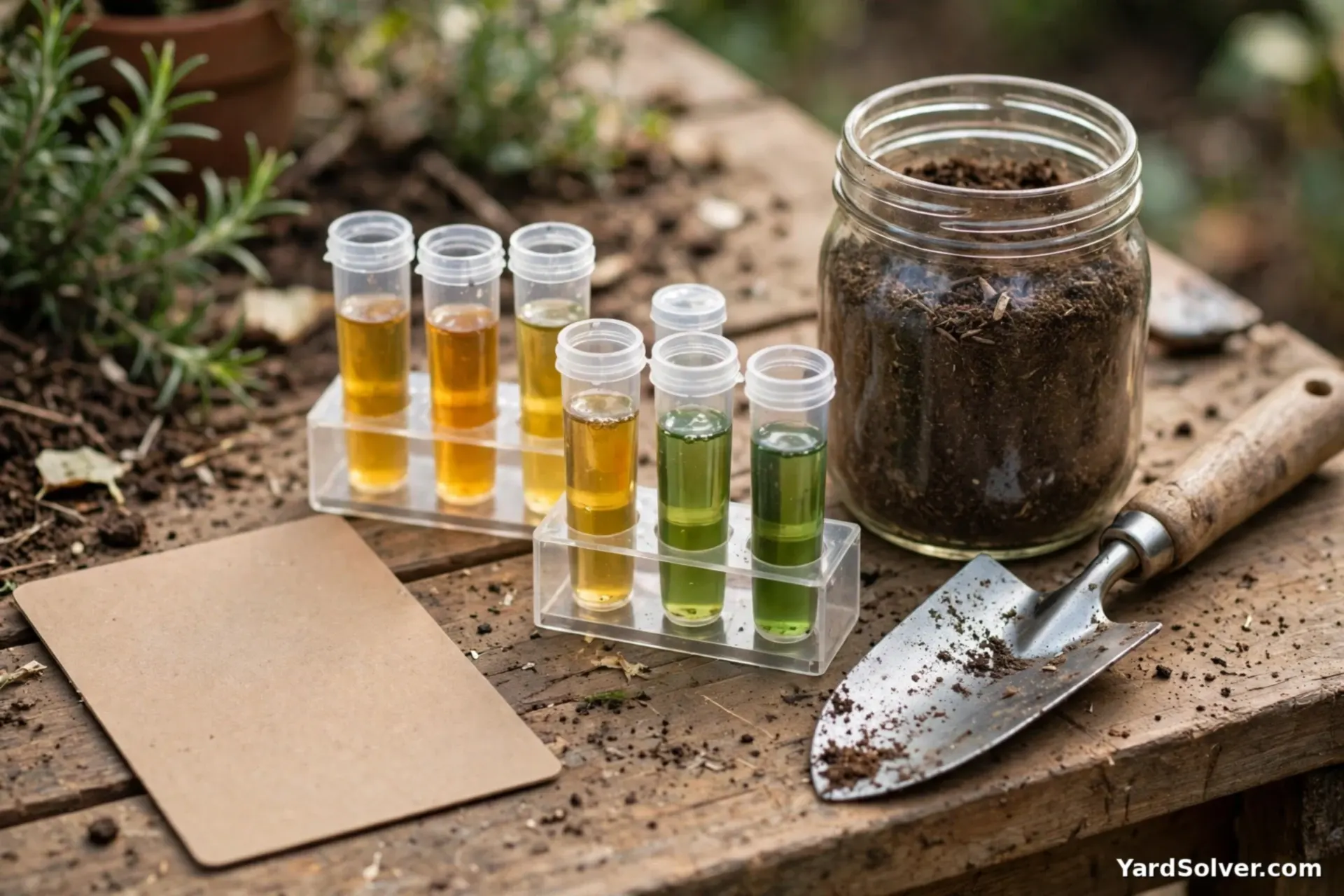
Take 10 to 15 small cores or trowel slices, 4–6 inches deep, from across the area and mix them in a clean bucket — one mixed sample tells the truth that one scoop cannot. A lab test gives you the pH, the type of soil you have, and usually a lime recommendation in plain pounds. How to take and send the sample properly is covered start to finish in How to Test Your Garden Soil. Know your target before you start, because not everything wants the same number:
Where most plants want to be
| Planting | Target pH | Note |
|---|---|---|
| Lawn grass | 6.0–7.0 | The usual lawn target is about 6.5 |
| Vegetable beds | 6.0–7.0 | Most veg feed best just under neutral |
| Potatoes | About 5.0–5.5 | Kept low on purpose — acid soil holds back scab |
| Blueberries, rhododendrons | 4.5–5.5 | Do not lime these beds at all |
Step 2 — Read your rate off the soil-type table
Clay fights a pH change hard; sand gives in easily. That is the whole reason the same pH fix can take 25 pounds on one yard and 100 on another. These are standard extension rates of ground limestone, in pounds per 1,000 square feet, to lift soil up to pH 6.5:
| Starting pH | Sandy soil | Loam | Clay soil |
|---|---|---|---|
| 5.5 | 20–30 lb | 45–75 lb | 90–100 lb |
| 4.5 | 30–50 lb | 80–130 lb | 150–190 lb |
One hard rule sits on top of the table: never spread more than 50 pounds per 1,000 square feet in a single pass. If your number is bigger, spread 50 now and the rest a few months later. When you know your area and your row of the table, the Lime Calculator turns it into total pounds and bags for your exact lawn or bed, split into safe passes for you.
Step 3 — Pick the right lime: type and form
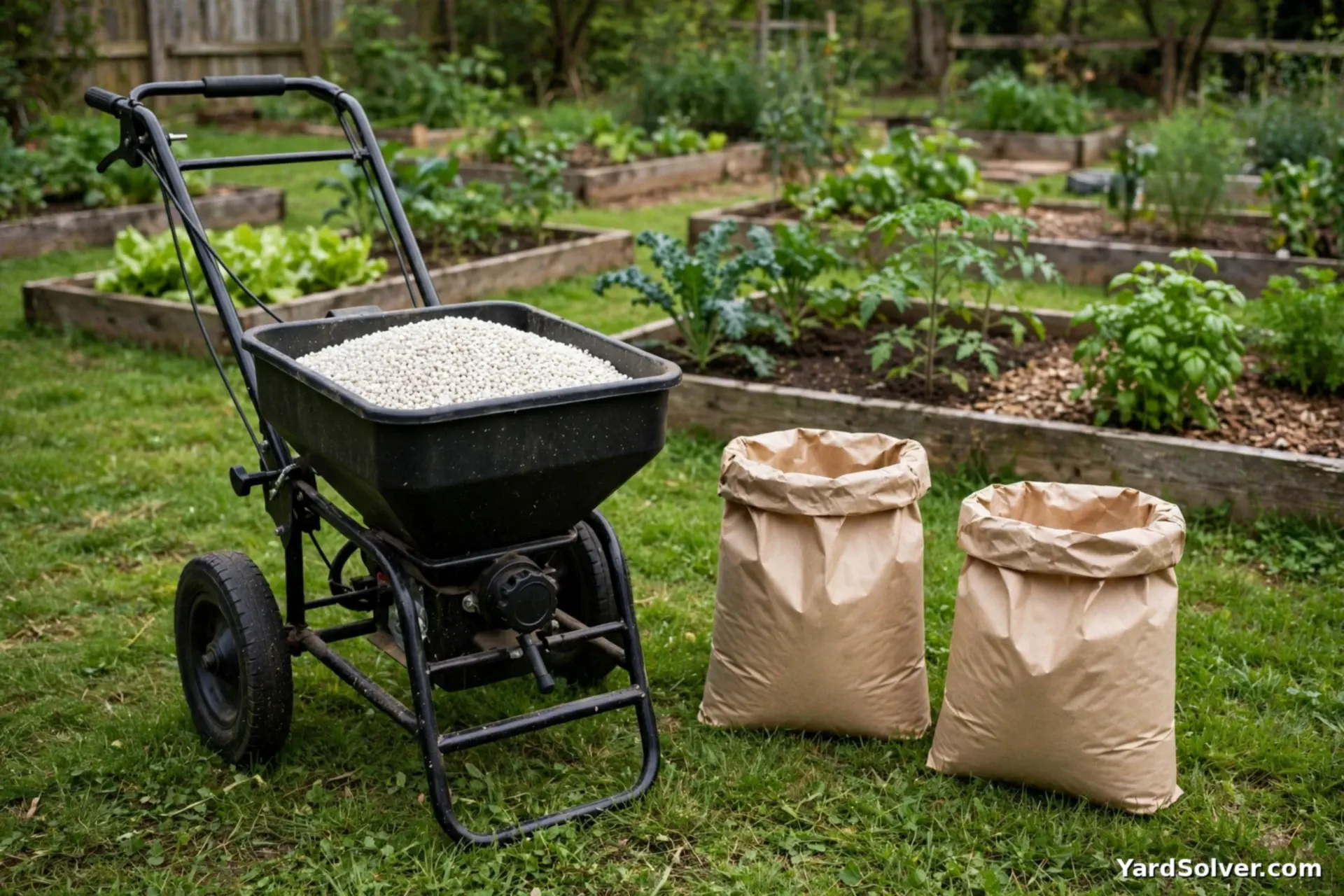
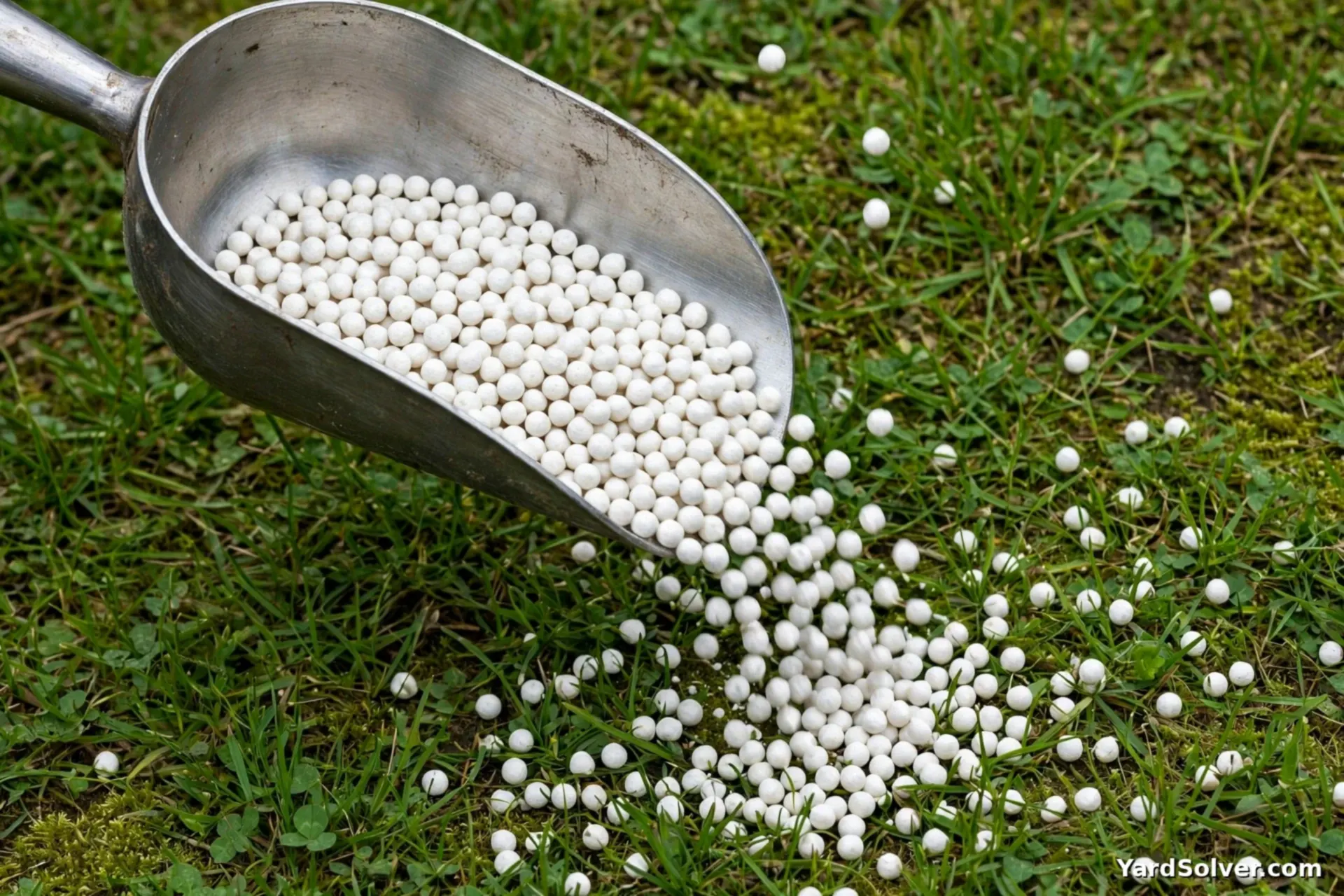
Two choices, both simple. Type: calcitic lime is plain limestone and right for most soils. Dolomitic lime is limestone with magnesium in it — pick it only when your soil test says magnesium is low. If your magnesium is already fine, extra does you no good, and calcitic is the honest buy. Form: powdered lime is cheap and starts working fastest, but it is dusty, drifts in wind, and is no fun to spread. Pelletized lime is the same stone pressed into clean pellets — it costs a bit more, goes through a lawn spreader evenly, and is slower only by a little. For a home lawn, pelletized wins on everything except price. Whichever you buy, the bag's rating tells you how strong it is; the calculator accounts for it.
Step 4 — Spread it in fall if you can
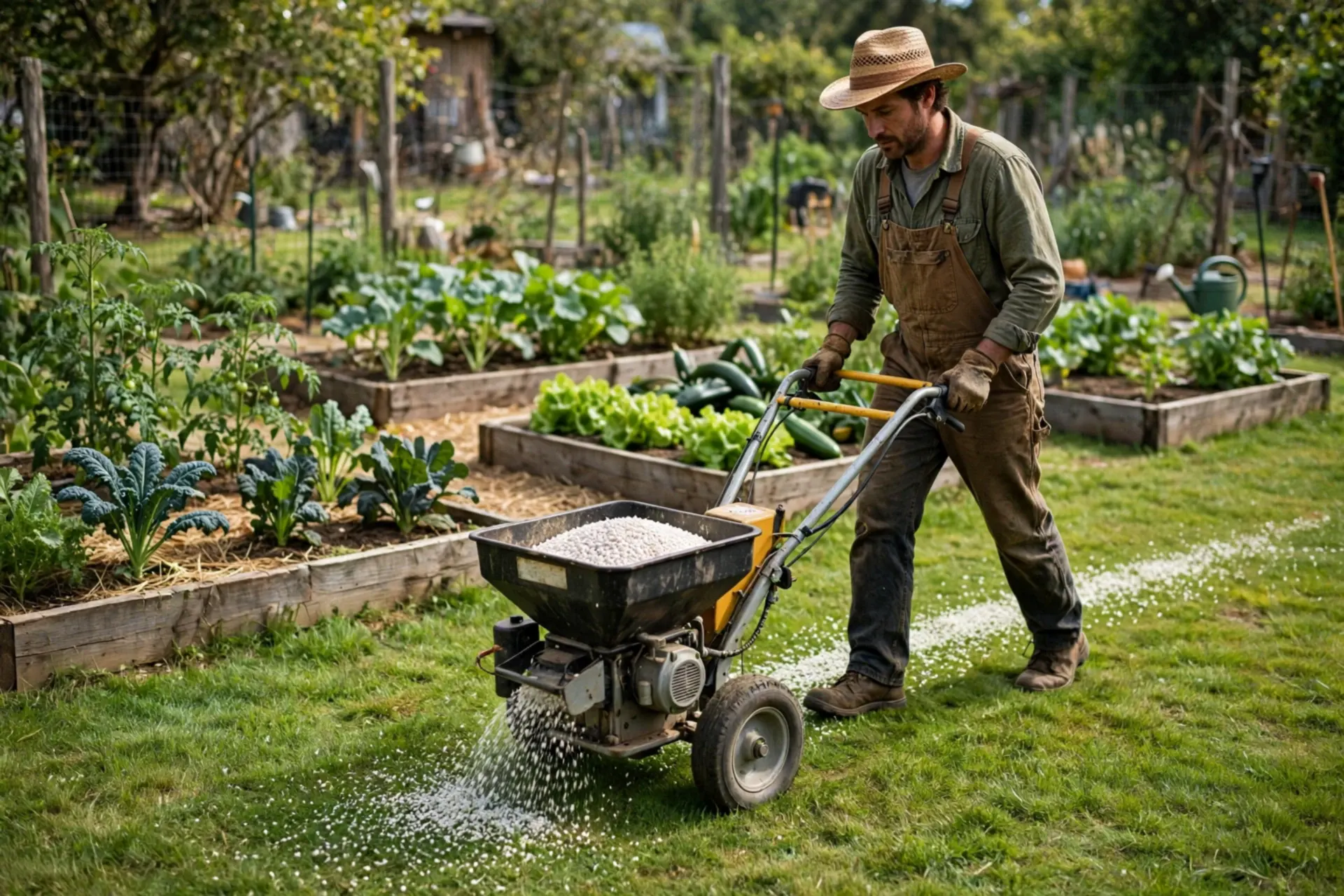
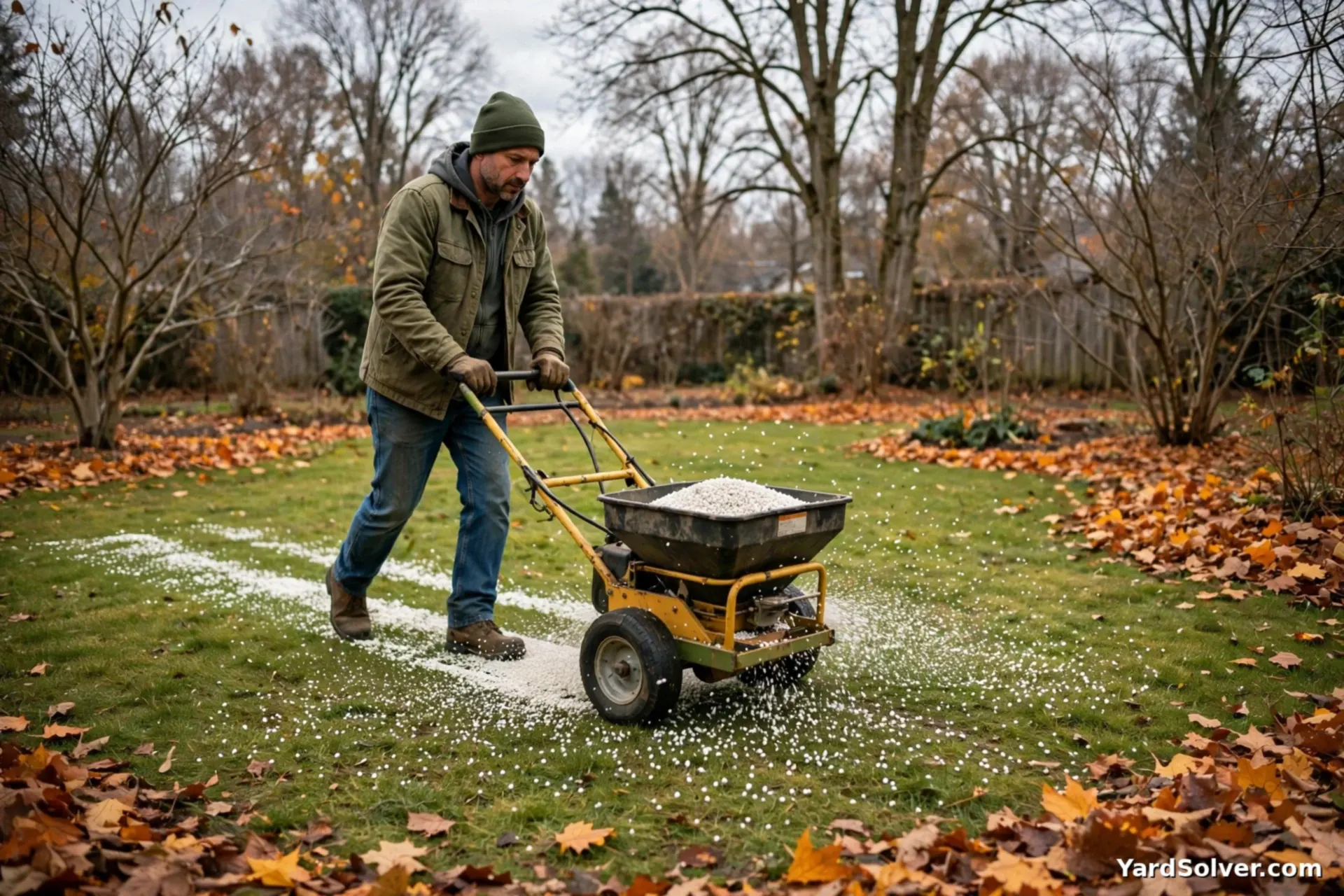
Fall is the kindest time to lime: months of rain, snow and freeze-thaw work the lime down into the root zone, and the pH is sitting right by spring planting. Spring works too — just expect the change to land mid-season rather than at the start. On a lawn, load the spreader and make two passes at half rate, the second one across the first, so no stripe gets double or nothing. On beds, spread on bare soil and rake or fork it into the top few inches before planting. If no rain is coming, water it in lightly so pellets break down and stay where you put them.
Step 5 — Wait the full wait, then retest
Lime is slow on purpose. Most of the change arrives in 3 to 6 months; heavy clay can take close to a year to settle. The classic mistake is spreading a second dose at month two because "nothing happened" — then both doses land at once and the soil overshoots. Retest after 6 to 12 months, and only add more if the number still falls short. And if your test ever comes back the other way — soil too alkaline rather than too acid — that is a different fix with a different material, covered in the sibling guide How to Lower Soil pH. The two pages are a pair: one key for each direction of the lock.
Keep going
Soil gone the other way? How to Lower Soil pH is this page's twin, for soil that needs to come down.
No test yet? How to Test Your Garden Soil walks the sampling and the lab report line by line.
Questions people ask
How long does lime take to raise soil pH?
Most of the change shows up in 3 to 6 months, and heavy clay can take close to a year to settle at the new pH. Lime is not slow because it is weak — it has to react through the whole depth of soil. Retest after 6 to 12 months before adding any more.
Can I put lime and fertilizer on the same day?
Yes — the two do different jobs and lawns get both in the same week all the time. Just do not mix them together in the spreader, and keep lime away from acid-loving plants like blueberries and rhododendrons, which want the soil exactly as it is.
What happens if I put on too much lime?
Soil pushed too far the other way locks up iron and manganese, and leaves yellow even though the food is there. Over-liming is much harder to undo than under-liming, which is why the rules exist: test first, never more than 50 pounds per 1,000 square feet in one pass, and split big corrections into rounds.
Comments & ratings
No comments yet.
Be the first to share your experience.