
Guides · Soil & feeding · Published November 6, 2026
How to Lower Soil pH (Make Soil More Acidic)
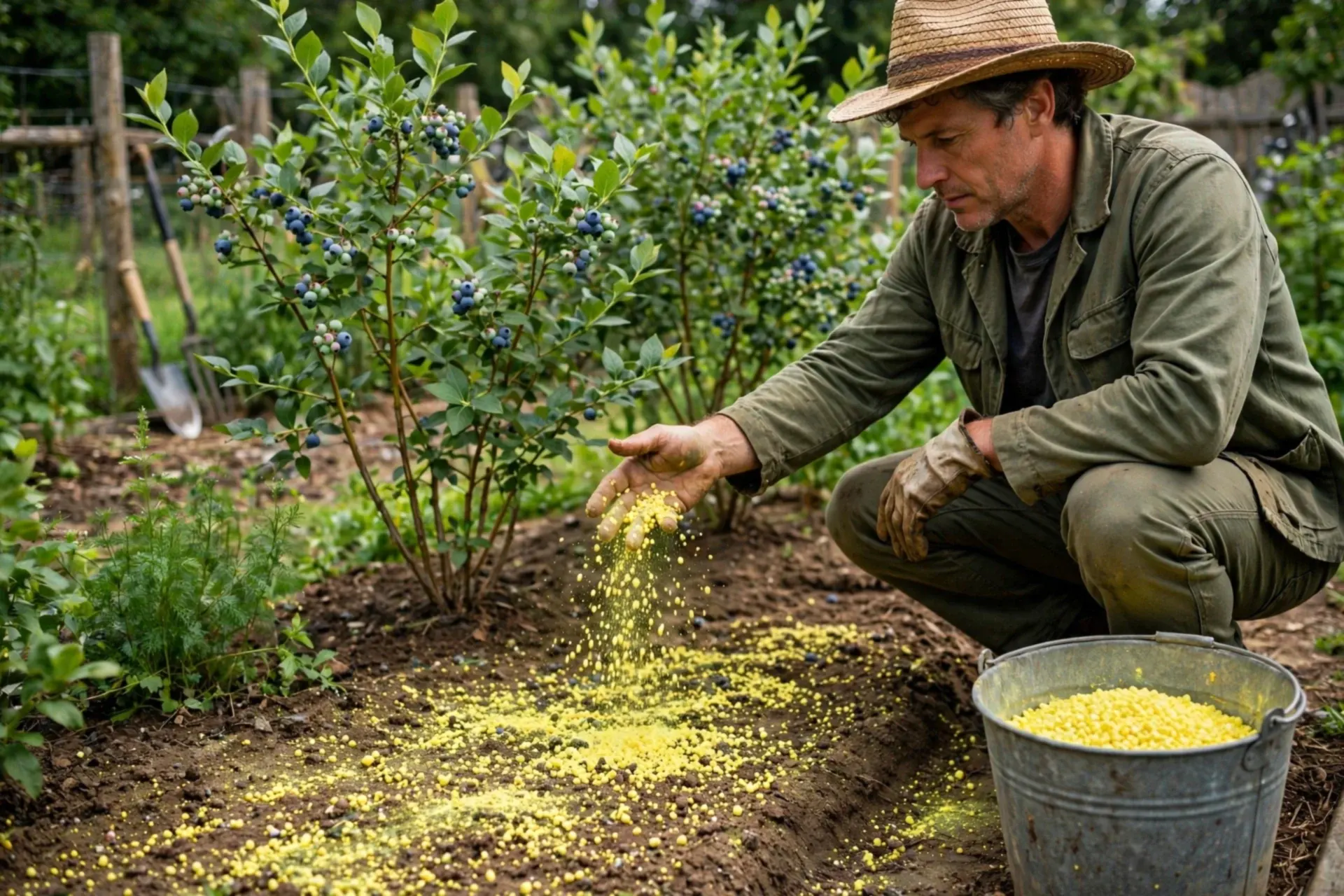
Some plants refuse to negotiate on pH. A blueberry bush in pH 7 soil yellows and sulks no matter how well you feed it, because at that pH the iron it needs is chemically locked away. Lowering pH is absolutely doable — but it is the slowest correction in gardening, because you are not really applying an acid: you are feeding sulfur to soil bacteria and waiting for them to make the acid for you. This guide gives the rates by soil type, the season that makes it work, and honest verdicts on the fast products and folk remedies (pine needles, vinegar, coffee grounds) that promise what they cannot deliver.
Lowering pH, in one honest card
- The tool: elemental sulfur — soil bacteria oxidise it into sulfuric acid over months
- The rate depends on texture: about 0.5–1 lb per 100 sq ft per pH unit on sand, up to 1.5–2 lb on clay
- Never more than ~2 lb per 100 sq ft in one application — split bigger corrections across seasons
- Warm soil or nothing: the bacteria nearly stop in cold soil, so fall application for spring planting is the classic timing
- Gypsum does not acidify — it is calcium sulfate, pH-neutral; a persistent myth
- Test first, retest later: no rate table is a substitute for your own soil's numbers
Step 1 — Test, and set a real target
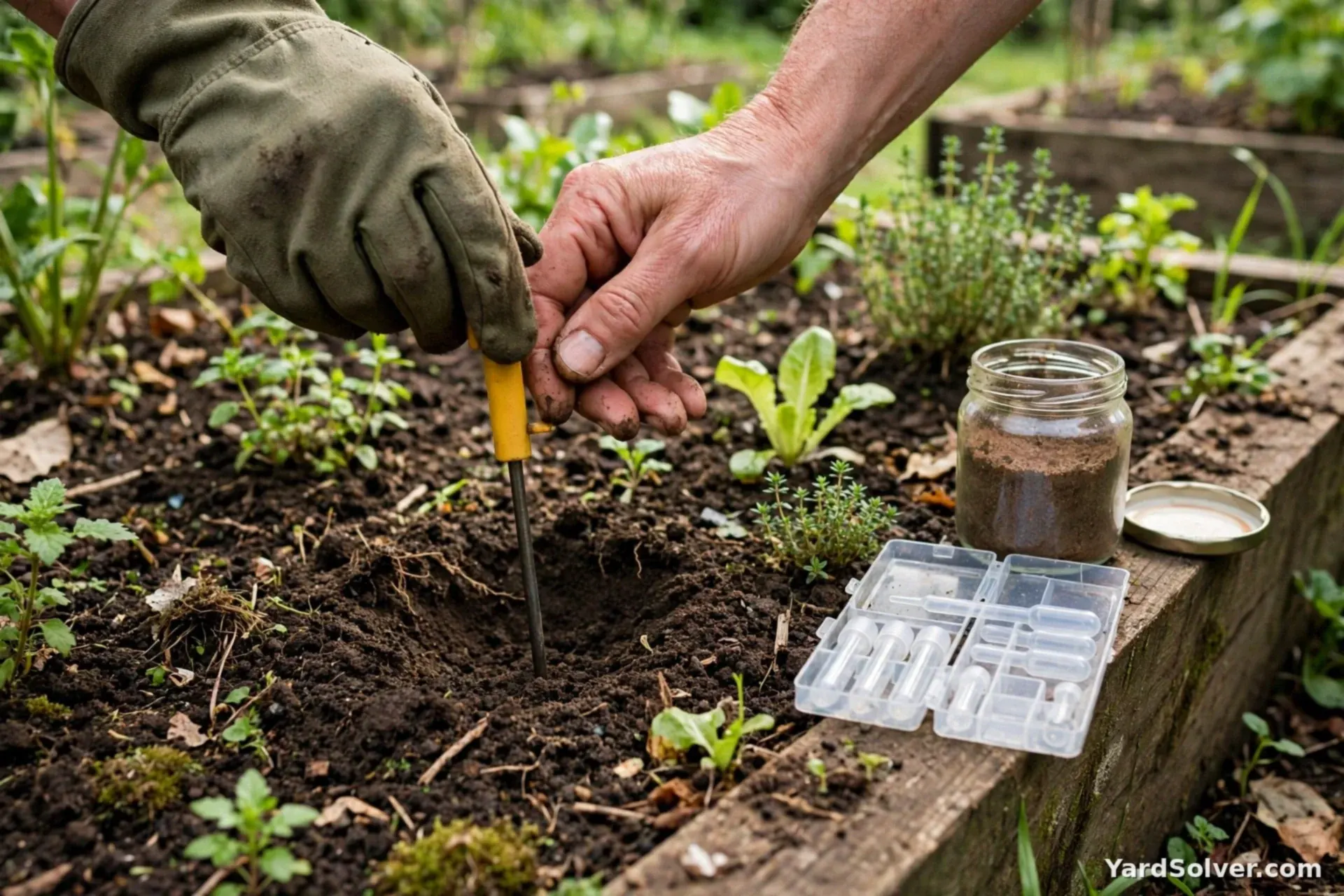
You cannot steer to a number you have not measured, and acidifying blind is how beds overshoot into genuinely hostile soil. Get a lab test first — our soil testing guide covers proper sampling — then write down the target before buying anything. Most vegetables are happy at pH 6.0–7.0 and need no acidifying at all; the true acid-lovers are a short list: blueberries at 4.5–5.5, and azaleas, rhododendrons and hydrangeas (for blue flowers) in a similar band. The gap between your number and the target is the job size: half a unit is a light correction, a unit and a half — say 7.0 down to blueberry territory — is a two-season project, and planning it that way from the start is what success looks like. Put the application and retest dates in the Garden Planner now, because in six months nobody remembers which bed got what.
Step 2 — Understand what sulfur actually does (so the timing makes sense)
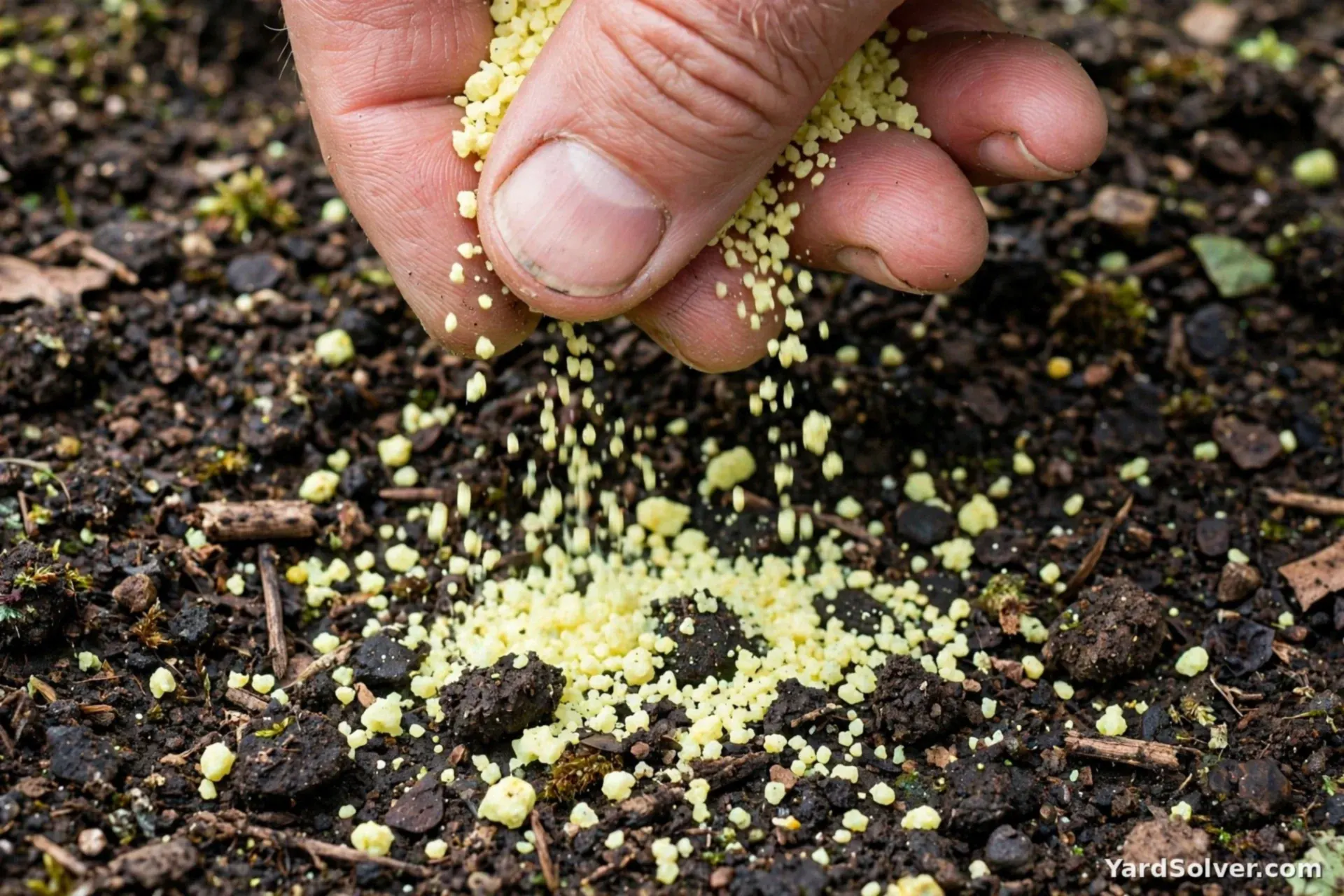
Elemental sulfur is inert when it lands. Soil bacteria (mainly Acidithiobacillus species) oxidise it into sulfuric acid, and that acid is what lowers pH — Iowa State Extension describes it as a two-step process, biological first, chemical second. The bacteria set the schedule: research summarised by Michigan State University found that even at 24°C (75°F) oxidation runs at only about 15% of the rate at 29°C (85°F), and it essentially stops in cold soil. Practical consequences: sulfur must be mixed into the soil where the bacteria live, not left on the surface; it works through the warm months; and a spring application made the week before planting blueberries is a donation to next year's crop. Fine, powdery sulfur oxidises faster than coarse prills because the bacteria get more surface to work on.
Step 3 — Apply the right rate for your soil texture
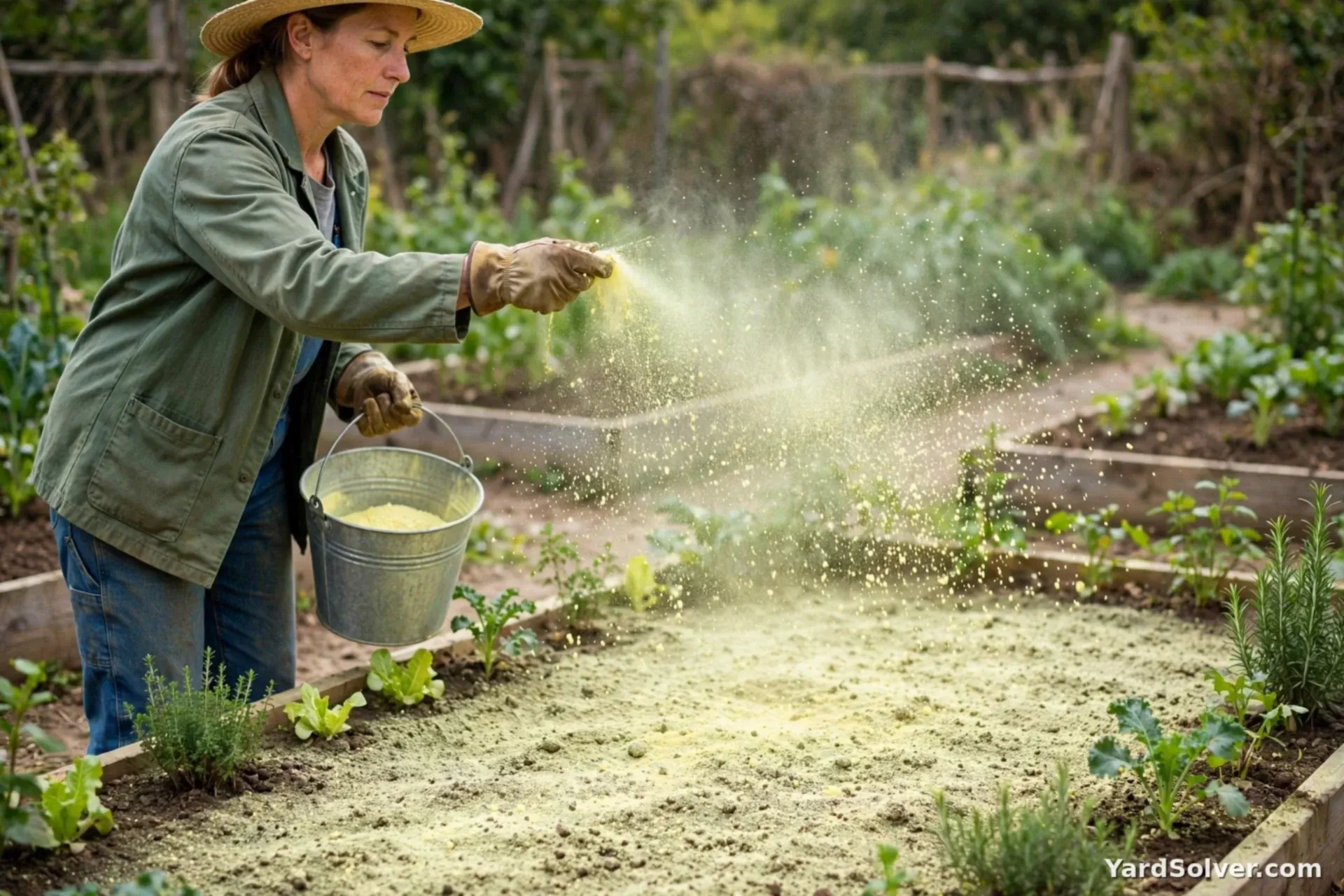
Soil texture is buffering: clay and rich loam soak up acid and demand more sulfur, while sand changes fast and overshoots easily. Extension tables from Colorado State, Utah State and the University of Minnesota land in a consistent band for lowering pH by about one unit: sandy soil — roughly 0.5–1 lb of elemental sulfur per 100 sq ft; loam — about 1–1.5 lb; clay — about 1.5–2 lb. (Oregon State's figures for blueberry beds run the same ratios at field scale: 10–20 lb per 1,000 sq ft on sand versus 40–50 lb on clay.) Two safety rails: never apply more than about 2 lb per 100 sq ft in a single application — split a two-unit correction across two seasons — and work the sulfur into the top 15 cm (6 inches) and water it in. If your test names an exact rate, the Fertilizer Calculator converts it to your actual bed area so you are weighing, not guessing. Note the mirror image: if your test instead says the soil is too acidic, you want the opposite correction — see the Lime Calculator and do not let anyone sell you sulfur for it.
Step 4 — Time it a season ahead, then retest before repeating
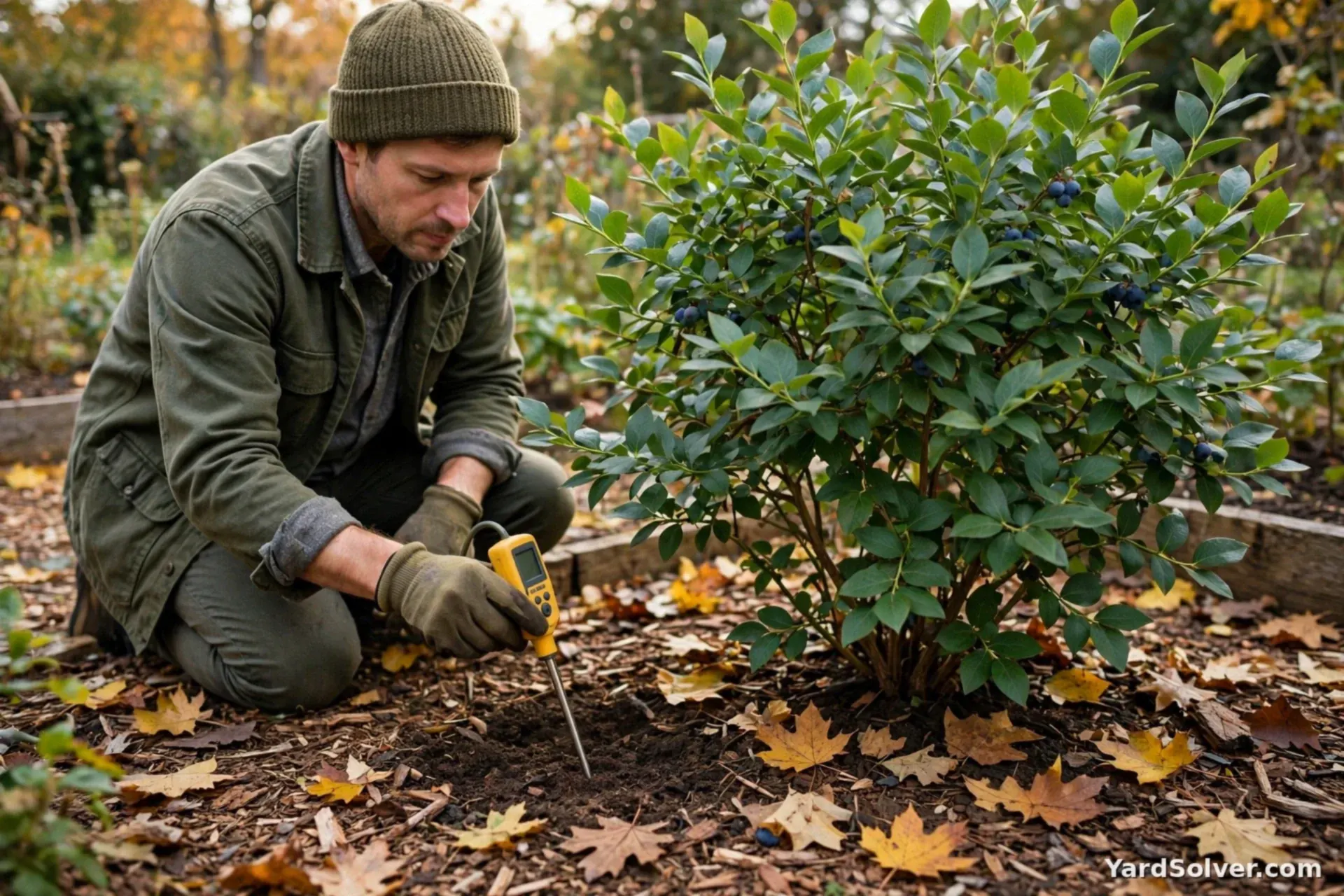
The classic programme, and the one Oregon State recommends for blueberry beds: apply in fall, mix it in, and let the bacteria work through every warm spell between then and planting. Retest in spring; if the target is not reached, repeat at a reduced rate rather than doubling up in frustration. Expect the first measurable drop after 2–3 months of warm soil and the full effect across 6–12 months. An established plant already in the ground gets the gentler version: smaller split doses scratched into the surface under the canopy and watered in, never a full bed rate dumped at the trunk. While a correction is cooking, acidifying fertilisers such as ammonium sulfate give a mild supporting nudge each feed — Oregon State measured yearly ammonium sulfate use lowering lawn pH by only about 0.1–0.2 units a year, which tells you honestly how much of the heavy lifting they do: some, slowly, as a supplement, never as the main event.
Step 5 — Skip the shortcuts that do not survive testing
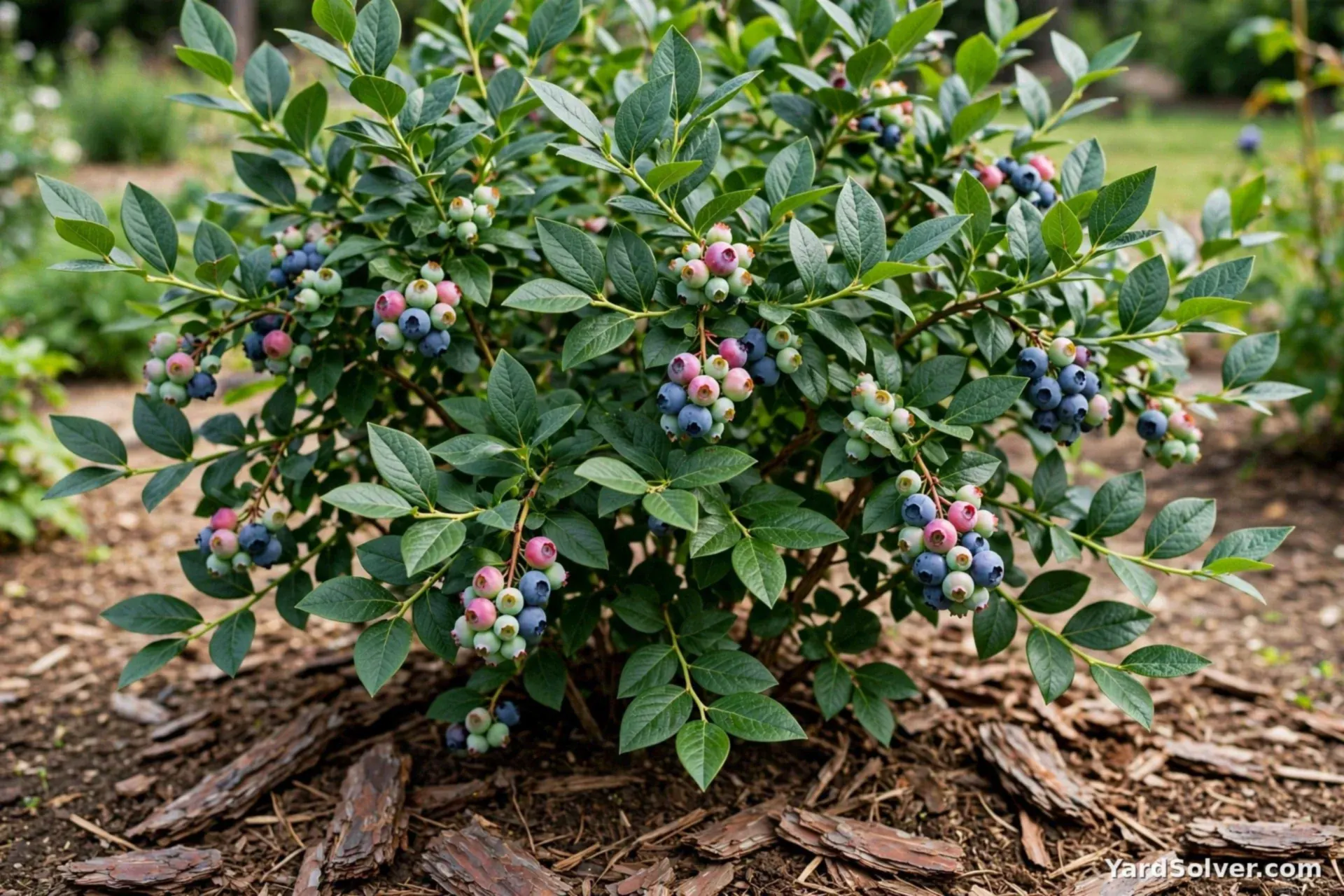
Gypsum: calcium sulfate is pH-neutral — it cannot acidify anything. It has a real job (sodic soils, see How to Fix Clay Soil) but acidifying is not it; Cornell and extension myth-busting sheets are consistent on this. Vinegar and other kitchen acids: they lower the pH of the water in the can, for hours, in the top centimetre — and at strengths that actually shift soil they damage roots and soil life first. Pine needles, coffee grounds and peat: pine needles test out near-neutral by the time they have composted down, coffee grounds are mildly variable, and sphagnum peat is genuinely acidic but would need to be a major fraction of the bed's volume to move pH — at which point you have built a peat bed, not acidified a soil. All three are fine materials used for their real purposes. For pH itself there is one honest road — sulfur, bacteria, warmth and time — plus one legitimate fast exception for a single suffering plant: aluminium sulfate, used sparingly, with the toxicity risk from the Questions section below kept firmly in mind.
Keep going
Numbers first: How to Test Your Garden Soil · How to Prepare Garden Soil in Spring · How to Fix Clay Soil. Then meet the plant that asks for all this: the Blueberry page, and schedule the work in the Garden Planner. Facing the mirror problem — soil that needs raising, and a stove full of ash? Wood Ash in the Garden covers that side.
Questions people ask
What is the fastest way to lower soil pH?
Aluminium sulfate acts in weeks rather than months, which is why it is sold as the quick fix — but it takes roughly six times as much material as elemental sulfur for the same pH change, and overdosing risks aluminium toxicity for the plants you are trying to help. Extension guidance treats it as a small, one-off nudge for a plant already in the ground, not a bed-scale correction. For a whole bed, elemental sulfur applied in fall is slower and far safer.
Do pine needles make soil more acidic?
Barely, and not usefully. Fresh pine needles are mildly acidic, but by the time they have composted into the soil their effect on pH is close to neutral — university extension testing has repeatedly found pine-needle mulch does not acidify the soil beneath it in any lasting way. Use pine needles as the good mulch they are; use elemental sulfur when pH actually has to move.
How long does sulfur take to lower soil pH?
Months, because soil bacteria do the work: they oxidise elemental sulfur into sulfuric acid, and they only do it in warm, moist soil — the process nearly stops in cold soil and runs fastest in summer warmth. Expect the first measurable drop in about 2 to 3 months of warm weather and the full effect over 6 to 12 months. That is why extension services recommend applying sulfur the fall before you plant acid-lovers, and retesting in spring before adding more.
Comments & ratings
No comments yet.
Be the first to share your experience.