
Guides · Watering · Published November 1, 2026
How to Water Plants While on Vacation
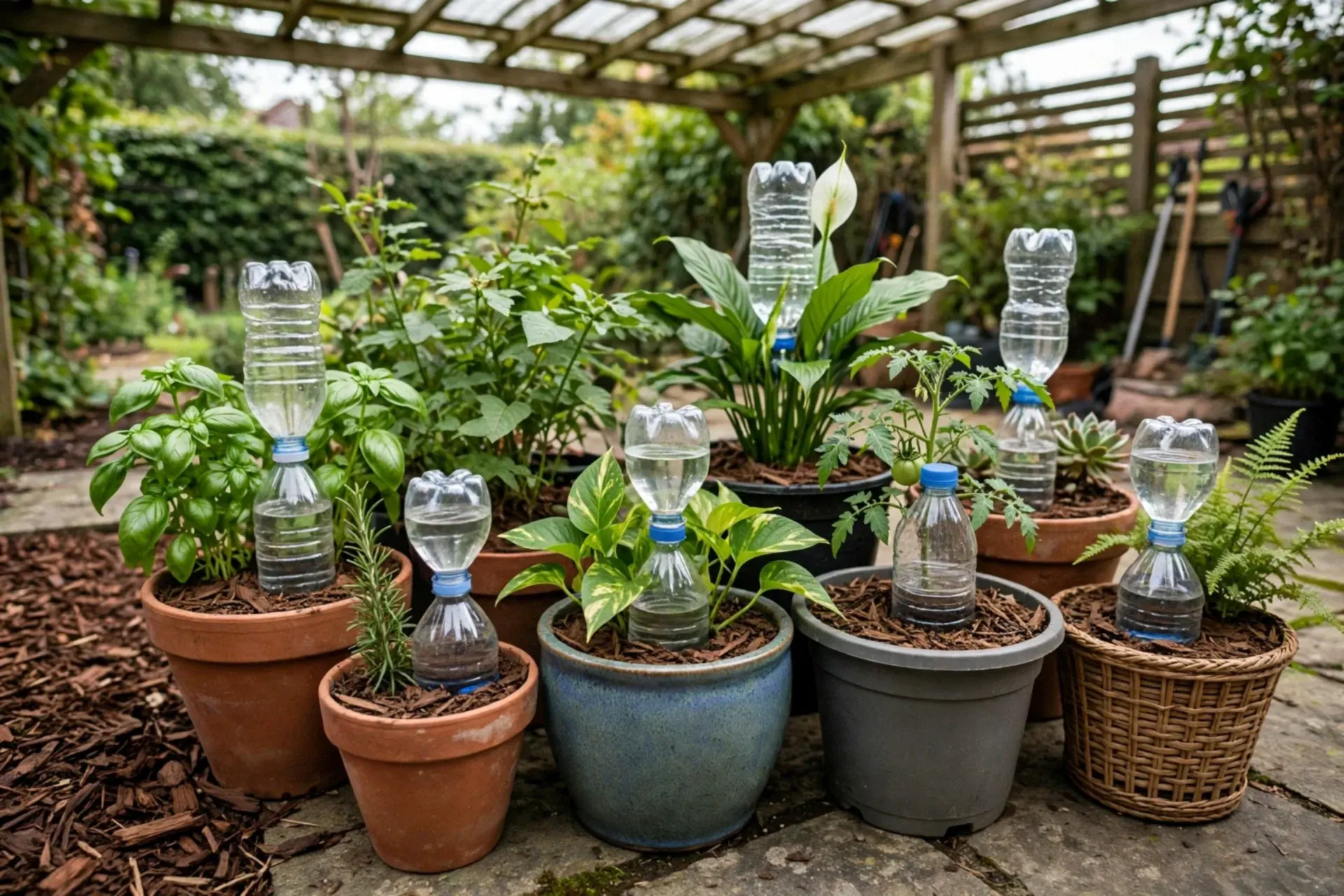
Every gardener has come home to the same photograph: the hanging basket cremated, the tomatoes wilted to lace, the one beloved pot dead beside a thriving weed. Vacation watering fails when it is arranged the night before. The system below is the one that works — triage what is actually at risk, soak and shade what you can, automate the rest, and test the whole thing while you are still home to fix it.
Know your risk before you book anything
- Pots and baskets: the real emergency — a small pot in sun can dry out in a single hot day
- New plantings and seedlings: shallow roots, no reserves — treat like pots
- Established beds and lawns: tougher than you think; most survive 2–3 dry weeks with a deep soak and mulch, and the lawn simply goes dormant and recovers
- Houseplants: most tolerate 2 weeks with grouping, shade and a wick system; the drama queens (ferns, fittonia) go to a friend's house
Step 1 — Triage: group the pots, move them to shade
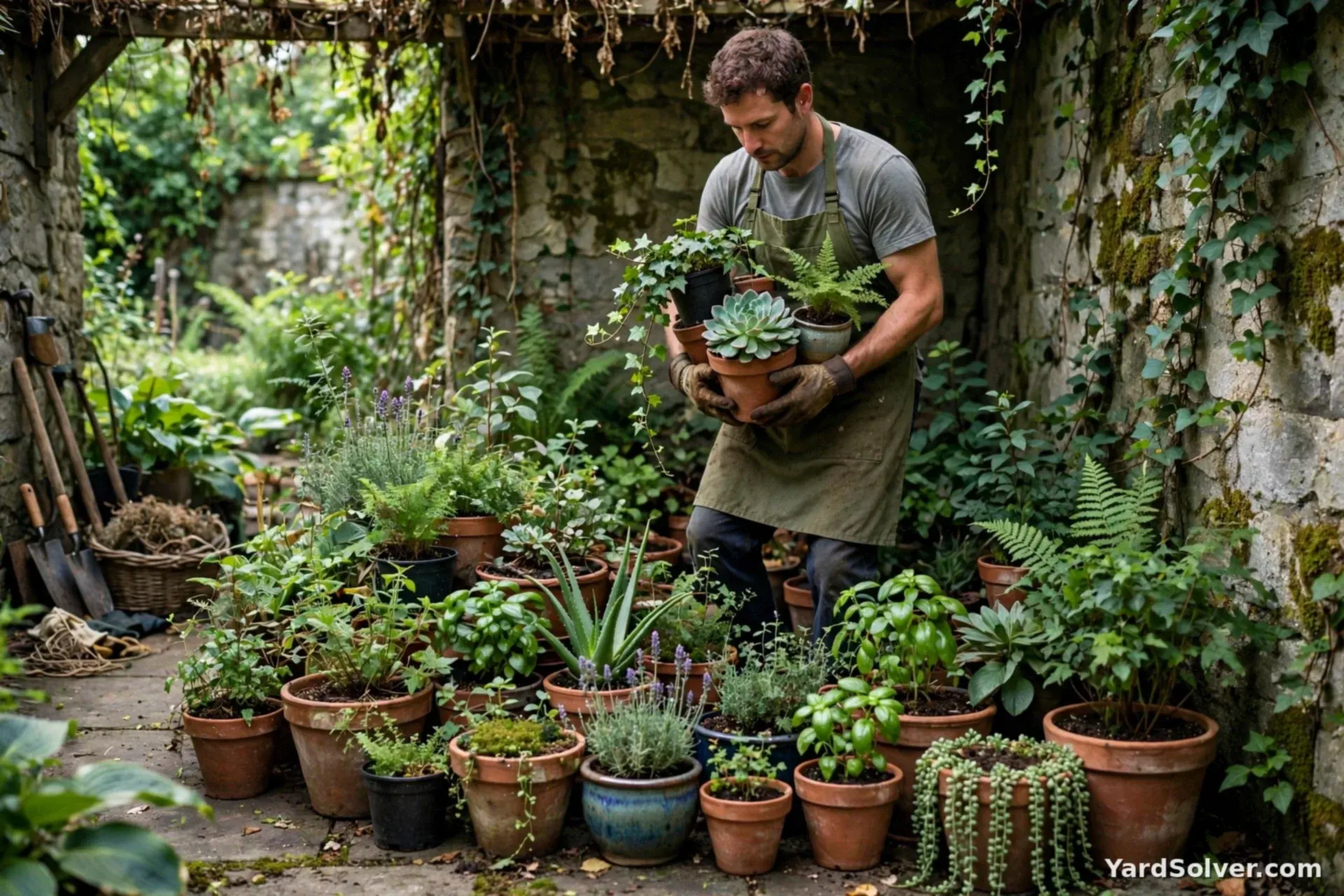
Start three or four days before you leave. Carry every pot and basket into the shadiest spot you have — under a tree, on the north side of the house, under the patio table — and cluster them tightly together. Clustered pots shade each other's soil and share a humid pocket of air, which measurably slows drying. Harvest anything ripe, deadhead spent flowers, and prune back thirsty overgrown baskets a little: less leaf means less water demand. Houseplants get the same treatment indoors — grouped in the coolest, brightest-but-not-sunny room, ideally in the bathtub or on a tray.
Step 2 — Water deeply and mulch before you leave
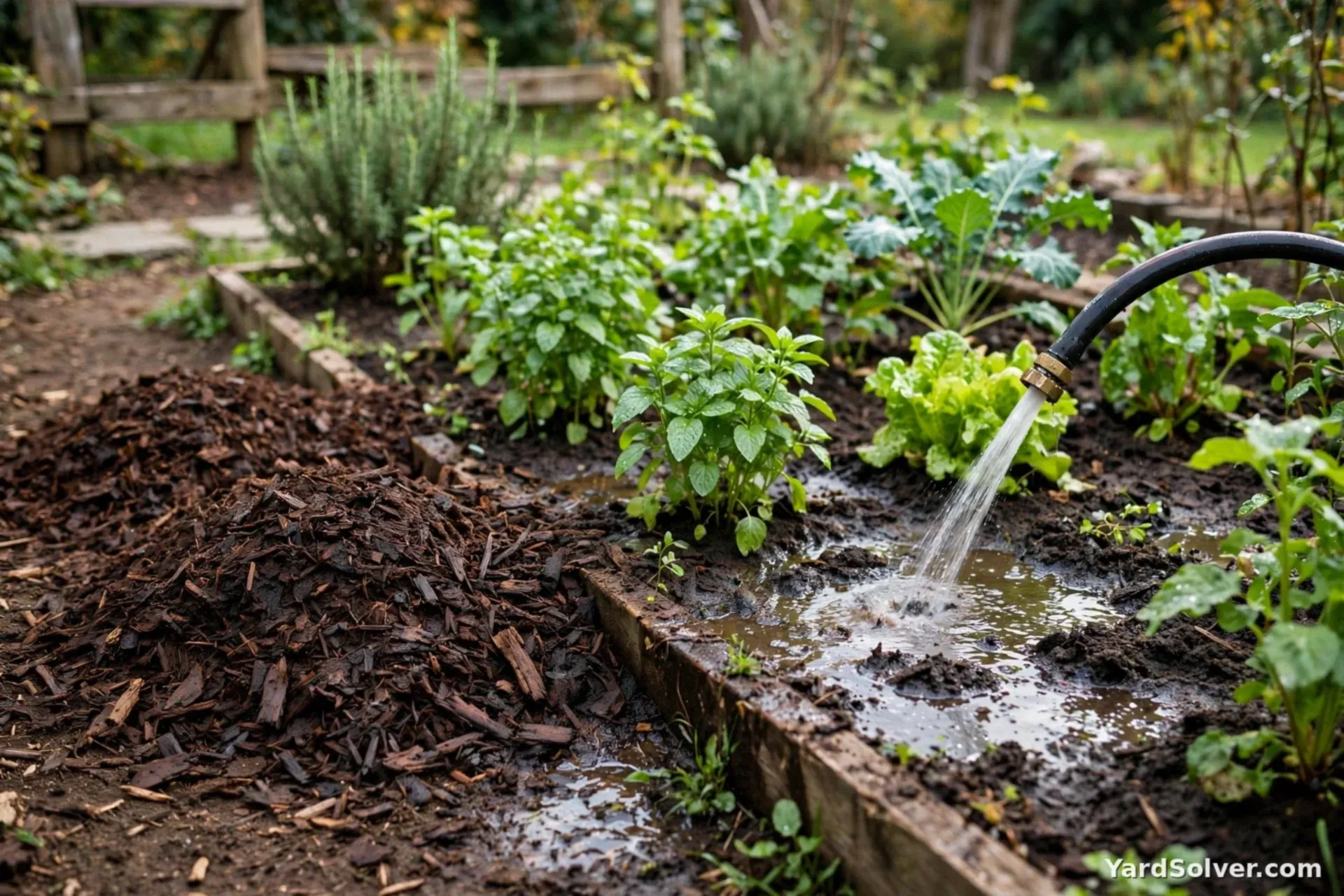
The day before departure, water everything deeply and slowly — beds until the top 6 inches (15 cm) are moist, pots until water runs from the drainage holes, then once more. Then mulch any bare soil: 2–3 inches (5–8 cm) on beds, an inch on big pots (the Mulch Calculator sizes it). Mulch over wet soil is the difference between a bed that is fine at day 10 and one that was dust at day 5. Skip fertilizing right before a trip — fed plants grow thirstier, and soft growth wilts first.
Step 3 — Set up self-watering for the pots
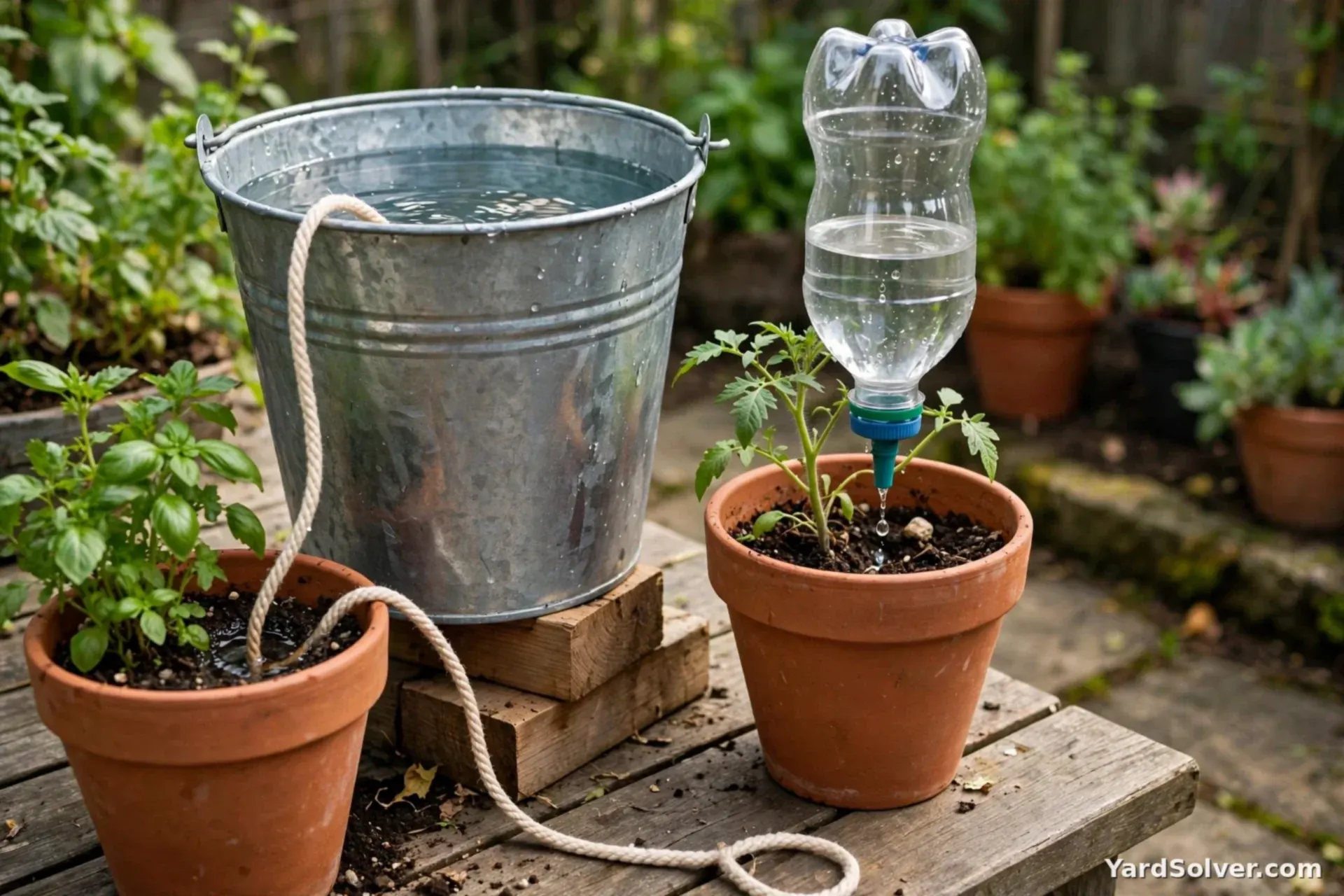
For pots, the methods with an honest track record: capillary wicking — one end of a cotton cord or strip of old t-shirt in a raised bucket of water, the other buried in the pot; water travels down the wick as the soil dries, good for 1–2 weeks for medium pots. Bottle drippers — an upturned water bottle with a spike or a pinhole cap — empty over days, not weeks; use the largest bottle that fits and expect 3–6 days. Capillary mats under grouped pots on a tray work the same wick principle at scale. Watering globes are the pretty version of the bottle and share its limits. Whichever you choose, sizing is guesswork until tested — which is why step 5 exists. For beds, automation beats gadgets, and that is step 4 and the full setup in How to Set Up Drip Irrigation.
Step 4 — Put the garden on a timer
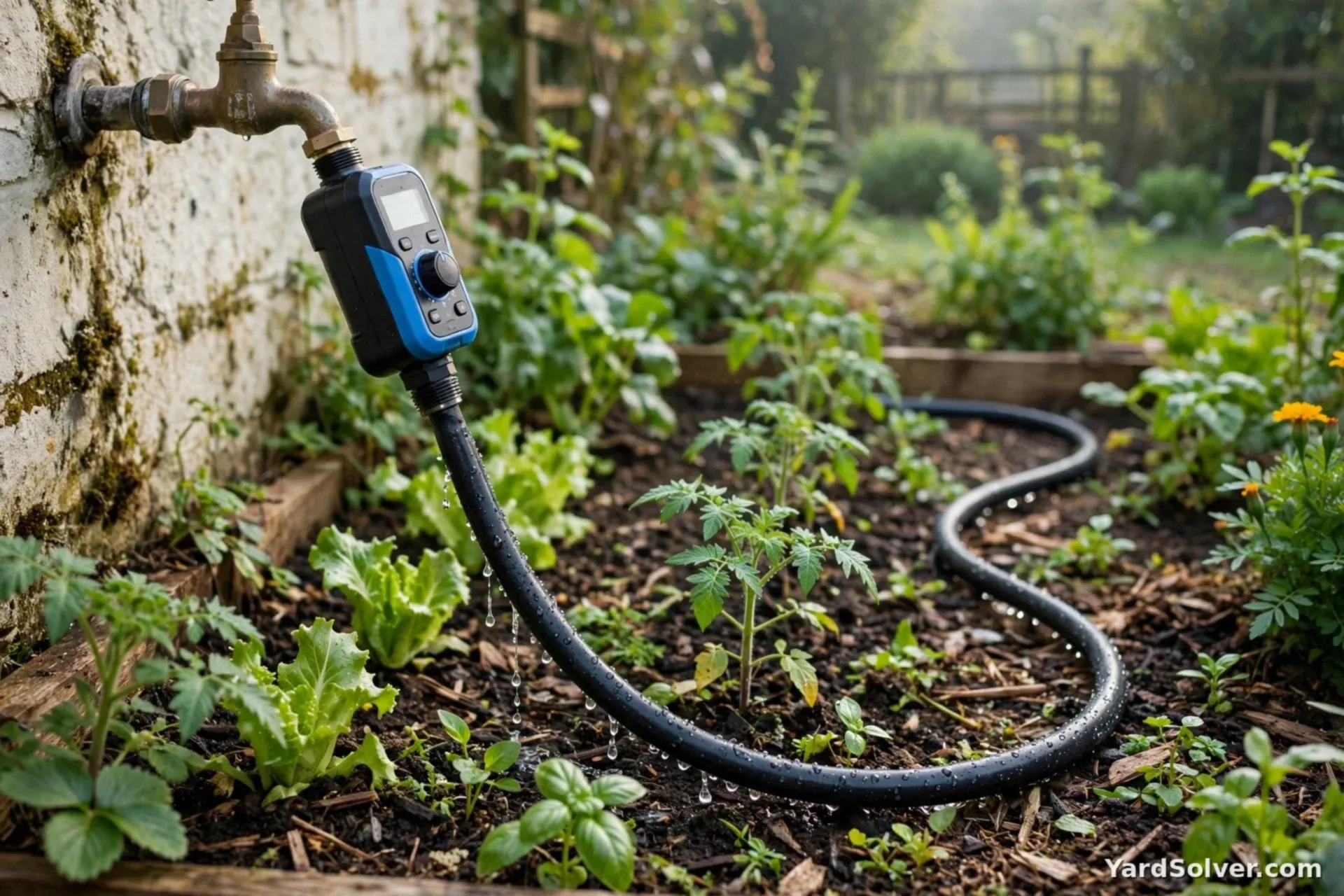
For beds, vegetable gardens and anything you truly cannot lose, a battery-powered hose timer plus soaker hose or drip line is the vacation-proof answer: set it to water deeply in the early morning, twice a week, and the garden barely notices you left. Fit it a week early, check every connection under pressure, and mulch over the soaker lines. Rain sensors or a simple instruction to a neighbour to skip after storms are refinements; the deep-and-infrequent schedule means a missed or doubled session does no harm. This is also the moment many gardeners make the timer permanent — vacation is just the excuse.
Step 5 — Test everything two days before you go
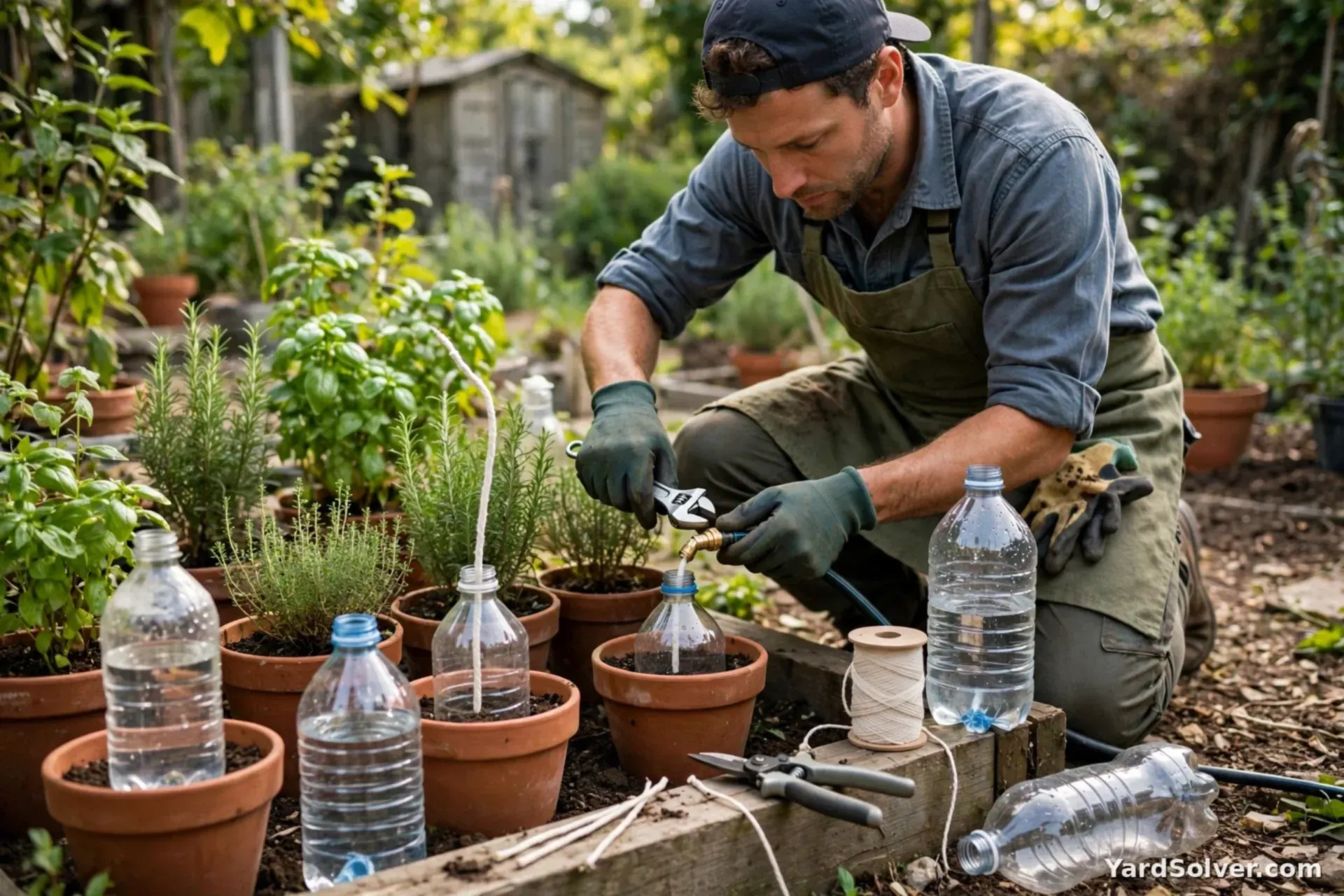
The step that separates the success stories: run the entire system for two days before you travel, living your normal life. Wicks that were never primed, bottles that emptied in a night, timer connections that weep — all of them announce themselves in the test and are fixable in minutes. Then the finishing touches: leave a watering can and a one-line note for the neighbour who offered (and ask them — human backup beats any gadget for the truly precious plant, with a reciprocal offer for their trip), set houseplant curtains for bright shade, and walk away. On the longest trips, accept the honest trade: harvest hard before you go, let the annual baskets go, and spend your ingenuity on the perennials and trees that took years to grow.
Keep going
Making the timer permanent? The complete low-pressure setup is in How to Set Up Drip Irrigation.
Came home to a crispy lawn anyway? It is probably dormant, not dead — recovery starts with How to Overseed Your Lawn if patches remain in fall.
Questions people ask
Do self-watering globes actually work?
Somewhat, for a few days, for small plants. A globe is a small reservoir with an unregulated drip — most hold 2–4 days of water for a modest houseplant and far less for a thirsty basket in sun. Wick systems drawing on a big bucket store ten times the water and regulate by soil dryness, which is why they win for real trips.
How long can tomato plants survive without water?
A mature tomato in the ground, mulched, in mild weather: about a week before stress shows, longer before real damage. In a pot in hot sun: 1–2 days. Fruit splitting and blossom end rot after a drought-then-deluge pattern are the usual vacation souvenirs — steady timer watering prevents both.
Should I bring my houseplants to a friend instead?
For trips over two weeks, or for the handful of plants you truly love, yes — a plant at a friend's house gets human judgement no gadget matches. Group, soak and wick the rest; the tough majority (snake plants, pothos, most succulents) will not even notice three weeks.
Comments & ratings
No comments yet.
Be the first to share your experience.