
Guides · Lawn care · Published November 15, 2026
How to Winterize a Sprinkler System: The Blow-Out Method, Step by Step (With Safe Pressures)
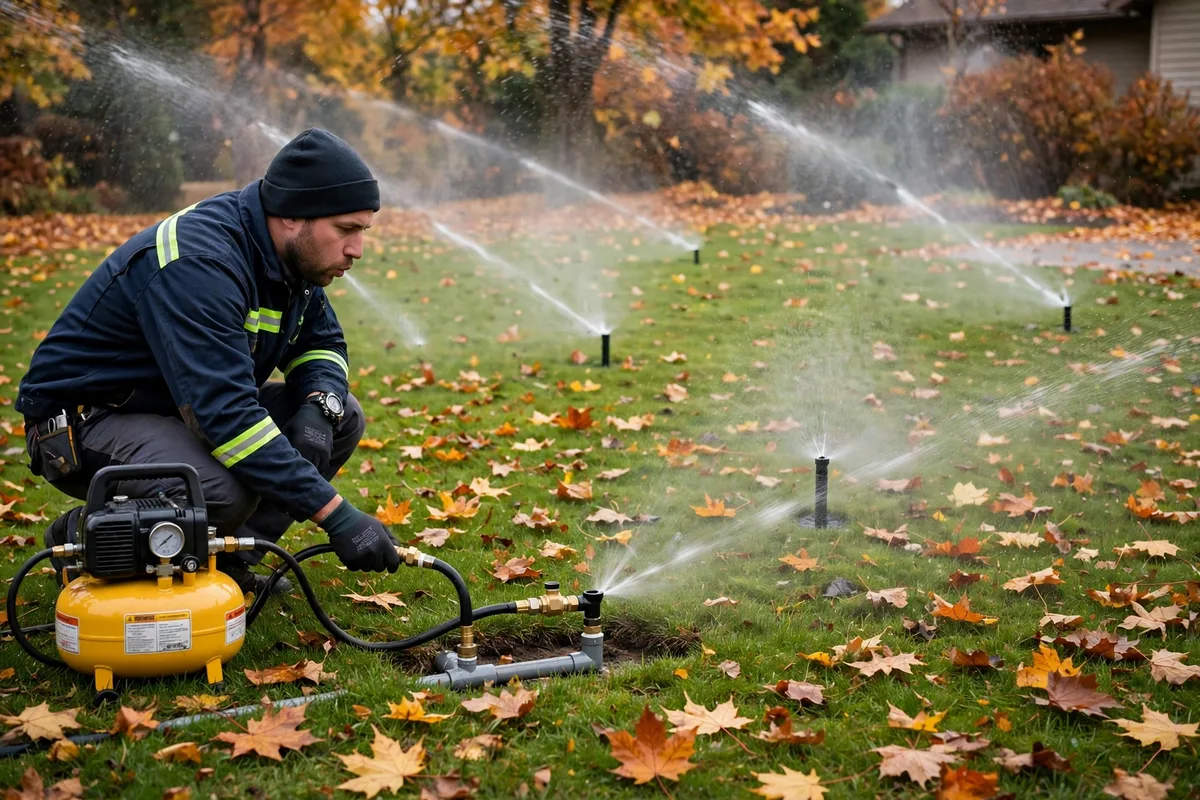
An in-ground sprinkler system ends the season full of water, and water is patient: it only needs one hard freeze. Ice expands with enough force to crack PVC pipe, split valve bodies and — the expensive one — burst the brass backflow preventer, a repair that can cost more than every other part of winterizing combined, many times over. Learning how to winterize a sprinkler system is mostly learning an order of operations: shut the water off, drain what gravity will drain, blow the rest out zone by zone at a pressure matched to your pipe, and put the backflow to bed correctly. Do it before the first hard freeze — in the northern US and Canada that means autumn, earlier in the Prairies and mountains than on the coasts — and the system wakes up in spring exactly as you left it.
Step 1 — Shut off the water and drain the main line
Close the irrigation shut-off valve (usually in the basement or crawl space, on the line that tees off your main supply). Then open the system's drain valves — most systems have a manual drain at the low point — and let gravity empty the main line into a bucket. If your system has automatic drain valves on the laterals, they will weep the lines empty as pressure falls; systems without them hold their water until you blow it out, which is what Step 3 is for. Turn the controller to its rain/off setting now so nothing tries to run a cycle mid-job — but leave the controller powered unless your manual says otherwise; the small transformer warmth protects its electronics through winter.
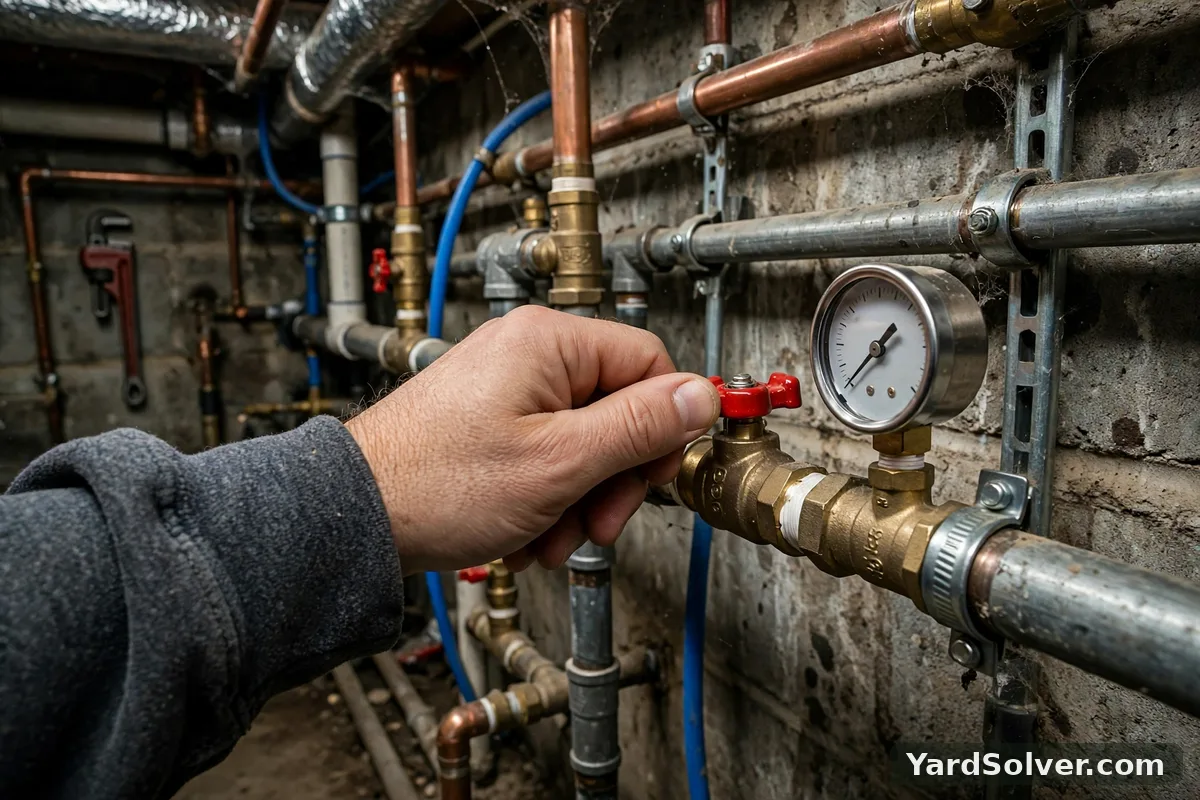
Safety, stated once and plainly: you are about to connect a compressor to plumbing. Wear eye protection, never stand over a sprinkler head while a zone is pressurised, and never, under any circumstances, blow air through the backflow preventer — connect downstream of it, as the next steps describe. Air through the backflow can destroy its internal checks in seconds.
Step 2 — Set the compressor to your pipe's safe pressure
Pressure is where DIY blow-outs go wrong: the danger is not air, it is too much of it, and friction heat from running a zone dry too long. The extension-service limits are clear and worth memorising — no more than 80 psi for PVC pipe, and no more than 50 psi for polyethylene (poly) pipe. If you do not know which your system is built from, use 50 psi: slower, and safe for both. Volume matters as much as pressure: a small pancake compressor can hold 50 psi on a residential zone but may need several tank cycles per zone, resting between them. That is fine. Connect the compressor to the blow-out port or a hose bib downstream of the backflow preventer, with the regulator set before you open the valve.
Step 3 — Blow out zone by zone, twice, until only mist comes out
Open the furthest zone from the connection point first, then open the compressor valve slowly. The heads will pop up and blast water, then sputter, then spray a fine mist — that mist is your finish line for the zone, usually within about two minutes. Never run a zone on air alone for longer than that: without water to cool them, gear-driven rotor heads overheat and damage themselves. Close the zone, move to the next, and work through them all. Then repeat the full circuit a second time — the second pass catches the water that drained back into low spots after the first. When every zone finishes at a clean mist twice, shut the compressor down and disconnect it. Leave zone valves and drains in the state your system manual specifies; many systems winter best with manual drain valves left open.
Step 4 — Put the backflow preventer to bed
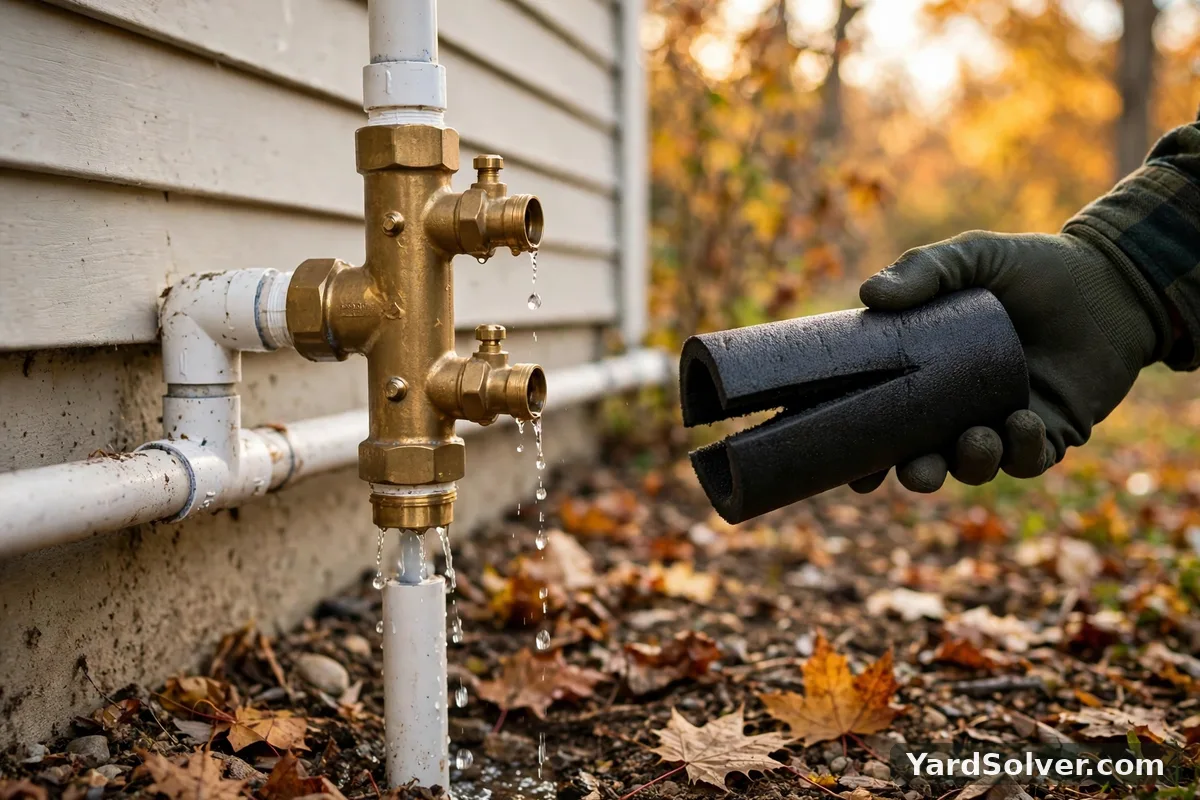
The backflow preventer — the brass assembly, usually above ground near the shut-off — is the most freeze-vulnerable and most expensive part of the system, and it holds water in its internal passages even after the lines are blown. Open its two small test cocks with a flat screwdriver and turn its ball valves to 45 degrees — half-open — so any remaining water can expand without cracking the body, and leave them there all winter. Drain the section of pipe between the shut-off and the preventer via its boiler drain if it has one. In genuinely cold regions, wrap the preventer in an insulation pouch or old blankets under a cover; in the coldest, some owners remove it entirely for indoor storage, which is legitimate where local code allows.
Finish the job properly: coil and drain garden hoses, note any heads you saw wobbling, leaking or failing to pop during the blow-out (winter is when you have time to order the parts), and file the date. The sibling jobs on the same autumn list live nearby on this site: drip systems have their own, gentler routine in How to Winterize Drip Irrigation, and the rain barrel needs emptying and storing too — the Rain Barrel Calculator page and our guide to winterizing a rain barrel cover its timing and storage options. A note for UK, European and Australian readers: most of your systems are drain-down or shallow designs that do not need a blow-out at all — this guide is written for North American freeze-depth installations, and if your winters never freeze the ground, draining alone is enough.
Keep going
Winterizing is a list, not a single job: drip lines, rain barrels, hoses and outdoor taps all want attention in the same fortnight. Start with How to Winterize Drip Irrigation and work down the list while the weather is still kind.
Come spring, the reverse job — charging and auditing the system — pairs with laying and seeding work in the Garden Planner, which turns your frost dates into a dated plan for the whole season.
Questions people ask
What PSI should I use to blow out sprinklers?
No more than 80 psi for PVC pipe and no more than 50 psi for polyethylene pipe, per extension-service guidance. If you do not know your pipe material, set 50 psi — it is safe for both and simply takes a little longer.
When should I winterize my sprinkler system?
Before the first hard freeze — a night forecast at or below about 28 °F (-2 °C) is the deadline that matters. In practice that is October in much of Canada and the northern US (September in the coldest Prairie and mountain areas) and late October to November further south.
Can I winterize sprinklers without a compressor?
If your system was built with manual or automatic drain valves at its low points, draining alone can be enough in milder freeze zones — open every drain and let gravity work. In deep-freeze regions, or on systems without drains, the blow-out is the reliable method; rental compressors sized for the job are widely available.
Comments & ratings
No comments yet.
Be the first to share your experience.