
Guides · Lawn care · Published November 15, 2026
Leatherjackets in Your Lawn: The Crane-Fly Larvae Eating Your Roots (UK & Europe Guide)
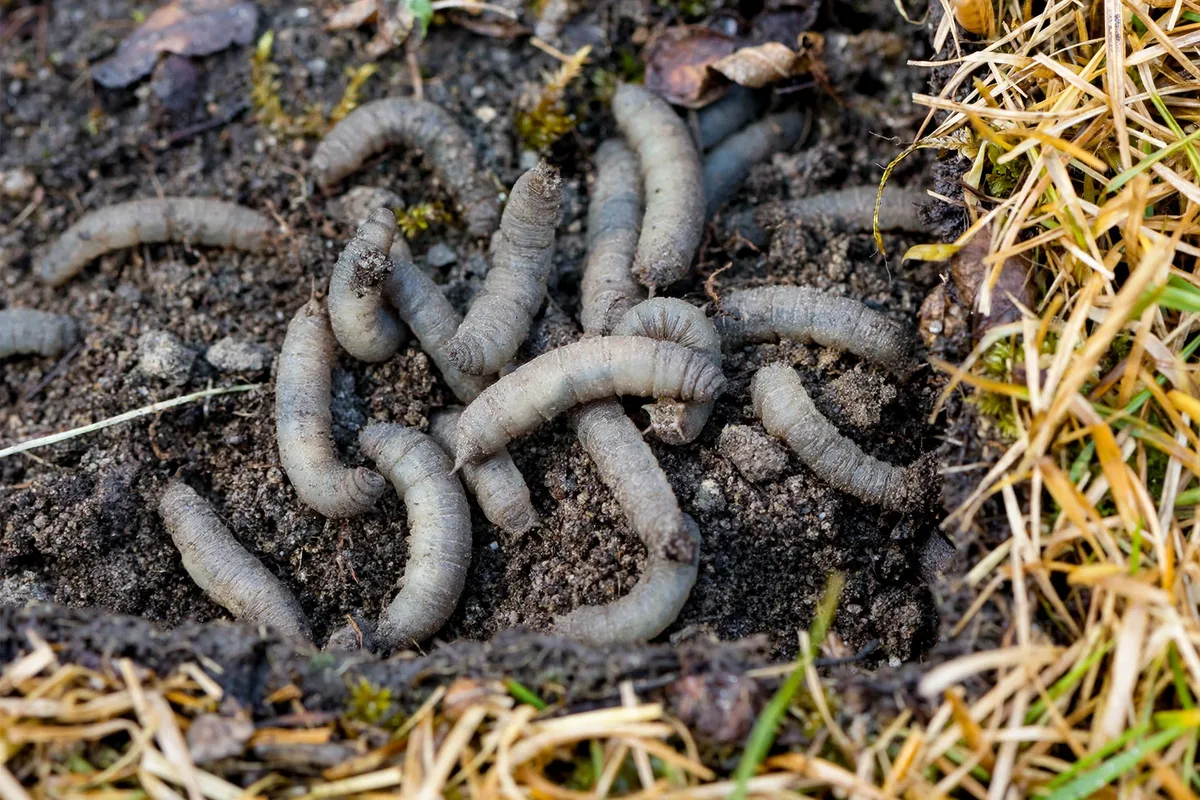
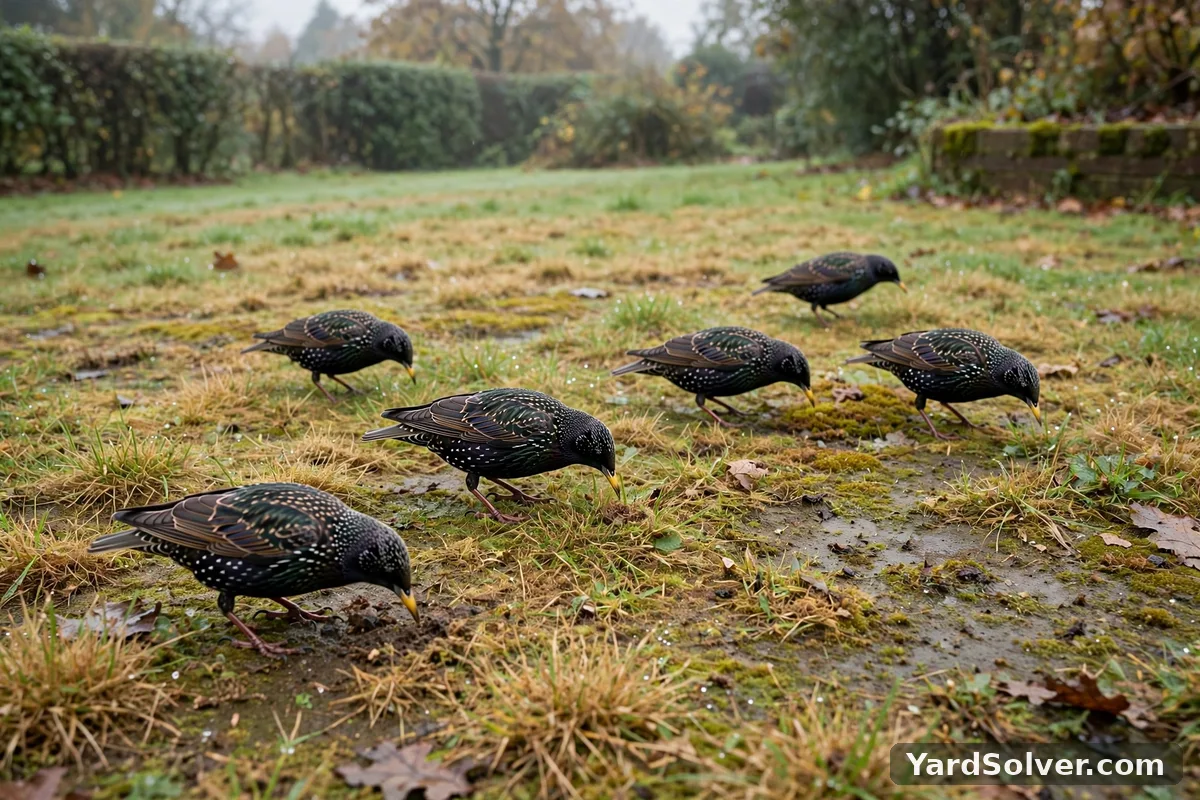
The signs arrive together in autumn: irregular yellow patches that no amount of watering revives, starlings and rooks stabbing at the turf like it owes them money, and — the clincher — grass that peels back in sheets because nothing is holding it down. Underneath, in the top few centimetres of soil, sit the culprits: grey-brown, legless, tough-skinned larvae up to 3 cm long. These are leatherjackets in your lawn — the larvae of crane flies (daddy longlegs) — and they are eating your grass roots through the autumn and winter. This guide is written for the UK and Europe, where the pest is a first-rank lawn problem and the control rules are genuinely different from North America's: there is exactly one effective homeowner treatment left, and it only works inside a short seasonal window.
Step 1 — Confirm the diagnosis (and rule out chafer grubs)
Cut three sides of a 30 cm square of turf over a damaged patch and fold it back. Leatherjackets sit in the top 2–5 cm: grey-brown, cylindrical, legless, with a tough, slightly shiny skin and no obvious head — like small grey slugs made of leather. Count them: a handful per square is background noise; dozens per square metre is a damaging population worth treating. The overnight test confirms it without digging — soak a patch in the evening, cover it with black plastic or a bin liner, and peel it back at dawn: leatherjackets come up under the cover and can be counted (and removed) directly.
The distinction that decides your product is leatherjacket vs chafer grub. Chafer grubs are white and C-shaped with three obvious pairs of legs and a brown head — unmistakable once seen. Leatherjackets have no legs and no C-curve. The two pests need different nematode species, so a misidentification is a wasted treatment: Steinernema feltiae for leatherjackets, Heterorhabditis bacteriophora for chafers. If your damage is spongy turf in North America rather than peeling turf in Britain, you are probably in the wrong guide — our Lawn Grubs guide covers the white-grub complex, and the two pages cross-refer deliberately.
Step 2 — Treat with nematodes, inside the window
In the UK, the old chemical controls for leatherjackets have been withdrawn; biological nematodes are the only homeowner control that works, and the honest guide says so rather than dressing up folklore. Steinernema feltiae is a microscopic worm that hunts the larvae in the soil and kills them within days. It works under three conditions, all non-negotiable. Timing: the larvae must be young and small — the treatment window is roughly September to October, just after the crane flies have laid their eggs (watch for the daddy longlegs emergence in late summer; that is your starting gun). A spring treatment exists but is weaker: by then the larvae are large, tough and close to pupating, and results are honestly mixed. Temperature: the soil must be above about 12 °C for the nematodes to be active. Moisture: the soil must be wet when you apply and kept moist for two weeks after, or the nematodes die before they hunt.
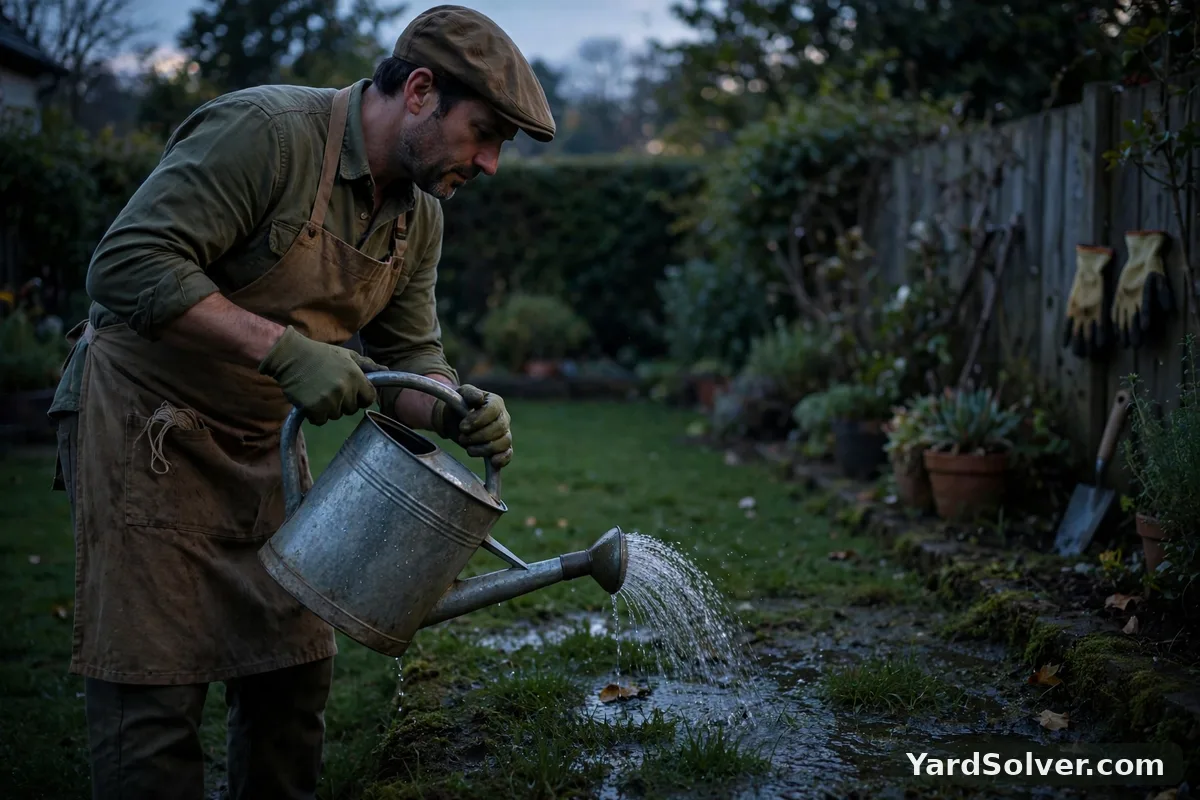
Apply in the evening or on a dull day (ultraviolet kills nematodes), water the lawn first, mix and apply immediately with a watering can or sprayer with its filters removed, then water again to wash them off the blades into the soil. Order them fresh when you are ready to use them — they are living organisms with a fridge life measured in weeks, not a shed product.
Step 3 — Repair the damage and reduce next year's eggs
Treatment stops the eating; it does not regrow the lawn. Once the larvae are dealt with, scarify out the dead material, overseed the bare patches in spring at the full repair rate — the Seed Calculator works out the quantity for the area you lost — and keep the seed moist while it establishes. Crane flies lay their eggs in long, damp, thatchy grass in late summer, which is why the cultural half of control is a dethatching habit: a lawn whose thatch is kept thin is a worse nursery. Our dethatching guide covers the wedge test and the method; late summer, just before the flies emerge, is the tactically perfect moment for it. Mowing a little shorter in late August and removing clippings also makes the lawn less inviting at laying time.
Accept the birds as allies rather than vandals: starlings, rooks and blackbirds pecking the lawn are eating the larvae you want gone. Their pecking looks messy for a few weeks and saves you real damage — many greenkeepers quietly regard a busy flock as the cheapest treatment of all.
Keep going
Not sure whether your lawn pest is a leatherjacket or a white grub? The comparison runs both ways — Lawn Grubs shows the North American complex with the same fold-back test, and between the two pages the identification is unambiguous.
Autumn lawn repair — scarifying, seeding and feeding — is easier planned than improvised: the Garden Planner builds the dated plan for your region's season.
Questions people ask
What is the best treatment for leatherjackets in the UK?
Nematodes — Steinernema feltiae — applied in September to October while the larvae are young, into soil above about 12 °C, kept moist for a fortnight afterwards. The former chemical controls are withdrawn for UK homeowners, so biological control plus spring reseeding is the complete honest answer.
How do I tell leatherjackets from chafer grubs?
Leatherjackets are grey-brown, legless and straight-bodied with a tough skin. Chafer grubs are white, curl into a C, and have three pairs of legs and a brown head. The distinction matters because each needs a different nematode species.
Why are birds pecking holes in my lawn?
They are hunting leatherjackets and chafer grubs just under the surface — usually the first visible sign of an infestation. It looks untidy but removes large numbers of larvae; treat the birds as a diagnostic and a free first treatment, then confirm with the turf test.
Comments & ratings
No comments yet.
Be the first to share your experience.