
Guides · Lawn care · Published November 15, 2026
How to Dethatch a Lawn: Signs You Need To, When and How
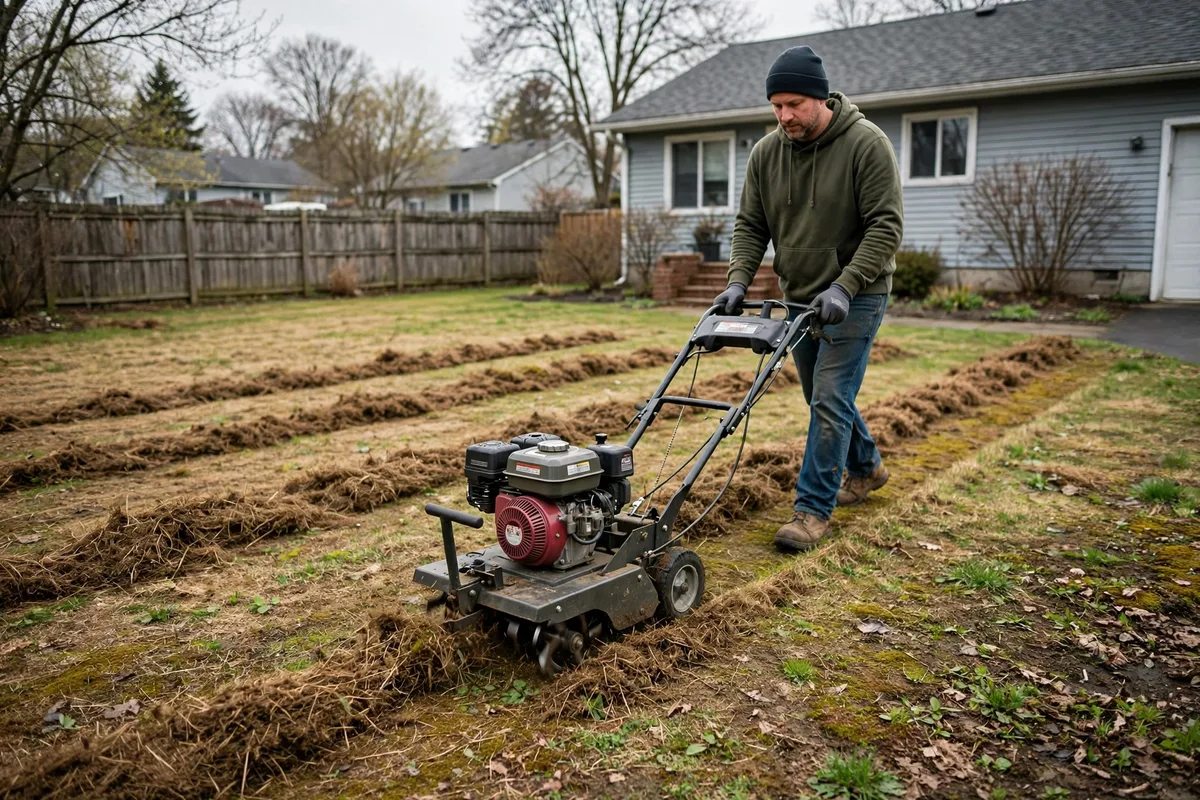
Thatch is the tight layer of dead stems, roots and runners that builds up between the grass blades and the soil. A thin layer is normal and even protects the crowns. But once it passes about half an inch, it starts working against the lawn: water runs off instead of soaking in, fertilizer sits on top where roots cannot reach it, and fungi get a warm, damp mat to live in. The lawn feels spongy underfoot, browns out in dry spells even when you water, and develops the patchy look people blame on everything except the real cause. This guide shows you how to dethatch a lawn properly — how to confirm thatch is really the problem, when to do the work, and how to bring the lawn back afterwards.
Step 1 — Check the thatch layer before you rent anything
Do not dethatch on a guess. Cut a small wedge of turf, two inches deep, from an average part of the lawn — not the best patch and not the worst. Look at the cross-section: grass blades on top, soil at the bottom, and between them the brown, spongy layer of thatch. Measure it. Under half an inch (about 1.25 cm), leave it alone — that layer is doing more good than harm, and dethatching a healthy lawn only tears up crowns and invites weeds. Over half an inch, and especially over three-quarters of an inch, dethatching will pay off. The spongy feel when you walk, water pooling on the surface, and shallow roots that never reach the soil all confirm the measurement.
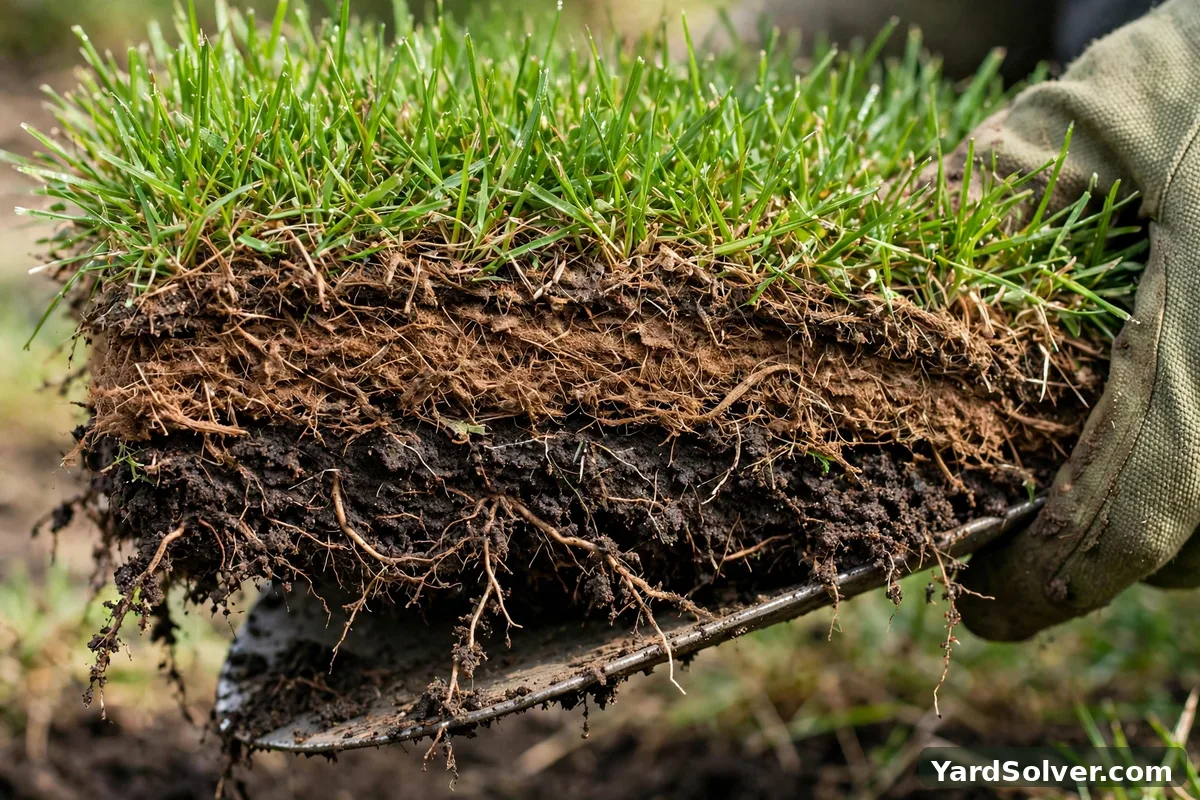
One warning: some grasses build thatch fast and genuinely need this — vigorous Kentucky bluegrass, creeping bentgrass and fine fescues are the usual suspects. Tall fescue and perennial ryegrass rarely build problem thatch, so on those lawns look for another cause first: compaction points to aeration instead, and our guide to How to Aerate Your Lawn covers that diagnosis in the same wedge of turf.
Step 2 — Pick the right week: early fall first, spring second
Dethatching is controlled damage. You are ripping a layer out of the lawn, and the grass needs active growth and mild weather to recover. For cool-season lawns the best window is late summer to early fall, roughly four to six weeks before the first hard frost: growth is strong, weed pressure is falling, and the lawn has the whole autumn to knit back together. Early spring is the second choice — after the grass has greened up and been mowed two or three times, but well before summer heat. Never dethatch a lawn that is dormant, drought-stressed or heading into a heat wave; you will remove the thatch and the lawn with it.
Warm-season lawns (bermuda, zoysia, St. Augustine) follow their own calendar: dethatch in late spring to early summer, when they are fully greened up and growing hard. Whatever your grass, mow a little shorter than usual the day before, mark sprinkler heads and shallow lines with flags, and work on soil that is moist but not muddy — a day or two after rain is ideal.
Step 3 — Rake it out by hand, or power-rake the big jobs
For a small patch or a thin layer, a thatching rake — the heavy rake with sharp, crescent-shaped teeth — does the job: pull it toward you in short strokes so the teeth bite under the thatch and lift it out in mats. Work the area in two directions, rake up the debris as you go, and expect a surprising volume of brown material off even a modest lawn. For a whole lawn, or thatch over three-quarters of an inch, rent a power rake (dethatcher) or a vertical mower from a tool rental shop. Set the blades to just scratch the soil surface — they should reach through the thatch and barely kiss the dirt, never dig trenches — and make one pass, rake up, then a second pass at a right angle only if debris is still coming up heavily.
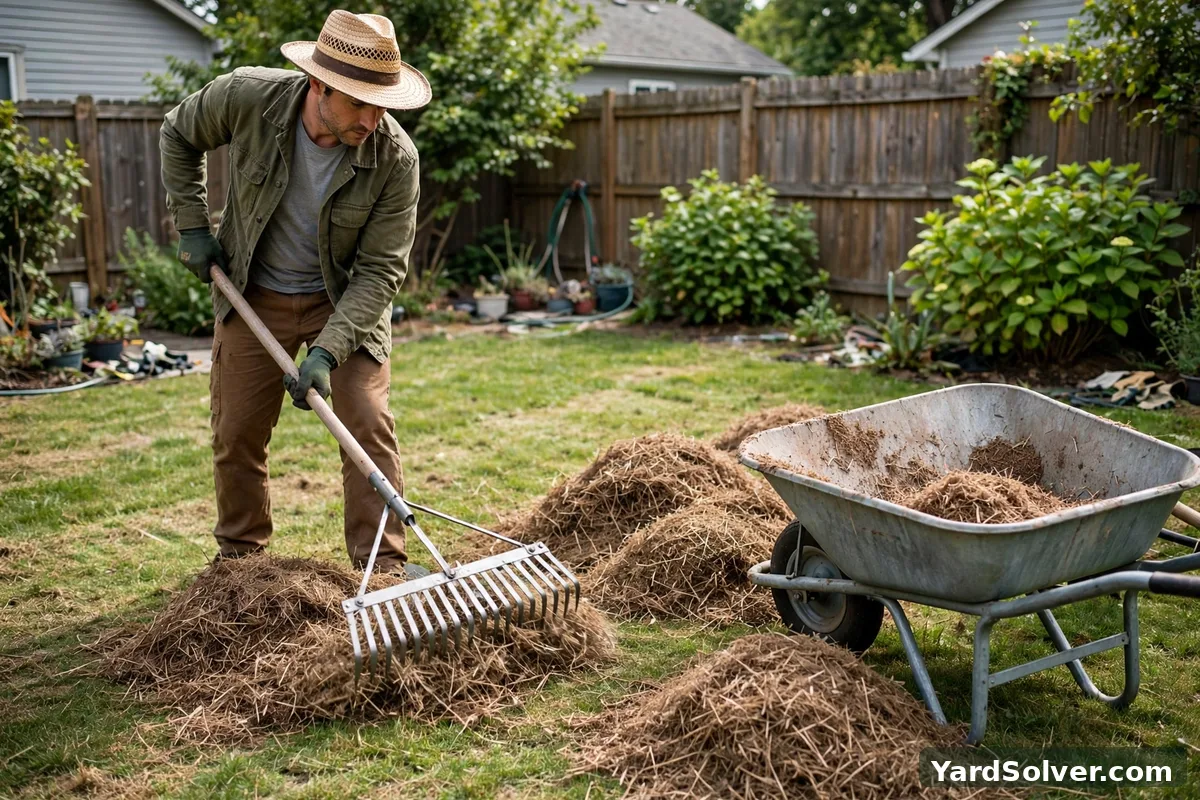
Bag or compost the debris rather than leaving it: a thick layer of pulled thatch left on the surface just becomes tomorrow’s problem in a new place. If the lawn was diseased, bag it for the green bin instead of the compost heap.
Step 4 — Repair the thin spots the same day
Dethatching exposes every thin and bare patch the thatch was hiding, and bare soil in a lawn is an open invitation to crabgrass and weeds. Overseed those spots the same day, while the soil is open and the seed can fall straight into contact with it. Scatter seed over the whole lawn at the overseeding rate if it is generally thin, or patch-seed the bare areas at the full bare-ground rate. Run your lawn’s size and grass type through the Seed Calculator so you buy the right amount of seed for the area you actually opened up — dethatching a third of a lawn and seeding all of it wastes a bag. Our full walkthrough of rates and watering is in How to Overseed Your Lawn.
Then water like it is a new seeding, because it is: light and frequent until the seed sprouts, then deeper and less often. Hold off on any pre-emergent weed control until the new grass has been mowed several times — most pre-emergents stop grass seed just as reliably as weed seed.
Step 5 — Keep thatch from building back
Thatch builds when the lawn produces stems and roots faster than soil microbes can break them down, and a few habits tilt that balance. Avoid heavy nitrogen doses in spring that force soft, fast growth; the Fertilizer Calculator works out the measured rate for your lawn’s size so feeding stays in the zone grass can use. Core-aerate compacted lawns every year or two — the soil plugs it pulls up scatter microbes right onto the thatch layer, which is nature’s own dethatching crew. Water deeply and infrequently so roots chase moisture downward instead of matting at the surface, and leave clippings where they fall: despite the old belief, ordinary mower clippings break down fast and are not a thatch source.
And for the patch of lawn that stays thin and spongy no matter what you do — the dry shade under a tree, the dog’s racetrack corner — consider stopping the fight: a groundcover like creeping thyme takes over those spots happily, needs no dethatching ever, and flowers for the bees in June.
Keep going
Thatch and compaction often arrive together, and the wedge test in Step 1 tells them apart. If your wedge showed tight, hard soil rather than a spongy layer, start with How to Aerate Your Lawn instead.
Planning the whole lawn season — dethatching, seeding, feeding and the frost dates that bound them all? The Garden Planner turns your frost dates into a dated plan with quantities and a shopping list, so the fall work lands in the right weeks without guesswork.
Questions people ask
How often should you dethatch a lawn?
Only when the thatch layer measures over half an inch — for most lawns that means every two to five years, and some lawns never need it. Dethatching on a fixed schedule, whether the lawn needs it or not, tears up healthy crowns and opens space for weeds. Measure with the wedge test each fall and let the number decide.
Is dethatching the same as power raking?
Power raking is one way to dethatch — a machine with flail blades or tines that pulls the thatch layer out. Hand dethatching with a thatching rake does the same job on small areas. Neither is the same as aerating: aeration punches holes and pulls soil plugs to fix compaction, and it helps microbes break thatch down, but it does not remove an existing thick layer.
Can you dethatch and overseed on the same day?
Yes — it is the best day to do it. Dethatching leaves the soil surface open and scratched, which is exactly the seed-to-soil contact new grass seed needs. Seed right after you rake up the debris, water lightly and often until it sprouts, and skip pre-emergent weed control until the new grass has been mowed at least three times.
Comments & ratings
No comments yet.
Be the first to share your experience.