
Guides · Lawn care · Published November 15, 2026
Mushrooms Growing in Your Lawn: Why They Appear and What to Do
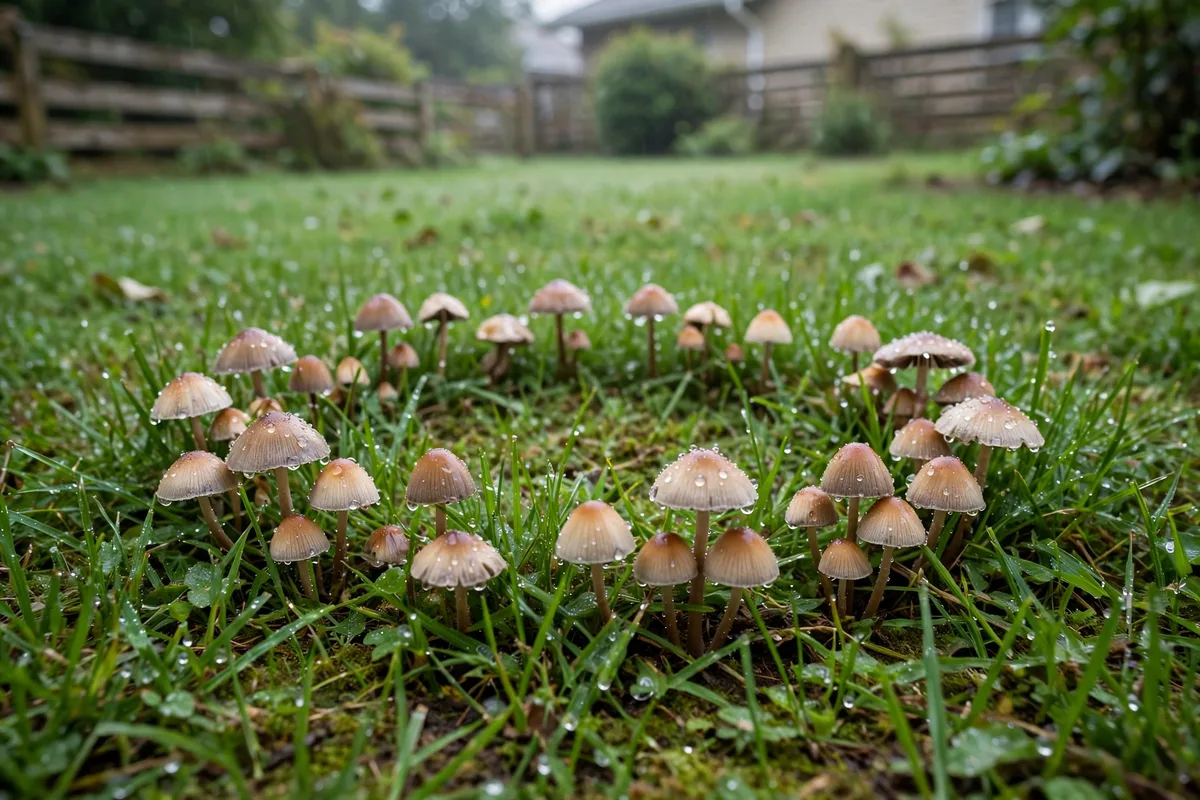
A wet week passes, and one morning the lawn has sprouted a crop nobody planted: mushrooms in lawn grass, sometimes in a neat ring, sometimes in a cluster where the old tree used to be. The questions arrive in a predictable order — is something wrong with the lawn, are they poisonous, how do I make them stop? The short answers: usually nothing is wrong (the fungi are doing cleanup work underground), some lawn mushrooms are toxic so the picking rule matters, and they stop when their food runs out or the weather dries. The longer answers, with the safety rules for dogs and children that are the real reason most people search this, are below.
Step 1 — Understand what a lawn mushroom actually is
The mushroom is only the fruit. The organism itself is a network of fungal threads — mycelium — living in the soil, and it is there because it has something to eat: decaying organic matter underground. Buried construction wood, a dead tree’s roots slowly rotting, an old stump ground out and left in the soil, a thick thatch layer, even buried bark mulch. The fungus digests that material — genuinely useful work that returns nutrients to the soil — and when conditions turn warm and wet, it fruits: mushrooms, appearing overnight because they inflate with water rather than growing cell by cell. This is why mushrooms so often appear in a line or a ring (a "fairy ring"): the mycelium spreads outward from its food source, fruiting at the edges. It is also why they vanish in a dry week without you doing anything.
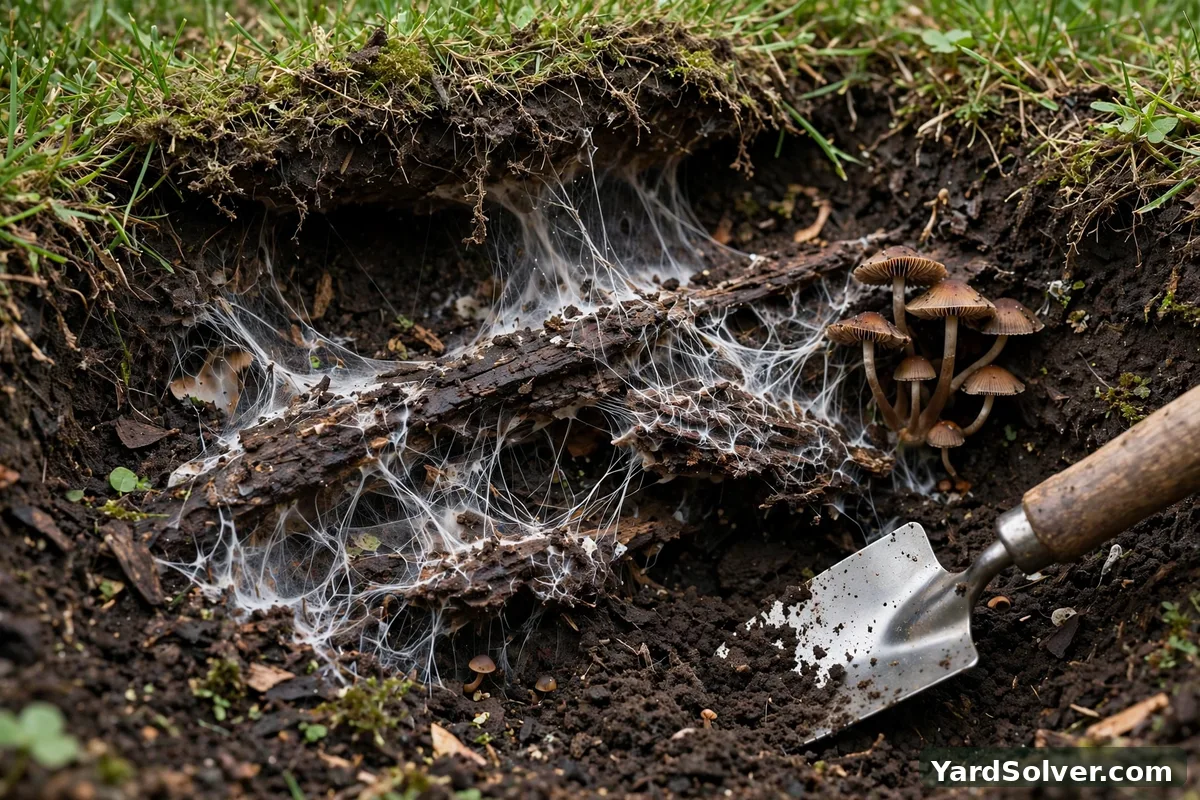
Dig one small exploratory hole where mushrooms cluster and you will usually find the food: soft, dark, decaying wood or old root. Knowing the source tells you the timescale — a ground-out stump can feed mushrooms for years as it rots away.
Step 2 — The safety rules: pets, children, and never eating them
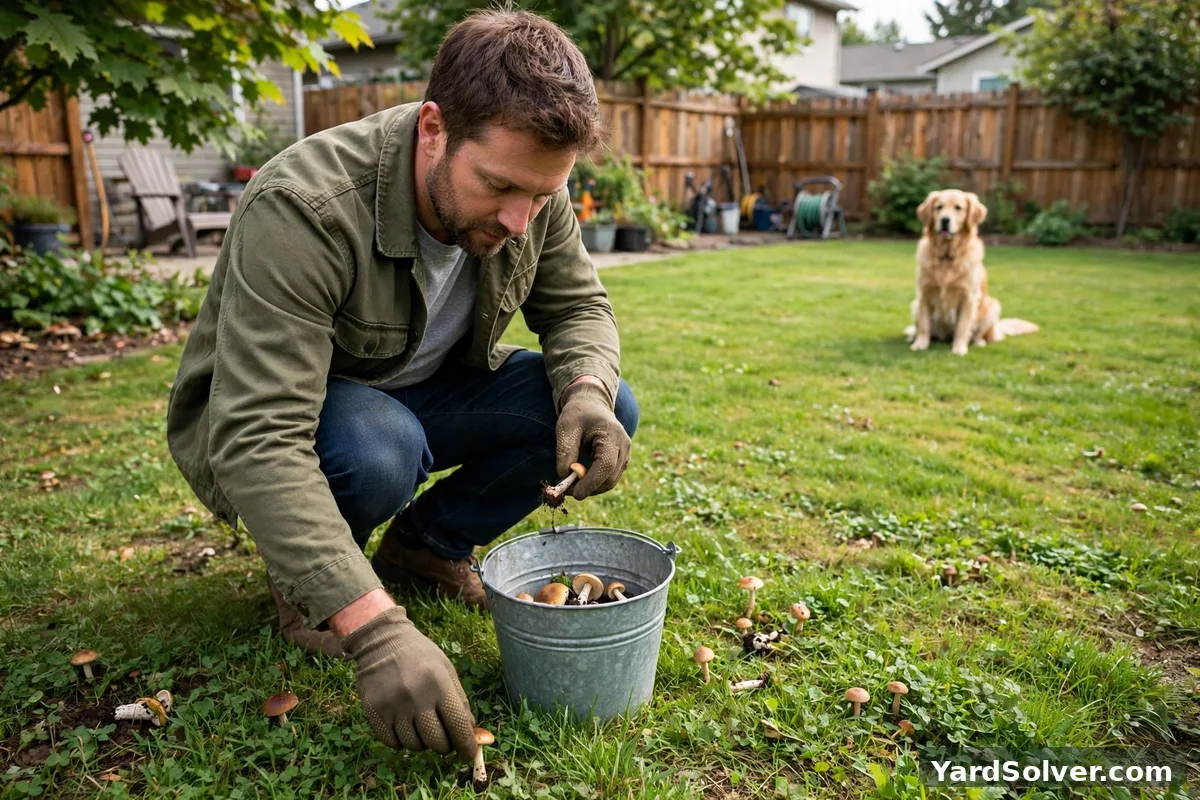
Here is the rule that outranks everything else on this page: no wild lawn mushroom should ever be eaten, by anyone, and the ones in your lawn should be treated as poisonous until an expert proves otherwise. Some common lawn species are genuinely toxic — the green-spored parasol that appears on southern and coastal lawns is a classic cause of poisoning, and the small brown species are nearly impossible for a non-expert to separate into safe and dangerous. Dogs are the usual victims: puppies especially mouth mushrooms while playing. The practical protocol for any yard with dogs or small children is simple — pick mushrooms as soon as you see them, before the morning dog run, wearing gloves or using a bag over your hand, and bin them (not the compost heap, where they just fruit again). Picking does not kill the fungus, but it removes the hazard and stops the spores from spreading. If a dog or child does eat one, keep a sample of the mushroom and call your vet or poison control promptly — identification matters and a photo helps.
For the lawn itself, the fungi are harmless to grass in almost all cases. The exception is a fairy ring that develops a dead or over-fertilized band of grass — the ring’s mycelium can make soil water-repellent, or its nitrogen release can burn a ring of grass. That is a lawn-appearance problem, handled in the next step, not a safety one.
Step 3 — Reduce them: remove the food, fix the wet
You cannot sterilize a lawn’s fungi, and should not try — they are part of how soil works. What you can do is shorten their season. Pick mushrooms promptly, before caps open and drop spores. Dig out the food where it is practical: chunks of buried wood near the surface, old roots in a bed you are redoing. Dry the surface out: mushrooms fruit in wet spells, so water the lawn in the morning rather than the evening, fix the downspout that dumps on one corner, and core-aerate compacted areas so water drains instead of sitting. Manage thatch: a layer over half an inch holds moisture and organic matter at the surface — the half-inch test and the fix are in our dethatching guide. Where a fairy ring leaves a water-repellent band, spiking the ring with a fork and watering with a drop of dish soap in the watering can (a homemade wetting agent) helps water back in, and reseeding the dead band follows the standard patch repair.
What about fungicide? For home lawns it is a poor answer to a cosmetic question: the products do not reach the mycelium deep in the soil in any lasting way, and the mushrooms return with the next wet week as long as the buried food remains. Gardeners are better served by the compost logic — fungi are decomposers, and the Compost Calculator exists precisely because controlled decomposition is a tool: the same organisms fruiting in your lawn are the ones turning a compost heap into garden gold, which is why experienced gardeners read lawn mushrooms as a sign of a biologically active soil, not a dirty one.
Step 4 — When mushrooms are telling you something bigger
Mostly they are not. But three patterns deserve a second look. Mushrooms fruiting from the base of a living tree, or shelves growing on its trunk, can signal internal decay in that tree — worth an arborist’s look, because a rotting tree near a house is a safety question, not a lawn question. A sudden heavy crop along one line can mark a buried leak or a persistently wet trench — check irrigation lines if the line is suspiciously straight. And mushrooms indoors, in a basement or crawl space, are a moisture problem in the building, never normal. In the open lawn, though, the story stays simple: something buried is being recycled, and the mushrooms are the visible tip of useful work. Garden beds tell the same story — wood-chip mulch in a mint bed or a tomato row will fruit small mushrooms after rain, and the rule there is identical: admire, pick if pets roam, never eat.
Keep going
Mushrooms love the same moisture that a thick thatch layer holds. If yours come with a spongy lawn, run the half-inch test in How to Dethatch a Lawn.
Wet-corner fixes, drainage jobs and reseeding all belong on the season plan — the Garden Planner builds yours from your frost dates, with quantities and a shopping list.
Questions people ask
Are mushrooms in my lawn a sign of a problem?
Usually the opposite. Lawn mushrooms mean fungi are decomposing buried organic matter — old roots, buried wood, thatch — and returning its nutrients to the soil. The lawn itself is not harmed in most cases. The exceptions are cosmetic (a fairy ring leaving a dead band) or structural (fungi fruiting from a living tree, which can mean decay inside it). The mushrooms themselves are a sign of a biologically active soil.
How do I get rid of mushrooms in my lawn permanently?
Honestly, only by removing their food or the moisture — and even then, neighbouring fungi move in. Picking mushrooms as they appear stops spores and removes the pet hazard. Digging out buried wood near the surface, improving drainage, watering in the morning, aerating and keeping thatch under half an inch all shorten the fruiting season sharply. Fungicides are a poor fix: they do not reach the deep mycelium, and the mushrooms return with the next wet week while the food source remains.
Are lawn mushrooms poisonous to dogs?
Some are, and neither you nor your dog can tell which by looking. Several common lawn species cause serious gastrointestinal poisoning in dogs, and a few are worse. Treat every wild lawn mushroom as poisonous: pick them before the dog goes out, especially during wet spells when they appear overnight, and if your dog eats one, keep a sample or photo and call your veterinarian or animal poison control right away rather than waiting for symptoms.
Comments & ratings
No comments yet.
Be the first to share your experience.