
Guides · Patios and paths · Published November 10, 2026
Paver Patio Base: How Deep, and How Much Gravel & Sand
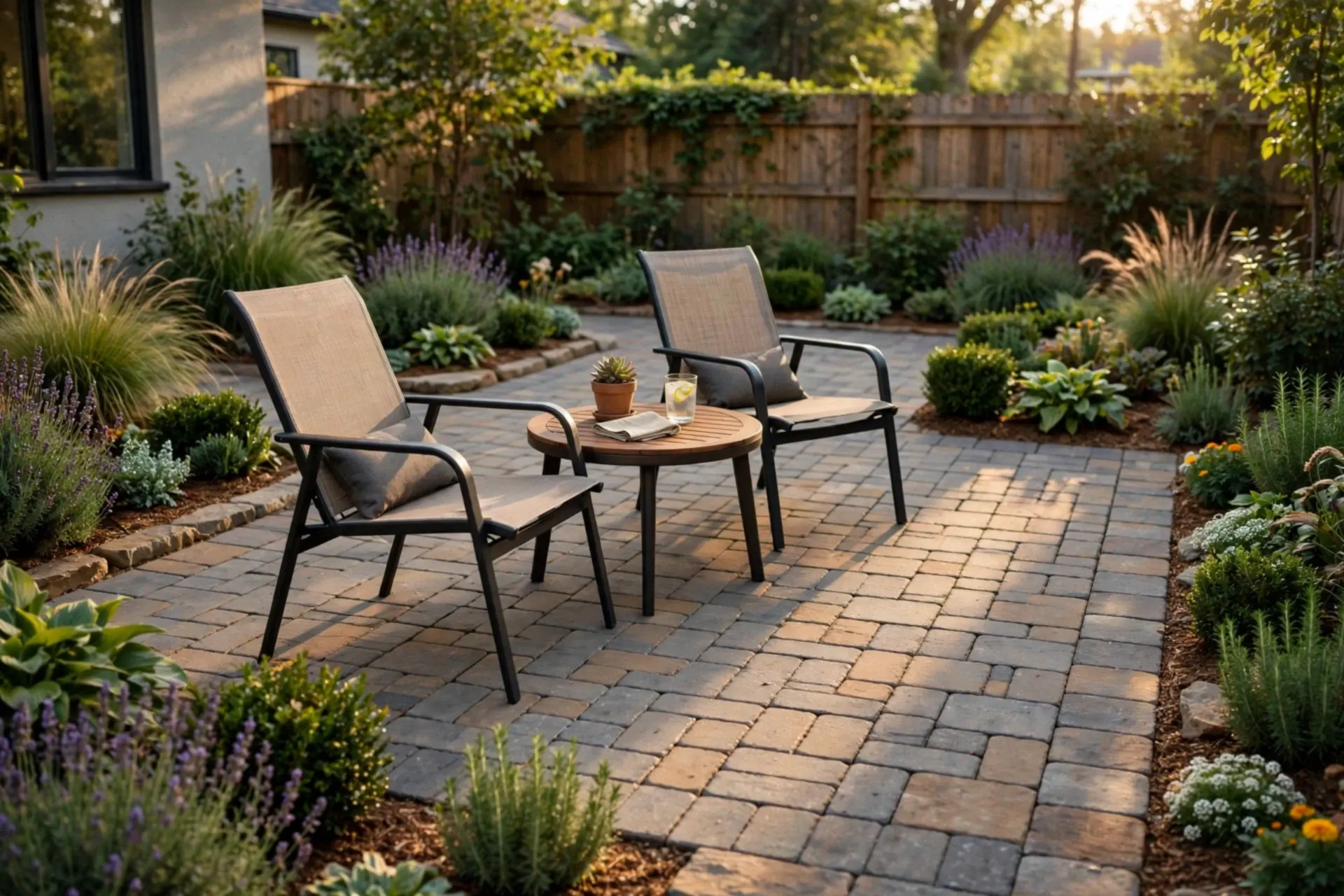
Ask anyone whose patio went wavy what failed, and it is never the pavers. Pavers are nearly unbreakable. What fails is the sandwich under them: too thin, not compacted, or built on sand that was treated like the base. A paver patio is really a gravel job with a pretty top. Get the layer depths right — and they are exact numbers, not vibes — and the surface stays flat for decades. This page gives the depths, the order, and where the calculators take over the heavy maths.
The base, layer by layer
| Layer | Depth | Notes |
|---|---|---|
| Gravel base — patios and paths | 4 in | Crushed stone with fines, compacted in 2-inch lifts |
| Gravel base — driveways, soft clay | 6 in (8 on very soft clay) | Same stone, more of it, same lifts |
| Bedding sand | Exactly 1 in | Coarse concrete sand, screeded — never compacted first |
| Pavers | About 2⅜ in | Standard patio pavers sit on the sand as it lies |
| Total dig | About 7½ in (patio) / 9½ in (driveway) | Dig 6 in wider than the patio on every side |
Build the slope into the dig itself: about 1 inch of fall for every 8 feet, running away from the house, so rain leaves instead of sitting under your chairs.
Step 1 — Mark it out and dig once, to the full depth
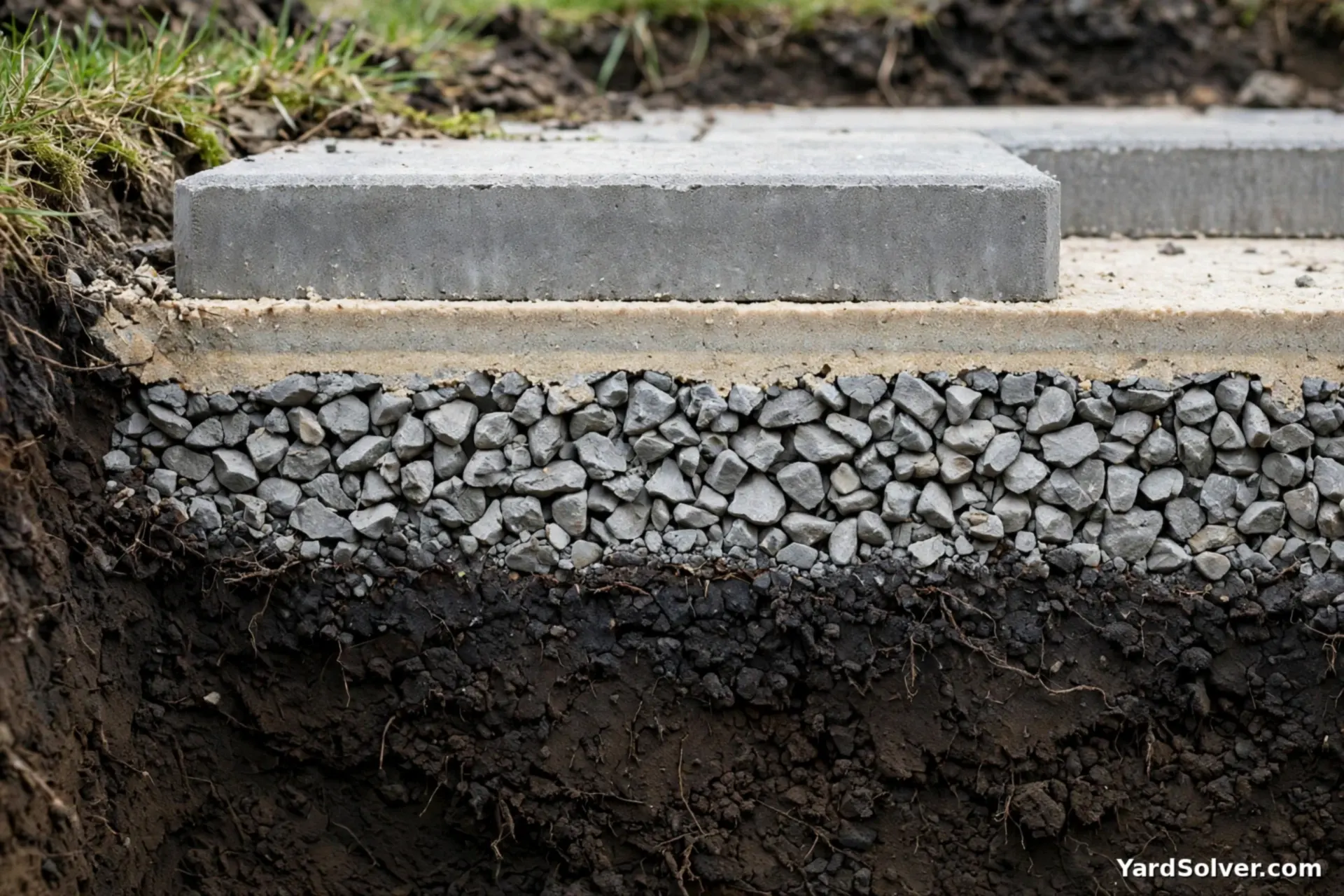
Mark the patio outline with string or a hose, then add 6 inches on every side — the base must run out past the last paver, or the edges have nothing under them. Dig to the full depth in one go: about 7½ inches for a patio (4 gravel + 1 sand + the paver), about 9½ inches for a driveway build. Keep the slope in the dig — 1 inch of fall per 8 feet away from the house — because every layer after this one copies the shape of this hole. Digging is the worst day of the job; doing it once, to the right depth, is the whole bargain.
Step 2 — Compact the soil, then the gravel in lifts
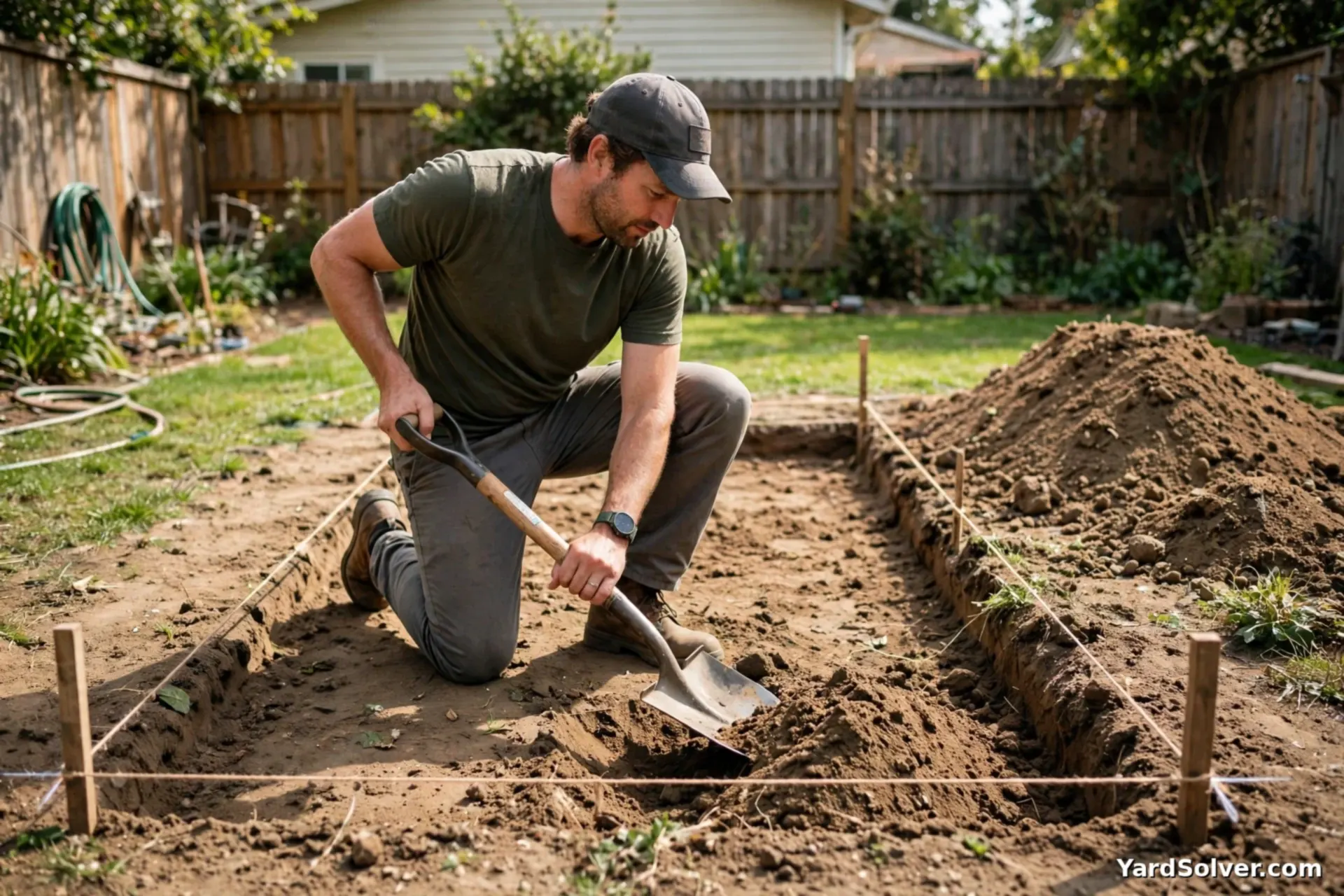
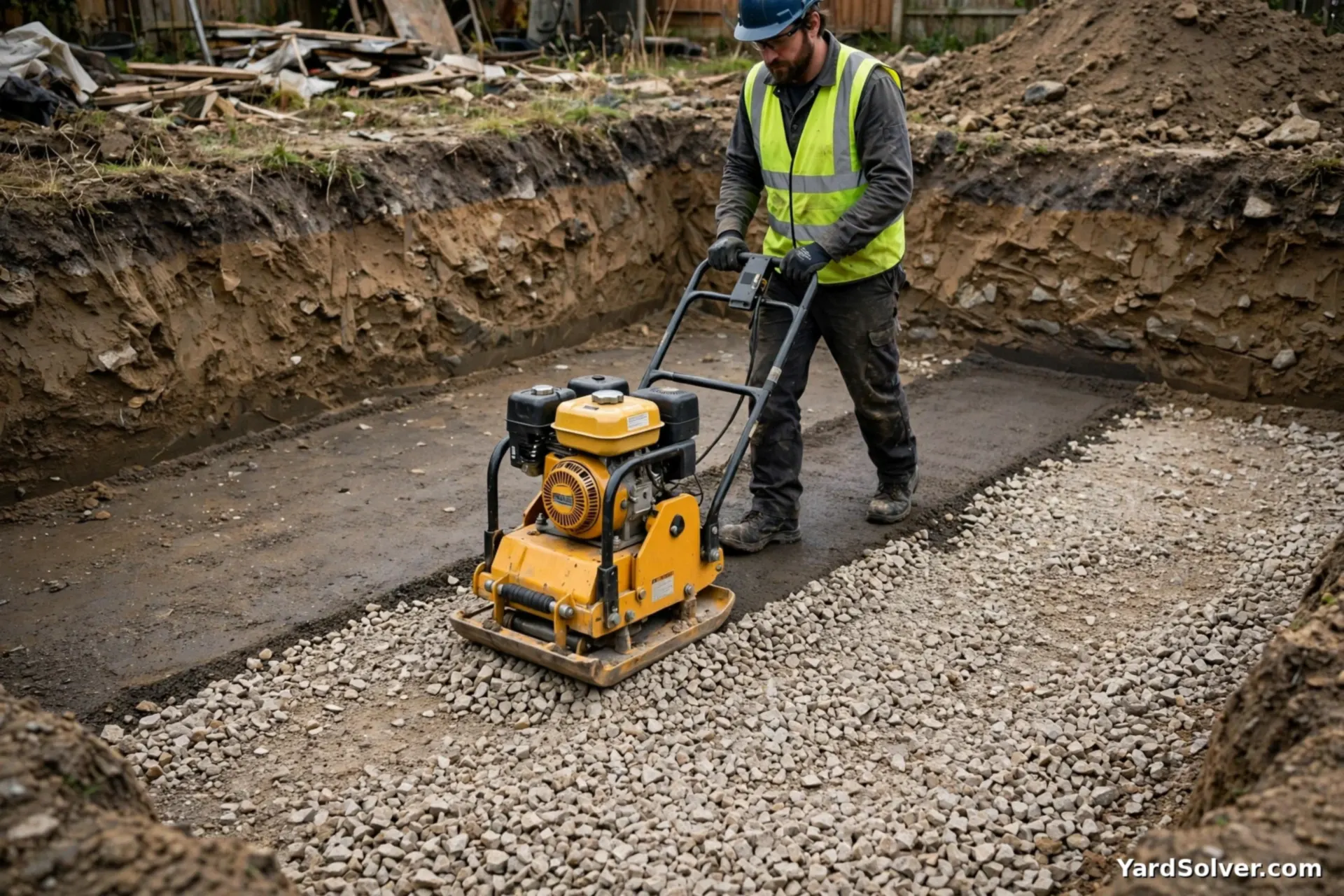
Run a plate compactor (a rental day is plenty) over the bare soil first — loose soil under a good base still settles. On clay, lay landscape fabric over the soil so the stone cannot slowly punch down into the mud. Then add the crushed stone about 2 inches at a time and compact every lift; a 4-inch base tipped in all at once compacts on top and stays spongy underneath. Done right, the finished gravel feels like walking on a road. The stone you need for your size and depth is exactly what the Gravel Calculator works out — order by the ton or the yard, not by the bag, if you can.
Step 3 — Screed exactly 1 inch of sand, and do not walk on it
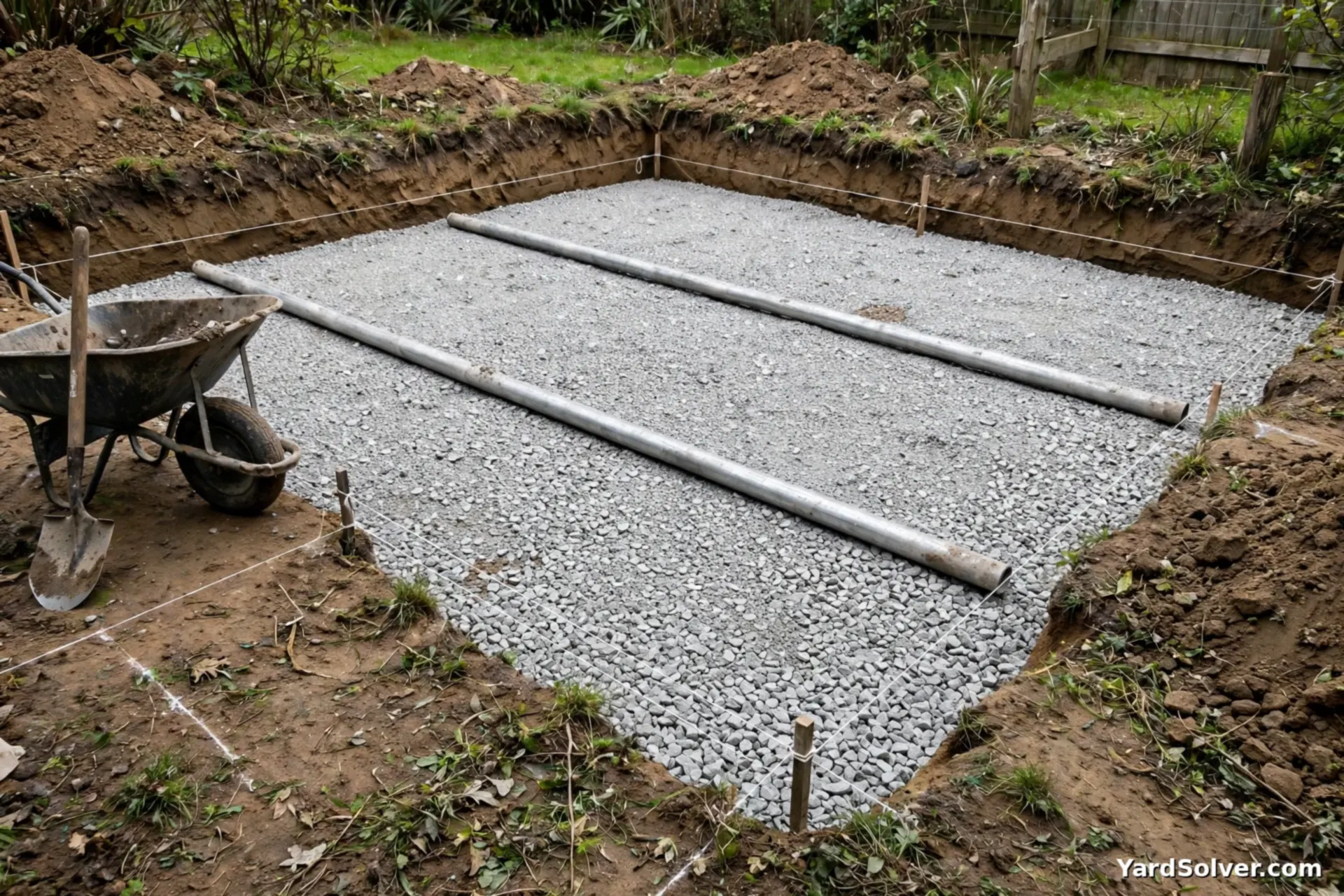
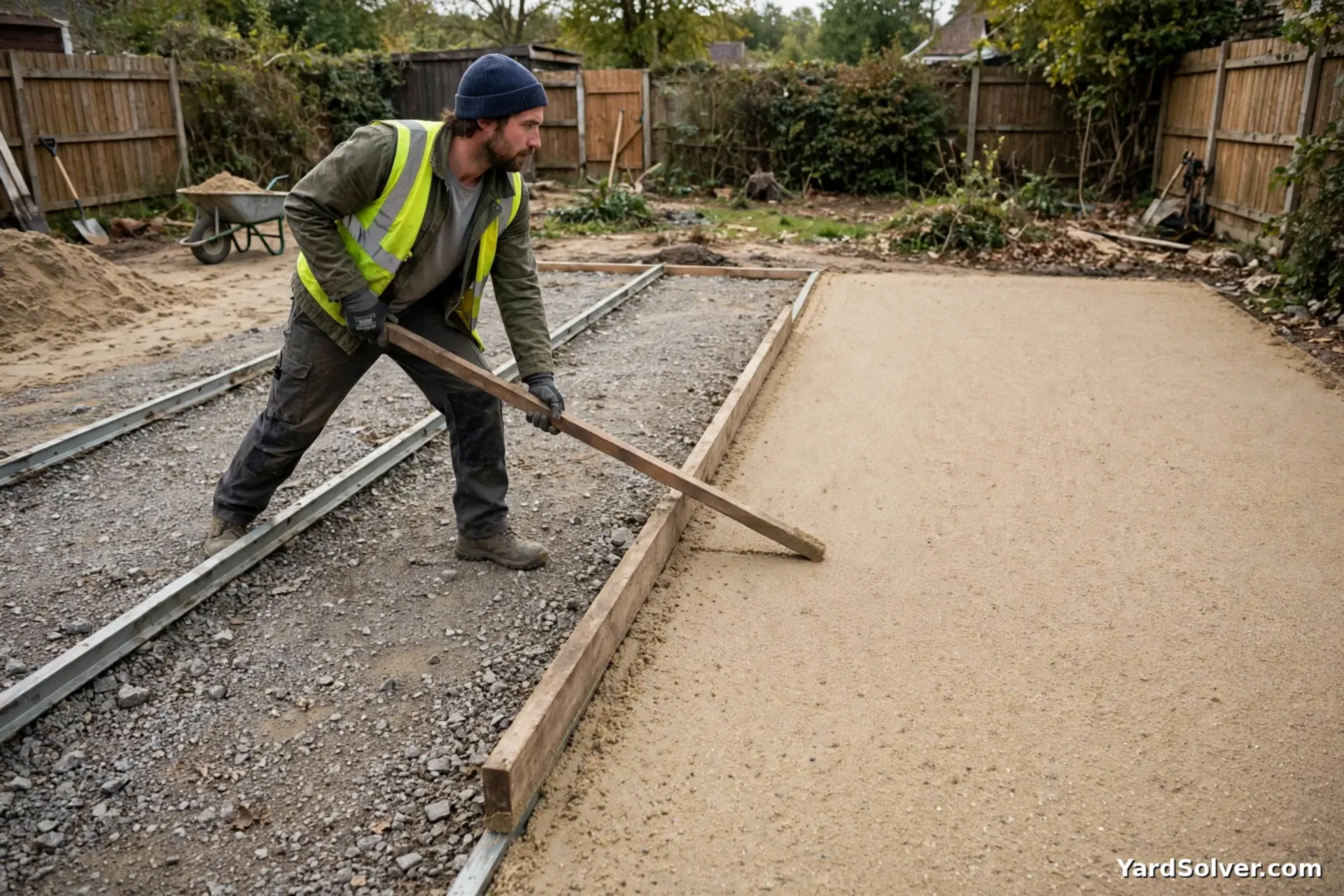
Lay two pipes or rails on the gravel, a board's width apart, and heap coarse concrete sand between them. Drag a straight board along the pipes and the sand levels itself to exactly 1 inch — that screeded inch is the soft bed each paver settles into. Then lift the pipes out and fill the grooves with a trowel. Two rules from here: use concrete sand, not play sand (fine round grains shift like ball bearings), and once the sand is screeded, stay off it — a boot print becomes a dip in the finished patio. Work from the laid pavers from now on. For the amount, the Sand Calculator sizes the bedding layer for your patio in one step.
Step 4 — Lay the pavers onto the sand as it lies
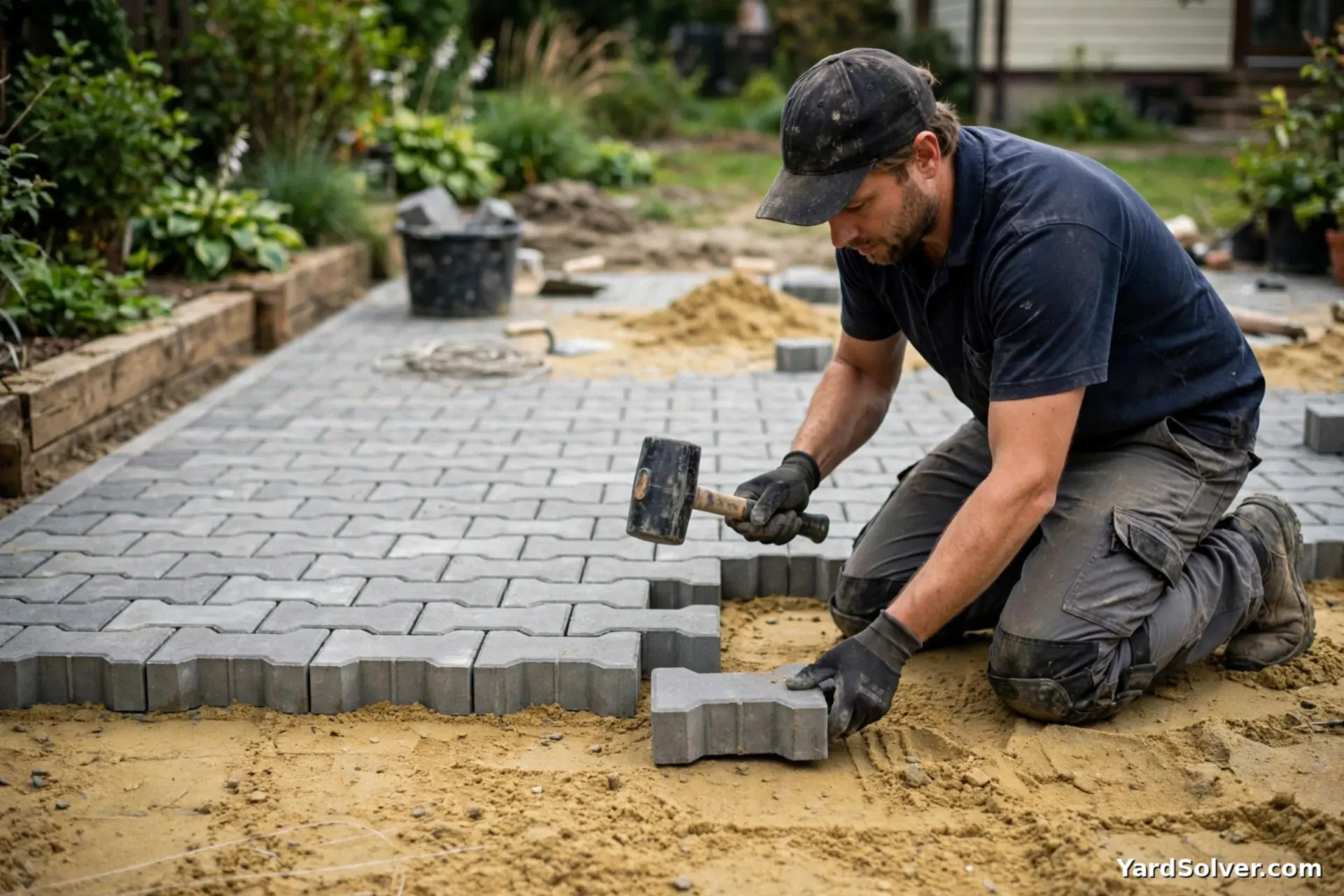
Start from a corner against a straight edge and work outward, kneeling on the pavers you have already laid. Set each one straight down onto the sand — sliding it shoves a ridge of sand ahead of it and the paver sits crooked. Butt them snug, tap with a rubber mallet, and check with a long level every few rows: you are looking for the gentle slope you dug, not a tabletop. Fit the edge restraints before the last rows go in; they are what stop the whole field slowly walking apart over the years.
Step 5 — Sweep the joints and lock it all in
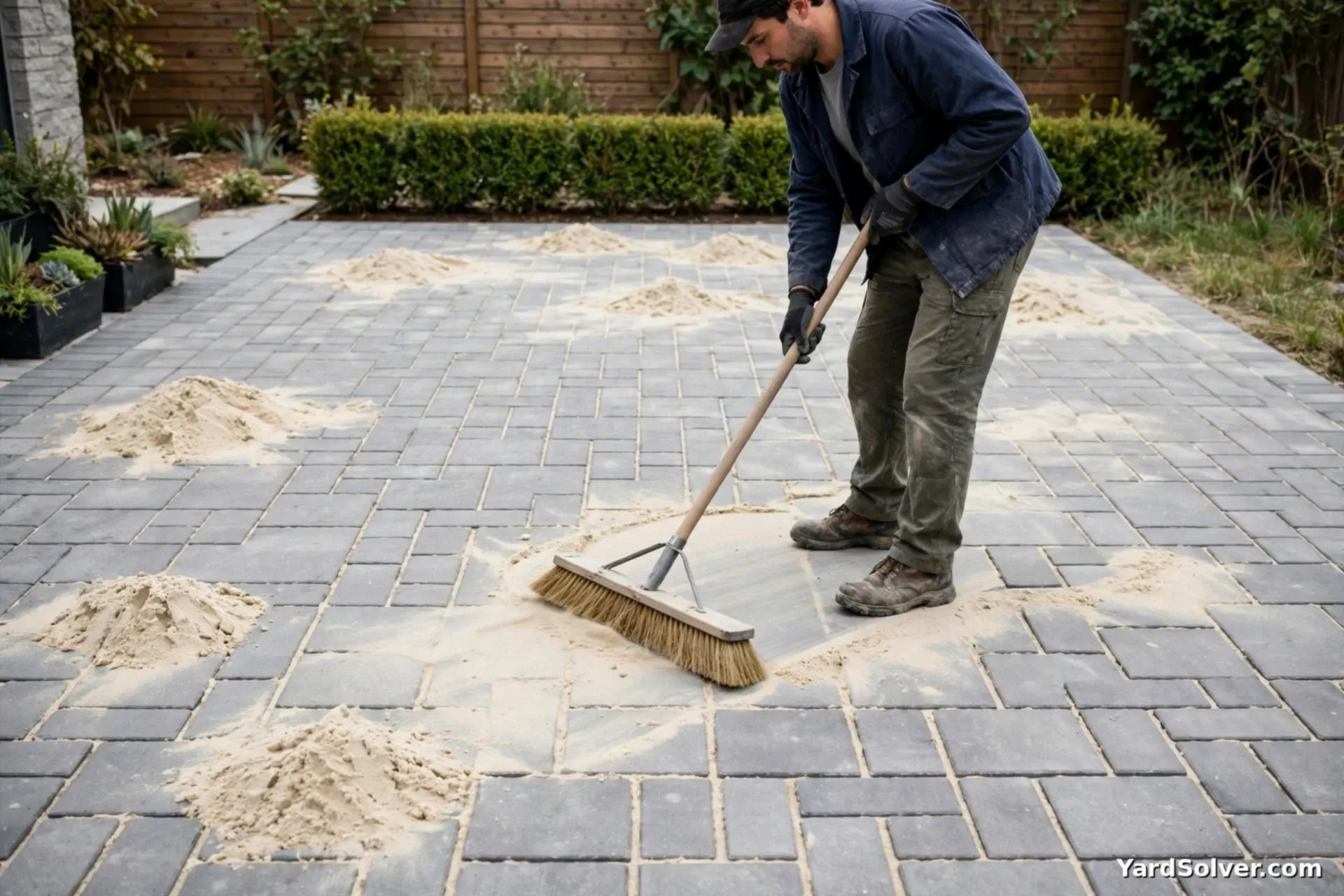
Once the field is laid, run the compactor over the pavers once (a pad or a sheet of plywood under it saves chipped corners) to settle them into the sand. Then sweep dry joint sand — or polymeric sand, misted to set — into every gap until the joints are full to just below the surface. This joint sand is not decoration: it locks the pavers to each other so they share loads instead of rocking alone. Top the joints up again after a few weeks, when the first sweep has settled in. For the full shopping list of the job — pavers, gravel tons, sand and edging for your exact size — the Paver Calculator puts all three materials on one page.
Keep going
Pouring a slab instead of laying pavers, this late in the year? Pouring Concrete in Cold Weather gives the temperature rules that decide whether the pour is safe.
Still sizing the job? The Paver Calculator counts pavers, gravel and sand together for your patio's measurements.
Edging the beds that meet the patio? How Many Bricks Do I Need for Garden Edging? counts the bricks four ways — flat, on edge, sawtooth and upright — with the sand bed underneath them.
Questions people ask
Can I lay pavers straight on dirt or sand with no gravel base?
You can, and it will look fine for a season or two. Then the soil moves with wet and frost, the pavers follow it, and the patio turns wavy with heaved edges. The compacted gravel layer is what spreads the load and drains the water — it is the cheap insurance the whole job stands on.
What kind of sand goes under pavers?
Coarse concrete sand for the 1-inch bedding layer — its grains are sharp and varied, so they lock together. Play sand and fine mason sand are too round and soft and shift underfoot. The joints on top are a different material: plain dry sand swept in, or polymeric sand that sets when misted.
How deep should a paver base be for a driveway?
Deeper than a patio: at least 6 inches of compacted gravel under the same 1 inch of sand, and 8 inches on soft clay, with thicker driveway-rated pavers on top. Cars punish a base in a way feet never do, and the dig is the one part you cannot cheaply redo later.
Comments & ratings
No comments yet.
Be the first to share your experience.