
Guides · Concrete work · Published November 10, 2026
Pouring Concrete in Cold Weather: Rules That Save a Slab
Concrete does not dry out. It cures — a slow chemical reaction between cement and water that builds strength over days and weeks — and temperature is the throttle on that reaction. Every 10 degrees colder roughly halves the rate it gains strength. Worse, if the water inside fresh concrete freezes before the slab has toughened up, it can cost the slab up to half its final strength, permanently. None of this means winter pours are impossible. Contractors pour all winter. It means a cold pour follows rules a summer pour forgives you for skipping. Here they are.
The temperature rules at a glance
| What the forecast says | What it means | What to do |
|---|---|---|
| Above 50°F, no frost coming | A normal pour | Standard care, keep it damp as it cures |
| 40–50°F | Slow set, slow strength | Pour late morning, blankets ready before you start |
| Below 40°F, or a freeze tonight | Cold-weather rules apply | Warm mix, protection for several days, no shortcuts |
| Ground itself frozen | The slab will settle as the ground thaws | Do not pour — thaw the ground first, or wait |
The concrete trade treats weather as "cold weather" concreting once air temperature drops below about 40°F during the days after the pour. A mild afternoon followed by a hard frost that same night is the trap — the slab is at its weakest exactly when the cold arrives.
Step 1 — Check the ground, not just the forecast
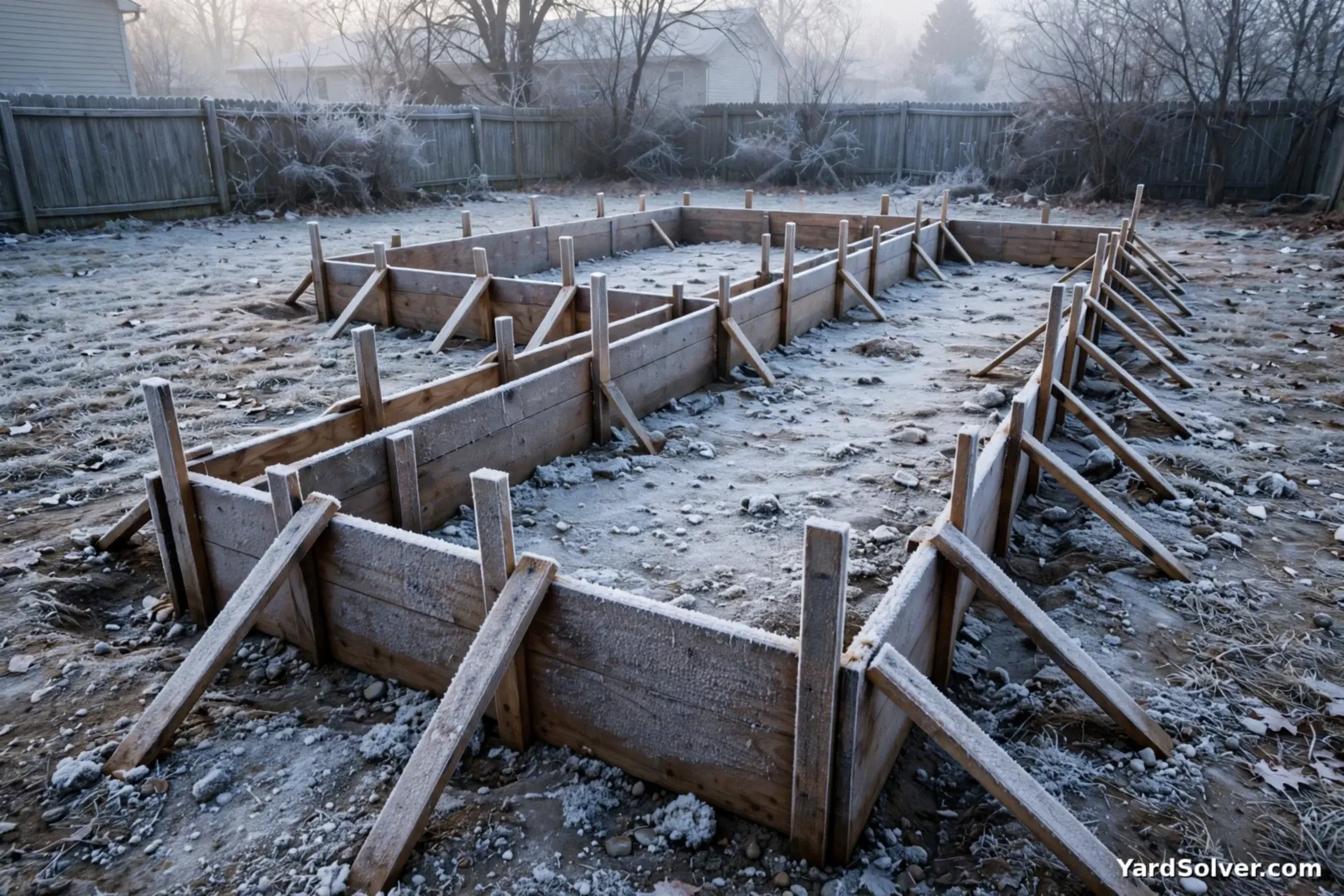
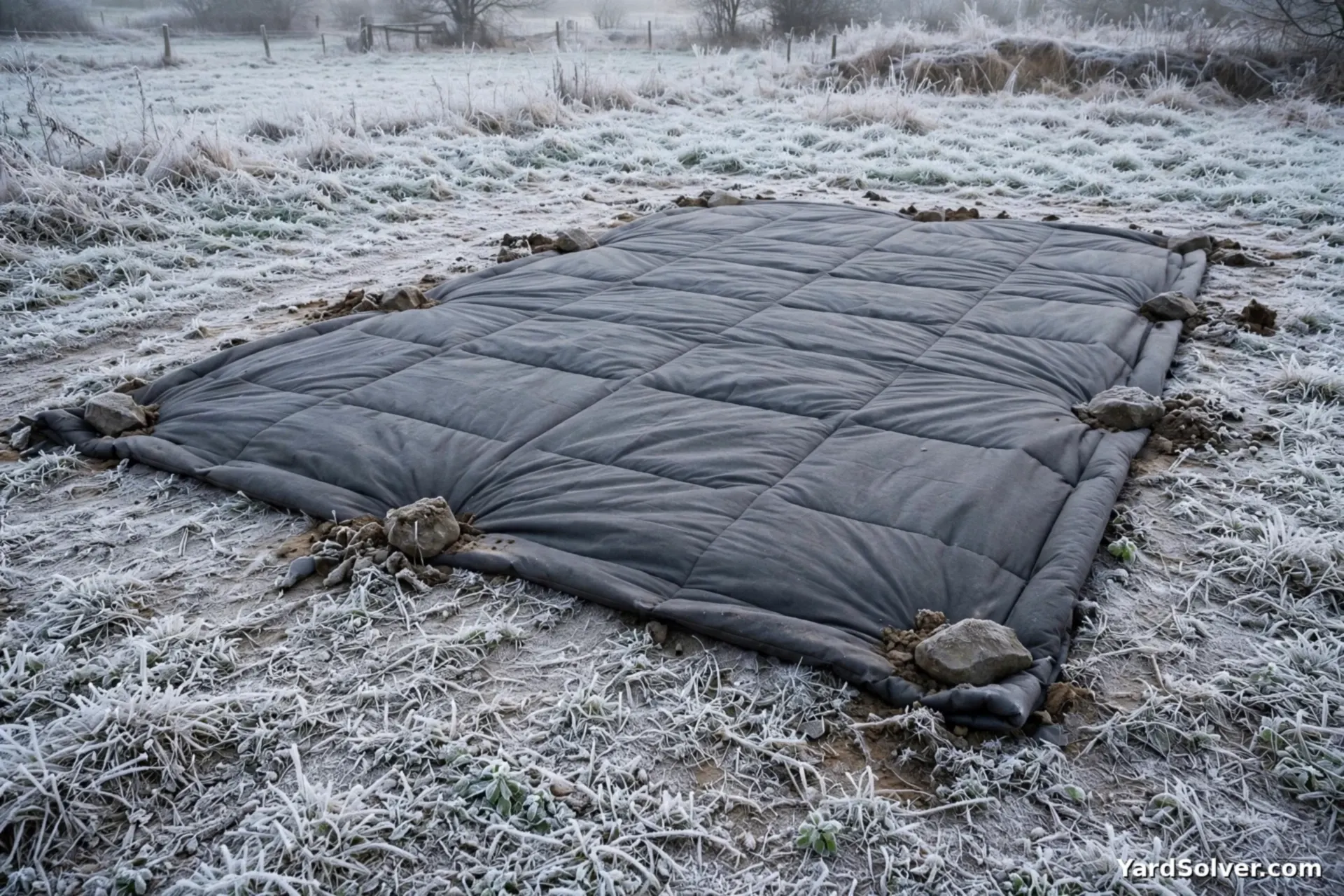
The first rule is absolute: never pour on frozen ground. Frozen soil feels rock-hard on pour day, then thaws unevenly underneath the slab in spring and drops it out of level — cracks from below that no mix quality can prevent. If the ground is frozen, thaw it first: insulated blankets or black plastic laid over the spot for a few days will usually do it for a small pad, and the ground must stay thawed until the concrete is in. While you are there, clear every scrap of snow and ice out of the forms and off any steel — ice in the form becomes a hole in the slab.
Step 2 — Order the mix for the cold
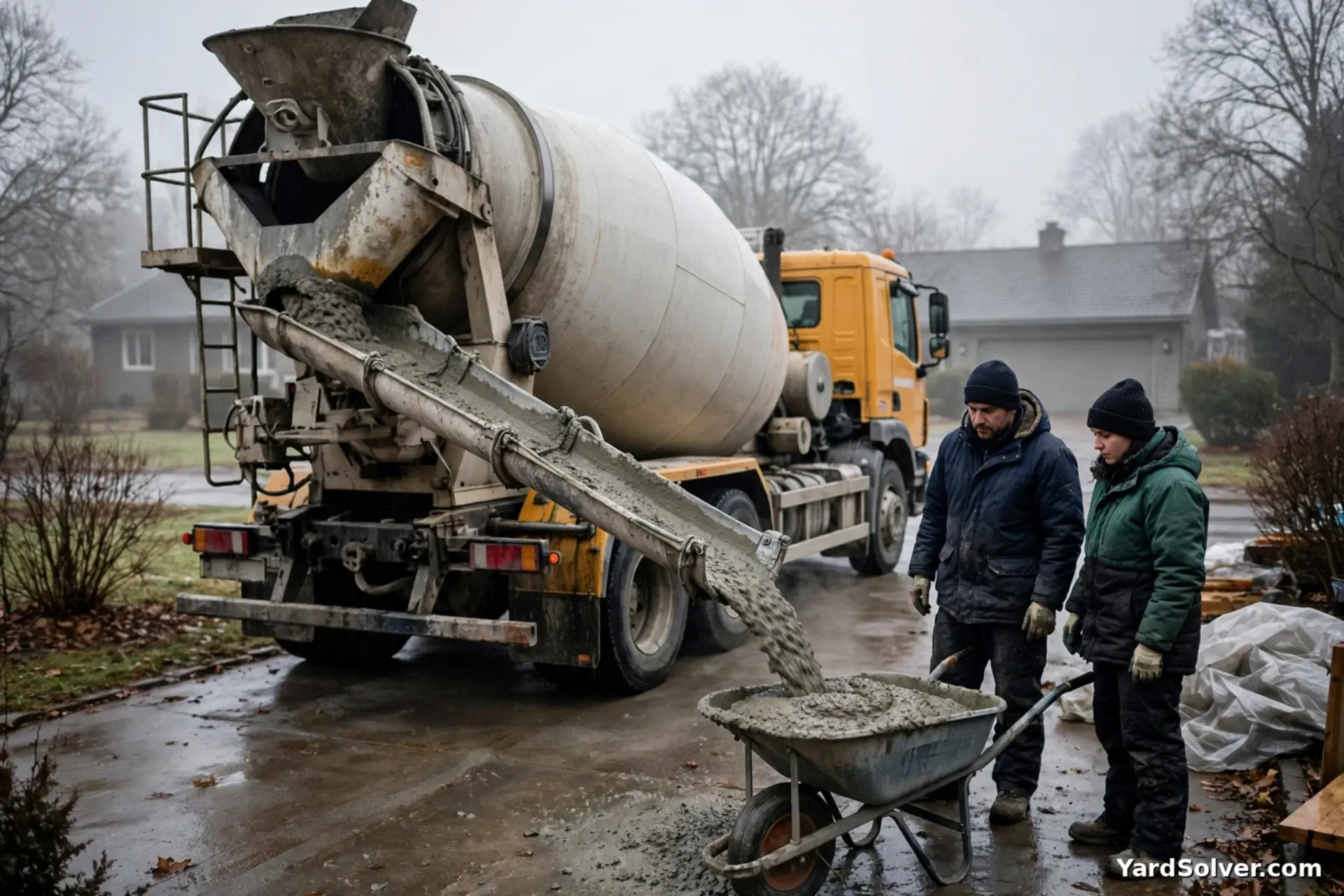
If a ready-mix truck is coming, tell the plant it is a cold-weather pour and ask for the mix batched with hot water and an accelerator — and mention whether the slab has steel in it, because the common accelerator (calcium chloride) is kept out of reinforced work in favour of a non-chloride kind. Mixing bagged concrete yourself, use warm water — comfortably hot to the hand, never boiling. The goal is concrete that arrives and goes down at roughly 50–55°F or warmer for a thin slab, already holding some heat of its own. How much you need in the first place is the Concrete Calculator's job — bags or yards, with the waste allowance in. Building with block instead of a slab? The Concrete Block Calculator counts blocks and mortar the same way.
Step 3 — Pour late morning and finish without fussing
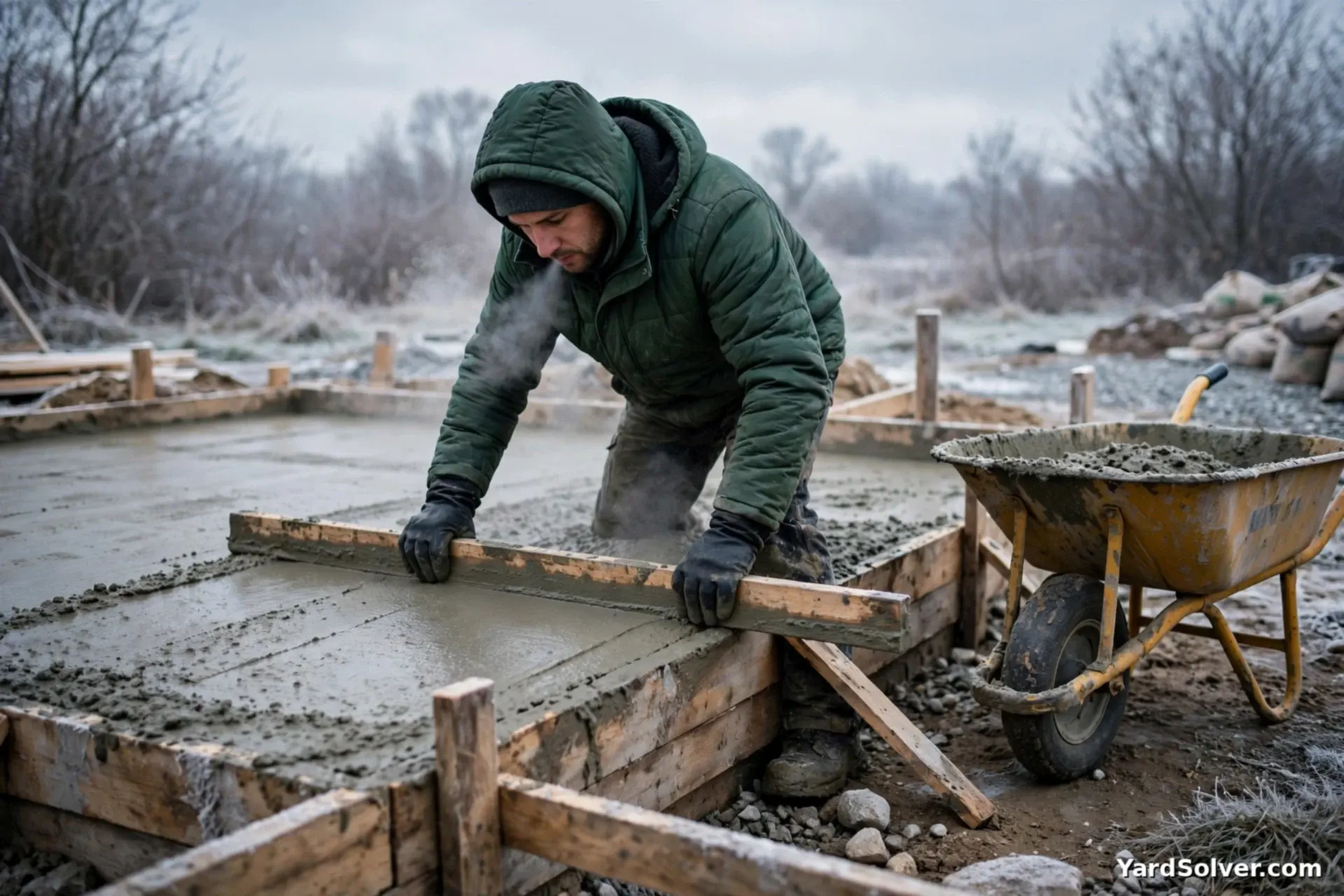
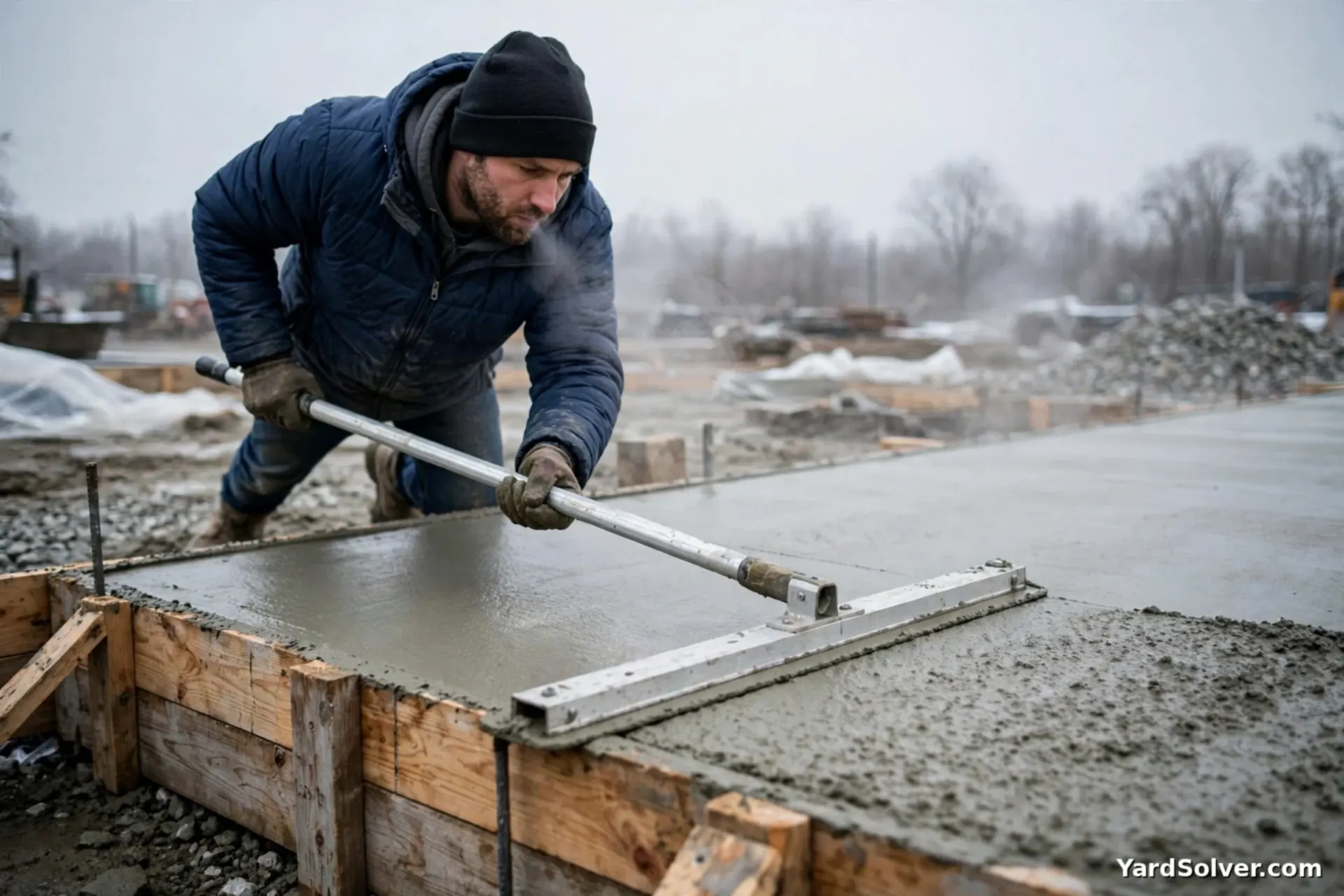
Time the pour for the warmest part of the day — late morning — so the slab gets its first, most fragile hours in the best temperatures going, and has banked some strength before the night drops. Have everything ready before the concrete arrives: cold concrete waits for nobody, and it sets slower, which tempts people into adding water to keep it workable. Do not add water on site. Extra water is the quiet strength-killer in every season, and a cold slab has no strength to spare. Place it, screed it, float it, and get it covered.
Step 4 — Blanket it, and hold it above 50°F for days
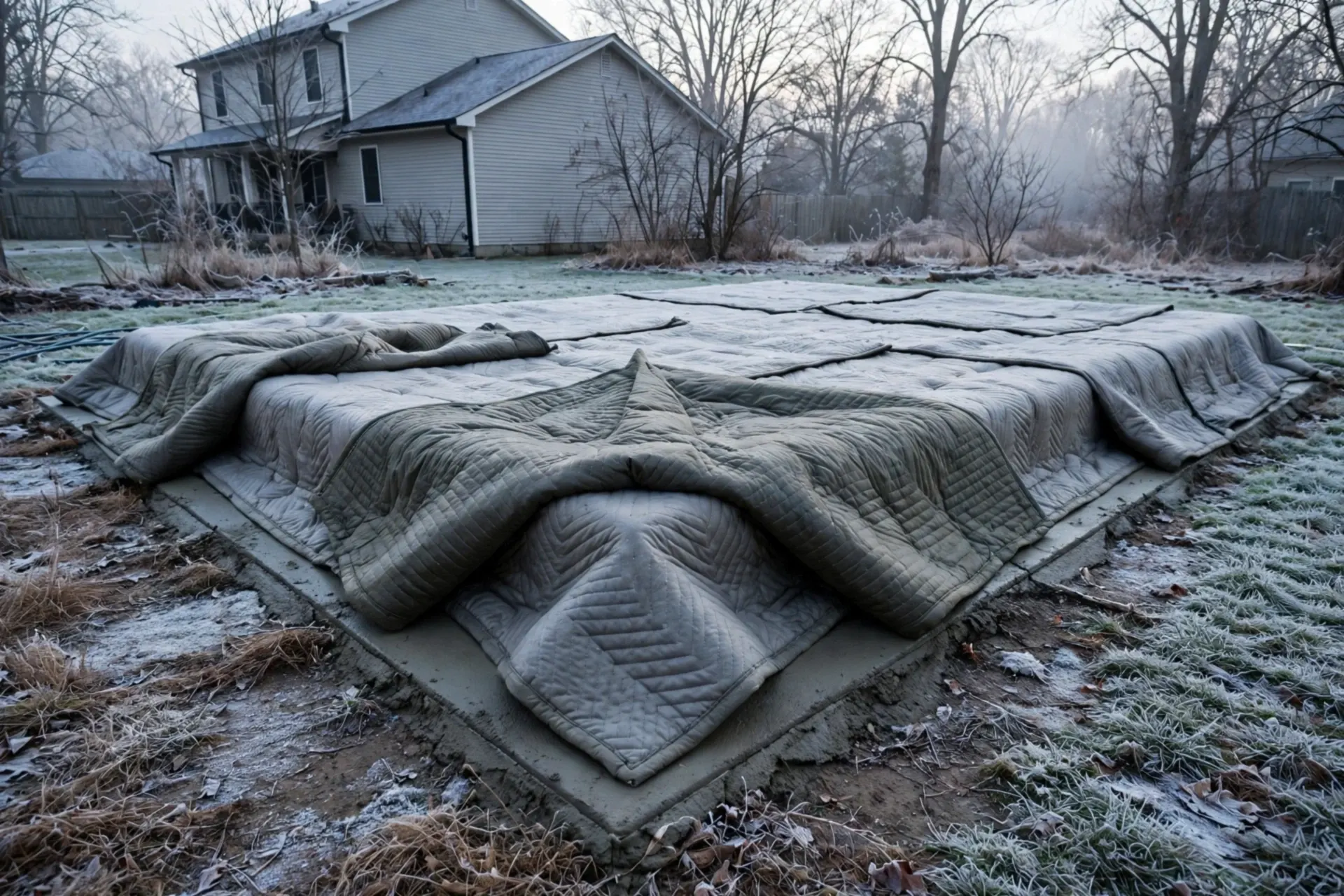
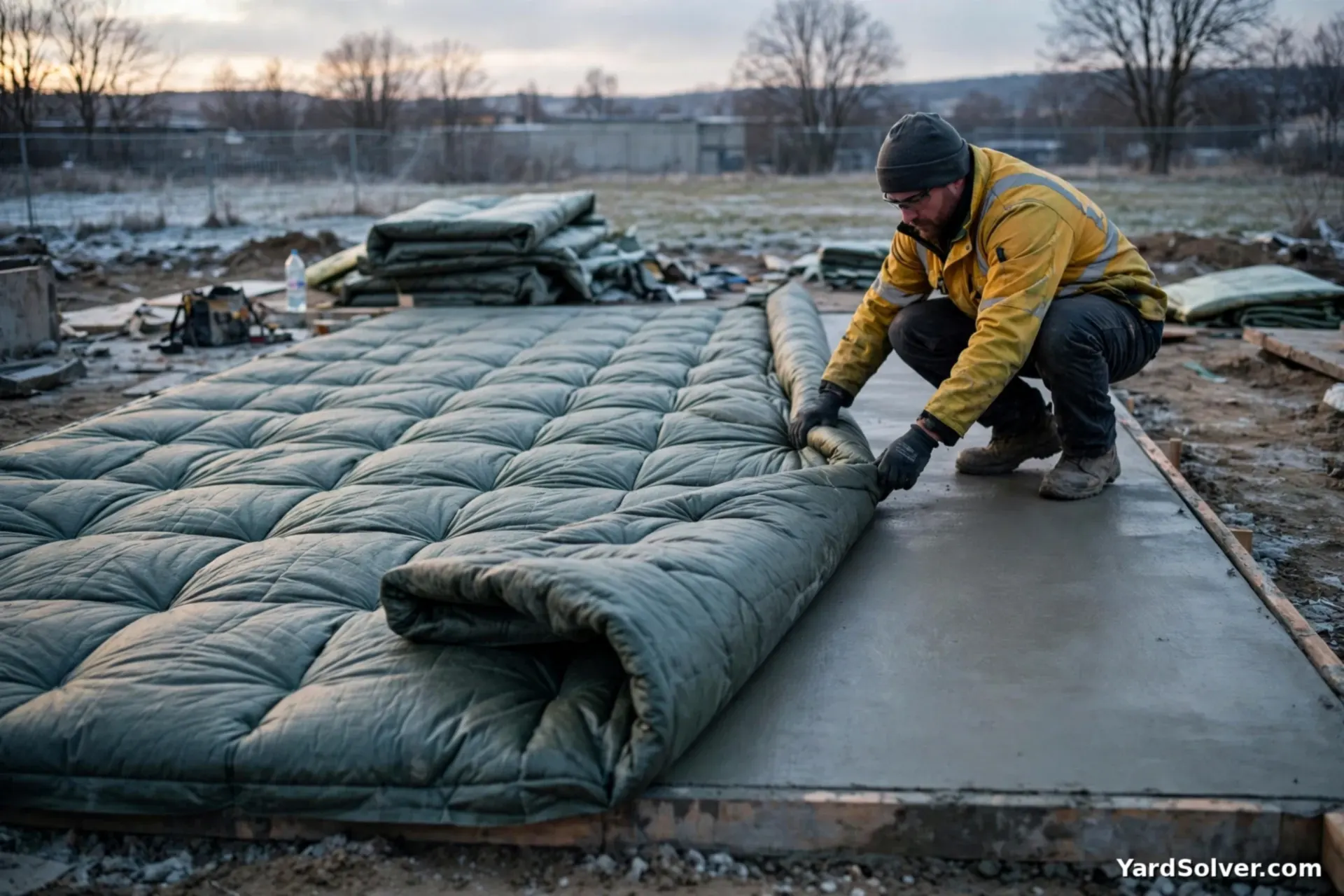
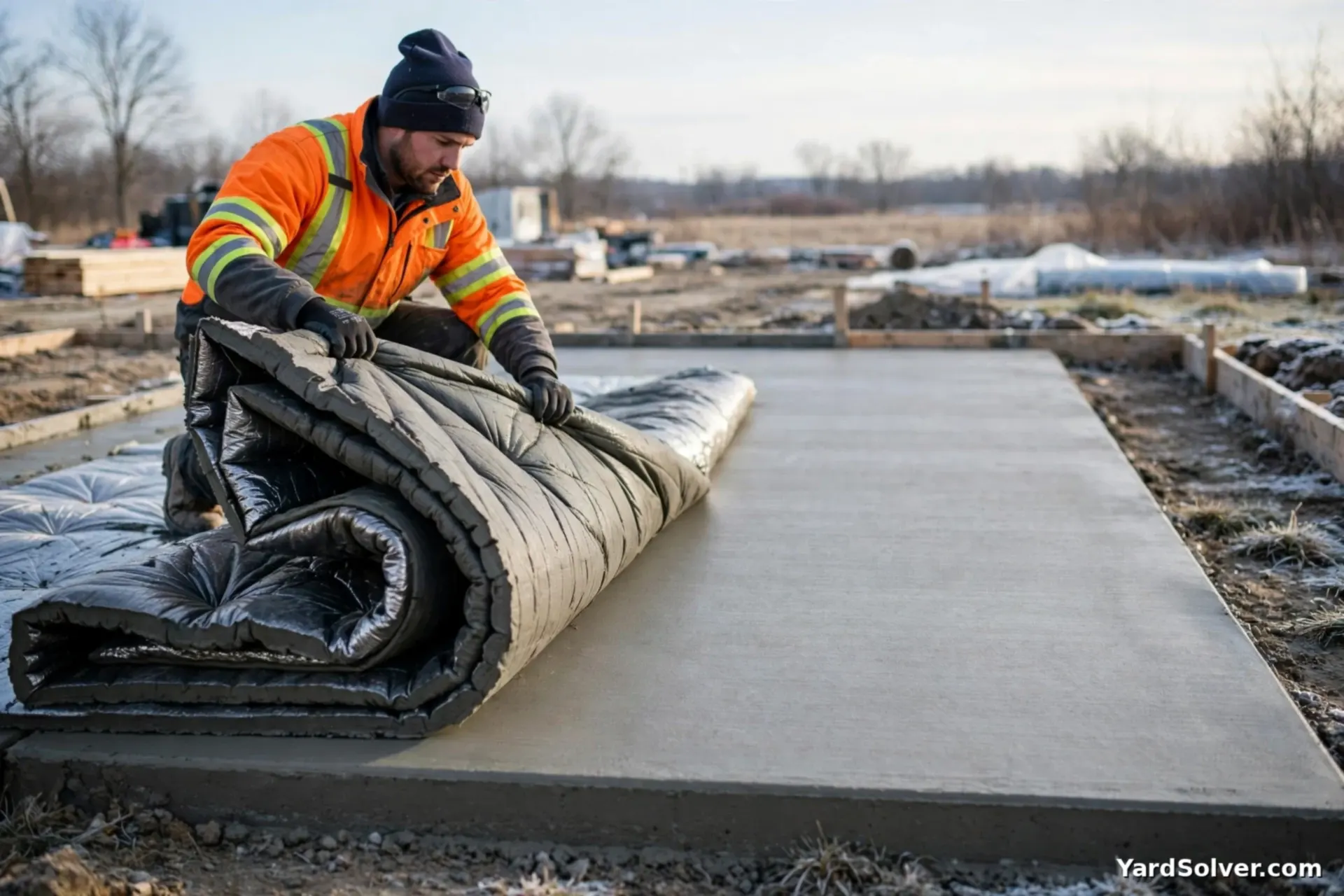
As soon as the finish is on, the protection goes on: a sheet of plastic against the surface, then insulated curing blankets over that — or, on a budget, a thick layer of straw under plastic. The edges and corners lose heat fastest, so double the cover there. The target is simple to say and strict to keep: the concrete stays above about 50°F for the first 3 to 7 days, and it must not freeze at all before it reaches roughly 500 psi — about a day or two in mild cold, longer when it is colder. In a hard cold snap (days in the 20s), thin homeowner blankets may not be enough; that is the weather to rent proper insulated blankets or postpone. Fresh concrete makes a little heat of its own as it cures — the blanket's job is simply to not let it escape.
Step 5 — Uncover slowly, and give it time
When the protection period is done, peel the blankets off gradually, on a mild part of the day if you can. Stripping warm concrete into freezing air shocks the surface and can craze it — a net of fine cracks that looks bad even when the slab is sound. Then be patient in a way summer never asks: cold-cured concrete gains strength slowly, so give a cold-weather slab a full week before real use, and the full 28 days before anything heavy sits on it. It will get there. Concrete poured cold and protected well ends up just as strong as a summer slab — it simply takes the scenic route.
Keep going
Choosing between a slab and pavers for the patio? Paver Patio Base covers the other build — the one with no curing weather window at all.
Still at the measuring stage? The Concrete Calculator sizes the pour before the truck or the bags get ordered.
Questions people ask
How cold is too cold to pour concrete?
For a homeowner pour, the honest line is this: if nights will drop below freezing in the first two or three days and you have no insulated blankets or heat, wait. Between 40 and 50 degrees the pour is workable with protection ready. Below 40 degrees you are in true cold-weather concreting, which pros do with warm mixes, enclosures and heaters — possible, but no longer a casual weekend job.
What happens if fresh concrete freezes?
If concrete freezes in its first 24 hours, before it reaches about 500 psi, it can lose up to half of the strength it would ever have had, and the surface often flakes and scales later. The damage is inside the slab and cannot be patched back — which is why one cold night matters more than a week of fussing afterwards.
Can I just add more cement instead of using blankets?
A richer mix and an accelerator help the concrete get ahead of the cold, and warm mix water helps too. But they do not replace protection: the slab still has to hold its heat above about 50 degrees for the first days. Heat kept in beats heat never made — the blankets are the main event, the mix tweaks are the support act.
Comments & ratings
No comments yet.
Be the first to share your experience.