
Guides · Lawn care · Published November 15, 2026
Snow Mold: What It Is, How to Fix It, and How to Prevent It
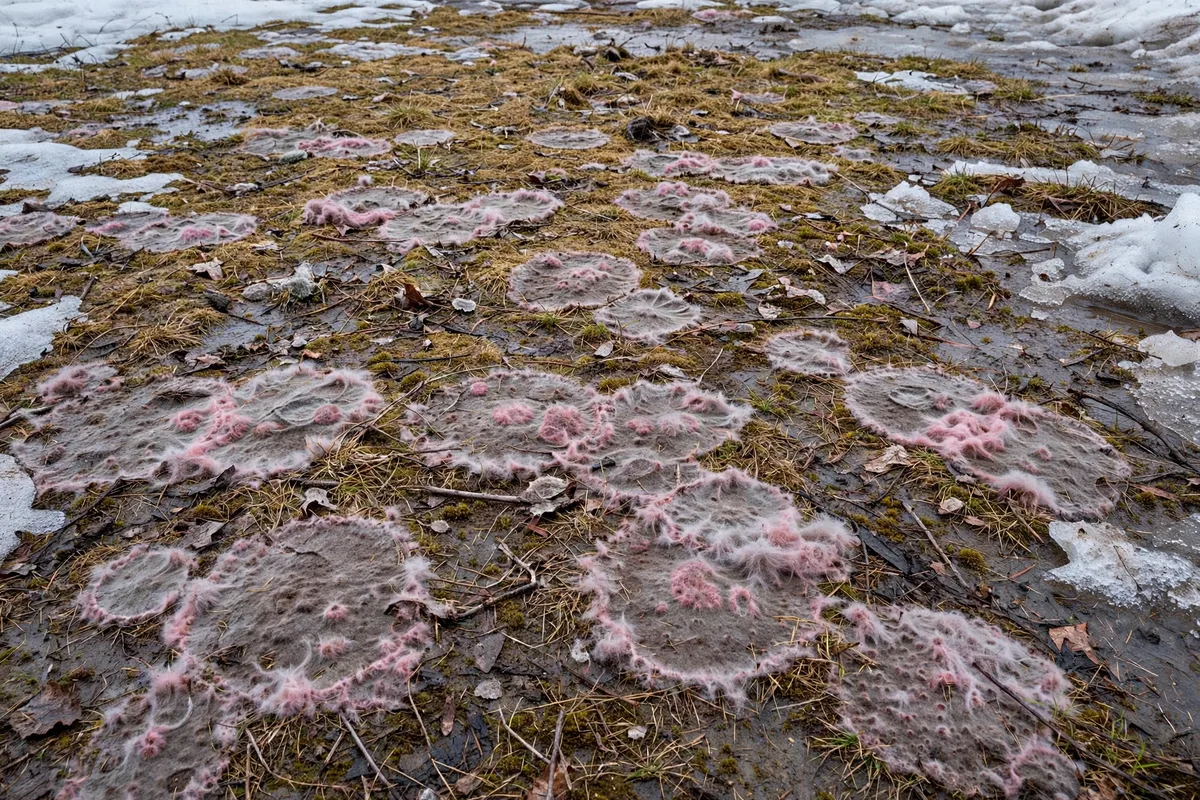
It appears in the cruellest week of the northern gardening year: the snow finally melts, you walk out to inspect the lawn, and it is covered in matted grey circles, some with a faint pink edge, the grass inside them flattened and slimy. This is snow mold — a fungal disease that works under the snow all winter, in the dark, wet, near-freezing layer between the soil and the snowpack. The good news is that most snow mold is cosmetic: the fungus usually damages the blades, not the crowns, and the lawn grows out of it. The work is knowing which type you have, helping it dry, and changing the fall habits that set it up. Here is the whole picture.
Step 1 — Identify it: grey snow mold vs pink snow mold
Grey snow mold (Typhula blight) forms circular patches from a few inches to about two feet across, grey-white and matted, often with tiny hard resting bodies (sclerotia) in the dead grass that look like small seeds. It needs snow cover to develop and mostly burns off as the lawn dries — it typically damages blades only. Pink snow mold (Microdochium patch) forms smaller, reddish-brown to pink-tinged circles, does not require snow — just cold, wet weather — and is the more serious of the two: in bad cases it can kill crowns and roots, leaving genuinely dead patches that will not recover. Both love the same conditions: long snow cover, especially snow that fell on unfrozen ground, matted leaves left under the snow, and grass that went into winter long and lush.
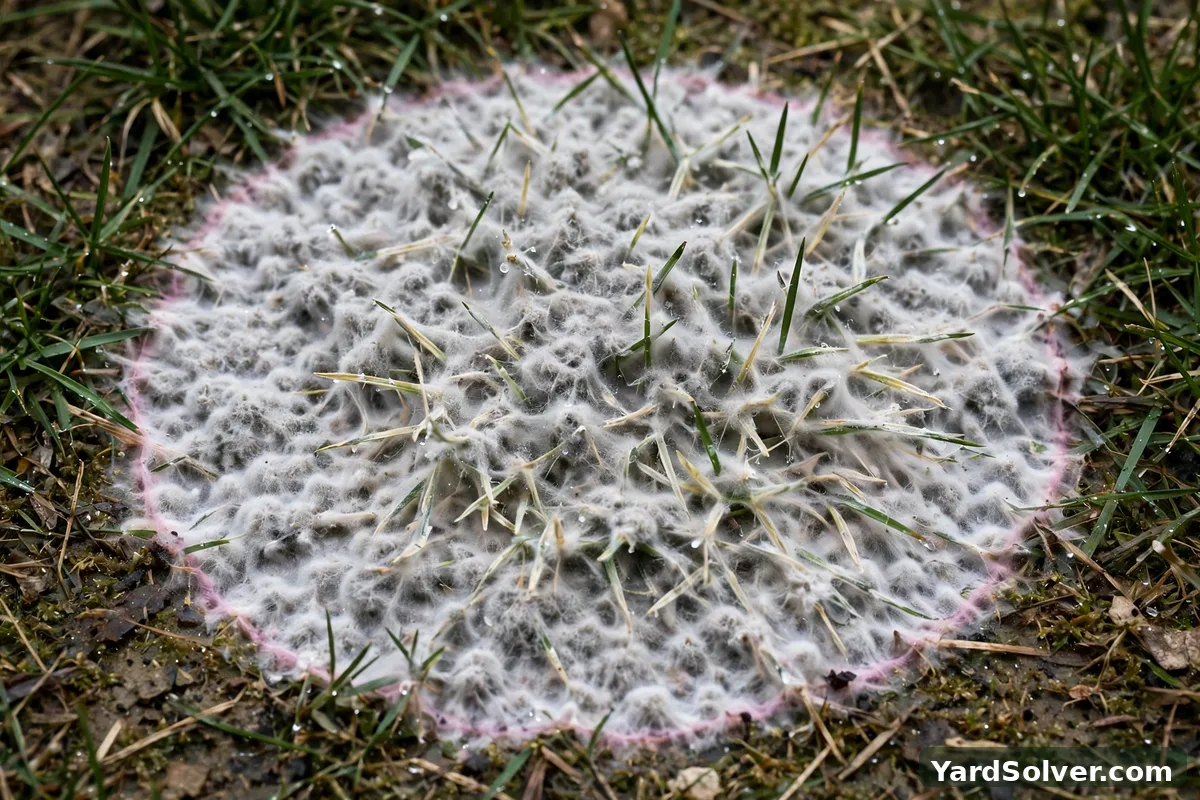
Timing is part of the identification. Snow mold shows at snowmelt — in Canada and the northern US, anywhere from February to April depending on the year. If your circles appear in summer instead, you are looking at a different disease entirely, and the diagnosis guide in Brown Spots in Your Lawn will sort it out.
Step 2 — Rake it out gently and let it dry
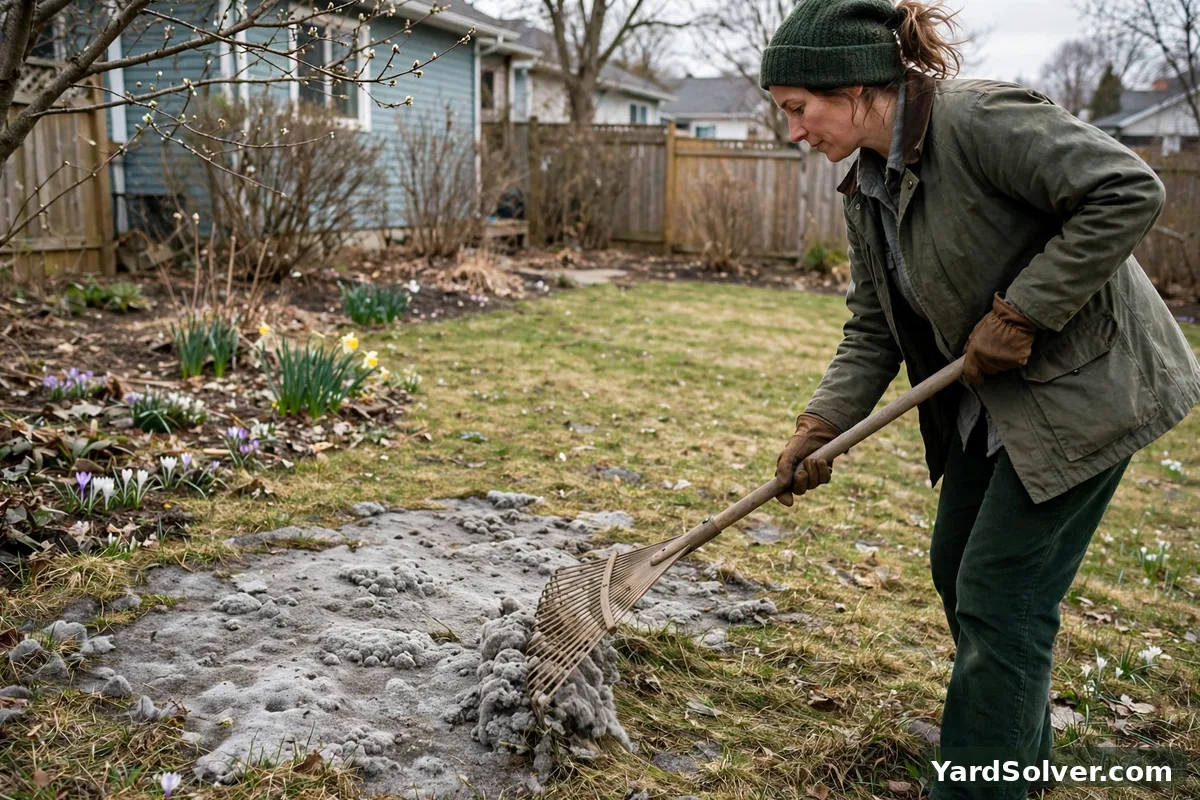
The single most useful thing you can do costs nothing: once the patches are no longer soaking wet, rake them lightly with a leaf rake to lift the matted grass, break up the fungal mat and let air and sun reach the crowns. You are not trying to rake the patch clean — aggressive raking on wet soil tears out crowns that were going to recover. Fluff, then walk away. Sun and airflow do the rest: grey snow mold stops growing as the surface dries and temperatures rise, and most patches green back up from the crowns within a few weeks of normal spring growth.
Hold off on two instincts. Do not fertilize a mold patch heavily to "push it out of it" — a flush of soft nitrogen-fed growth is exactly what lawn fungi enjoy. And do not reach for a fungicide on a home lawn at this stage: by the time you can see snow mold, the damage is done and the fungus is winding down; fungicides for this disease are preventive, applied in fall, and are mostly a golf-course tool. Your spring job is drying, patience, and honest assessment.
Step 3 — Repair the patches that do not come back
Give every patch three to four weeks of active spring growth before judging it. Scratch the surface of a patch that is still bare: if you see green crowns at the base, it is alive and just slow. If the patch is dead — most often pink snow mold’s work — rake out the dead material, rough up the soil, and reseed it. The Seed Calculator turns the total area of your dead patches into the amount of seed to buy, so a dozen small circles do not turn into a whole unnecessary bag. A light starter feeding worked out with the Fertilizer Calculator helps the repair patches establish, at the measured rate rather than a heavy-handed one.
Keep the reseeded patches moist like any new seeding, and expect them to lag the rest of the lawn by a few weeks. By early summer a repaired patch is usually invisible.
Step 4 — Prevent it next winter: the fall checklist
Snow mold is largely decided in October and November. The prevention list is short and entirely mechanical. Keep mowing until the grass stops growing, and take the last cut a little shorter than mid-season height — long grass mats down under snow and makes the fungus a perfect home. Clear the leaves: a mat of leaves left on the lawn under snow is snow mold’s favourite real estate. Go easy on late fall nitrogen — a heavy late feeding pushes soft growth into winter; if you fertilize in fall, do it while the grass can still use it, not on the eve of snow. Improve drainage in the low spots where snow lingers longest, and when you shovel in winter, spread deep snow piles out where you can — the last snowbank to melt is where the worst patch will be. Finally, manage thatch: a thick thatch layer holds moisture at the surface, and our guide to How to Dethatch a Lawn covers the half-inch test that tells you if yours is part of the problem.
The same fall tidy-up protects the rest of the garden, by the way — cold-climate staples like garlic go into winter under mulch in the same weeks, and both jobs reward the gardener who finishes before the first lasting snow instead of after it.
Keep going
Snow mold is one entry in the whole family of lawn marks and patches. When something appears in summer instead, Brown Spots in Your Lawn: 7 Causes and How to Tell Them Apart walks the same diagnosis in the other season.
Spring repair fits into a bigger dated plan — seeding, feeding and first mow all have their weeks. The Garden Planner lays them out from your own frost dates, with quantities and a shopping list.
Questions people ask
Will snow mold kill my lawn permanently?
Usually not. Grey snow mold typically damages only the grass blades, and the crowns underneath survive and regrow as the lawn dries and warms. Pink snow mold is the more serious type and can kill crowns in patches, leaving dead areas that need reseeding. Give patches three to four weeks of spring growth before deciding — many that look dead in March are quietly alive at the base.
Should I use a fungicide for snow mold?
On a home lawn, almost never in spring. Snow mold fungicides work preventively, applied in late fall before snow cover, and by the time you see the disease at snowmelt the fungus is already winding down as the surface dries. Raking to fluff and dry the patches, plus the fall prevention habits — shorter last mow, leaves cleared, moderate late nitrogen — do more for a home lawn than a spring fungicide can.
Why does snow mold come back to the same spots?
Because the conditions that grew it are still there: those spots are where snow lies longest (often where it is piled from shovelling), where leaves mat down in fall, where drainage is slowest, or where thatch is thickest. Fix the condition — spread snow piles, clear leaves, improve drainage, dethatch if the layer is over half an inch — and the same spot usually stops being the problem.
Comments & ratings
No comments yet.
Be the first to share your experience.