
Guides · Lawn care · Published November 15, 2026
Brown Spots in Your Lawn: 7 Causes and How to Tell Them Apart
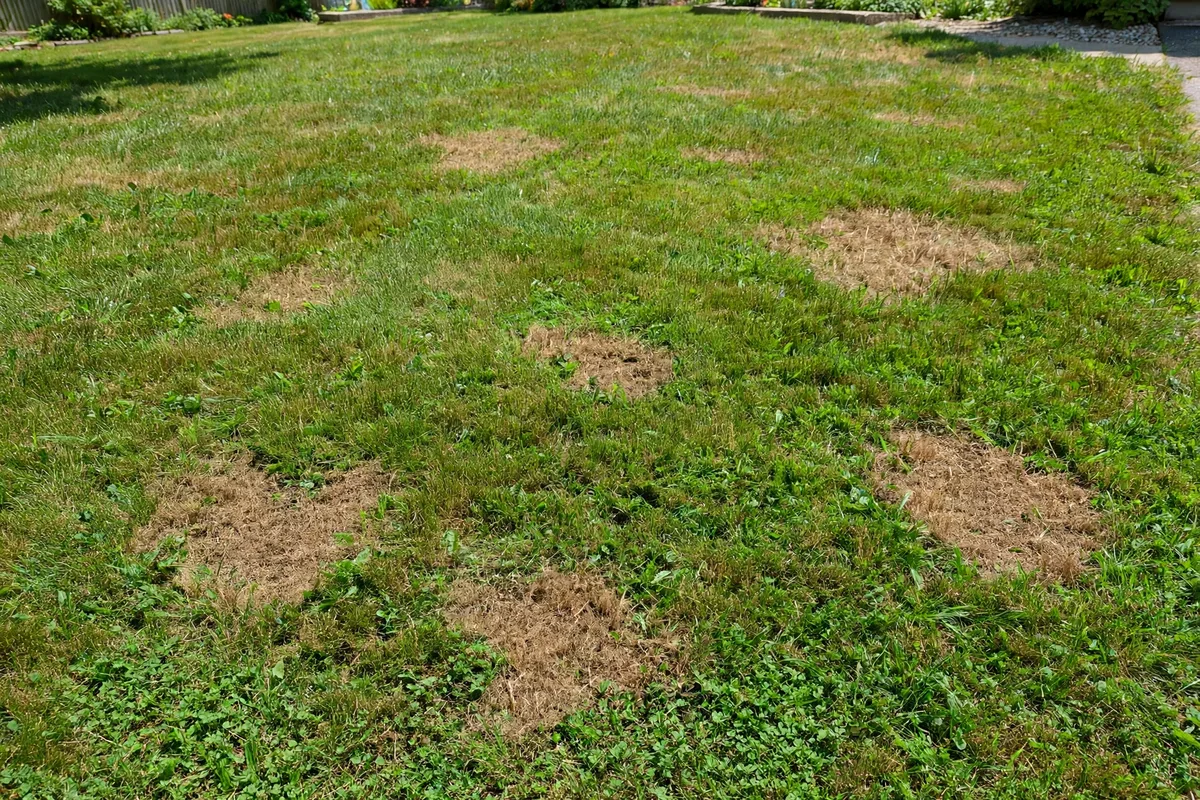
Brown spots in lawn grass are a symptom, not a diagnosis — and the fix for one cause actively wastes money on another. Fungicide does nothing for drought. Extra water makes fungus worse. Seed will not fix a pH problem. The seven causes below account for nearly every brown patch on a home lawn in the US and Canada, and each one leaves a different signature: a shape, a pattern, a feel underfoot, a response to a simple test. Read the pattern first, run the quick test that confirms it, and only then spend money. This page is the sorting hat.
Step 1 — Read the pattern before you touch anything
Stand back and look at the whole lawn, not the patch. Where the brown appears is half the diagnosis. Brown only on the high spots, slopes and south-facing edges, while low areas stay green? That is water talking. Perfect circles that expand week by week? Fungus or grubs. Spots that follow the dog’s favourite route out the door? You already know. A brown tint in straight lines or a checkerboard that appeared within days of a fertilizer application? That is the spreader’s signature. One dull, thin, yellowing-brown area that never responds to anything you feed it? Suspect the soil itself. Shape, spread and timing are the three witnesses — interview them before you buy a single product.
Then get close. Part the grass at the edge of a patch — the border between brown and green is where diseases are active and evidence is freshest — and look at the blades, the crowns and the soil surface. The three tests in the next step take five minutes total.
Step 2 — Run the three tests: tug, screwdriver, and the morning look
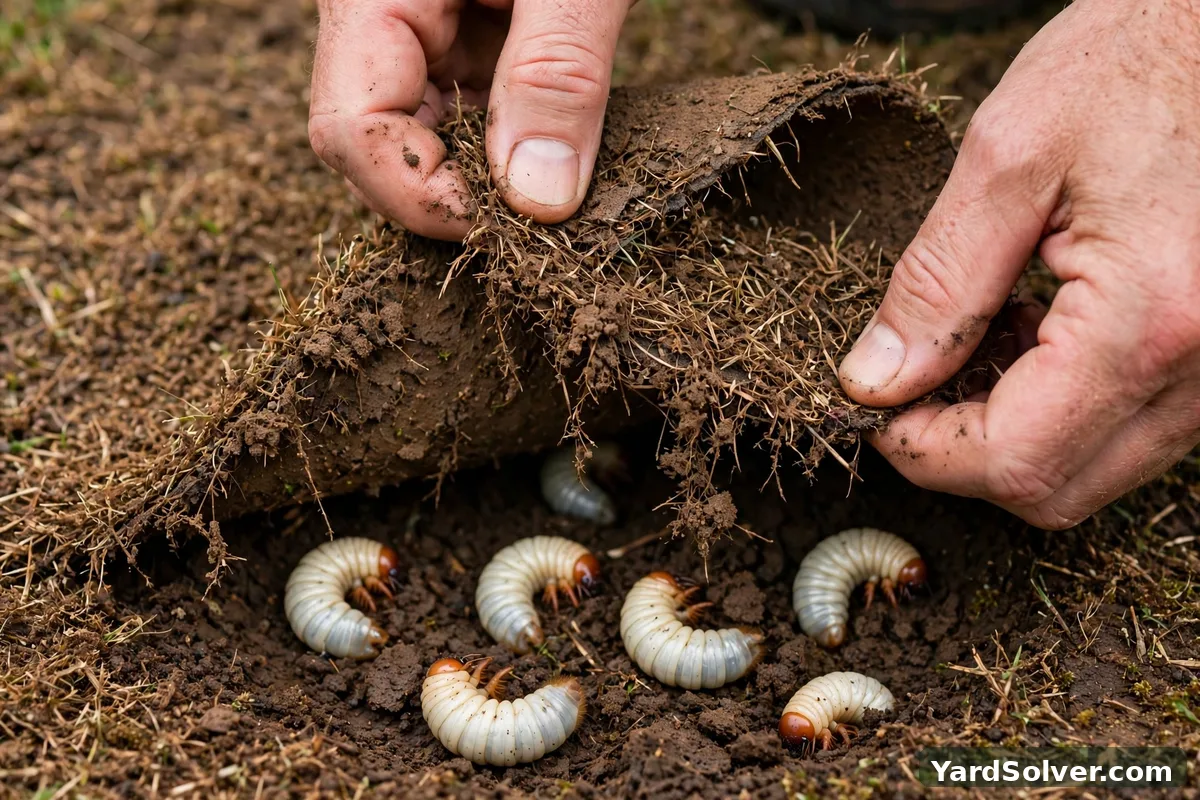
The tug test: grab a handful of brown grass and pull gently. If the turf lifts and peels back like a loose carpet, roots are gone — that means grubs have eaten them, and peeling the turf back will usually show the white C-shaped grubs themselves in the top two inches of soil. If the grass resists and stays rooted, grubs are not your cause. The screwdriver test: push a long screwdriver into a brown area and into a green area. If it slides into the green but stops hard in the brown, the brown patch is simply dry and compacted — drought stress, cause number one. The morning look: check a patch early, while dew is on it. Fungal diseases often show fine, cobwebby threads (mycelium) across the blades at dawn, and individual blades carry lesions — spots, bands or bleached tips — that drought never makes.
The 7 causes, one by one
1. Drought and heat. The most common cause of all. Irregular straw-brown patches on high, sunny, or shallow-soil areas; screwdriver will not penetrate; grass is dormant, not dead, and greens up within a week or two of real rain or deep watering. Fix: deep, infrequent watering, and mow higher in summer.
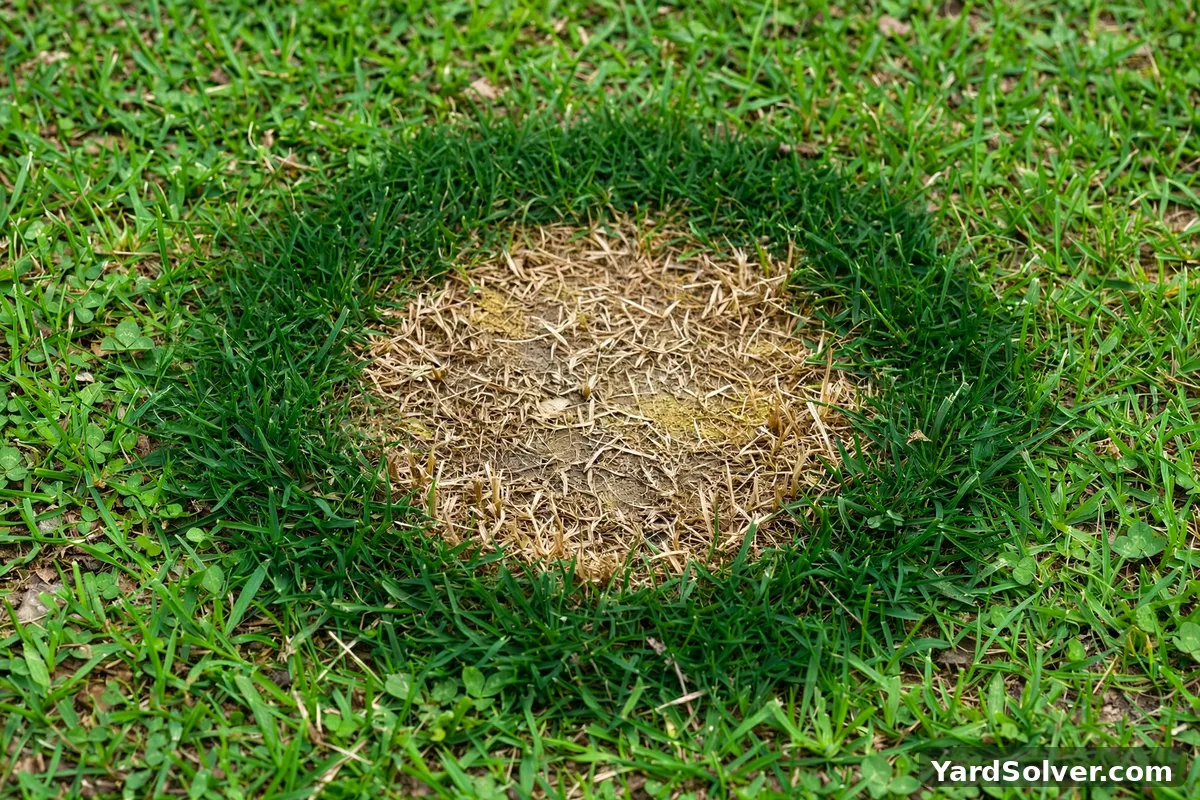
2. Fungal disease. Circles or rings that expand, blades with lesions, morning mycelium. Brown patch, dollar spot and their cousins love warm, wet nights and heavy nitrogen. Our snow mold guide covers the cold-season member of the family; summer diseases share the rules: water in the morning only, improve airflow, feed moderately. 3. Grubs. Spongy turf that peels back, irregular patches in late summer and fall, often with birds and skunks digging. Full treatment in the lawn grubs guide. 4. Dog urine. Round dead spots a few inches across with a dark green ring of over-fed grass around them — see dog urine spots for the fix and prevention. 5. Mower damage. A uniform brown or white cast over the whole lawn within days of mowing, worse on bumps and high spots: dull blades shredding tips, or scalping. Sharpen the blade, raise the deck. 6. Fertilizer burn. Streaks, stripes or a dead patch where granules spilled, appearing days after feeding. Flood the area with water; use the Fertilizer Calculator next time so the rate is measured, not guessed. 7. Low soil pH. The quiet one: a lawn that stays thin, pale and patchy-brown despite water and food, with moss creeping in. Acid soil locks nutrients away from the roots. A soil test confirms it, and the Lime Calculator works out the correction for your lawn’s size and soil type.
Step 3 — Fix the cause, then repair the patch
Every cause above has its own fix, and the patch repair only sticks once the cause is handled — seeding over active grubs or un-limed acid soil just grows the next brown spot. Once the cause is treated, repair is the same for all of them: rake out the dead material so seed can touch soil, reseed at the bare-ground rate (the Seed Calculator sizes the amount to the patch), keep it moist until it sprouts, and keep feet off it for the first few mows.
The diagnosis habit you build here transfers to the whole garden. A gardener who learns to read lesion patterns on lawn grass will spot the same fungal logic early on tomatoes, where leaf spots announce themselves the same way — pattern first, product second. And if the brown in your lawn turns out to be a spring problem with grey or pink circles, that is snow mold, with its own page and its own fall prevention list.
Keep going
Two of the seven causes have their own full guides: Lawn Grubs for the peel-back patches, and Dog Urine Spots on Grass for the ringed spots by the door.
Repairs, feeding and liming all belong on a dated plan rather than a weekend whim — the Garden Planner builds yours from your frost dates, with quantities and a shopping list.
Questions people ask
Why is my lawn brown in spots even though I water it?
Because water is only one of seven common causes. If the spots peel up like carpet, grubs have eaten the roots and the water never had a chance. If they are circles with lesioned blades, a fungus is at work and extra water can make it worse. If a soil test shows low pH, the grass is starving in the middle of plenty. Run the tug test and the screwdriver test first — five minutes of diagnosis beats a season of watering the wrong problem.
Are brown spots in a lawn dead or dormant?
Drought-browned grass is usually dormant, not dead: the crowns are alive and it greens up within a week or two of deep watering or real rain. Grass killed by grubs, urine burn or severe disease is dead and will not recover — check for green crowns at the base of the patch. Dormant patches need patience; dead patches need the cause fixed and then reseeding.
When should I worry about brown spots spreading?
Spreading is the signature of an active cause: fungal circles expand while weather suits them, and grub patches grow as the grubs feed outward. A static patch that appeared once — a fertilizer spill, a scalped bump — is an event, not an infestation. Mark the edge of a spreading patch with a couple of pegs and check it in three days; movement tells you the cause is alive and needs treating, not just repairing.
Comments & ratings
No comments yet.
Be the first to share your experience.