
Guides · Fall & winter tasks · Published November 1, 2026
How to Overwinter Pepper Plants Indoors
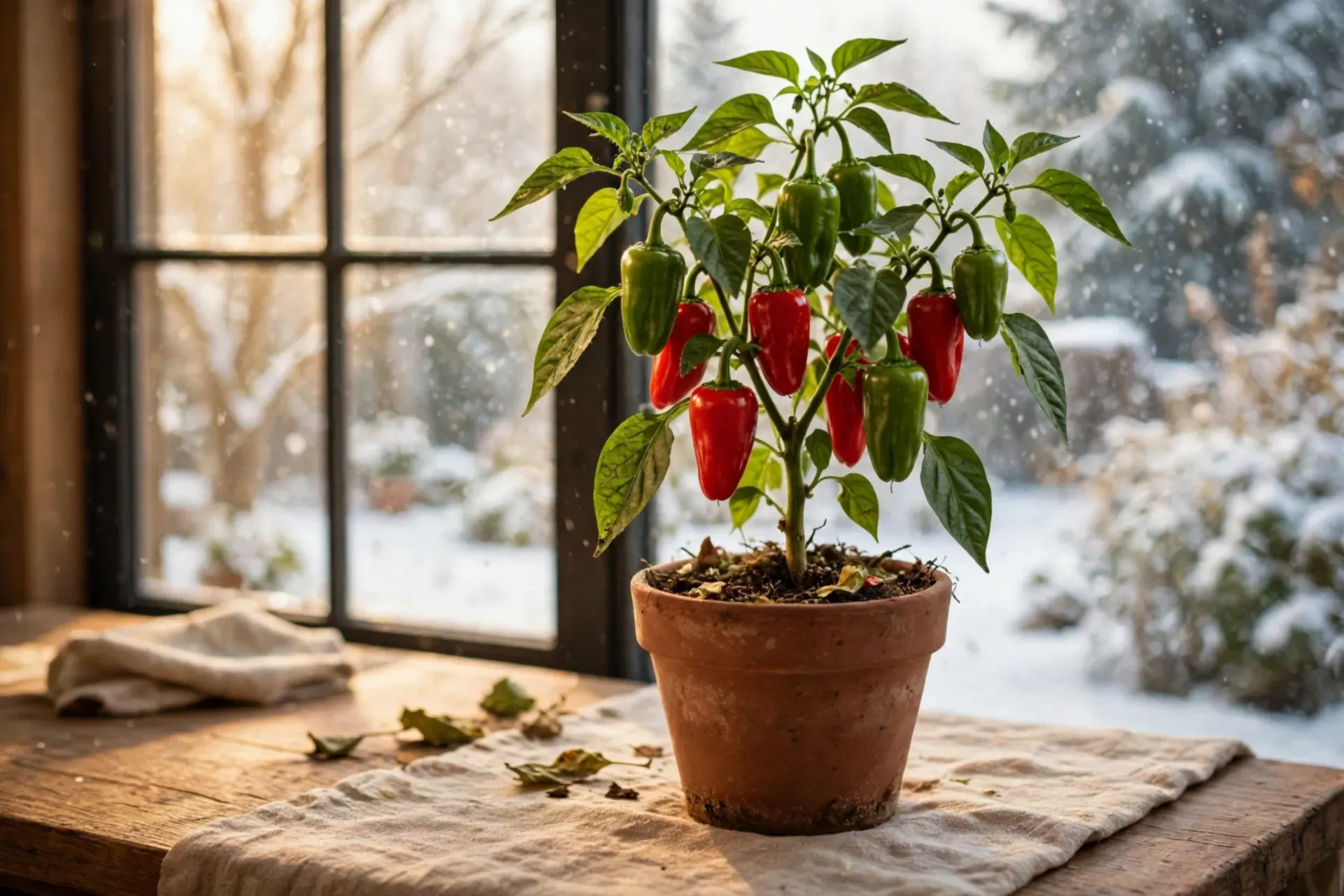
In their native climate peppers are perennial shrubs that live for years — it is only frost that makes them annuals in northern gardens. Bring a good plant indoors before the first hard frost, cut it back hard, and keep it in a cool, bright, half-dormant state all winter, and it wakes up in spring as a mature plant that fruits weeks earlier than any seedling. It costs one pot of space. Here is the whole routine.
Before you start: pick the right plant
- Choose health, not sentiment: a vigorous, disease-free plant — a sick or pest-ridden plant carried indoors will share its problems with every houseplant you own
- Hot and compact varieties overwinter best, but any pepper can be tried; big bells are the most reluctant
- Timing is fixed by the weather: the plant must come in before the first frost night — a frost-touched plant rarely recovers indoors
- Pot-grown plants are easiest (just carry them in); garden plants can be dug with a root ball and potted, accepting some shock
Step 1 — Clean it like it is entering quarantine (because it is)
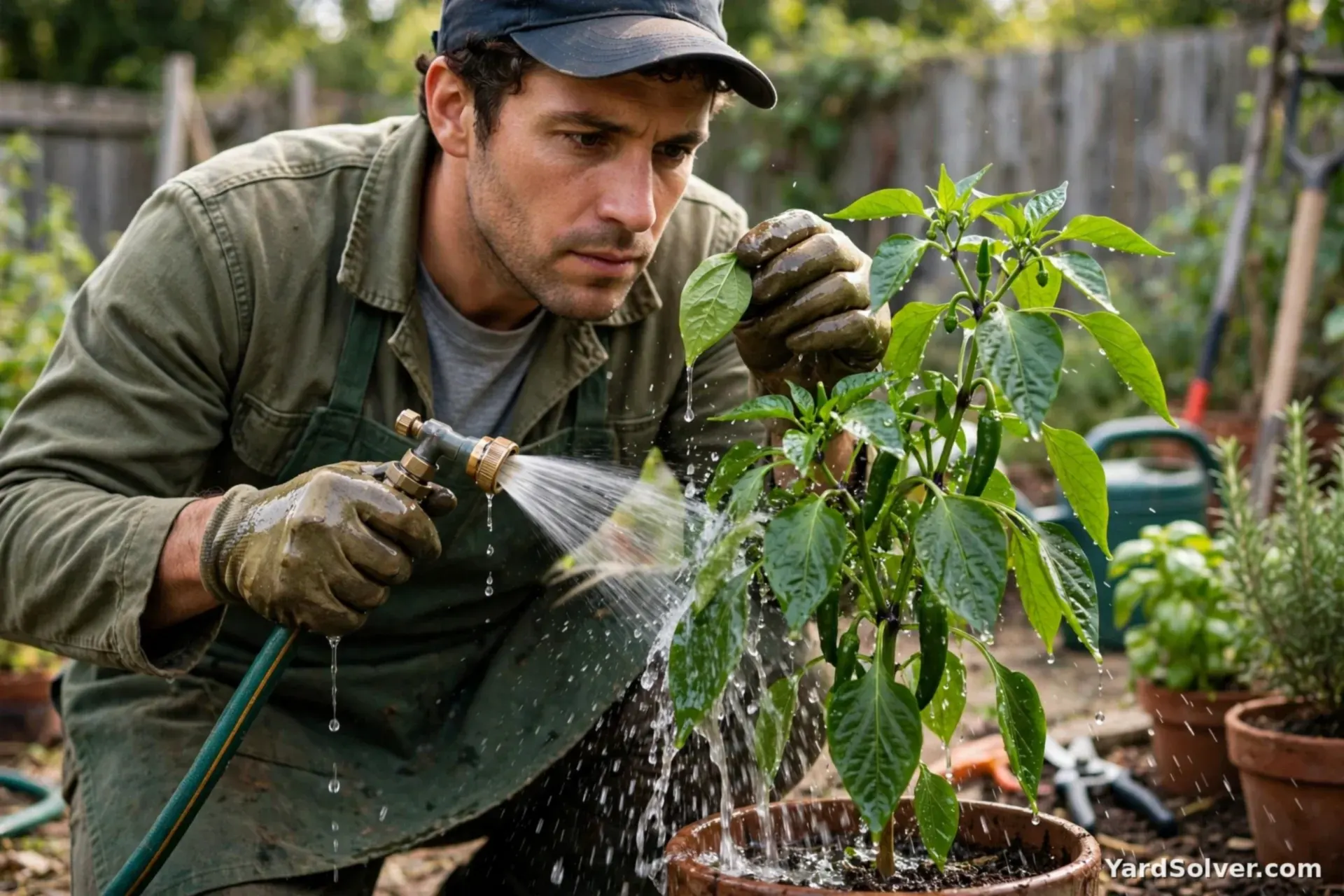
Outdoor plants carry aphids, whitefly and eggs. Hose the plant down thoroughly, check every leaf underside, and prune off anything suspect. Keep the pepper away from your houseplants for the first two weeks indoors and inspect it twice a week — an aphid colony in January starts exactly this way.
Step 2 — Prune it back to a skeleton
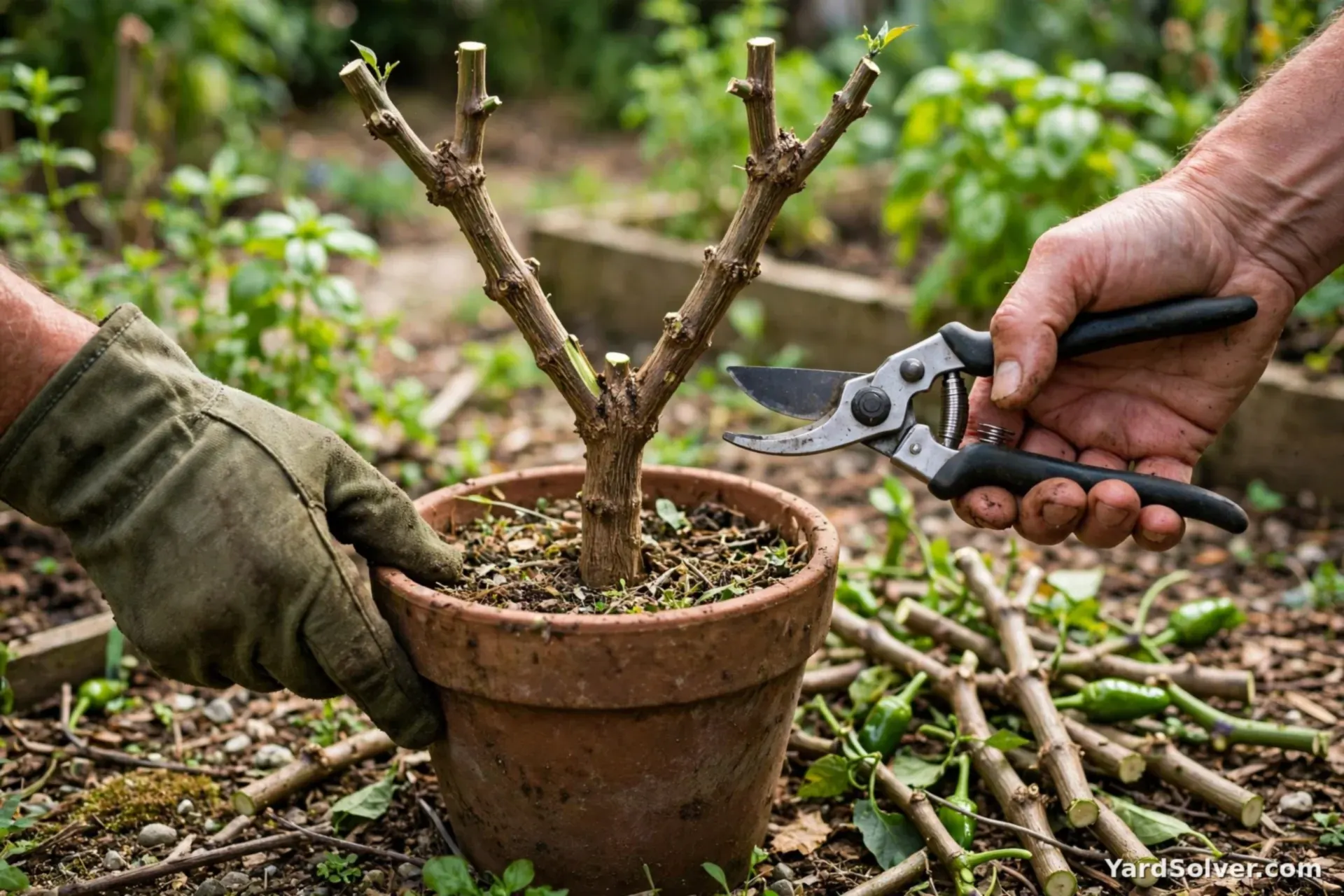
This feels drastic and is the heart of the method. Cut the plant back to a short woody framework — a Y or V of thick stems about 15–20 cm (6–8 inches) tall — and strip off the leaves. A leafless skeleton needs little light, little water, and gives pests nowhere to live. If the plant is coming out of the ground, trim the root ball to fit a pot of fresh mix, roughly matching the cut you made above ground.
Step 3 — Give it the cool, bright corner
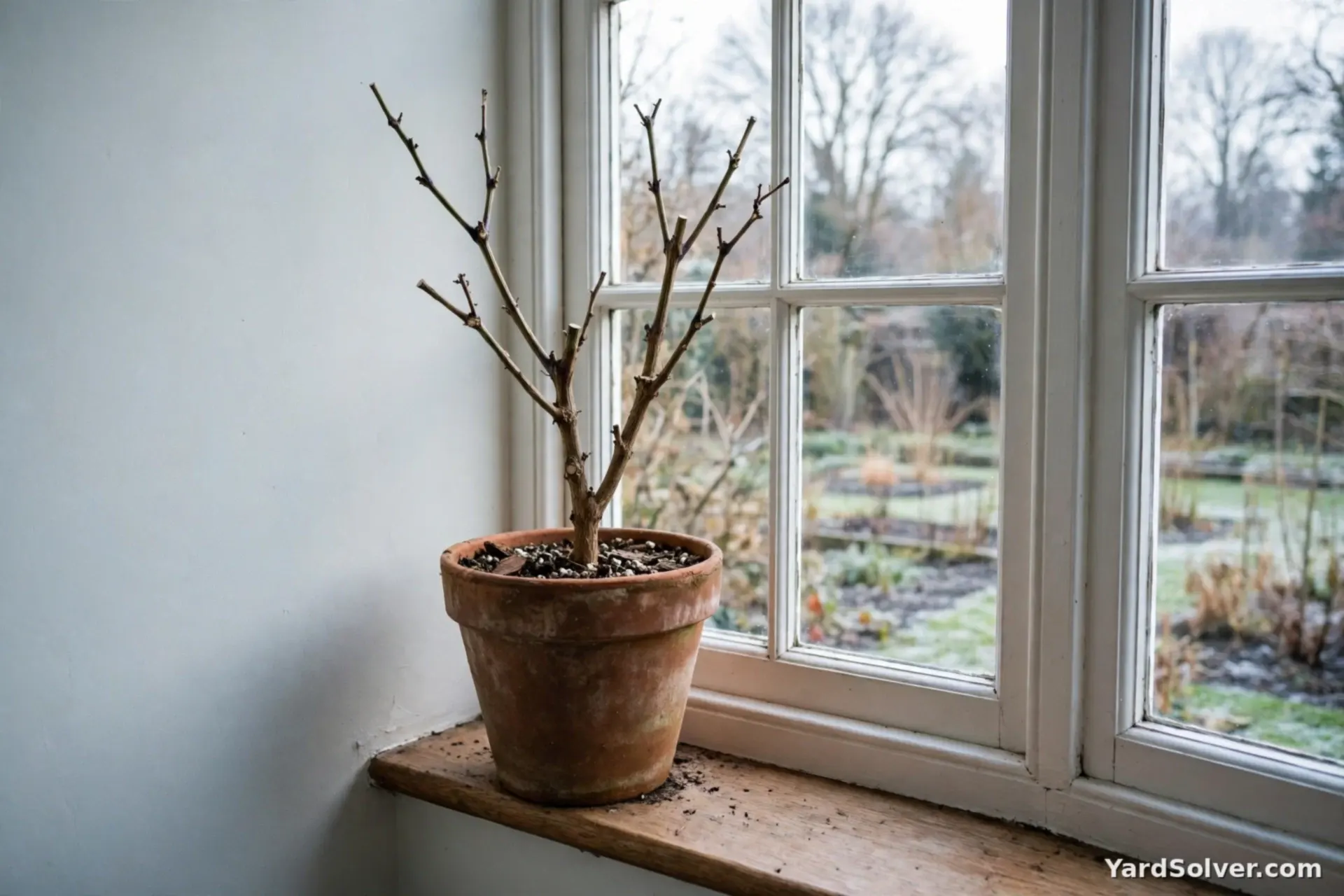
The ideal winter spot is bright and cool — around 10–15 °C (50–60 °F): an unheated spare room, a bright garage window, a cool sunroom. Warm rooms keep the plant trying to grow weakly toward weak light, which exhausts it and invites pests. In the cool corner it should sit nearly dormant, holding, not growing.
Step 4 — Water like you mean to forget it
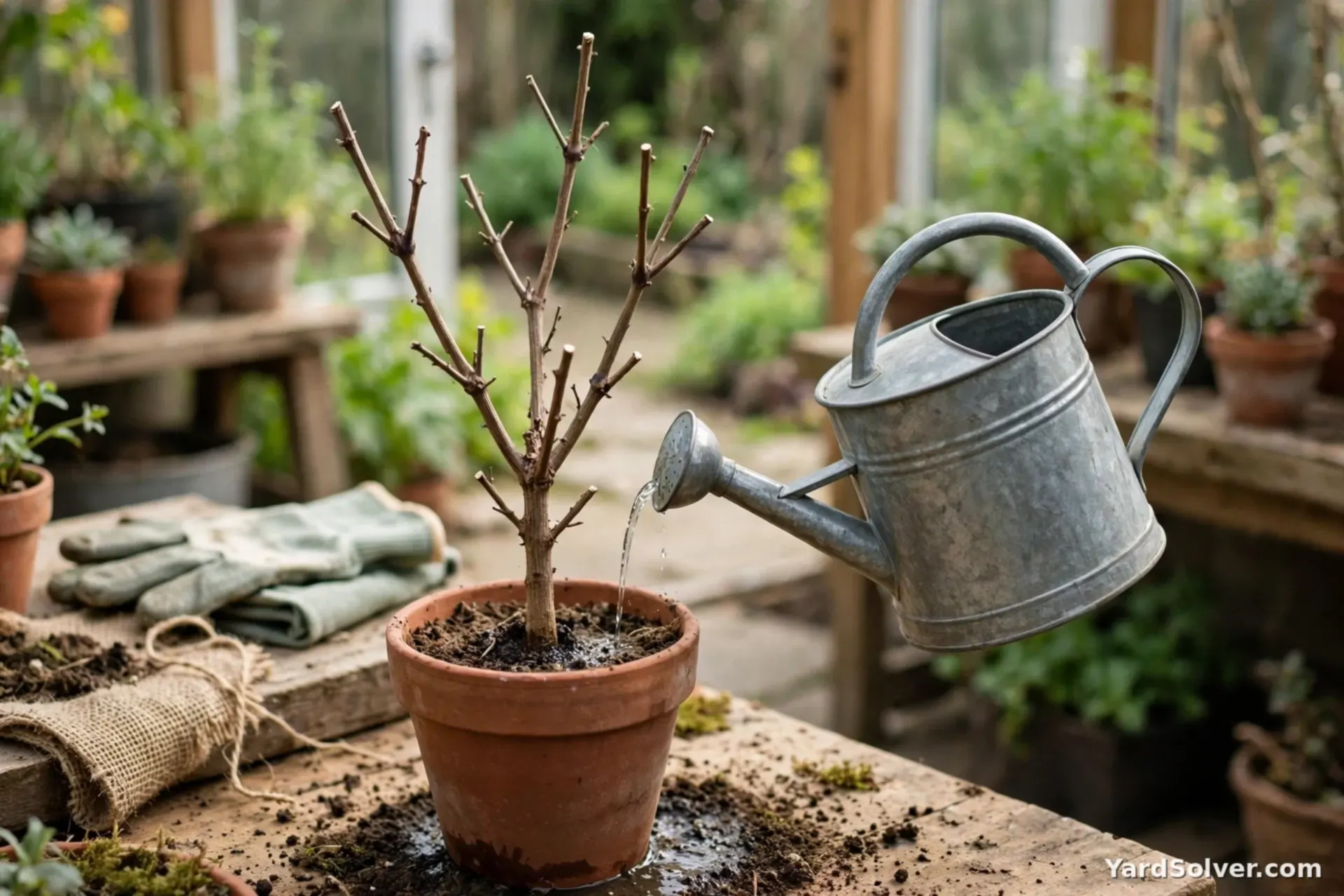
A dormant pepper needs very little: water just enough to stop the mix going bone-dry all the way through — often every two to three weeks. No fertilizer at all until spring. The commonest way to kill an overwintering pepper is kindness: warm room, frequent water, weak growth, aphids. Check monthly for pests on any new leaf, and expect the plant to look dead. Most are not — scratch a stem: green under the bark means alive.
Step 5 — Wake it up 6–8 weeks before your last frost
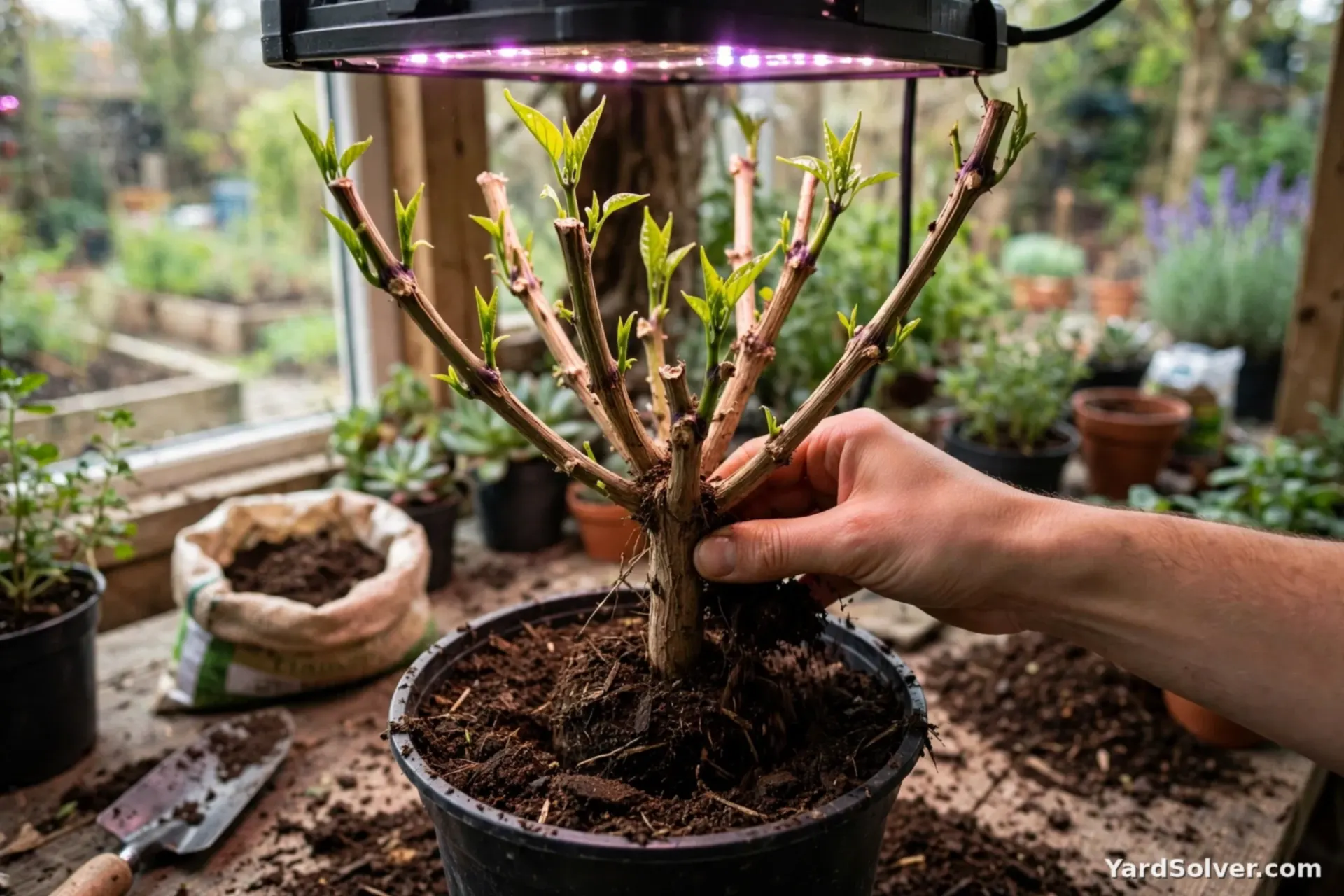
Move the plant into warmth and your brightest light (or under a lamp), water it properly, and give a first weak feed once new buds swell. Fresh green shoots usually appear within a couple of weeks. Repot into fresh mix if it is root-bound, then treat it like a prized transplant: harden it off over a week or more before it goes back outside after the last frost.
Keep going
While it sleeps: How to Grow Herbs Indoors in Winter · How to Get Rid of Fungus Gnats. Keeping tender plants through winter instead of replacing them? Geraniums take a different trick: Overwintering Geraniums — potted, cuttings, or bare-root in paper bags. If the plant fruits poorly next summer, work through Why Are My Peppers Not Producing Fruit? — and the pepper's full profile is in the Plant Library.
Questions people ask
Will my pepper plant actually survive the winter?
Many do, and the healthiest, youngest plants have the best odds — but there is no guarantee, and some simply never wake. Treat it as a bonus: one survivor fruits weeks ahead of seedlings, which repays the small effort several times over.
Do I really have to cut off all the leaves and most of the plant?
Most experienced growers do, and it is what makes the method work indoors: a small leafless skeleton needs little light or water, and leaves no habitat for the aphids and whitefly that otherwise explode on a full plant in a warm room. A gentler prune can work in a bright sunroom, but expect more pest patrol.
Why is my overwintered pepper dropping its last leaves?
Leaf drop after the move indoors is normal — the plant is adjusting to far less light and settling into dormancy. As long as the stems stay firm and green under the bark, hold your nerve, keep the mix barely moist, and wait for spring buds.
Comments & ratings
No comments yet.
Be the first to share your experience.