
Guides · Houseplants · Published November 10, 2026
Christmas Cactus Not Blooming? The Cool, Dark Fix
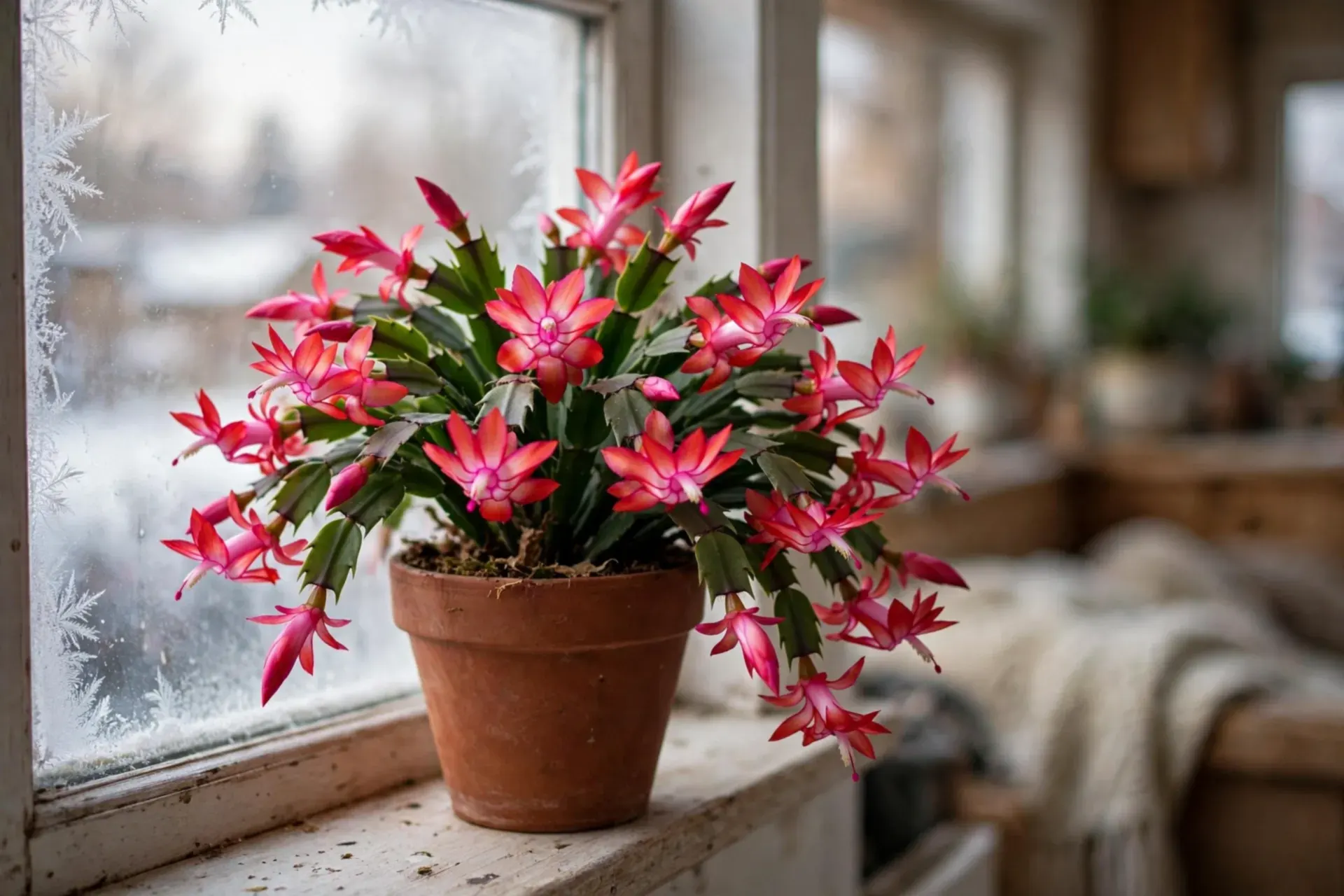
Here is the frustrating picture: a big, healthy, glossy green plant that has not flowered in years. It is not dying. It is not even unhappy. It is simply never been told that autumn happened. In the wild these are jungle cacti from Brazil that set their buds when the nights get long and cool. Indoors, in a warm room with the lights on until bedtime, neither signal ever arrives — so the plant grows leaves, waits, and grows more leaves. The fix is to fake autumn for about six weeks: long dark nights, cool air, and a bit of a rest. That is all this plant has been waiting for.
Step 1 — Check which cactus you actually own
Most plants sold as "Christmas cactus" are not — they are Thanksgiving cactus or hybrids of the two, and it matters only because it shifts the bloom time a few weeks earlier. Look at the edges of the flat stem segments:
| Type | Segment edges | Usual bloom time |
|---|---|---|
| Thanksgiving cactus | Pointed, claw-like teeth | Late November to December |
| Christmas cactus | Smooth, rounded scallops | Late December to January |
| Easter cactus | Rounded, with tiny bristles at the tips | Spring — a different plant, a different season |
The treatment below is the same for the first two. If yours turns out to be an Easter cactus, no amount of autumn darkness will help — it blooms on spring's lengthening days instead.
Step 2 — Give it long, unbroken nights
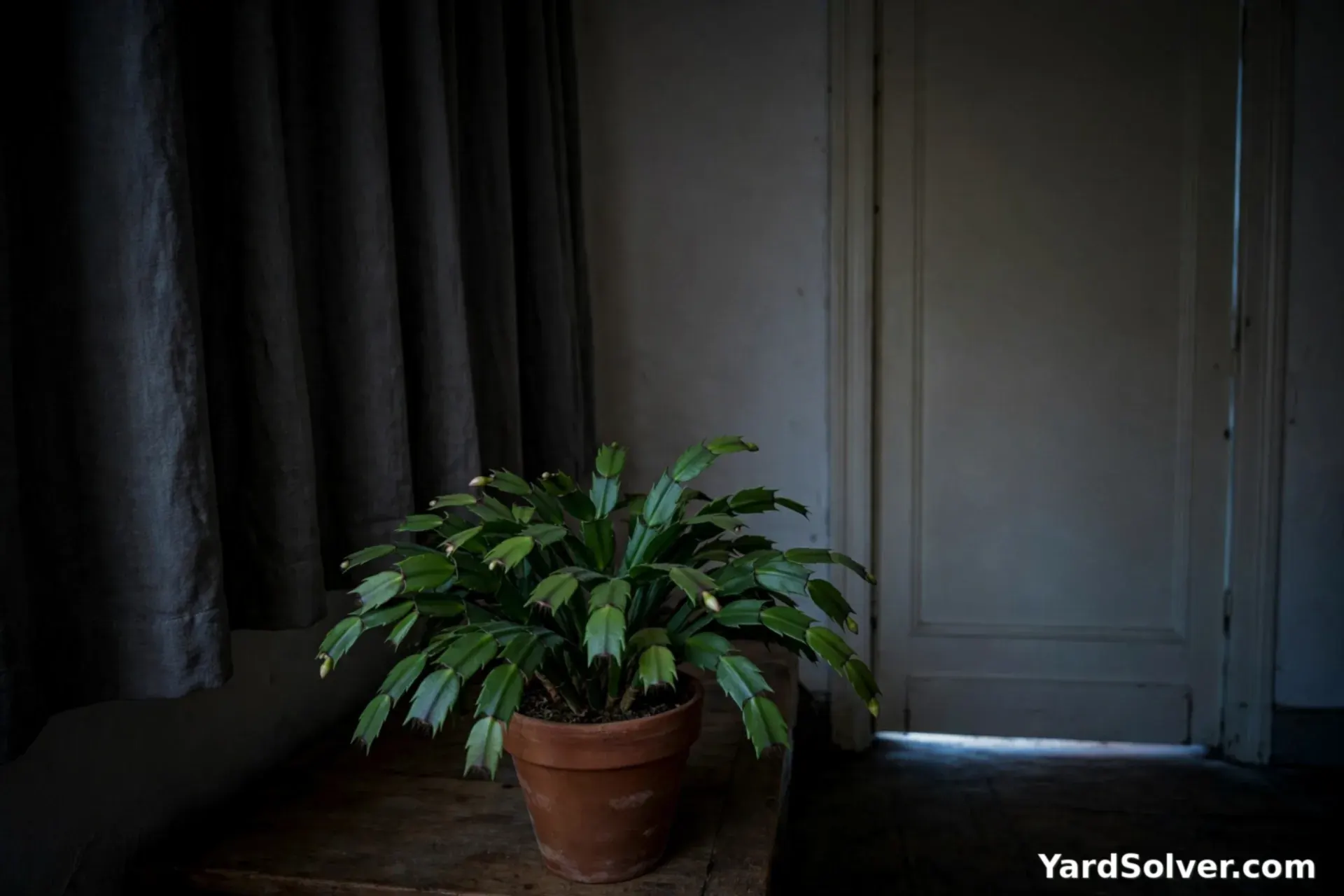
The plant needs 12–14 hours of complete darkness every night, and "complete" is the word that matters. A lamp across the room, a hallway light, even a bright streetlight through thin curtains can be enough to reset the night and cancel the signal — extension services warn that even a couple of hours of stray light can stop bud set. The easy ways to guarantee darkness: a spare room nobody uses in the evening, a closet, or a cardboard box slipped over the plant each night and taken off each morning. During the day it still wants bright, indirect light as usual. Keep this routine going for roughly six weeks, until you can see small buds forming at the segment tips.
Step 3 — Give it cool nights to match
Darkness is half the signal; the other half is temperature. Buds form best with nights around 50–55°F (10–13°C) — a cool spare room, an enclosed porch that stays above freezing, or a spot by a draft-free but chilly window. The University of Minnesota's guidance is stark: with nights above about 65°F, the plant is unlikely to bloom even if the darkness is perfect, because a warm house reads as endless summer. Keep it away from radiators and heating vents, and do not overdo the cold either — much below 50°F and buds that do form may drop. Cooler days are fine and need no fussing; it is the nights that carry the message.
Step 4 — Ease off the water, stop the feed
From late summer on, stop fertilizing completely — feeding pushes leaf growth, which is the opposite of what you want now. (Feeding season is spring and summer, when the plant is building segments; the Fertilizer Calculator handles doses when growth restarts.) During the dark-and-cool weeks, water a little less than usual: let the top inch dry between waterings. Remember this is a jungle cactus, not a desert one — the soil should never stay bone dry for weeks, and never sit soggy either. Slightly thirsty and resting is the mood you are after.
Step 5 — When buds show, move it back — then leave it alone
Once the segment tips are studded with small buds, the treatment is over: bring the plant back to its normal bright spot and normal watering. And then, the hardest step of all — do not move it again. A plant carried from room to room, turned for a better view, or parked near a door that blasts it with cold air answers by dropping its buds, sometimes all of them, in a day. Pick the display spot, settle the pot, water evenly, and let it flower. Individual flowers last about a week and open in waves, so a good plant performs for a month or more. While it rests after flowering, its easy-going housemates ask for even less: the Spider Plant and Pothos pages cover the two plants most often sharing the shelf. Next year, put "start the cactus treatment" in your Garden Planner for early October and the timing takes care of itself.
Keep going
Houseplants acting up this winter in other ways? Winter Houseplant Pests covers the fungus gnats and mealybugs that move in when the heating comes on.
Growing herbs on the same windowsill? Grow Herbs Indoors in Winter has the light and watering routine.
Questions people ask
My Christmas cactus is healthy and green — why won't it flower?
Because health was never the trigger. These plants set buds in response to autumn itself: nights longer than about 12–14 hours, unbroken by lamplight, plus cool nights near 50–55°F. A plant in a warm, lamplit living room gets neither signal, so it just keeps growing leaves. Six weeks of the dark, cool treatment is the fix, and it works on plants that have sulked for years.
The buds formed but then fell off — what happened?
Bud drop is a stress reply. The usual causes are moving the plant after buds formed, a hot or cold draft, a sudden change in temperature or light, or soil swinging between soggy and bone dry. Once buds appear, put the plant in its display spot, keep the temperature steady, water evenly — and leave it alone until flowering is done.
When should I start the treatment for Christmas blooms?
Count back about 10 weeks from when you want flowers: six to eight weeks of dark, cool nights to set the buds, then a couple of weeks for the buds to grow and open. Early October is the classic start for Christmas. Starting in mid-November still works — the flowers simply arrive a few weeks later, in January, which is a fine thing in January.
Comments & ratings
No comments yet.
Be the first to share your experience.