
Guides · Plant problems · Published November 3, 2026
Winter Houseplant Pests: Spider Mites, Mealybugs & Scale
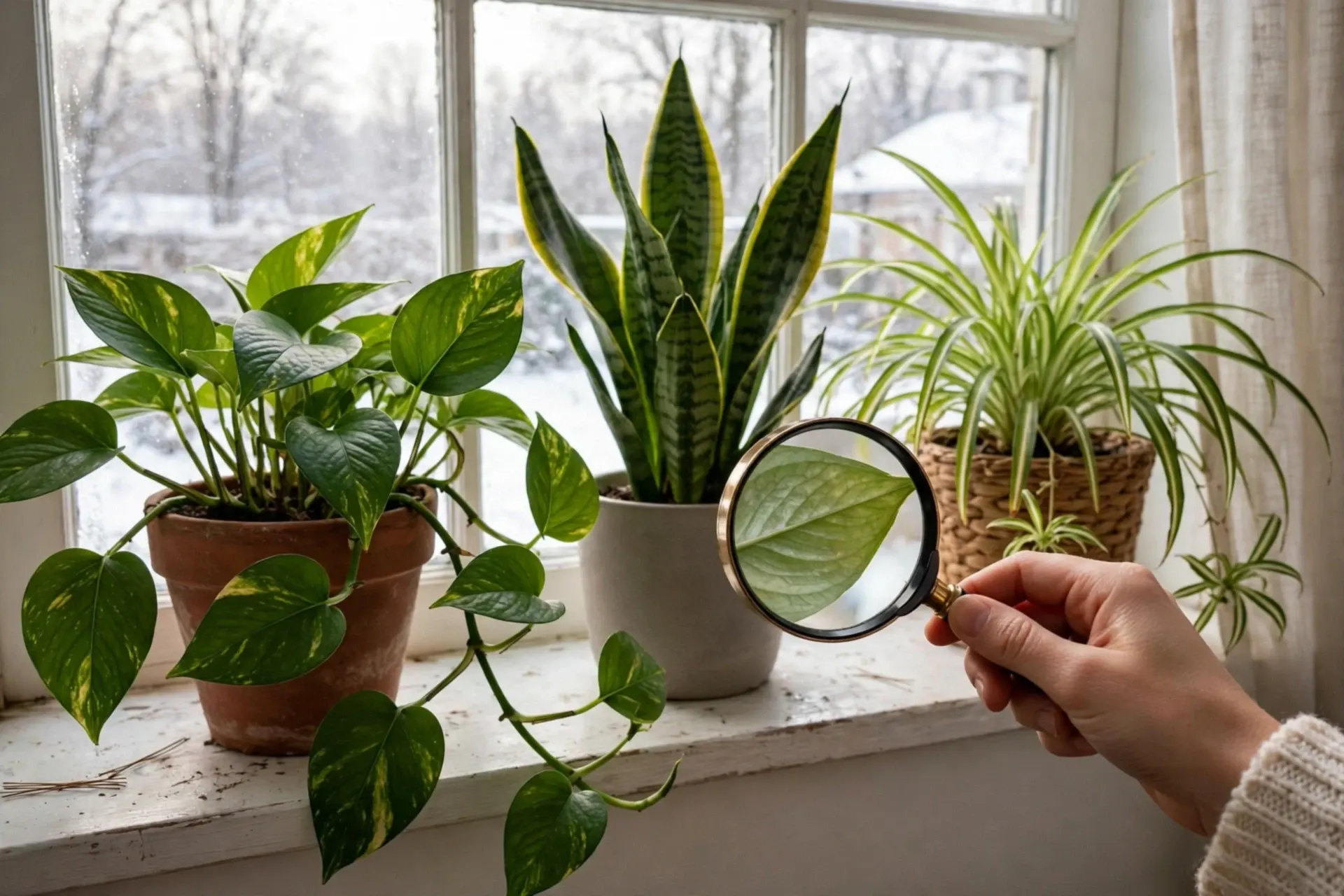
The timing is not a coincidence. The heating comes on, indoor air turns desert-dry, the plants you carried in from the porch in autumn are crowded cheek-by-jowl on the windowsill — and the pests that hitched a ride indoors find warm, dry air with no rain, no wind and no predators to trouble them. By the time you notice the fine webbing, the white fluff or the strange stickiness, the colony has usually been building for weeks. The good news: all three of the big winter pests — spider mites, mealybugs and scale — give themselves away with clear signs, and all three can be beaten without panic-buying chemicals, if you work in the right order. Identify first, quarantine second, hands and water third, spray last and on repeat.
The treatment ladder, in the order that works
- Name it first: mites web and speckle, mealybugs look like cotton wool, scale sits still as brown bumps — each needs slightly different handling
- Quarantine the same day: one plant on its own is a treatment; a shelf of infested plants is a season of it
- Water is a treatment: a firm shower physically removes more mites and mealybugs than most sprays
- Alcohol on a cotton bud is the precision tool for mealybugs and scale — it dissolves their defences on contact
- Soap spray finishes the job — and only works because you repeat it every 5 to 7 days to catch each new hatching
- Dry air is the cause: humidity, spacing and a weekly leaf check stop the next outbreak before it starts
Step 1 — Understand why winter is pest season
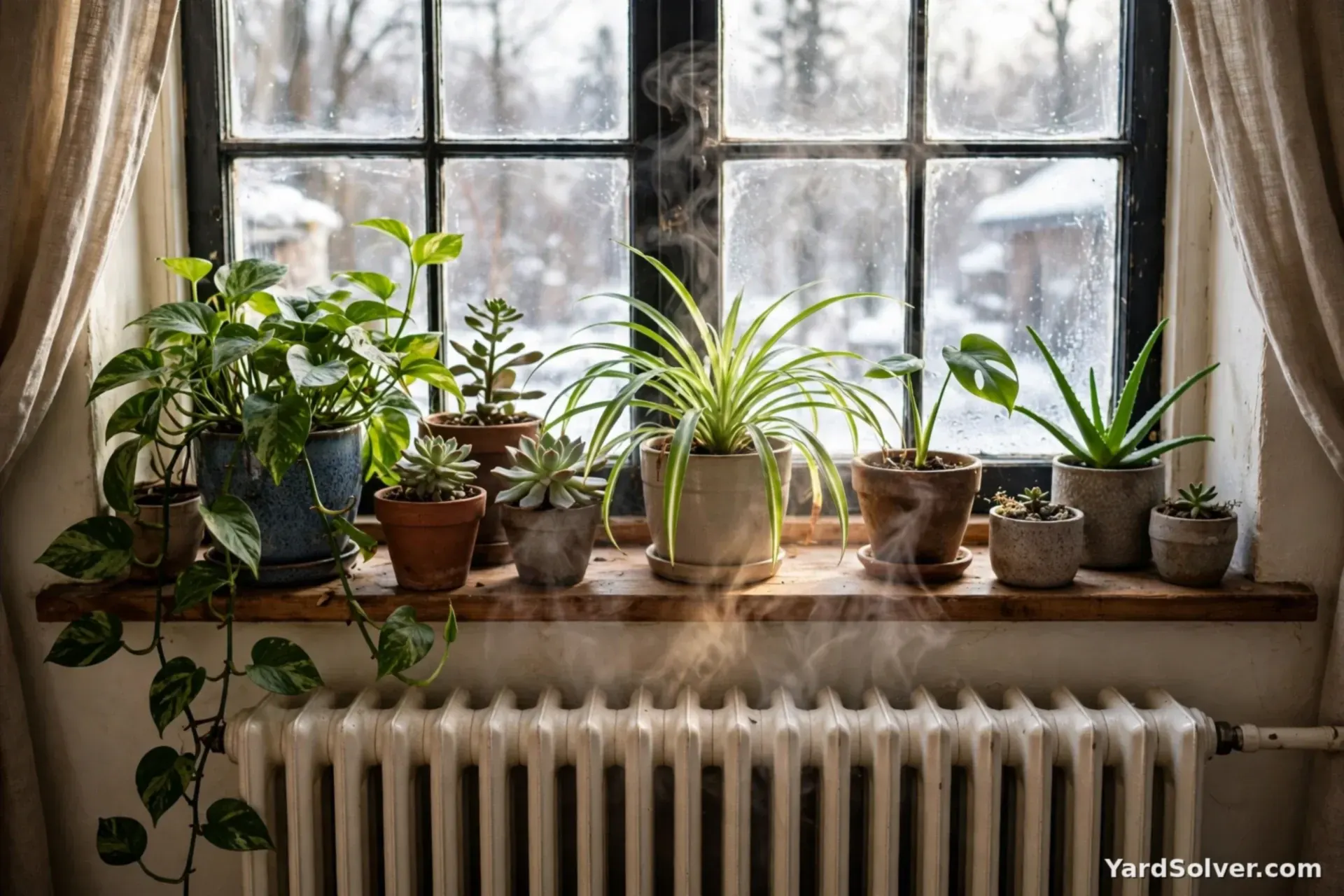
Spider mites in particular are built for this season. They breed fastest in warm, dry air — a heated living room can let a mite generation turn over in about a week, while the same plant outdoors gets its colonies washed off by rain and eaten by predatory mites and ladybirds. Mealybugs and scale move more slowly but share the same advantage: nothing indoors hunts them. The usual source is the plant itself — tender plants brought in for winter (or a new purchase) arrive carrying a few eggs or crawlers too small to see. This is why our winter growing guidance, like growing herbs indoors in winter, keeps coming back to inspection: the outbreak you catch at ten insects is an evening's work; at ten thousand, it is a project. Know your likely victims, too — thin-leaved plants like the spider plant show mite damage early, while tough plants like the snake plant harbour scale quietly for weeks before you spot it.
Step 2 — Identify your pest before you touch anything
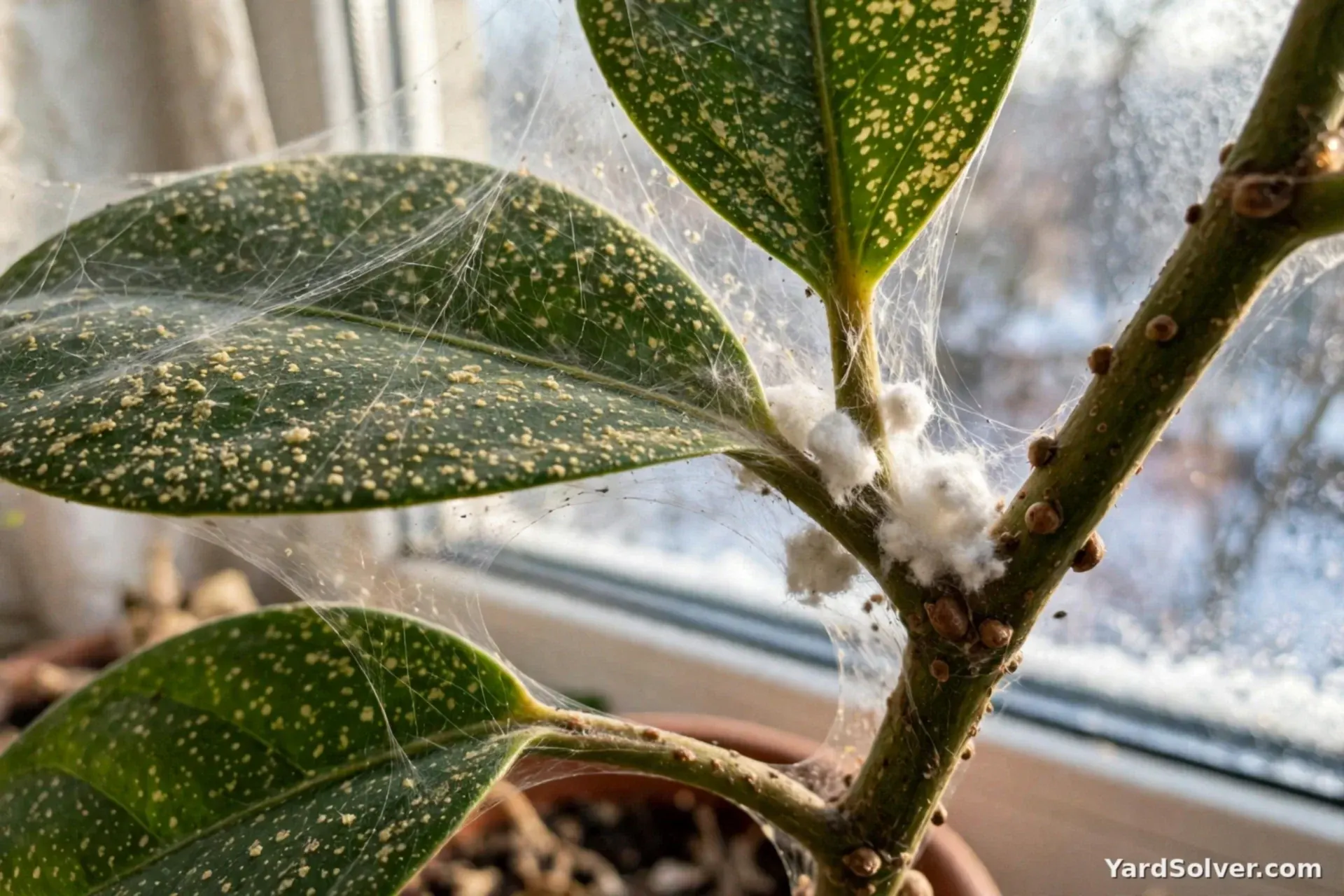
Spider mites are the speckle-and-web pest. The leaves develop a fine pale stippling, as if dusted with sand, and lose their green from the underside up; in a settled infestation you will find silk webbing stretched between leaf joints. The mites themselves are pinhead-sized and easiest to prove by tapping a leaf sharply over white paper and watching whether the fallen specks crawl. Mealybugs are the cotton-wool pest: soft white clusters tucked into leaf joints and along veins, moving very slowly if at all, and leaving leaves sticky with honeydew that later grows black sooty mould. Scale is the bump pest: small brown or tan oval shells fixed along stems and the midribs of leaves — they look like part of the plant, do not move, and also produce honeydew. A sticky shelf or floor beneath the plant is often the first scale or mealybug clue. One confusion to avoid: tiny black flies drifting up when you water are fungus gnats, a different and mostly harmless problem solved mainly by watering less — they need none of the treatment below.
Step 3 — Quarantine and clean before you treat
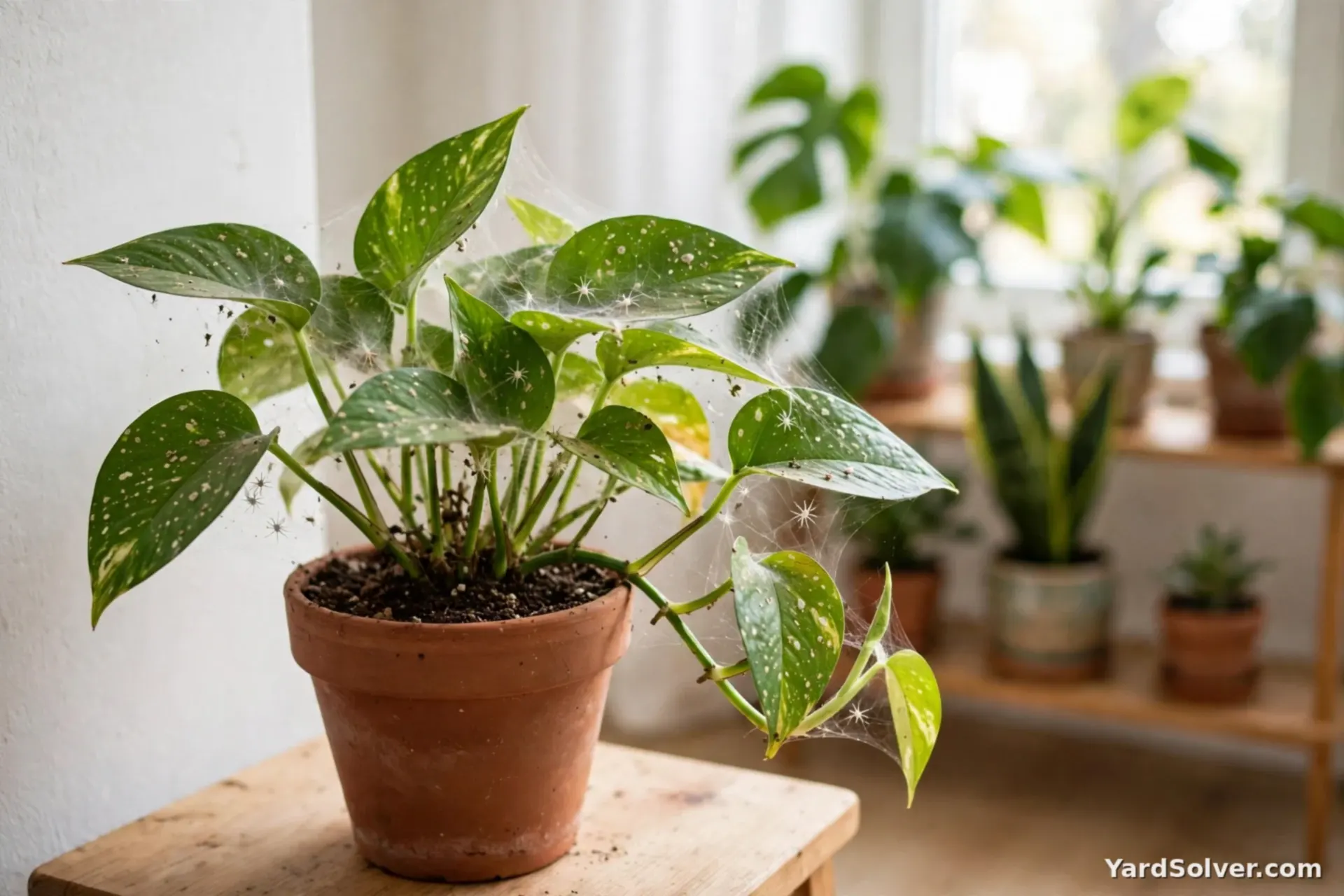
Move the infested plant away from every other plant — a separate room or at least a separate surface, ideally still with decent light, because a plant fighting pests in the dark loses twice. While it is isolated, strip the damage that is only helping the pest: pick off yellowed, webbed or heavily colonised leaves and bin them (never compost them indoors or out), clear fallen leaves off the soil surface where mealybugs hide, and wipe the shelf or sill the plant stood on. Wash your hands and any tools after handling it — mites ride on fingers and watering cans quite happily. Then check the neighbours it stood with, leaf undersides first, and mark the date: you will re-check them weekly for a month. Where the plant recovers matters too — a convalescent in the dimmest corner often declines for light reasons that get blamed on the pest. If a recovering plant looks light-starved, the Sun & Shadow Calculator gives a rough read on what a winter window is really delivering.
Step 4 — Hands first: shower, wipe and swab
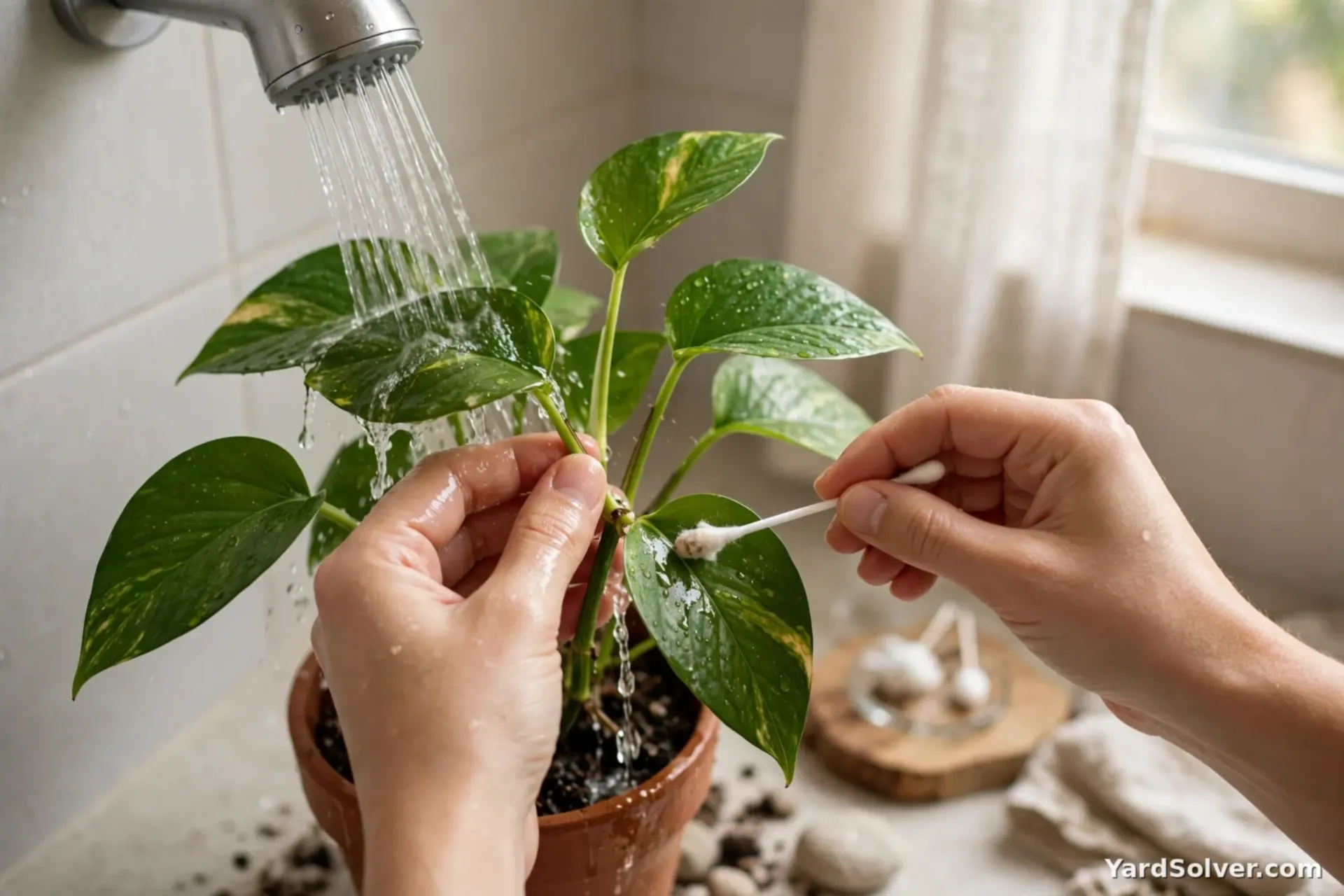
Start with the treatment with no label warnings at all: water. Take the plant to a sink or shower and rinse it thoroughly, aiming the stream at the undersides of the leaves and into the joints, where all three pests live. A firm rinse physically strips off the great majority of mites and mealybugs — repeat it weekly and many mild outbreaks simply end there. For the survivors, rubbing alcohol (the standard 70% isopropyl from the pharmacy) on a cotton bud is the precision instrument: touched to a mealybug, it dissolves the waxy coating that protects it, and it lifts scale shells off stems one by one. It is slow work on a big plant, but for mealybug and scale it is the most reliable single move there is — test it on one leaf first and wait a day, since a few thin-leaved plants mark. Wipe honeydew off leaves with a damp cloth as you go: it feeds sooty mould, and a clean leaf also photosynthesises better while the plant recovers. Trailing plants like the pothos reward patience here — work vine by vine, checking each leaf joint, because the mealybugs you miss are the colony that restarts.
Step 5 — Spray on repeat, then fix the conditions
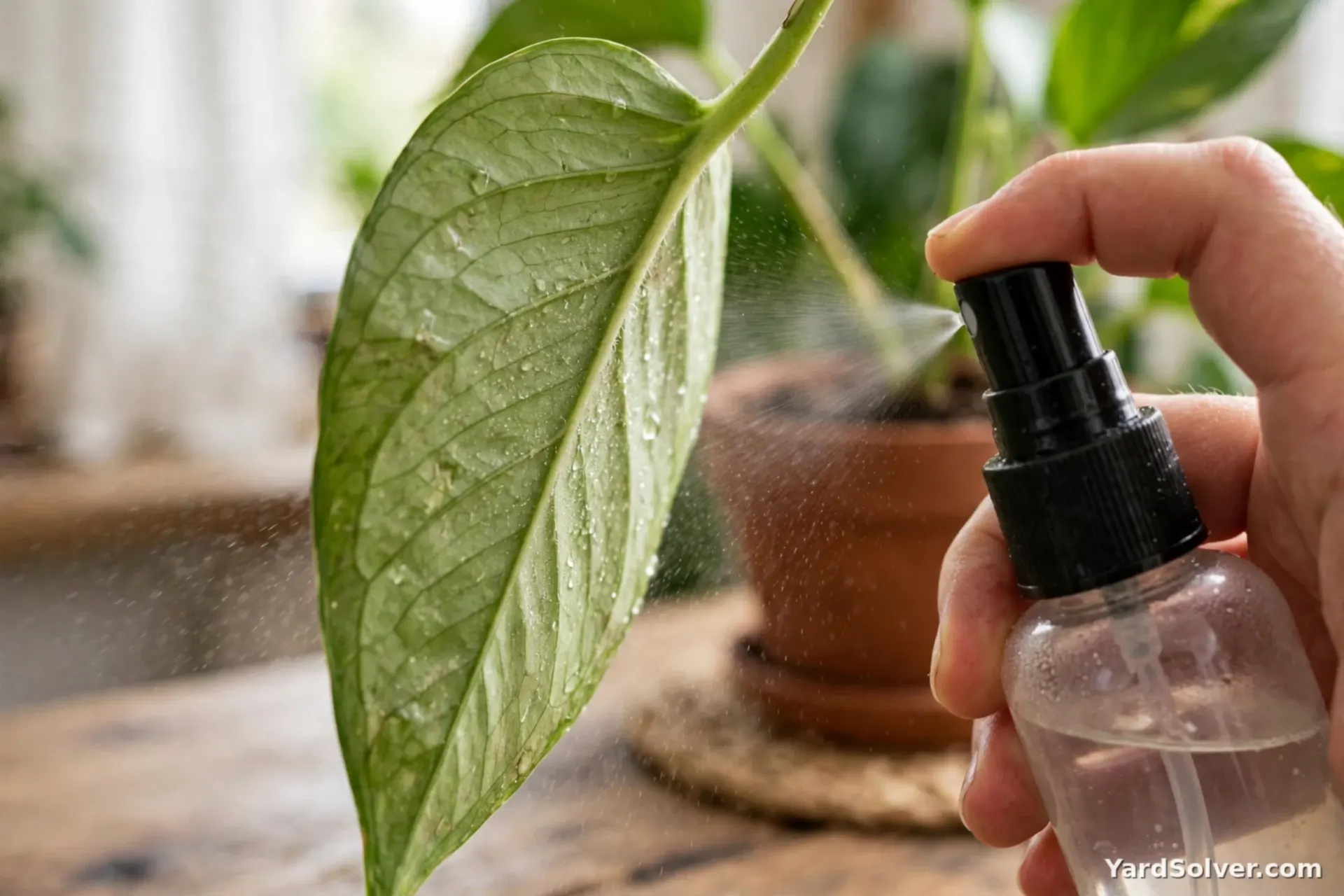
For a heavy mite or mealybug infestation, follow the washing with insecticidal soap — mixed properly, it is the gentlest spray that genuinely kills these pests on contact. Our full recipe and safety routine is in How to Make Insecticidal Soap Spray; the discipline is the same whatever product you use: coat the undersides until they drip, and repeat every 5 to 7 days at least three times, because eggs survive every spray and hatch into the next round. Systemic houseplant insecticides also exist on shop shelves — if you ever use one, it is indoors-only, away from anything edible, and the label is the law; most winter outbreaks never need them. Two recovery rules matter as much as the spraying: do not feed a plant that is fighting pests — soft, fertiliser-pushed growth is pest food, and a stressed plant needs light and water balance, not a meal (the Fertilizer Calculator is for the plant's healthy season, not this one). And fix the cause: group plants a little apart, raise humidity with a pebble tray or a nearby bowl of water, and give even the toughest leaves — aloe included — a weekly underside check through the heating season. That ten-second inspection is the whole secret: winter pests are only ever a disaster when they get a month's head start.
Keep going
The spray, made safely: How to Make Insecticidal Soap Spray · The look-alike problem: How to Get Rid of Fungus Gnats.
Know your plants: Snake Plant · Spider Plant · Pothos.
And if the shelf's problem is a plant that will not flower rather than one being eaten: Christmas Cactus Not Blooming is the dark-and-cool fix.
Questions people ask
How do I know if it is spider mites or something else?
Look for the combination: tiny pale speckling on the leaf surface, the finest webbing in the leaf joints and undersides, and — if you tap a leaf over white paper — specks that slowly move. Mealybugs look like tufts of white cotton wool sitting still in the joints, and scale looks like small brown bumps on stems and leaf veins that do not move at all. Sticky, shiny leaves (honeydew) point to mealybugs or scale rather than mites.
Will these pests spread to my other houseplants?
Yes — that is exactly how a winter outbreak builds. Spider mites drift on air currents and hitchhike on your hands and watering can; mealybugs crawl between touching leaves. Move an infested plant away from the others the day you spot trouble, wash your hands after handling it, and check its neighbours weekly. Catching the second plant early is much easier than treating the whole shelf.
How long does it take to get rid of them?
Plan on three to four weeks of treatments, not one afternoon. Sprays and swabs kill the pests they touch today, but eggs and sheltered crawlers survive and hatch over the following days — that is why the repeat round every 5 to 7 days matters more than the strength of any single treatment. You are finished when two full weekly checks in a row find nothing alive.
Comments & ratings
No comments yet.
Be the first to share your experience.