
Plant Library · Houseplants
🌿 How to Grow Spider Plant
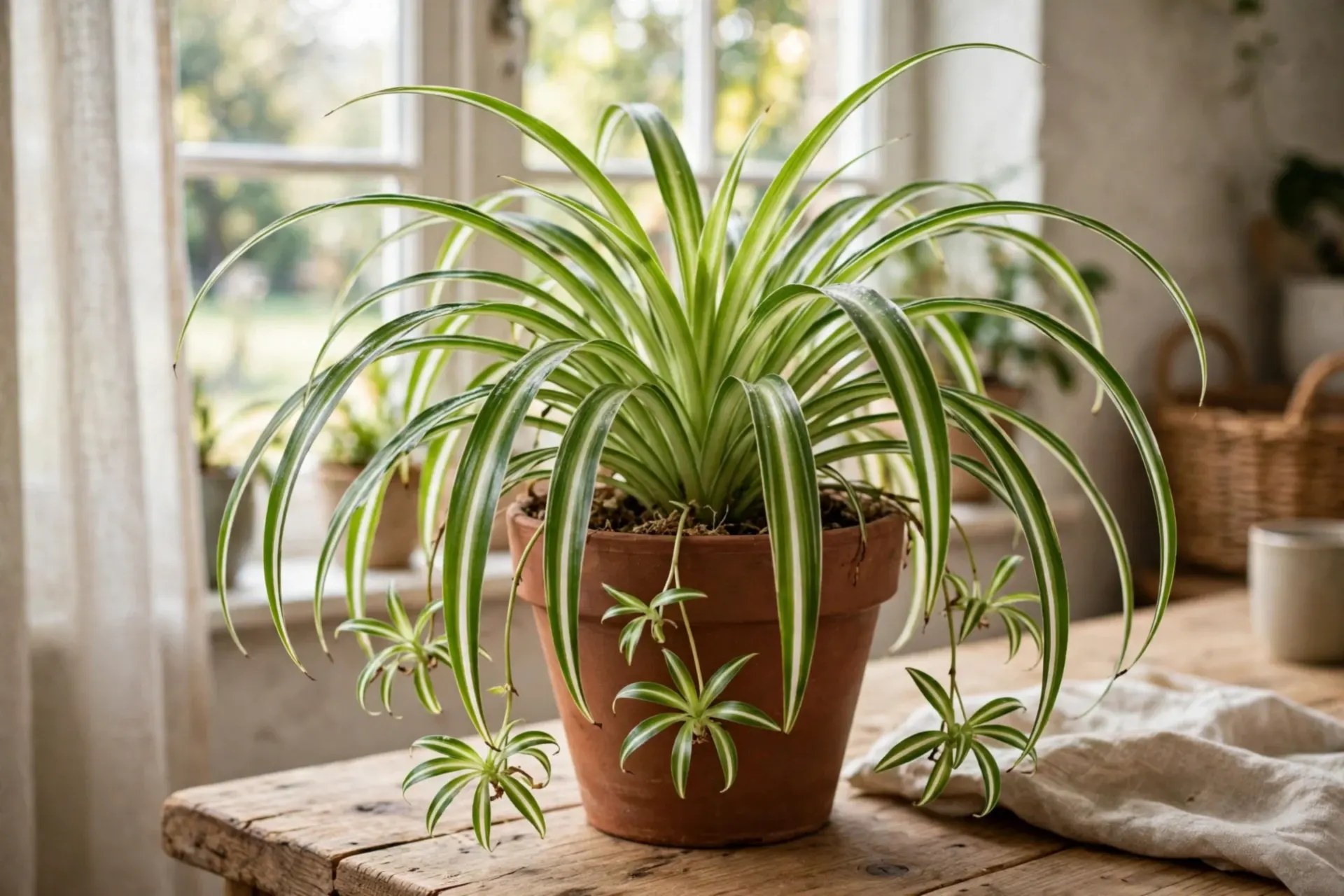
A houseplant for indoors year-round, often in a hanging pot; the baby plantlets on long stems can be potted up free. Spider plant is a houseplant for indoors year-round: give it bright indirect light, keep the soil lightly moist, and enjoy the baby plantlets that dangle from its long stems.
Grow Spider Plant with us — step by step
Everything for this plant is written step by step below — what to do, and exactly when. Read it through first if you like: you can grow it entirely on your own with that guide. Or start with us here — tell us your planting day and we lay out your personal schedule on this page, every next step on its own day, counted from your planting date. No guessing, no forgetting.
Step 1 — today: Settle your Spider Plant into its spot today: a pot with drainage, the light it loves (bright indirect light), and one good watering to settle the mix around the roots.
Spider Plant at a glance
Spacing: — (pot) · Propagation: Plantlets on the stems, not seed
Sun: Bright indirect light
Water: Regular; keep lightly moist
Harvest: Grown for foliage — no harvest
Timing counts from your average last spring frost — get your own dates in the Planting Calendar. Guidance follows standard extension-service practice for Canada and the US.
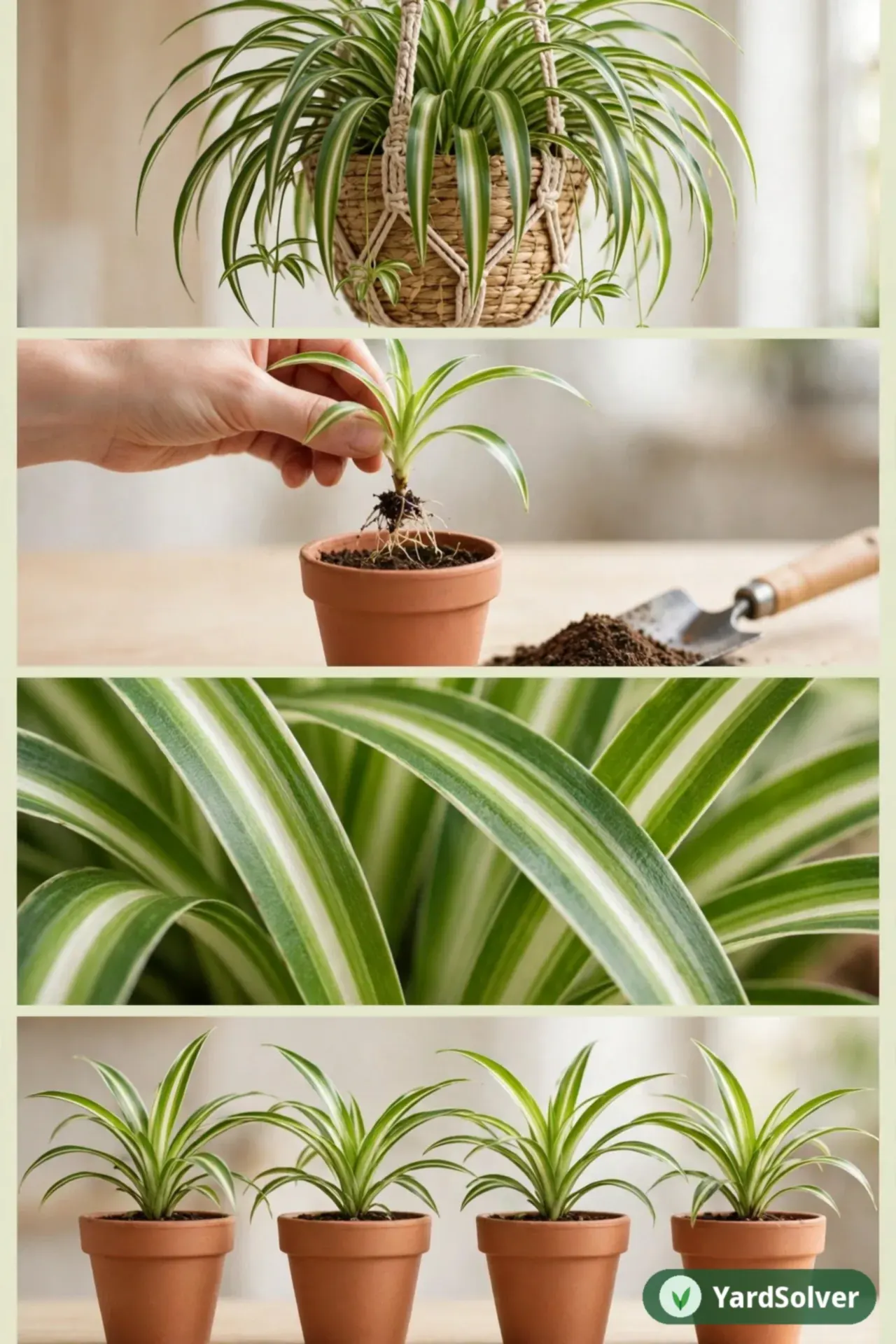
How to plant and grow spider plant, step by step
Step 1 — Choose its spot
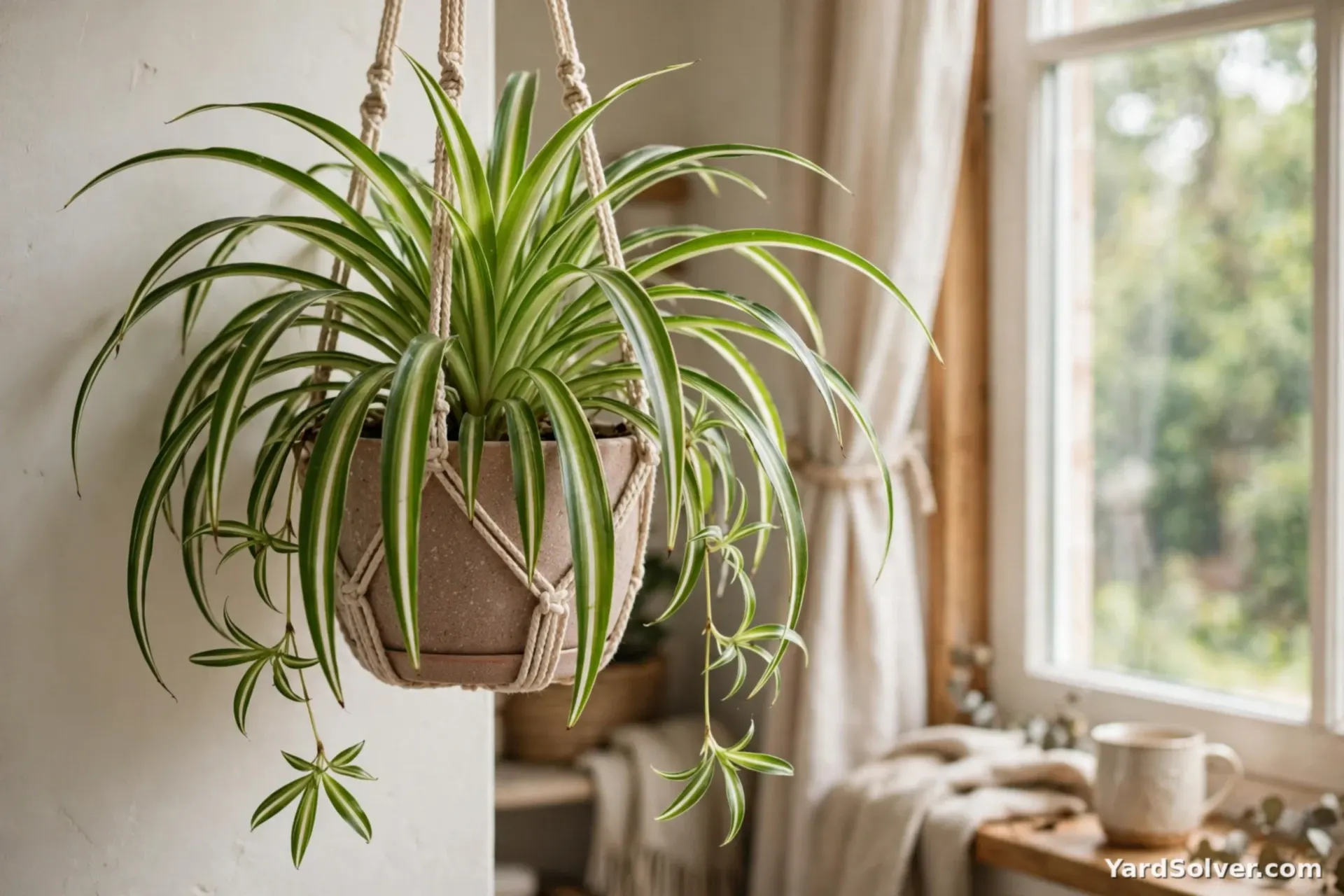
Bright indirect light suits spider plant best. Keep it away from heating vents and cold drafts, and remember most houseplants would rather be a little dry than a little soggy. A houseplant for indoors year-round, often in a hanging pot; the baby plantlets on long stems can be potted up free.
Step 2 — Pot it right
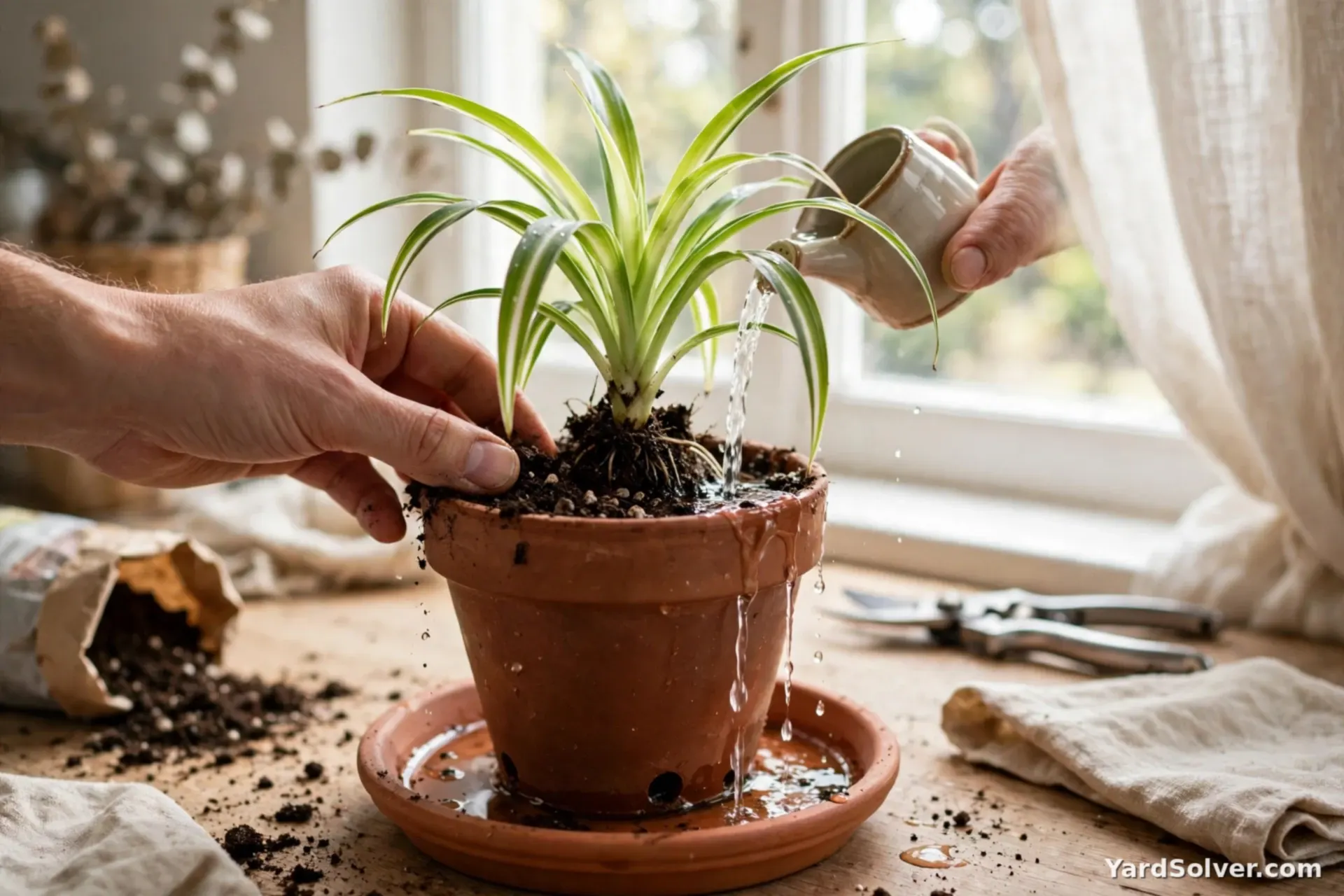
A pot with drainage holes and free-draining houseplant mix — never garden soil in a pot. Tip out any water that collects in the saucer. Water it in once after potting, then let the top of the mix dry before watering again — the rhythm in the care card below is the whole routine.
Step 3 — Water by feel, not by calendar
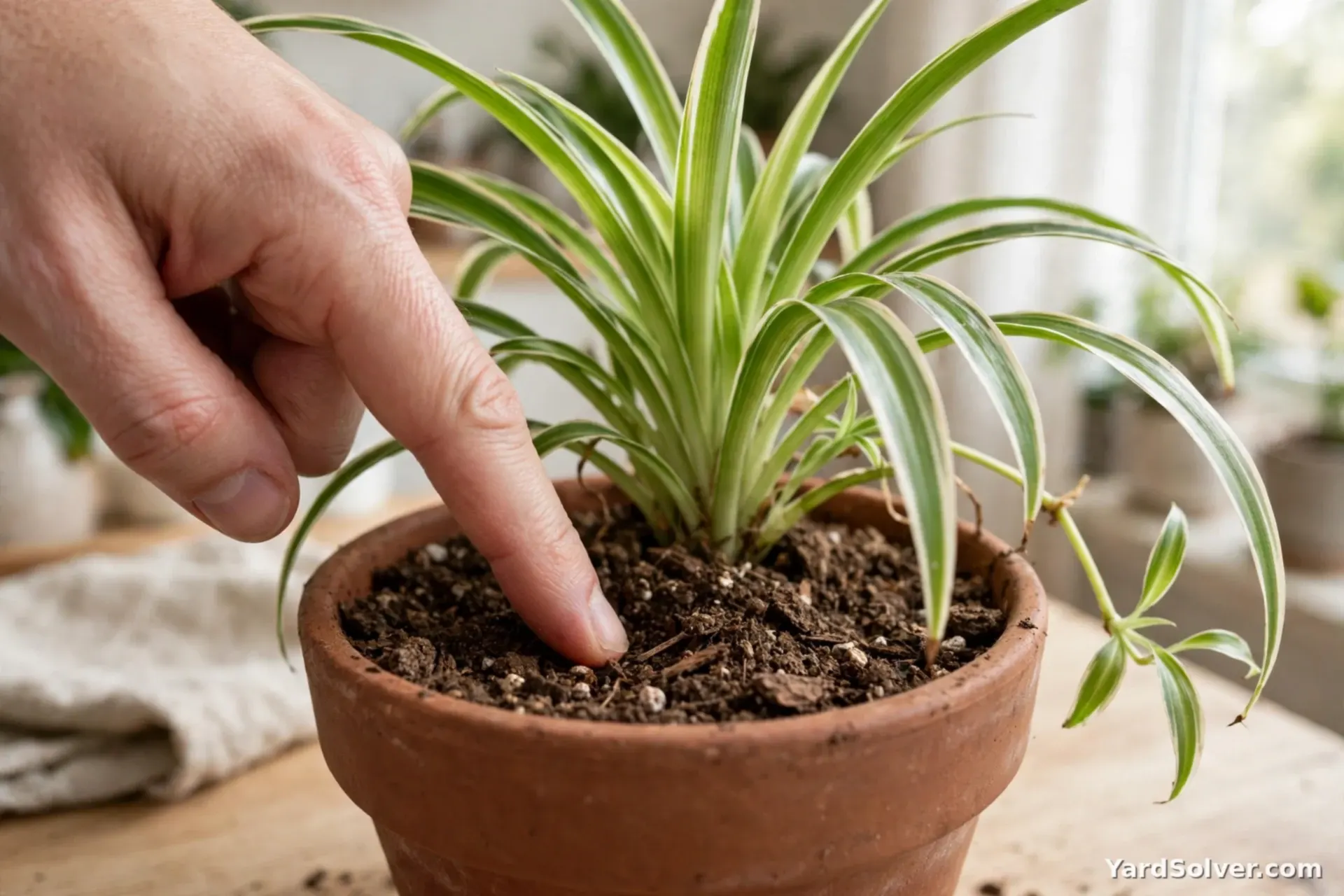
Regular; keep lightly moist. Push a finger into the mix: dry on top means water, damp means wait. Empty the saucer after every watering — roots sitting in water rot quietly.
Step 4 — Feed lightly in the growing season
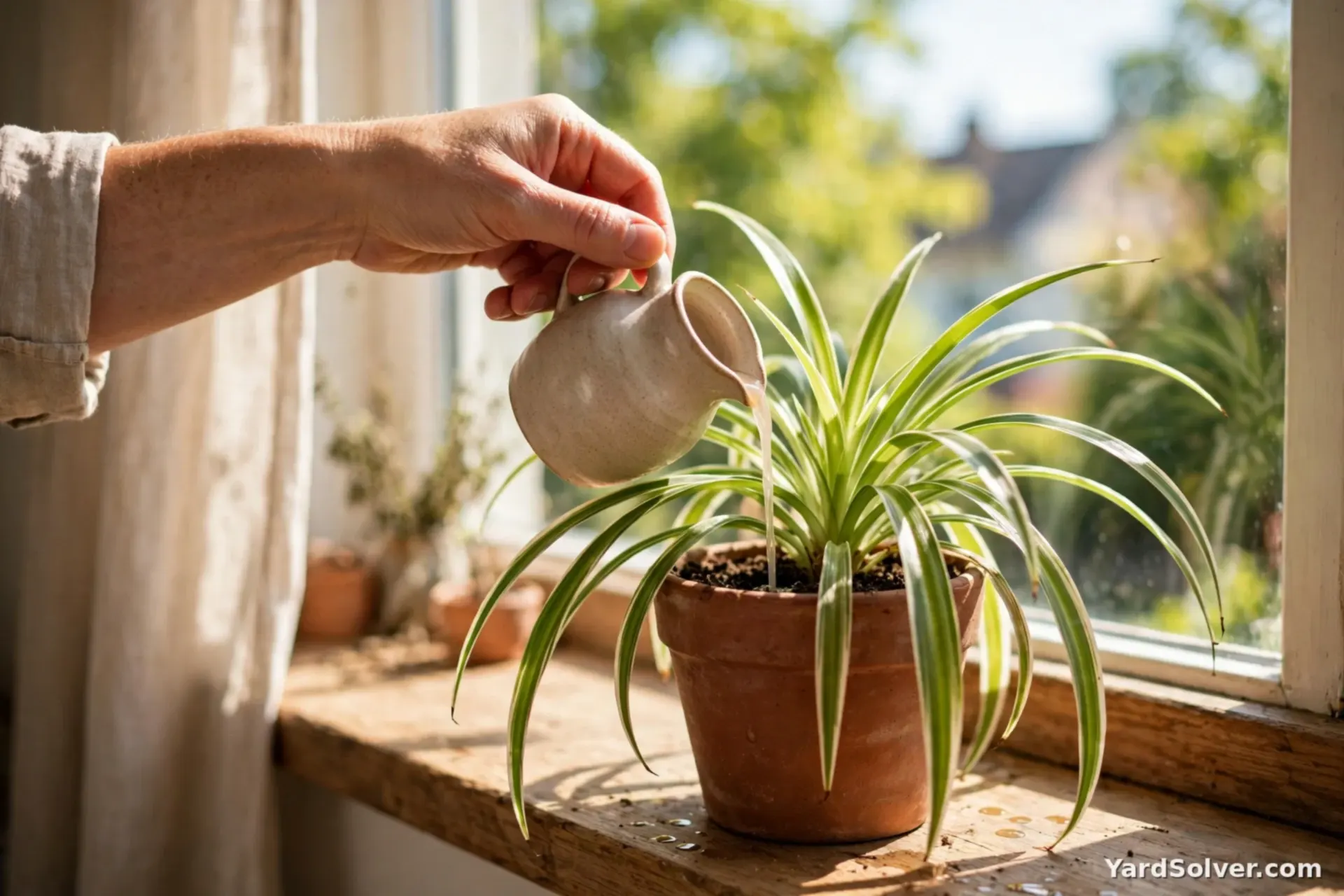
A half-strength general houseplant feed once a month in spring and summer is plenty. Stop feeding in winter, when growth slows and the plant is resting.
Step 5 — Watch for the usual problems
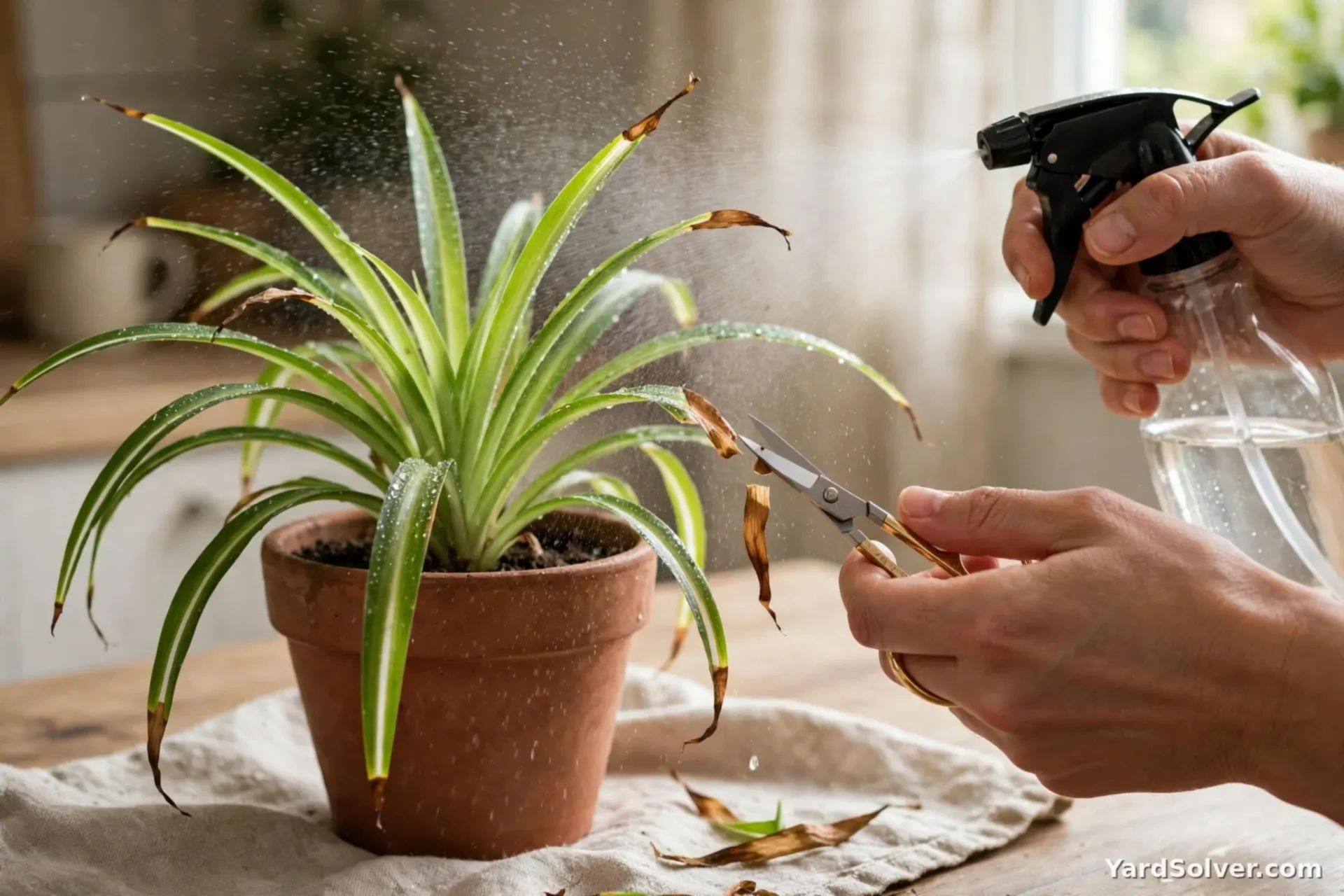
- Brown leaf tips — usually from inconsistent watering or very dry indoor air; trim tips and water more evenly.
- Root rot in soggy soil — use a free-draining pot.
- Spider mites in dry rooms — mist occasionally.
Step 6 — What to expect
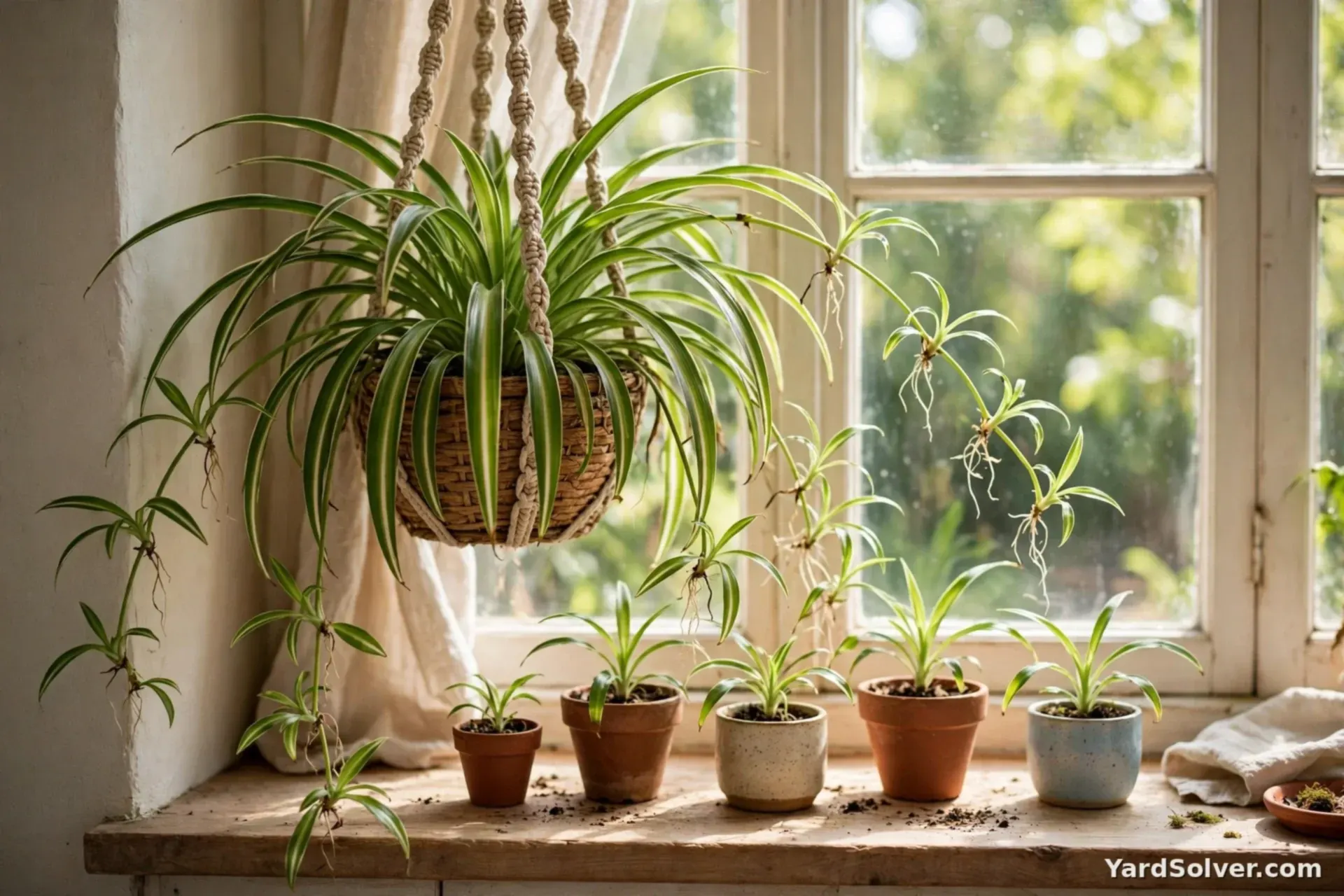
A spider plant lives indoors year-round and is watered when the soil feels lightly dry — its reminders are simple care checks (and potting up the baby plantlets), not dates counted from planting. A healthy spider plant can dangle dozens of babies in a single year — one plant can fill a whole windowsill of little pots for free.
📅 Your personal Spider Plant schedule
This plant runs on rhythm and season rather than a day count — here is the honest version of its schedule.
Varieties worth growing
| Variety | Colour | Why gardeners like it |
|---|---|---|
| Variegatum | Green centre with white edges | The most common type — bright white margins on arching leaves |
| Vittatum | White-cream centre with green edges | The reverse pattern to Variegatum, with a wide pale stripe down the middle |
| Bonnie | Green with white stripes, curled | Leaves twist and curl as they grow, with babies that curl too |
Good for you — and take care
Benefits
- Often grown as a natural air-freshening houseplant, especially in hanging baskets
- A safe, non-poisonous choice for homes with cats and dogs
- Makes free baby plantlets on long stems — endless new plants to keep or share
- Forgiving of the odd missed watering, so it suits busy beginners
- Its arching striped leaves soften shelves and bright window corners
Take care
- Brown leaf tips are common — usually from dry air, uneven watering, or salts in tap water; rainwater or distilled water keeps leaves cleaner
- Wet, soggy soil can rot the thick roots, so let the surface dry a little between waterings
A little history — and one good fact
Spider plants come from southern Africa, where they creep along shaded ground under trees. They became favourites in Victorian hanging baskets and never really left our homes. Their lasting popularity is simple: few houseplants give you so many free new plants, dangling like little spiders on threads.
Fun fact: A healthy spider plant can dangle dozens of babies in a single year — one plant can fill a whole windowsill of little pots for free.
Keep going
Guides: How to Propagate Pothos · When to Start Seeds Indoors · How to Harden Off Seedlings
Calculators: All calculators
More houseplants: Pothos · Snake Plant · String of Pearls
← Back to the Plant Library · Get your personal planting dates
Questions people ask
How often do I water spider plant?
Regular; keep lightly moist. Check the soil with a finger — dry on top means water, damp means wait. It is the rhythm, not a date on the calendar, that keeps this plant happy.
How much light does spider plant need?
Bright indirect light. Keep it away from heating vents and cold glass, and turn the pot now and then so growth stays even.
What kills spider plant most often?
Overwatering, almost every time. A pot with drainage holes, free-draining mix, and an emptied saucer prevent the root rot that ends most houseplants.