
Guides · Lawn care · Published November 15, 2026
Clover Lawns and Lawn Alternatives: Microclover, Thyme, and No-Mow Options Compared

The clover lawn has gone from weed to headliner in a few short years, and the reasons are practical, not fashionable. Clover fixes its own nitrogen from the air, so it stays green without fertilizer. Its roots run deeper than lawn grass, so it holds its colour through dry spells that brown a conventional lawn. It asks for a fraction of the mowing. And its flowers feed bees in a way a monoculture turf never does. But "clover lawn" hides several different choices — a full clover stand, a grass-and-microclover blend, a thyme carpet for small areas, a no-mow fescue for slopes — and they differ sharply in wear tolerance, looks and upkeep. This page compares them honestly, then gives the seeding method that makes the change succeed.
Step 1 — Know what clover does that grass cannot
Clover is a legume, and legumes host bacteria in root nodules that pull nitrogen out of the air and convert it into plant food. A clover lawn therefore feeds itself — and, in a mixed stand, quietly feeds the grass growing with it, which is why old pastures were sown grass-and-clover for centuries before bagged fertilizer existed. The deep roots explain the drought colour: while shallow-rooted lawn grass goes dormant and brown in a dry July, clover keeps reaching water and stays green. The trade-offs are equally real. Clover tolerates less foot traffic than tough turf grasses — a football pitch it is not. It can stain clothes more readily than grass. Its flowers, glorious for bees, are a consideration where a barefoot toddler or a bee-sting allergy uses the lawn daily (mowing before bloom, or choosing microclover which flowers less, manages this). And in cold Canadian winters pure clover can thin out, which is why the blend, below, is the northern favourite.
Step 2 — Compare the options: microclover, white clover, thyme, no-mow fescue
| Option | Best for | Mowing | Traffic | Watch out for |
|---|---|---|---|---|
| Microclover blend (microclover + lawn grass) | Most home lawns; the northern default | Normal to low | Good — grass carries the wear | Costs more seed money up front; clover share can ebb and flow by season |
| White (Dutch) clover, pure or dominant | Low-traffic lawns, orchards, banks | Low — a few cuts a year | Light to moderate | More flowers (more bees); can thin in hard winters; slippery when wet |
| Creeping thyme | Small sunny areas, between stones, front-yard statements | Almost none | Light — paths, not play | Slow and costly to establish over big areas; needs sharp drainage |
| No-mow fescue | Slopes, rough areas, naturalized zones | Once or twice a year | Light | Shaggy meadow look — a choice, not a flaw; poor under play |
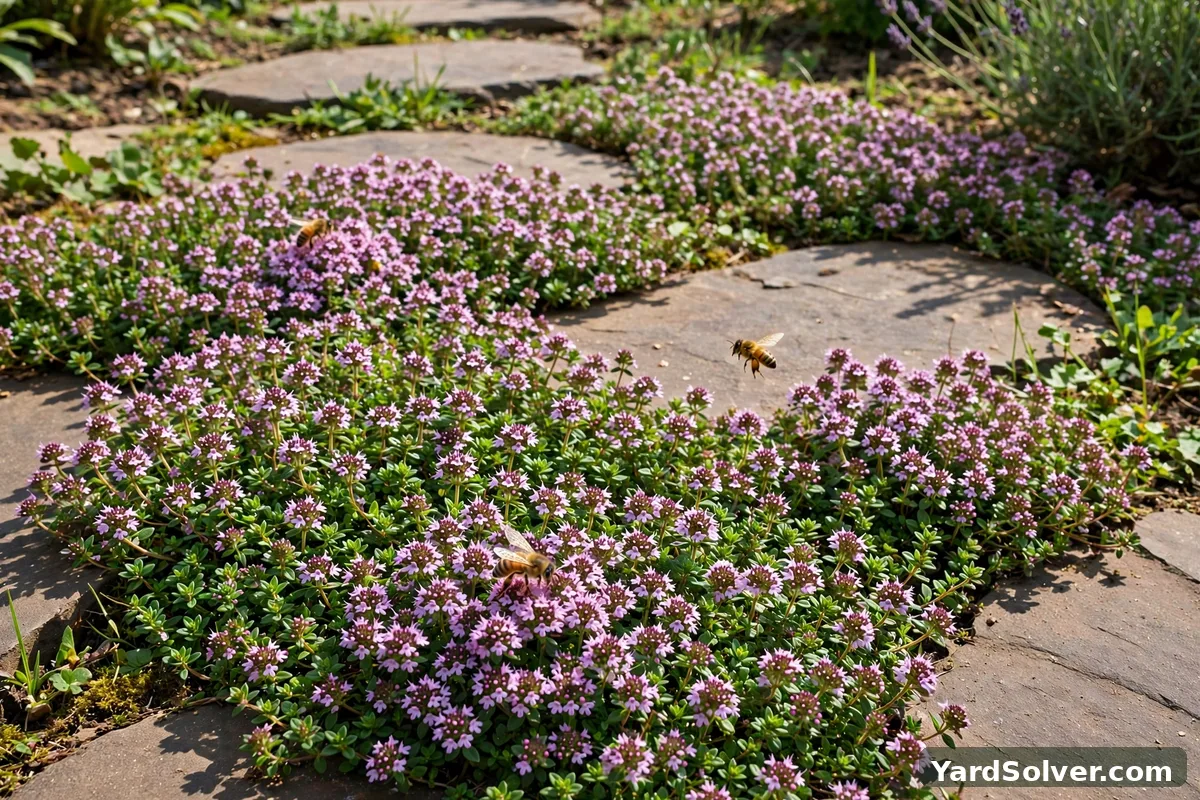
The blend deserves its first-place billing. Microclover varieties are bred small-leafed and low, so they weave into turf grass without the puffy look of farm clover; the grass provides wear tolerance and winter hardiness, the clover provides nitrogen, drought colour and the flowers. Most gardeners converting a real family lawn should start here. Pure white clover suits the lawn that is looked at and sat on rather than played on. Creeping thyme is a specialist — unbeatable between stepping stones and on hot, dry, small patches, impractical by the acre. No-mow fescue is the answer for the slope you are tired of risking a mower on.
Step 3 — Sow it: into an existing lawn or from bare soil
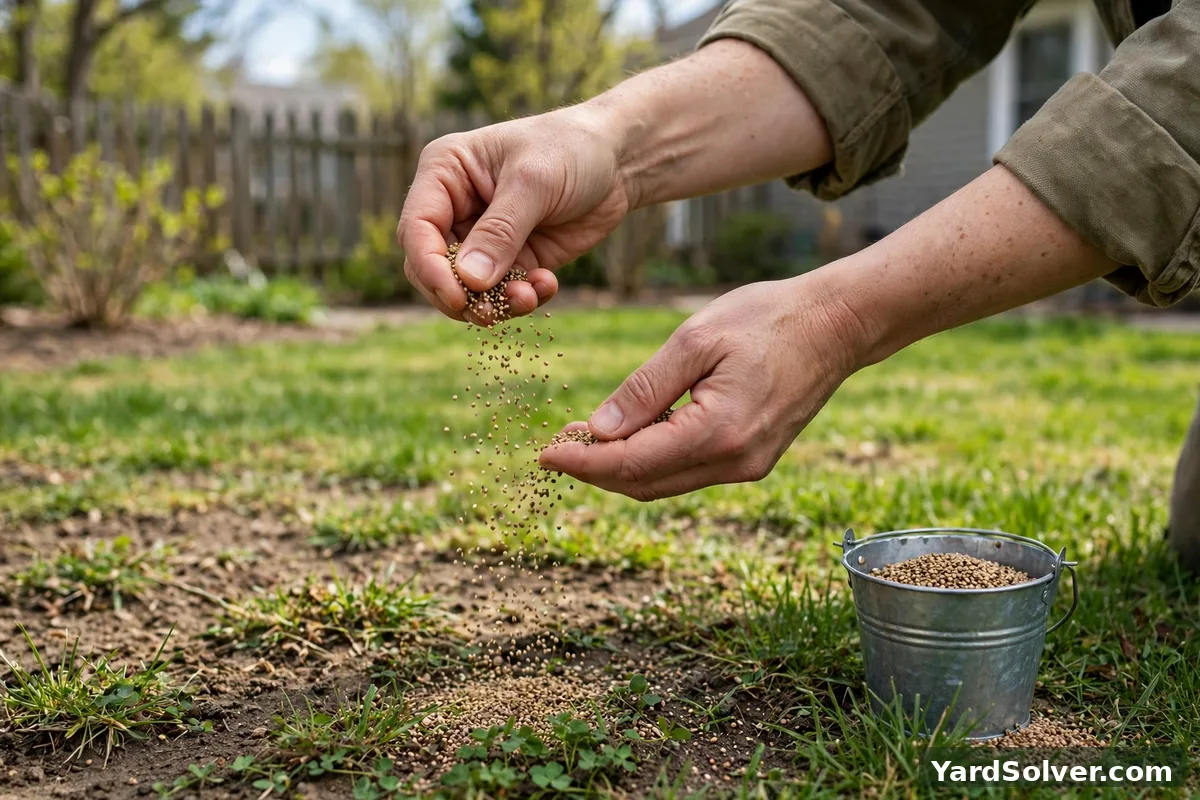
Clover seed is tiny, and the method respects that: it needs light and contact, not depth. Into an existing lawn (the blend route): mow short, rake hard to open the soil surface — a dethatching pass if the thatch is thick, per our dethatching guide — then broadcast the clover seed over the lawn and water. Spring and early fall are the windows; early fall is best, with warm soil, falling weed pressure and autumn rains. From bare soil: rake level, broadcast, roll or tread for contact, and keep the surface constantly moist for the first two to three weeks — tiny seed on a dry surface is bird food and dust. Either way, work out your area first and run it through the Seed Calculator: clover seeding rates are a small fraction of grass rates by weight, and the expensive mistake is buying grass quantities of a seed sold by the fraction.
One chemical warning that decides success: broadleaf lawn weedkillers kill clover — it is a broadleaf plant. A lawn converting to clover leaves the "weed and feed" world behind, permanently. For many converts that is the point; for a household that wants both clover and a spray program, the two wishes cancel, and it is better to know before seeding than after the first application.
Step 4 — Live with it: the first year and after
Year one is establishment: water through dry spells, mow a little high (around 3 inches suits the blend), and do not panic at patchiness — clover spreads by runners and fills its gaps through the season, and a light overseed in the second spring evens out any thin start. From year two the routine shrinks to the advertised minimum: mow when you feel like it rather than when you must, skip fertilizer entirely on clover-dominant areas, and water rarely. The lawn will look different across the year — flowering in June, deep green in a dry August when the neighbours’ grass is straw, thinner in a hard winter and back by May. Gardeners who make peace with that rhythm tend to become evangelists; gardeners who wanted a bowling green with less work tend to be disappointed, and it is better to choose with open eyes.
Clover also plays well with the rest of the garden: it is one of the plants that shrugs off the dog’s attention better than fine turf (the urine spots problem shrinks noticeably on clover blends), and a flowering clover strip beside the vegetable beds is pollinator infrastructure for crops like strawberries that need bees to fruit well. The lawn stops being a green desert with a mower attached and becomes part of the garden’s working staff.
Keep going
Opening up an old lawn for clover seed is the same job as preparing for overseeding — How to Dethatch a Lawn covers the thatch test and the rake work.
A lawn conversion is a season-sized project; the Garden Planner puts the seeding window on your dated plan, with quantities and a shopping list.
Questions people ask
Is a clover lawn really less work than grass?
Yes, on the two big recurring jobs: it needs no fertilizer (it makes its own nitrogen) and far less mowing, since clover tops out low and grows slowly compared with turf grass. It also needs less water to stay green. The work it adds is front-loaded — careful seeding and first-year watering — and it asks you to give up broadleaf weedkillers, since they kill clover too. From the second year, most owners describe it as the least demanding lawn they have had.
Will a clover lawn survive a Canadian winter?
A grass-and-microclover blend will, reliably — the grass carries the stand through winter and the clover returns from crowns, runners and self-sown seed in spring. Pure white clover can thin out in a hard winter, especially in exposed or very cold sites, and may need a light spring overseed in its first years. Choosing the blend is the standard northern answer, and early-fall seeding gives the clover a full season of roots before its first winter.
Does a clover lawn attract too many bees?
It attracts bees when it flowers — that is one of its purposes, and pollinators need the forage. If bare feet, toddlers or a sting allergy make that a real concern, you have two controls: mow before or during bloom to remove the flowers (microclover also flowers less than standard white clover), or keep clover out of the one play area and let it flower elsewhere in the yard. Most families find the mowing control entirely sufficient.
Comments & ratings
No comments yet.
Be the first to share your experience.