
Guides · Lawn care · Published November 15, 2026
Dog Urine Spots on Grass: How to Fix Them and Stop New Ones
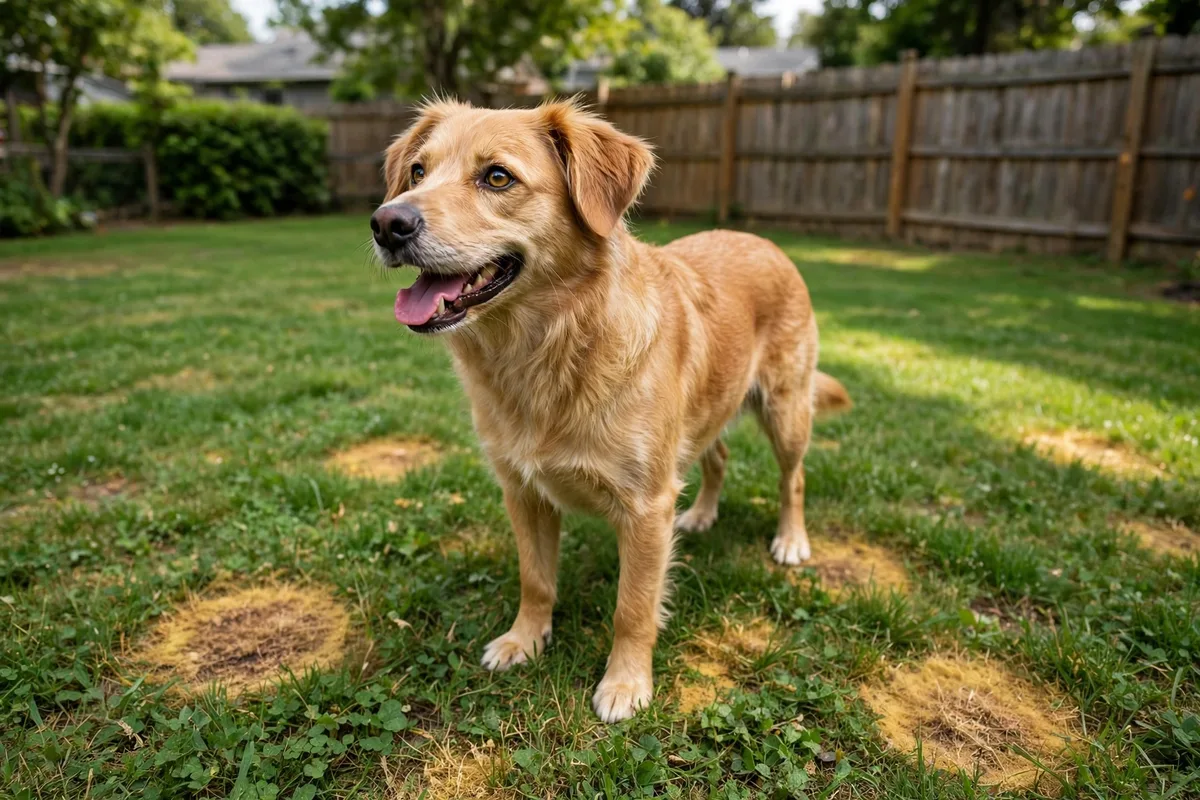
Every dog owner with a lawn knows the pattern: round yellow-brown spots, each a few inches across, each ringed by a band of grass that is darker green and growing faster than everything around it. Dog urine spots on lawn grass are not a mystery disease and not a poison problem — they are a fertilizer burn in miniature. Urine carries nitrogen and salts; in the centre of the spot the dose is so concentrated it burns the grass dead, while at the diluted edge the same nitrogen acts as a feed, producing that telltale green ring. Once you see it that way, the fixes sort themselves: dilute fresh spots fast, repair dead ones properly, and manage where the dog goes. Here is the whole routine.
Step 1 — Flood a fresh spot within hours, not days
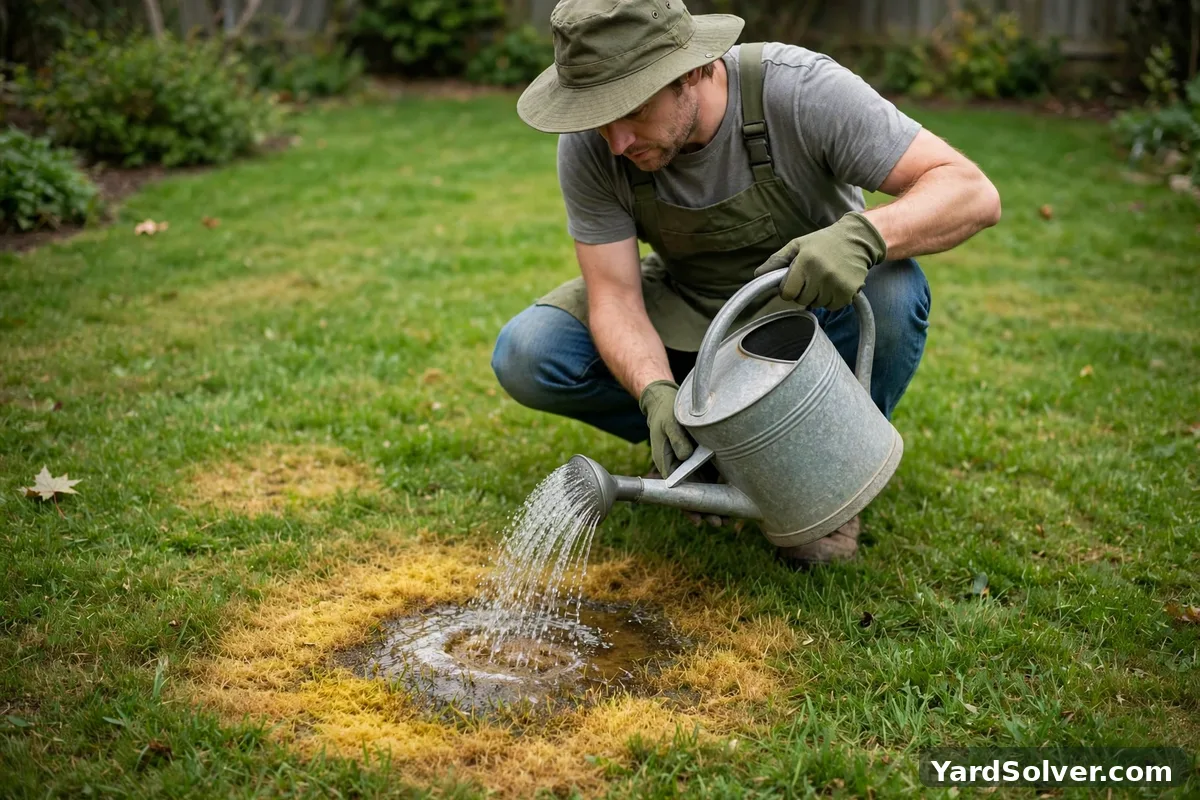
The single most effective act in this entire guide takes ten minutes and a watering can. When you see the dog go on the lawn — or find a spot still fresh — flood the spot with water, roughly two to three times the volume of the urine itself. You are diluting the nitrogen and salts down through the soil before they can burn the crowns. Done within a few hours, most spots never appear at all. Done tomorrow, it helps less; done next week, not at all — the burn has happened. This is why the habit matters more than any product: a watering can kept by the back door during the dog’s first morning run prevents more spots than a shelf of remedies.
A note on the folk remedies, because they are everywhere: gypsum does not neutralize urine in any meaningful dose, baking soda adds more salts to a salt problem, and tomato juice or supplements that claim to change the dog’s urine chemistry range from useless to genuinely unkind to the dog. Dilution is the remedy. The lawn in Brown Spots in Your Lawn gets the same diagnosis treatment if you want to confirm urine is really your cause and not one of its six rivals.
Step 2 — Judge the spot: burned blades or dead crowns?
A spot that is yellow but still has green at the base, and where the grass resists a gentle tug, is burned at the blades with living crowns: water it well and it will usually grow out in two to three weeks. A spot that is straw-brown to the soil, where the grass comes away dead and the centre shows no green at all after a week of normal weather, is dead and will not recover — it needs reseeding. Female dogs and large dogs make bigger, deader spots (more volume in one place, delivered closer to the ground); the first morning urine of the day is the most concentrated and does the most damage. None of this is the dog’s fault or a training failure — it is chemistry, and chemistry is what you are managing.
Step 3 — Rake out and reseed the dead spots
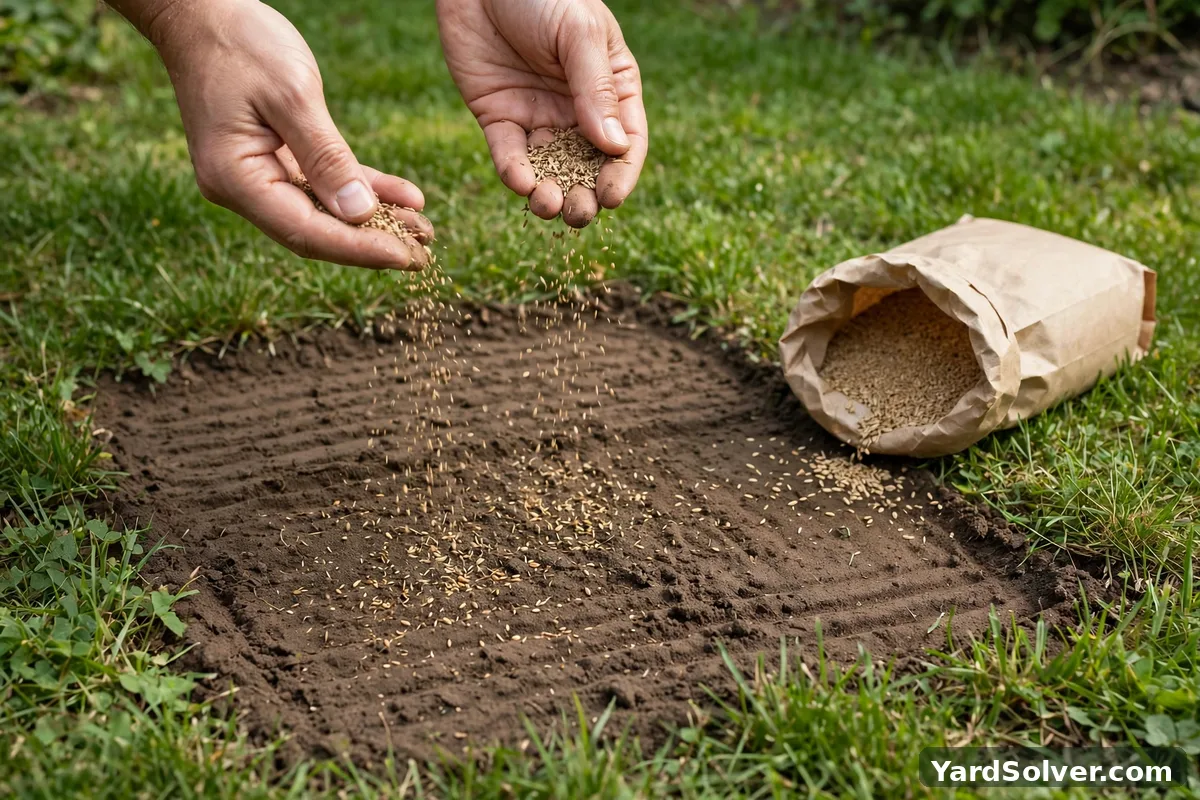
Repair is the standard patch method, with one urine-specific addition: flush the spot first. Rake out all the dead grass down to soil, then soak the patch deeply to wash residual salts down and away — reseed straight into salty soil and germination suffers. Loosen the top half-inch of soil, scatter seed at the bare-ground rate, press it into contact, and keep it moist until it sprouts. The Seed Calculator turns the total of your dead spots into a seed quantity, so a dozen patches do not consume a whole bag meant for the fall overseed.
Choose the repair seed with the dog in mind. Tough, fast-establishing grasses — tall fescue and perennial ryegrass — take traffic and recover better than slow, fine grasses, and ryegrass’s speed makes it the classic patch seed. For the corner of the yard the dog has chosen as headquarters, consider surrendering gracefully: a patch of creeping thyme or a clover blend (see our clover lawn guide) tolerates urine far better than fine turf and asks for almost no care in return.
Step 4 — Stop new ones: the designated corner method
The lasting fix is not a product; it is geography. Dogs are creatures of habit and most will accept a designated bathroom area if it is set up properly: a corner of the yard surfaced with pea gravel, mulch or hard-wearing groundcover, introduced by walking the dog there on a leash for the first week or two and praising the choice like it was the dog’s own idea. Keep the rest of the lawn less inviting by watering the favourite grass spots to dilute scent markers, and pick the dog’s corner somewhere drainage carries urine away rather than pooling it. Combined with the Step 1 flooding habit for accidents, most households cut new spots to nearly zero within a month.
Two lawn-care adjustments help everywhere else. Water the whole lawn deeply when you water, which keeps background salt levels low, and feed at measured rates — a lawn already at its nitrogen limit shows urine burns faster, so run your feeding through the Fertilizer Calculator instead of adding the dog’s contribution on top of a heavy hand. And in winter, remember that frozen ground concentrates everything in one place until spring melt; the first spots of the year often trace to the dog’s small winter circuit by the door.
Keep going
Urine is cause number four of seven — if your brown spots do not have the green ring, run the full diagnosis in Brown Spots in Your Lawn before treating.
Reseeding, feeding and the fall overseed all sit on one calendar — the Garden Planner builds yours from your frost dates, quantities included.
Questions people ask
Why does dog urine kill grass in the middle but make it greener around the edge?
It is a dose effect. Urine is rich in nitrogen — the same nitrogen in lawn fertilizer. At the centre of the spot the concentration is so high, along with the salts, that it burns the grass dead. At the edge, the urine is diluted by soil moisture to a level the grass experiences as a free feed, so that ring grows darker and faster. The green ring is the signature that separates urine spots from fungal patches, which never feed the grass around them.
Do urine-neutralizing products and lawn sprays work?
Mostly no. Gypsum is sold for this but does not neutralize urine nitrogen at any realistic dose; baking soda adds salts to a salt burn; and products meant to change the dog’s urine chemistry are ineffective at best and can be unhealthy for the dog. What works is unglamorous: diluting fresh spots with water, reseeding the dead ones after flushing the soil, and training the dog to a designated corner. Spend the product money on seed.
Which grass handles dog urine best?
Among common lawn grasses, tall fescue and perennial ryegrass cope best — both are relatively tolerant of the salt and nitrogen hit and, just as importantly, they establish and recover fast, so repairs blend in quickly. Kentucky bluegrass repairs itself by spreading once it is established, but establishes slowly from seed. No grass is immune at the centre of a large dog’s first morning spot, which is why dilution and the designated corner matter more than the species choice.
Comments & ratings
No comments yet.
Be the first to share your experience.