
Plant Library · Herbs
🌿 How to Grow Thyme
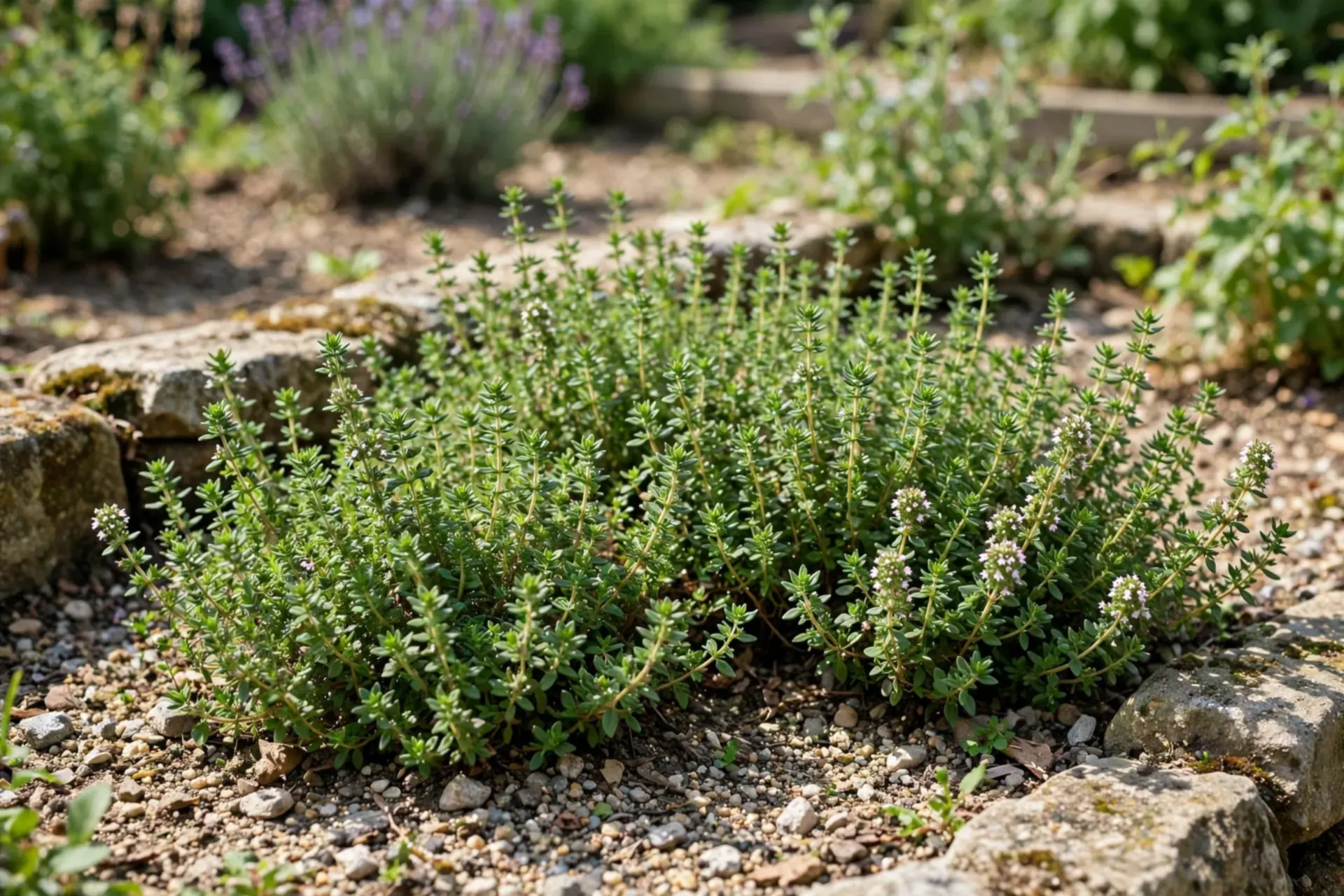
Tiny seeds and slow to start — patience indoors pays off for years. Thyme is a hardy perennial in zones 5–9: plant it once in a sunny, sharply drained spot and it crops for years, getting bushier and more flavourful as it settles in. Start the tiny seed indoors early, because germination is slow and seedlings grow slowly at first.
Grow Thyme with us — step by step
Everything for this plant is written step by step below — what to do, and exactly when. Read it through first if you like: you can grow it entirely on your own with that guide. Or start with us here — tell us your planting day and we lay out your personal schedule on this page, every next step on its own day, counted from your planting date. No guessing, no forgetting.
Step 1 — today: Plant out your young Thyme plants today (hardened off first), spaced 9 in apart, and water them in lightly. Starting from seed instead? Sow indoors now and barely cover the tiny seed, and this same schedule counts from transplant day.
Thyme at a glance
Sow indoors: 8 weeks before last frost
Move outside: 2 weeks after last frost
Spacing: 9 in · Seed depth: 1/4 in
Sun: Full sun
Water: Sparingly — drought-tolerant once established
Harvest: Cut stems as needed once plants are established; fullest flavour in year 2
Timing counts from your average last spring frost — get your own dates in the Planting Calendar. Guidance follows standard extension-service practice for Canada and the US.
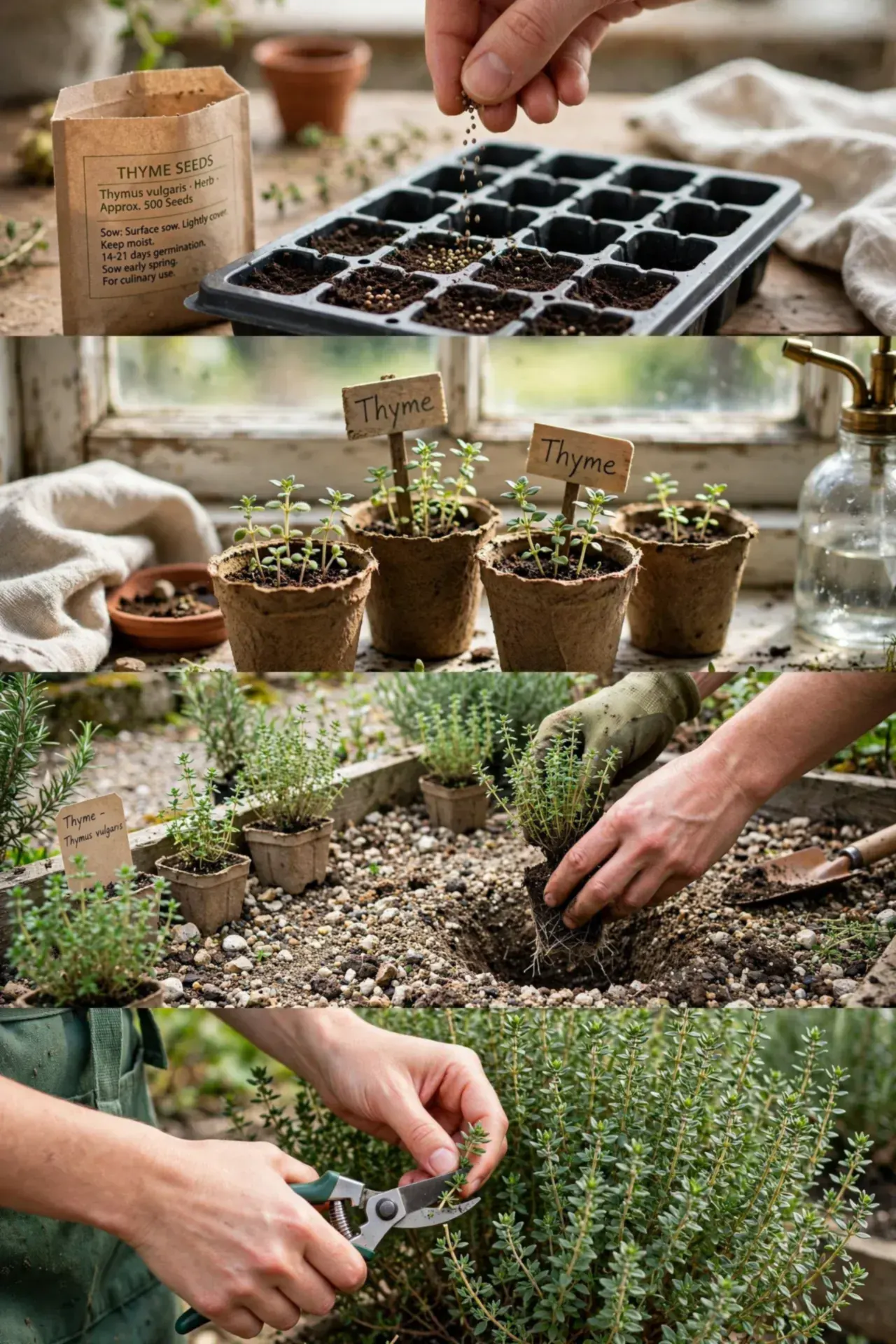
How to plant and grow thyme, step by step
Step 1 — Time it right
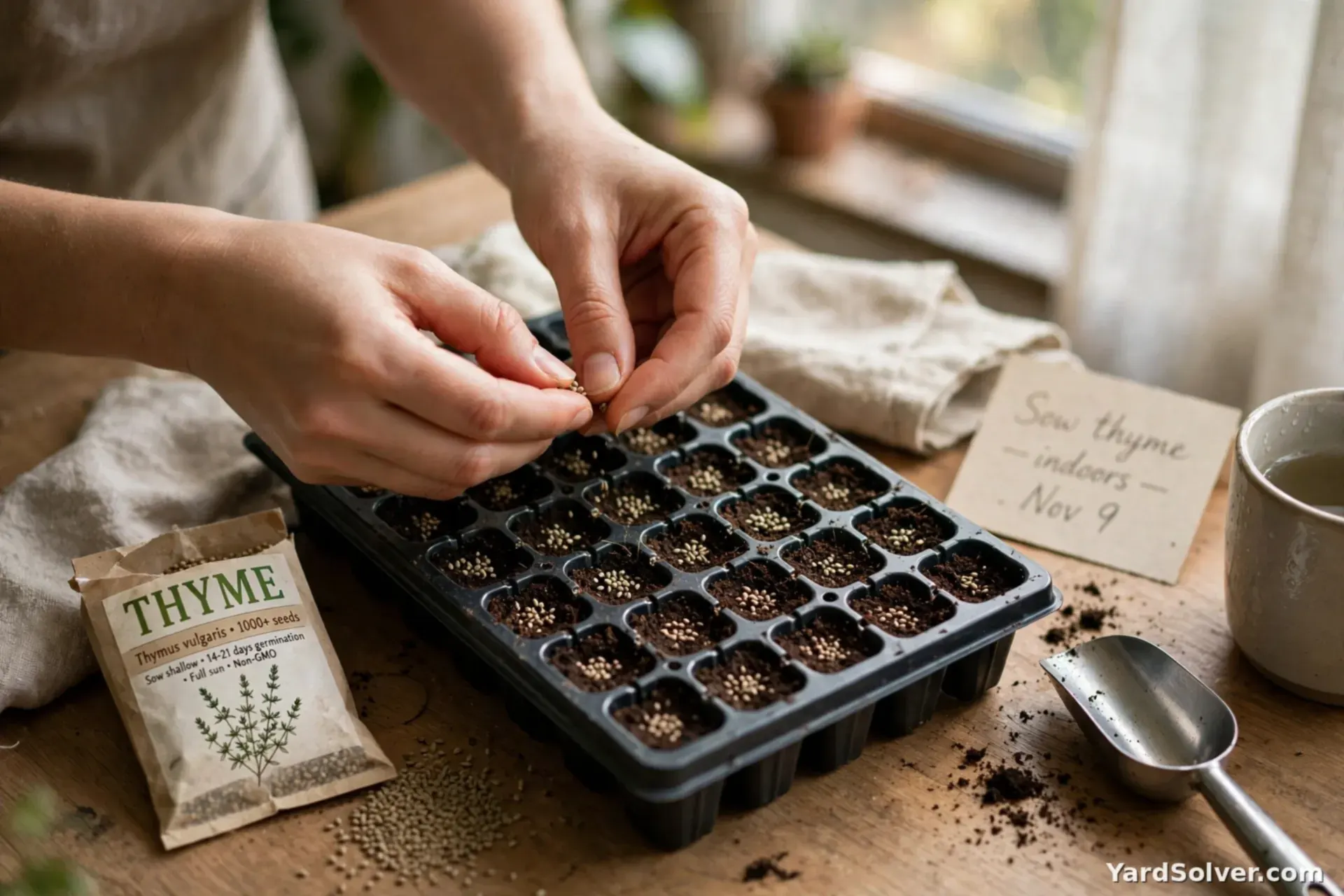
Sow indoors: 8 weeks before last frost; Move outside: 2 weeks after last frost. All dates count from your average last spring frost — the Planting Calendar turns them into real dates for your garden. Thyme seed is dust-fine and slow — seedlings can take 2–4 weeks just to sprout — so the early indoor start is what gives this perennial a proper first season.
Step 2 — Prepare the spot
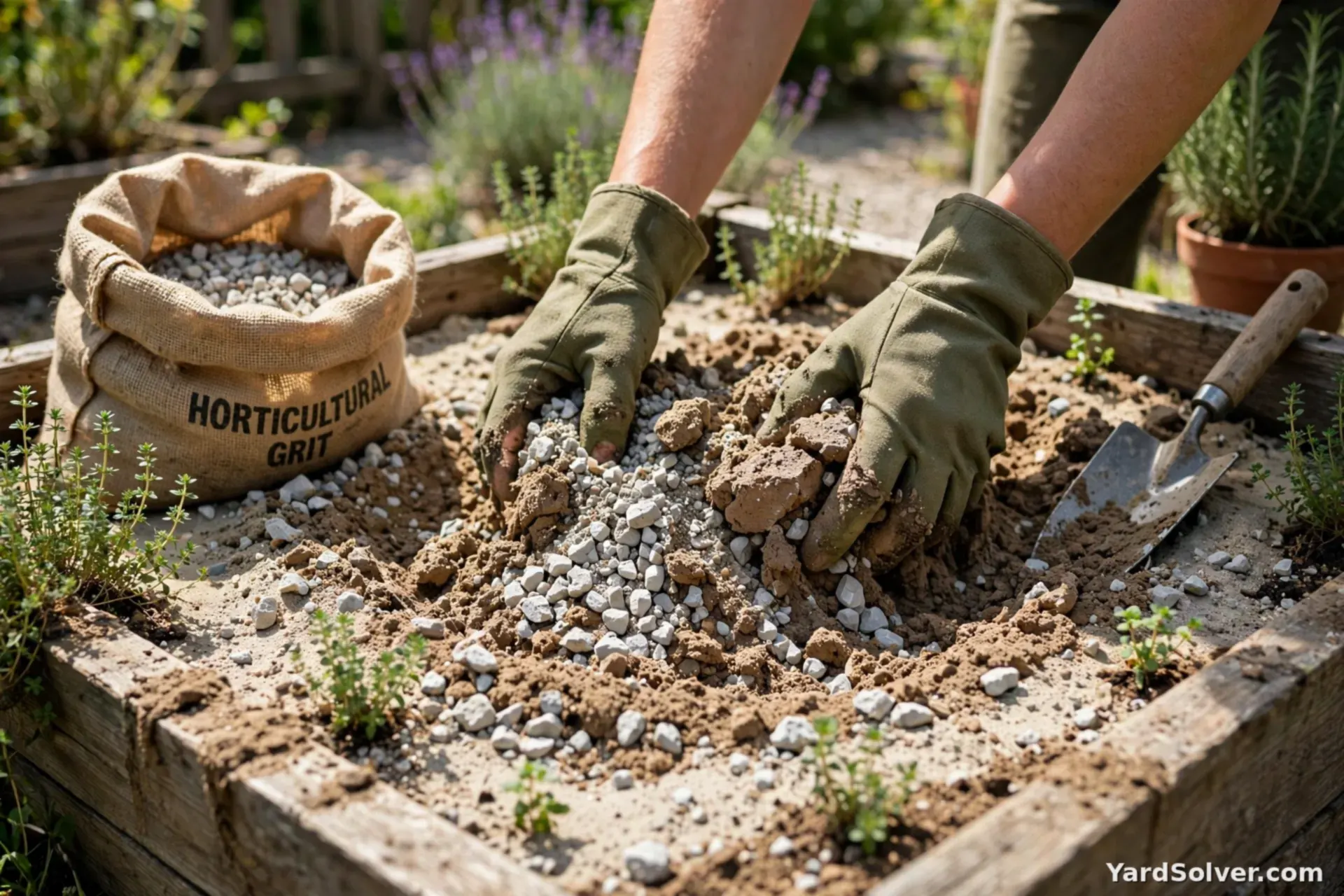
Sun: Full sun. Thyme comes from dry Mediterranean hillsides and wants the same at home: lean, gritty soil with sharp drainage — mix coarse grit or sand into heavy soil, or use a raised bed or a pot. Rich, wet soil is the one thing it cannot forgive. Work out how much you need with the Garden Mix Calculator or the Raised Bed Soil Calculator.
Step 3 — Sow and plant out
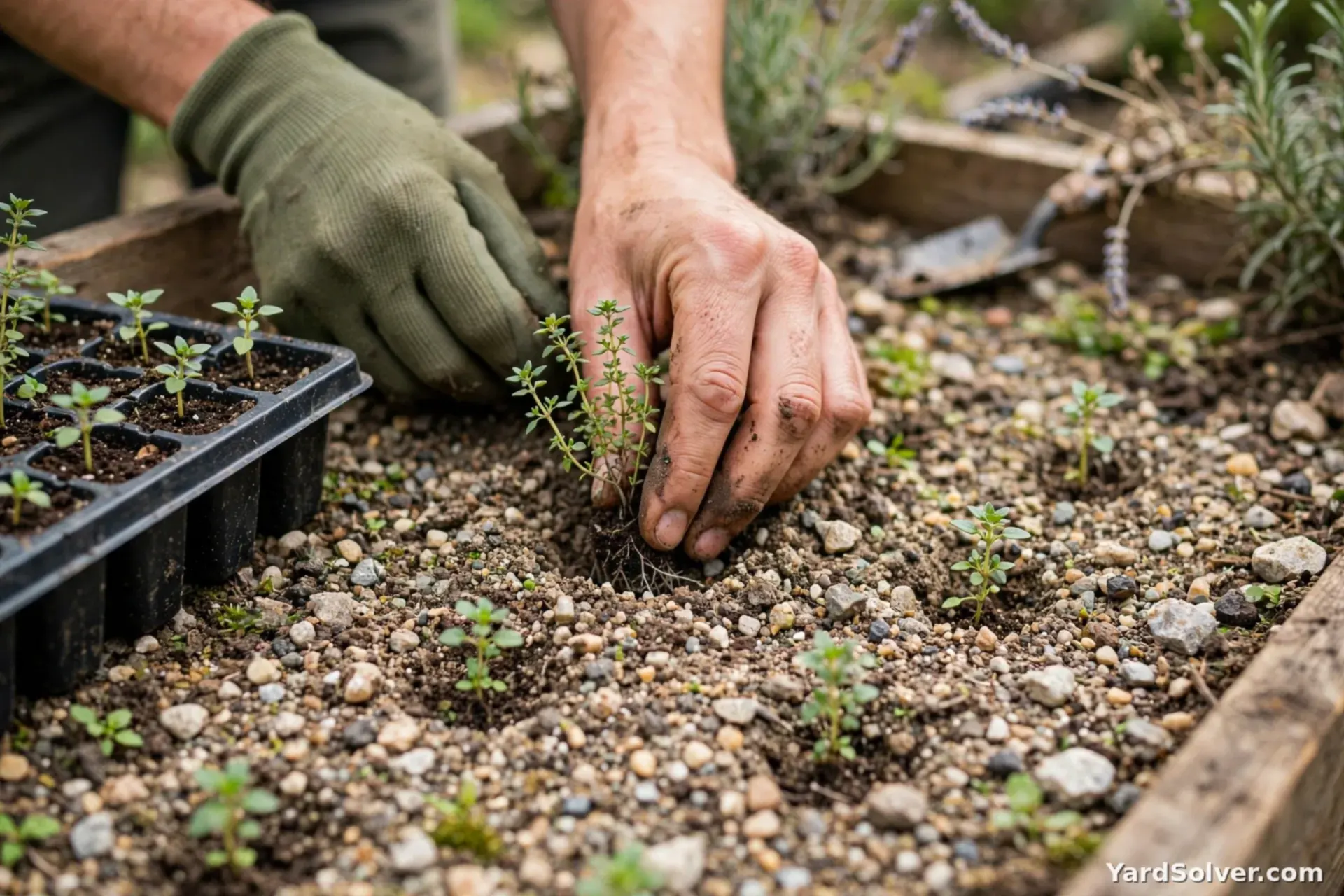
Surface-sow the tiny seed indoors and barely cover it — it germinates best with a little light and steady warmth. Grow seedlings on in strong light, harden them off over 7–10 days (see How to Harden Off Seedlings) and move them outside 2 weeks after last frost, spaced 9 in apart. The Plant Spacing Calculator turns that spacing into plants-per-bed.
Step 4 — Water and feed
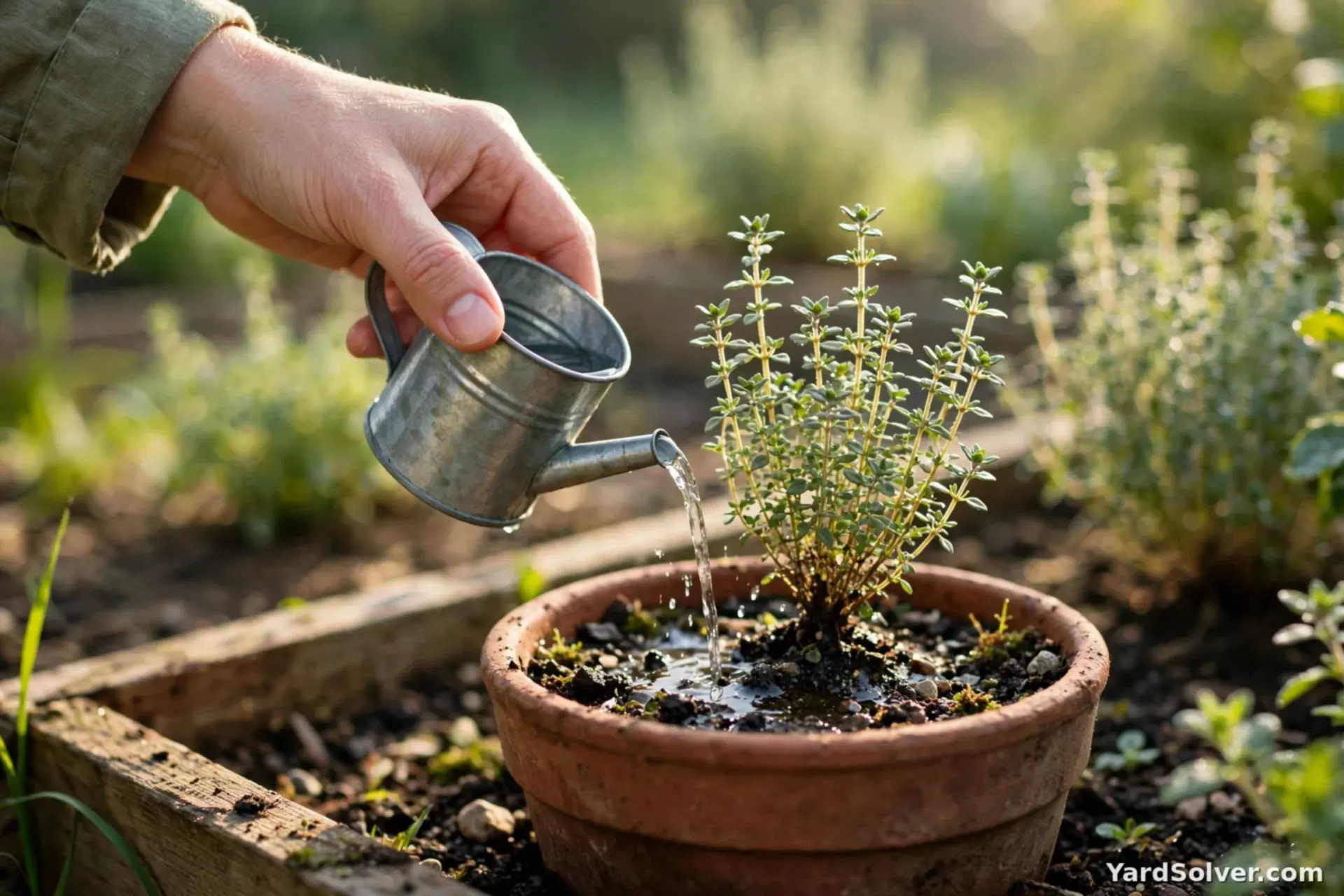
Water: Sparingly — drought-tolerant once established. Water young plants just enough to settle them in, then let the soil dry well between waterings; thyme in soggy soil fades fast. Feeding is barely needed — a sprinkle of compost in spring is plenty, and rich feeding only makes soft, weak-flavoured growth. The Fertilizer Calculator turns a bed size into the right amount if you do feed.
Step 5 — Care and the problems to watch for
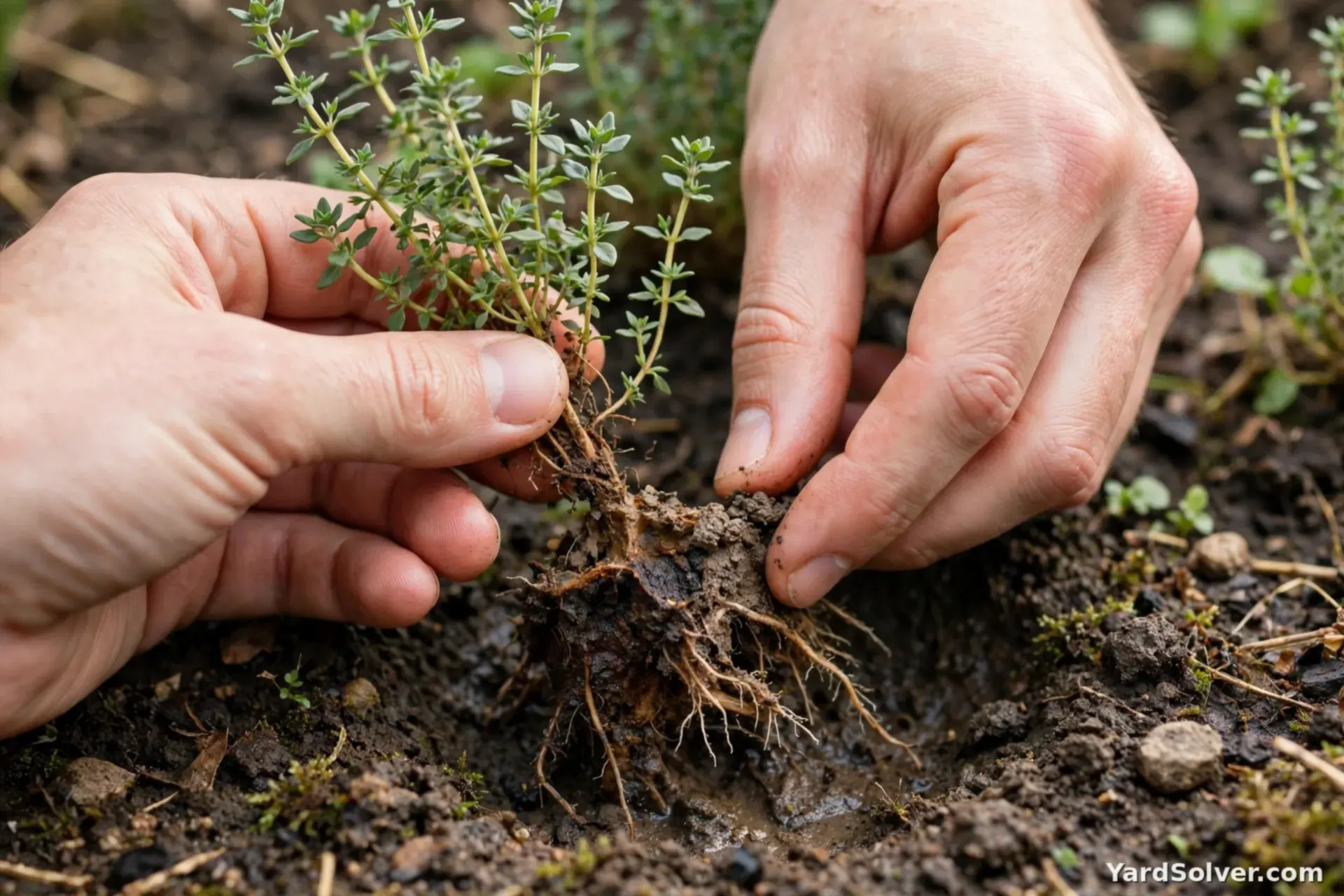
- Root rot in wet soil — plants yellow and collapse at the base; drainage is the cure, so replant in grittier ground rather than watering less in heavy soil.
- Grey mould in damp, crowded growth — grey fuzzy patches on stems; thin the plant for air and water at the base on dry mornings.
- Leggy, weak growth in shade — thyme stretches and loses flavour without full sun; move pots to the sunniest spot you have.
Take care: Never cut into the grey, bare old wood at the centre of the plant — it does not regrow. Thyme essential oil is far stronger than the leaf and is not a food — do not swallow it.
Step 6 — Harvest
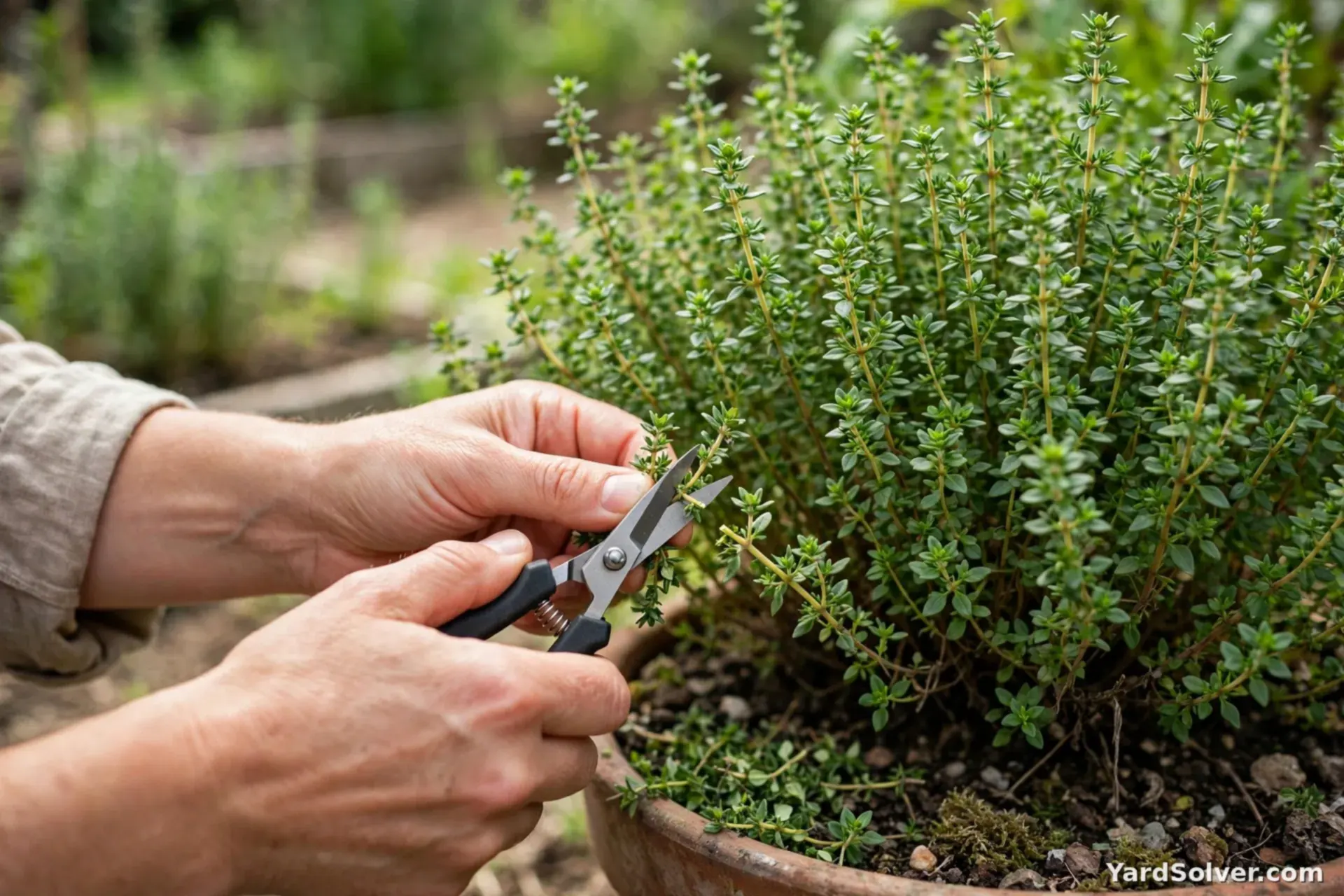
Ready in: Cut stems as needed once plants are established; fullest flavour in year 2. Snip stems with scissors as the kitchen needs them, cutting into the green, leafy part of each stem. Never cut back into the bare, woody centre — old wood rarely sprouts again, and hard pruning is how thyme plants are lost. A handful of sprigs also dries beautifully: hang small bunches in a dry, airy spot.
Problems, pests & diseases — diagnosis and fixes
- Stems blackening at the base, plant collapsing despite wet soil: root rot from sitting in waterlogged ground. Fix: lift the plant, cut roots back to firm tissue, and replant into gritty, free-draining soil or a pot — and water far less.
- Grey, fuzzy mould on stems and leaves in damp weather: grey mould thriving in still, wet air. Fix: cut out affected growth, thin the plant for airflow, and water at the base in the morning only.
- Long, pale, sprawling stems with widely spaced leaves: light starvation — thyme sulks in shade. Fix: move it to full sun and trim the leggy tips to force bushier regrowth.
- Tiny white specks and fine webbing under leaves in hot, dry spells: spider mites. Fix: blast them off with a strong jet of water on several days running, undersides included.
- Small green insects clustered on soft new tips: aphids. Fix: pinch out the worst tips and rinse the rest off with water; ladybirds usually finish the job.
- Plant slowly thinning in the middle after a wet winter: winter wet damage, common in heavy soil. Fix: take cuttings from healthy outer stems in spring — thyme roots easily — and replant the babies in grittier ground.
📅 Your personal Thyme schedule
Counted from your planting day — not a generic calendar. Day 0 is the day the seed went in the ground or the young plant went out.
Varieties worth growing
| Variety | Colour | Why gardeners like it |
|---|---|---|
| English (Common) | Green | The classic culinary thyme — small leaves, strong flavour, hardy and reliable |
| French | Green | Narrower leaves and a slightly sweeter, finer flavour prized in French cooking |
| Lemon | Green, lemon-scented | Bright citrus scent — lovely with fish, chicken and in herbal teas |
| Creeping | Green with pink-purple flowers | A low ground-cover thyme for paths and walls — ornamental first, lightly edible |
| Orange | Green, orange-scented | Orange-peel fragrance in the leaves — good in desserts and drinks |
Good for you — and take care
Benefits
- Adds strong flavour to food with almost no calories
- A source of vitamin C and vitamin A in small amounts
- Provides iron and manganese
- Perennial and drought-tolerant, so one planting seasons years of cooking
- Flowers are loved by bees and other pollinators
Take care
- Never prune back into the bare old wood — it will not regrow
- Thyme essential oil is far stronger than the leaf and is not a food
- Creeping and other ornamental thymes are mild — use the named culinary types for cooking
A little history — and one good fact
Thyme has been grown around the Mediterranean for thousands of years — the ancient Egyptians used it in embalming, the Greeks burned it as incense, and Roman soldiers were said to bathe in thyme water for courage. It spread north with the Romans and became a staple of European herb gardens, where its hardiness made it one of the few flavourings available fresh all year.
Fun fact: Thyme's scent comes mainly from thymol, a natural compound so antiseptic it was used in early mouthwashes and is still an ingredient in many of them today.
Keep going
Guides: Earliest Seeds to Start Indoors · Grow Herbs Indoors in Winter · How to Harden Off Seedlings
Calculators: Plant Spacing Calculator · Seed Calculator · Fertilizer Calculator
More herbs: Basil · Rosemary · Mint · Oregano · Chives
← Back to the Plant Library · Get your personal planting dates
Questions people ask
When do I plant thyme?
Count from your average last spring frost: sow indoors 8 weeks before last frost; move outside 2 weeks after last frost. Thyme is a hardy perennial in zones 5–9: start the slow, tiny seed indoors early and plant out into the sunniest, best-drained spot you have.
How far apart do I space thyme?
Space plants 9 in apart, with seed sown 1/4 in deep. Sun: full sun.
When is thyme ready to harvest?
Cut stems as needed once plants are established; fullest flavour in year 2. Tiny seeds and slow to start — patience indoors pays off for years.