
Guides · Plant problems · Published November 1, 2026
Why Is My Zucchini Plant Dying?
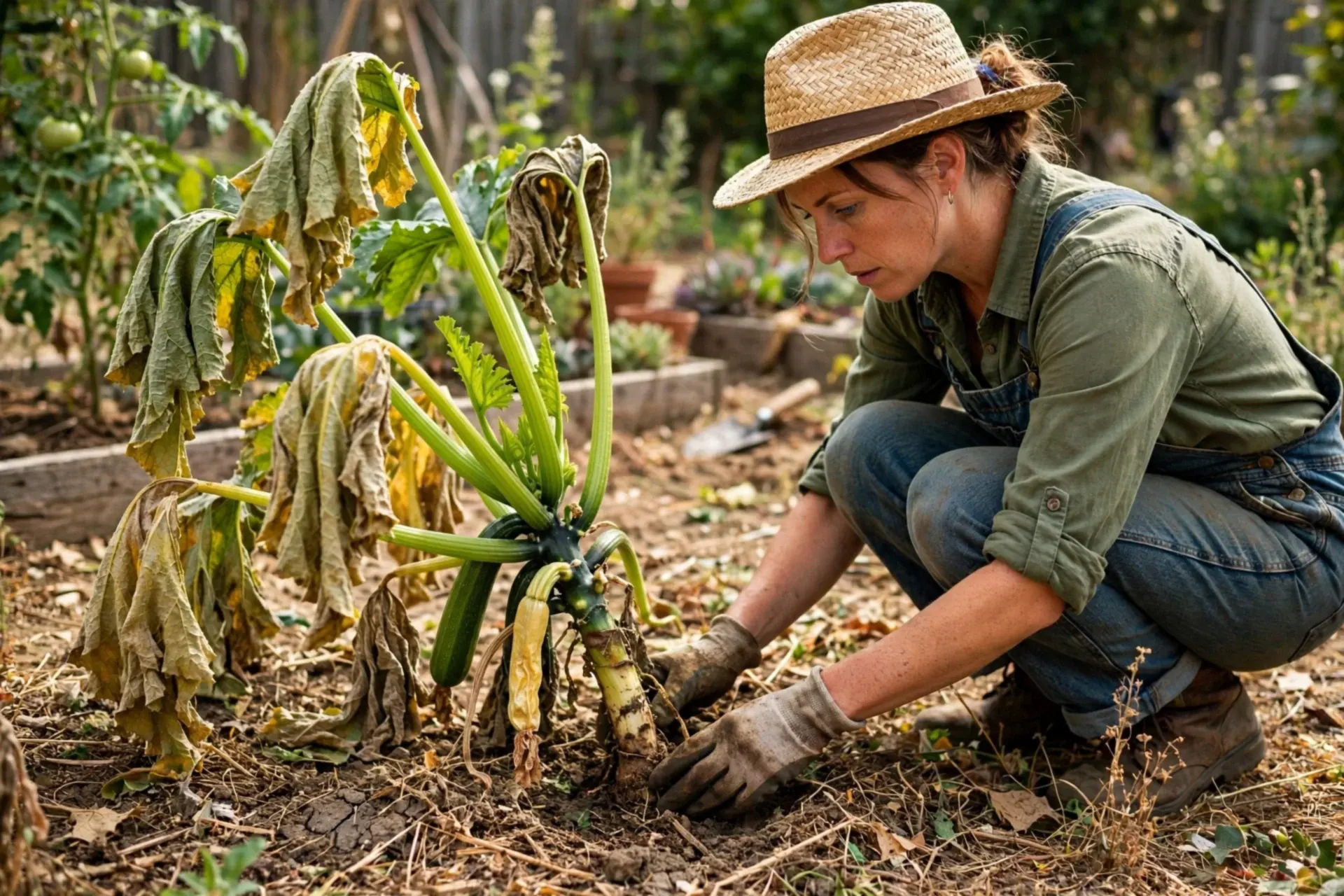
Zucchini have a reputation for being unstoppable — until the day a huge, productive plant wilts overnight or fades over a fortnight, and the harvest ends in July. When a zucchini dies mid-season it is almost always one of four culprits, and each leaves clear evidence. Diagnose by the pattern below before treating anything: the fixes are completely different, and two of them are genuinely rescuable.
Sort the collapse by its signature
- Sudden total wilt + orange 'sawdust' (frass) at the stem base, soil moist → squash vine borer, a larva tunnelling inside the stem
- White powdery coating spreading over leaves, oldest leaves first, plant fading slowly → powdery mildew (see the mildew guide)
- Wilts at midday, recovers by morning, soil dry a few centimetres down → simple water stress — the huge leaves out-drink the roots in heat
- Yellowing from the base, stem soft and rotting at soil level, mix constantly wet → stem/root rot from waterlogged soil
- Leaves yellow in a mosaic pattern and distort, plant stunted → virus, usually carried in by aphids — the one case with no cure
Step 1 — Water check first (five minutes, no products)
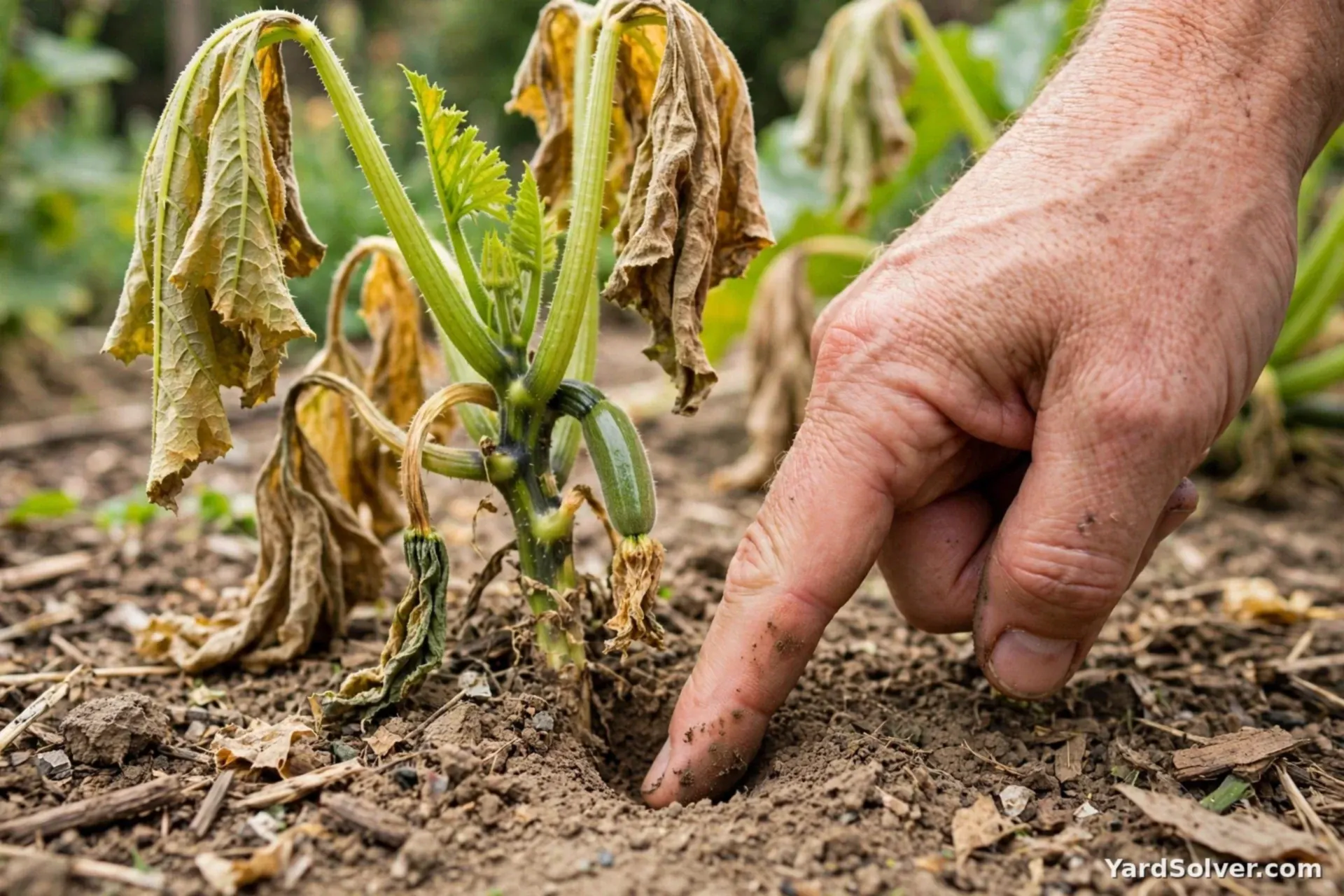
Push a finger 5 cm into the soil at the base. Bone dry? The plant is thirsty, not dying: water deeply at the base (not over the leaves), mulch the soil to hold it — amounts from the Mulch Calculator — and it should stand back up by evening. Soil wet and the plant still flat? The problem is in the stem or roots; go to Step 2.
Step 2 — The vine borer rescue operation
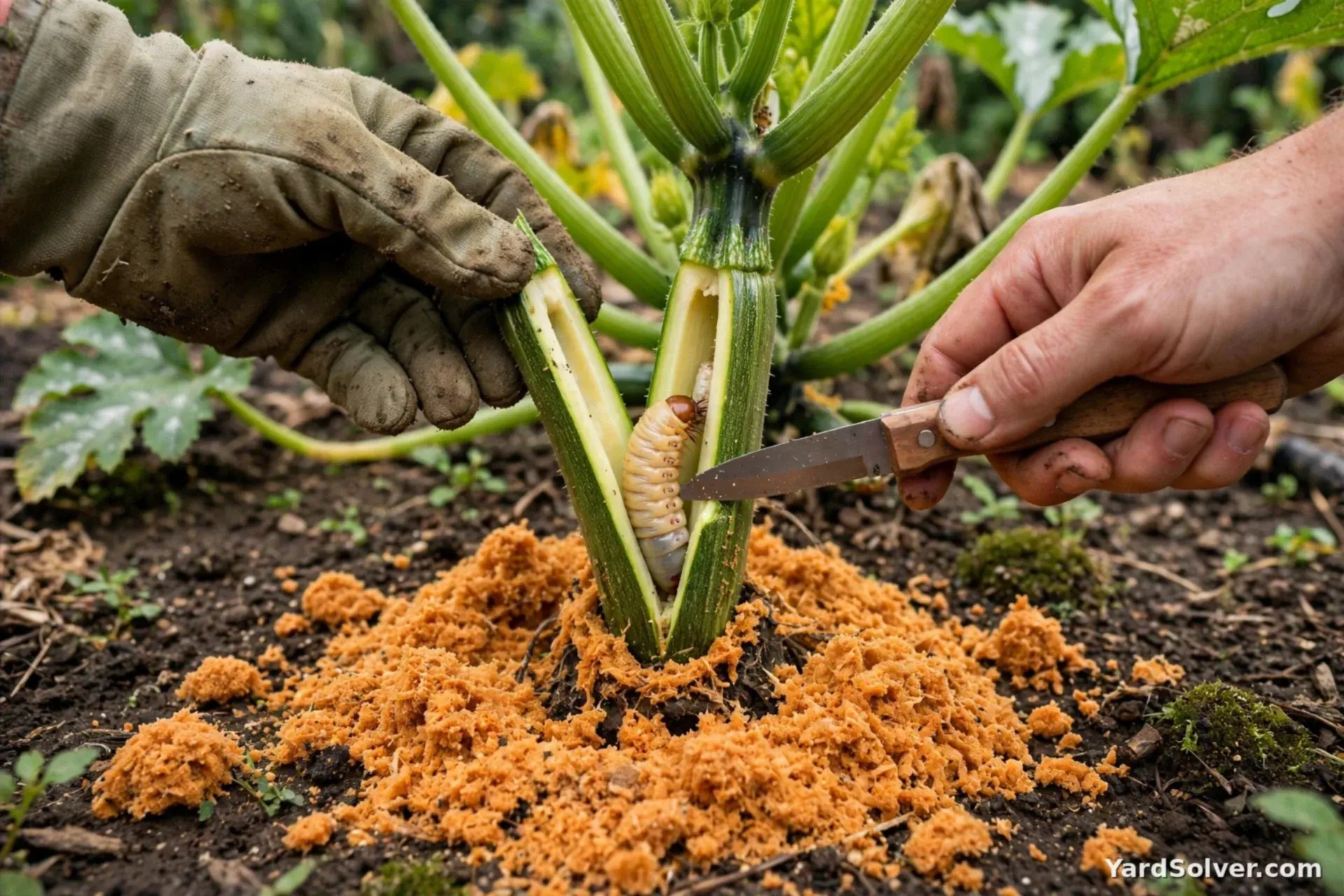
For sawdust at the base: find the entry hole, slit the stem lengthwise with a sharp knife just enough to reach the pale grub inside, and remove it. Then mound moist soil over the wounded stem section — zucchini root along buried stem and the plant frequently recovers well enough to crop again. Cover the mound and keep it watered. Afterwards, prevention: in borer country, wrap the lowest stem in foil or fine mesh at planting, or grow under row cover until flowering.
Step 3 — Mildew and airflow: slow the fade
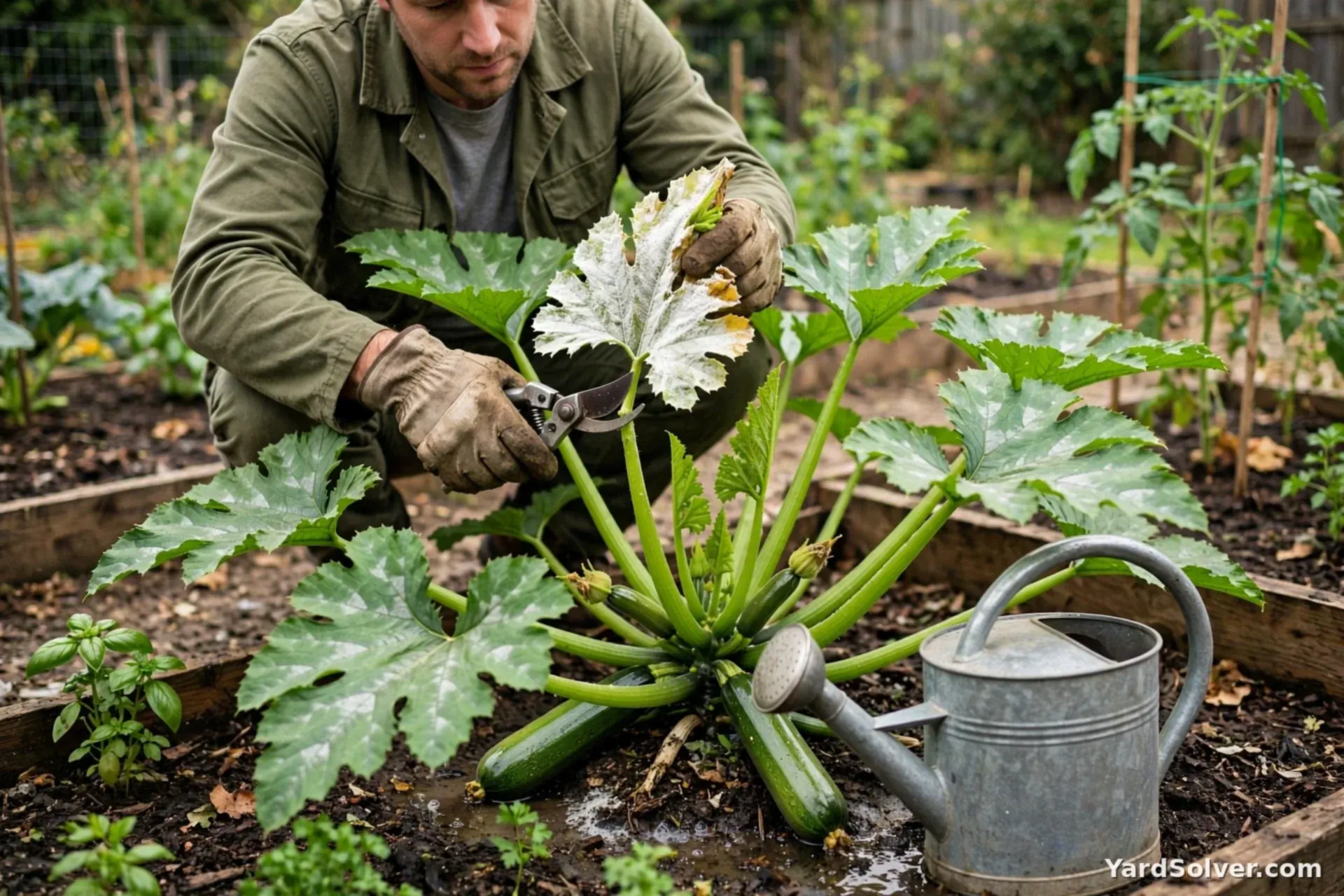
Powdery mildew rarely kills outright but drains the plant week by week. Remove the worst leaves, space and prune for airflow (the Plant Spacing Calculator gives next year's spacing honestly), water at the base, and follow the spray routine in How to Get Rid of Powdery Mildew — if you are mixing a baking-soda or oil spray, the Garden Mix Calculator works out the exact quantities for your sprayer.
Step 4 — Rot and virus: the honest endings
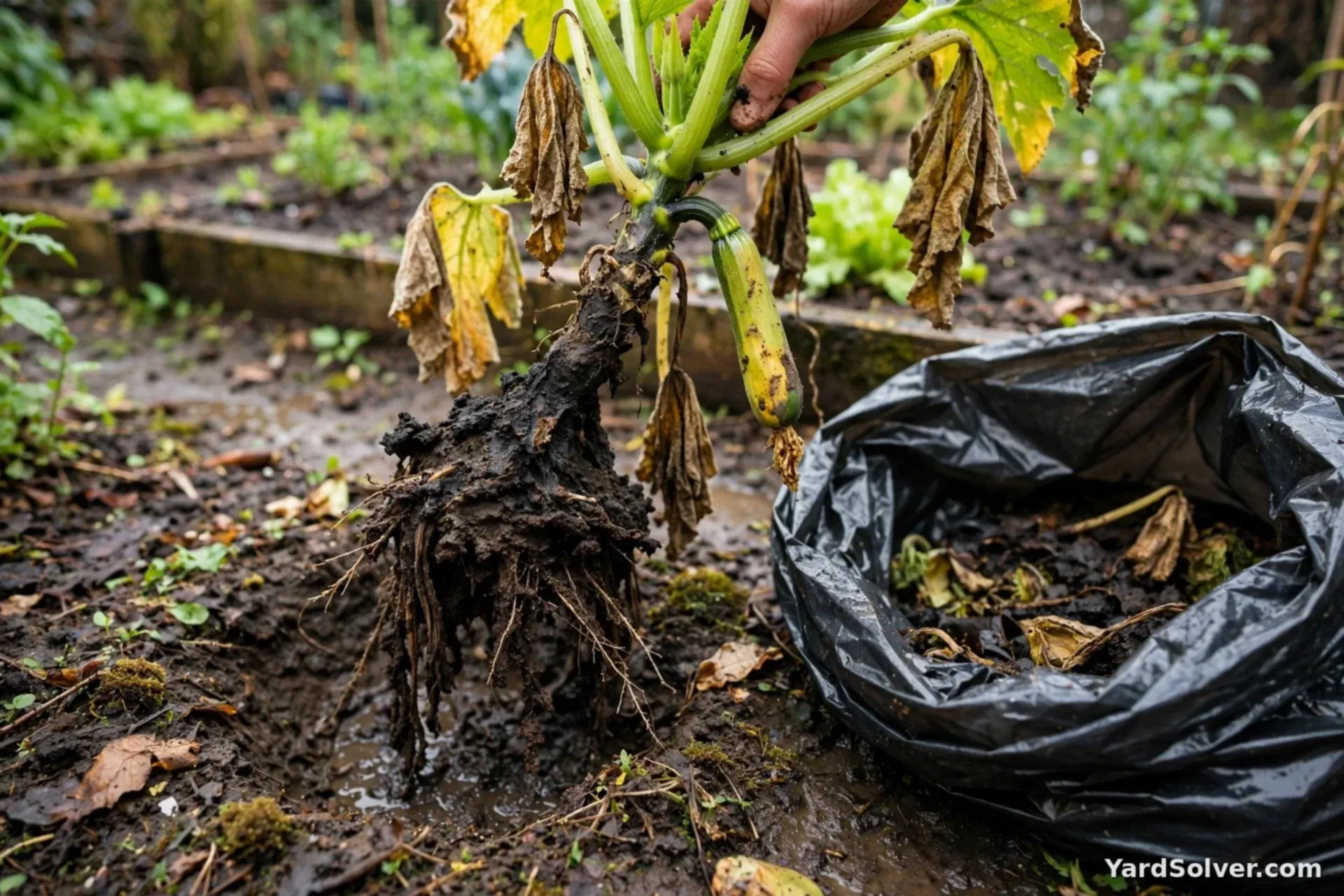
A stem rotting at the base in wet soil cannot be un-rotted. Improve drainage for the next plant, remove this one, and do not compost it. Virus is the same verdict: no treatment exists, the plant becomes a source for aphid-spread infection, and removing it protects the rest of the bed. Neither failure is a verdict on you as a gardener — both are weather-and-luck diseases that visit careful growers too.
Step 5 — Succession: the zucchini insurance policy
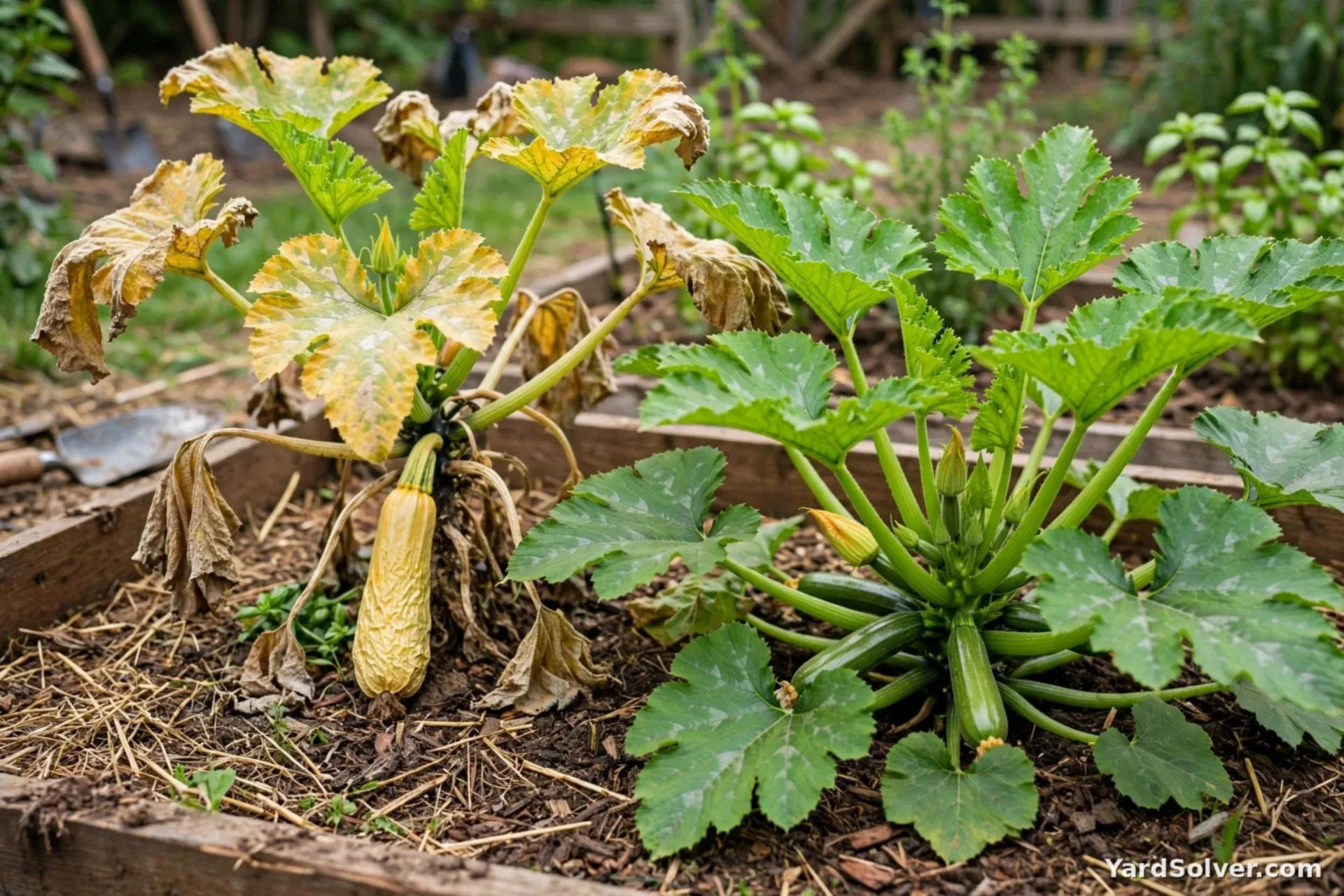
Professionals do not rely on one plant: they sow a second zucchini 4–6 weeks after the first, so when borer, mildew or age finishes plant number one, plant number two is just hitting production. It is the cheapest, most reliable 'treatment' on this page. Keep the new plant under cover until it flowers if borers are your local problem, and rotate the squash family's bed each year.
Keep going
The two partner problems: How to Get Rid of Powdery Mildew · How to Get Rid of Aphids on Plants. Zucchini's spacing, water and harvest profile is in the Plant Library.
Questions people ask
Can a zucchini plant with vine borer be saved?
Often, yes — if you act while the plant still has healthy growth beyond the damage. Slit the stem to remove the grub, then mound moist soil over the wounded section so the stem can root again. Plants that have collapsed completely for several days rarely recover; a succession-sown second plant is the reliable backup.
Why did my zucchini die in just two days?
Fast collapses are usually stem-level events, not leaf diseases: a vine borer severing the stem's plumbing from inside, or a stem rot in waterlogged soil. Leaf problems like mildew kill slowly over weeks. The speed of the collapse is itself a diagnostic clue — check the base of the stem first.
Will the problem spread to my other squash and cucumbers?
It depends which problem. Powdery mildew spreads freely among squash, cucumbers and melons. Vine borer stays in the plant it hatched in but its moth lays on nearby squash too. Stem rot stays in its wet patch of soil. Viruses spread plant to plant via aphids — which is why virus plants come out promptly.
Comments & ratings
No comments yet.
Be the first to share your experience.