
Guides · Dill · Published November 8, 2026
How to Grow Dill: The Complete Beginner's Guide
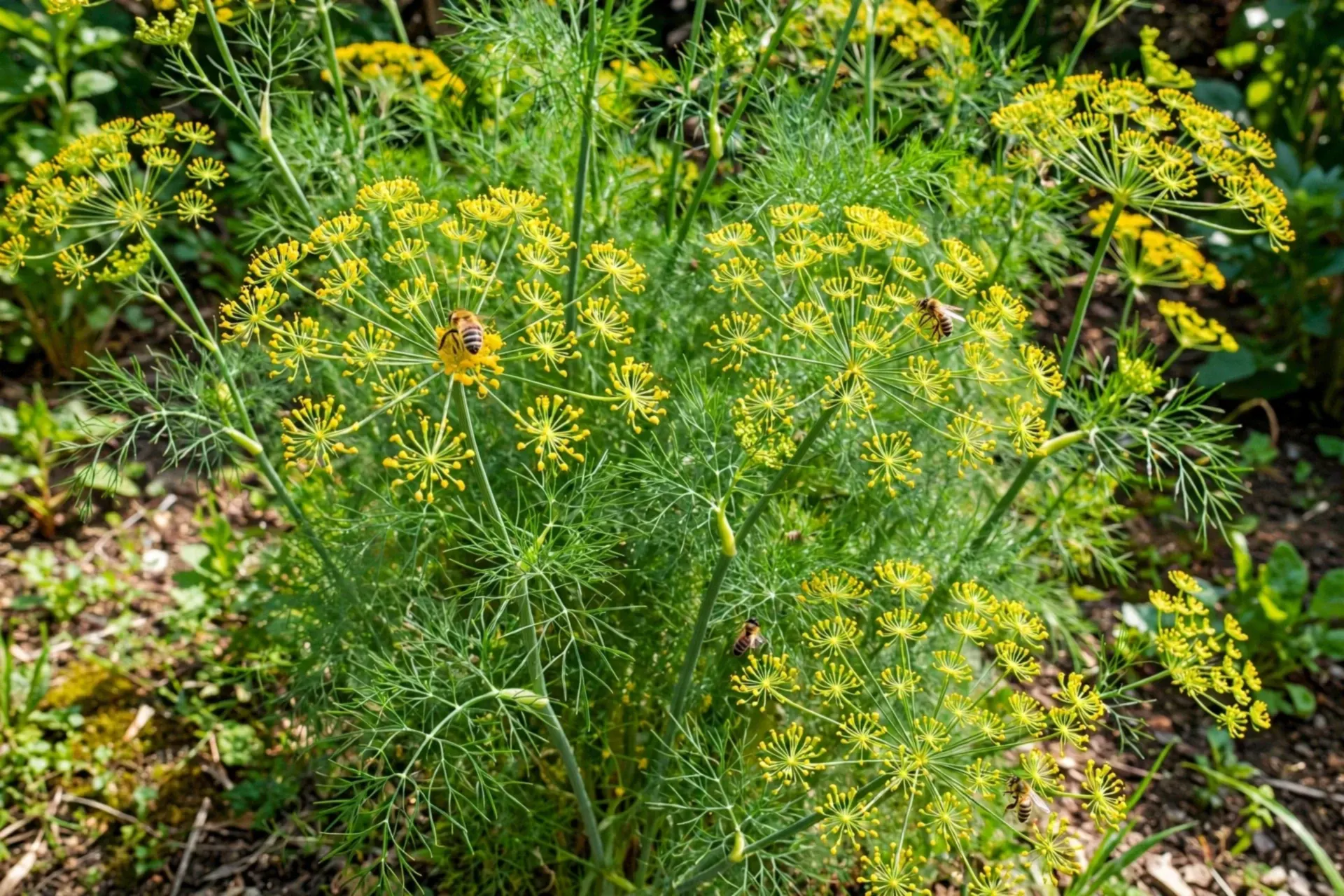
Dill is the herb garden's easiest success and its most common small disappointment — not because it is hard to grow, but because it plays by two rules nobody tells beginners: it refuses to be transplanted, and it bolts the moment summer warms up. Work with those two rules instead of against them and dill practically grows itself, then plants next year's crop for free. This guide is the whole routine on one page, in order. For the one-screen version — light, water and care at a glance — see the Dill plant page; this is the deep guide it points to.
The dill season at a glance
- Sow direct, never transplant: dill's long taproot hates being moved — seed goes where the plant will grow
- Succession-sow: a short row every 2–3 weeks keeps fresh leaf coming as older plants bolt
- Thin wide, full sun: 10–12 inches apart, with shelter from strong wind for the tall hollow stems
- Water even, feed lean: steady moisture, almost no fertilizer — rich soil makes leggy, bland plants
- Harvest before flowering, then let one bolt: leaf is best pre-bloom; a spared plant gives seed and self-sows
Step 1 — Sow direct after frost, and keep sowing
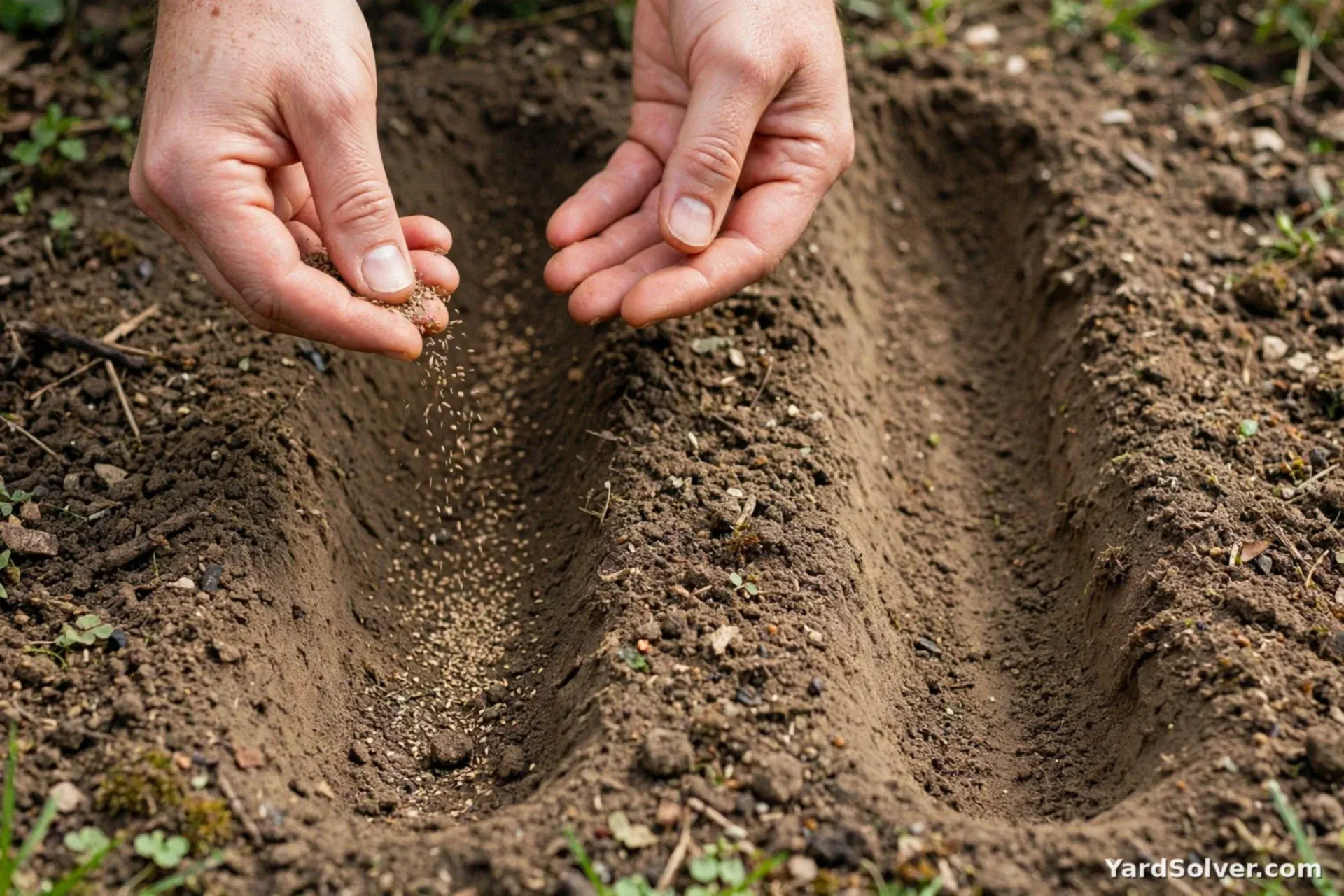
Skip the seed trays and the nursery six-packs. Dill grows a single long taproot, and disturbing it — even a careful transplant — stunts the plant or sends it straight to flower. Sow seed directly in the bed or pot where it will grow, once the danger of hard frost has passed and the soil has begun to warm. Scatter it in a shallow drill about ¼ inch deep, cover lightly, and water gently; seedlings appear in roughly 10–14 days. Then make succession sowing a habit: a short row every 2–3 weeks from spring into late summer. Dill is a short-lived herb that bolts as it matures, so a standing crop is really a conveyor belt — one row leafing out as the previous one goes to seed. The Planting Calendar shows the sowing window for your last-frost date, and a pinch of seed is all each sowing takes.
Step 2 — Thin to 10–12 inches, in full sun and out of the wind
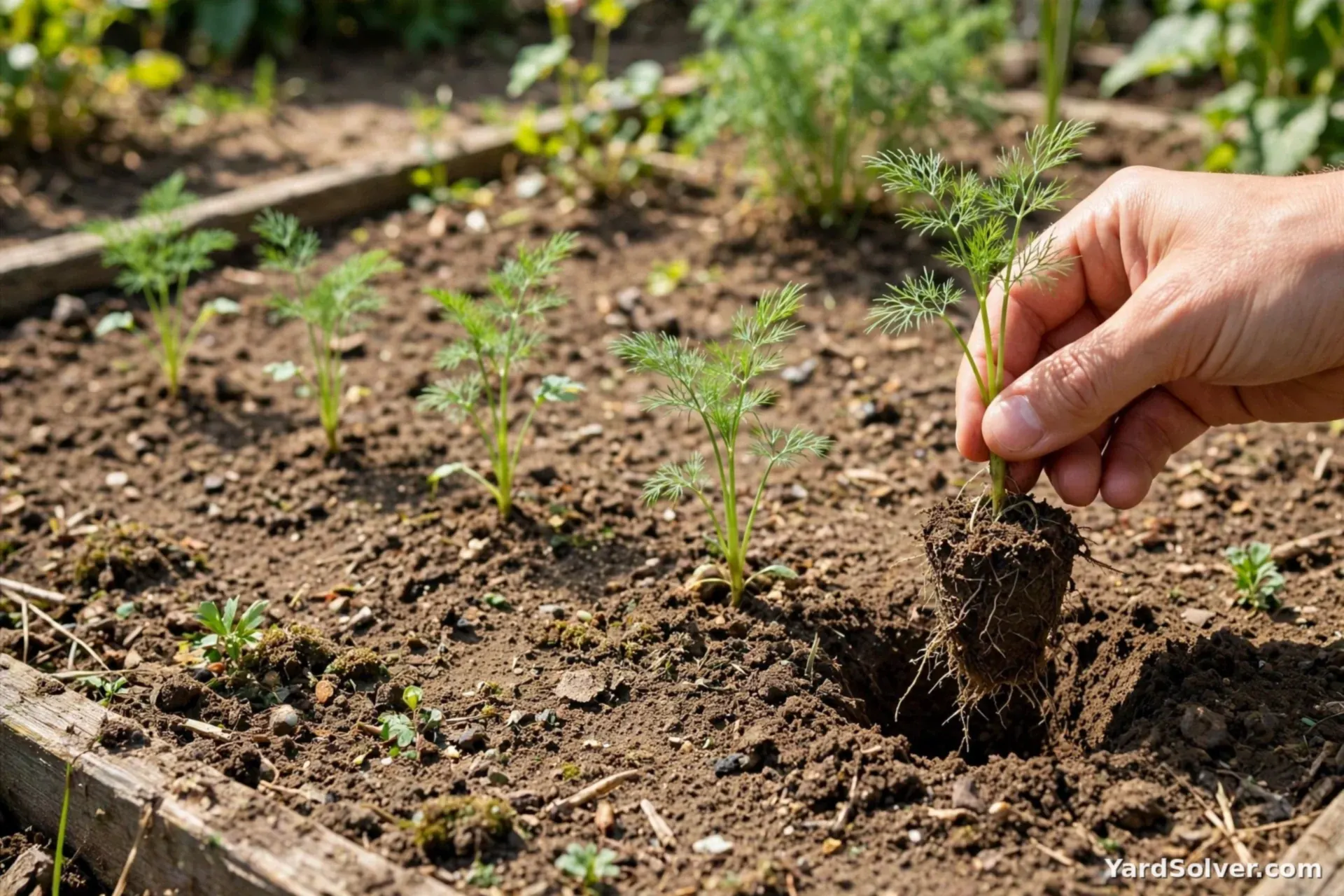
Dill seedlings come up thick, and thinning is the step that decides the harvest. When the seedlings are 2–3 inches tall, thin them to stand 10–12 inches apart — it feels wasteful, but a crowded row produces spindly stems and a fraction of the leaf. Snip the extras with scissors rather than pulling, so the keepers' taproots stay undisturbed, and eat the thinnings: they are the first dill of the year. Give the row full sun — six hours at minimum — and a spot sheltered from strong wind. A mature dill plant stands 3–4 feet tall on a hollow stem, and a gusty corner will lay a whole row flat just as it peaks. Laying out a mixed herb bed? Sketch the tall dill at the back, where it will not shade shorter herbs, in the Garden Planner before you sow.
Step 3 — Water evenly, feed lightly — leaner is tastier
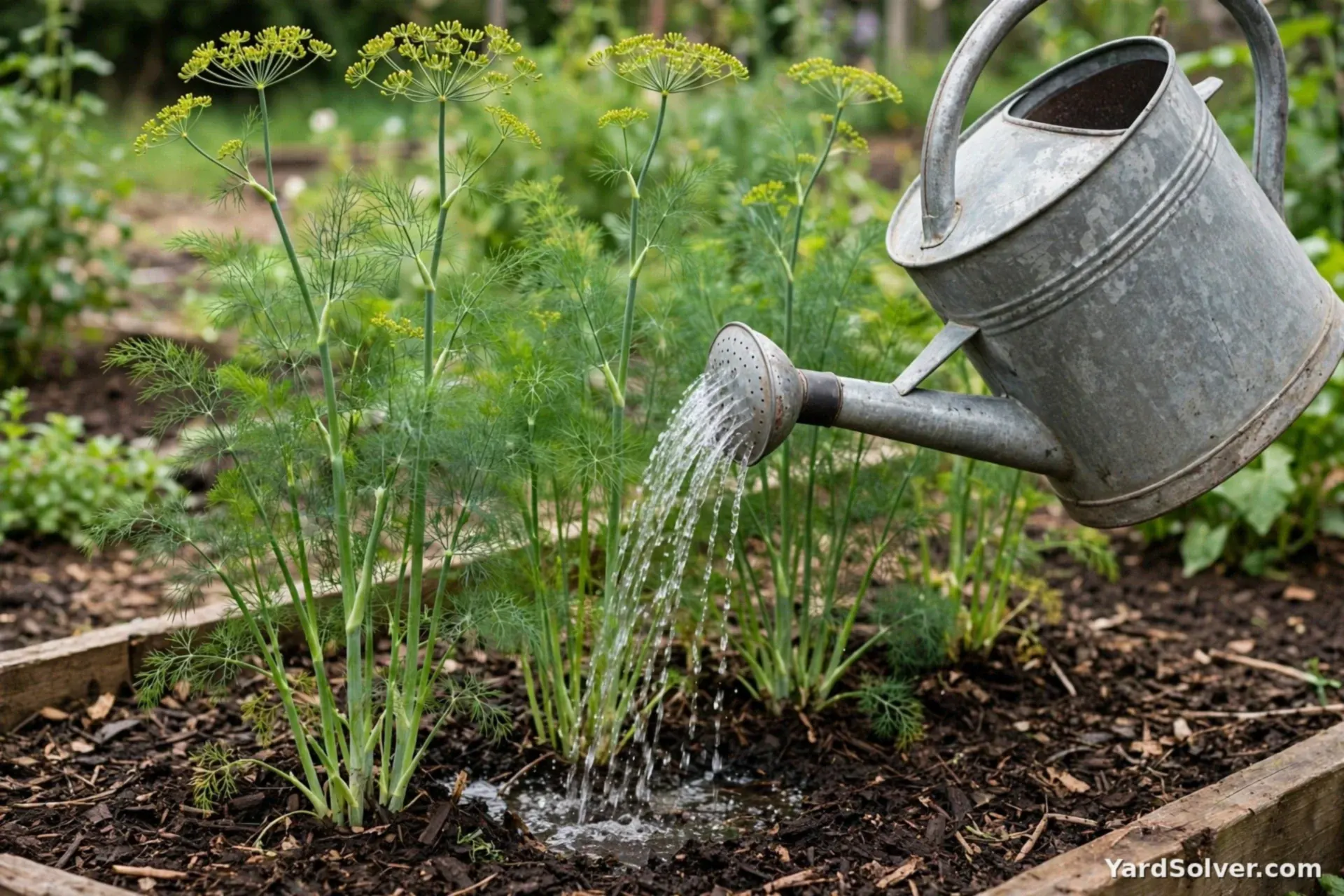
Dill wants its moisture even: soil that swings between dust-dry and soaked stresses the plant and hurries it to bolt. Water at the base when the top inch of soil dries out — about an inch of water a week in most weather, more in a heatwave — and lay a light mulch of compost or straw around the stems to hold that moisture steady. Feeding is where restraint pays twice. Dill grown hard in ordinary soil makes the most flavourful leaf; rich soil and generous fertilizer produce tall, leggy plants with noticeably weaker flavour. In an average garden bed, no feed at all is a perfectly good dill program; in poor, sandy soil, one light scattering of compost at sowing time is enough. If you do feed, keep the dose small and honest with the Fertilizer Calculator — and then stop. With dill, the cook thanks you for the fertilizer you did not use.
Step 4 — Harvest outer fronds before flowering
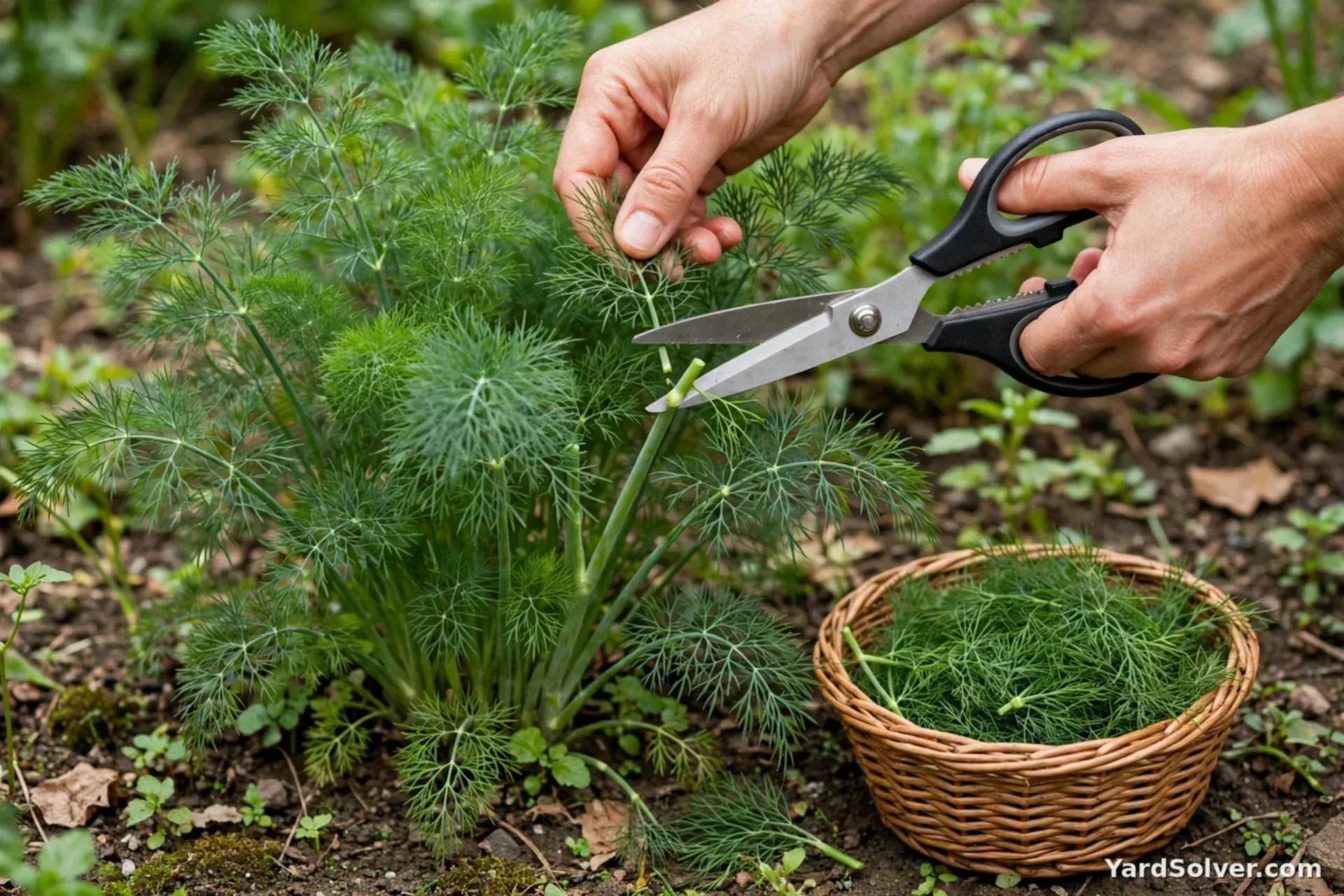
Begin harvesting once a plant is about 12 inches tall and bushy. Snip the outer fronds first, cutting close to the stem, and leave the centre to keep growing — a plant picked this way yields for weeks. Harvest in the morning, when the aromatic oils are strongest, and never strip more than about a third of a plant at one picking. Timing matters more than technique: leaf flavour peaks before the plant flowers, and fades as the yellow umbrella heads open, so pick steadily and use or preserve what you cut rather than letting it wait on the plant. Dill grown for pickling is the exception to plan for — the green seed heads go into the jars — so let one succession row run on toward flower for Step 5 while the younger rows keep you in leaf.
Step 5 — Save seed in a paper bag, and let a plant or two self-sow
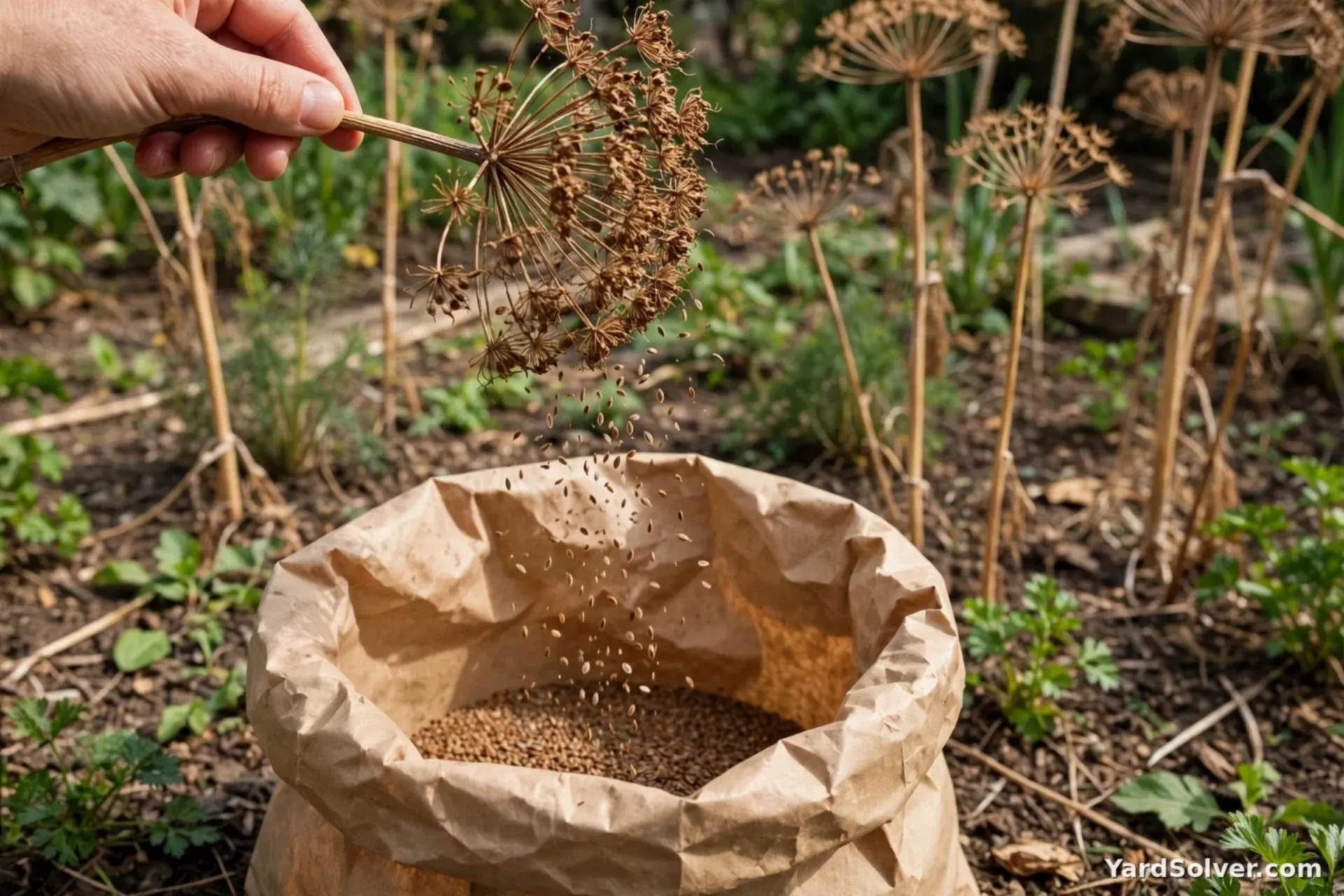
For pickling, cut whole seed heads when the seeds have formed but are still partly green, and use them within a day or two. For seed worth storing, wait until the heads turn tan and the seeds ripen brown, then slip a paper bag over the head and shake or clip the stem into it — ripe dill seed shatters at a touch, and the bag catches what your fingers would lose. Spread the seed indoors for a week to finish drying, then store it airtight and labelled; it stays good for several years. Then do the easiest seed-saving of all: leave one or two plants standing to drop their seed where they grew. Dill self-sows freely, and next spring a volunteer row appears in roughly the right place at roughly the right time — one reason dill belongs in every companion planting plan, since its flowers also feed the hoverflies and parasitic wasps that police aphids. One honest limit to plan around: dill bolts fast in heat and long summer days, so in hot climates treat it as a spring and autumn herb — sow as the soil warms, again as summer cools, and do not fight midsummer.
Keep going
The at-a-glance version, with light and water needs: Dill — Plant Library.
More herb-growing guides: Grow Herbs Indoors in Winter · Companion Planting Basics · Grow Microgreens Indoors.
Questions people ask
Why did my dill bolt so fast?
Heat and long days are the trigger. Dill is a cool-season herb, and hot weather or the long days of midsummer tell it to flower and set seed instead of making leaves. You cannot truly stop bolting — instead, succession-sow every 2–3 weeks so a younger row is always coming on, harvest leaf early and often, and let the bolted plants finish: their flowers feed pollinators and their seed is next year's crop. In hot climates, grow dill as a spring and autumn herb rather than a summer one.
Can dill grow in a pot?
Yes — in a deep pot, sown direct. Dill grows a long taproot and resents transplanting, so sow the seed where it will grow, in a pot at least 12 inches deep with drainage holes. Thin to one or two plants per pot, keep it in full sun, and water evenly: pots dry out faster than beds, and a thirsty dill bolts sooner.
How do I store fresh dill?
Stand the stems in a jar with an inch of water, slip a loose bag over the fronds, and refrigerate — it keeps about a week, far longer than in a drawer. For keeping months, chop the fronds and freeze them in ice-cube trays topped with a little water or oil; drop a cube straight into soups, sauces and dressings. Frozen dill loses its garnish looks but keeps most of its flavour.
Comments & ratings
No comments yet.
Be the first to share your experience.